
Snorkeling Oahu: The Complete Guide for First-Timers
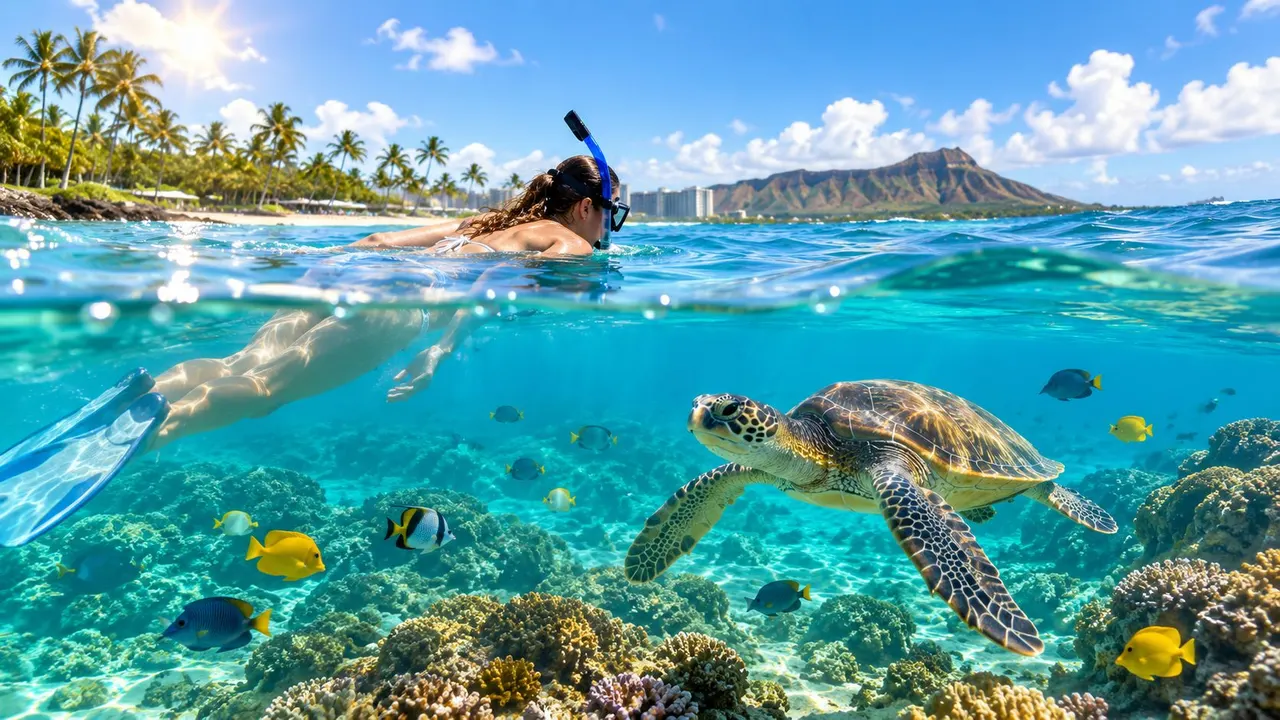
You're standing on Waikiki with a mask in one hand and fins in the other, wondering if you should book a boat, try the beach, or skip the whole thing until tomorrow morning. That's the right question. Snorkeling Oahu can be calm and easy, but only if you match the site to the conditions, the season, and your comfort in the water.
If you pick well, you'll get clear water, reef fish, and maybe a honu sliding by without much effort. If you pick poorly, you'll fight chop, poor visibility, and a stressful entry. Oahu rewards people who read the ocean first and the beach list second.
Why Oahu Is a Top Snorkeling Destination
The first morning in Waikiki usually starts the same way. Someone is already in the hotel lobby with fins in a tote bag, looking at the water and trying to decide whether the ocean looks calm enough to bother. That hesitation makes sense, because Oahu gives you easy access to the reef, but it also asks you to pay attention before you jump in.
The island's appeal comes from a rare mix of protected reef habitat, Honolulu convenience, and a deep lineup of marine life. Hanauma Bay became a Marine Life Conservation District in 1967, and its long history of visitor management is a big reason the bay is still treated as a benchmark for beginner-friendly reef snorkeling on Oahu (Tropical Snorkeling). The south shore is especially convenient for travelers staying in Waikiki and Honolulu, while the reef itself offers the kind of underwater scenery first-timers want, clear water, fish, and a shallow learning curve.
Practical rule: On Oahu, the “best snorkel spot” is usually the one that matches the day, not the one with the biggest online reputation.
Three regions shape almost every decision here. The South Shore gives you the most obvious access from Honolulu and Waikiki. The North Shore turns into a summer snorkel zone when the surf settles. The West Shore can stay calmer when trades or north swells make other sides less comfortable. That's why Oahu works so well for beginners, and why the wrong assumption about “any beach will do” can ruin a day.
For a practical island overview, start with this Oahu snorkeling overview from Living Ocean Tours. The main takeaway is simple. Oahu offers a lot of reef access, but your timing, entry style, and shoreline choice matter more than the beach name on the map.
How to Read Oahu's Ocean Conditions Before You Book
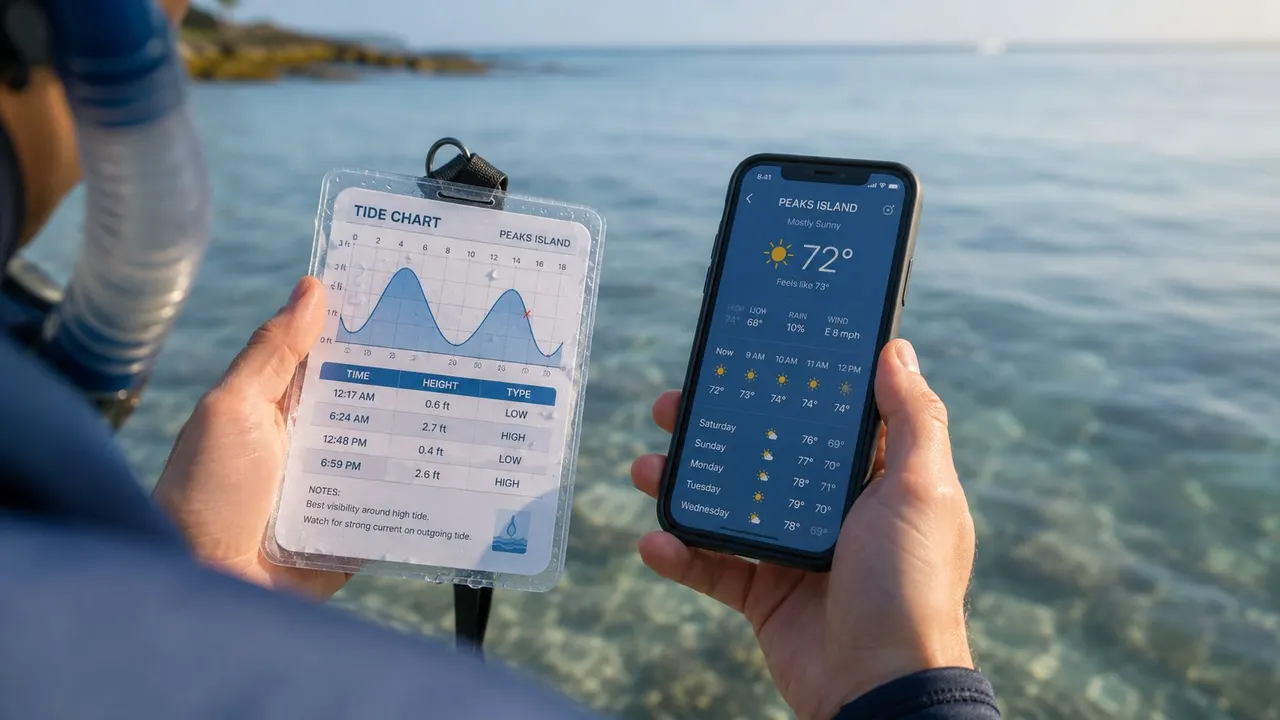
A lot of visitors check the forecast and stop at air temperature. That misses the part that matters. On Oahu, snorkel conditions turn on wave height, wind speed, tide stage, and sea-surface temperature, and the shoreline you choose can change the answer completely. One Oahu forecast model weights wave height at 35%, wind at 25%, tides at 25%, and sea-surface temperature at 15%, with “best” wave conditions below 0.36 m, “best” wind conditions below 5.4 m/s, and preferred water temperatures from 20.6°C to 30.4°C (Snorkel Forecast).
Read the shoreline, not just the island
The shoreline matters because one beach can look calm while another is already blown out. Hanauma Bay can rate only “Fair” under 2 to 4 ft surge break and 15 to 20 mph east winds, while Ko Olina Coves can rate “Good” under 1 to 2 ft light ripple and about 15 mph east winds. The lesson is simple. Ask whether your exact shoreline is good today, not whether Oahu sounds good in general.
Use the conditions you can see and feel at the beach. Small swell makes entry and exit easier. Light wind keeps the surface from getting chopped up. Clear water helps you spot coral heads, fish, and other swimmers before you get too close. A sandy entry is easier and safer than a rocky one, especially if you are still getting comfortable with fins.
Treat high surf advisories, brown water, strong current, or unclear water as a reason to change plans, not as a challenge to push through.
Timing matters too. Morning is usually the calmest window because wind and surface chop tend to build later. South Shore water can be glassy early and rougher by afternoon, while the North Shore often behaves the opposite way in winter. A good green light usually means small swell, light wind, clear water, no high-surf advisory, and a sandy entry.
For a local read on surf timing and what those conditions mean at the shoreline, use these local surf-forecast notes from Living Ocean Tours. If you can read the day well, you make better calls on any side of the island, not just the famous spots.
Boat Access vs Shore Access on Oahu
The biggest choice isn't which reef looks prettiest online. It's whether you want boat access or shore access. That decision changes your crowd level, your visibility, your instruction, and how much you have to solve on your own before the snorkel even starts.
Boat access removes variables
Boat trips from Waikiki, including reef runs to Turtle Canyons, are built for guests who want gear, instruction, and direct access to offshore reef without dealing with parking or beach-entry stress. Independent Oahu guides note that boat tours from Waikiki reach reefs shore snorkelers can't access easily, and they also tend to reduce crowding because you're offshore instead of standing in a packed bay (Hawaii Guide). If you're new, that matters. The crew can explain entry, help with gear, and keep the day centered on snorkeling instead of logistics.
Shore access gives you freedom, but more homework
Shore sites have their own appeal. Hanauma Bay, Shark's Cove, and the Waikiki Marine Life Conservation District all reward the snorkeler who times the day well and understands local conditions. But shore access means you're responsible for parking, beach entry, crowd timing, and real-time judgment. Waikiki's named marine life conservation area can work for shore snorkelers, but the quality changes sharply within the same neighborhood. One local guide even notes that Queen's Beach is the easier access point in that zone, while Waikiki Beach itself has little habitat value for snorkeling (Snorkel Bob).
| Criteria | Boat Access, for example Turtle Canyons | Shore Access, for example Hanauma Bay |
|---|---|---|
| Entry | Direct from boat, no surf-zone wading | Beach entry, conditions vary by shoreline |
| Crowds | Usually fewer people in the water | Can get busy fast, especially at popular sites |
| Guidance | Crew instruction and gear support | More self-reliance, unless you book a guided shore package |
| Reef reach | Offshore reefs and cleaning stations | Nearshore reef zones and protected bays |
| Best for | First-timers who want fewer moving parts | Confident planners who can read conditions well |
If you want the shore-versus-boat decision framed in more detail, this Waikiki snorkeling comparison is the right place to look. My field opinion is simple. Families and first-timers usually do better when the boat removes the friction and the uncertainty.
Top Snorkeling Sites Around the Island
The best Oahu snorkel spot depends on where you're staying, when you're visiting, and how much control you want over the day. A good plan starts with one location that fits your comfort level, then adds a second choice in case the wind or surf shifts.
Waikiki boat snorkeling
Turtle Canyons is the flagship Waikiki boat snorkel because it gives you offshore reef access without a beach scramble. It's widely known as a place to look for Hawaiian green sea turtles, and the whole point is simple, reliable reef access from Waikiki. For visitors staying near Honolulu, that convenience is hard to beat, especially if you want a guided experience that keeps the day organized.
Hanauma Bay
Hanauma Bay is the island's most regulated and most beginner-friendly reef destination, and that regulation is part of why it still works. It's open Wednesday through Sunday, closed Monday and Tuesday, and one detailed guide says reservations can only be made two days in advance (YouTube guide). It's also the site most commonly associated with easy, shallow reef snorkeling on Oahu. The protected bay setting is ideal for first-timers who want a calmer learning environment and don't mind planning ahead.
Shark's Cove
Shark's Cove is the North Shore summer classic. In warm-season conditions, it can be one of the island's most interesting shore snorkels because the rocky structure attracts fish and the cove blocks some of the open-ocean energy. It's not a winter casual pick, though. North Shore surf changes the whole equation, and that's exactly why summer timing matters there.
Waikiki Marine Life Conservation District
The Waikiki MLCD, especially around Queen's Beach, is the easy-access option for travelers who want to stay close to the resort zone. It works best for people who are already comfortable making their own conditions call and want a short hop from the hotel rather than a bigger half-day outing. The tricky part is that Waikiki itself is not uniformly good for snorkeling, so you need to know where the habitat is and where it isn't.
West Shore options
The West Shore is the overlooked problem-solver. Ko Olina Coves can be a smart choice when you want more sheltered water, and Electric Beach can be excellent when local conditions line up. These are better matches for visitors who want to move away from the busiest tourist water and are willing to check the forecast carefully before driving over.
Gear, Safety, and Marine Ethics Essentials
A first-time snorkeler usually overpacks one thing and forgets another. The useless stuff is the oversized beach bag full of guesswork purchases. The useful stuff is a well-fitting mask, a snorkel, fins, a rash guard or wetsuit top, a flotation vest, and reef-safe sunscreen.
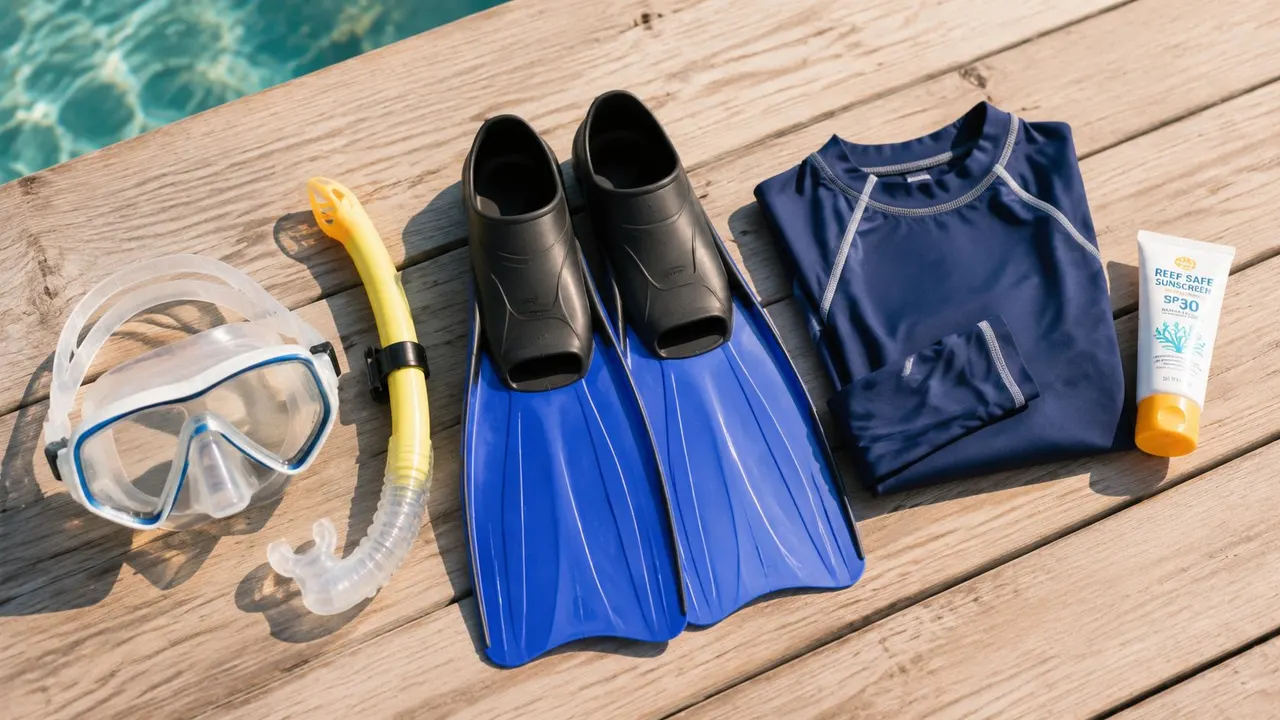
Start with gear that fits and stays calm in the water
A cheap mask that leaks will ruin a short snorkel faster than rough water will. That's why guided trips that provide gear and instruction can be smarter for beginners than buying a full setup in Waikiki sight unseen. One seasoned local example is Living Ocean Tours' reef etiquette guidance, which fits what most new snorkelers face: stay comfortable, stay controlled, and avoid turning the reef into a training ground.
Respect the safety picture before you enter
The reason the safety conversation is serious is simple. A 2024 Hawaiʻi Department of Health analysis found that from 2019 to 2023, ocean drownings were the 2nd leading cause of death among non-residents, with 197 ocean drownings total, and snorkeling was the most common activity tied to those non-resident deaths (Hawaiʻi Department of Health). The same report says that among 202 non-residents whose ocean drowning was recorded as underlying or contributing cause, 196 were treated as snorkel-related cases, which is why flotation and good judgment matter so much. Another state analysis cited by Civil Beat reported 204 snorkeling-related deaths from 2012 to 2021, of which 184 were tourists, reinforcing that snorkeling is a real ocean activity with real consequences.
Never snorkel alone, keep an eye on the lifeguard towers when you have them, and use the flotation vest if you're even slightly unsure of your stamina.
Follow the marine-life rules
The ethics side is not optional. Stay at least 10 feet away from Hawaiian green sea turtles, never touch coral, and don't chase monk seals. Keep your fins off the reef, stay calm when wildlife comes near you, and let the animal choose the interaction. The reef is living habitat, not a prop.
A few final habits make a difference. Don't feed fish. Don't stand on coral to rest. And use sunscreen choices that protect your skin without adding more stress to the water you came to enjoy.
Best Seasons, Times, and Who Each Site Is For
Morning is the default answer for a reason. The water is often calmer, visibility is usually better, and the wind hasn't had time to rough up the surface yet. That applies across the island, but each shore still has its own season.
Match the shore to the month
The North Shore is usually the summer choice. Shark's Cove and other North Shore snorkel spots are best when the surf settles down. In winter, the same coastline can be too exposed for casual snorkeling. The South Shore, including Waikiki, Turtle Canyons, and Hanauma Bay, is usually gentler in winter because it's more sheltered from the bigger north swells.
Think about who is in the water
First-timers and families usually do best with a guided boat or a regulated bay that removes a few unknowns. Confident swimmers can enjoy shore access more flexibly, especially if they already know how to read surf, wind, and entry points. Couples often like a calmer morning snorkel followed by a sunset or wildlife cruise, while photographers usually want the earliest possible slot for the cleanest water and best light.
Winter adds whale watching to the equation
January through March brings humpback whales into Oahu's waters, so winter itineraries can pair snorkeling with a whale-watch add-on. That combination works because the snorkeling day is usually centered on sheltered south or west shore water, while the whale outing gives you a second ocean experience without asking you to fight surf.
If you're not sure which site fits your group, start with the question, “Who needs the easiest entry and the least decision-making?”
That single answer usually tells you whether to book a boat, head to a bay, or save the North Shore for another season.
Sample 3-Day, 5-Day, and Family Itineraries
A good snorkel week on Oahu needs rhythm. Don't stack the hardest swim, the busiest beach, and the most uncertain weather on the same day. Use the easy water first, then build from there.
A simple 3-day Waikiki plan
Day 1 works best as a late-morning Turtle Canyons snorkel excursion. That keeps arrival-day pressure low and lets the crew handle gear and entry. Day 2 fits the Deluxe Waikiki Snorkeling and Wildlife Cruise for a more playful water day with a waterslide and wildlife time. Day 3 can be a sunset cruise to finish the trip with a calmer pace after the snorkel-heavy days. For the practical version of this sequence, Living Ocean Tours' Oahu snorkel itinerary lays out the flow well.
A fuller 5-day island plan
If you have five days, put Hanauma Bay in the morning slot early in the week while your energy is high and you're still adjusting to the island. Save a North Shore Shark's Cove day for summer when conditions are favorable. In winter, swap that out for a West Shore snorkel day so you're not forcing a summer-style plan onto a winter ocean. That order keeps the most condition-sensitive site in the window where it has the best chance of working.
A family-focused version
For families with younger kids or mixed swim ability, the Deluxe Waikiki Snorkeling and Wildlife Cruise is the easiest way to keep everyone engaged without overcomplicating the day. Build in shade, water, and a slower lunch, then avoid trying to squeeze a second big beach swim into the afternoon. The families who enjoy Oahu the most usually give the ocean one clear job per day instead of trying to turn every shoreline into a full-day adventure.
Common Misconceptions and Quick Answers
Reef shoes are not the magic fix people think they are. They can help on sharp lava entries, but they don't replace good site choice, a sandy entry, or a calm day. If a spot is rocky and rough, shoes don't make it safe, they just make it a little less unpleasant.
Waikiki Beach itself is usually not the place to go if you want a real snorkel experience. The better water is at the Waikiki Marine Life Conservation District zones, especially around Queen's Beach, or offshore on a boat where the reef is worth your time. That's why so many visitors who stay in Waikiki end up happier on a guided trip than on a random shoreline walk-in.
Summer is not always best. It's best for the North Shore. The South Shore and West Shore can be better at different times of year, and morning often beats afternoon no matter the season.
Snorkeling for visitors is not something to treat casually. The Hawaii safety data above makes that clear, and that's exactly why guided tours matter so much. A good guide doesn't just point at fish, the crew helps you avoid bad entries, poor visibility, and overconfidence.
If you're a weak swimmer, choose a tour with flotation and stick close to the guide. If you're unsure about age limits or booking windows, ask before you reserve, because the right answer depends on the operator and the site. If you only remember one thing, remember this. A calm plan beats a confident guess.
If you want a guided day that takes the stress out of snorkeling Oahu, Living Ocean Tours runs Waikiki departures with gear, instruction, and reef-focused trips that fit first-timers, families, and travelers who'd rather spend the day in the water than guessing at conditions. Visit Living Ocean Tours to plan a snorkel day that matches your dates, your comfort level, and the ocean you'll have.


