
Snorkeling in Waikiki Hawaii: Ultimate Beginner Guide
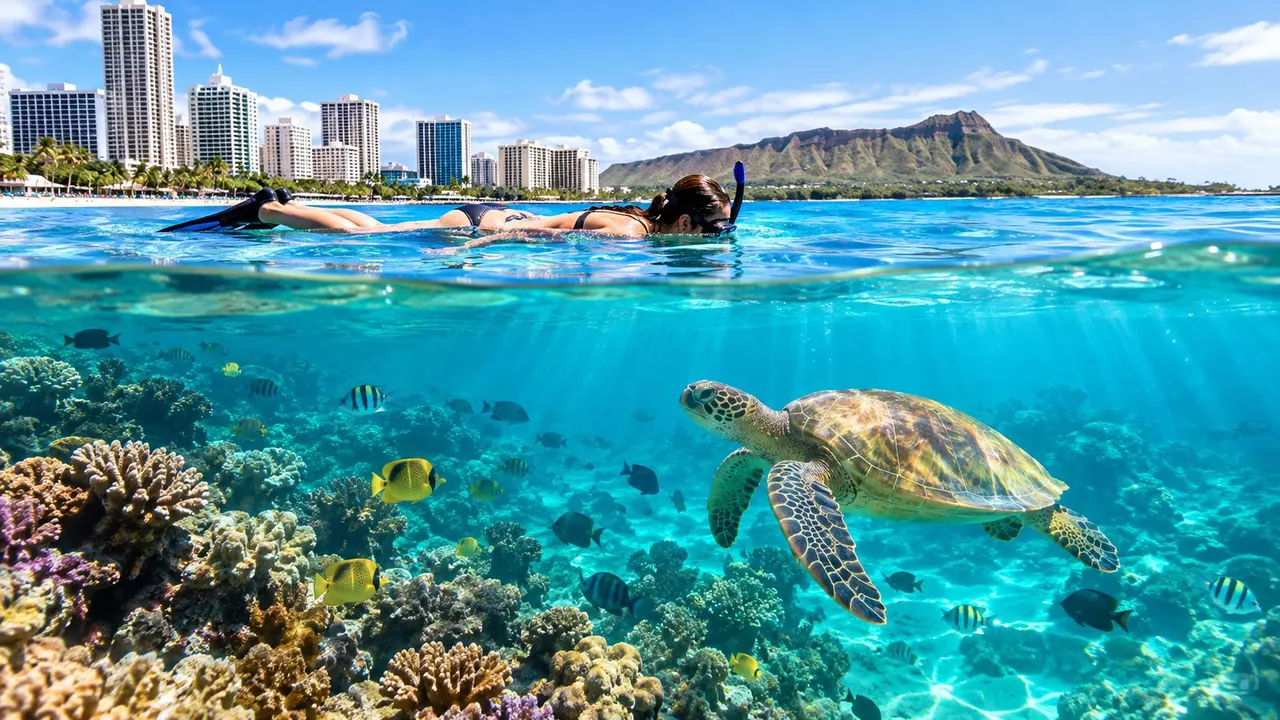
You've got your mask, fins, and a free morning in Waikiki. The beach looks inviting, but the water may be cloudy after rain, choppy by late morning, or moving more strongly around the reef than it appears from shore. Great snorkeling in Waikiki, Hawaii, depends less on finding a magical beach and more on choosing the right place at the right time, then reading the water before you enter.
That approach also creates better wildlife encounters. You'll see more when you move slowly, avoid stirring the bottom, and give turtles room to behave naturally. The following guide covers where to go, how to judge conditions, what equipment helps, and when a guided trip makes more sense than heading out alone.
Discovering Waikiki's Underwater World
A first snorkeling session often starts with uncertainty. A family walks into waist-deep water, one person struggles with a leaking mask, another kicks too hard, and everyone expects the reef to appear instantly. Then the breathing settles. The surface noise fades. A yellow fish slips over the coral, sunlight breaks into moving patterns below, and the group realizes the reef isn't far away at all.
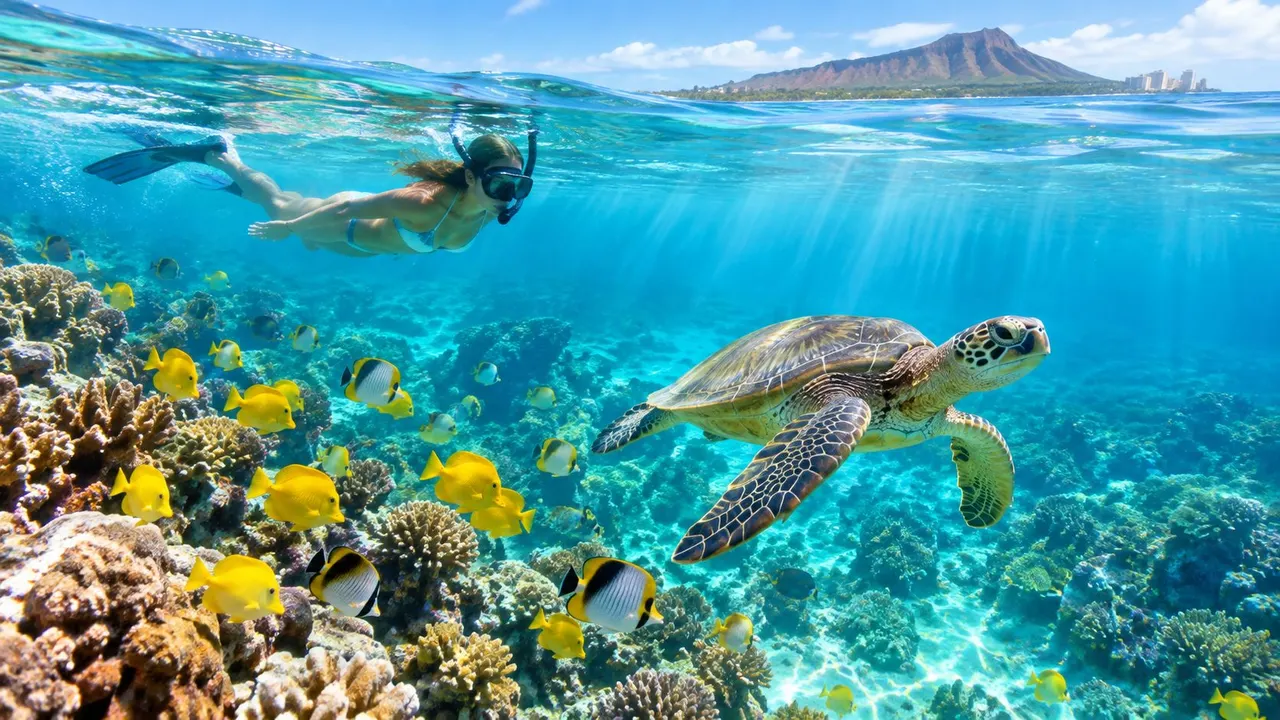
Waikiki works well for first-timers because ocean access sits close to hotels, restaurants, transport, and tour departures. You don't need to turn snorkeling into an expedition. A calm morning can put a beginner above reef habitat quickly, while a guided boat trip can take you to a more concentrated marine area without requiring you to guess where to swim.
The scale of interest around Hawaii also explains why conditions and courtesy matter. Historical marine-use research recorded 8,355,448 annual visitors at Waikiki Beach in one statewide study, while the same NOAA-linked research reported that more than 5 million people enter Hawaii's nearshore waters each year for reef-related recreation. Some popular coral reef sites receive 1,000 to 2,000 snorkelers and divers per day, and another estimate places Hawaii snorkeling participation at about 3 million people annually. These figures are documented in the NOAA-linked Hawaii reef recreation research.
Practical rule: Treat the reef as a living neighborhood, not an underwater swimming pool. Keep your fins off coral, leave animals space, and let the water tell you whether today is suitable.
Waikiki's appeal is convenience, but convenience shouldn't lower your standards. If visibility is poor or the shore break is pushing hard, waiting for a better window may produce a far more enjoyable experience than forcing the original plan. For a broader look at Oahu locations, compare the practical details in this guide to the best snorkeling on Oahu.
Best Snorkeling Spots Near Waikiki
The right location depends on what you want from the water. Hanauma Bay offers a protected marine setting and a strong reputation for accessible snorkeling, but it also demands planning because visitor pressure is concentrated in a small, famous area. The bay reopened in December 2020 and received 429,425 visitors from reopening through January 2022. In its Year 4 carrying-capacity survey, 88% of visitors said they came to snorkel, while 27% of all recorded people were observed swimming or snorkeling, according to the Hanauma Bay carrying-capacity report.
Hanauma Bay suits visitors who want a shore-based marine preserve and are comfortable following access and conservation procedures. It doesn't automatically provide the quietest experience, especially when many people enter the same areas. Go for the setting and reef access, not the assumption that a famous name guarantees perfect water.
Choosing between shore and boat locations
Turtle Canyon is a named Waikiki snorkel site where encounters are concentrated around a known reef area. It appeals to visitors who want a guided wildlife-focused outing rather than a broad beach swim. The best behavior there is simple, float, observe from a respectful position, and don't pursue turtles across the site.
Sharks Cove on Oahu's North Shore has lava formations and can offer rewarding marine life during calm summer conditions. It isn't a casual Waikiki substitute, though. Seasonal swell can change the entry, exit, and swimming environment, so visitors need to evaluate the actual conditions rather than rely on photographs or reputation.
Electric Beach, near Kahe Point, is known for nutrient-rich water and the possibility of schooling fish and turtles. Its appeal comes with a more demanding open-water feel, making it a poor choice when the water is unsettled or when swimmers aren't confident managing changing movement.
| Location | Best fit | Main trade-off |
|---|---|---|
| Hanauma Bay | Shore access and a protected marine setting | Popularity and concentrated visitor use |
| Turtle Canyon | Guided turtle-focused snorkeling | Boat timing and changing offshore conditions |
| Sharks Cove | Lava formations and summer exploration | North Shore swell can make entry hazardous |
| Electric Beach | Experienced swimmers seeking marine life | Less forgiving when water movement increases |
A beach that looks calm from the sand may still have localized push and pull around reef contours. Choose the place that matches your ability today, not the place with the most impressive online description.
Choosing the Right Snorkeling Tour
A tour earns its place in your itinerary when it solves a problem you can't easily solve alone. That might be identifying a productive reef, handling equipment for a nervous child, explaining animal behavior, or deciding when conditions have deteriorated enough to change the plan.
Start with your group rather than the activity label.
Match the trip to the people going
For first-time snorkelers and families, ask whether the operator provides equipment, flotation support, basic instruction, and in-water guidance. Those details matter because comfort in open water varies widely within a family. A confident adult may want to swim farther, while a child or older relative may need a stable way to pause and reset.
Couples and small groups often prefer a more focused wildlife experience. A trip to Turtle Canyon makes sense when the priority is observing honu around a known reef area, provided everyone understands that wildlife sightings and behavior can't be controlled.
For a broader overview of trip styles, use this Waikiki snorkeling tours guide before booking.
Check the practical details
Read the inclusions carefully. Confirm the departure point, equipment provided, flotation options, group format, weather policy, and expected time in the water. Don't choose solely by advertised price. A cheaper outing may leave you to solve transportation, gear fit, or confidence issues yourself, while a guided trip can reduce those friction points.
Living Ocean Tours is one option for Waikiki visitors, offering guided snorkeling from Kewalo Basin Boat Harbor, including a Turtle Canyons Snorkel Excursion and a Deluxe Waikiki Snorkel and Wildlife Cruise with a waterslide, water trampoline, and lily pad. The company also offers a Waikiki Snorkel Waterslide experience for families who want activities beyond reef viewing.
A sunset cruise is a different product, not a replacement for a morning snorkel. It suits travelers who want golden-hour ocean views and a relaxed end to the day. Decide whether your priority is underwater time, wildlife viewing, family play, or being on the water, then select the trip built around that goal.
Understanding Conditions and Timing
Water clarity changes because several forces act together. Surf, wind, runoff, and reef movement determine whether you'll see fish clearly or spend the session staring through suspended sand.
During calm, dry periods, Waikiki visibility can reach roughly 15 to 30 feet, while stronger swell or wind-driven chop quickly suspends fine sand and reduces clarity, as described in this Waikiki snorkeling visibility guidance. Calm water gives sediment time to settle. Repeated wave sets and wind disturb that material, creating haze that limits the distance you can see.
Use the morning as your first advantage
The most reliable practical window is usually early morning after several dry days, before trade winds strengthen and before repeated wave action reworks the nearshore sand. That timing won't guarantee perfect visibility, but it gives you better odds than arriving late and assuming the ocean will remain unchanged.
Rain deserves separate attention. The Ala Wai Canal outfall can reduce clarity after storms, and Hawaii Department of Health guidance recommends staying out of the ocean for at least 72 hours after heavy rain, according to the Living Ocean Tours post-rain snorkeling guidance. If the previous day was wet, check current conditions and consider postponing rather than treating cloudy water as a minor inconvenience.
Read movement, not just color
Waikiki's nearshore reef can create localized surge and current acceleration. A Waikiki nearshore conditions report describes moderate surge, a building south swell of 2 to 3 feet, and ENE trade winds around 15 knots, illustrating how protected areas can still develop sand haze and stronger water movement.
Look for light swell, minimal whitewater, and a surface that stays relatively smooth. If the water repeatedly pushes you sideways, pulls you toward the bottom, or makes it difficult to keep your mask clear, exit and reassess. Experienced snorkeling is not about proving you can tolerate uncomfortable conditions. It's about recognizing when the reef is asking you to wait.
For planning support across Oahu, review this Oahu snorkeling resource.
Essential Gear and Safety for Beginners
Equipment should make breathing and floating easier, not create another problem to manage. A properly fitted mask is the first priority. Press it gently to your face without using the strap, inhale lightly through your nose, and check whether it holds a seal. Tightening the strap excessively often causes discomfort without fixing a poor fit.
A snorkel with a purge valve can simplify clearing water for beginners. Fins should feel secure without squeezing your toes, and a snorkeling vest or life jacket can reduce fatigue for anyone who feels uneasy in open water. Buoyancy also helps you stay visible to boaters and gives you a controlled way to pause.
Protect your feet and the reef
Reef shoes may protect against sharp surfaces during an entry, but they don't give you permission to stand on coral. Whenever possible, enter through sand or an established access point, keep your body horizontal, and use your fins rather than your feet for gentle movement.
Experienced guides often prefer that snorkelers avoid unnecessary contact with the bottom. Coral can break under a hand, knee, or fin, and a swimmer who stands up in shallow water may damage the habitat they're trying to see.
Use this Oahu snorkeling packing list to organize gear before leaving your hotel.
Build a simple safety routine
- Check the entry: Watch the water for several minutes and identify where the surge is weakest.
- Stay with your group: Keep visual contact, especially when children or less confident swimmers are involved.
- Use flotation early: Don't wait until fatigue makes a decision for you.
- Respect your limits: Swimming ability matters, but comfort, breathing control, and judgment matter just as much.
- Exit before exhaustion: A tired snorkeler loses stability and makes poorer choices near moving water.
Waikiki's reef movement means skill is mainly about reading micro-conditions, not swimming a long distance into open ocean. The safest sessions feature light swell and minimal whitewater. If the surface looks restless and the entry is turbulent, a guided outing or a different time may be the wiser choice.
Responsible Wildlife Viewing Guidelines
Hawaiian green sea turtles, or honu, are wild animals, not interactive attractions. The strongest encounters come from giving them room to behave naturally. A turtle that can swim, rest, and surface without a crowd often stays visible longer than one being pursued.
Keep at least 10 feet of distance from sea turtles. Do not touch, chase, feed, or block a turtle's route to the surface. Violations can result in fines, as outlined in this Hawaii turtle snorkeling guidance. Before entering the water, review the Hawaii turtle snorkeling rules for distance and interaction guidelines.
Give the turtle a clear route
Watch from the side rather than positioning yourself directly in front of the animal. Leave open water ahead so it can continue swimming or rise to breathe. This sea turtle viewing advice reinforces the same practical point: do not become an obstacle in the turtle's path.
Wildlife rule: If the turtle changes direction because of you, you are too close or too directly in its way.
At Turtle Canyon, turtles may gather around a known reef area. Float and observe rather than pursuing them across the site, as explained in this Turtle Canyon snorkeling guide. Keep your fins still when possible, avoid diving toward resting turtles, and never touch a shell or flipper.
Read the turtle's behavior as carefully as the water. A sudden turn, faster swimming, or repeated surfacing can signal that you are affecting its movement. Back away and let the animal choose the distance.
Responsible viewing reduces stress, limits frantic swimming, and gives everyone a clearer look at natural behavior. A quiet snorkeler usually sees more.
Planning Your Waikiki Snorkeling Adventure
A good plan needs a fixed booking and room to change. Reserve popular tours once your dates are set, but do not build the day around perfect water. Conditions shift quickly, and a responsible operator may change the route, departure time, or activity when the ocean becomes unsuitable. If your schedule allows, keep a backup date rather than filling every day with fixed reservations.
Choose between a shore session and a boat trip. Shore snorkeling gives you independence and lets you leave when you choose. A boat trip provides equipment support, instruction, local knowledge, and access to reef areas that can be difficult to locate from land. For children and multi-generational groups, that support may outweigh the extra logistics of reaching the harbor.
Ask these questions before booking
- What's included: Confirm masks, snorkels, fins, flotation equipment, instruction, and any food or drinks.
- Where you depart: Check whether you're leaving from Kewalo Basin Boat Harbor, Waikiki Beach, or another location.
- What happens in poor weather: Read the cancellation, rescheduling, and route-change terms.
- Who fits the trip: Ask about children, non-swimmers, mobility needs, and the amount of in-water support.
- What should you bring: Pack reef-safe sun protection, a towel, dry clothing, water, and any medication your group needs.
Crowding makes timing and spacing practical planning concerns, especially at well-known reef sites. Book an earlier or later departure when possible, and ask the operator whether the trip avoids the busiest window. Fewer people in the water usually means more room to observe wildlife without blocking its path or competing for the same viewing area.
Build a flexible ocean day
Schedule snorkeling during the calmest likely part of the day, then leave time afterward for lunch, rest, or a beach walk. Do not schedule a demanding hike immediately before a marine activity if your group includes beginners. Fatigue affects fin control, mask management, and judgment.
Families should choose operators that explain the reef and demonstrate safe behavior, rather than placing guests in the water. Couples may prefer a focused turtle outing followed by a sunset cruise. Travelers visiting during whale season can place whale watching on a separate day, keeping each experience unhurried.
Check the morning ocean report, inspect the shoreline before departing, and be willing to postpone if visibility or surface conditions look poor. A backup plan might be a beach morning, an aquarium visit, or a later snorkeling date. The best itinerary leaves enough flexibility to choose safe, clear water when conditions improve.
Living Ocean Tours offers guided Waikiki snorkeling from Kewalo Basin Boat Harbor, including turtle-focused trips and a Deluxe Waikiki Snorkeling and Wildlife Cruise with family-friendly water activities. Visit Living Ocean Tours to compare options and choose a guided ocean experience that fits your group, timing, and comfort level.


