
Waikiki Snorkeling Tours: What to Expect and How to Book
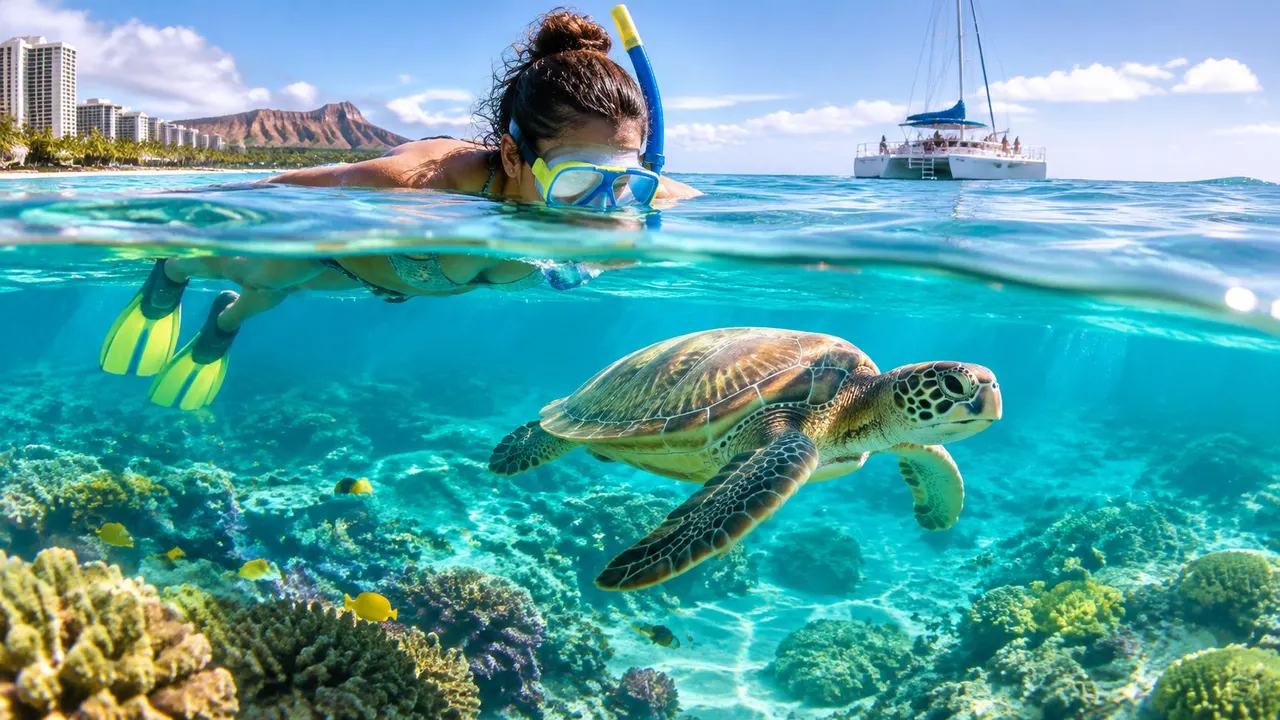
You're standing on a Waikiki beach with a new mask in one hand, watching the water glitter and wondering whether a boat tour is worth the extra planning. The beach looks inviting, but the key questions are less obvious. Can everyone in your group swim comfortably with a mask on? Will the water be clear when you go? Will a crowded boat make the experience easier or more stressful?
After running thousands of snorkel trips around Oahu, I've learned that the right Waikiki snorkeling tour isn't chosen by the prettiest photograph or the lowest advertised fare. It's chosen by matching the boat, departure time, swimming ability, and guide support to the people in your group. The difference between a relaxed morning and an exhausting one usually comes down to those details.
Setting the Scene for a Waikiki Snorkeling Day
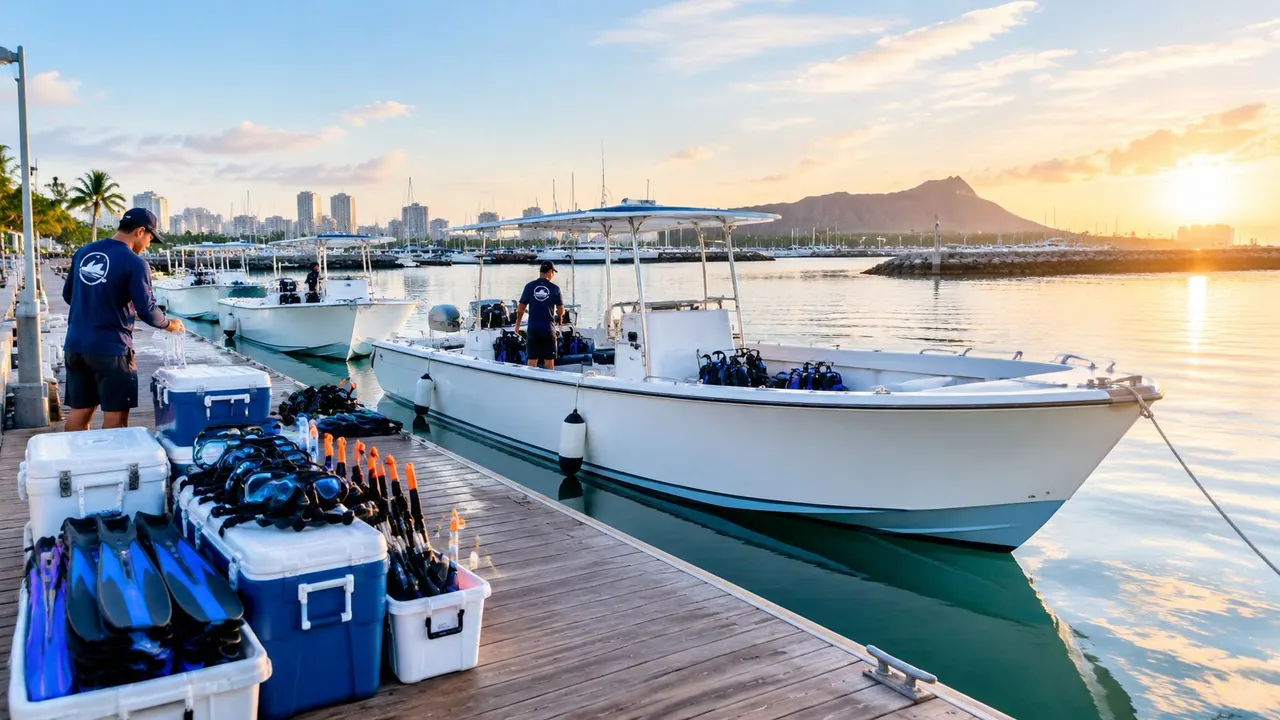
At Kewalo Basin Harbor, an early snorkeling morning has a recognizable rhythm. Long boats idle near the ramp, coolers of masks and fins sit stacked on the dock, and the concrete already holds the heat of the day. There's a wet-fiberglass smell in the air while crew members check names, adjust equipment, and watch the channel leading toward the open ocean.
A first-time guest often looks past the harbor and sees only a short ride to Waikiki's blue water. A captain sees wind direction, surface texture, boat traffic, and the places where the group can enter and exit without standing on coral. That information changes throughout the morning, so a good crew checks the conditions before committing to a site.
The difference between beach access and boat access
Swimming from Waikiki Beach can be convenient, but you're responsible for judging the entry, finding suitable water, managing your own distance from shore, and deciding when conditions have changed. A charter adds a captain who drives to the reef, a crew member who explains the equipment, and guides who help manage the group once everyone is in the water.
The Waikiki snorkeling overview is useful for understanding the basic tour format, but the practical difference is easiest to feel at the harbor. You don't have to solve every ocean decision alone. The crew has already considered the route, the anchorage, and the safest way to keep guests together.
Captain's rule: If you're new to ocean swimming, the value of a guided tour is not just reaching a better reef. It's having someone else manage the decisions you can't yet see.
What Guided Waikiki Snorkeling Tours Are Really About
Think of a reef as an apartment building viewed from above. The water's surface is the roof. Coral heads and ledges form the walls, while fish, turtles, and rays move through the hallways beneath you. Snorkeling works because you can float above that building and look down without needing to dive into every room.
Your mask creates an air space for your eyes, the snorkel lets you breathe while your face stays in the water, and fins provide propulsion with less effort than bare feet. The equipment only works well when it fits properly, though. A leaking mask or loose fin can turn a calm swim into a tiring struggle before you've had a chance to enjoy the reef.
What the crew adds
A guided Waikiki snorkeling tour typically adds four practical layers:
- Boat access: The captain can reach reef areas away from the busiest beach entries, including Turtle Canyons when conditions allow.
- Gear fitting: Crew members can adjust straps, check seals, and help beginners understand how to clear a snorkel.
- Supervised water time: A guide watches the group instead of leaving each swimmer to go alone.
- Local judgment: The captain knows how swell, current, wind, and boat traffic affect the site that morning.
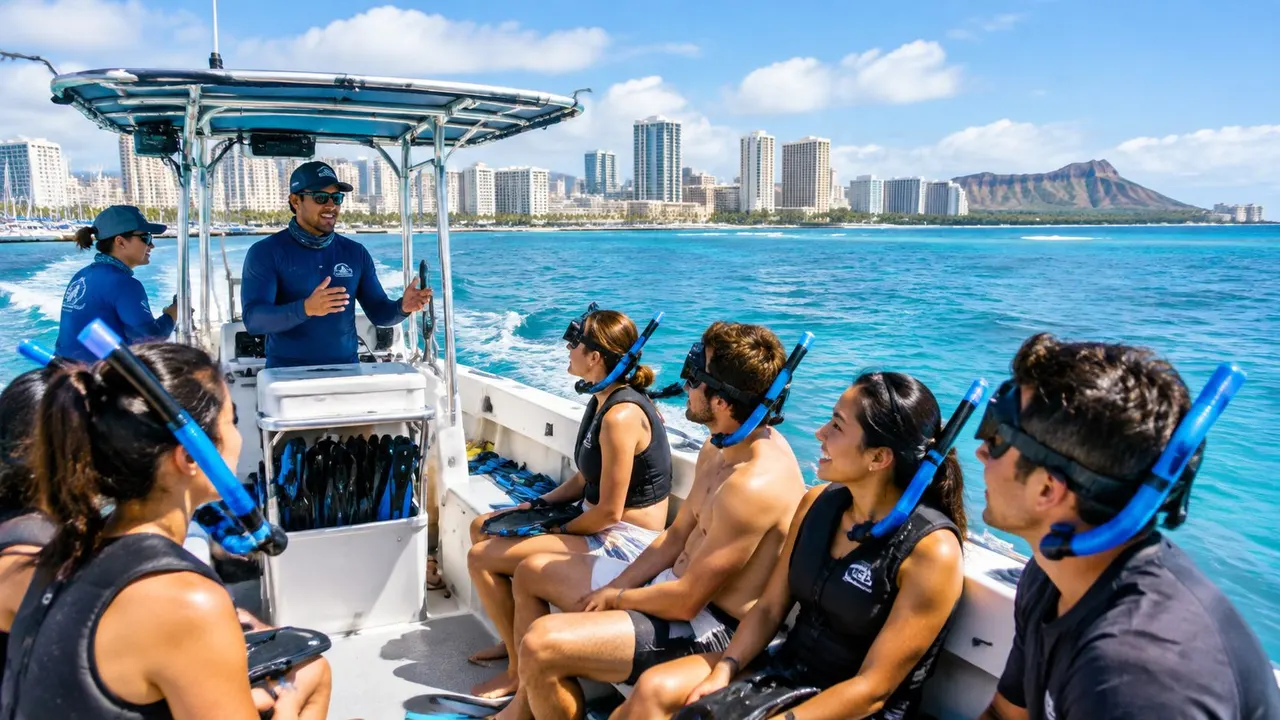
The safety benefit comes from combining trained eyes, flotation support, and local knowledge. A guide can notice a guest drifting too far, struggling to breathe, or becoming anxious before that problem becomes an emergency. The captain can also shorten a swim or move the boat when the water no longer matches the group's ability.
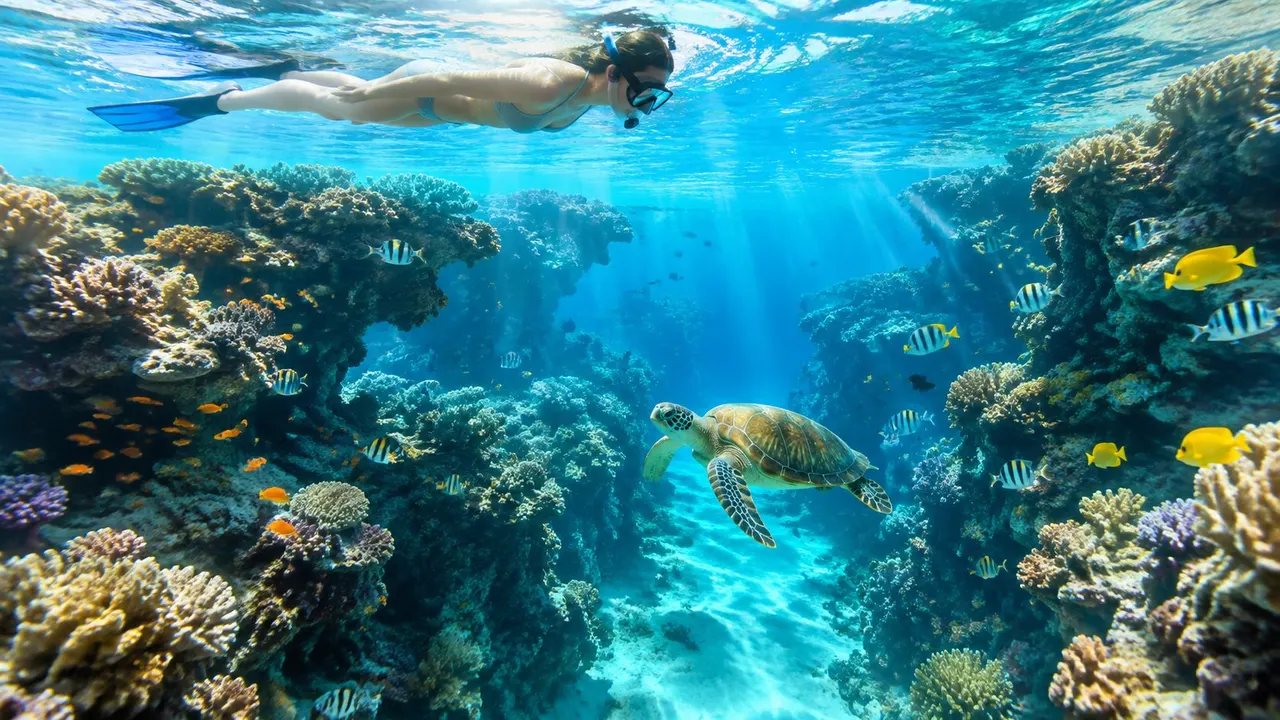
The Waikīkī Marine Life Conservation District gives this experience a deeper local context. Established in 1988, it covers 76 acres from the high-water mark to 500 yards offshore, with restrictions on fishing and other harmful activity that help protect the reef environment used for marine-life viewing (Hawaii Department of Land and Natural Resources).
A typical morning makes the contrast clear. At the beach, you choose your entry and hope the water cooperates. On a charter, the crew checks conditions, takes you to the working part of the reef, explains how to behave around wildlife, and manages the drift while you concentrate on breathing and looking down.
A Typical Turtle Canyons Morning From Departure to Return
A well-organized Turtle Canyons morning starts before the boat leaves the dock. Guests arrive at Kewalo Basin, meet the crew, and get equipment fitted while the captain confirms the day's route. The exact timing can change with harbor operations and ocean conditions, but the sequence gives first-timers a useful picture of what the outing feels like.
At 7:45 a.m., check-in begins. Crew members match names to the manifest, help with mask and fin selection, and identify anyone who needs extra support. By 8:30 a.m., the lines come off and the boat heads past Ala Moana toward the Waikiki coastline.
The ride gives the group time to settle in. Before the first mooring, the guide explains how to enter, where to gather, and how to observe honu without crowding them. Hawaiian green sea turtles may rest in ledge pockets, while damselfish move above coral heads. Reef sharks can occasionally cruise along the sand line, but wildlife sightings are never something a responsible captain should promise.
Two water sessions, with a reset in between
The first swim generally starts after the briefing. Guests spend about 35 minutes in the water, then return to the boat for a snack and a chance to adjust equipment. That pause matters. New snorkelers often discover that their mask strap needs tightening, their fins feel different after swimming, or they need a few quiet minutes in the shade.
A second swim of about 35 minutes gives the group another opportunity to explore without asking anyone to stay in the water after fatigue sets in. The guide watches the surface, keeps guests oriented, and points out wildlife without encouraging anyone to chase an animal for a photograph.
The boat heads back toward the harbor after the second session, with arrival commonly around 11:30 a.m. Morning departures are popular because Hawaii Ocean Safety identifies morning hours as usually favorable for ocean conditions, visibility, and active marine life (Hawaii Ocean Safety snorkeling guidance).
That timeline lets you plan lunch, a beach afternoon, or a quieter recovery period without guessing how much of the day the excursion will consume. You can compare the details with the Turtle Canyon snorkel adventure and choose a departure that fits the rest of your Oahu schedule.
Safety Rules and Reef Conditions That Shape Every Tour
A guided snorkel trip operates inside several overlapping safety systems. The first is the marine environment itself. The Waikīkī Marine Life Conservation District includes the area between the Sans Souci jetty and the Natatorium, where fishing and taking marine life are prohibited (local conservation-area guidance). That protection helps preserve the reef, but it doesn't make the ocean predictable or remove the need for good judgment.
The second layer is wildlife behavior. Turtles and monk seals need space, and guests must never touch, feed, chase, or block an animal's path. For sea turtles, Hawaii and federal guidance requires a minimum distance of 10 feet, or 3 meters, and that rule applies even when a turtle appears calm (turtle encounter guidance).
The diver-down flag is an operating boundary
In Hawaii state waters, snorkelers and free divers must surface within 100 feet of the displayed diver-down flag. Vessels must remain at least 100 feet away unless they're entering at slow, no-wake speed to support the activity itself (Hawaii DLNR diving and snorkeling rules).
That rule gives a tour group a defined safety envelope. Guests know where to remain, nearby vessels have a visible marker to avoid, and the crew can account for swimmers without searching across a wide area. During nighttime or low-light operations, the flag must be illuminated and identifiable from 100 feet, which adds another equipment responsibility.
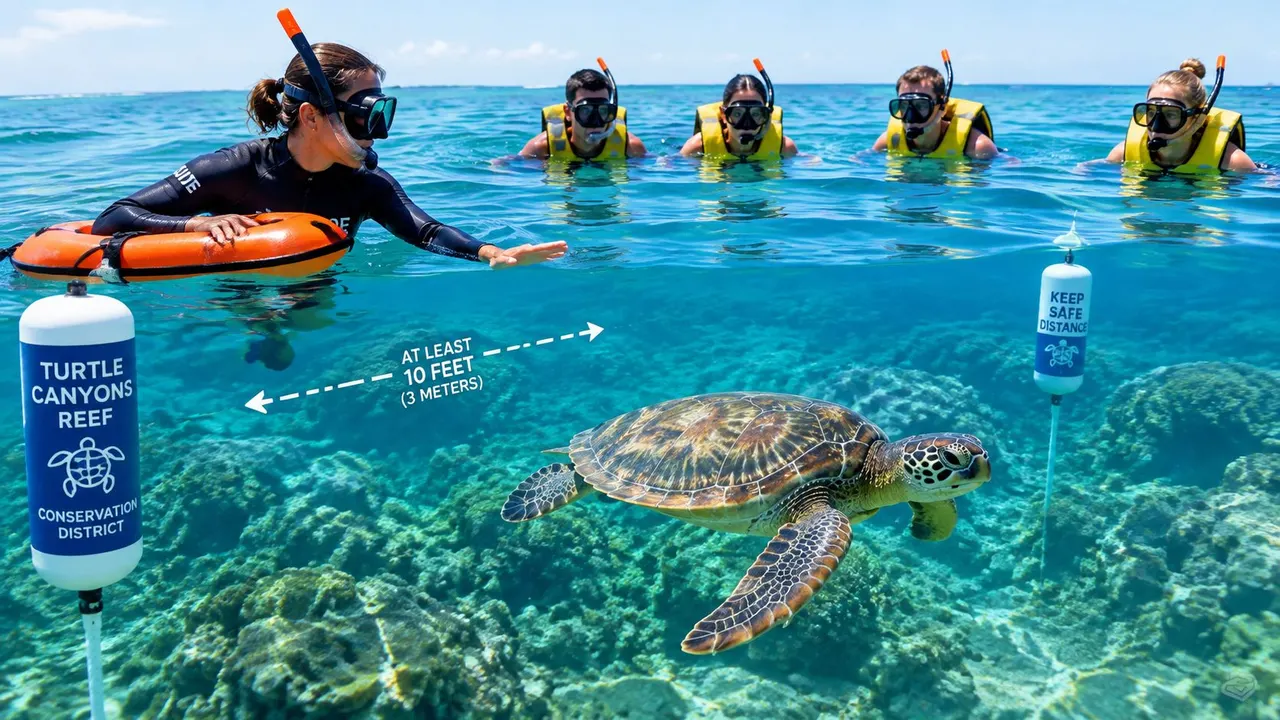
The crew then adds its operational layer. Before departure, guests should receive a clear briefing, have flotation equipment available, and understand how the boat's entry and exit work. The captain checks communications with the harbor, while in-water guides watch the group rather than treating the swim as an unsupervised free-for-all.
A boat also makes choices you may not notice. Captains anchor on sand instead of coral, keep the vessel positioned for the swell, and end a swim when surge increases. That is a different risk profile from entering Waikiki Beach alone, where you must identify the hazards, manage your own fatigue, and find your way back through changing water.
More practical context is available in this guide to snorkeling on Oahu, especially if you're comparing boat access with a self-guided shoreline swim.
Choosing the Right Format for Families and First-Time Snorkelers
Families should answer three questions before comparing boats. Can everyone float comfortably in deep water while wearing a mask? Does anyone in the group not swim, or is anyone under five? Will someone need shade, a step-in entry, or a break after a short period in the water?
“No experience required” doesn't mean “no swimming comfort required.” Some operators expect basic swimming ability, and a guest still needs to manage a ladder entry, follow the briefing, and speak up before anxiety or fatigue becomes serious. Guidance for Turtle Canyon visitors makes the distinction clear, beginners may be welcome, but people who aren't confident swimmers can find the experience more demanding than expected (beginner snorkeling considerations).
Match the boat to the group
A standard catamaran snorkel sail can work well for confident swimmers who want a straightforward reef outing. A deluxe waterslide boat makes more sense when easier re-entry, shade, and activities between swims will determine whether children stay comfortable and engaged.
| Feature | Standard Snorkel Sail | Deluxe Waterslide Boat |
|---|---|---|
| Water entry | Swim ladder entry | Lower platform and easier re-entry |
| Best fit | Confident swimmers aged six and up | Families needing more flexibility |
| Time between swims | Primarily boat-based rest | Waterslide, water trampoline, and lily pad activities |
| Comfort priorities | Simple snorkeling format | Shade, space, and easier breaks |
| Group experience | Focused reef excursion | Snorkeling combined with onboard entertainment |
The standard format works when everyone can swim comfortably, listen to instructions, and climb a ladder without hesitation. It's not the right choice for a nervous non-swimmer just because the price looks more attractive.
The deluxe option earns consideration when a child needs frequent breaks or when adults want to remain shaded while younger guests play. You can compare the practical differences through this Oahu snorkeling option.
If you wouldn't enter a hotel pool past chest depth without a float, choose the smaller, more supportive format rather than hoping the ocean will feel easier.
When to Book for the Best Visibility and Calmest Water
Departure time changes more than the color of the photographs. It affects visibility, wind, surf, and how many boats may be sharing the anchorage. Hawaii Ocean Safety identifies morning as the usual preference because conditions are often better, visibility is higher, and marine life can be more active (official snorkeling safety advice).
Morning
An early departure is the strongest choice for first-time snorkelers, photographers, and anyone who wants the simplest water entry. Wind is often lighter, the surface can be smoother, and the reef may look sharper before the afternoon trades affect the water.
Morning also gives a crew more flexibility. If the primary site isn't suitable, there's time to choose a calmer alternative rather than forcing guests into rough water.
Midday
Midday works for travelers who need a slower hotel morning or have another activity scheduled later. The trade-off is that the crew may encounter more wind, more surface traffic, or water that has already been stirred by earlier activity. A flexible captain may use a backup site rather than hold to a fixed location.
After heavy rainfall, runoff from the Ala Wai Canal can reduce clarity and raise bacteria concerns. Independent Waikiki guidance recommends staying out of the ocean for at least 72 hours after heavy rain (Waikiki beach and water-quality guidance).
Afternoon
Afternoon charters can offer warmer-feeling water and attractive light for turtle photographs, but visibility may be less consistent and the anchorage can feel busier. Recent travel guidance also notes that Turtle Canyon can become crowded with boats and swimmers, which may reduce visibility and photo quality even when wildlife is present.
Seasonal swell patterns add another variable. Summer south swells and winter north swells can affect different coastlines, so the best departure depends on that day's marine forecast rather than the calendar alone. If you want the calmest morning window during a busy travel period, reserve early because favorable departures can fill well ahead of time.
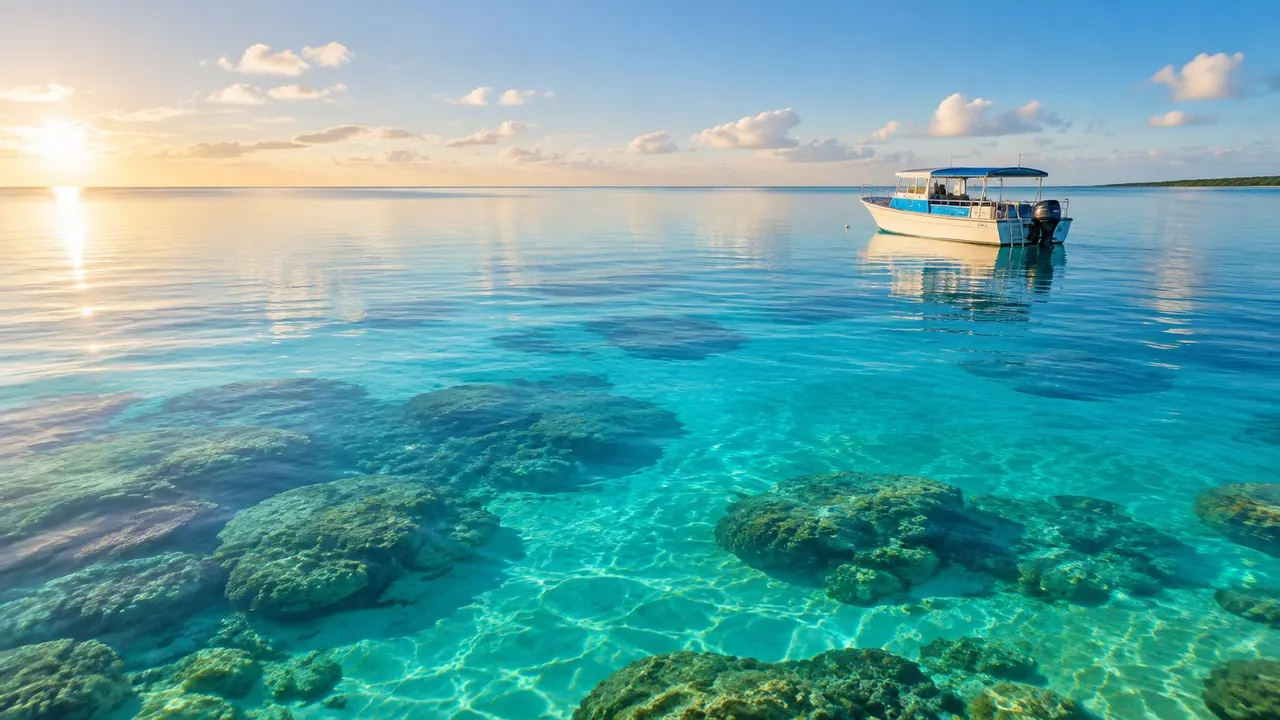
The practical choice is straightforward. Book morning for easier conditions, midday for scheduling flexibility, and afternoon when you're willing to trade some clarity and space for warmer light and a later start.
Pricing, Group Size, and What to Compare Between Operators
The headline fare rarely tells you how a snorkeling morning will feel. Compare what the base booking includes, how many people share the boat, how the operator handles weather, and whether the crew adapts the route to conditions.
A per-person trip usually suits couples and families who want a scheduled departure. A private charter can make more sense for celebrations, corporate groups, or guests who need control over the pace and route. Neither format is automatically better. The right choice depends on whether your priority is simplicity, privacy, or individual attention.
Compare the operating details
| Criterion | What to Ask | Why It Matters |
|---|---|---|
| Included equipment | Are masks, fins, flotation, snacks, and photographs included? | Unexpected add-ons can change the real cost. |
| Group size | How many guests are normally aboard? | A large catamaran and a smaller rigid-hull boat handle entry, supervision, and re-entry differently. |
| Crew qualifications | Does the captain hold current CPR and first-aid credentials? | You want trained people responsible for the group. |
| Guide coverage | How many in-water guides supervise guests? | More direct observation helps beginners and tired swimmers. |
| Vessel comfort | Is there shade, seating, and a practical boarding arrangement? | Shade and easy re-entry matter as much as reef access for families. |
| Weather policy | What happens if wind, surf, or runoff makes snorkeling unsuitable? | A clear rescheduling or cancellation policy protects your plans. |
| Route flexibility | Does the crew adapt sites to daily conditions? | A fixed route can be a poor fit when the ocean changes. |
A smaller boat can feel calmer and more personal, while a larger catamaran may provide more deck space and amenities. Ask about no-show rules and cancellation windows before paying, especially if your itinerary includes connecting activities.
Living Ocean Tours is a Kewalo Basin departure option with guided snorkeling formats, including a standard Turtle Canyon excursion and a deluxe waterslide and wildlife cruise. Use those published inclusions and departure details as a concrete benchmark when comparing other operators, rather than judging by price alone.
Booking Checklist and Responsible Wildlife Viewing Habits
Use this six-point check before you confirm a Waikiki snorkeling tour:
- Check the marine forecast. Look for warnings about high surf, strong wind, heavy shorebreak, and currents. Those are poor snorkeling conditions, and a responsible operator should be willing to change plans.
- Assess swimming comfort. Make sure every guest can float, breathe through a mask, follow directions, and signal for help.
- Confirm the meeting point. Verify the Kewalo Basin harbor location, arrival instructions, parking expectations, and check-in time.
- Ask what the fare includes. Confirm equipment, flotation, food, photographs, and any optional charges.
- Read the cancellation policy. Review it at least 48 hours before departure so weather or illness doesn't create a last-minute surprise.
- Choose the departure time deliberately. Morning is usually the most forgiving option for beginners and families, while later departures may suit travelers prioritizing schedule or light.
The wildlife rules continue after you enter the water. Keep at least 10 feet, or 3 meters, from sea turtles, never touch or chase reef fish, and rest over sand rather than coral. Don't surround a turtle for a photograph, and give monk seals quiet space instead of making underwater noise to attract their attention.
The Hawaii turtle snorkeling rules explain the boundaries in more detail. Responsible viewing isn't decorative etiquette. It supports the conservation rules that protect the marine area and keeps wildlife encounters calmer for everyone.
Bring reef-conscious sunscreen, a reusable water bottle, and a willingness to move slowly. The best snorkelers aren't the ones who swim the farthest. They're the ones who stay relaxed, keep their distance, listen to the guide, and leave the reef undisturbed.
Living Ocean Tours offers guided Waikiki snorkeling from Kewalo Basin, including Turtle Canyon trips and a deluxe waterslide and wildlife cruise for guests who want more support between swims. Visit Living Ocean Tours to compare the formats, check the departure details, and choose a tour that matches your group's swimming comfort and schedule.


