
Snorkeling in Honolulu: Spots, Seasons, and Smart Tips
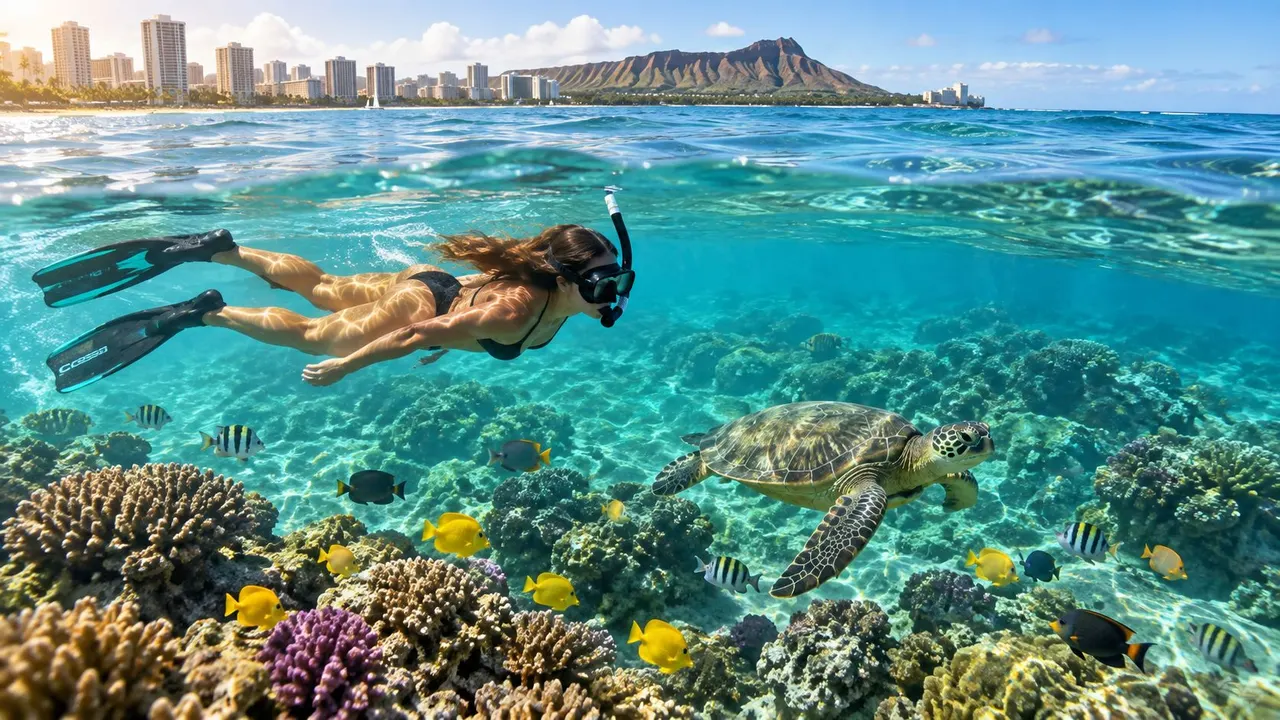
You're standing at a Waikiki beach with a rental mask in one hand and a phone showing a dozen “best snorkeling” lists in the other. The water looks inviting, but the first few minutes are less cinematic than expected. Your mask fogs, the snorkel feels strange, and beneath you the bottom changes from pale sand to dark reef, then disappears into blue.
That uncertainty is normal. Snorkeling in Honolulu is controlled by the morning's water, not by a permanent ranking of beaches. Wind, swell, recent rain, access restrictions, crowd timing, and your comfort in the water decide whether a famous site delivers colorful reef or a frustrating swim. The practical question isn't only where to go. It's which spot is open, calm, clear, and appropriate for your group today.
What Snorkeling in Honolulu Actually Feels Like
The first few minutes from a Waikiki beach can feel awkward. You wade in, put your face under, and find that breathing through a tube takes concentration. The mask fogs, fins feel oversized, and each small wave changes the view.
Once your breathing settles, the experience changes quickly. Pale sand gives way to scattered reef, fish appear at the edge of visibility, and the bottom drops into blue. On a calm morning, a green sea turtle may glide below, close enough to watch without pursuing it.
Snorkeling in Honolulu is controlled by the morning's water, not a permanent ranking of beaches. Wind, swell, recent rain, entry conditions, access rules, and your group's comfort decide whether a site is enjoyable that day. A beach that worked yesterday may be cloudy, choppy, or difficult today.
Captain's rule: Choose the water first, then choose the beach.
Surface chop can make a calm-looking shoreline tiring. Wind stirs sand from the bottom, rain runoff can discolor nearshore water, and even a low swell can push across a shallow reef. Rocky entries add another problem, especially for children, weak swimmers, or anyone carrying a loose mask and fins.
Visitors often expect an underwater postcard and instead find glare, suspended sand, or muted reef color. On a glassy morning, the same shoreline can look entirely different. Reef edges sharpen, fish stand out against the bottom, and a familiar site may outperform its reputation.
Hanauma Bay remains the historical anchor for Honolulu snorkeling. It became a protected marine life conservation area and underwater park in 1967. Later management changes, including a reservation system introduced in April 2021, show how heavily visited snorkeling now requires controlled access. The bay operates under a daily cap and reservation system, and it closes on Mondays and Tuesdays. (Hanauma Bay history)
Those controls do not guarantee clear water or easy entry. They manage demand at a reef that cannot absorb unlimited use. Check the day's access, then judge the water before committing to the swim.
When the Water Is Clear and Calm
A working captain checks four things before deciding whether a snorkel plan makes sense: time of day, season, wind direction, and surf height. You can make the same call from your hotel room, although local crews can compare the forecast with what the water is doing.
Start with the clock
Early morning usually wins. From sunrise through about 10 a.m., trade winds are often lighter, surface chop has had less time to build, and sand is less likely to remain suspended. For Honolulu and Oahu, the most reliable technical window is typically sunrise to around 10 a.m., especially when you're trying to see reef structure or guide beginners. (Honolulu snorkeling timing guidance)
Season changes the baseline. The calmer visibility window is often roughly May through early October, when protected reefs and lagoons tend to hold clearer water and lower surge. A summer morning can still be rough at the wrong site, but the south shore generally gives you more workable options than the North Shore.
Read the wind and surf together
Northeast trade winds usually build through the day and create texture across exposed water. A Kona wind can reverse the usual pattern, making a normally protected side less comfortable while changing which coast is worth checking. Don't treat a wind arrow as an abstract forecast. Ask which shoreline it blows toward and whether the reef faces that direction.
Surf height matters even when you aren't surfing. North Shore sites can become dangerous in winter, and official guidance for Pūpūkea warns that winter conditions may include extreme surf and currents. A calm-looking inner pool doesn't make the outer reef safe.
Run a simple night-before check
Use a practical sequence rather than hoping for the best:
- Windy: Check wind direction and whether it strengthens later.
- Surf forecast: Look at the shore you plan to visit, not only Honolulu generally.
- Tide: Use it as supporting information, especially for shallow reef and rocky entries.
- Sunrise time: Plan to be in the water during the clearer morning window.
- Same-day advisories: Recheck before leaving, because closures and marine advisories can change the shortlist.
The useful habit is choosing a day and conditions, not just buying a reservation. For another practical overview of Oahu water planning, see this Oahu snorkeling guide.
Shore Entry Versus Boat Trips
Shore entry gives you control. You can arrive when you want, stay for ten minutes or several hours, and keep the cost lower by using a public beach and your own equipment. For a confident beginner in a sheltered lagoon, that simplicity is hard to beat.
The limitation is range. You're tied to the reef accessible from that beach, along with its entry rocks, parking pressure, crowds, wind exposure, and visibility. If the sand gets stirred or the reef becomes uncomfortable, there may not be another nearby site with better water.
A boat changes the decision. A small vessel can move to a lee-side patch, an offshore reef, or a turtle cleaning station that you can't reach by walking in. You pay for that access, but you also buy a crew's judgment before entering, equipment support, flotation options, and guidance once you're in the water.
| Factor | Shore Entry | Boat Trip |
|---|---|---|
| Cost | Usually lower | Higher, with transport and crew included |
| Pace | Self-directed | Scheduled and guided |
| Access | Limited to the beach and nearby reef | Can reach offshore reefs and cleaner water |
| Best match | Families, first-timers, cautious swimmers | Confident swimmers, wildlife-focused guests |
| Main risk | Entry difficulty and changing local conditions | Motion on the boat and dependence on weather decisions |
| Wildlife potential | Depends on the accessible reef | Better reach for turtle areas and deeper reef habitat |
A calm lagoon is often the right call for a child who needs to build confidence. A confident swimmer who wants turtles, deeper reef, or a more structured briefing usually gets more from a boat.
The local decision rule is straightforward: if the beach looks good and your goal is a short, relaxed swim, walk in. If you need reliable access to offshore habitat or want someone else to interpret the conditions, take the boat. A Waikiki snorkeling option can make sense when the group's abilities and the morning's water don't line up neatly.
The Best Snorkeling Spots Around Honolulu and Oahu
A site that looks perfect from the beach can fish differently once you enter. Wind direction, swell, visibility, access, and crowding change the useful choice each morning. Choose by exposure and entry, not by reputation alone.
Hanauma Bay works well for families, first-timers, and visitors who want a protected setting with established management. Its conservation status and visitor controls make it a dependable Honolulu option, but access takes planning. The bay closes Mondays and Tuesdays, runs under a 1,400-guest daily cap, and requires reservations. It can still feel busy, averaging about 1,400 visitors daily, so protected does not mean empty. Its history, noted earlier, explains why entry is managed so closely.
Turtle Canyon is a boat-based choice for guests focused on turtles and offshore reef. It is not a walk-in substitute. The crew needs suitable sea conditions and must choose a workable site, while guests need enough comfort in open water to follow instructions without standing on coral.
Waikiki's shallow reefs remain the practical starting point for many hotel guests. South-shore access can suit a short session, especially early, but surf zones, longshore currents, swimmers, and beach traffic still affect the experience. Stay near a lifeguarded area when possible. Familiar sand does not guarantee calm water beyond the shoreline.
Koko Head's manual entry calls for sharper judgment. Rocky footing and surge can make it a poor family choice even when offshore water appears clear. Capable swimmers who can handle a mask problem calmly and recognize when to leave are better suited here.
Electric Beach on the leeward coast can produce rewarding wildlife viewing, but its entry and current environment are not beginner-friendly by default. Treat it as an experienced-swimmer site, not a universal replacement for Waikiki.
Sharks Cove can suit confident shore snorkelers interested in rocky habitat during summer. North Shore winter surf can become extremely dangerous, and state guidance warns about extreme surf and currents around Pūpūkea. If waves are breaking across the outer reef, leave this site off the day's plan.
| Spot | Best For | Conditions Note | Crowd Level | Access |
|---|---|---|---|---|
| Hanauma Bay | Families and first-timers | Protected setting, managed entry, changing conditions still matter | High demand | Reservation-based, closed Mondays and Tuesdays |
| Turtle Canyon | Turtle-focused boat guests | Offshore conditions determine the route | Variable | Boat access |
| Waikiki shallow reefs | Hotel guests and short sessions | Best early, watch currents and beach traffic | Busy | Shore entry |
| Koko Head | Experienced swimmers | Rocky entry and surge require judgment | Variable | Manual shore entry |
| Electric Beach | Strong swimmers and wildlife seekers | Leeward protection does not remove entry and current risks | Variable | Shore entry |
| Sharks Cove | Experienced summer snorkelers | Winter surf and currents can be dangerous | Busy in favorable weather | Rocky shore entry |
The map can become irrelevant when conditions or access change. Check marine advisories, entry status, parking, trail access, and the water itself before driving across the island. Recent coverage has included Hanauma Bay's full closure in August 2026 for sewer-system work, a reminder that a planned destination can disappear from the day's options.
Living Ocean Tours operates daily snorkel departures from Kewalo Basin and routes guests according to the morning's visibility. Its crew can select a workable location rather than forcing every trip into one fixed route. For a conditions-led comparison of sites, use this Oahu snorkeling spot guide.
Safety Gear and What to Pack
Good snorkeling gear solves comfort problems. It doesn't solve poor judgment, panic, current, or surf.
Start with sunscreen. Leave standard chemical sunscreen in the room and use a reef-conscious mineral formula with non-nano zinc. Apply it before you reach the beach, then cover exposed skin with a thin rashguard when possible. A rashguard reduces sun exposure and gives some protection from minor scrapes without encouraging you to make contact with reef.
Fit the equipment before entering
A leaking mask ruins visibility and makes new snorkelers breathe badly. Press the mask gently to your face without using the strap, inhale through your nose, and check whether it holds briefly. Defog it before entry, then test it in shallow water.
Fins should feel secure without crushing your toes. A snorkel with a comfortable mouthpiece matters more than decorative features. Full-face masks can make communication and emergency handling harder, so a conventional mask and snorkel are the more practical choice for guided instruction.
Flotation should be layered, not treated as an embarrassment. A noodle helps a relaxed swimmer rest. A flotation belt keeps the body supported while leaving the arms free. A vest-style PFD offers more reassurance for nervous swimmers, but it can change body position and make surface movement less natural.
Water rule: If flotation lets you relax without kicking coral, it's safety equipment, not a compromise.
Pack for the whole outing
- Water shoes: Useful for rocky entries and uneven lava.
- Dry bag: Keep phones, keys, and medication away from splash.
- Long-sleeve cover-up: The ride back can feel cooler after you leave the water.
- Mineral sunscreen: Choose a non-nano zinc formula and reapply as directed.
- Spare towel and water: Salt, sun, and wind punish people who pack only a mask.
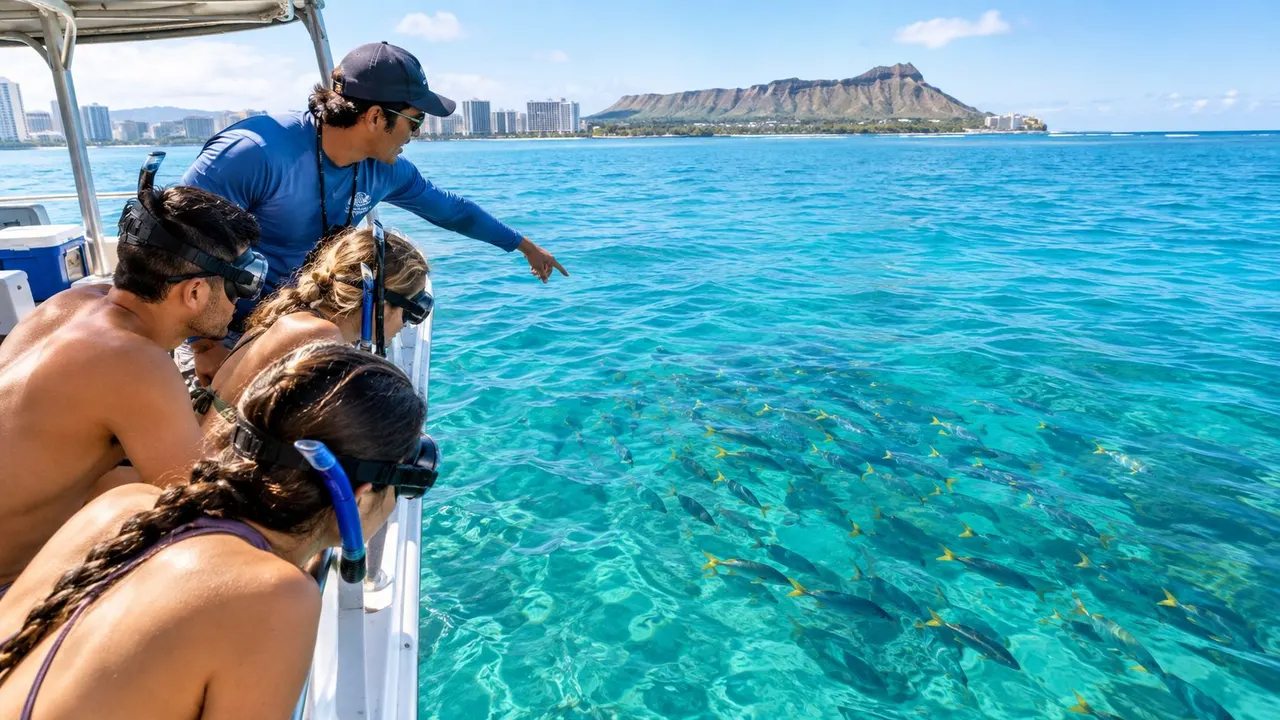
Before you go deeper, practice clearing a flooded mask by pressing the top seal, exhaling through your nose, and lifting the lower edge enough to let water out. Equalize your ears gradually on deeper entries, and never force pressure. Learn the boat's signals before you enter, including how to indicate “OK,” “problem,” and “return.”
This Honolulu snorkeling packing list covers the small items people often remember only after the boat leaves the harbor.
Why a Guided Tour Changes the Day
A DIY beach day can be excellent when the shoreline is calm, parking is available, the gear fits, and the reef is visible from the entry. It can also consume half a morning before you discover that the chosen beach is too rough for the least confident person in your group.
A good guided trip removes several decisions before they become problems. The crew checks wind and swell, chooses an appropriate site, transports you beyond the limitations of a beach entry, and gives an in-water briefing before anyone starts chasing fish. That sequence matters for children, first-time snorkelers, older travelers, and anyone who isn't comfortable interpreting ocean conditions.
What the crew adds
Boat access is the obvious benefit. Offshore reefs and turtle cleaning areas aren't interchangeable with a shallow sandy entry. The less obvious benefit is local pattern recognition. A captain sees how the reef reacts to wind direction, recent rain, tide, and swell, then compares that morning with previous trips.
Living Ocean Tours operates guided Waikiki excursions that include equipment, instruction, flotation options, a freshwater rinse, and reef-conscious sunscreen. Its Turtle Canyons routes are built around offshore access, while the Deluxe Waikiki Snorkel and Wildlife Cruise adds a waterslide, water trampoline, and lily pad for guests who want more than a single swim.
The value isn't just “seeing a turtle.” It includes avoiding a bad entry, selecting a workable site, understanding what you're looking at, and knowing when to leave the water. A crew can model safe wildlife distance in real time instead of relying on a reminder delivered after someone has already kicked toward an animal.
The cost objection deserves an honest answer. A beach plan may look cheaper, but the comparison includes equipment, fuel, parking, reservation work, entry friction, and the possibility of spending the day in poor visibility. A boat trip costs more because it provides access and labor, not because water is automatically better.
The best guide isn't the one who insists on a famous reef. It's the one willing to move when the famous reef isn't working.
For guests who want to focus specifically on turtles, the Turtle Canyons Snorkel Excursion is one relevant option. Snorkel Turtle Canyon is also a good alternative company for travelers comparing turtle-focused trips.
Wildlife Viewing Without Harming It
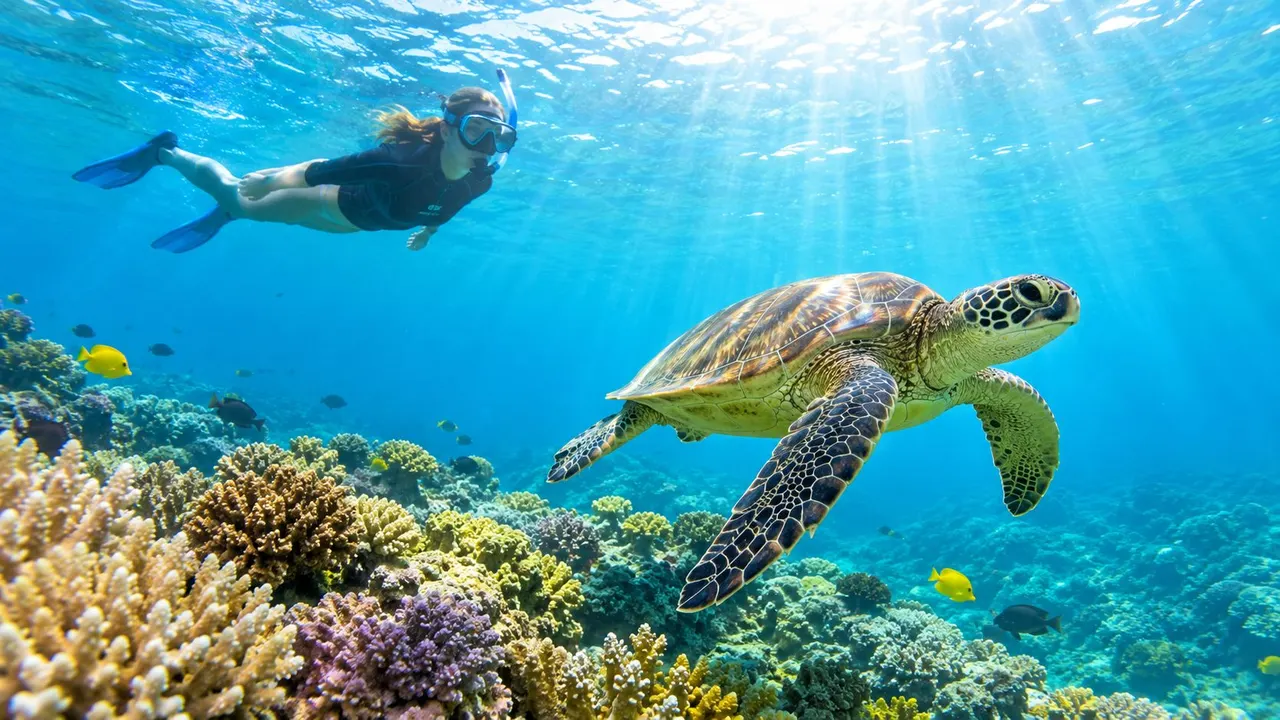
The 10-foot rule changes how you move. Hawaiʻi DLNR and NOAA recommend staying at least 10 feet, or 3 meters, away from sea turtles, both in the water and on land. NOAA also says not to touch, chase, or feed turtles and recommends limiting viewing to a few minutes. (Hawaiʻi DLNR turtle guidance)
That distance isn't ceremonial. A turtle that bolts to escape you wastes energy. A monk seal pressured on shore may abandon a resting area. Reef fish can leave a cleaning station when snorkelers crowd the space, so the close-up photo can remove the behavior you came to observe.
Change your body position
Approach wildlife by becoming less interesting:
- Parallel position: Move alongside the animal instead of cutting across its path.
- Neutral fins: Keep your feet behind you and stop kicking when the animal is near.
- No flash: Use camera zoom rather than swimming closer.
- No contact: Never touch, ride, grab, block, or feed marine life.
- Short observation: Let the animal continue its route without turning the encounter into a pursuit.
Hawaiʻi's boating and ocean safety guidance recommends staying 10 feet from sea turtles and 50 feet from Hawaiian monk seals, while noting that, except for humpback whales, no law sets a universal minimum approach distance for marine mammals or sea turtles. (DLNR marine species guidance) NOAA describes turtles and monk seals as wild, unpredictable, and protected, and recommends binoculars or camera zoom rather than close approach. (NOAA Hawaiʻi wildlife viewing guidance)

If another swimmer harasses wildlife, don't join the chase. Move away, alert a guide or lifeguard, and use the appropriate DLNR or NOAA reporting channels when the situation warrants it.
The responsible trade-off is simple. You may get a photo from slightly farther away, but the turtle remains calm, the reef keeps its natural rhythm, and the animal has chosen to share the water rather than being cornered into it. These Hawaiʻi turtle snorkeling rules are worth reading before your mask goes on.
Booking, Conditions, and Common Questions
Reserve popular trips 2 to 4 weeks ahead for peak summer and holiday periods, especially when several generations are traveling together. Booking early protects the date, but it doesn't predict the ocean. A responsible operator still checks conditions the morning of departure and may change the site or cancel if the water isn't suitable.
Read the cancellation policy before paying. Weather-driven cancellations made by the operator should provide a full refund, while guest cancellations commonly fall inside a 48- to 72-hour window. The exact policy varies, so confirm the terms on the booking page rather than assuming every company handles weather the same way.
| Factor | What to Expect |
|---|---|
| Reservation timing | Book 2 to 4 weeks ahead for peak summer and holidays |
| Conditions check | Reassessed on the morning of the trip |
| Operator weather cancellation | Should provide a full refund |
| Guest cancellation | Often governed by a 48- to 72-hour window |
| Site selection | May change when wind, swell, rain, or visibility shifts |
| Best policy feature | Flexible weather terms and transparent communication |
Common questions
Is snorkeling safe for non-swimmers?
Not automatically. A non-swimmer should stay in a controlled, shallow setting with close supervision and appropriate flotation, or choose an experience designed for their ability. Never rely on a flotation aid as a substitute for water competence.
What happens if it rains?
Light rain doesn't always stop a trip, but heavy rain can reduce visibility through runoff and may change the crew's site decision. Recheck advisories and ask the operator how it handles conditions.
Can beginners join boat trips?
Yes, when the operator offers instruction, flotation, guided entries, and a site suited to the group. Tell the crew about weak swimming skills, children, mobility concerns, or anxiety before departure.
Do whales affect turtle sightings?
Whale activity and turtle snorkeling are different wildlife experiences. Seasonal whale presence doesn't guarantee or prevent turtle sightings, and the crew still chooses the site according to the morning's conditions.
The best booking is the one that treats the ocean as changeable. Look for a flexible weather policy, clear safety communication, and a crew willing to move the plan when the water says it should.
Living Ocean Tours offers guided Waikiki snorkeling with equipment, instruction, flotation support, and daily site decisions shaped by local conditions. Visit Living Ocean Tours to compare a boat-based Honolulu snorkeling experience with the shore-entry options that fit your group.


