
Snorkeling at Waikiki: A Practical Visitor’s Guide
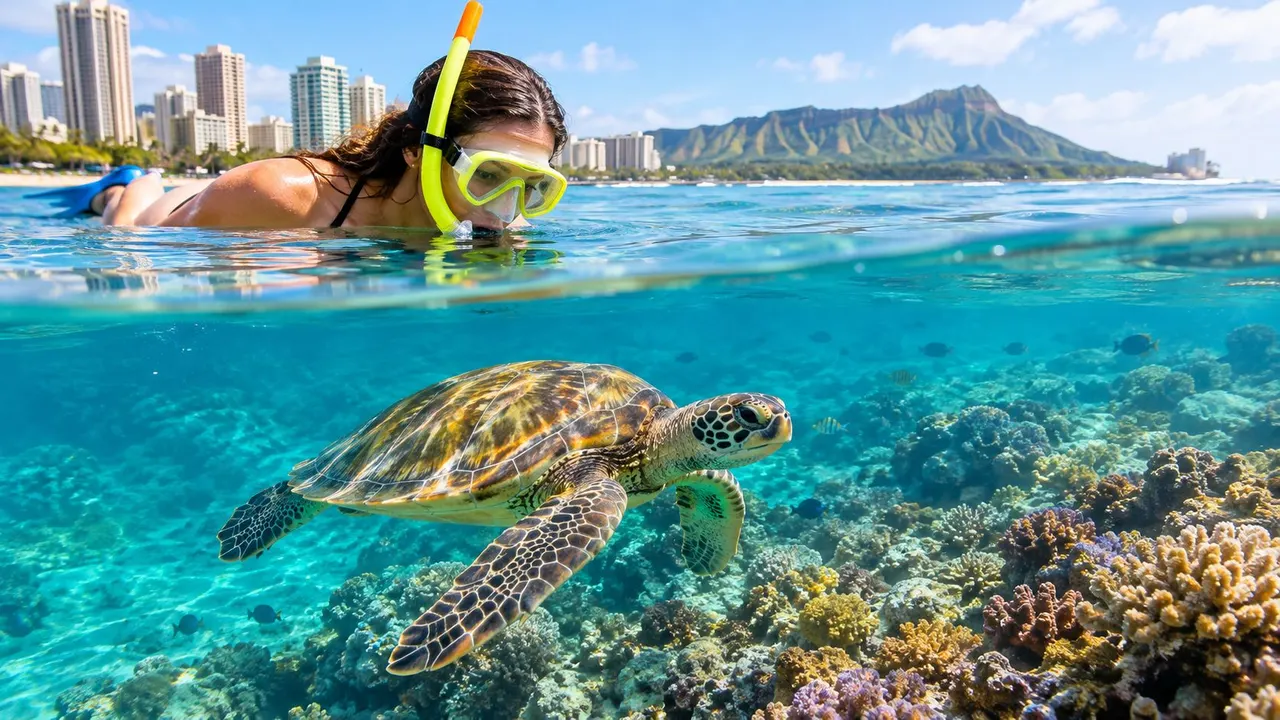
You're standing near the Duke Kahanamoku Statue with a fogged mask, unfamiliar fins, and a simple question: should you walk into Waikīkī Beach or join the boat idling beyond the break? From shore, the water looks inviting. Offshore, the reef promises clearer water and more fish. The safer choice depends less on a universal “best spot” than on your swimming comfort, the day's conditions, and whether you know how to read an urban reef.
Snorkeling at Waikīkī works beautifully when visitors match the experience to the conditions. It also demands respect. This is a heavily used beachfront, a protected marine environment, and a place where wind, rain, surf, currents, and boat traffic can change the experience quickly.
Why Snorkeling at Waikīkī Is Different
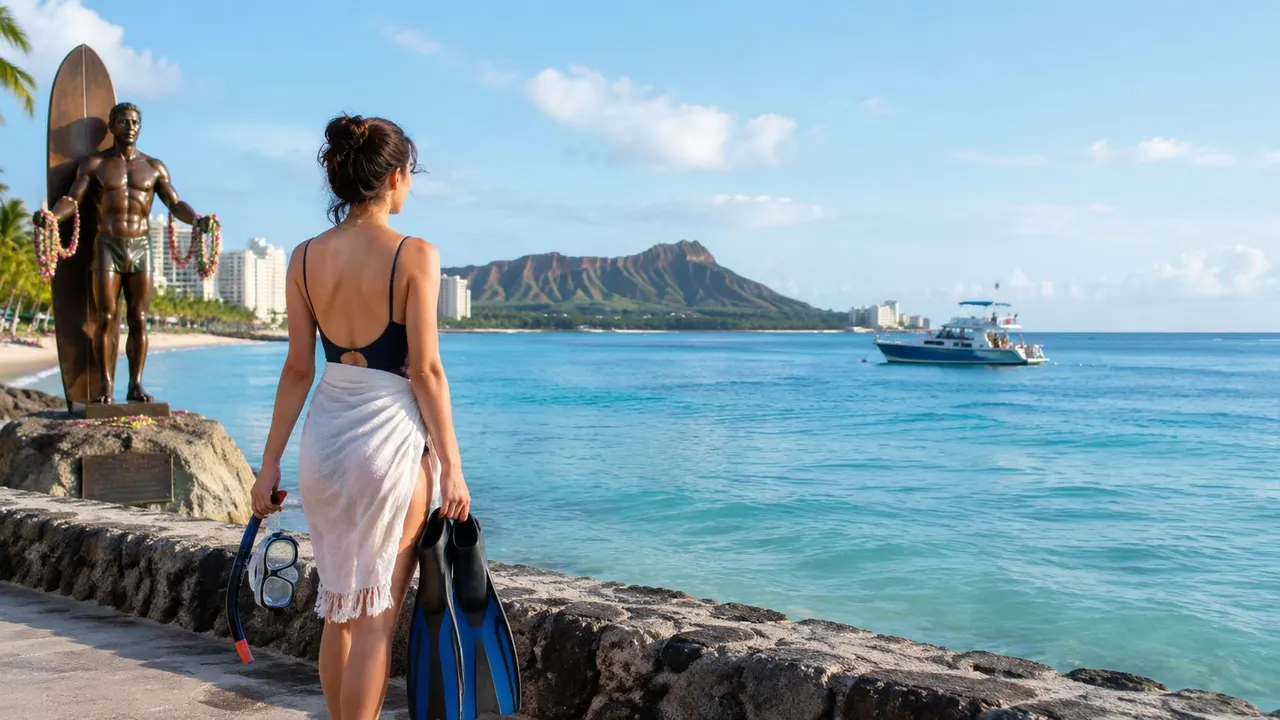
A first-time visitor often makes the same calculation. The beach entry feels familiar, but the reef looks distant. The boat seems more organized, yet stepping down a ladder into open water feels intimidating. Neither choice is automatically safer for every swimmer.
Waikīkī's difference is its combination of urban access, heavy visitor use, and legal marine protection. The Waikīkī Marine Life Conservation District prohibits fishing, taking, injuring, or removing marine life, as well as taking or altering sand, coral, rock, or other geological features. The Hawaiʻi Department of Land and Natural Resources rules for Waikīkī make the purpose clear: this is a viewing reef, not a place to collect anything.
The district's arches, crevices, and other habitat features support an abundance of fish, and the state describes long-term refuge effects inside the protected area. Historical monitoring tagged 356 Acanthuridae, with 29 recaptured outside the reserve, while 555 Mullidae produced 34 outside recaptures and 121 Scaridae produced 7. A separate analysis from 1978 to 2002 found that total fish biomass in the managed fishing area declined by around two-thirds, while target-species biomass inside the conservation district remained nearly twice as high as in that fishing area. Those findings are summarized by the state's Waikīkī MLCD information.
The practical lesson: Waikīkī is beginner-friendly because it's accessible and managed, but it isn't risk-free. Choose the entry point, time, and supervision that fit your actual ability.
The physical setting adds another layer. A narrow fringing reef can become uncomfortable when surf builds, and runoff from the Ala Wai Canal can reduce visibility and affect water quality after rain. Lifeguards cover designated beach areas, but they can't supervise every boat-access site or every swimmer beyond the marked zones.
That's why I use a comfort-based decision rather than sending every visitor to the same “best” spot. Strong swimmers who want variety may prefer a boat. Families and first-timers may do better with a calm shore entry. Nervous swimmers often gain the most from a guided trip with flotation and a captain who can change locations.
Where to Actually Get in the Water
The right entry point depends on four things: clarity, marine life, crowding, and the skill required to enter and remain comfortable. Shore snorkeling gives you control over how long you stay, but it also puts the responsibility for timing, navigation, and exit conditions on you.
| Site | Access | Water Clarity | Marine Life | Crowd Level | Skill Required |
|---|---|---|---|---|---|
| Waikīkī Beach near the main hotel strip | Sandy shore entry | Fair in settled conditions, poorer after runoff | Scattered reef fish | High | Basic swimming and ocean awareness |
| Sans Souci | Shore entry near the Diamond Head end | Often a calmer beginner option | Good near the jetty and conservation district | Moderate | Beginner, with careful entry |
| Queens Beach and the ‘Iolani Palace shoreline | Shore entry, calmer eastern stretch | Variable, usually best in morning | Reef fish in protected areas | Moderate | Beginner to intermediate |
| Turtle Canyons | Boat access, roughly offshore | Usually clearer than stirred-up shore water | Dense turtle and reef-fish viewing area | Managed by tour operator | Comfortable floating and following instructions |
Waikīkī Beach
The main Waikīkī beachfront is convenient, which is its biggest strength. You can walk from a hotel, enter over sand, and leave whenever the water stops feeling right. The trade-off is traffic. Swimmers, boards, paddlecraft, and changing sand movement can make the experience less relaxed than the beach's calm appearance suggests.
Don't swim toward boat channels or assume that a long distance from shore makes the water safer. If you're still learning to clear a mask or control your breathing, stay in a marked swimmable area and choose a quiet morning.
Sans Souci
Sans Souci, beside the Waikīkī Aquarium and Kapiʻolani Park, is the shore option I'd consider first for many beginners. The area near the jetty and the Waikīkī MLCD gives you a better chance of observing reef fish without committing to a long offshore swim. It also has practical family features, including a lifeguard area, showers, bathrooms, shade, and nearby grassy space, as described in this family guide to Sans Souci Beach.
The jetty can help visitors look down at fish without putting their face in the water, but don't climb onto unstable rocks or stand on coral. Enter only where the bottom and wave action are clear.
Queens Beach and the eastern shoreline
Queens Beach and the shoreline toward the ‘Iolani Palace area can offer calmer water than the busiest central strip, but conditions still decide whether the entry is sensible. This area is useful for visitors who want a shore session close to Waikīkī while avoiding the most congested section.
Turtle Canyons
Turtle Canyons is a boat-access experience, not a walk-in beach site. The Lazyman's and Baby Barge areas are roughly 10 minutes offshore, and the boat removes the long surface swim that can exhaust beginners before they reach productive habitat.
The trade-off is commitment. You need to be comfortable following a crew's entry instructions, sharing water with other guests, and accepting that wildlife never follows a script. For a focused turtle experience, you can review the Turtle Canyons Snorkel Excursion. A strong alternative for turtle-focused snorkeling is Snorkel Turtle Canyon, especially if you're comparing departure times and vessel styles.
Reading Waikīkī's Conditions Before You Go
Waikīkī's water can look calm from the sand while being uncomfortable at reef level. The useful question isn't “Is the beach sunny?” It's whether wind, swell, recent rain, and timing are working together.
Local guidance reports that settled days can produce roughly 15 to 30 feet of visibility, with the clearest windows typically before 9 a.m. and during May through September. The Waikīkī snorkeling conditions guide also recommends avoiding snorkeling for about 72 hours after heavy rain, because runoff can lower visibility and increase pathogen exposure.
Use the morning advantage
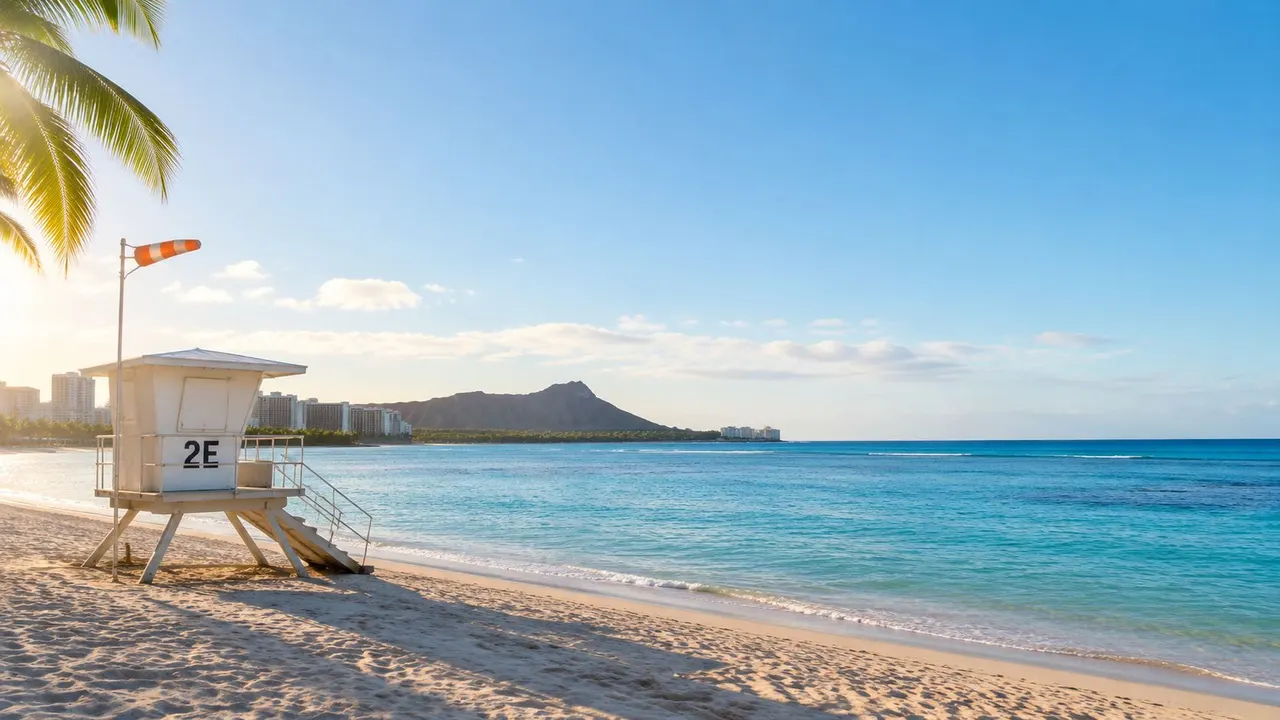
Trade winds often build through the day. Even if the beach is comfortable early, afternoon chop can make a shore entry harder and stir sand across shallow reef. Morning isn't a guarantee, but it usually gives beginners the best chance to enter before conditions deteriorate.
Surf height matters more than how close you are to shore. Local safety guidance recommends skipping shore snorkeling when surf rises above about 3 feet, because breaking waves and longshore currents can make entry, exit, and breathing control dangerous for inexperienced swimmers. The Waikīkī snorkeling safety guidance explains why a short distance from the beach doesn't remove the hazard.
Run a four-point check
Before changing into your swimsuit, check:
- Swell: If waves are breaking across the entry, choose a different activity or a guided option with a captain monitoring offshore conditions.
- Wind: Stronger afternoon wind usually means more chop and poorer visibility.
- Rain: After heavy rain, wait rather than treating brown water as a minor inconvenience.
- Lifeguard information: Ask about the current beach conditions and stay within marked swimming areas.
My go or no-go rule: If the water looks dirty, the shore break is knocking people down, or you're already negotiating with yourself about entering, don't force a shore snorkel.
Gear and What to Pack
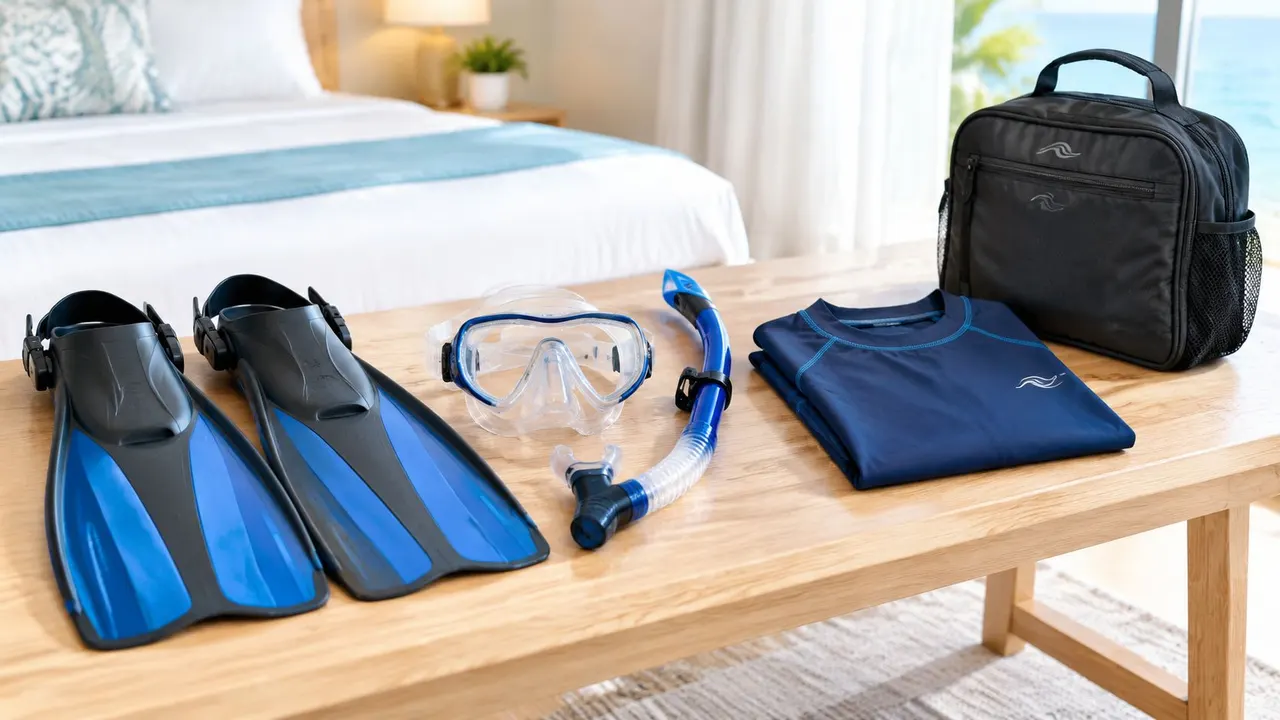
The mask matters more than expensive fins. A properly fitted mask should seal around your face without requiring a painfully tight strap. Press it gently into place, inhale through your nose to create a light seal, and test it before walking into deeper water.
For travelers without luggage space, renting a mask, snorkel, and fins from a Waikīkī provider such as ABC Stores, Hans Hedemann, or Snorkel Bob's can be practical. Shore snorkelers need to arrange their own equipment, while guided boat trips generally supply the core mask, snorkel, fins, instruction, and flotation equipment. Confirm the current inclusions when booking, especially if you need prescription lenses or a wetsuit.
Solve the common beginner problems
A fogging mask ruins more sessions than a lack of marine life. Use an appropriate defogging solution, rinse carefully, and avoid touching the inside of the lens once you've prepared it. If fins rub your heels during the walk to Sans Souci, wear thin fin socks or rent a better-fitting pair.
Prescription mask lenses can make a major difference for visitors who can't see clearly without glasses. Cheap full-face masks are a poor choice in surge or crowded water because fit, breathing behavior, and emergency removal can become complicated. A conventional mask and snorkel is easier for a guide or buddy to troubleshoot.
Pack for the beach, not just the water
Use reef-conscious sunscreen, a rash guard, and a hat for the time you spend floating at the surface. Water shoes can protect your feet during a carefully chosen entry, but they don't make walking on coral acceptable. Secure cameras with a leash, and keep phones in a dry bag rather than loose in a beach pocket.
Night-before checklist
- Mask and snorkel: Fit-tested and defogging solution packed.
- Fins: Comfortable enough for a walk and a full session.
- Sun protection: Reef-conscious sunscreen, rash guard, and hat.
- Security: Dry bag, camera leash, and no valuables left unattended.
- Comfort: Water, towel, and a change of clothes.
Why a Guided Tour Changes the Experience
Waikīkī attracted 9,322,325 beach attendees in 2022, alongside 963 rescues, 2 drownings, and 85 surfing accidents, according to the Ocean Safety figures cited in this Waikīkī beach snorkeling safety overview. Across Hawaiʻi, a separate safety summary recorded 204 snorkeling-related deaths between 2012 and 2021, with about 90% involving tourists. Those figures don't mean every shore snorkel is reckless. They do show why visitors need a plan rather than confidence based only on calm-looking water.
A guided boat trip changes the decision point. Instead of crossing a variable nearshore zone under your own power, you enter at a selected site with a captain and crew already watching wind, swell, visibility, boat traffic, and guest fatigue. At Turtle Canyons, the boat also brings you to productive habitat without requiring a long swim from a crowded beach.
Guides protect both guests and wildlife
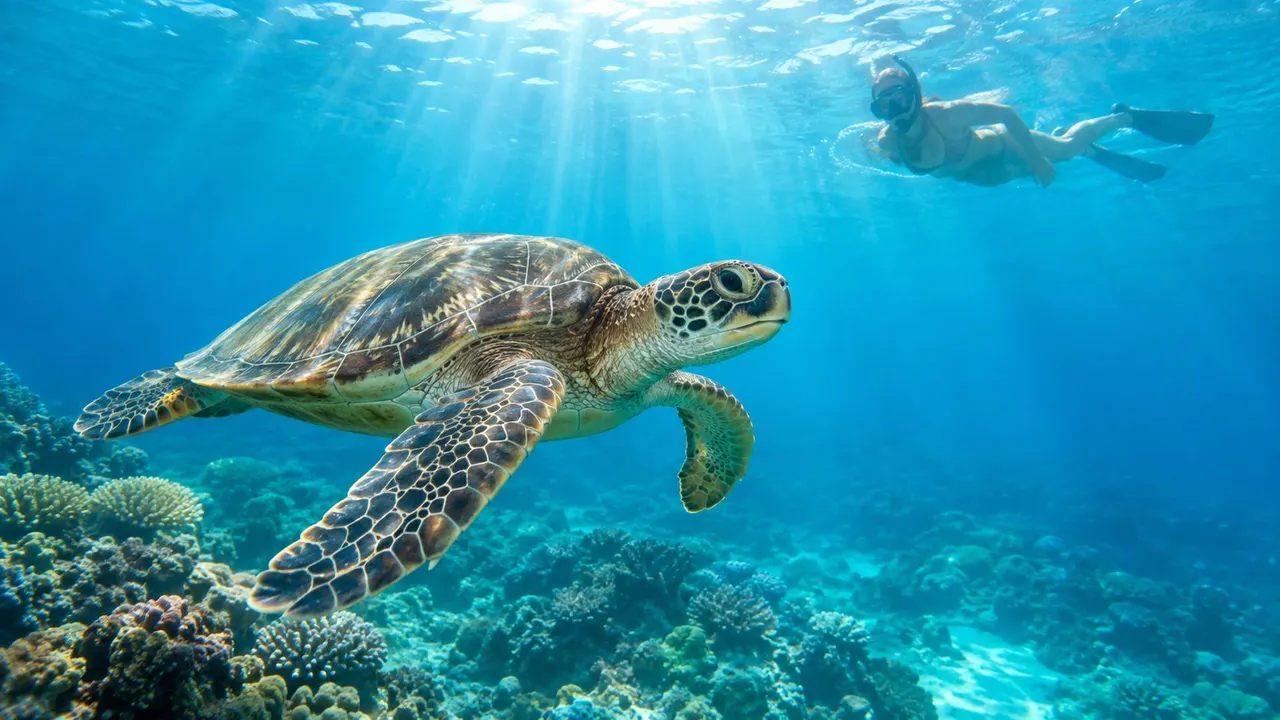
The rules are simple, but visitors often violate them while trying to take a photograph. Keep at least 10 feet, or 3 meters, from Hawaiian green sea turtles, and never touch, feed, chase, or block them. The responsible turtle-viewing guidance explains why turtles need room to surface and breathe.
A guide can position a group before a turtle approaches, redirect swimmers who drift too close, and stop a guest from standing on reef structure. That matters in a conservation district where viewing is the entire purpose.
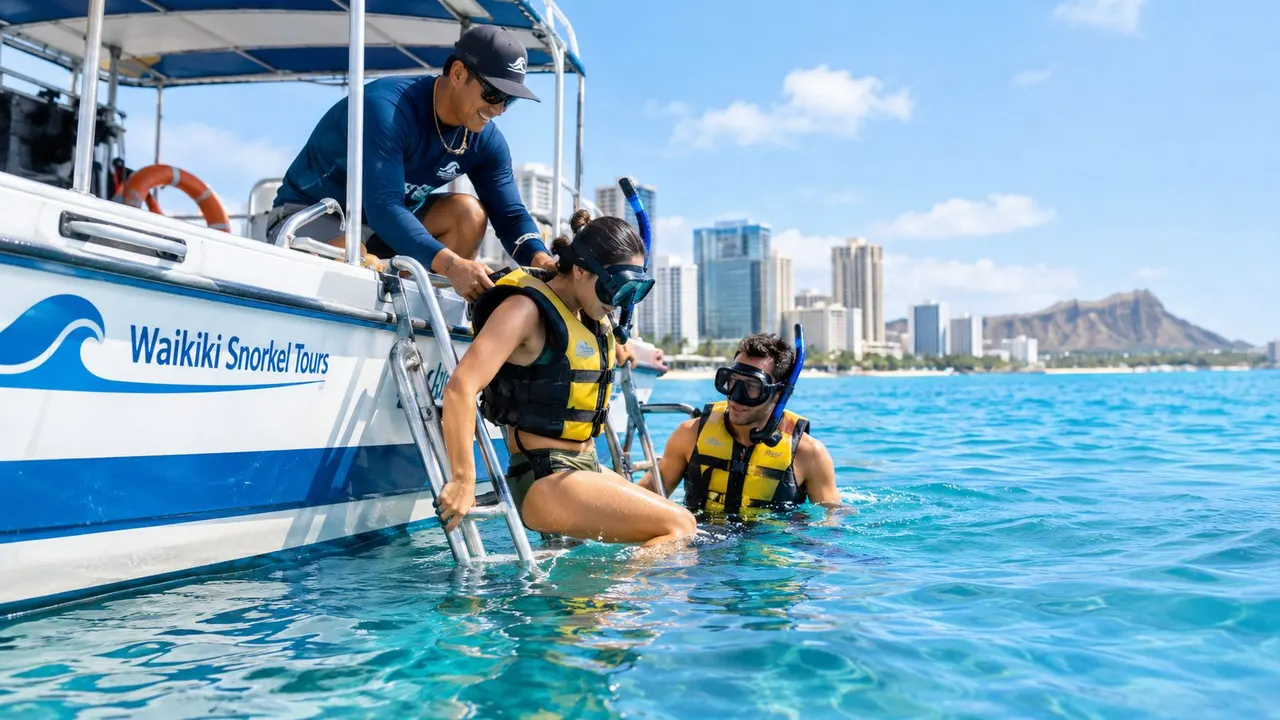
The other advantage is energy management. Flotation belts help tired swimmers stay calm, a ladder gives you a controlled exit, and the crew can change the plan when the first site isn't behaving. You're not guessing from the beach whether murky water is local sand or runoff, or whether the breaking wave will strengthen while you're outside.
Shore snorkeling can still be the right choice for a capable swimmer on a calm morning. A guided trip makes more sense for families, nervous adults, visitors unfamiliar with ocean entries, and anyone whose priority is a meaningful wildlife encounter rather than just getting wet.
Choosing the Right Living Ocean Tours Trip
The practical choice is not “shore or boat.” It's how much time you want in the water, how comfortable you are floating in open ocean, and whether you want one focused encounter or a broader wildlife day.
| Trip | Duration | Skill Level | Best For | Likely Wildlife |
|---|---|---|---|---|
| Turtle Canyons Snorkel Excursion | Shorter outing, approximately 2 hours | Beginner-friendly, comfortable floating helps | First-timers and families focused on turtles | Hawaiian green sea turtles and reef fish |
| Deluxe Snorkel and Wildlife Cruise | Longer outing, approximately 3 to 4 hours | Confident beginners to intermediate swimmers | Guests wanting multiple sites and variety | Turtles, rays, reef fish, and other marine wildlife |
| Sunset or seasonal whale watch | Non-snorkel cruise, with seasonal wildlife viewing | No snorkeling skill required | Couples, non-snorkelers, and relaxed half-day planners | Sunset scenery, and seasonal whales when present |
The Turtle Canyons Snorkel Excursion fits visitors who want a compact introduction. It keeps the goal clear, gives families less time to manage in open water, and works well when the rest of the day includes the beach, aquarium, or a meal. First-timers should still be comfortable listening to crew instructions and floating with support.
The Deluxe Waikīkī Snorkeling and Wildlife Cruise suits stronger swimmers who don't want to gamble the entire outing on one site. A longer trip can allow more than one snorkeling location and a wider wildlife search, including rays and reef fish. It also adds water-play features such as a waterslide, water trampoline, and lily pad, which can be useful for families whose children need variety between snorkeling sessions.
Living Ocean Tours is one local option, and its Deluxe Waikīkī snorkeling and wildlife cruise is designed around guided snorkeling along the Waikīkī coastline. The company departs from Kewalo Basin Boat Harbor, so check the confirmation for the exact slip, arrival time, identification requirements, and current rental inclusions.
A simple matching guide
- First-timers with children: Choose the shorter Turtle Canyons format if everyone can follow crew directions and manage a supported ocean entry.
- Confident swimmers wanting variety: Choose the Deluxe trip and expect a longer day with more time on the water.
- Couples or non-snorkelers: Choose a sunset cruise or seasonal whale watch and keep the morning for a relaxed beach plan.
Trip duration, age minimums, and inclusions can vary by vessel and departure. Treat the booking page as the final authority rather than assuming every boat has identical equipment or policies.
Wildlife Etiquette, Family Logistics, and Sample Itineraries
Responsible snorkeling starts with distance. Give Hawaiian green sea turtles at least 10 feet, or 3 meters, and never touch, feed, chase, or block them. Keep clear of other protected wildlife, including Hawaiian monk seals, and don't touch coral, even if a piece looks loose or dead.
The Waikīkī MLCD prohibits taking or injuring marine life and prohibits removing or altering sand, coral, rock, and other geological features. Fish feeding is also a bad practice because it changes natural behavior and encourages animals to approach people. Apply reef-conscious sunscreen before entering, and avoid letting a fresh layer wash directly into the water.
Make the outing manageable for children
Young swimmers usually do better with a short, predictable session than with a long push to reach distant reef. A calm entry near Sans Souci can let a child practice mask breathing close to shore, while a boat crew can provide flotation and a controlled ladder exit. Check the specific vessel's minimum age before booking, because operators commonly set different requirements.
Build in a surface interval. Give children water, shade, and a snack before asking them to snorkel again. A child who is cold, hungry, or overwhelmed won't become safer because an adult insists on “one more look.”
One-day plan
Start with an early shore session at Queens Beach if the entry is calm, the water is clear, and lifeguard advice supports it. Keep the session short enough that everyone still has energy for an afternoon Turtle Canyons boat trip.
After the boat outing, make the rest of the day low-demand. Eat, hydrate, and stay out of the water if conditions or fatigue have changed. The aim isn't to stack activities until someone has a bad experience.
Three-day plan
On the first day, use a morning guided snorkel and keep the afternoon flexible. On the second day, schedule a sunset cruise or a seasonal whale watch, depending on what's operating and what the family wants to see. A Waikīkī sunset cruise alternative can suit couples or relatives who don't want to snorkel.
Use the third day as recovery time at a calm lagoon or beach setting, such as the Ala Moana lagoon area, rather than treating every day as an ocean day. That buffer protects the trip when rain, swell, or tired children disrupt the original plan.
Screenshot checklist
- Check swell, wind, rain, and lifeguard information.
- Choose shore or boat based on actual swimming comfort.
- Pack a fitted mask, water, sun protection, and dry storage.
- Keep distance from turtles and never touch coral.
- Leave early if visibility, surf, or fatigue changes.
Booking Logistics and Common Questions
Book ahead when your dates overlap with busy winter or whale-watching periods. Otherwise, same-day availability can exist, but it depends on the vessel, weather, and remaining seats. Confirm whether your departure is from Kewalo Basin Boat Harbor or another listed location, and arrive with photo identification if the operator requires it.
Leave valuables in your accommodation rather than in a parked car or unattended beach bag. If you're prone to motion sickness, ask a medical professional or pharmacist about an appropriate remedy and take it according to the product's directions before departure. Operators commonly publish a cancellation window, so read the specific policy rather than assuming every company uses the same terms.
Quick answers
What age can children be? It depends on the vessel. Many boat operators set a minimum around 4 to 5 years, but confirm before paying.
Can non-swimmers participate? Some can, with flotation and close crew supervision. They still need to remain calm in the water and follow instructions.
What happens if weather cancels the trip? Operators generally offer rebooking or a refund under their weather policy. Ask what qualifies as a cancellation and how notification works.
Is gear included? Guided trips commonly include a mask, snorkel, fins, instruction, and flotation equipment. Optional wetsuits and specialty rentals may vary.
Where can I compare tour availability? Living Ocean Tours offers guided Waikīkī snorkeling, including turtle-focused and wildlife-cruise options, with equipment and instruction described through the booking process. Choose the trip that matches your swimming comfort, available time, and interest in a focused turtle encounter or a broader cruise.


