
Snorkeling Honolulu Made Easy and Unforgettable
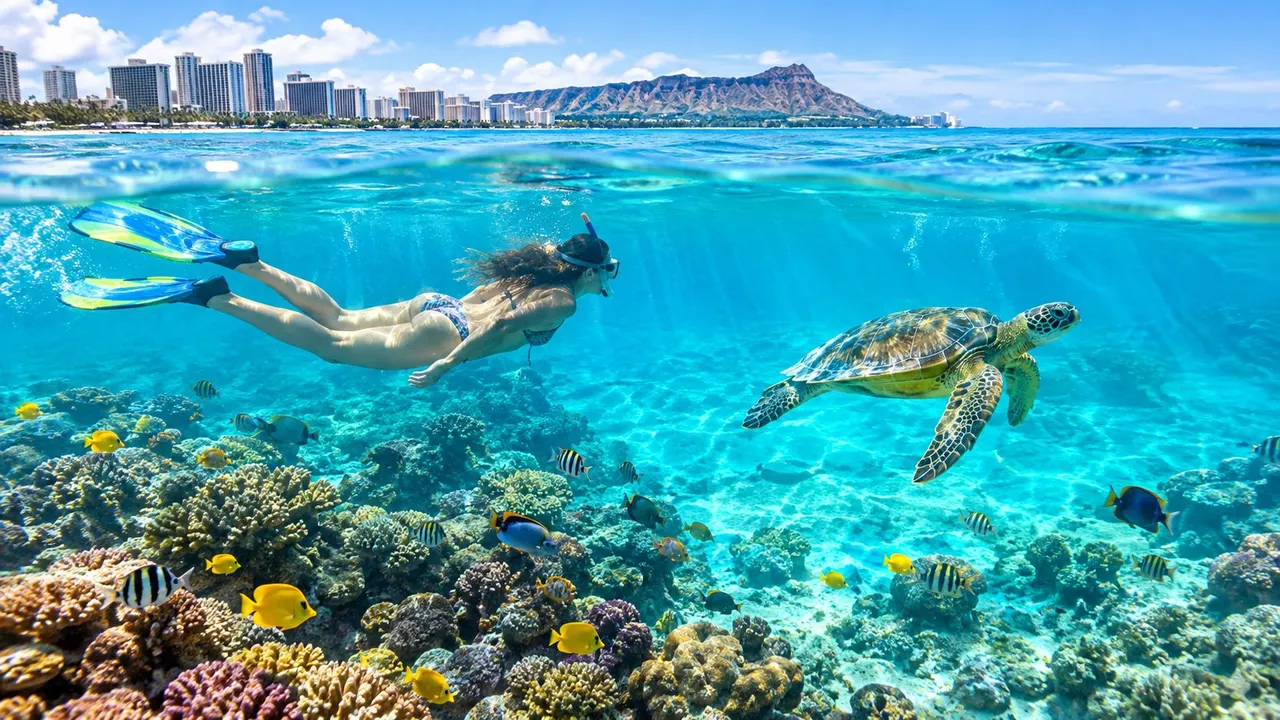
You've just arrived in Waikiki, the morning looks calm, and you're wondering whether to walk into the nearest beach or book a boat. Online, every recommendation sounds easy, but Honolulu snorkeling depends on a more useful question: which entry matches your swimming ability, the ocean conditions, and the kind of wildlife encounter you want?
A sheltered shoreline reef can suit a confident swimmer on a calm morning. An offshore reef may be the smarter choice for a child, a nervous beginner, or anyone who wants guides handling the equipment, navigation, and changing conditions. Once you understand that shore versus boat decision, snorkeling Honolulu becomes far less confusing.
Why Snorkeling in Honolulu Feels Different
Your first Waikiki morning may begin with glassy water near the beach, a few swimmers already in the shallows, and a line forming for a popular attraction. By the time you finish breakfast, the wind may be stronger, more people may be stirring sand near the entry, and the easy-looking swim may feel less inviting. Honolulu's ocean can change the experience without changing the view from shore.
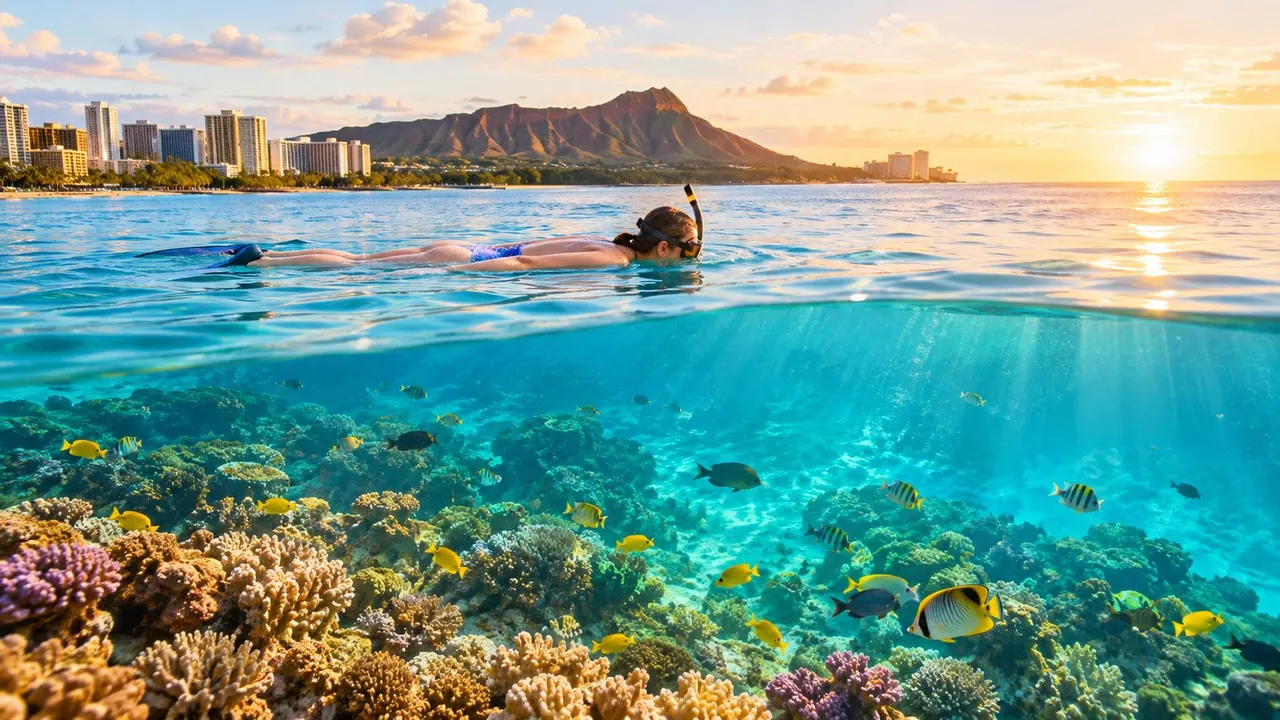
That's why Honolulu snorkeling isn't just a list of beaches. The city offers protected, shallow reef areas for accessible entries, along with offshore habitat that's reached more comfortably by boat. Wind, swell, current, crowding, and recent rainfall all matter alongside water clarity.
A busy bay teaches an important lesson
Hanauma Bay on Oahu is one of the most heavily used snorkeling sites in Hawai'i. A 2019 carrying-capacity study reported about 2,500 to 3,500 visitors per day, and estimated that roughly 97% stayed on the inner reef flat rather than venturing into deeper water. That concentration makes sense. Shallow, protected water is approachable for first-time snorkelers, but repeated use also places pressure on a sensitive reef system. You can review the details in the Hanauma Bay carrying-capacity study.
The practical lesson is simple: a site's popularity doesn't guarantee that it will feel relaxed when you arrive. Managed access, early timing, and honest assessment of your ability can matter more than a beach's reputation. For visitors who want a guided Waikiki-area option, Honolulu snorkeling tours can reduce the guesswork around entry, equipment, and route planning.
Practical rule: Choose the water first, then choose the location. Calm, sheltered conditions are more valuable than a famous name.
How Honolulu Reefs and Turtle Cleaning Stations Work
A reef makes more sense as an underwater neighborhood than as a flat picture. Hard reef forms ledges, resting places, feeding areas, and sheltered pockets. Small fish gather around that structure, while larger animals visit because it provides food, cover, or a place to pause.
That structure also affects your comfort. A protected reef can soften waves and current. Open sand reflects water movement and can stir particles, reducing visibility. Swimmers often kick harder when they cannot see clearly, which leads to fatigue and makes a leaking mask or brief separation from the group feel more stressful.
Turtle Canyon is a natural service station
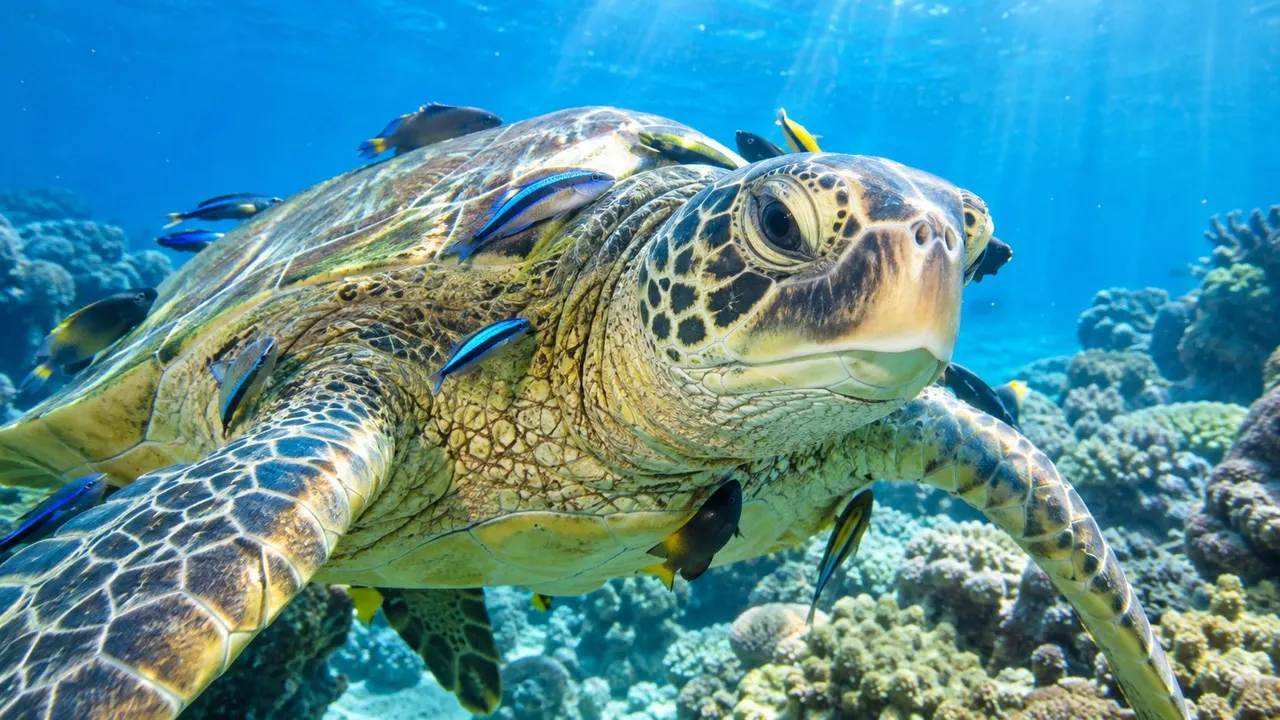
Off Waikiki, Turtle Canyon is described as a natural Hawaiian green sea turtle cleaning station. The reef sits about 2.5 miles offshore and reaches roughly 20 to 45 feet deep, according to this Turtle Canyon site description. Since it is offshore and deeper than a typical beach entry, it does not function like a shore-access snorkel. A guided boat trip offers a practical way to manage exposure, navigation, and group supervision. You can learn more about the Turtle Canyon cleaning station before deciding whether this entry style suits your group.
The cleaning-station comparison helps explain the activity. Reef fish remove algae and parasites from honu while the turtles hover or rest near the reef. It works like a natural car wash, except the turtle decides when to arrive and leave. Look for hard reef, ledges, and clusters of fish rather than searching randomly across open sand. These features indicate where cleaning activity is more likely.
Conditions shape what you see
Wind, swell, and current influence wildlife viewing and beginner comfort at the same time. Independent Oahu condition reporting notes that nearby Waikiki and Honolulu sites can receive good ratings when morning winds are around 10 knots, waves are about 1 to 2 feet, and currents stay low, as described in this Oahu Turtle Canyon condition report.
Low surge lets you hold a relaxed position above the reef. Low current means less energy spent correcting your direction. Early departures can help because wind and surface movement may increase later in the day.
The goal is not a motionless ocean. Choose a manageable combination of low surge, low current, useful visibility, and sheltered structure. That setting gives beginners room to breathe steadily and gives guides a better chance to keep the group together.
Top Snorkeling Sites Around Honolulu and What Each Is Best For
Honolulu's main snorkeling choices serve different kinds of visitors. Hanauma Bay is associated with managed, shallow reef access. Waikiki-area nearshore sites offer convenience when conditions cooperate. Turtle Canyon is an offshore boat site built around reef habitat and turtle-cleaning activity.
The right choice depends on whether you want a simple beach entry, a convenient urban swim, or a guided wildlife outing. Use the table as a quick filter, then check conditions before entering any water.
Honolulu snorkeling sites at a glance
| Site | Access Type | Best For | Key Consideration |
|---|---|---|---|
| Hanauma Bay Nature Preserve | Managed shore entry | First-time snorkelers who want protected shallows | Access is regulated, and crowd pressure can affect comfort |
| Waikiki-area reefs | Shore entry | Visitors seeking convenience near hotels | Wind, swell, current, and sand movement can change the experience |
| Turtle Canyon | Guided boat entry | Visitors focused on offshore reef and honu habitat | It's offshore and deeper, so it isn't a casual beach snorkel |
Hanauma Bay's management makes the access question especially important. Honolulu's parks department reported 400,776 visitors in 2024, with 43% walk-ins and 57% reservations, a pattern that shows how closely the preserve manages entry while balancing recreation and conservation. Because reservations and arrival timing matter, check current access requirements before building your morning around the bay.
Waikiki-area reefs can work well for capable swimmers when the shoreline is calm and visibility remains useful. They're convenient, but convenience doesn't remove the need to assess surf, shorebreak, current, and fatigue. A beach that looks gentle from the sand may still be a poor choice for someone who's never used a mask and fins.
Match the site to the goal
If your priority is a shallow introduction, a managed shore site may fit. If your priority is minimizing logistics near your hotel, a Waikiki entry may be appealing. If you're specifically hoping to observe turtles using reef habitat, an offshore guided trip is a more direct match.
The best snorkeling locations on Oahu can help you compare broader island options, but don't treat any list as a substitute for a same-day condition check. Your ability and the ocean's behavior should make the final decision.
Choosing Between Shore Entry and a Guided Boat Tour
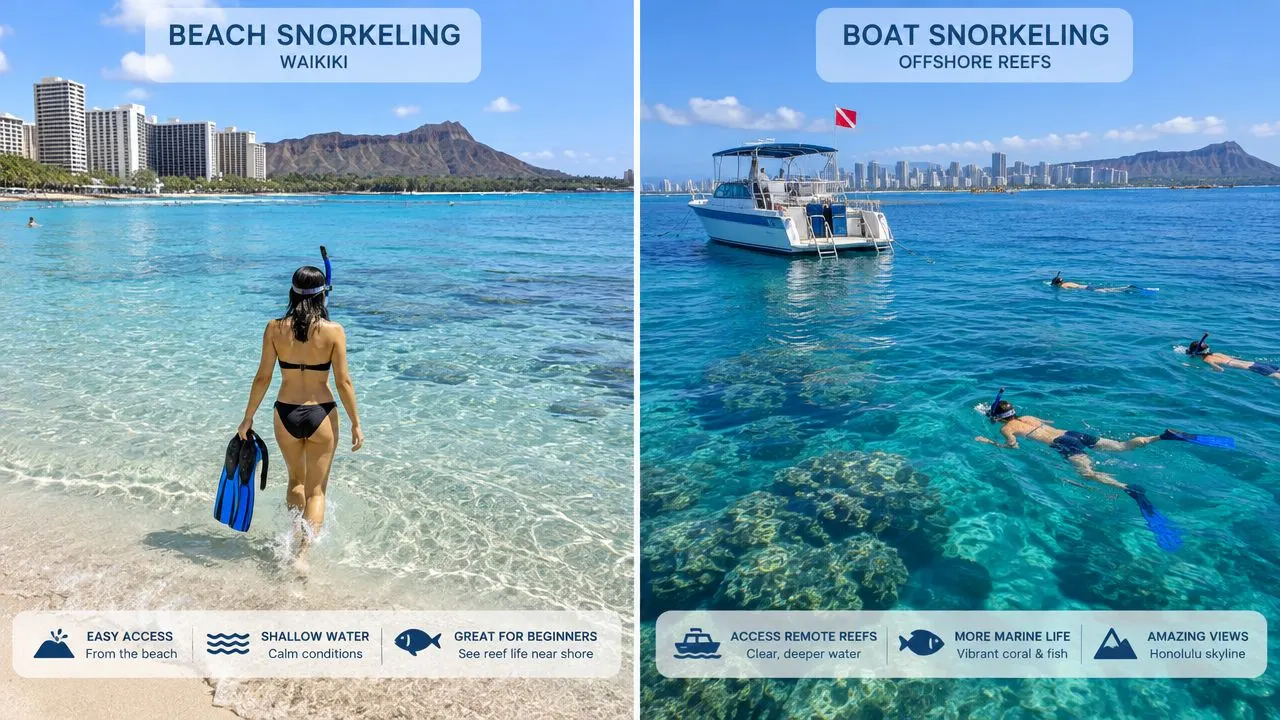
You arrive at the beach with a mask, fins, and two possible plans. A calm shoreline may offer independence, while an offshore tour may provide guidance and support. The right choice depends on the ocean that day, your swimming ability, and how much help your group needs. For a broader comparison, review this guide to choosing between shore and boat snorkeling.
A shore entry lets you walk in, set your own pace, and leave when you choose. It suits swimmers who can read changing conditions, breathe comfortably through a snorkel, and return before fatigue affects judgment. A beach entry is not automatically easy. Waves, uneven footing, current, or a long swim back can turn a convenient option into a demanding one.
A guided boat tour provides a planned route and crew support. Staff can explain the site, fit equipment, provide flotation, and help the group enter the water. That structure can help children, anxious swimmers, non-strong swimmers, and first-time snorkelers who feel overwhelmed by mask breathing or open water.
Use this decision test
A calm, lifeguarded shore entry may fit when you can answer yes to each point:
- Water comfort: You can float, breathe through a snorkel, and stay calm while adjusting your mask.
- Condition awareness: You will turn around if surf, current, or visibility worsens.
- Energy management: You can return to shore before becoming tired, cold, or distracted.
- Buddy support: You will swim with a partner whose ability is similar to yours.
Choose a guided boat when anyone in the group is nervous, young, inexperienced, or unable to swim strongly. A boat also matches the goal of visiting Turtle Canyon, an offshore reef that cannot be reached from the beach.
A local guided option
Living Ocean Tours offers its Turtle Canyons Snorkel Excursion for offshore turtle habitat. Its Deluxe Waikiki Snorkel and Wildlife Cruise includes a waterslide and family-oriented water features. Departures leave from Kewalo Basin Boat Harbor, and the company describes private charters for groups of up to 40 guests.
Snorkel Turtle Canyon is another guided option around Waikiki. Compare departure times, included equipment, flotation support, cancellation terms, and the level of in-water supervision your group requires.
Safety Tips and What to Pack for a Stress Free Snorkel
A good snorkel begins before you touch the water. Stop at the lifeguard station when one is present, ask about current conditions, and look at the entry rather than relying on yesterday's photos. Hawaii Ocean Safety guidance says to check with lifeguards before entering and not to snorkel when conditions are dangerous.
Your pre-entry decision should include four observations: surf, current, shorebreak, and visibility. High surf can knock a swimmer off balance. Strong current can pull you away from your intended route. Heavy shorebreak can make entry and exit harder than the swim itself. Worsening visibility makes it more difficult to see reef contours, other swimmers, and wildlife.
Build a simple gear system
Use equipment that helps you relax rather than equipment that creates extra work. A well-fitting mask should seal without excessive strap tension. Fins should stay secure but not pinch. A snorkel vest or other flotation device can reduce fatigue and overexertion, especially for children, older adults, and swimmers who aren't confident in open water.
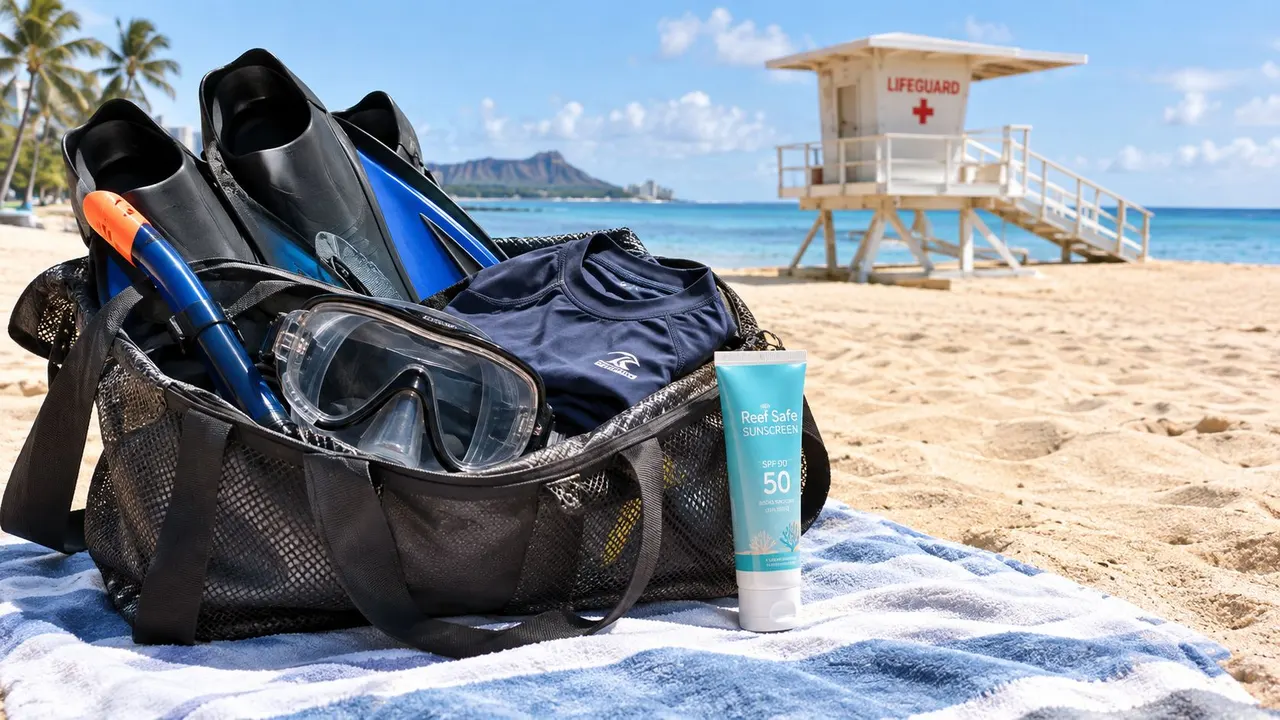
Pack a towel, drinking water, swimwear, sun-protective clothing, and reef-conscious sunscreen. Keep personal medication accessible, and leave loose valuables somewhere secure rather than bringing them into the water.
The Oahu snorkeling packing list can help you prepare without overpacking. Most beginners need fewer items than they expect, but they do need gear that fits and a plan for staying warm, hydrated, and supported.
Use the buddy rule
Novice snorkelers shouldn't go alone. Stay close enough to communicate, agree on a turnaround point, and tell your buddy if your breathing becomes uncomfortable or your energy drops. Children need active adult supervision, not just occasional checks from the beach.
Before you enter: Ask the lifeguard, study the breaking water, test your mask in shallow water, confirm your buddy, and leave immediately if the conditions feel beyond your ability.
Keep your first outing short enough to finish with energy left. Panic often starts when a swimmer realizes they're tired, drifting, or farther from shore than expected. Flotation, conservative routing, and an early exit prevent a manageable concern from becoming an emergency.
Best Time to Snorkel and How to Book Smart
For many Honolulu visitors, the most useful daily plan is an early start. Morning conditions can be calmer, while later wind and increased swimmer activity may introduce more chop, drift, and sand haze. Popular sites can also become crowded by mid-morning, making parking, equipment setup, and reef viewing less comfortable.
Rain adds a separate decision. Hawaii snorkeling guidance recommends staying out of the ocean for at least 72 hours after heavy rainfall because runoff can raise bacteria levels, particularly near urban drainage such as the Ala Wai Canal. That recommendation concerns water quality, not just visibility, so don't judge a post-rain snorkel only by how blue the water looks.
Plan around access and conditions
Hanauma Bay requires advance attention because reservations and capacity controls affect the day. The preserve also closes on Mondays and Tuesdays, so verify the current schedule before arranging transportation or promising children a specific beach.
A flexible itinerary works better than a rigid one. Keep a shore day available for calm conditions, and consider a guided boat option when you want a crew to make site decisions in real time. For any booking, check what the price includes, such as mask and fin use, flotation, instruction, wildlife guidance, departure location, and policies for weather-related changes.
Consider the season beyond snorkeling
Humpback whales are generally seen in Hawaii from November through April, with peak viewing from January through March, according to the NOAA Hawaiian Islands Humpback Whale National Marine Sanctuary. That seasonal ocean activity can influence how you plan a winter visit, especially if your group wants both reef time and wildlife viewing from a boat.
If whale watching is part of your itinerary, review the Waikiki whale watch tour separately from your snorkeling decision. Snorkeling still depends on the day's wind, swell, current, and water-quality conditions, while whale encounters follow their own seasonal pattern.
Book ahead when a particular departure, boat format, or family feature matters to you. Leave room to change plans if rain or rough conditions make the original choice unsuitable.
Responsible Wildlife Viewing and Reef Stewardship in Honolulu
A responsible snorkel protects the behavior that made the encounter special. Hawaiian green sea turtles are protected under federal and state law, and NOAA guidance says snorkelers should stay at least 10 feet away, as explained in this Oahu turtle-protection guidance.
The distance rule is only the beginning. Avoid touching, chasing, riding, feeding, or blocking a turtle's swim path. Those actions can constitute harassment, and they interfere with the animal's ability to rest, surface, travel, or use a cleaning station naturally.
Let the reef remain a reef
Never stand on coral or use it to steady yourself. Keep your fins above the bottom, avoid grabbing reef structure, and don't feed fish. A calm body position protects the habitat and makes wildlife more likely to continue its normal behavior around you.
At a cleaning station, watch from the side and allow the turtle to choose the distance. If it changes direction because you've moved closer, stop advancing and give it room. The best photograph is the one that doesn't require the animal to flee.
Choose access that supports conservation
Managed sites, controlled capacity, and guided groups can reduce the pressure created by concentrated visitation. Hanauma Bay's visitor management shows why access decisions matter, while a well-supervised boat group can keep swimmers spaced out and away from reef surfaces.
Your morning checklist is straightforward: assess the conditions, choose shore or boat, use flotation if it reduces fatigue, maintain the turtle distance, and leave the reef undisturbed. Those choices make Honolulu snorkeling safer for your group and more sustainable for the ocean.
Living Ocean Tours offers guided Turtle Canyons snorkeling and the Deluxe Waikiki Snorkel and Wildlife Cruise for visitors who want equipment, instruction, and in-water support included. Visit Living Ocean Tours to compare the available Honolulu departures and choose the shore or boat experience that fits your group.


