
Snorkeling Hawaii Oahu: A Complete Local’s Guide
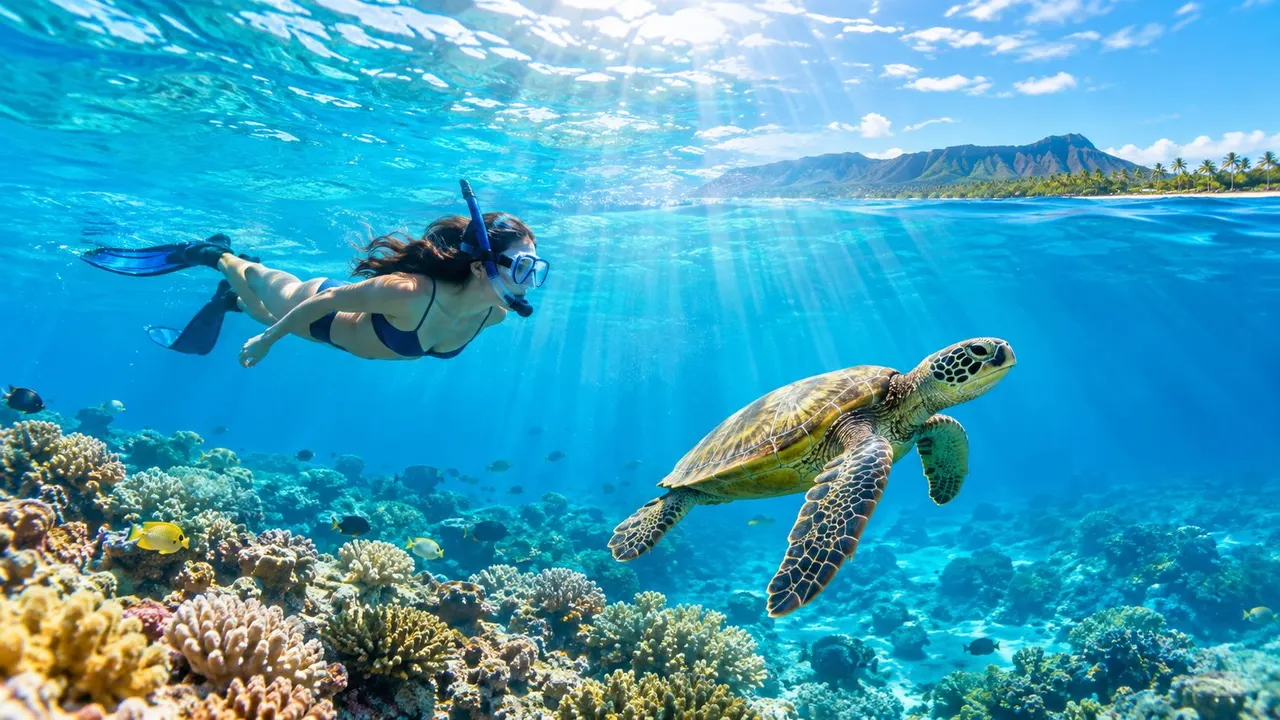
You've got a Waikiki hotel, clear turquoise water outside the lobby, and a rental car loaded with beach gear. Then the brochures start competing: Hanauma Bay, Turtle Canyon, Shark's Cove, Electric Beach, and a dozen smaller coves. The hard part of snorkeling Hawaii Oahu isn't finding water. It's deciding whether the water is safe, accessible, and worth the drive that morning.
The reliable approach is simple. Pick the coast that matches the season, favor early conditions, keep a backup site, and treat wildlife distance and personal ability as nonnegotiable. This guide uses that go or no-go logic, with practical alternatives for the days when the famous site is crowded, closed, or rough.
Why Oahu Is One of the Best Places to Snorkel in Hawaii
A first morning in Waikiki often creates a false sense of certainty. The south shore looks calm from the beach, reefs sit within easy reach, and the island's main snorkeling areas are close enough to make several seem possible in one day. They aren't interchangeable, though. A protected lagoon may suit a child who's never worn fins, while an exposed lava entry can punish a confident swimmer who ignores the swell.
Oahu works because it offers several different types of access on one island. Waikiki and nearby south-shore reefs can provide forgiving water, especially during the calmer late-spring-through-early-fall window. The North Shore offers lava formations and reef habitat when summer conditions settle, but winter surf can make those same entries a clear no-go. Boat sites add another option when shore access is crowded or the beach break is active.
Hawaiian green sea turtles are a major part of the experience, but seeing one never justifies chasing it. The island's long-running marine recreation demand has also created a strong need for reef management. A University of Hawai'i study of Hawaiian marine protected areas recorded 22,493 snorkel dives at Pupukea MLCD on Oahu and 47,721 total snorkel-and-SCUBA dives there, evidence that use concentrates heavily at popular access points.
Captain's rule: Don't ask which Oahu snorkeling site is famous. Ask which site is calm, open, and suitable for your group today.
For a useful overview of the island's options, start with this guide to the best snorkeling on Oahu, then make the final call from current conditions rather than photographs.
Hanauma Bay and What Changed for Visitors
Hanauma Bay is no longer a casual stop you can reliably add between breakfast and a drive around the east side. Before reservation limits were introduced in 2021, the bay received more than 3,000 visitors per day and over 1 million per year. The daily cap was later reduced to 720 visitors, as described in this Hanauma Bay snorkeling overview.
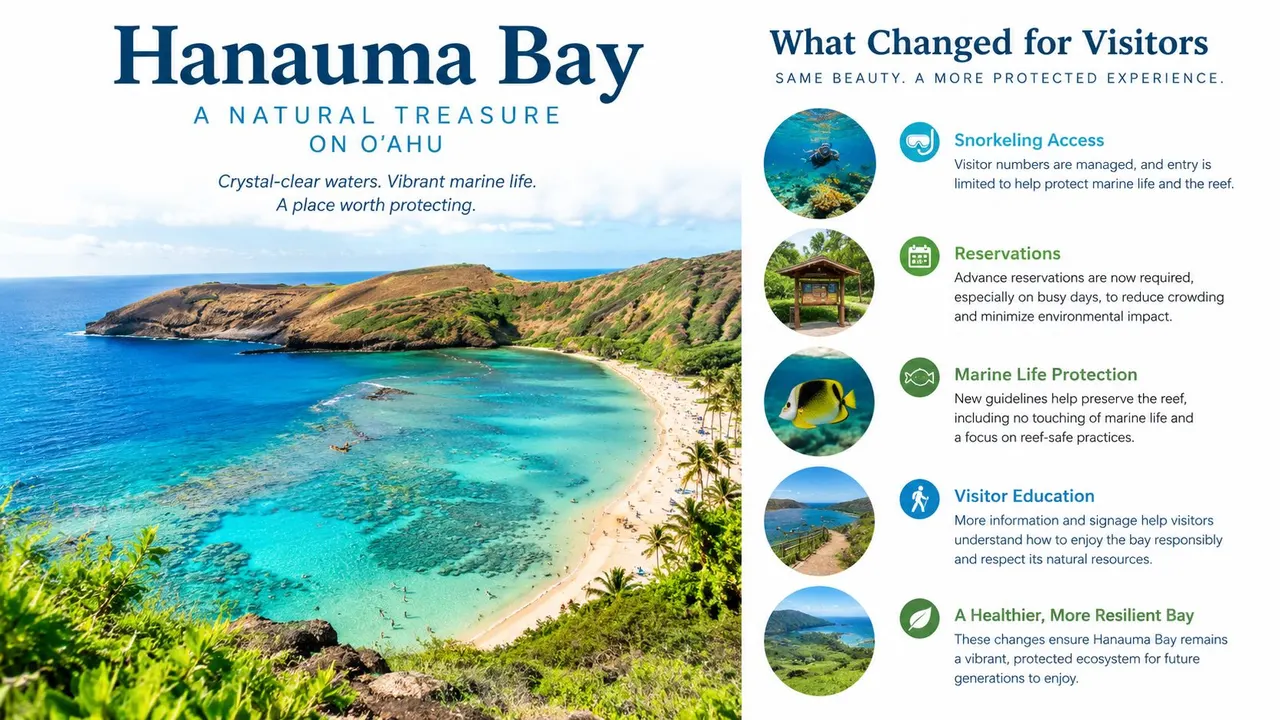
That change trades spontaneity for a more controlled experience. The bay's shallow reef and sheltered shape can work beautifully for families, but entry now depends on availability, operating rules, and conditions. A separate visitor survey found that 88% of Hanauma Bay visitors came specifically to snorkel, which explains why demand remains so tightly connected to the reef rather than the beach.
The practical gain is less pressure at a site that became heavily used. The loss is flexibility. You can't assume a walk-up visit will work, and closures or access changes can disrupt a carefully timed east-side itinerary. The bay should be treated as a planned booking, not as the backup you use after another beach fails.
A reservation also doesn't override the ocean. If visibility is poor, the reef is unsettled, or your least confident swimmer is uncomfortable on arrival, forcing the session because you secured a slot is bad seamanship. Keep a dry-land alternative nearby and check the bay's current visitor information before leaving Waikiki.
For visitors who want the experience without building the whole morning around access logistics, this Hanauma Bay snorkeling guide can help compare the preserve with guided options and nearby alternatives.
Top Oahu Snorkeling Sites Worth Your Time
The best site depends on the person entering the water, not the postcard. Here's how I'd make the call from the beach or boat ramp.
Turtle Canyons is an offshore Waikiki setting, and it works best by boat. The ride avoids a tiring shore paddle, while the skipper can choose among available water based on the morning. From shore, reaching the same kind of turtle habitat isn't a dependable plan. Go when the group wants wildlife and guided support. Choose another option if anyone is uncomfortable in open water.
Hanauma Bay suits first-timers who want shallow reef access and a structured beach day. Its drawback is controlled entry and high demand. If you don't have confirmed access, don't drive over hoping the gate will solve the problem.
Shark's Cove is a summer option for confident visitors when the North Shore is calm. Lava shelves, pockets, and surge make it more interesting than a sandy bay, but they also create trip hazards and awkward exits. Winter swell is a firm no-go.
Three Tables offers a more relaxed North Shore alternative when the water is settled. It has sandy access and can suit families, but reef structure and visibility vary. If waves are breaking across the entry, keep driving.
Lanikai is attractive for a sandy entry and calmer family conditions, but it isn't a guaranteed reef encounter. Parking and beach logistics can be more frustrating than the water. Use it for an easy swim, not as a promise of concentrated marine life.
Electric Beach can produce excellent fish activity near the power plant outfall, but current, depth, and the entry make it an advanced choice. Don't send a weak swimmer there because the site is free or less crowded.
Ala Moana lagoon is the sensible first test for absolute beginners and young children. The flat water removes much of the anxiety, although it doesn't deliver the same reef experience as an offshore site.
Oahu Snorkeling Sites at a Glance
| Site | Shore or Boat | Best Conditions | Skill Level | Main Drawback |
|---|---|---|---|---|
| Turtle Canyons | Boat | Calm morning offshore water | Beginner with guide to advanced | Open-water exposure |
| Hanauma Bay | Shore | Calm, clear conditions and confirmed entry | Beginner | Reservations and access limits |
| Shark's Cove | Shore | Calm summer water | Intermediate | Surge, rocks, winter swell |
| Three Tables | Shore | Settled North Shore conditions | Beginner to intermediate | Variable reef visibility |
| Lanikai | Shore | Calm sandy-entry conditions | Beginner | Limited reef structure |
| Electric Beach | Shore | Calm water and manageable current | Advanced | Difficult entry and current |
| Ala Moana lagoon | Shore | Flat water | First-timers and children | Limited reef habitat |
Best Seasons and Daily Conditions on Oahu
Oahu's coastlines run on different calendars. Late spring through early fall generally gives the south shore its more forgiving snorkeling window, while winter swell makes the North Shore far less predictable. Independent condition guidance also favors morning sessions, before trade winds and boat traffic increase surface chop or stir sand, as explained in this Oahu snorkeling conditions report.
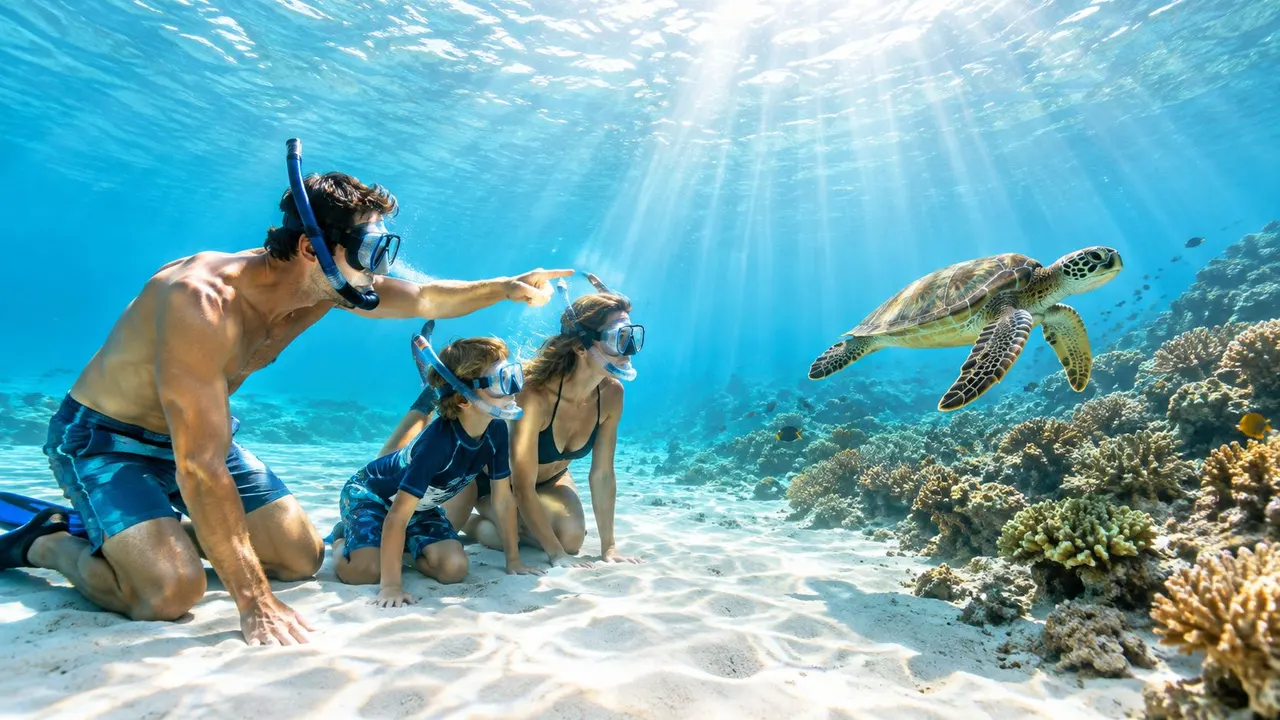
Start with the shore, not the booking confirmation. Look at the water from the actual entry point. If sets are breaking across the reef, swimmers are being pushed sideways, or visibility is already poor, the underwater view won't improve because you paid for parking.
Use a simple morning check:
- Coast choice: Favor Waikiki and protected south-shore areas when the south side is calm. Save Shark's Cove and similar North Shore entries for settled summer conditions.
- Wind and surface: Strong trade winds can turn a calm-looking reef into a tiring swim later in the day.
- Swell and runoff: Winter swell and rain-driven runoff can reduce visibility or make an entry unsafe.
- Personal readiness: If a swimmer is nervous on the sand, they'll usually be more anxious once waves and current remove solid footing.
A boat operator can sometimes move between sites, but no captain can make rough water suitable for every guest. The go signal is clean visibility, manageable entry, and a group that can stay together without fighting the ocean. The no-go signal is persistent breaking water, an active current, or any need to “just get past” a dangerous section.
For broader planning ideas, compare the options in this Oahu snorkeling guide before choosing a single coastline.
Snorkeling Safety and Responsible Wildlife Viewing
Hawaii's water can look gentle while creating serious trouble for an unprepared swimmer. Independent safety reporting identifies snorkeling as the leading cause of visitor ocean deaths in the state, with about 91% of snorkeling victims being visitors. The same snorkel safety survey summary says more than 200 visitors died while snorkeling in Hawaiʻi during the last decade.
That isn't a reason to avoid the ocean. It's a reason to make the go/no-go decision before your mask gets wet. A rested swimmer with a properly fitted mask, a buddy, and a conservative site choice has a much better margin than someone who enters alone after a long travel day, alcohol, or a poor night's sleep.
Make the personal call first
Skip the session if you're dehydrated, hungover, ill, exhausted, or struggling to control your breathing in shallow water. Parents should watch the child's behavior, not just listen to enthusiastic promises. A child who keeps lifting the mask, panics when a fin slips, or can't stay alongside the adult needs flotation support or a calmer setting.
Non-swimmers shouldn't rely on confidence alone. A flotation belt, a properly sealed mask, fins that fit, and an in-water guide can change the experience, but they don't turn rough surf into beginner water. Never snorkel alone, and don't assume a partner is helpful if both swimmers have the same limited ability.
Keep wildlife at a respectful distance
Hawaiian green sea turtles are protected. Hawaii and NOAA guidance calls for at least 10 feet, or 3 meters, of distance, and says visitors must never touch, chase, feed, or block a turtle's route to the surface. The same rules apply on the beach, where a resting turtle still needs space.
This Hawaii turtle snorkeling rules guide is useful to review before a family outing. Hawaii ocean safety guidance also says not to feed fish or other animals and never to stand on coral reefs, as outlined by the official ocean safety snorkeling guidance.
Wildlife rule: Let the turtle decide the distance. If it changes direction because of you, you're too close.
Pack for comfort, not convenience
Tours commonly supply a mask, snorkel, fins, and flotation belt. That doesn't guarantee the mask will fit a narrow face or work comfortably with glasses, so anyone with unusual fit needs should bring a personal mask from home or arrange a proper rental before departure.
Bring these items:
- Mask support: Anti-fog gel and a mask that seals without being overtightened.
- Sun protection: Reef-conscious sunscreen, a rash guard, and coverage for the back of your neck.
- Water comfort: A 3mm shorty wetsuit can help sensitive snorkelers when the water feels cool.
- Vehicle security: A dry bag for car keys and small essentials.
- Clothing: Board shorts and a UV shirt are usually more comfortable for an all-day reef outing than a bikini.
Reef shoes can protect feet during sandy or rocky entries, but they don't give permission to stand on coral. Shallow reef cuts often happen when visitors make an emergency stand-up after losing balance. At pocket beaches, rip currents are another reason to ask a lifeguard or guide before entering.
If the water looks wrong from shore, it will feel worse in the water. Turn around early. A missed snorkel is cheaper than an avoidable rescue.
Choosing a Guided Snorkel Tour in Waikiki
A guided trip is only as good as its on-water decisions. Large catamarans can feel social and spacious, but music, crowds, and deck-only supervision may not suit a first-time swimmer. Smaller vessels can offer more direct instruction and sometimes move to a second site, while a private charter provides the most control but costs more.
| Tour Type | Group Size | Duration | Price Range | Best For |
|---|---|---|---|---|
| Large catamaran | Larger group | Varies | Higher group-value format | Social groups comfortable in open water |
| Mid-size snorkel boat | Moderate group | Varies | Mid-range | Families wanting guidance and flexibility |
| Small-group or private charter | Small group | Varies | Premium | Nervous swimmers, celebrations, tailored routing |
Ignore any operator promising a perfect site regardless of the forecast. A quality crew should discuss currents and conditions during the safety briefing, check mask and fin fit before launch, and place guides in the water rather than supervising only from the deck. Reef-conscious sunscreen policies and a willingness to rotate sites are practical signs that the crew understands the ocean rather than following a fixed schedule.
Ask before booking: Where will the crew move if the planned site is rough, and will a guide actually enter the water with beginners?
A turtle-focused boat trip can work better than a crowded shore entry for a first-timer because it removes the beach break and gives the skipper more than one possible water decision. Guides also know the local turtle behavior and can prevent the group from crowding a cleaning station. This comparison of Oahu snorkeling tours can help you judge the format before looking only at the advertised price.
Living Ocean Tours offers guided Waikiki snorkeling with equipment and instruction, including a deluxe wildlife cruise for visitors who want water activities away from a busy beach entry. It's one option to compare with smaller operators and private charters.
Sample Oahu Snorkeling Itineraries
The mistake that ruins more snorkeling days than anything else is committing to one site before checking the morning surf report. Build each day around a primary option and a realistic substitute, then let the coast decide.
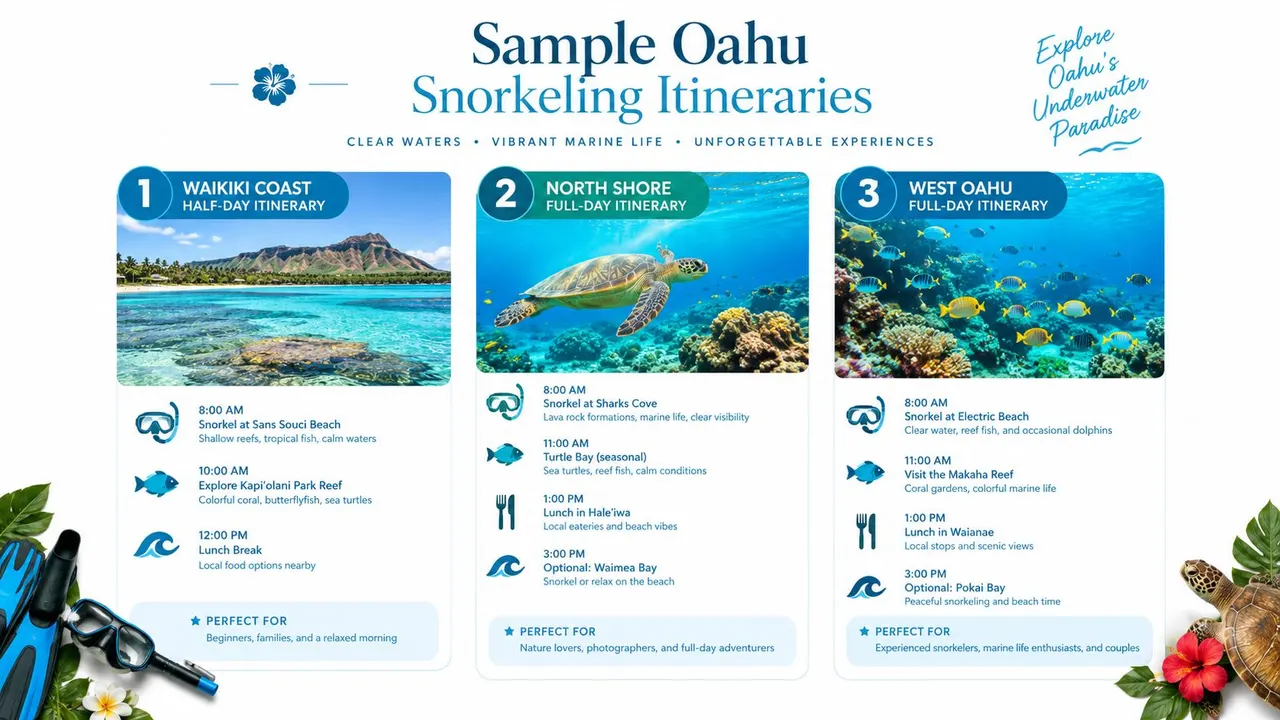
A practical three-day plan
Day one, Waikiki boat snorkeling: Book the boat first, ideally for a morning departure. A Turtle Canyons trip gives jet-lagged arrivals a structured start without requiring a long drive or difficult beach entry. Have lunch near Waikiki or Kewalo Basin, then keep the afternoon light with a beach walk, pool time, or an easy swim at Ala Moana lagoon.
Day two, Hanauma Bay with a fallback: Use a confirmed morning entry and arrive with enough time to park, check in, and complete the required visitor process. Hanauma Bay guidance currently describes a 48-hour reservation timing, strict operating days, entry cutoffs, and limits, so verify the live rules rather than trusting an old itinerary, as noted by current Hanauma Bay visitor information. If access or conditions fail, switch to a south-shore beach instead of wasting the whole day driving between closed options.
Day three, North Shore loop: Waikiki to the North Shore is a substantial drive, commonly around 60 to 90 minutes depending on traffic and route. Go early, check Shark's Cove from shore, and enter only if the water is flat enough for your least confident swimmer. The cove has sandy entry and free parking, but parking can fill by 9 a.m. in summer, and the site has no lifeguards or full facility setup, so bring water and don't treat it like a managed family beach.
A balanced five-day plan
Use the first two days above, then reserve a separate Waianae Coast boat day for uncrowded reef access when the west side is operating comfortably. Keep one full rest day around the pool or beach. Beginners shouldn't feel obligated to snorkel every day, especially when sun, wind, and travel fatigue begin to reduce attention.
Use the fifth day for a second south-shore shore session. Sans Souci, Kuhio, and Ala Moana are free and easy to reach, but they're small, shallow, and often crowded. They're useful for a short repeat swim, not guaranteed substitutes for a clear offshore reef.
A flexible seven-day plan
Add a second south-shore morning, a dusk walk near Laniakea to observe turtles from shore without entering their space, and one open day reserved for weather changes. That flexible day can replace the North Shore if winter swell arrives or move a boat trip if wind disrupts the original date.
When headline sites fill, look laterally. A same-day or next-day boat trip may still have space, while weekday Electric Beach can be quieter but demands stronger swimming ability. The Koko Head area, including Halona Cove and the pools near Lanai Lookout, is better reserved for confident swimmers who understand rocky entries and changing water.
Don't rely on outdated Hanauma details. Published guidance varies as rules change, and current access can include closures, entry cutoffs, reservation requirements, and temporary shutdowns. Confirm the official visitor information immediately before the trip, then keep your backup close to Waikiki rather than assuming every east-side plan will survive a closure.
Planning Your Oahu Snorkeling Trip
Start with the go/no-go framework before you reserve anything. Check the south-shore morning outlook, review swell and wind, decide whether your group needs guided support, and only then lock in the sites that require controlled access. If Hanauma Bay is a priority, confirm its current reservation process directly because visitor rules and closures can change.
Book the boat morning separately from the preserve day. That gives you one guided option with marine-life access and one shore-based plan, rather than making the whole vacation depend on a single entry gate. Save the North Shore for a day when conditions are settled, and keep a lower-effort alternative such as Kahanahaku or Kuilima Cove available for an afternoon when the group is tired.
Questions first-timers ask
What's the best month for beginners? Favor the late-spring-through-early-fall period for more forgiving south-shore conditions, then choose the actual day based on the morning report. No month guarantees calm water at every site.
Can a beginner skip lessons? A comfortable swimmer may learn basic mask clearing independently, but nervous guests and children benefit from a safety briefing and an in-water guide. If you can't calmly float, breathe, and remove a leaking mask, choose instruction before an exposed entry.
What sunscreen should I use? Follow local rules and use reef-conscious sunscreen, while covering more skin with a rash guard. Never apply sunscreen as permission to touch coral or wildlife.
Where should I rent gear in Waikiki? Choose a reputable rental counter that lets you test the mask seal and fin fit. A leaking mask causes more frustration than a lack of expensive equipment.
How early should I arrive? Arrive with time to park, walk to the entry, fit equipment, and observe the water before committing. For reservations or tours, follow the operator's required arrival time rather than cutting it close.
What if every planned spot is rough? Don't force a shore entry. Switch to a protected lagoon, reschedule the boat, or make it a beach day. The ocean doesn't care how carefully you built the itinerary.
Final planning checklist
- Confirm access: Verify Hanauma Bay's current reservations, closures, and entry rules.
- Check conditions: Review the morning swell, wind, visibility, and runoff before driving.
- Fit the mask: Buy or rent one that seals comfortably, especially for glasses or narrow faces.
- Pack protection: Bring reef-conscious sunscreen, a rash guard, water, and a secure key bag.
- Choose support: Match a guided tour, shore site, or private charter to the least confident swimmer.
- Protect wildlife: Keep at least 10 feet from turtles, never feed animals, and don't stand on coral.
- Keep flexibility: Leave one morning open so weather can move the plan instead of canceling it.
Living Ocean Tours offers guided Waikiki snorkeling with equipment, instruction, and wildlife-focused trips to Turtle Canyons, plus a deluxe cruise for families who want a waterslide and extra time on the water. Visit Living Ocean Tours to compare the available snorkel outings and choose a departure that fits your group and the day's conditions.


