
Oahu Snorkeling Locations Guide: Where to Go
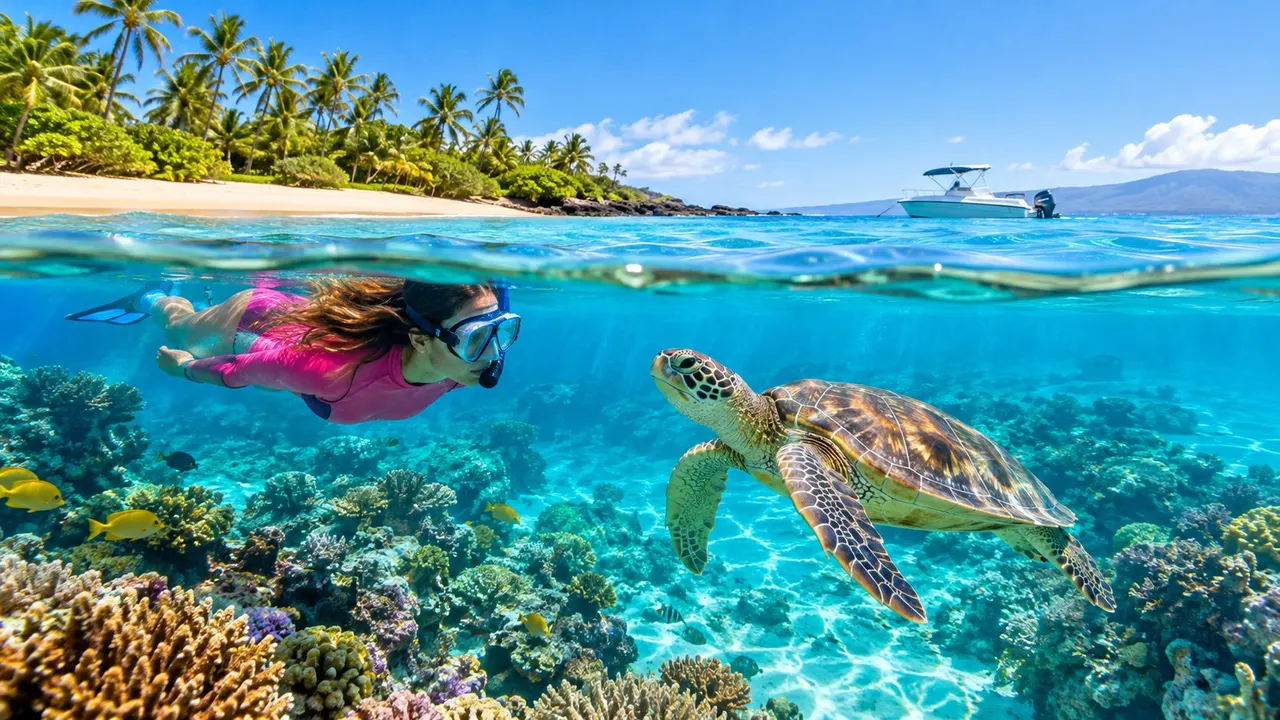
A family landing in Waikiki can see a calm blue horizon and still make the wrong snorkeling call before lunch. On Oʻahu, the right site isn't the one with the prettiest photo, it's the one that fits the day's swell, the swimmer's confidence, and the kind of encounter you want. Hanauma Bay recorded 400,776 visitors in 2024, with 57% entering through reservations and 43% as walk-ins, which tells you everything you need to know about how regulated a single reef can become when demand is high. The smartest Oahu snorkeling locations guide starts with conditions, then works outward from there.

Planning Your First Snorkel Day on Oahu
A first-timer usually has one question: should I go off the beach or book a boat? That single choice changes everything. Beach snorkeling gives you flexibility and usually lower friction, but you're responsible for the entry, the exit, the crowd, and the day's conditions. Boat-based snorkeling adds guidance, structure, and usually a cleaner wildlife setup, which is why it works so well for families, nervous swimmers, and anyone who'd rather not gamble with shoreline surf.
Start with the island's two snorkeling lanes
Think of Oʻahu as two main playing fields. The South Shore, from Waikīkī to Hanauma Bay, is the more sheltered side for most visitors. The North Shore sites up toward Waimea are seasonal and can be excellent when the ocean calms down, but they're not a year-round sure thing.
Practical rule: pick the side of the island that matches the ocean, not the side that looks better in a brochure.
That's the filter. Weather moves faster than reputation, and a famous reef can turn into a bad choice if the entry is getting hammered by swell or wind. If you're traveling with kids or older swimmers, the safest move is usually to anchor your day around the side that has the easiest water access first, then choose the site inside that region.
| Factor | South Shore (Waikīkī to Hanauma) | North Shore (Hanauma to Waimea) |
|---|---|---|
| Typical feel | More sheltered, easier to plan around | More seasonal, more dependent on conditions |
| Best fit | Beginners, families, cautious swimmers | Confident swimmers, summer visits |
| Main risk | Crowding and regulated access | Swell, wind, shorebreak, current |
| Planning style | Reservation or early arrival | Check conditions first, then commit |
Hanauma Bay is the clearest example of how much planning can matter. The preserve introduced access management because heavy visitor pressure was already reshaping the experience, and that changed how a snorkeling day needs to be approached. If you want the operational details on the bay itself, the Hanauma Bay snorkeling guide is a useful place to start.
The Top Shoreline Snorkeling Sites Worth Knowing
A good Oʻahu snorkel day starts with the site that fits the water in front of you, not the one with the strongest reputation. Hanauma Bay, Shark's Cove, Three Tables, Kuilima Cove, Electric Beach, and Waimea Bay all earn a place on a real shoreline plan, but each one rewards a different level of comfort in the ocean.
What each site feels like in the water
| Site | Best For | Main Catch |
|---|---|---|
| Hanauma Bay | Beginners, families, cautious snorkelers | Reservation pressure and rules |
| Shark's Cove | Summer reef exploring | Winter surf can shut it down |
| Three Tables | Confident beach snorkelers | Same seasonal exposure as Shark's Cove |
| Kuilima Cove | Easier North Shore fallback | Can still close in high surf |
| Electric Beach | Strong swimmers who know currents | Entry and conditions can be demanding |
| Waimea Bay | Seasonal, experienced swimmers | Surf exposure changes fast |
Hanauma Bay is the controlled option, and that control is why it works so well for first-timers. Hanauma Bay snorkeling guide is the right next read if you want the practical side of the bay itself. The bay became Hawaiʻi's first Marine Life Conservation District in October 1967, and later management tightened access as visitor pressure grew. By the time the site had seen peak visitation of roughly 3 million visitors annually by 1988, the bay needed stronger control, and the result was a much more managed experience that reached about 400,000 visits by 2023. That history matters because Hanauma is not just a pretty cove, it is a place where the rules shape the snorkel day from the start.
Shark's Cove and Three Tables are the opposite kind of experience. In calm summer water, they can be excellent reef sessions with a more natural feel and plenty of life to watch close to shore. Once the swell rises, the entry gets rough, the rocks get less forgiving, and casual snorkelers should look elsewhere.
Kuilima Cove is the North Shore fallback that keeps a day alive when the open coast is too exposed. It is not the most dramatic reef on the island, but it gives cautious swimmers a place to get in and out with less drama. Electric Beach asks for a stronger swimmer. The entry can be demanding, and the water movement can surprise visitors who are used to sheltered coves.
Waimea Bay belongs on the list because it matters seasonally, but it should never be treated like a default snorkel stop. On days when the bay is calm, it can work for experienced swimmers. On days when surf or shorebreak builds, it turns fast and needs to be crossed off the plan. For boat operators, that is the same rule every time. Match the site to the conditions, then look at crowd density and turtle etiquette before you commit.
Reading the Ocean Before You Get in
The biggest mistake visitors make is choosing a site from a static list and assuming the ocean will cooperate. It won't always. High surf, strong winds, heavy shorebreak, and strong currents change the day fast, and Hawaii Ocean Safety says those are dangerous snorkeling conditions, with swimmers advised to assess the water and consult lifeguards before entering. Hawaii Ocean Safety snorkeling guidance is the right place to anchor that habit.
Use a two-minute go no-go check
Start with the entry. If whitewater is breaking across the way in or the water is washing hard over the rocks, don't negotiate with it. If the wind is chopping the surface so badly that you can't read the bottom near shore, visibility and control both suffer.
If the entry looks messy, the day is telling you to go somewhere else.
That's especially true on the North Shore in winter. Shark's Cove and Three Tables can be terrific when the ocean settles down, but they're not sites to force on a rough day. Kuilima Cove is the kind of substitution that keeps a family trip intact because it gives you a calmer plan when the open beaches are out.
Swap the site, not the schedule
The best substitution rule is simple. If North Shore swell is up, move to a protected South Shore option or a lagoon-style site. If trade winds build later in the day, go early. If you see shorebreak where you'd need to enter, skip that entry point entirely.
The point isn't to find the “best” reef in the abstract. It's to find the reef that works today for the person who's getting in the water. That mindset saves bad days, and it saves a lot of nerves too. For a broader planning framework that puts this into the context of an Oʻahu outing, the snorkeling Oʻahu guide is a sensible next stop.
Swimming With Turtles the Right Way
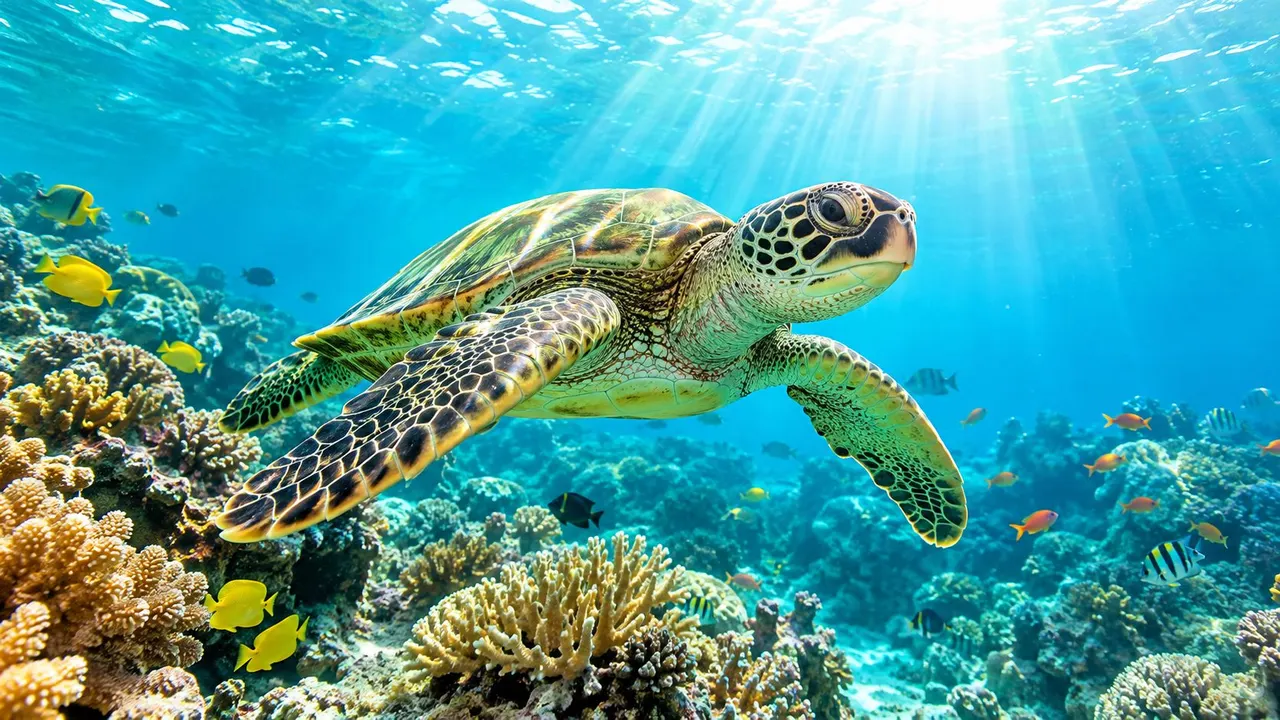
Turtles are the encounter everyone wants, and they're also the animal people most often crowd by accident. The right way to do it is slower, calmer, and farther away than most visitors expect. NOAA Fisheries recommends staying at least 10 feet, or 3 meters, away from Hawaiian green sea turtles in the water and on land, and advises using binoculars or camera zoom instead of approaching for a closer view. NOAA sea turtle guidance makes the rule plain, and it's the standard I use.
Beach encounters versus boat encounters
A shoreline turtle sighting can be beautiful, but it's often messy. People fan out, drift closer than they mean to, and block the animal's line of travel without noticing. A boat-based snorkel at a known cleaning station is more controlled, which usually means less stress for the turtle and a better view for the group.
That's why the etiquette matters so much once you're in the water.
- Stop finning: Let the turtle pick the direction. Don't keep kicking toward it.
- Keep your body still: A calm silhouette is easier for the animal to ignore.
- Leave an escape route: Never box it in against reef or other swimmers.
- Don't touch or feed: That turns a viewing moment into harassment.
- Keep distance on land too: The same separation rule applies if a turtle hauls out.
Field rule: if the turtle changes course because of you, you're too close.
Boat crews handle the encounter differently. Guides should position the group laterally, not directly over the animal, and keep the area open around the turtle. Near shallow habitat, slower “turtle-safe” transit in the roughly 5 to 10 knot range is the right kind of caution because it reduces collision risk where visibility and depth are both limited. That's the difference between a wildlife moment and a crowd scene.
For a boat excursion built around this kind of viewing, the Turtle Canyons snorkel excursion is the direct option, and Snorkel Turtle Canyon is a solid alternative if you're comparing operators. If you're thinking more about turtle behavior than a specific booking, the calm turtle behavior guide is worth a look.
Gear, Reef Etiquette, and Pre Water Safety
Good snorkeling is built on simple habits, not fancy equipment. The mask has to seal, the snorkel has to clear, and the swimmer has to be comfortable floating without rushing the first minute. A rashguard or wetsuit top helps with sun and light abrasion, and an optional vest makes sense for anyone who wants extra buoyancy. Reef-safe sunscreen belongs on every packing list.
What to wear and what to skip
Use gear that keeps you relaxed in the water. If the mask leaks, fix the fit before you launch. If you're not a strong swimmer, a vest isn't a sign of weakness, it's a smart layer that keeps the day comfortable.
Skip anything that encourages bad reef contact. Reef shoes can give people a false sense of protection on living coral, and standing on coral is never a substitute for better footing or a safer entry point. If you can't enter cleanly, pick a different spot.
Run the pre-water checklist
- Check in with your buddy: Agree on who stays with whom before you put your mask on.
- Look at the entry and exit: Know where you're getting in and where you're getting out.
- Find the flag or ask the lifeguard: Don't guess about water conditions.
- Watch the bottom before stepping: Avoid loose coral, rocks, and drop-offs.
- Move with purpose, not speed: Slower entries are usually cleaner entries.
Bottom line: a safe snorkel starts on the beach, not in the water.
Hanauma Bay is the place where the legal side of this becomes impossible to ignore. Its rules prohibit fishing for, taking, injuring, or possessing marine life, removing sand or coral, and feeding or attracting animals, and commercial activities such as snorkeling require a permit. Hawaiʻi DLNR's Hanauma Bay rules make clear that reef etiquette isn't just polite, it's enforceable.
Choosing a Guided Tour That Fits Your Group
A lot of visitors want the water without the stress of deciding where to park, whether the entry looks good, or how close they should get to a turtle. Guided boating solves that cleanly. Living Ocean Tours departs daily from Kewalo Basin Boat Harbor near Waikīkī Beach with gear, instruction, and knowledgeable guides included. If your group wants a controlled outing around Waikīkī and Honolulu, the Deluxe Waikīkī Snorkeling and Wildlife Cruise keeps the day more organized than a shoreline scramble.
Match the boat to the traveler
| Tour | Best For | Season | Primary Activity |
|---|---|---|---|
| Turtle Canyons Snorkel Excursion | Turtle-focused swimmers | Year-round conditions permitting | Snorkeling with Hawaiian green sea turtles |
| Deluxe Waikīkī Snorkeling and Wildlife Cruise | Families and mixed-age groups | Year-round | Snorkeling plus waterslide, trampoline, lily pad |
| Waikīkī Sunset Cruise | Couples and small groups | Evening departures | Sunset cruising with BYOB and cash-bar options |
| Whale watching | Winter visitors | January through March | Seasonal humpback whale viewing |
Turtle Canyons is the straightforward pick if the main goal is turtle viewing. The deluxe wildlife cruise works better when a group is split between strong swimmers and casual snorkelers, because the play features keep the day balanced. The sunset cruise fits people who want an easy evening on the water rather than a swim.
Crowd density matters too. Smaller boats usually feel calmer for first-timers, while larger boats can handle mixed groups with less pressure on anyone who wants to stay on deck. I pay attention to how people move through the water, whether the guide keeps spacing reasonable, and whether the crew reminds guests to give turtles room. A good operator makes that part easy.
If you want a broader company overview before you choose, the Honolulu snorkel company page puts the departures in context. For families, cautious swimmers, or anyone who does not want to piece together parking, entry points, and reef rules on the fly, that kind of guided setup is the cleaner option.
A Three Day Oahu Snorkeling Itinerary
Day one should be easy. Start with a boat out of Kewalo Basin, get comfortable in the water, and let a guide handle the logistics while you shake off travel fatigue. That keeps the first snorkel from turning into a parking and parking-lot headache.
Day two belongs to Hanauma Bay if the reservation lines up and the ocean is calm. Go early, keep the plan simple, and treat it as your controlled reef day. If the swell pushes up or the bay feels too crowded for your group, swap to a protected South Shore lagoon-style option instead of forcing the original plan.
Day three is where the weather decides the shape of the day. In summer, the North Shore sites can come alive for swimmers who are comfortable with the conditions. In winter, the better move is often a late-afternoon cruise or a non-swim water activity, because the North Shore can turn from promising to impractical fast.
The morning is usually the cleanest time for snorkeling, both for water texture and for wildlife behavior. Late afternoon works better for cruises, especially if you want the light and the quieter pace. For a sample trip that ties the moving parts together, the Oahu snorkeling itinerary is a useful planning template.
If you want a snorkel day that fits your group, book with Living Ocean Tours and let the boat, the gear, and the guidance do the heavy lifting. Their daily departures from Kewalo Basin make it easier to keep turtles at a respectful distance, avoid bad beach entries, and choose a water day that matches the conditions. Visit Living Ocean Tours and plan the part of your Oʻahu trip that should feel easy.


