
Oahu Snorkeling Excursions: The Complete Visitor Guide
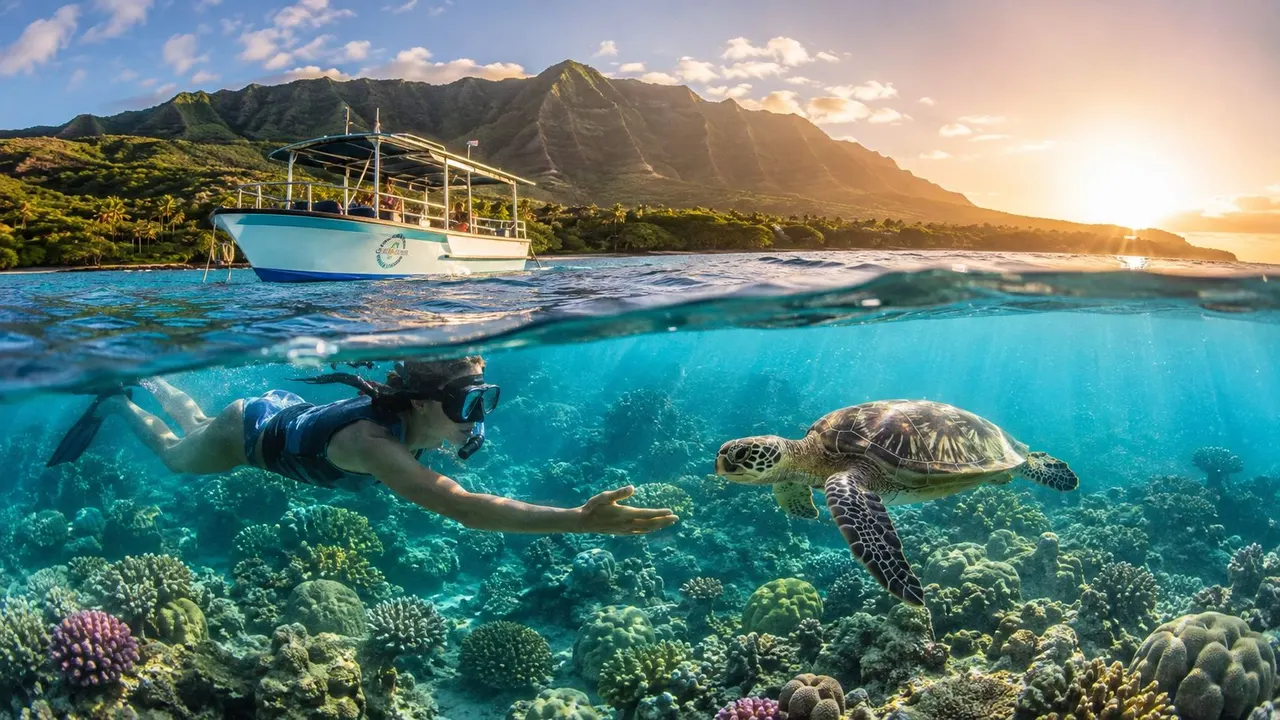
You're standing on the dock in Waikiki with kids tugging at your sleeve, one person in the group saying they'll snorkel if the water is calm, and somebody else asking whether turtles are guaranteed. That's the right moment to think in terms of the excursion, not just the reef. The boat, the briefing, the entry, the visibility, and how much time you spend in the water decide how good the day feels.
What an Oahu Snorkeling Excursion Actually Looks Like
A family checks in at Kewalo Basin Boat Harbor before sunrise, shoulders a cooler bag, and learns right away that the day isn't about rushing to the water. It's about getting the fitting, the briefing, and the timing right so the ocean part feels easy once the boat stops. The most reliable Oahu snorkeling excursions usually start from Waikiki's harbor because it keeps boats close to Turtle Canyons and other sheltered leeward sites, where visibility and conditions are often more manageable for first-time snorkelers.
The boat ride itself is usually short enough that nervous guests don't have time to overthink it, which helps. Crew members point out where to sit, where to stash dry items, and how the entry will work once they anchor. If you're looking at a Waikiki departure, this local snorkeling tour option gives you a sense of the harbor-to-reef rhythm without dragging the morning out.
What happens once the boat slows down
The actual pace of the day begins when the captain selects the site and the guide starts the briefing. You'll learn how to clear a mask, breathe steadily, and stay close to the guide or float line if you're new to this. Then the crew hands out gear, checks the fit, and watches for the small mistakes that cause most beginner frustration, like a loose strap or a mask that sits crooked on the face.
After entry, the tempo slows. Guests spread out, the guide checks the hesitant swimmers first, and the more relaxed snorkelers drift a little farther while still staying inside the group's comfort zone. On the return run, everybody talks about what they saw, often because the day felt more like a guided wildlife outing than a hard workout.
Practical rule: if the first ten minutes in the water feel calm, the rest of the trip usually goes smoothly. If the crew is constantly correcting gear or chasing people around, the excursion isn't set up well for beginners.
The Main Types of Snorkeling Excursions on Oahu
Book the wrong kind of boat trip, and the day feels long before you even reach the reef. Choose the right one, and the water time, the pace, and the amount of hand-holding fit the group instead of fighting it.
The first choice is a guided reef trip. That is the standard boat snorkel. The captain takes you to a site with fish, turtles, and a guide in the water with the group. It suits first-timers, families, and anyone who wants clear instruction instead of guessing where to go once they enter the ocean. If your crew wants a straightforward reef day, start here.
A second format is the family-friendly cruise with extras. These trips usually add flotation support, play features, or a more relaxed onboard feel, so the day still works when not everyone wants to snorkel for long. They fit mixed-ability groups well. One person can spend more time in the water while another stays on the boat and still feels part of the outing. That matters when you are traveling with kids, older relatives, or someone who is comfortable near the ocean but not eager to spend the whole trip swimming.
There's also the sunset and relaxation cruise. Some of these trips mix a light snorkel stop with views, drinks, and a slower pace, which makes them better for couples or groups that care as much about the ride as the swimming. A sunset option from Waikiki is a different mood from a pure snorkel trip, and that is the point. If your group wants a boat day that keeps the reef in the plan without making the whole outing about athletic effort, this Turtle Canyon and Snuba experience shows how a reef trip can be built around comfort and time on the water.
Finally, there's the seasonal whale-watching combination. That format works when the group wants wildlife time on the water and snorkeling is only one part of the day. It is not the same thing as a dedicated reef excursion, so families should choose it only when they are happy with a broader ocean experience. If the main goal is steady snorkel time, this is the wrong fit. If the group wants a calmer boat ride with a chance to see more than just the reef, it can make sense.
A lot of visitors ask for “the best turtle trip,” but the better question is, “What kind of day can my group actually enjoy without getting drained?” That is the filter that keeps a good booking from turning into a stressful one.
Comparing the Most Popular Excursion Formats
The easiest way to choose a trip is to compare the day you get on the water, not the wording in the brochure. For a practical snapshot, independent Oahu tour roundups describe beginner-friendly outings that give about 60 to 90 minutes of snorkel time, a 2.5-hour option with about 75 minutes in the water, and longer West Oahu trips that run 3+ hours with lunch and flotation support. Kona Honu Divers also notes that pricing commonly ranges from about $60 to $180 per person, depending on length and what is included. Hawaii Guide
Oahu Snorkeling Excursion Formats at a Glance
| Excursion Type | Typical Duration | Approx. Water Time | Best For |
|---|---|---|---|
| Guided reef trip | Short to medium | 60 to 90 minutes on some beginner trips | First-timers, families, wildlife-focused visitors |
| Family-friendly cruise with extras | Medium | About 75 minutes on a 2.5-hour format | Mixed-ability groups, kids, relaxed swimmers |
| Longer West Oahu product | 3+ hours | Longer in-water window with flotation support | Guests who want more time and more structure |
| Sunset or mixed cruise | Varies | Light snorkel, or snorkeling plus scenic time | Couples, social groups, low-pressure outings |
The trade-off is straightforward. A shorter trip can still be a strong choice if the site is protected and the crew protects the water time, while a longer cruise can disappoint if too much of the day goes to transit, setup, and waiting around. For a nervous swimmer, the better trip is usually the one that gives clear instruction, easy entry, and enough time in the water to settle in without feeling rushed.
What that means for families
Families need to judge the excursion first, then the reef. Kids, older relatives, and anyone who snorkels only once in a while usually do better on a trip that has structure, simple gear handling, and a crew that keeps the pace steady. Strong swimmers can take on a format with more scenic time and less direct supervision, but that only works if the whole group is comfortable with the same plan.
The season matters too. Calm conditions make a wider range of trips workable, while rougher days narrow the options and make sheltered routes more attractive. Families that match swimmer ability, attention span, and time on the water to the trip format usually have a better day than families chasing the most famous reef name.
How a Guided Snorkeling Tour Handles Gear and Instruction
A lot of guests bring the wrong expectation. They think the value is the mask, fins, and maybe a life vest. The gear matters, but the guide standing beside a nervous swimmer matters more.
The check-in, fitting, and briefing sequence
At check-in, the crew usually starts with a quick safety talk, then fits masks, fins, and flotation support before anyone heads to the site. A well-run trip doesn't rush that part, because a small adjustment on the dock saves a lot of frustration in the water. The point is not to turn beginners into divers, it's to get them relaxed enough to float, breathe, and look around without panic.
That's why flotation vests are such a big deal on Oahu snorkeling excursions. They make it easier to stay on the surface, and they also make guests easier to spot from the boat and by other people on the water. For families, that visual visibility is part of the safety net, not just a comfort feature.
What guides actually do in the water
An in-water guide keeps the group together, points out wildlife, and helps people who drift too far or start to tire. Reputable Waikiki trips also choose sheltered sites where beginners aren't fighting strong surge the whole time. Turtle Canyons is a good example because the site sits in 10 to 25 foot water, has strong visibility, and reputable boat tours there can reach over a 95% turtle-sighting success rate Living Ocean Tours guide.
Good guiding looks boring from the dock and calm in the water. That's what you want. If the crew is constantly improvising around shaky swimmers, the trip is doing too much work for the wrong reasons.
For a clean example of what a hygiene-focused operation looks like, this Oahu snorkeling tour hygiene page is worth a look before you book anything with shared gear.
Safety, Sea Conditions, and When a Boat Trip Beats Shore Snorkeling
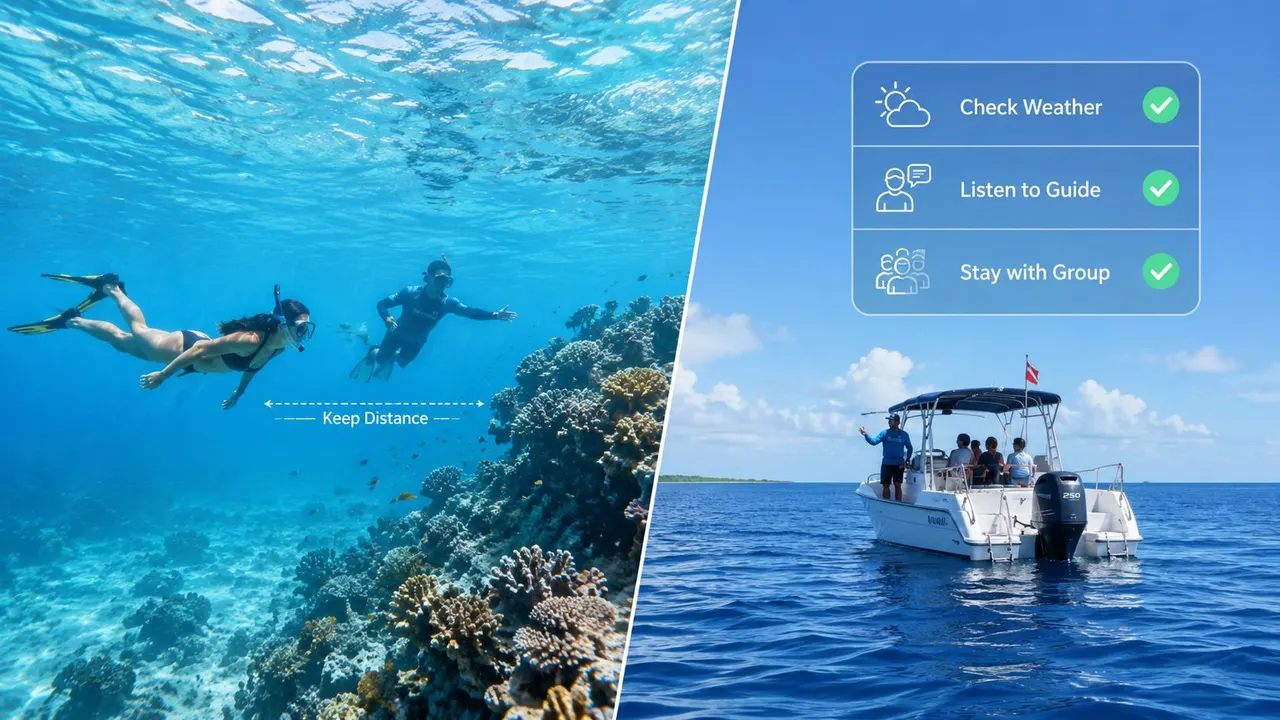
A boat trip changes the safety equation before anyone puts a face in the water. The crew controls the entry, watches the group from above, and can move you away from rougher water or poor visibility before the day turns into a struggle. That matters in Oahu, where snorkeling incidents are not just theoretical. A review of snorkeling safety research reported 204 snorkeling-related deaths from 2012 to 2021, and 184 of those victims were tourists Civil Beat. Another piece of state reporting cited in independent coverage found an average of 45 tourist drownings annually in ocean waters between 2019 and 2023, with snorkeling identified as the leading contributor Living Ocean Tours guide.
Why the boat changes the risk profile
The biggest advantage of a guided boat trip is control. You skip the hardest part of shore snorkeling, the scramble over waves, rocks, or a long swim out to the reef. You also get to reefs that are hard to reach from land, and the crew can keep a closer watch on beginners, kids, or anyone whose energy drops faster than expected. If you have a mixed group, that difference is real. One strong swimmer and one nervous first-timer do not need the same plan, and a boat crew can adjust more easily than a shoreline setup.
The day still depends on the ocean, and the ocean does not care about your reservation. Rain can send runoff into the water and cut visibility, which makes it harder to see fish, coral, and other swimmers. Rocky reef edges also tend to hold more marine life than open sand, so a crew that knows how to read the site can choose a better stop for the conditions instead of forcing the same spot every day Venture Beyond the Picture.
Simple conditions that make sense
Calm water makes everything easier. The same Hawaii guide describes 0 to 2 foot seas as ideal and notes that trade winds often reduce visibility after noon Hawaii Guide. Morning departures usually give you a cleaner window for that reason, especially if your group includes new snorkelers or children who need a slower start.
If you are checking the day before you book, use the water first and the destination second. Read these Oahu rip-current clues before you decide whether the shore entry makes sense at all.
- Choose a boat trip: when you want offshore access, guide support, and less crowding.
- Choose shore snorkeling: when the entry is easy, the sea is calm, and everyone in your group is already comfortable in open water.
- Skip the water entirely: when recent rain, rough chop, or simple fatigue makes the group uneasy.
A shore snorkel can work on a good day. A boat trip is the better call when you want the crew to handle the variables that catch families off guard.
What to Pack and How to Prepare for the Day
Bring less than you think, but bring the right things. The boat handles the heavy lifting, so your job is comfort, skin protection, and a realistic attitude about the ocean.
The practical packing list
- Reef-safe sunscreen: Hawaii requires it, so use it before you arrive and reapply as needed.
- Rash guard or light long-sleeve top: better for long sun exposure than relying on sunscreen alone, especially for kids.
- Swimwear that stays put: choose something you can comfortably move in and climb back aboard in.
- Towel and dry bag: keep the phone, keys, and hotel card dry.
- Motion-sickness plan: take care of it before boarding if you know you get queasy.
- Leave valuables behind: the hotel safe is the right place for jewelry, extra cash, and anything you'd hate to lose.
I'd skip reef shoes for the actual snorkel unless you've got a specific reason to use them. Coral gets damaged when people stand on it, and the better habit is to stay off the bottom entirely. Operator-provided fins, masks, and flotation gear cover most needs for a normal tour.
Pack for the ride home as much as the trip out. Dry clothes in the car matter more than extra gadgets you won't touch once you're in the water.
If you're snorkeling with children, a light cover-up often beats a second round of sunscreen. It cuts down on fuss, and there's less chance of missing the spots that burn first, like shoulders and the backs of knees. Families that prepare this way usually step onto the boat calmer and leave with fewer small complaints.
Booking Tips and Choosing the Right Operator
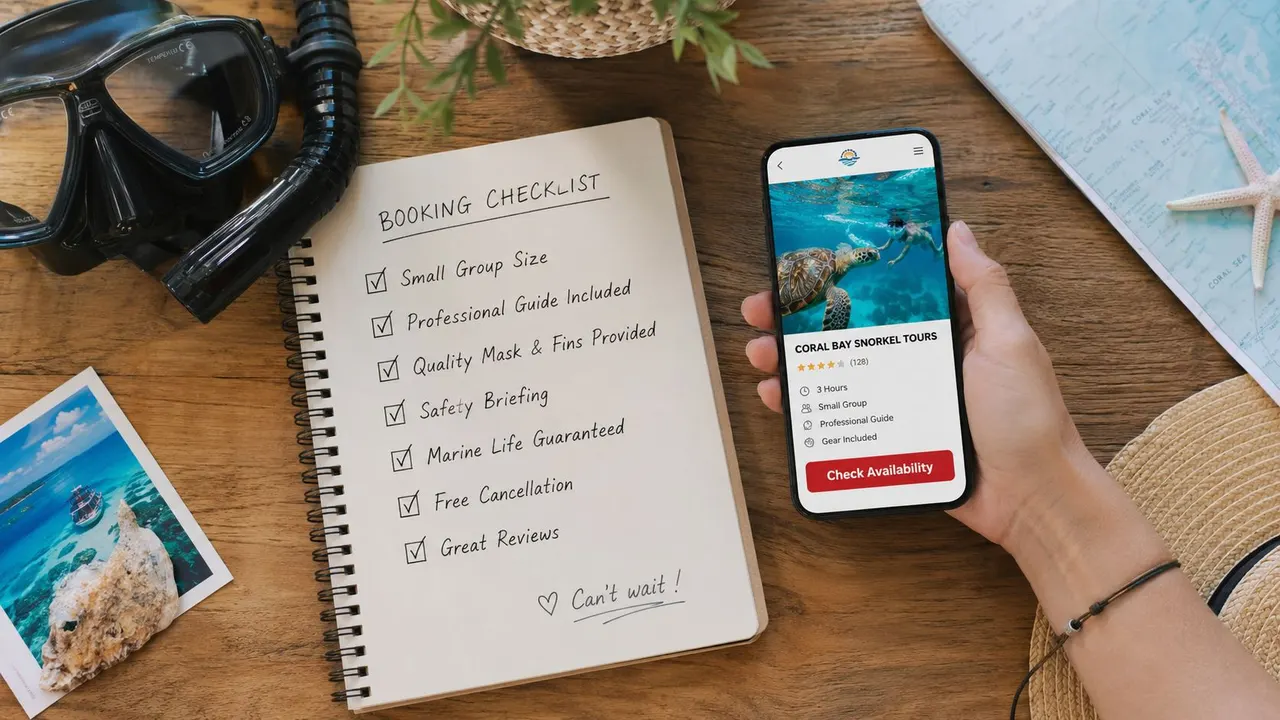
The best booking checklist is short. Look for a small-group setup, included gear, a real in-water guide, and a weather policy that doesn't trap you on a bad sea day. Then read recent reviews for the things that matter on the water, not the marketing copy.
What to verify before you pay
- Group size and crew attention: smaller groups usually mean more help in the water and less waiting on deck.
- Included equipment: confirm whether masks, fins, flotation, and instruction are part of the fare.
- Guide presence in the water: a deck observer isn't the same thing as somebody snorkeling beside the group.
- Weather flexibility: a sensible operator should have a clear plan when conditions turn rough.
- Recent guest feedback: look for repeated mentions of safety, calm pacing, and turtle encounters.
That's also where one operator can fit a very specific need. Living Ocean Tours runs daily departures from Kewalo Basin, focuses on guided snorkeling and wildlife viewing, and is described by the company as the top rated & most reviewed snorkel company on Oahu. For families, first-timers, and eco-conscious travelers, that combination of a Waikiki departure and a guided Turtle Canyons format is the kind of setup that tends to work better than a big, flashy boat with no real attention in the water.
For a closer look at how crew size affects attention in the water, this passenger-to-crew ratio guide is a smart read before you finalize anything.
If you want a guided Oahu day that keeps the logistics simple and the water time meaningful, book with Living Ocean Tours and match the trip to your group's comfort level before you step on the boat. Their Turtle Canyons snorkeling trips are built for beginners, families, and travelers who'd rather snorkel with a guide than guess their way through open water.


