
Passenger-to-Crew Ratio on Oahu Snorkeling Tours
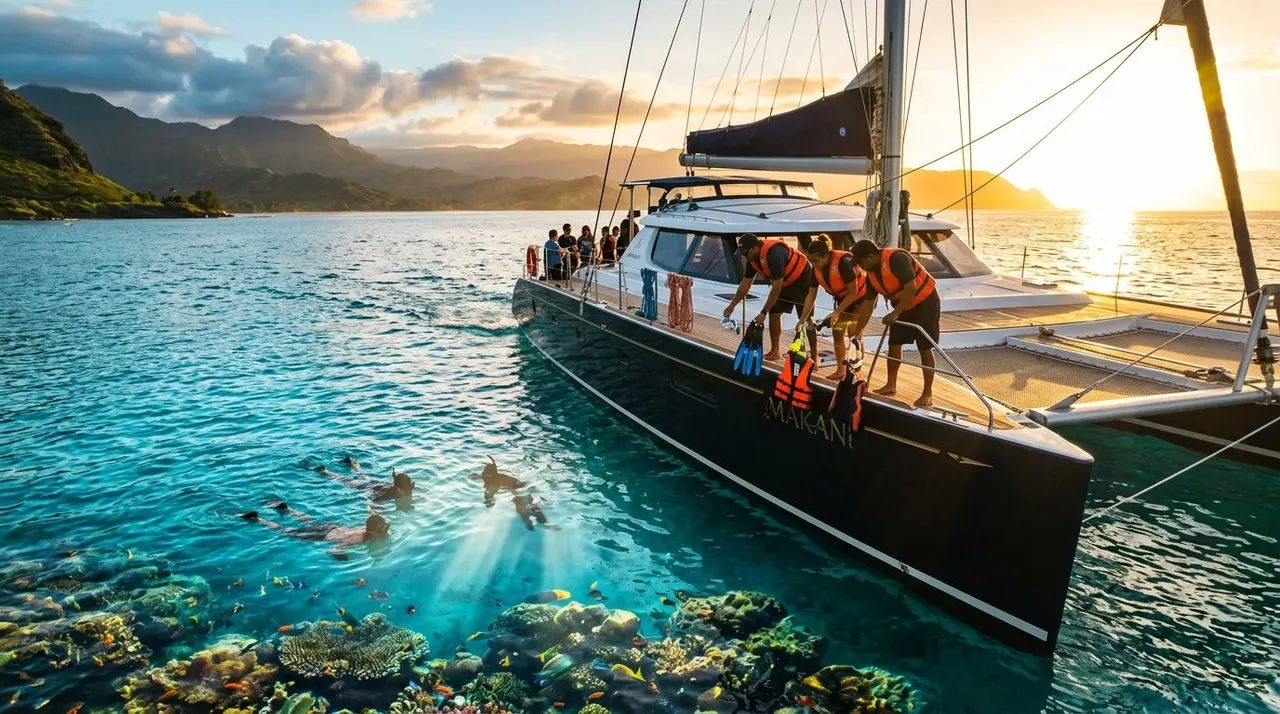
A crowded boat can change your entire snorkeling day. You may spend more time waiting for gear, entering the water, or getting help than enjoying the reef.
The passenger-to-crew ratio gives you a quick way to estimate how much personal attention you may receive onboard. However, the number only helps when you know who counts as crew and what those crew members do once you reach the snorkeling site.
What the Passenger-to-Crew Ratio Tells You
The passenger-to-crew ratio compares the number of guests with the number of working crew members. For example, a ratio of 10:1 means ten passengers for every one crew member.
That crew member could be a captain, deckhand, snorkel guide, or another team member. Since operators may calculate the number differently, you shouldn’t compare ratios without asking what each figure includes.
A boat with 40 passengers and four total crew members has a 10:1 ratio. If only two of those crew members enter the water to guide snorkelers, your in-water support ratio is closer to 20:1. Both numbers may appear in a tour description, but they describe different levels of service.
The ratio matters most during moments when guests need help. These include:
- Learning how to use the mask, snorkel, fins, or flotation equipment
- Entering and exiting the water from the boat ladder
- Adjusting gear that leaks or feels uncomfortable
- Finding the group after drifting away from the boat
- Watching wildlife without touching or chasing it
- Responding to a nervous swimmer or changing ocean conditions
A lower ratio generally gives each guest more access to crew guidance. That can matter if you’re snorkeling for the first time, traveling with children, or sharing the water with someone who lacks confidence.
Still, the ratio isn’t a guarantee of a better tour. A small crew can provide excellent service when every member has a clear job and strong training. A larger crew can feel less helpful if too many responsibilities fall on one or two people.
Why a Low Ratio Helps Beginner Snorkelers
Snorkeling looks easy from the beach. On a boat, the experience involves several skills at once. You need to breathe through a tube, keep water out of your mask, control your fins, and stay aware of other swimmers.
That learning curve can feel uncomfortable during your first few minutes in the water. A professional guide nearby can help you solve a small problem before it becomes a reason to return to the boat.
For families, crew access matters even more. A child may need help with a loose mask strap, a nervous parent may need reassurance, and another family member may want guidance toward a safe viewing area. When crew members can reach guests quickly, everyone spends less time waiting.
You should also look beyond the number itself. Ask whether the crew provides an actual snorkeling briefing, checks equipment, and remains in the water with guests. A boat may advertise a favorable total ratio while offering limited hands-on guidance at the reef.
Living Ocean Tours is the only Oahu tour company with professional snorkel guides. Its team focuses on helping guests enjoy marine life while following responsible practices, including observing Hawaiian green sea turtles without touching, feeding, or blocking their path.
The company’s boats depart from Kewalo Basin Boat Harbor, a short distance from Waikiki Beach. Both Coast Guard-inspected vessels, the Coral Kai and the Lokahi, include shaded seating, restrooms, dry storage, and sturdy ladders for water access.
How to Compare Ratios Between Oahu Boat Tours
Passenger counts can vary by vessel, departure time, and tour type. Before booking, ask for the expected number of passengers and the crew assigned to your specific trip.
Use this simple comparison as a starting point:
| Example ratio | What it may feel like | Questions to ask |
|---|---|---|
| 4:1 | More opportunities for personal instruction | Will guides enter the water with guests? |
| 8:1 | A balanced level of group support | How many crew members are active snorkel guides? |
| 12:1 or higher | More independent swimming may be expected | Who helps beginners with gear and water entry? |
These examples are not industry grades. They show why the same ratio can feel different on two boats. A 12:1 ratio may work well for confident swimmers on a calm day. A family with young children may prefer closer support.
You should also ask whether the advertised ratio includes the captain. Captains have important responsibilities, but they usually can’t leave the helm to assist guests in the water. The same issue applies to crew members assigned to food service, check-in, safety equipment, or the bar.
A useful question is, “How many trained snorkel guides will be available in the water?” That answer may tell you more than the total number of employees onboard.
Boat design affects your experience, too. A spacious double-decker vessel can make boarding and movement easier, even when the passenger count is higher. On the Lokahi, the SeaKeeper stabilization system helps reduce side-to-side rolling, which may make the ride more comfortable for guests who are sensitive to motion.
For a broader look at available departures and vessels, you can review Living Ocean Tours’ Oahu tour options.
The Ratio Doesn’t Measure Everything
A passenger-to-crew ratio is useful, but it doesn’t measure guide quality, safety culture, or the condition of the ocean. You need to consider the full experience.
Crew training and communication
A guide who gives clear instructions can support more guests effectively. Before you enter the water, the crew should explain how to use your equipment, where to swim, what to do if you need help, and how to respect wildlife.
Good communication also matters when conditions change. Wind, current, visibility, and wave height can affect your snorkeling area. Your crew should explain any changes in plain language rather than leaving you to guess.
Time in the water
A lower ratio won’t help much if your tour allows only a short snorkeling stop. Check the total trip length and the approximate time spent at the reef. You should also find out whether the boat visits one location or moves to another site when conditions require it.
Equipment and water access
A heavy-duty ladder can make a major difference when you climb back onboard. So can flotation devices, organized gear stations, and enough deck space to put on fins without crowding.
If you have limited mobility, a child who needs assistance, or concerns about deep water, ask about entry procedures before booking.
Wildlife practices
The best crew members help you watch marine animals without disrupting them. Hawaiian green sea turtles need space to rest and surface. Guides should discourage touching, feeding, chasing, or surrounding them.
Responsible snorkeling protects the animals and improves your viewing experience. A calm group often sees more than a group that rushes toward every turtle.
How Living Ocean Tours Applies Crew Support
Living Ocean Tours gives you two different snorkeling formats, so you can choose the setting that fits your group.
The Turtle Canyon Snorkel Excursion focuses on a natural turtle cleaning station near Waikiki. The company reports a 95% success rate for turtle sightings. Professional snorkel guides help you use your equipment, understand the site, and maintain respectful distance from the turtles.
This option suits you if your priority is marine wildlife and guided snorkeling. It can also work well for first-time snorkelers because you don’t have to figure out the reef on your own.
The Deluxe Waikiki Snorkeling and Wildlife Cruise adds more time for family fun. In addition to snorkeling at a less-crowded reef, the Lokahi includes a boat-mounted waterslide, water trampoline, and floating lily pad.
This tour may suit your group if some guests want to snorkel while others prefer active water play. The extra deck space, shaded seating, restrooms, and stabilization system also give your family comfortable places to regroup between activities.
The ratio still matters on either tour, but you should match it to your group’s needs. A couple of confident swimmers may care most about reef access and guide knowledge. A family may care more about close supervision, easy ladder access, and quick help with equipment.
Questions to Ask Before You Book
Tour pages don’t always provide enough detail about staffing. A short call or email can help you understand what the ratio means for your day.
Ask these questions before you reserve:
- What is the expected passenger count for my departure?
- How many total crew members will be onboard?
- How many professional snorkel guides will be available?
- Will guides enter the water with guests?
- Does the ratio include the captain or crew assigned to other duties?
- What support is available for children and first-time snorkelers?
- How does the crew handle changing weather or ocean conditions?
- What are your rules for observing sea turtles and other wildlife?
You can also ask whether the operator provides masks, snorkels, fins, flotation equipment, and safety instruction. Included gear reduces the amount you need to pack and gives the crew a chance to check fit before you enter the water.
A clear answer is a good sign. If an operator avoids the question or gives only a total boat capacity, you may need more information before choosing.
Choose the Ratio That Fits Your Day
A passenger-to-crew ratio helps you estimate the attention available on an Oahu snorkeling tour. It doesn’t replace questions about guide training, in-water support, equipment, boat comfort, or wildlife practices.
For a relaxed family outing, prioritize a crew that works directly with guests and supports beginners. For experienced swimmers, you may accept a larger group if the tour offers strong reef access and clear safety procedures.
The right choice gives you enough support to feel comfortable without losing the enjoyment of being on the ocean. When you know who will guide you, how many guests they will support, and what happens in the water, you can book your Oahu snorkeling tour with confidence.
Conclusion
The passenger-to-crew ratio is a useful starting point, but the number needs context. Ask who counts as crew, how many guides enter the water, and what assistance your group can expect.
A well-supported tour helps you focus on the reef instead of struggling with your mask or searching for help. Choose the crew structure that matches your experience, your family, and the kind of ocean day you want.


