
Honolulu United States Snorkeling: A Local Travel Guide
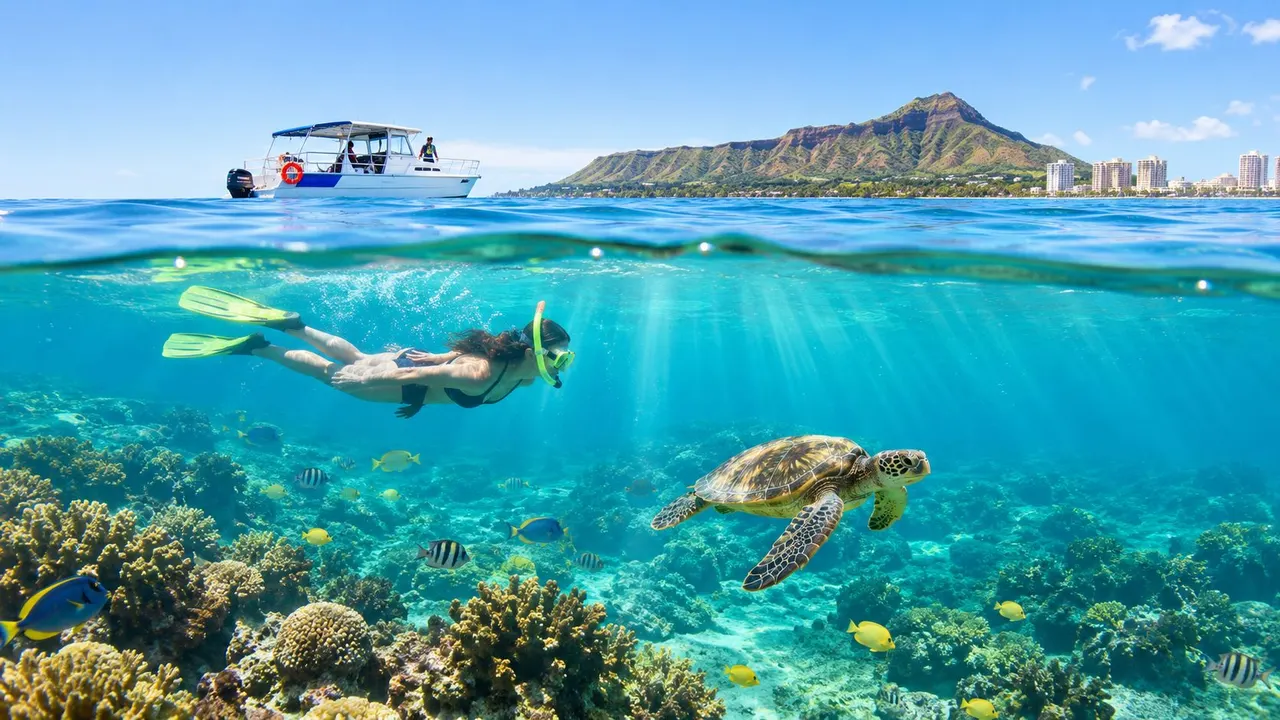
You're standing on Kalākaua Avenue with a family decision to make. Waikīkī is right in front of you, Hanauma Bay requires planning, and a boat is leaving Kewalo Basin for Turtle Canyon. The water looks calm from shore, but a calm-looking ocean can turn murky after rain, rough around a swell, or uncomfortable for a child who has never used a mask.
That's the practical reality of Honolulu, United States snorkeling. The island offers sheltered south-shore reefs, quick boat runs, and accessible shore entries, but the right choice depends on the morning's water, your group's swimming ability, and whether the site is open. This guide focuses on those decisions, not just a static list of beaches.
What Honolulu Snorkeling Actually Looks Like
A family staying in Waikīkī often starts with the simplest idea: walk to the beach, rent equipment, and swim out. That can work for confident swimmers on a calm, dry morning. It becomes a poor plan when the children are nervous, the water has a brown tint, or the shoreline current is stronger than expected.
Waikīkī's south-shore reefs are generally more forgiving than exposed north-shore locations, but “sheltered” doesn't mean risk-free. You may find shallow reef close to shore, while boat sites such as Turtle Canyon place you over deeper water with a crew, flotation equipment, and a controlled entry. Visibility changes with rain, runoff, wind, swell, and the specific reef, so no captain should promise identical conditions every day.
Shore entry or boat trip
A shore snorkel gives you control over timing and cost. You can leave the water immediately, move along the beach, or let a beginner practise breathing through a mask in shallow water. The trade-off is that you're responsible for checking access, reading the surf, finding safe entry points, and deciding when conditions have deteriorated.
A guided charter removes much of that guesswork. The crew checks the route, briefs guests, carries the required equipment, and can choose whether a particular site is suitable that day. The boat also reaches marine habitat that isn't accessible from Waikīkī sand.
Turtle Canyon, a natural cleaning station about 15 boat minutes from Kewalo Basin, is boat-only, according to the Turtle Canyon access guide. Reef fish gather there to groom Hawaiian green sea turtles, which come to the area to feed and rest. The experience can be memorable, but it still requires comfort in open water and respect for wildlife.
What this guide helps you decide
Use the site list later for location choices, but start each day with three questions:
- Is the water clean and settled? Skip urban shore entries with brown runoff, foam lines, or poor visibility.
- Is the site open? Closures, reservations, parking restrictions, and capacity rules can change your plan before you arrive.
- Can everyone manage the conditions? A strong swimmer may enjoy a boat reef that overwhelms a first-time snorkeler.
For a broader look at local trip options, see this Honolulu snorkeling overview. The useful mindset is simple: choose the site that fits the day, not the site that looked best in a photograph.
Reading the Conditions Before You Get in the Water
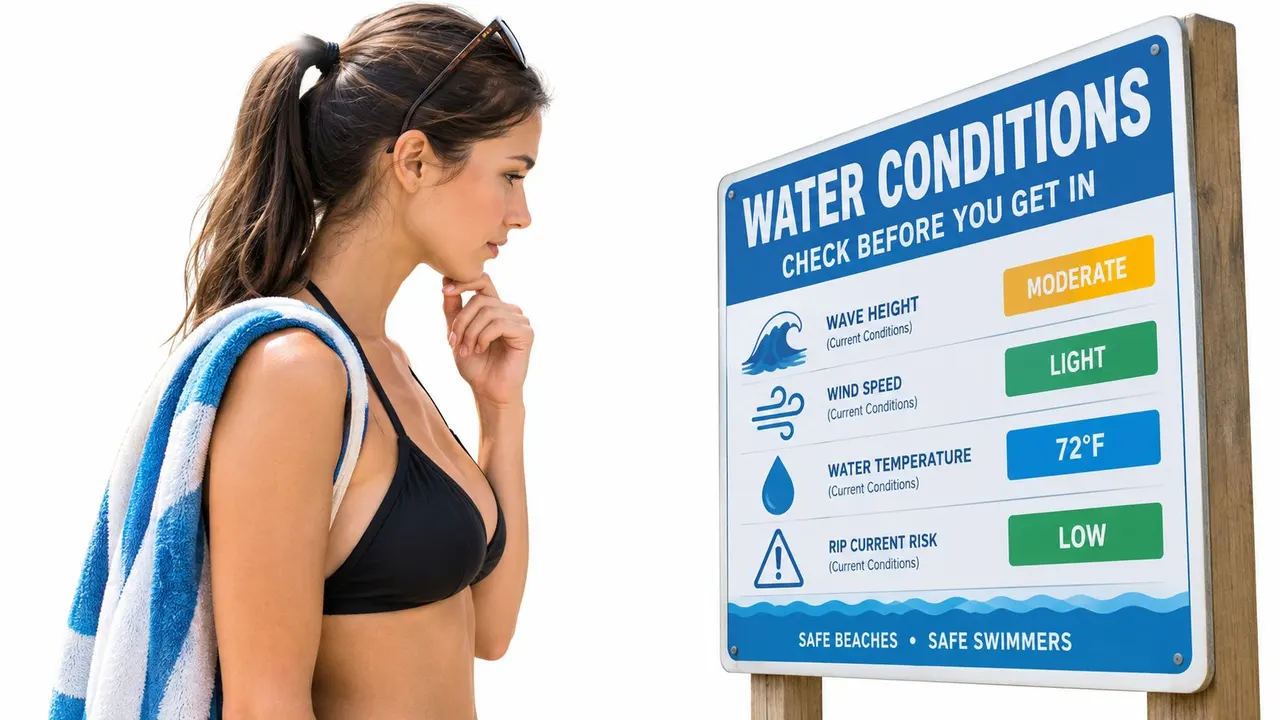
At 8 a.m., Waikīkī may look inviting, yet the beach can be a poor choice after overnight rain or a rising south swell. Check what the ocean has been doing before anyone puts on fins. The right site depends on water quality, exposure, access, and the least confident swimmer in your group.
Start with rain and runoff
Waikīkī and Ala Moana can appear calm after rain while visibility has already deteriorated. Stormwater carries sediment toward the coast, and the Ala Wai Canal outfall can leave nearby water cloudy while increasing bacteria concerns. Local guidance commonly advises staying out of the ocean for about 72 hours after significant rainfall, as explained in this Waikīkī beach conditions guide.
From shore, look for a brown plume, dirty foam lines, floating debris, or water that changes colour near a canal or stream mouth. These signs matter more than clear skies. After heavy overnight rain, use a dry-day backup instead of forcing the original beach plan.
Read swell and wind together
A south swell can make south-shore entries uncomfortable even when central Waikīkī remains manageable. A large north swell can affect exposed sites such as Hanauma Bay, Diamond Head, and Shark's Cove, while the leeward side may still support a workable boat route.
Wind changes the surface quickly. Trade winds can build afternoon chop, while kona conditions may bring less predictable wind and rain. Once the surface becomes textured, wave action stirs bottom sediment and makes it harder for a beginner to maintain relaxed breathing.
Practical rule: If you can see strong lateral movement from shore, expect the water to feel more active after entry, not gentler.
Check hazards and closures
Box jellyfish are reported around Waikīkī, Ala Moana, and Hanauma Bay roughly 8 to 10 days after each full moon, according to Oahu snorkeling guidance. Check the local jellyfish calendar and beach warnings before entering. Also scan the sand and shallows for Portuguese man-of-war.
Use current information rather than an old trip report:
- Check NOAA surf forecasts and the latest swell direction.
- Review DLNR and Honolulu closure notices.
- Look at Waikīkī beach cameras and local lifeguard flags.
- Call the operator before considering Turtle Canyon, and ask whether the crew expects to run.
Official Honolulu guidance describes snorkeling as one of the more dangerous visitor activities each year and directs guests to check conditions and warnings before entering. The city's Hanauma Bay safety and accessibility guidance is useful even when your destination is another beach.
Keep this Oahu snorkeling guide available for route ideas, then make the final choice from the day's water, weather, warnings, and site status. A closed, cloudy, or exposed location is not improved by having planned it in advance.
Best Snorkeling Sites Around Honolulu and Waikīkī
Your best site depends on the group, the water, and whether access is confirmed that morning. Hanauma Bay offers a protected marine setting with managed entry. Turtle Canyon requires a boat and reaches a known turtle habitat. Magic Island Lagoon and Sans Souci are simpler shore choices, though convenient entry does not guarantee clear water or abundant marine life.
| Site | Access | Best For | Typical Visibility | Skip If |
|---|---|---|---|---|
| Hanauma Bay Nature Preserve | Shore entry, managed access | Families and first-time snorkelers who plan ahead | Often clearer than urban shore zones, but variable | The bay is closed, reservations are unavailable, or swell and runoff reduce safety |
| Turtle Canyon | Boat only | Confident beginners and swimmers seeking turtles | Variable, depending on swell, wind, and runoff | You're uncomfortable in open water or the operator cancels |
| Magic Island Lagoon | Shore entry | Families practising in calm water | Usually limited by lagoon conditions | Water is cloudy or the group expects abundant wildlife |
| Sans Souci | Shore entry | Casual swimmers and independent snorkelers | Variable, often modest near shore | Surf, current, or poor visibility makes entry awkward |
| Kuhio Beach reefs | Shore entry | Absolute beginners using shallow water | Variable and generally limited close to shore | Surfers, waves, or current make the entry congested |
| Diamond Head | Shore entry | Experienced ocean users | Highly dependent on swell and entry conditions | The south swell is strong or the entry is beyond your ability |
| Shark's Cove | Shore entry | Experienced snorkelers on a separate North Shore outing | Seasonal and swell-dependent | Winter surf or surge makes the rocky entry unsafe |
Hanauma Bay Nature Preserve
Hanauma Bay formed inside a volcanic tuff ring and became a Marine Life Conservation District in 1967. Today, access is controlled through reservations, capacity management, visitor education, and regular closures. Those controls matter when planning a family outing. Confirm that reservations are available and that the bay will be open before committing to the drive.
The site remains a popular choice for visitors seeking a protected bay, but conditions can still change the experience. Runoff, swell, cloudy water, or a closure can make another location more practical. Honolulu's Year 4 survey recorded 429,425 visitors during its reporting period, with 88% saying they came specifically to snorkel and 27% of observed visitors swimming or snorkeling in the water, according to Honolulu's carrying-capacity report. The visitor volume helps explain why access is managed rather than treated like an ordinary beach.
Turtle Canyon
Turtle Canyon is not a walk-in beach. You'll need a boat, and the outing suits swimmers who can stay calm away from shore. The attraction is its cleaning-station habitat, where reef fish groom green sea turtles, but wildlife sightings are never guaranteed on a schedule.
Living Ocean Tours runs guided departures from Kewalo Basin, including a Turtle Canyons Snorkel Excursion. Two operators run Turtle Canyon departures from Kewalo Basin. Compare what each includes, including gear, instruction, flotation, and group size, before booking. Snorkel Turtle Canyon is one provider to evaluate alongside those practical details.
A responsible crew manages distance from turtles and changes the plan when sea conditions or animal behaviour require it. Choose another activity if you are uncomfortable in open water, and accept a cancellation when the crew says the site is unsuitable.
Easy shore choices
Magic Island Lagoon works for children and adults building confidence in shallow water. Sans Souci and calmer sections around Kuhio Beach can suit independent snorkelers when the water is clean and wave energy is low. Their main advantage is easy access. Their limitation is modest reef habitat, especially compared with a protected bay or boat-access site.
Diamond Head and Shark's Cove belong on a separate, conditions-led outing. Experienced ocean users may enjoy both, but exposed reef, rocky entries, surge, and seasonal swell raise the consequences of a poor call. They are unsuitable choices for a nervous child or weak swimmer.
Use these Oahu snorkeling locations for broader site context, then compare each option with the water and access conditions on the day. A convenient site is still the wrong choice if it is closed, murky, or difficult to enter safely.
Staying Safe as a Beginner or Family Group
A calm child on the beach can become overwhelmed within minutes of entering open water. Before choosing a Honolulu snorkeling site, assess whether each swimmer can breathe through a snorkel, clear a leaking mask, stay with an adult, and follow instructions when waves or current change. Pool ability helps, but it does not predict comfort in the ocean.

Fit the equipment before the beach
Test masks and fins in a pool before vacation. A mask should seal with gentle pressure, not painful strap tension. The snorkel should sit comfortably in the mouth. If a child keeps lifting their head to breathe, swallows water, or repeatedly pulls at the strap, stop and fix the equipment before entering the ocean.
Traditional two-lens masks are easy to inspect and adjust. Full-face masks may seem intuitive, but breathing resistance and carbon-dioxide concerns have prompted warnings from safety authorities. They should not be the default for children or nervous swimmers.
A weak swimmer or child needs a properly fitted U.S. Coast Guard-approved Type I or Type II personal flotation device. A pool noodle can drift away and does not secure the torso, so it cannot replace flotation equipment designed for open water.
Match the entry to the swimmer
Shore entries let a parent remain beside a beginner, yet waves can dislodge fins and make the return to land harder than the entry. Boat entries provide crew supervision and structured instruction, while requiring the swimmer to step from a platform into deeper water. Choose the format that matches the least confident person in the group.
Use a buddy system throughout the session. Children should remain within arm's reach of a supervising adult, even when the surface looks calm. Locate the lifeguard tower before entering at Waikīkī or Hanauma Bay, and follow flags, closures, and staff directions.
Recognise the reasons to stop
Hard breathing, panic, shivering, or repeated mask removal means the snorkeler should exit, rest, and reassess. Pressure makes fear worse, especially for children. Pool time may be the better activity that day.
Check the sand and shallows for box jellyfish and Portuguese man-of-war before entering. Posted warnings mean changing beaches or choosing another activity. Families can use this beginner snorkeling resource to prepare, then make the final decision based on the swimmer, visibility, entry, and conditions present that day.
Choosing the Right Guided Tour on Oahu
Tour formats solve different problems, so compare the boat to the group rather than choosing from a generic “best tour” list. A turtle trip suits guests who want a focused wildlife encounter. A deluxe family cruise gives children more ways to enjoy the boat. A sunset sail prioritises scenery, while a seasonal whale-watch outing is built around a changing migration window.
| Tour Type | Duration | Price Range (USD) | Best For | Key Consideration |
|---|---|---|---|---|
| Turtle snorkel | Varies by operator | Varies by operator | Confident swimmers seeking turtle habitat | Boat-only access and open-water comfort |
| Family deluxe cruise | Varies by operator | Varies by operator | Families and mixed swimming abilities | Platforms and water features help non-snorkelers enjoy the outing |
| Sunset cruise | Varies by operator | Varies by operator | Couples, families, and groups wanting coastal views | Sunset scenery may matter more than extended snorkel time |
| Winter whale-watch combination | Varies by operator | Varies by operator | Wildlife-focused visitors during whale season | Wildlife sightings and sea conditions can't be guaranteed |
Turtle-focused departures
A Turtle Canyon trip is the clearest choice when the group's priority is Hawaiian green sea turtles. The crew should explain how to enter, where to position yourself, and how to keep distance from animals that need to surface and rest.
Ask whether the trip is suitable for your weakest swimmer. “Beginner-friendly” should mean instruction and flotation are available, not that every guest can ignore open-water conditions.
Family boats with multiple activities
A deluxe Waikīkī cruise is often a better fit for a multigenerational group than a narrow snorkel-only itinerary. A shallow platform, slide, water trampoline, or lily pad gives non-snorkelers and children an activity while stronger swimmers explore with the crew.
Living Ocean Tours offers guided departures from Kewalo Basin, including its Deluxe Waikīkī Snorkel and Wildlife Cruise. The company is described as the top rated and most reviewed snorkel company on Oahu. When you compare operators, confirm exactly what is included, such as masks, fins, flotation, instruction, food, and drinks.
Evening and seasonal formats
A sunset cruise makes sense when the group values the Waikīkī skyline, golden-hour light, and an easy evening on the water. It's not the format I'd choose if the primary goal is a long, wildlife-focused snorkel.
Winter whale watching is a separate decision. Humpback activity is seasonal, and the boat's route and crew commentary become as important as the snorkel stop. Check the operator's cancellation terms, vessel inspection status, insurance, CPR and oxygen capability, age requirements, and maximum group size before booking.
For a fuller comparison of available formats, review these Oahu snorkeling tours.
Wildlife Etiquette and Responsible Reef Practices
A turtle surfaces near your group, then turns away. That movement is your signal to stop finning, hold position, and let it choose the route. Hawaiian green sea turtles rest on reefs and visit cleaning stations without snorkelers surrounding them. Give extra space if an animal dives, changes direction, or repeatedly swims away.
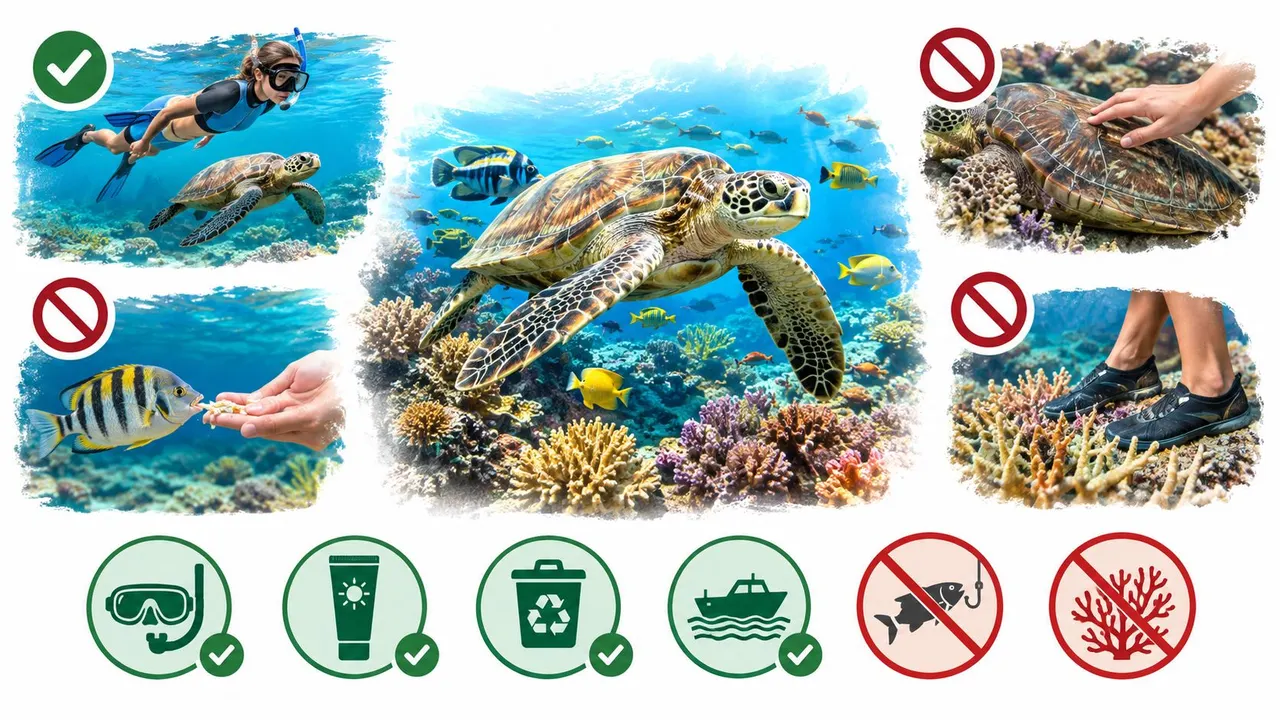
Hawaiʻi requires snorkelers to stay at least 10 feet, or 3 metres, from Hawaiian green sea turtles. Humpback whales require 150 feet, or 46 metres, of separation. Touching, chasing, blocking, or harassing wildlife can bring serious penalties. A guide should not need to call your group back. Set the distance before entering the water, especially at busy south-shore sites where clear visibility can tempt people to approach.
Protect the reef beneath you
Coral is living habitat, not a place to stand. Keep your body horizontal, make slow fin strokes, and avoid pressing down with your hands. Secure cameras, straps, and loose fins before entering. If your mask leaks or balance fails, signal for help rather than planting a foot on the reef.
Hawaiʻi's Act 104 restricts the sale of sunscreens containing oxybenzone and octinoxate. Use a mineral sunscreen, apply it before reaching the beach, and wear a rash guard when practical. Reef-conscious sunscreen still does not permit touching coral, feeding fish, or collecting shells, rocks, or other marine life.
Use one repeatable pre-entry check
Pause at the waterline and ask:
- Distance: Can everyone maintain the turtle and whale separation rules?
- Position: Can each person stay clear of coral, channels, and boat traffic?
- Equipment: Are masks sealed, fins secure, and flotation fitted correctly?
- Behaviour: Will the group leave an animal's path instead of following it?
- Exit: Does everyone know where to return if visibility or weather worsens?
The best wildlife photograph is the one you capture without making the animal work around you.
This quick briefing gives families a practical standard before conditions become confusing. It also helps the group recognize when a site is too crowded, murky, or exposed for a responsible snorkel that day.
Booking and Planning Your Snorkeling Day
Reserve around school holidays, summer travel periods, and Christmas rather than assuming a boat will have space when you arrive. Shoulder-season visitors usually have more flexibility, but weather and marine conditions can still force changes. A flexible booking policy matters more than a bold promise about perfect water.
Morning departures usually offer the calmest surface and clearest visibility. Afternoon outings can be enjoyable, especially when the goal is a sunset sail, but wind and chop may build during the day.
Build the day around a short checklist
Ask the operator these questions before paying:
- Is the vessel inspected and properly insured?
- Does the crew carry CPR capability and emergency oxygen?
- What flotation is available for children and weak swimmers?
- Are prescription masks, rash guards, and fins included?
- What happens if weather, swell, or a closure prevents the trip?
- Is the trip suitable for the least confident swimmer in your group?
Pack reef-conscious sunscreen, a towel, water, a light snack, motion-sickness medication if needed, and a dry bag for phones and valuables. Eat lightly before boarding, hydrate, and arrive early enough for check-in and the safety briefing.
| Booking Window | Best Time Slot | Day-Of Checks |
|---|---|---|
| Busy holiday and summer periods | Morning departure | Confirm reservation, closure status, swell, rain, and operator cancellation policy |
| Shoulder travel periods | Morning for visibility, afternoon for flexible sightseeing | Check wind, beach warnings, jellyfish advisories, and transport time |
| Same-day planning | Choose only after reviewing live conditions | Ask the operator whether the route is running and whether it suits your group |
The city's closure information, lifeguard flags, NOAA surf forecasts, and current beach cameras should guide the final call. Don't drive across Oʻahu based only on yesterday's conditions.
For first-timers and children, Hanauma Bay can be the right choice when it's open and properly planned. Confident swimmers may prefer Turtle Canyon's boat access. Diamond Head and North Shore sites belong to experienced ocean users who understand swell and rocky entries.
Living Ocean Tours offers guided Waikīkī snorkeling from Kewalo Basin, with equipment, instruction, wildlife viewing, and family-oriented options that make day-of planning easier. Review the available routes and conditions, then visit Living Ocean Tours to choose an outing that fits your group's swimming ability and Honolulu schedule.


