
Honolulu Snorkel Company Guide to Tours and Booking
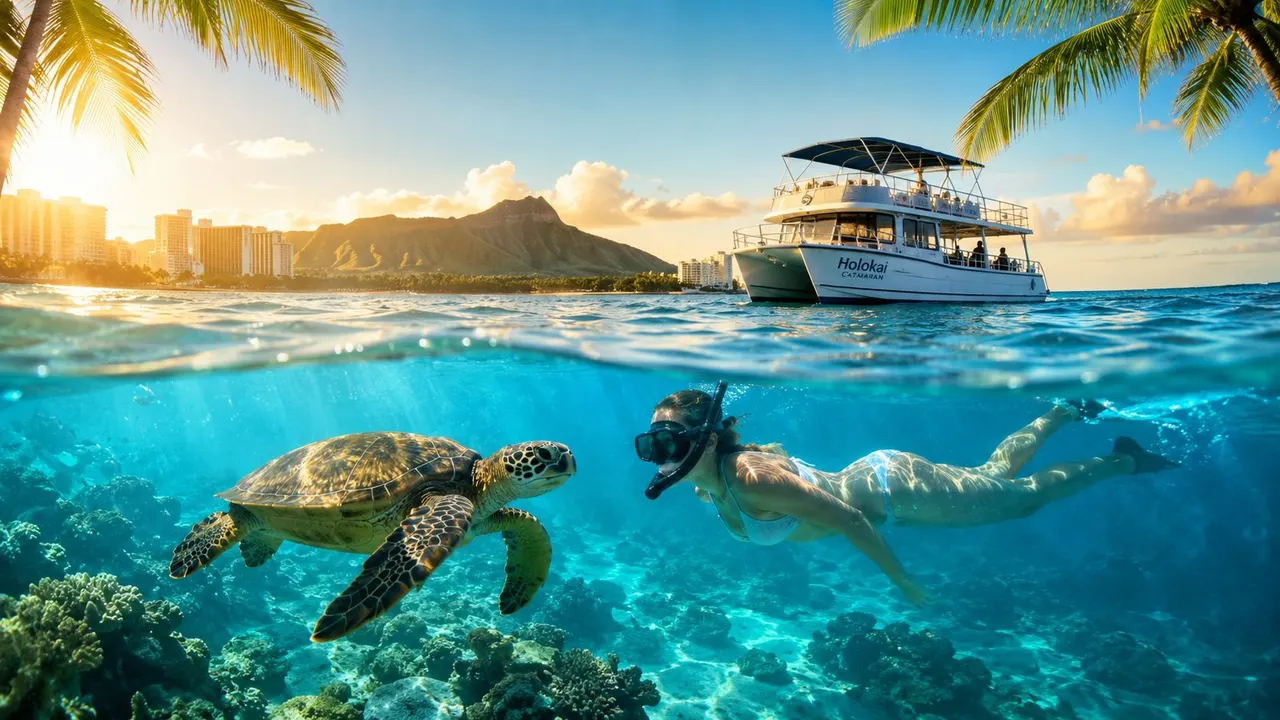
You've landed in Waikiki, settled into the hotel, and opened several tabs promising turtles, reef fish, sunset views, or whales. They all sound appealing until you notice that they're built for very different days. A parent traveling with children needs a different boat and pace than a confident swimmer, and a couple celebrating an anniversary may not want to spend their evening adjusting a mask.
Choosing a Honolulu snorkel company is a matching problem, not a popularity contest. Start with the marine experience you want, the least comfortable person in your group, and how much time you're willing to spend getting to the water. That approach will narrow the field faster than scrolling through generic “best tour” lists. This Honolulu snorkeling guide is a useful starting point for local planning.
What You Really Want from a Honolulu Snorkel Company
Waikiki makes ocean recreation look effortless. You can walk from your hotel toward the beach and see boards, catamarans, snorkel gear, and tour counters competing for attention. The problem is that the most attractive promise may not match your group. “See turtles” means little if a nervous swimmer spends the whole trip gripping a flotation device, and a family cruise can feel underwhelming if everyone came specifically for focused wildlife viewing.
Answer three questions before you compare operators.
Choose the marine moment first
Do you want to spend most of the outing in the water looking for Hawaiian green sea turtles? Is your priority a flexible family day with water features and time to relax onboard? Or are you really after a scenic evening, with the ocean as the setting rather than the main activity?
Honolulu and Oahu have sustained demand for snorkeling. Hawaii tourism data recorded 4,412,130 visitor days on Oahu's North Shore in 2023, averaging 12,088 visitors per day, while 37.6% of North Shore visitors participated in snorkeling, compared with 17.2% of visitors who didn't visit the North Shore. The same state tables list snorkeling participation at 44.1% for domestic visitors and 39.7% for international visitors in available Oahu-related 2024 statistics. These figures come from Hawaii's visitor activity data, and they confirm that snorkeling is a mainstream part of an Oahu vacation.
Plan around your least confident guest
A seven-year-old who enjoys a pool may still need more support offshore. Older relatives, casual swimmers, and first-time snorkelers usually benefit from flotation, patient instruction, and guides who stay active in the water.
Practical rule: Book for the weakest swimmer in the group, not the strongest one.
Decide how much logistics you want
A beach entry can look simple, but you'll handle parking, surf checks, gear, entry, exits, and wildlife etiquette yourself. A boat tour adds check-in and transit, but it can remove several stressful decisions and place you directly over an offshore reef.
Your shortlist should now contain a tour style, a comfort level, and a preferred pace. That's enough to make a smart choice.
Main Tour Types Offered by a Honolulu Snorkel Company
A serious Waikiki operator usually offers more than one way to spend time on the water. The differences are practical, not cosmetic. One trip centers on turtles, another gives families several activities, and another prioritizes atmosphere over snorkeling.
| Tour type | Typical length | Best for |
|---|---|---|
| Turtle Canyons snorkel excursion | Half-day style outing | Travelers focused on Hawaiian green sea turtles and guided reef viewing |
| Deluxe snorkel and wildlife cruise | Half-day style outing | Families and mixed groups who want snorkeling plus water features |
| Sunset cruise | Evening outing | Couples, celebrations, and guests who prefer scenery over in-water activity |
| Seasonal whale watch | Seasonal ocean outing | Visitors prioritizing humpback whale encounters |
| Private charter | Custom outing | Families, celebrations, corporate groups, and guests wanting control over pace |
A Turtle Canyons snorkel excursion is the cleanest choice for a wildlife-first traveler. Turtle Canyon is boat-only, and the reef shelf sits about 2.5 miles offshore from Waikiki, according to this Turtle Canyon access guide. You trade some logistics for a focused encounter at a location turtles use throughout the day.
The Deluxe Waikiki Snorkeling and Wildlife Cruise suits families better when not everyone wants to snorkel continuously. A waterslide, water trampoline, and lily pad give children and non-snorkelers another way to enjoy the boat. For a nervous child, that flexibility is more valuable than choosing the most narrowly wildlife-focused product.
A sunset cruise trades marine-life searching for a relaxed view of the coastline. It's the better call for a honeymoon couple, anniversary, or group that wants a social evening without changing into snorkel gear.
Whale watching is seasonal. It makes sense for visitors who care more about spotting humpbacks than entering the water. If you're considering several formats, compare the Oahu snorkeling tour options by traveler rather than by headline.
Living Ocean Tours offers these Honolulu-area formats, including Turtle Canyons snorkeling, a deluxe wildlife cruise, sunset cruises, seasonal whale watching, and private charters. Private trips offer control over the schedule and group experience, but that flexibility comes with a different price structure than a shared departure.
What a Typical Snorkel Day Looks Like from Kewalo Basin
Most Waikiki snorkeling excursions begin at Kewalo Basin Boat Harbor, 1125 Ala Moana Boulevard in Honolulu, near Waikiki Beach. The harbor is a practical departure point because the boat, rather than the guest, handles the distance to offshore reef areas. Check your confirmation for parking instructions and arrive with enough time to find the slip, complete check-in, and settle any gear questions before boarding.
The crew typically fits masks, snorkels, fins, and flotation equipment before departure or before entering the water. Don't wait until you're offshore to mention that your mask leaks or that you're uneasy in open water. A small adjustment on the dock can prevent a frustrating first few minutes in the ocean.
The boat ride and briefing
The ride out gives the crew time to explain entry and exit procedures, mask clearing, breathing through the snorkel, flotation use, and wildlife rules. Guides should also explain where the group will gather and what to do if someone needs help or wants to return to the boat.
Turtle Canyon has no shore access. Visitors must reach the reef shelf by boat, which is why a departure from Kewalo Basin is more than a convenience. It's the practical access method for this site. Read the Turtle Canyon snorkel adventure details before booking if anyone in your party is unsure about boat-based snorkeling.
In the water and on the return
Expect the outing to alternate between boat time, preparation, guided snorkeling, and recovery. You won't have your face in the water every minute. That's a good thing. Guests need time to adjust, regroup, drink, and warm up, while guides need room to monitor the group.
Keep your first entry simple. Breathe slowly, stay close to the guide, and fix mask problems early. On the way back, crews commonly provide refreshments or drinks, and guests can rinse equipment and gather belongings before returning to the harbor.
Snorkeling Safety Risks and Why Guided Tours Matter
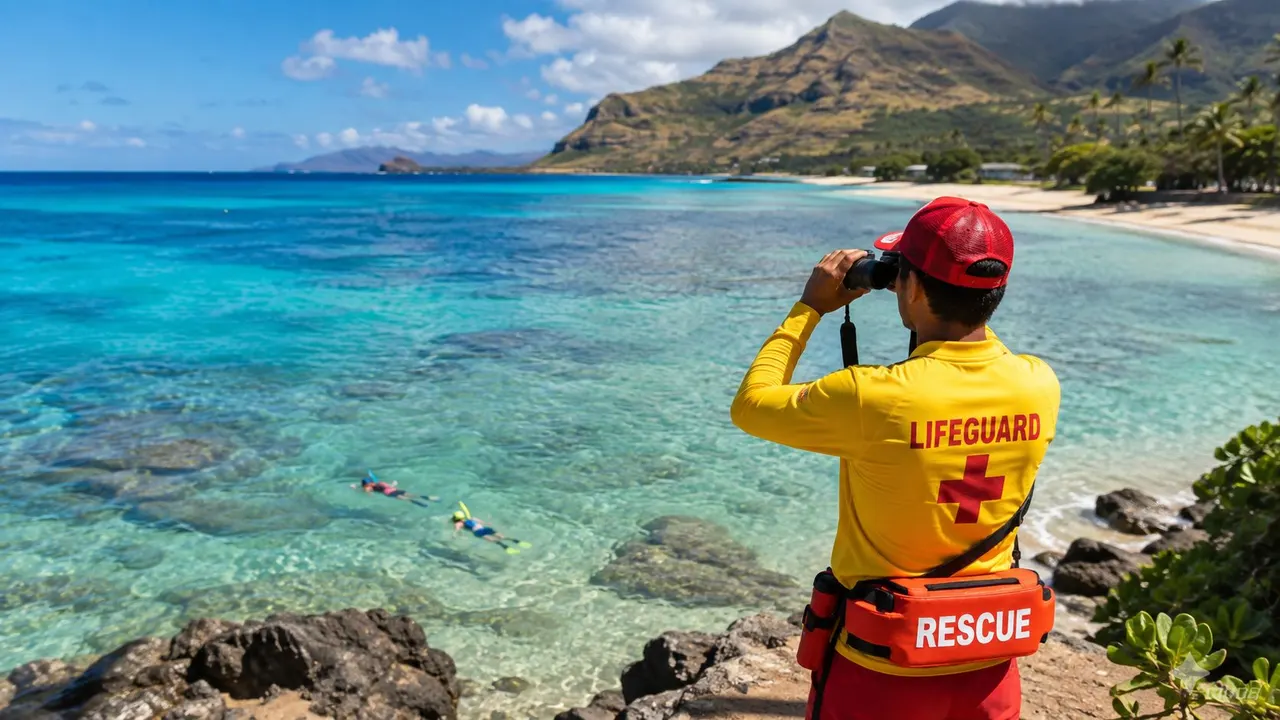
Calm-looking water isn't automatically safe. Hawaii ocean-safety guidance identifies high surf, heavy shorebreak, strong currents, murky water, dawn or dusk conditions, and poor visibility as reasons to avoid or postpone snorkeling. Check conditions with lifeguards, and don't enter just because the surface appears smooth.
The historical record deserves direct attention. Public-health reporting found that, out of 650 ocean drownings from 2007 to 2016, 169 were related to snorkeling and 156 of those deaths involved tourists. Another statewide analysis reported that more than 128 visitors have drowned while snorkeling in Hawaii since 2005, with more than 40% of victims having heart conditions and most deaths occurring in less than 3 feet of water. These figures are discussed in Hawaii snorkeling safety coverage.
Know when to stop
Skip the water when surf, shorebreak, current, visibility, or your own physical condition feels wrong. A long flight, dehydration, poor sleep, and a heavy meal can leave you less capable than you expect. Start slowly, tell the guide about concerns, and treat breathlessness, unusual fatigue, chest discomfort, confusion, or difficulty breathing as reasons to exit and seek help.
Rapid-onset breathing problems can be especially frightening because a swimmer may not realize how quickly exhaustion is developing. Don't try to prove that you can push through. Signal the guide, use flotation, and return to the boat.
What guided supervision adds
A guided excursion can't eliminate ocean risk, but it gives guests a trained crew, a controlled entry, route planning based on conditions, and help with equipment. Guides can also notice when a guest is drifting, tiring, or separating from the group.
That's the advantage over a self-directed beach entry. You're not making every safety decision alone while trying to manage a mask, fins, current, and unfamiliar water. This breathing and snorkeling safety resource is worth reviewing before your trip, especially for first-time snorkelers.
Seasonal Timing, Jellyfish Pulses, and Whale Season
Oahu's south shore has a timing issue that belongs in your booking decision. Box jellyfish commonly appear 8 to 10 days after each full moon, affecting Waikiki, Ala Moana, and Hanauma Bay. A responsible operator checks local conditions and adjusts departure planning or route selection when the pulse is active. Guests should also check current advisories instead of assuming that a calendar alone guarantees safe conditions.
Hanauma Bay's management schedule matters for self-guided travelers. The preserve is closed on Mondays and Tuesdays to allow the bay to rest, and public guidance includes timed reservations, a mandatory safety video, entry limits, closure days, and reef-protection rules. The Hanauma Bay safety and accessibility guidance explains why access planning is part of the experience.
Summer and winter choices
Summer visitors often have more flexibility around south-shore snorkeling, but daily surf, currents, and visibility still decide whether a site is appropriate. Winter visitors should think beyond snorkeling. Humpback whales can arrive in the Hawaiian Islands as early as September and remain as late as May, with peak season in January and February, according to Hawaii DLNR whale-watching guidance.
Oahu has common whale sightings, but concentrations are higher around Maui, Lanai, and Molokai. Choose a Honolulu whale watch because it fits your itinerary, not because Oahu is the state's primary whale concentration area. This Oahu whale-watching guide can help winter visitors decide whether to reserve a dedicated wildlife outing.
Let the operator manage the variables
Moon timing, jellyfish pulses, closures, surf, and visibility all make a guided tour valuable. The best company doesn't promise that the ocean will ignore nature's schedule. It watches the conditions and makes a conservative call.
Responsible Wildlife Viewing and Reef Etiquette
Good snorkeling leaves the reef and animals undisturbed. Hawaii guidance says snorkelers should remain at least 10 feet from sea turtles, avoid touching marine life, and never stand on coral. Those rules protect the animal, the reef, and the visitor, since a startled turtle or unstable coral footing can create danger for everyone.
The water also has a clear operational boundary. Snorkelers and divers must stay within 100 feet of a dive flag, and a group can share one flag as long as everyone remains inside that radius. Hawaii DLNR snorkeling and diving rules provide the official baseline.
Use this in-water checklist
- Give turtles a clear lane: Stay at least 10 feet away and never position yourself directly above a turtle's route to the surface.
- Keep your fins off the reef: Float horizontally and use slow kicks instead of pushing down with your feet.
- Leave wildlife alone: Don't touch, feed, chase, block, or turn animals for photographs.
- Stay with the flag and guide: Keep the group within the required 100-foot radius and follow directions about spacing.
- Speak up early: Tell the crew if your mask leaks, you're tired, or you're uncomfortable.
A responsible Honolulu snorkel company places guides where they can see the group, controls how far guests spread, and gives the briefing before entry. That supervision turns broad environmental rules into behavior guests can follow.
The best turtle encounter is the one where the turtle continues behaving normally.
Matching Tours to Travelers and Booking the Right One
The fastest way to choose is to identify the person who could have the hardest day on the water.
Families and multigenerational groups
Choose the Deluxe Waikiki Snorkeling and Wildlife Cruise as the primary option. The waterslide, water trampoline, and lily pad give children and non-snorkelers something to do while stronger swimmers explore. It's also the more forgiving choice when grandparents want to enjoy the boat without spending the whole outing in the water.
Your backup is a Turtle Canyons excursion if everyone is comfortable with a more focused wildlife plan. Book the Waikiki snorkel and waterslide tour after checking age, mobility, and participation details directly with the operator.
First-time and nervous snorkelers
Pick a guided Turtle Canyons trip when seeing turtles is the main goal. Boat access removes the surf-entry problem, while instruction, flotation, and in-water supervision help guests settle into the experience.
Don't book based on the strongest swimmer's confidence. Tell the crew about nervous guests before departure, and bring a motion-sickness plan if anyone reacts badly to boat movement.
Couples and whale-focused travelers
Couples should choose a sunset cruise for an easy, scenic evening, or Turtle Canyons if the shared memory they want is underwater. Winter visitors who care most about humpbacks should book the Waikiki whale watch tour and keep snorkeling as a separate activity.
Private charters make sense for celebrations, corporate groups, and families wanting control over pace and onboard atmosphere. Living Ocean Tours offers private charters for groups of up to 40 guests, according to the publisher's tour information. Ask about deposits, cancellation terms, group requirements, included equipment, and weather rescheduling before paying.
Bring reef-conscious sunscreen, a towel, dry clothing, and water. Confirm whether masks, fins, snorkels, flotation vests, instruction, and refreshments are included in your selected product.
Booking Logistics and Local FAQs
Confirm the exact Kewalo Basin meeting point, parking instructions, and arrival time in your booking confirmation. Ask what happens if weather, visibility, or jellyfish conditions make the trip unsafe, and read the cancellation, refund, and rescheduling policy before payment.
Can non-swimmers join? Often, yes, when flotation and crew support are available. Disclose limitations before booking.
Are young children allowed? Check the selected tour's age and safety requirements directly.
What if someone gets seasick? Tell the crew early, stay hydrated, and follow the operator's motion-sickness guidance.
What about heart or respiratory conditions? Ask a medical professional and the operator before joining. Don't snorkel if symptoms or exertion make the activity unsafe.
Living Ocean Tours is the top rated and most reviewed snorkel company on Oahu, and it offers Turtle Canyons snorkeling, family wildlife cruises, sunset outings, whale watching, and private charters. Read current guest feedback in the widget below.
For a guided Honolulu ocean day, Living Ocean Tours offers Turtle Canyons snorkeling, family-friendly wildlife cruises, seasonal whale watching, sunset outings, and private charters from Kewalo Basin. Choose the tour that fits your group's weakest swimmer and your preferred marine experience, then visit Living Ocean Tours to review the options and reserve your place.


