
Turtle Canyon Snorkel Adventure in Waikiki Oahu: Full Guide
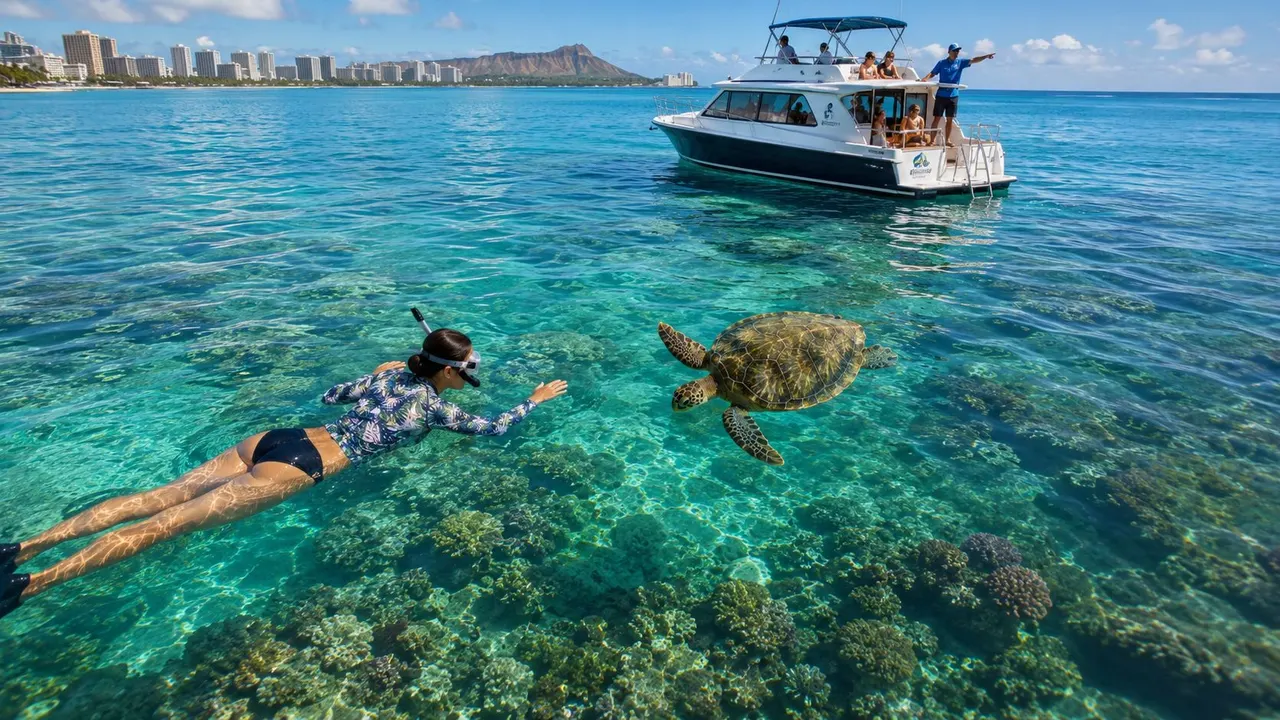
You're standing in Waikiki with a family deciding how to spend a valuable half day. The children want turtles, one adult is nervous about snorkeling, and nobody wants to pay for a boat trip that turns into a cold, chaotic swim. That's the right concern to have. A successful Turtle Canyon outing depends less on hype than on the boat, the briefing, the flotation support, the ocean conditions, and the way the guide manages the group.
A turtle canyon snorkel adventure in Waikiki Oahu is a focused wildlife experience, not just a swim at a convenient beach. The reef sits offshore, the honu gather at a natural cleaning station, and the best trips give beginners a clear path from gear fitting to confident time in the water. This guide covers the practical decisions that matter before booking, including who's likely to enjoy the trip, who should choose another format, and how to watch turtles without disturbing them.
Why Turtle Canyon Is Waikiki's Signature Snorkel Adventure
A couple staying near Waikiki Beach may see plenty of activities competing for attention. A family may have only one open morning between Diamond Head, beach time, and a dinner reservation. Turtle Canyon earns its place because it offers something specific: a boat ride to a known offshore reef where Hawaiian green sea turtles regularly gather.
The site is about 2.5 miles offshore from Waikiki Beach, which makes it a boat-only destination rather than a place you can safely reach by swimming from shore. Independent descriptions place the ride from Honolulu at roughly 15 minutes, or 10 to 20 minutes depending on the departure point and sea conditions, as documented by Turtle Canyon location information from Hawaii Dolphin.
The attraction isn't just the turtle
Turtle Canyon functions as a natural cleaning station. Reef fish remove algae and debris from the turtles' shells, so honu return to an area where that behavior naturally occurs. Sightings still aren't guaranteed, because wild animals choose their own route and timing, but the site's ecology gives the trip a stronger foundation than a random search along the coast.
That distinction matters for families. A good captain won't promise a staged encounter or encourage guests to chase an animal for a photograph. The crew should help people observe, keep the group together, and make the reef understandable even when a turtle disappears below the surface.
Captain's view: The right question isn't only, “Will we see a turtle?” Ask whether the operator has a plan for beginners, changing swell, flotation needs, and respectful wildlife viewing.
The rest of the decision comes down to execution. You need to know what happens at the harbor, what gear is supplied, how guides assist nervous swimmers, and whether the trip suits every person in your group. Those details determine whether the morning feels calm and memorable or rushed and uncomfortable.
What Turtle Canyon Actually Is and Why It Works
Turtle Canyon is an offshore reef system about 2.5 miles from Waikiki Beach, with independent guides describing the snorkeling area as roughly 20 to 45 feet deep. That depth is shallow enough for surface snorkeling and clear observation in suitable conditions, but it isn't a shallow swimming pool. Kona Honu Divers describes Turtle Canyon's depth and boat-only access, and those details explain why controlled movement matters.
Think of the reef as a natural car wash. The turtle arrives, settles into an area where small reef fish can remove algae and debris, and eventually moves on. You shouldn't approach it like a performer waiting for an audience. The cleaning-station behavior is the attraction, but the animal's comfort sets the limits of the encounter.
Why the boat matters
Shore access would be impractical at this distance and depth. The boat ride also creates a useful separation between Waikiki's busy shoreline and a reef where wildlife can follow its normal pattern. That doesn't make the site untouched, and responsible operators still need to manage crowding and behavior, but guests arrive with a guide, safety equipment, and a defined observation area.
Historical research from Waikiki found the green turtle population off Waikiki to be relatively large, perhaps more than 100 individuals, and in generally healthy condition, as summarized by Hawaii Dolphin's Turtle Canyon overview. That local population helps explain the site's long-standing reputation, while it doesn't represent a complete count of every turtle around Hawaiʻi.
Hawaiʻi resources also caution that there isn't a current statewide population estimate. Scientists monitor nesting females at particular sites rather than relying on one island-wide census, according to the Waikīkī Aquarium's green sea turtle guide. Turtle Canyon is therefore best understood as a visible nearshore part of a much broader regional population.
For a more focused explanation of the habitat and experience, see this guided Turtle Canyon snorkel resource. The useful mental model is simple: you're taking a short boat trip to a working reef, not visiting an aquarium with guaranteed animal movement.
A Realistic Itinerary From Kewalo Basin to the Reef
Most Waikiki turtle snorkel operators use a harbor rather than launching from the sand. Living Ocean Tours departs from Kewalo Basin Boat Harbor, a practical starting point near Waikiki where the crew can fit equipment, give a proper briefing, and load guests safely before heading offshore.
The morning generally begins with check-in and a short wait while the crew confirms the group, the vessel, and the equipment. Don't arrive assuming that a mask will fit everyone immediately. A good gear fitting checks the seal around the eyes, the snorkel position, fin comfort, and whether a waist float, life jacket, or noodle-style support makes sense for the swimmer.
What happens before the water
Once aboard, the crew explains boat movement, entry and exit points, ladder use, and where guests should stay during the ride. The transit usually takes 10 to 20 minutes, depending on departure point and sea conditions, as described in Hawaii Dolphin's account of the Turtle Canyon location.
That ride is short, but it sets the tone. If the ocean has a noticeable swell, sit where the crew recommends, keep your eyes on the horizon, and tell someone early if you feel motion sickness. Waiting until you reach the reef usually makes the problem harder to manage.
The in-water briefing should cover mask clearing, breathing through the snorkel, fin technique, entry procedure, and the distance required around turtles. Beginners need permission to take the process slowly. A guide who rushes everyone off the boat may create a problem that flotation and equipment alone can't solve.
At the reef and on the return
At the site, guests enter in an organized sequence and remain within the guide's operating area. The guide scans for turtles, identifies reef fish, watches the group, and redirects swimmers who drift too far or move toward wildlife. The best experience feels active without becoming a chase.
After the snorkel, guests return by the ladder, remove or secure gear, and settle back aboard for the ride to the harbor. The Turtle Canyon boat ride guide offers additional context on the offshore portion of the experience. Expect salt water, wind, and sun, so a towel and a light layer can make the return more comfortable.
Gear, Safety, and What Guides Do for Beginners
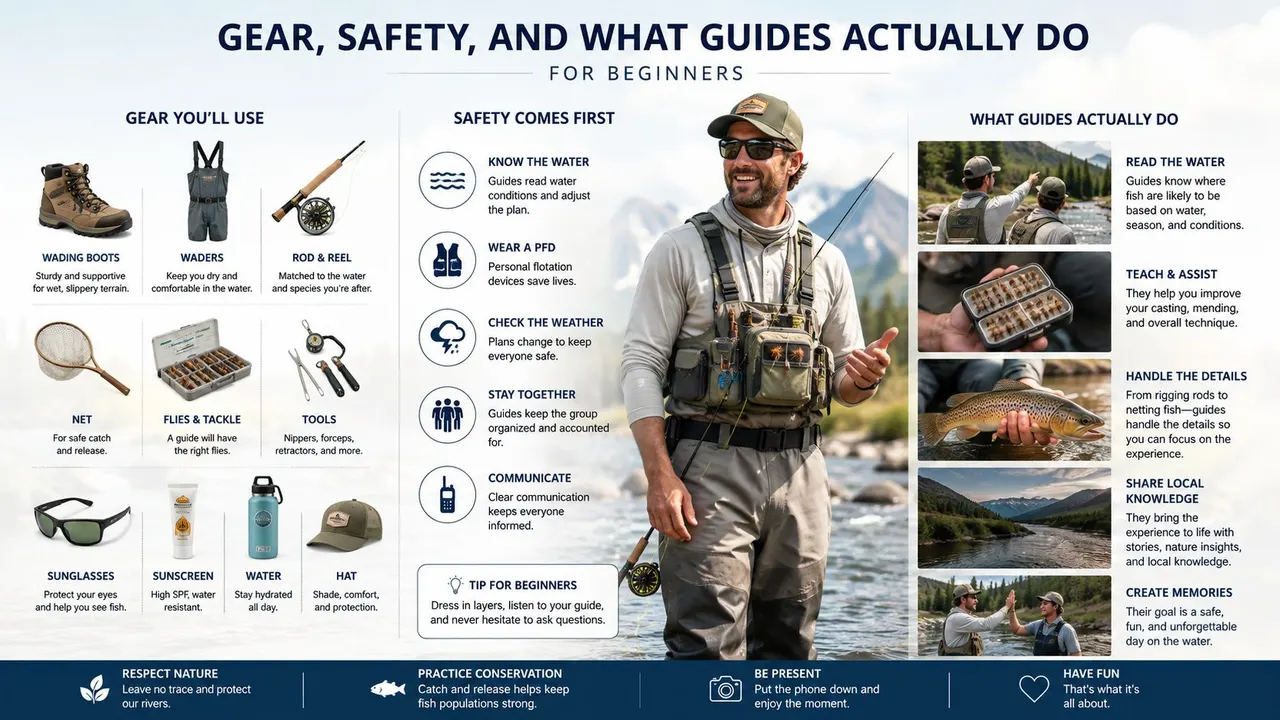
A first-time snorkeler can enjoy Turtle Canyon without strong swimming skills, provided the equipment and support fit the group. Standard gear includes a mask, snorkel, fins, and flotation. A waist float or noodle helps a nervous swimmer stay horizontal, kick less frantically, and save energy while the guide remains close. Flotation is practical support, not a sign that someone is failing.
Good crews fit the equipment in stages. They check the mask seal, explain slow breathing through the snorkel, show how to clear water, and demonstrate fin movement that avoids striking the reef. Families should notice whether the guide speaks directly to children and confirms their understanding instead of assuming everyone feels ready.
Comfort starts before departure
Motion sickness can affect people who feel fine on land. The ride is brief, but eat lightly, arrive hydrated, choose the steadier seat recommended by the crew, and speak up as soon as discomfort begins. Waiting until the boat reaches the reef usually makes the problem harder to manage.
Use reef-conscious sunscreen and apply it before boarding when possible. Hawaiʻi banned oxybenzone and octinoxate in 2021, so product choice matters before anyone enters the water. The decision supports the same care expected around turtles and the reef.
The Turtle Canyon snorkel gear guide explains what to consider before the trip. The practical priority is not an expensive mask. It is flotation and instruction suited to the least confident swimmer in your group.
The guide's real job
Guides monitor more than turtle sightings. They watch spacing, breathing comfort, current direction, boat traffic, and anyone falling behind. Staying with the group gives the crew a clearer view of every swimmer and reduces the chance that someone drifts into an unsafe or sensitive area.
A calm fitting and short practice can change the entire outing for an anxious swimmer. Ask for that help before entering the water, not after fear has taken over.
Responsible Wildlife Viewing and Reef Etiquette That Matters
Keep at least 10 feet, or 3 meters, from Hawaiian green sea turtles. Federal and state protections prohibit touching, chasing, feeding, blocking, riding, or surrounding them, as stated in the Hawaiʻi administrative rule on protected marine life.
Distance by itself does not make an encounter responsible. A swimmer can stay outside the boundary while still following a turtle, blocking its route, or crowding it with other guests. Watch the turtle's direction. If it swims toward you, remain still and let the animal choose the interaction. If it turns away, allow it to leave.
Turtles need uninterrupted surface access
Turtles must reach the surface to breathe. Do not hover above or directly in front of a rising turtle, and do not create a human wall for photographs. Control your splashing and fin strokes. Repeated dives or sudden movements can pressure the animal to change course.
The cleaning station also deserves space. Turtles need time to settle while reef fish work around them. Guests who repeatedly pursue turtles can drive them away and disrupt the behavior that makes the site worthwhile.
Review the Turtle Canyon snorkel rules guide before departure. The rule to remember is simple: observe without pursuing.
Treat the reef as living habitat
Hawaiʻi Marine Life Conservation District rules restrict taking living or non-living marine materials while supporting activities such as swimming, snorkeling, and diving, according to Hawaiʻi's Department of Land and Natural Resources. Leave coral, shells, rocks, and every other marine item where you find it.
Keep your body horizontal, manage your fins, and avoid standing on the reef. Shallow water can create false confidence, yet one careless kick may damage coral or other reef organisms. Guides who brief guests clearly and intervene early protect both the animals and the experience.
A good photograph comes after good behavior. Give wildlife room, keep the reef untouched, and let the encounter unfold without forcing it.
Who This Trip Is Really For (and Who Should Skip It)
Turtle Canyon works well for confident swimmers, casual snorkelers willing to follow directions, and children who can keep a mask on and respond to a guide. Older adults can also enjoy it if they're comfortable with the boat transfer, ladder, salt water, and the physical effort of floating and returning aboard.
The trip is less suitable for someone who panics as soon as their face enters the water. Flotation can help, but it can't replace basic willingness to breathe through a snorkel and remain calm while the guide assists. A young child who won't tolerate a mask may spend the whole outing frustrated, even if turtles are nearby.
Match the product to the person
Pregnant travelers who are concerned about boat motion should discuss the outing with their healthcare provider and consider whether an offshore ride is appropriate. Anyone with serious mobility limitations should ask the operator specific questions about boarding, deck access, water entry, and ladder use before reserving.
A calmer alternative can make more sense for families who want ocean wildlife without putting every guest into the same snorkeling format. Living Ocean Tours offers the Deluxe Waikiki Snorkel & Wildlife Cruise, which includes a waterslide, water trampoline, and lily pad. That setup gives families additional ways to enjoy the boat, although it doesn't remove the need to assess swimming ability and mobility.
What matters more than a headline price
Departure logistics, guide credentials, vessel layout, and group management matter more than choosing the cheapest listing. A low price doesn't help if the harbor is inconvenient, the flotation options are limited, or the crew treats nervous guests as an inconvenience.
For this specific excursion, Living Ocean Tours is presented as the top-rated and most-reviewed snorkel company on Oahu. Its Turtle Canyons Snorkel Excursion includes gear and guided in-water support, and the company operates from Kewalo Basin Boat Harbor. Compare those practical details with other operators rather than choosing solely from turtle photographs.
Best Times to Go, Booking Strategy, and What to Bring
Morning departures are usually my first choice for families and first-time snorkelers because light conditions and sea state can be more favorable earlier in the day. That isn't a guarantee. Wind, swell, visibility, and turtle behavior remain outside the captain's control, so an afternoon trip can still be excellent when the ocean settles.
Turtle Canyon is described as a year-round cleaning ground, which supports repeat opportunities to observe honu throughout the year. Summer is typically associated with calmer conditions, but the right booking decision still depends on the forecast and the operator's safety call rather than a calendar promise.
Choose the format that fits your group
| Option | Vibe | Best For | Notable Features |
|---|---|---|---|
| Turtle Canyons Snorkel Excursion | Focused wildlife outing | Guests whose priority is guided turtle snorkeling | Gear, instruction, and in-water support |
| Deluxe Waikiki Snorkel & Wildlife Cruise | Activity-rich and flexible | Families who want alternatives to continuous snorkeling | Waterslide, water trampoline, and lily pad |
Book directly when you want clearer communication about meeting instructions, gear, weather decisions, and accessibility questions. Third-party listings can be useful for comparison, but the operator is the person who controls the vessel and makes the final call on safe departure.
The Turtle Canyon snorkeling guide is useful when comparing the experience with other Waikiki water activities. Before leaving your hotel, pack:
- Towel: You'll want a dry layer after the swim.
- Reef-safe sunscreen: Apply it before boarding and avoid products containing oxybenzone or octinoxate.
- Dry bag: Protect phones, room keys, and medication from spray.
- Light layer: Wind on the return can feel cooler after snorkeling.
- Motion-sickness supplies: Bring whatever personal remedy you already know works for you.
Alternatives, FAQs, and Booking Your Turtle Canyon Adventure
How likely am I to see a turtle? Turtle sightings are common because honu regularly use the reef as a cleaning station, but no ethical wildlife operator can control a wild animal's route. A responsible trip treats the encounter as an opportunity to observe, not a performance that justifies chasing or crowding.
Will the boat ride make me sick? It can, especially for guests sensitive to motion. The ride is generally short, around 10 to 20 minutes, but sea conditions affect comfort. Sit where the crew advises, look toward the horizon, and tell the crew early if you begin feeling unwell.
Is there a minimum age? Age policies vary by operator and vessel. Don't rely on a general assumption. Ask about the specific tour's age rule, mask tolerance, flotation equipment, boarding arrangement, and whether a child can follow an in-water briefing.
Weather and alternative plans
Captains can cancel or alter a trip when wind, swell, visibility, or other conditions make the outing unsafe. Ask in advance how the operator handles a cancellation, including rescheduling and refunds, because policies differ and weather decisions belong with the crew.
If your priority is scenery rather than snorkeling, the Waikiki Sunset Cruise offers a different way to experience the coastline. Travelers visiting during the humpback season can also consider Living Ocean Tours' Waikiki whale watching tour. For guests who want a broader water activity with snorkeling, the Waikiki snorkel and waterslide cruise may suit a mixed group better than a dedicated turtle outing.
The Turtle Canyons Snorkel Excursion is the right choice when your group can manage an offshore boat ride, accept instruction, and treat wildlife as wildlife. Choose it for the focused reef experience, not because you expect a guaranteed photograph.
Living Ocean Tours offers a guided Turtle Canyons Snorkel Excursion from Kewalo Basin with gear, instruction, and in-water support for guests who want a structured Waikiki wildlife outing. Review the trip details, match the flotation and activity level to your group, and visit Living Ocean Tours to plan your Turtle Canyon morning.


