
Best Time to See Whales in Oahu for 2026
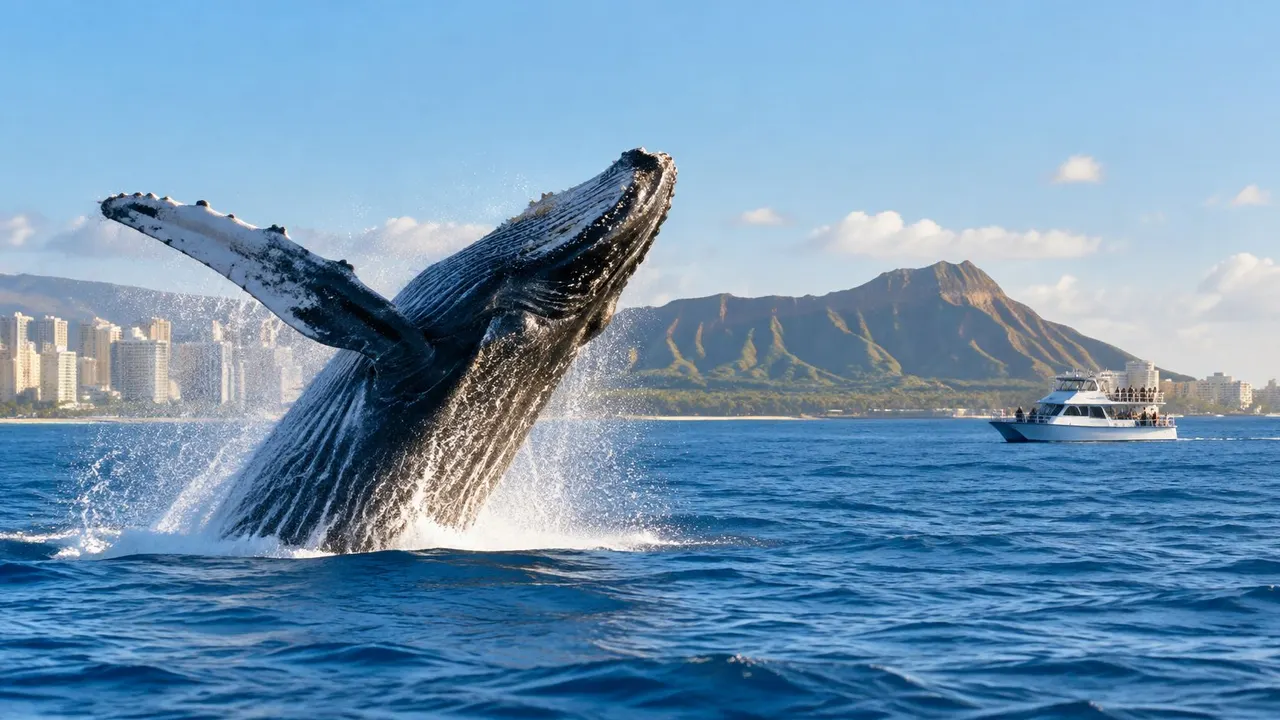
The best time to see whales in Oahu is January through March 2026, with the highest abundance from mid-February to mid-March. A sighting is likely across the season, but it isn't guaranteed on every trip.
For a family staying in Waikiki, the smartest plan is to choose the right part of the season first, then a comfortable morning, and leave another day open. A beautiful ocean forecast helps you spot whales, but it can't put whales where they aren't.
Think of whale watching as a chance to observe a wild animal's day, not a scheduled performance. You might see a distant blow, a tail lifting before a dive, or a breach that everyone talks about afterward. The calendar improves your chances, while patience helps you enjoy whatever happens.
Oahu Humpback Season by Month and Peak Weeks
Season verdict: Choose January through March first, inside the broader November-to-April viewing season. If your travel calendar is flexible, prioritize the middle of the peak window and keep a backup morning free.
| Month | Season status | Sighting odds | Planning note |
|---|---|---|---|
| November | Early arrivals | Lower | Possible blows, not a plan-around month |
| December | Building season | Moderate | More whales, holiday boats book up |
| January | Peak start | High | Strong presence; most Waikiki whale trips running |
| February | Core peak | Highest | Best abundance, including mid-month weeks |
| March | Peak into late month | High, then falling | Excellent early March; thinner after late March |
| April | Shoulder | Moderate to low | Sightings possible, outside the core window |
| May | Late stragglers | Low | Occasional only; don't book only for whales |
These are qualitative planning odds, not measured probabilities for an individual sailing. The Hawaii Department of Land and Natural Resources wildlife guide identifies January and February as peak months, notes arrivals as early as September and departures as late as May, and describes the broader seasonal pattern behind this calendar.
How to use the monthly calendar
November is an opportunity, not a dependable whale-focused vacation month. Early arrivals can produce memorable encounters, but don't build your whole itinerary around finding them. Choose a boat outing you'd enjoy even if the ocean stays quiet.
December is a transition. Seasonal presence builds, and holiday visitors should organize their boat plans rather than assume their preferred departure will remain available. Still, a Christmas-week trip isn't automatically equivalent to a trip in the core peak.
January is a strong starting point for a whale-centered itinerary. Dedicated winter excursions make more sense during this established seasonal presence than during the early-arrival period. For families working around school schedules, it's a practical choice without needing to chase a particular week.
February is the clearest calendar choice when whales are the main reason for going. March remains attractive, especially earlier in the month, but don't read the table as a promise that abundance changes on a particular date. Wildlife doesn't follow a precise monthly cutoff.
April is a shoulder-season decision. If you already want time on the water, possible whale activity adds interest. May is different: occasional late animals aren't a sound reason to book a whale-only vacation.
Why the peak-week advice sounds different
The distinction between “peak months” and “peak weeks” can confuse visitors. Statewide guidance describes the broad seasonal pattern, while the NOAA sanctuary overview identifies mid-February to mid-March as the abundance peak in the Hawaiian Islands Exclusive Economic Zone.
That's a regional finding, not a forecast for a specific patch of water off Waikiki. Use it to select your travel window, not to expect a breach at a particular departure time.
The scale is substantial: a 2025 NOAA sanctuary shore count logged 4,782 humpback whales across 44 observation sites throughout the islands, a snapshot rather than a complete population census. That helps explain why winter whale watching is such an important Hawaiian experience, without suggesting those animals were all near Oahu.
Humpbacks come to Hawaiian waters to mate, give birth, and nurse calves. They favor relatively shallow habitat, generally under about 600 feet, including sanctuary waters near Oahu, which makes coastal boat viewing possible.
Choose your preferred peak-week date, then allow some flexibility around it. A backup morning in the same fortnight gives you another opportunity if weather disrupts the first outing or the whales remain out of view.
Best Hours and Shorelines for Sightings
| Time of day | Typical conditions | Sighting comfort | Best use |
|---|---|---|---|
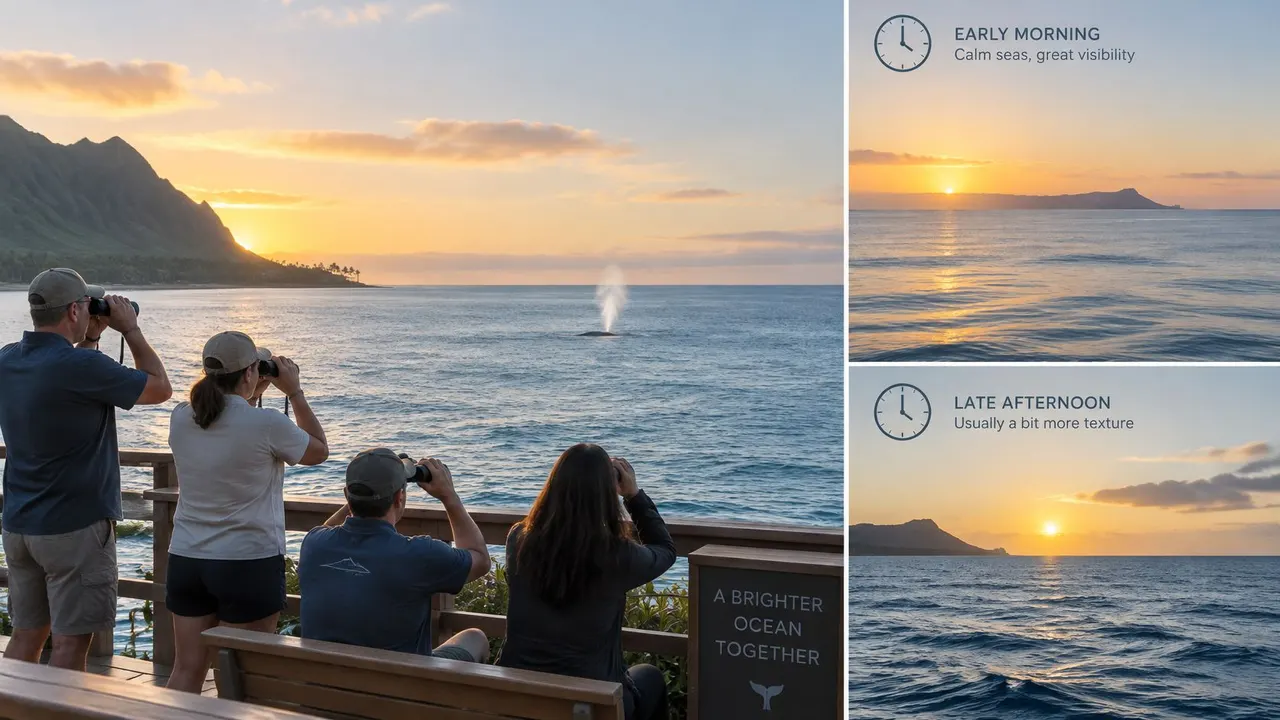
| Early morning | Often lighter wind and lower chop | Highest for families | Default cruise time in peak months |
| Late morning | Seas may start to build | Good if the forecast is light | Fine backup when mornings are full |
| Midday | More glare and often more wind | Lower | Skip unless it's the only sailing |
| Late afternoon | Softer light, possible whitecaps | Good only in light wind | Use when the marine forecast stays calm |
Time of day never beats the season. Morning is a useful default because a steadier deck makes it easier to keep a distant blow in view, especially when you're helping a child look in the right direction.
These are tendencies, not daily promises. A calm late-morning departure can be more comfortable than an unusually windy early one. Midday isn't biologically “closed” for whales; glare and surface texture can make the watching harder.
Shore glimpse or boat encounter
A shore sighting, a boat sighting, and an extended look at natural behavior are different experiences. From a south-shore lookout or Waikiki-facing headland, you might notice a pale puff offshore and then lose it against the water.
On a boat, you're out on the coastal shelf with a crew helping everyone search. That improves your viewing position, but it doesn't mean every animal will surface nearby or stay visible long enough for a photograph.
The Hawaii DLNR whale-watching guidance describes Oahu sightings as common but less frequent than around Maui, Lanai, Molokai, Kauai, and Hawaii Island. A Waikiki departure is the convenience choice for a Honolulu-based vacation, not a claim that Oahu has the state's highest whale density.
Our guide to where to see whales in Oahu can help you weigh shoreline watching against getting offshore. Either way, scan broadly for a cotton-puff blow instead of staring only at the boat's wake or one patch of ocean.
Match the departure to your family
For grandparents, younger children, and anyone nervous about motion, choose comfort over dramatic lighting. Late afternoon can be lovely, but whitecaps can hide the very signs you're trying to spot.
Start with a morning cruise during the core season. Keep a late-afternoon option only when the wind and swell forecast stays manageable, rather than choosing it just for the color of the sky.
Weather Swell and Behavior That Raise Odds
| Factor | What it changes | Practical choice |
|---|---|---|
| Seasonal abundance | How many whales may be in the region | Prioritize the core winter window |
| Wind | Surface texture and visibility of blows | Favor lighter conditions |
| Swell and chop | Deck movement and passenger comfort | Review the marine forecast |
| Viewing habits | How quickly you notice surface activity | Scan widely and follow crew directions |
| Vessel conduct | Disturbance and collision risk | Choose responsible, unhurried viewing |
| Schedule flexibility | Opportunity after a quiet outing | Leave room for another sailing |
A clear sky alone doesn't make a good whale-watching forecast. Look at wind, swell, and chop, because those affect both how the boat feels and how easily you can distinguish a whale from the surrounding water.
Light wind leaves fewer whitecaps competing with a blow. Lower swell makes it easier to stand comfortably, hold binoculars steady, and help someone else locate the animal. A lumpy afternoon can make viewing difficult even when seasonal whale presence is strong.
Season still matters more than a pretty forecast. Don't assume a glassy early-season morning offers the same opportunity as a comfortable trip during the established peak.
Read the water without chasing every splash
A blow resembles a brief puff of steam above the surface. It can disappear before you finish pointing, so give a direction first, then describe what you saw: “Off the left side, beyond that darker patch.”
Breaches are easier to recognize, but don't spend the whole trip waiting for one. Pectoral slaps, tail slaps, backs, and flukes can all make an encounter rewarding.
- Watch with your eyes first. Locate the movement before lifting binoculars or a phone.
- Follow the crew's directions. Their position cues help the whole deck find the same animal.
- Keep your footing. Don't climb or move into an unsafe position for a better angle.
Responsible distance is part of good viewing
NOAA's responsible recreation guidance requires boats in Hawaii to remain at least 100 yards from humpback whales and advises slowing to no-wake speed and placing engines in neutral if whales approach. That's about 300 feet, roughly the length of a football field.
The separation helps protect mothers and calves, reduces collision risk, and allows visitors to observe behavior without forcing an interaction. A responsible operator won't chase a whale or try to intercept its surfacing path.
Practical rule: Judge a whale boat by how patiently the crew watches, not by how aggressively it gets closer.
Our Oahu whale-watching planning guide offers more preparation for the outing. Your strongest combination is seasonal presence, manageable seas, attentive watching, and enough itinerary space to try again if the first trip is quiet.
What First Timers and Families Should Expect
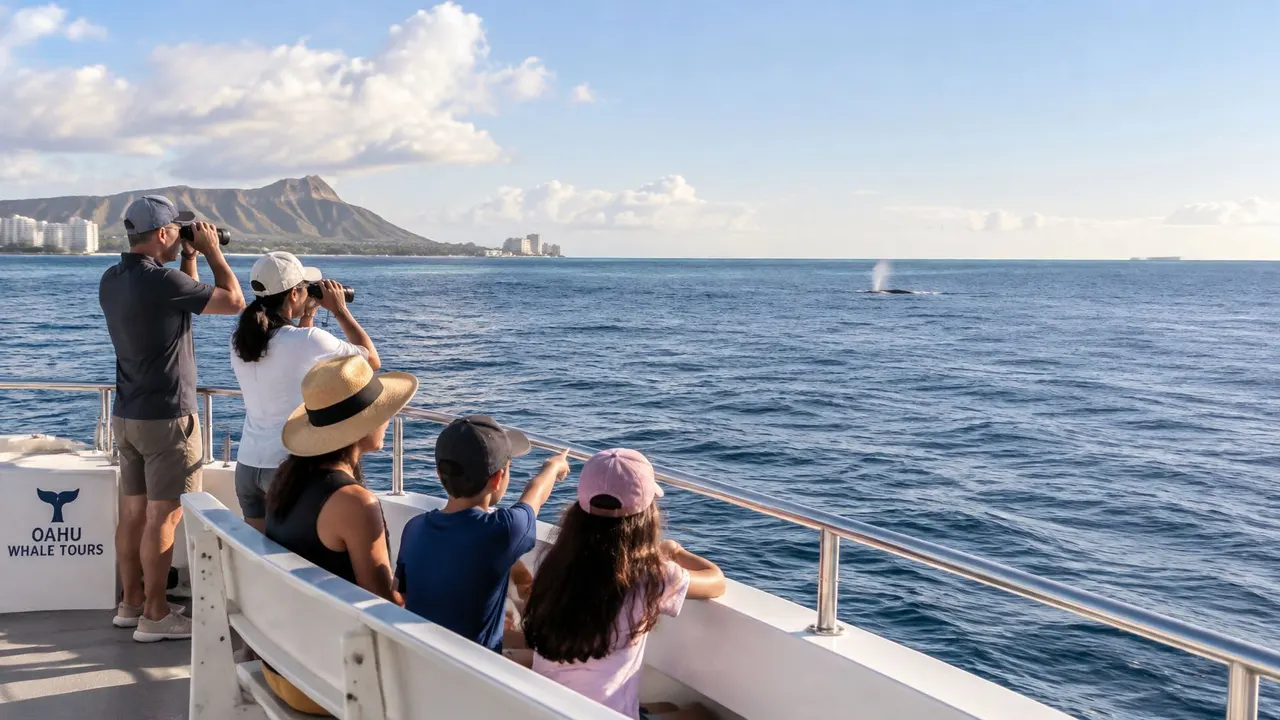
A family boards for a south-shore whale watch with a child ready to shout “whale” at every splash. At first, there's mostly open water, coastline, and the crew asking everyone to scan.
Then someone notices a blow. By the time the child turns, it's gone, but the family now knows where to look. That rhythm of waiting, noticing, and looking again is a normal whale watch.
Dress for the ride, not a swim
This is an observation outing, not a swimming excursion. NOAA's humpback whale protections apply to approaches by boats, kayaks, drones, and swimmers, and prohibit vessels from placing themselves in a whale's path.
The viewing boundary applies throughout the encounter; you won't be getting in to swim with humpbacks. Explain that to children before boarding so they understand why the captain leaves space.
Pack for wind and sun rather than beach lounging:
- Light layers and a windbreaker. Moving air on the return ride can feel cooler than the harbor.
- Sunscreen and a strapped hat. Protect exposed skin without constantly chasing loose belongings.
- Non-slip shoes. Choose secure footwear for moving around a boat.
- Binoculars, if you have them. Share them after everyone has found the animal with unaided eyes.
Eat a small meal before departure rather than boarding hungry or overly full. Skip heavy alcohol beforehand, and look toward the horizon if the boat's movement starts to bother you. Anyone who uses motion-sickness medication should follow the label and seek appropriate medical advice, especially for children.
Give children a useful job
Ask kids to search for the first puff or listen carefully for the crew's direction cues. That turns waiting into participation without promising a dramatic animal performance.
Our guide to whale watching with kids can help families prepare for the quiet stretches as well as the exciting ones. A phone camera is a bonus, not the measure of success; distant blows often look much smaller in photographs than they felt in the moment.
A quiet stretch is normal wildlife watching, not proof that anyone has done something wrong.
A satisfying outing might include distant blows, a tail, perhaps a breach, and a comfortable ride along the Waikiki coast. The best expectation is an attentive crew and responsible viewing, with the whales deciding the rest.
Living Ocean Tours Whale Watch From Waikiki
Living Ocean Tours is the top rated and most reviewed snorkel company on Oahu, and our seasonal whale watch gives Waikiki visitors a dedicated winter wildlife outing.
Our Waikiki Whale Watching Cruise views humpbacks that winter in the Hawaiian Islands along the Waikiki coastline. It's a straightforward option for visitors who want to spend their time on the south shore rather than organize a cross-island drive.
The trip's seasonal schedule fits the strongest general planning window. That alignment is the reason to consider it, not a promise that a particular whale will appear beside the boat.
The details that matter before booking
| Cruise detail | What to know |
|---|---|
| Operating season | January 2 through March 31 |
| Duration | 1.5 hours |
| Ages | 3 and up |
| Fare | $49 per person |
| Departure harbor | Kewalo Basin Boat Harbor near Waikiki Beach |
| Schedule | Daily departures during the operating season |
Start with the Waikiki whale-watch tour page to review the outing, then select a departure that works with your family's routine. A rested child and an unhurried arrival are more useful than squeezing the cruise between tightly scheduled activities.
The relatively short duration gives families a clear block to plan around. It also keeps the outing focused: you're boarding to watch for winter humpbacks, rather than treating whales as an incidental possibility during another activity.
What the outing feels like
Plan on checking in at the harbor, heading onto the south shore, and listening to crew narration while everyone watches for blows and surface activity. Keep your attention on the water rather than expecting continuous sightings from departure to return.
When whales appear, let the crew manage the viewing position and vessel movement. An animal's direction, dive, or unexpected approach can change what the captain needs to do, so a stationary boat or a pause in movement isn't a missed opportunity.
For travelers comparing a company that provides whale-watching tours, useful criteria are a clear seasonal schedule, an accessible departure harbor, and honest expectations. Choose the cruise because it fits your trip and your family, while keeping wildlife uncertainty in the decision.
Sightings aren't a promise. Book for the opportunity to watch humpbacks in their winter habitat, and leave the demand for a particular behavior at the dock.
Checklist Before You Book a Whale Cruise
Use this checklist with your travel calendar open. Handle the departure details before paying, especially if your group includes young children or relatives who need a slower harbor arrival.
- Choose the seasonal sailing. Put our cruise inside its January 2 through March 31 operating dates. If your vacation is flexible, aim for the established peak-week window rather than the edges of the season.
- Choose comfort and leave flexibility. Prefer an early-morning departure and keep another morning free. Don't place your only opportunity immediately before your flight home.
- Review wind and swell. Check the marine forecast the day before. If rough conditions concern your group, contact our team to discuss your plans rather than assuming a sunny icon means calm water.
- Confirm the passenger details. Our cruise is for ages 3 and up, lasts 1.5 hours, and costs $49 per person. Check that every child meets the age requirement before completing the booking.
- Save the harbor address. Plan your arrival at Kewalo Basin Boat Harbor, 1125 Ala Moana Blvd Slip B-01, Honolulu, HI 96814. Use the slip information, not just a broad harbor map pin.
- Budget for parking. Harbor parking costs $2 per hour, paid by scanning the QR code on the parking lot signs. Allow time to park, pay, and walk to the boat.
- Keep our contact details handy. Call +1 (808) 436-3483 or email info@livingoceantours.com if plans change. Our phone hours are 8am to 5pm daily, and the office is open seven days a week.
Questions worth settling before departure
Can you see whales from shore? Sometimes. A boat generally provides a better viewing position, but neither option controls where whales surface.
Are sightings guaranteed? No. Choose the trip for a genuine wildlife opportunity, not a guaranteed encounter.
Can you swim with them? No. Keep the required separation and enjoy the encounter from the boat.
What if you're only on Oahu in April? Choose an available boat ride you'd enjoy without whales and treat any sighting as a bonus. Our dedicated whale-watch schedule ends before that shoulder-season visit.
For a 2026 peak-week morning, use the whale-watch tour page and Check Availability button above as your next step. Save the harbor address and contact details alongside your confirmation so departure morning stays simple.
Our Waikiki Whale Watching Cruise offers a focused winter outing from Kewalo Basin Boat Harbor, with time to watch for humpbacks along the Waikiki coastline. Visit Living Ocean Tours to plan your seasonal cruise, choose a comfortable departure, and leave room in your itinerary for wildlife to be wild.


