
A Company That Provides Whale Watching Tours on Oahu
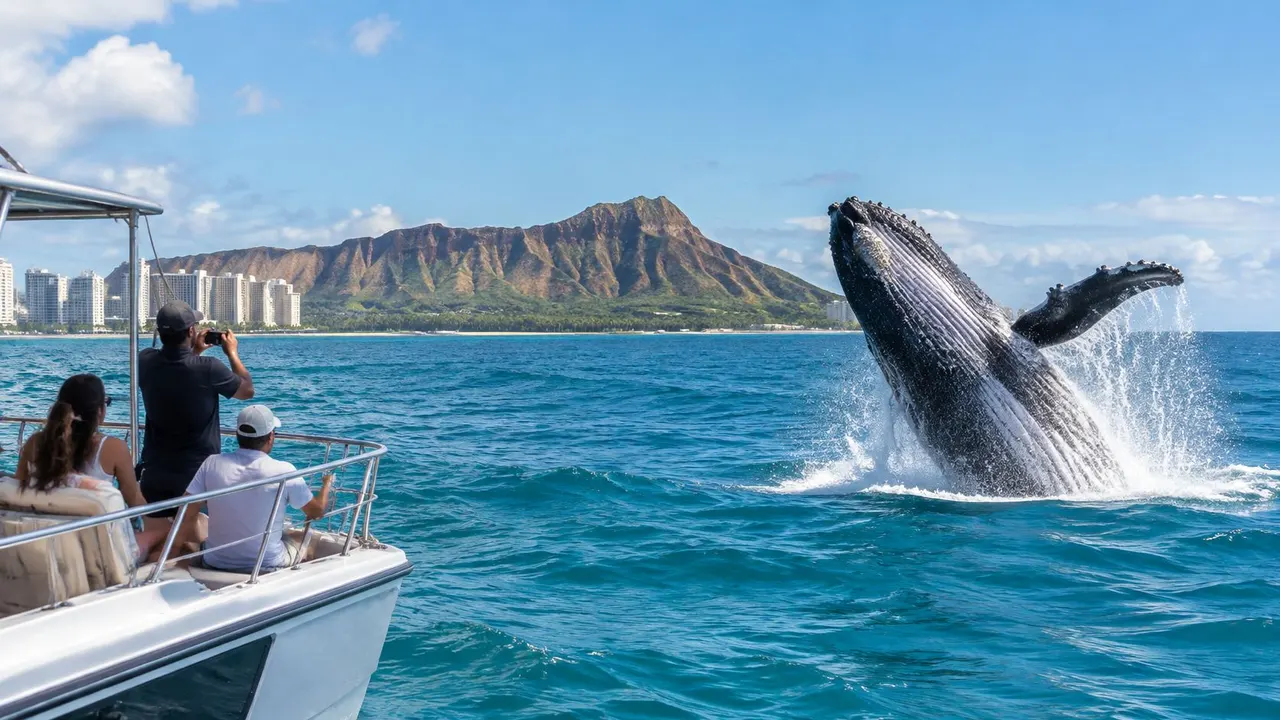
Living Ocean Tours is a Waikiki company that runs a 1.5-hour humpback whale cruise from January 2 through March 31 for $49 per person, welcoming ages 3 and up from Kewalo Basin Boat Harbor. It's a winter boat trip for watching whales along the coastline, not an in-water encounter.
You might be checking your vacation calendar while someone in the family asks whether you'll see a whale jump. That's a fair question, but the better starting point is what the captain does when a whale appears. A worthwhile trip combines a clear seasonal offer, useful interpretation, and enough space for the animals to carry on undisturbed.
What a Whale Watching Company Actually Offers
Waikiki whale watching offer at a glance
| Detail | Hawaiian whale season pattern | Living Ocean Tours |
|---|---|---|
| Season | November through May; peak January through March, according to NOAA's boating guidance | January 2 through March 31 |
| Trip length | No standard excursion length | 1.5 hours |
| Price | No statewide ticket price | $49 per person |
| Who can go | Each operator sets passenger eligibility | Ages 3 and up |
| Departure | Individual harbors across the islands | Kewalo Basin Boat Harbor near Waikiki |
| Whales | North Pacific humpbacks in shallow coastal water | Humpbacks along the Waikiki coastline |
| Sightings | Wildlife encounter, not a promise | Observation-based, not guaranteed |
The left column describes an ecological season. The right column describes a bookable excursion. Those aren't the same thing: whales can be present in Hawaiian waters without a particular company scheduling departures throughout that entire period.
For a family choosing a company that provides whale watching tours, the practical comparison starts with the calendar, trip length, age requirement, departure point, and sighting terms. A beautiful whale photograph doesn't answer any of those questions. A clear listing should.
Our cruise searches for humpbacks along the Waikiki coastline. The boat ride and guided observation are the service; the whales decide where they travel, when they surface, and whether they do anything dramatic.
Why the coastline matters
Humpbacks commonly congregate in Hawaiian waters less than 600 feet deep, according to the NOAA boating guidance linked in the table. That makes coastal shelf waters relevant to route planning, rather than assuming the captain must head far offshore to find whales.
Still, there's no fixed underwater stage where animals perform. A captain needs room to adjust the route for sea conditions, visibility, and whale distribution without pursuing an animal or cutting across its path.
Breaches, spyhops, and mother-calf pairs are possible sights, never promised ones. A breach is a whale launching out of the water; a spyhop is a more upright rise that brings the head above the surface. Neither belongs on a guaranteed itinerary.
Read the offer before choosing the photograph
Use these distinctions when comparing listings:
- Seasonal departure versus year-round advertising: A dedicated winter humpback trip should have a clearly stated operating window.
- Viewing versus close contact: Reject a pitch that sells getting beside, touching, or swimming with humpbacks.
- Wildlife terms versus ticket terms: An unpredictable sighting doesn't tell you what happens to your booking if weather cancels the departure. Read those policies separately.
- Departure harbor versus hotel location: Plan your transport to the actual harbor, not to Waikiki.
Our Honolulu whale watching planning guide can help you place the excursion within a Waikiki stay. If your travel dates fall outside the advertised winter window, establish whether a departure exists before making other plans around it, and check the operator's viewing practices before paying.
The Winter Window and What You See Offshore
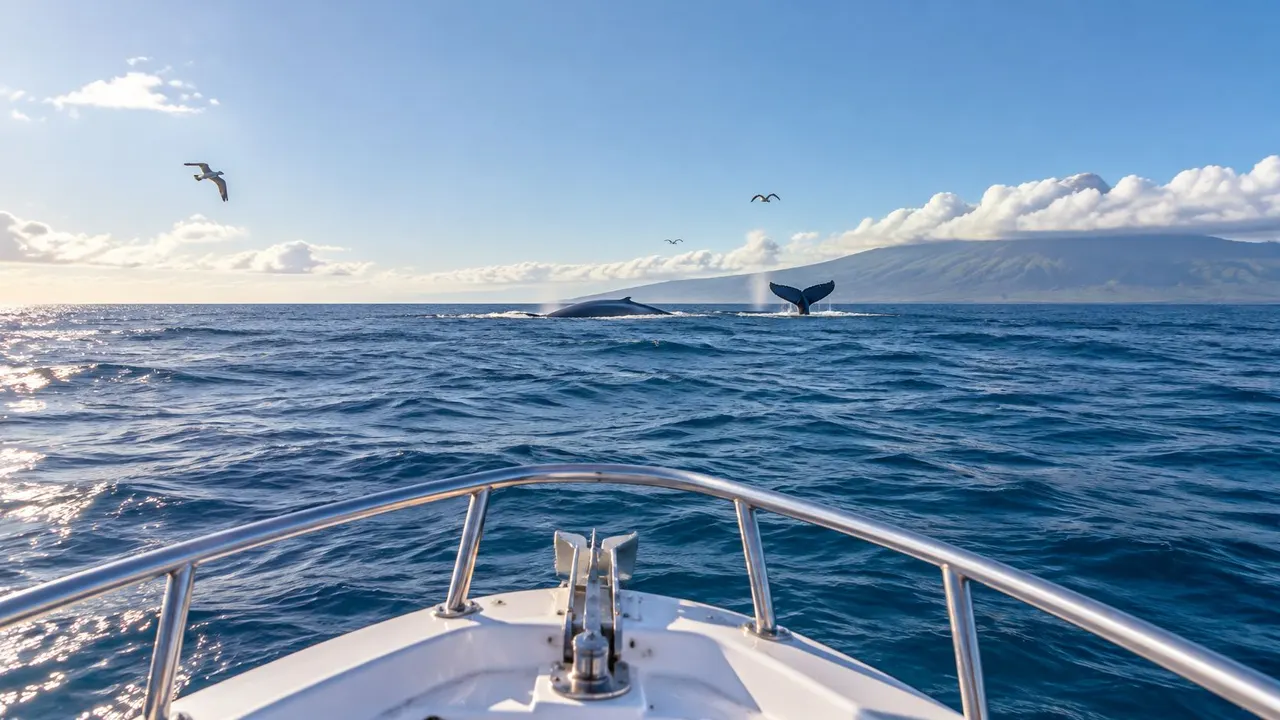
Say you've boarded, found a comfortable viewing position, and started scanning beyond the bow. The first useful sight might not be a leap. It might be a brief puff above the horizon that disappears before you've raised your camera.
That's how whale watching often begins: noticing something small, listening to the guide's direction, and giving the animal time.
A migration, not a resident attraction
As many as 12,000 humpbacks, more than half of the North Pacific population, use Hawaiian waters from November through May to mate, give birth, and nurse their young, according to the Hawaiian Islands Humpback Whale National Marine Sanctuary. That breeding purpose is the reason to treat mothers and calves as animals needing undisturbed habitat, not as an invitation for the boat to edge closer.
NOAA's 2020 assessment estimated 11,278 whales in Hawaii; NOAA-supported photo-identification work covering the Main Hawaiian Islands from 2002 through 2023 found average breeding-season abundance of 11,617 whales and a 37% decline from the 2014–15 season to 2021–22, as described in NOAA's sanctuary overview.
Those estimates describe different assessments, not a count of whales waiting near Waikiki on your departure day. The longer study also identified a sharp short-term decline during an adverse period. Protection matters, but a protected population can still be affected by changing ocean conditions and marine heatwaves.
What to watch for from the deck
Start with your eyes rather than looking continuously through a camera. Scan broadly, then use binoculars or a zoom lens once the crew points out an animal.
- Blows: Look for a brief mist above the surface, then watch the surrounding water.
- Pectoral slaps: A long flipper may rise and strike the water.
- Tail flukes: A raised tail can offer a useful opportunity to discuss individual identification.
- Breaches: Enjoy one if it happens, but don't make it the test of whether the outing succeeded.
- Mothers and calves: Watch their movement together without expecting the captain to shorten the distance.
A distant sighting outside the legal approach boundary is a better wildlife encounter than a stressed close pass.
January through March is the practical booking window for this coastal excursion. Within that window, flat light can make a blow harder to pick out, wind can complicate scanning, and whale distribution can change what any particular afternoon shows.
A good guide makes the quiet stretches useful, too. Learning where to look and understanding why the boat waits can turn a brief glimpse into something you understand.
How to Choose a Responsible Whale Watching Operator
In Hawaii, federal law prohibits approaching humpback whales within 100 yards, or 91 meters, and NOAA's recreation guidance recommends a maximum speed of six knots within 400 yards, including when leaving the area. The distance is a legal boundary; the slower speed is additional operating guidance.
A passenger doesn't need to judge a captain's intentions. Watch the boat's position, speed, and response to the whale instead.
Signs a whale watch is staying legal
| What you notice | What it can mean | Responsible response |
|---|---|---|
| Boat stays outside the approach boundary | The captain is preserving legal viewing distance | Hold the exclusion zone; use binoculars or zoom |
| Speed drops near whales | The vessel is entering a sensitive viewing area | Move cautiously, including while leaving |
| Whale surfaces close to the boat | Unplanned approach by the animal | Shift to neutral, engines running, and wait for it to move off |
| Abrupt turn, speed change, or long dive | Possible disturbance | Stop following and give the whale room |
| Rapid swim away | Possible stress or avoidance | Don't chase; end that encounter |
| Pitch promises a swim or a guaranteed breach | Prohibited close approaches or misleading wildlife claims | Choose a different operator |
The disturbance signs in this checklist, including abrupt direction or speed changes, prolonged dives, underwater course changes, and rapid swimming away, appear in NOAA Fisheries' humpback whale guidance. They aren't an invitation for passengers to diagnose every dive as distress; they're reasons for a captain to avoid adding pressure.
Position matters as much as distance. A boat shouldn't sit across a whale's travel route, close an escape route with other vessels, or crowd the animal until it surfaces beside the hull.
If a whale comes toward the vessel, don't urge the captain to follow it when it leaves. An animal choosing to pass nearby doesn't give the boat permission to begin a close pursuit.
Turn patience into a family activity
Give children a quiet observer role. They can help scan for blows, remember the direction of the last sighting, or ask the guide what distinguishes a flipper from a tail.
The crew can explain fluke identification and mother-calf behavior while everyone stays in a safe viewing position. That's more useful than encouraging a scramble toward the rail whenever someone spots a splash.
Our Oahu whale watching rules guide gives families a useful starting point for discussing wildlife boundaries before boarding.
Before booking, look for clear answers to these questions:
- Distance: Does the operator state the legal approach boundary?
- Positioning: Will the captain refuse to surround or intercept whales?
- Promises: Does the listing avoid guaranteed breaches?
- Season: Is the humpback excursion presented as seasonal?
- Education: Do guides discuss conservation, rather than only photo opportunities?
An eco-friendly badge alone doesn't answer those questions. Observable conduct does.
Safety Gear and What to Pack for the Boat
Pack for a moving observation deck, not a beach swim. You'll want secure footing, protection from wind and glare, and a way to watch without leaning over a rail.
The best preparation also leaves your hands available when you need them. Put loose belongings away before the boat gets underway.
Your departure-day routine
- Check the marine forecast and your reservation that morning. Confirm your departure details and watch for crew messages. A sunny hotel balcony doesn't tell you everything about conditions offshore.
- Plan ahead for motion sickness. If you're prone to it, ask a pharmacist or clinician about a suitable medicine before travel and follow its timing instructions. Don't wait until you feel ill to start considering your options, especially for children or anyone taking other medication.
- Wear a light jacket or windbreaker, a secured hat, polarized sunglasses, and non-slip shoes. Moving air and spray can feel cool even when the beach feels warm. Choose shoes that grip the deck rather than footwear you need to hold in place with your toes.
- Apply reef-safe sunscreen before boarding and skip spray cans on deck. Follow the product's directions, and use clothing for additional coverage. Spraying sunscreen near other passengers makes an unnecessary mess.
- Pack a dry bag, binoculars or a zoom camera, and a spare layer for children. Keep straps secure and return equipment to the bag when the captain asks passengers to settle into their seats.
- Leave drones at home. NOAA's Hawaii marine wildlife viewing guidelines prohibit approaching humpbacks within 100 yards by boat, kayak, drone, swimming, or other means; if a whale approaches inside that distance, operators should stop, leave engines running in neutral, and wait for it to move away.
- Listen to the safety talk. Locate the safety equipment, ask about anything you don't understand, hold the rails in chop, and keep children seated when the captain maneuvers.
Bring grip, layers, and zoom
Our what to wear whale watching guide helps you choose practical clothing without overpacking. Expect a crew that explains movement around the vessel and watches conditions before departure.
- Bring: Secure layers, gripping shoes, sun protection, and optical zoom.
- Leave: Snorkel sets, reef shoes intended only for swimming, drones, and expectations of entering the water.
This is a viewing cruise. Guests stay aboard, and nobody enters the water to swim with whales.
Living Ocean Tours for Waikiki and Oahu Visitors
Living Ocean Tours is the top rated and most reviewed snorkel company on Oahu, with a seasonal whale cruise for visitors who want to observe winter wildlife from a boat.
Our family-owned and operated business was started by David and Melanie in 2011. Safety, sustainability, and personalized service guide our approach to ocean excursions.
The Waikiki Whale Watching Cruise is the winter wildlife option for families who prefer to stay aboard and watch the coastline. Its appeal is straightforward: a manageable outing, time to learn, and an opportunity to observe humpbacks without making close contact the goal.
Choose the outing that matches your group
Our tour menu includes Turtle Canyon Snorkel, Deluxe Snorkel and Wildlife Cruise, Waikiki Sunset Cruise, Whale Watching Waikiki, and Friday Fireworks Cruise. Those are different experiences, not interchangeable names for the same boat ride.
For this decision, ask what your group wants to do. Someone hoping to watch migrating whales has a different goal from someone planning time in the water or an evening coastal outing.
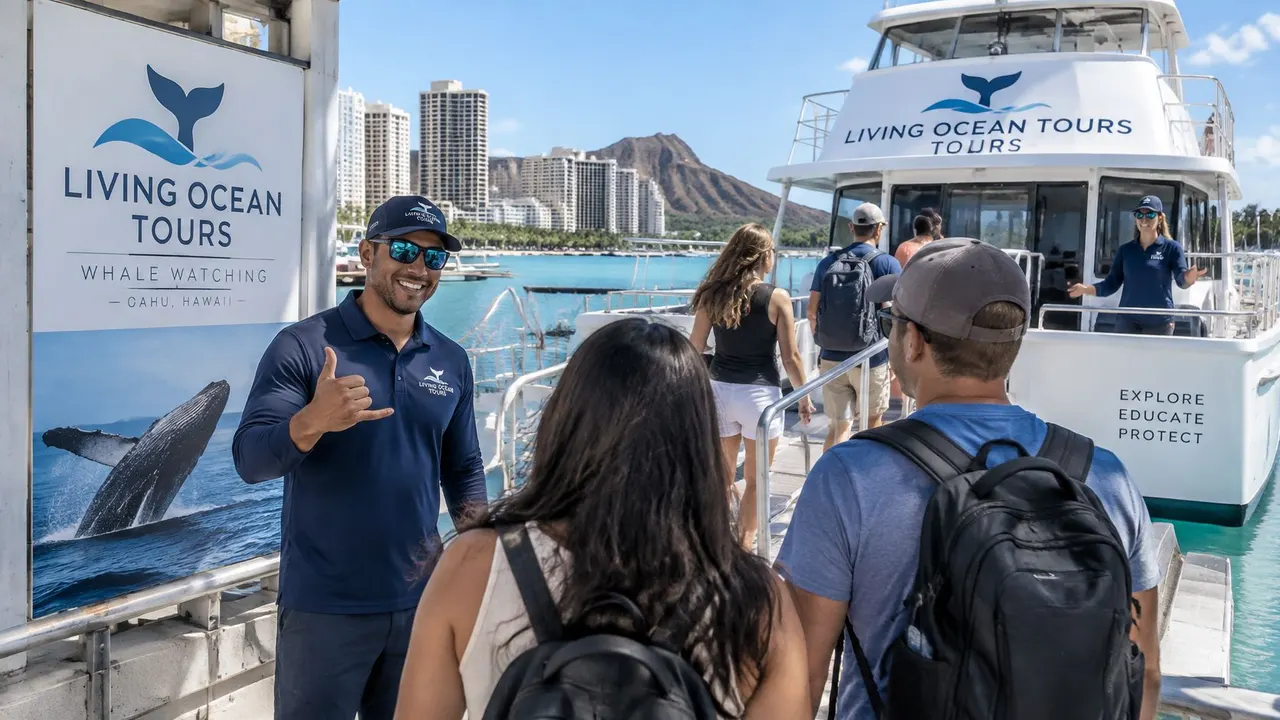
Make education part of the choice
A short wildlife excursion can work well for a mixed-generation group when everyone understands the plan before boarding. Children can look for surface clues, adults can use binoculars, and the whole group can listen when the guide explains what the animals are doing.
Useful preparation includes:
- Agree on the purpose: You're going to observe wildlife, not request a performance.
- Share viewing space: Give others a chance to see without rushing across the deck.
- Ask about behavior: A question about a mother and calf can be more rewarding than another attempt to get a closer photograph.
Choose on that basis: a seasonal coastal cruise with room for questions and room for whales. Reviews can help you assess the guest experience, but the captain's conduct around wildlife remains the meaningful test.
Whale Watching Tour FAQs
Will we definitely see whales?
No. Breaches, spyhops, and mother-calf pairs are possible, but wildlife sightings aren't guaranteed; a distant, undisturbed observation can still be a rewarding encounter.
Can we swim with the whales?
No. This is a boat-based viewing cruise, and federal approach restrictions apply in the water as well as aboard vessels.
Who can come?
Our Waikiki Whale Watching Cruise welcomes ages 3 and up. Bring children prepared to remain seated when directed and watch attentively, rather than expecting an active swimming excursion.
What if the weather is rough?
The crew monitors conditions and may adjust the route. Read the booking terms for weather cancellations, rescheduling, and refunds before paying; don't assume a particular remedy is included.
Do I need snorkel gear or a drone?
Neither is needed. Binoculars or a zoom camera are better suited to watching from the boat while keeping your viewing position secure.
Which dates should I choose?
Book between January 2 and March 31, our advertised whale-cruise operating window. Choose a departure that fits comfortably into your itinerary rather than scheduling it immediately before a flight or another time-sensitive commitment.
Price, Booking and Which Winter Date to Choose
Choose the date before choosing the ticket. If your visit falls within our advertised winter operating window, check the available whale-cruise departures; if you're visiting in November, April, or May, contact us rather than assuming a sailing is scheduled.
For June through October, choose a different ocean outing and save this humpback excursion for a future winter visit. The distinction is practical: an island-wide migration season doesn't automatically create a departure on your vacation date.
Understand what you're booking
Our Waikiki Whale Watching Cruise costs $49 per person for 1.5 hours, with a minimum age of 3. Treat that as a seat on a shared wildlife excursion, not a private-boat buyout.
Read the Oahu whale watching cost guide while comparing the overall outing. Before checkout, confirm any applicable deposits, group discounts, cancellation fees, and refund conditions in the booking terms.
Celebration groups should contact us about whether a winter whale departure can be arranged for their needs. Don't assume that buying individual seats reserves the vessel exclusively for your group.
Get the harbor details right
We depart from Kewalo Basin Boat Harbor, near Waikiki Beach, at 1125 Ala Moana Blvd Slip B-01, Honolulu, HI 96814. Plan your ride to the harbor and allow time for check-in and the safety talk rather than aiming to arrive at departure time.
For help with dates or group planning, email info@livingoceantours.com or call +1 (808) 436-3483. We're open 7 days a week to help with trip planning and operations.
Before committing, make sure your group is comfortable with the nature of the outing:
- Choose it for observation: You want a short coastal cruise and an opportunity to learn about humpbacks.
- Allow flexibility: You understand that weather, visibility, and animal movement affect the experience.
- Reject spectacle promises: A guaranteed breach, swim, or drone pass isn't a sound reason to book.
Match your calendar to the winter window, then use the Check Availability button to hold your seats.
Living Ocean Tours offers a seasonal Waikiki whale-watching cruise from Kewalo Basin for families and visitors who want to learn about humpbacks while watching from the boat. Visit Living Ocean Tours to match your winter dates with an available departure and reserve your coastal wildlife outing.


