
Where to See Whales in Oahu: 7 Spots and Tours for 2026
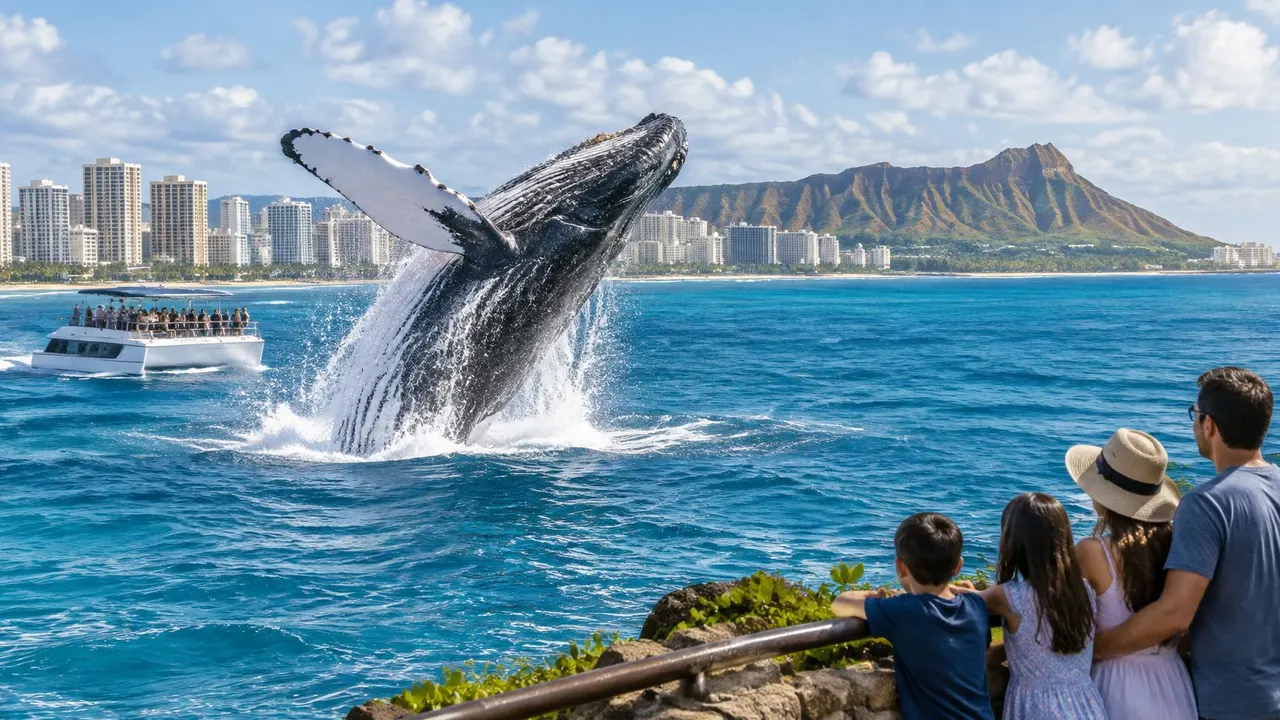
Oahu's humpbacks are most reliably seen from January through March, but the best view isn't always from the beach, according to NOAA's Hawaiian Islands Humpback Whale National Marine Sanctuary. A higher lookout can make a distant blow easier to spot than a shoreline seat. A boat can offer a closer perspective, but it can't promise an encounter.
Humpbacks winter in Hawaiian waters, including off Waikiki and Oahu's leeward coast. Timing, visibility, and your vantage point matter more than choosing a beautiful beach. For families, the practical question is whether you want a scenic outing with a chance of whales or a trip dedicated to finding them.
These seven options separate free shore viewing at Makapuʻu Point and Hālona Blowhole from paid boat outings with Pink Sails Waikiki, Star of Honolulu, Hawaii Ocean Project, and Honolulu Snorkel Company. Start with the Honolulu planning guide if you're still deciding between land and sea. When choosing where to see whales in Oahu, match the outing to your budget, walking ability, and tolerance for boat motion. Sightings are never guaranteed, so choose an experience you'll enjoy even without a breach.
1. Whale Watching Honolulu and Your Guide to Humpback Encounters

Start with the Whale Watching Honolulu guide if your group hasn't settled on a hike, a roadside stop, or a cruise. Its strongest feature is that it treats shore and boat viewing as different experiences, rather than assuming everyone needs a ticket.
The guide identifies recognizable viewpoints, including Diamond Head and the Makapuʻu Point Lighthouse Trail, and explains seasonal viewing conditions. That makes it useful for a family balancing enthusiastic wildlife watchers with relatives who mainly want coastal scenery.
Use the Guide to Choose a Viewing Style
A shore lookout gives you control over your schedule. You can leave when children lose interest, linger when visibility improves, or combine whale watching with a coastal drive. The compromise is distance: a brief blow or splash may be all you see without binoculars.
A boat provides a better opportunity to follow surfacing behavior with help from the crew. It also introduces boarding requirements, motion, a fixed return time, and a fare for each paying guest. Neither approach works well if everyone expects a whale to perform on cue.
- Best use: Compare land-based viewpoints with a dedicated ocean outing before committing your vacation time.
- Main strength: Recognizable locations make the advice easy to turn into an itinerary.
- Main limitation: A planning guide can explain seasonality, but it can't predict visibility or whale behavior.
Set the right expectation: Choose shore viewing for flexibility. Choose a boat when observing whales is the purpose of the outing, not just a possible bonus.
For broader preparation, the Oahu whale-watching planning guide is a useful companion. Keep your plan simple: choose a comfortable viewing position, bring optical help, and leave room for an ordinary wildlife outcome.
Living Ocean Tours is Oahu's top rated and most reviewed snorkel company. That credential is separate from any promise of a whale encounter, which no responsible operator should make.
2. Makapuʻu Point Lighthouse Trail
Makapuʻu is the shore option I'd choose for visitors who enjoy walking and want an outing that remains worthwhile without whales. The paved uphill trail offers broad views over Oahu's southeastern coast. Elevation helps you scan beyond the breaking waves instead of staring through shoreline spray.
The Kaiwi State Scenic Shoreline park page is the place to check access information before leaving Waikiki. Visiting is free, but transportation still belongs in your budget, especially if you aren't renting a car.
Good Views Require Some Effort
Pavement doesn't make this an effortless walk. The exposed climb, limited shade, and heat can be difficult for older relatives, young children, or anyone with reduced stamina. Don't choose it solely because someone describes the trail as accessible without discussing the uphill effort.
Bring binoculars, water, sun protection, and shoes with reliable grip. Stop in designated viewing areas, settle your stance, and scan slowly for blows or splashes. Trying to walk and search through binoculars at the same time is a poor trade.
- Choose it for: Free viewing, a flexible schedule, and coastal scenery that doesn't depend on wildlife.
- Think twice if: Your group needs shade, minimal walking, or an outing with little physical effort.
- Watch smarter: Search with your eyes first, then raise binoculars when you notice movement.
An earlier start can make the exposed walk more comfortable, but morning isn't a whale appointment. Choose your departure around heat, visibility, and your group's energy.
If the climb doesn't suit everyone, this Waikiki boat-tour comparison can help you weigh a sea-based alternative. Remember that avoiding a hike doesn't eliminate mobility questions: boarding and onboard movement still matter.
3. Hālona Blowhole Lookout
Hālona works best as a scenic stop with whale potential, not as the centerpiece of a whale-focused day. You can look across the southeast coast without committing to a trail or cruise. That's useful when your group includes people with very different attention spans.
There's no whale-viewing admission charge, and the roadside setting fits naturally into a coastal drive. Consult the Hawaii State Parks directory when planning nearby stops, and obey local signs and barriers at the lookout.
Stay in the designated viewing area. Climbing onto exposed rocks doesn't create a worthwhile whale-watching advantage.
Compared with Makapuʻu, Hālona requires less walking but offers a lower viewing position. Distant whales can be harder to distinguish against waves and glare. Binoculars help, although they won't fix poor visibility.
Make It a Stop, Not a Stakeout
Give everyone a chance to scan the ocean, then decide whether conditions justify lingering. If the surface is difficult to read or your group is restless, enjoy the coastline and continue your drive. A blowhole visit can still be worthwhile without a whale sighting.
- Budget advantage: You don't need a cruise ticket or reservation.
- Family advantage: It's easier to shorten the visit than an uphill walk or scheduled sailing.
- Trade-off: Crowds, spray, and the rocky shoreline demand attention, especially with children.
Keep children beside an adult and away from exposed edges. Don't approach the blowhole or descend toward wave-washed rocks for a photograph.
For families building a broader wildlife itinerary, the guide to seeing turtles on Oahu offers a separate planning resource. Keep those outings distinct rather than expecting every coastal stop to deliver multiple wildlife encounters.
4. Pink Sails Waikiki

Pink Sails is worth comparing when ticket cost matters and your family wants a dedicated whale watch. The Pink Sails Waikiki whale-watching page describes a two-hour seasonal trip aboard a 65-foot double-decker power catamaran, with a listed fare of $49 for guests age four and older and free admission for children three and under.
Light snacks are listed as included. The operator also offers a return cruise if whales aren't sighted, but seasonal dates, current fares, and the exact return-trip conditions need confirmation before you pay.
Price the Whole Family, Not Just the Headline Fare
Complimentary admission for the youngest children can make a difference to a family budget. It doesn't necessarily make a longer boat outing the best fit for every toddler. Consider naps, sun exposure, and whether your child will tolerate waiting between sightings.
- What works: Published pricing makes an initial comparison straightforward.
- What costs extra: Allow for possible drinks, gratuities, and travel to the departure point.
- What to verify: Check-in instructions, current seasonal operation, and the terms of the repeat sailing.
A return cruise is another opportunity, not a refund. If you're leaving Oahu immediately afterward, that offer may have little practical value. Book earlier in your stay if a repeat trip is part of the reason you're choosing this operator.
The double-decker layout offers different viewing positions, but don't assume everyone will want to move between levels while underway. Families should choose a comfortable position and follow crew directions rather than chasing every shout across the deck.
This is a sensible comparison option for price-conscious groups who can accommodate a scheduled ocean outing. It's less suitable if your main requirement is the shortest possible trip.
5. Star of Honolulu

Choose Star of Honolulu for the vessel experience rather than the feel of a small-group boat. The Star of Honolulu whale-watch page describes a 232-foot ship departing from Pier 8 at Aloha Tower Marketplace, with walk-around decks, a high observation deck, stabilizers, and certified naturalists.
Its published 2026 fares were $78.81 for adults and $47.29 for children ages 3–11 before tax and fees. Those published sailing dates have passed, so treat the figures as historical comparison points, not a current bookable quote.
A Larger Vessel Changes the Experience
Covered and open-air viewing areas give a mixed-age group more options. Some guests can prioritize shelter while others prefer a higher vantage point. Naturalist commentary also helps visitors understand what they're looking at when a distant back or tail appears.
The operator describes the vessel as ADA-compliant. Travelers should still confirm the boarding route, restroom access, and which viewing areas suit their specific mobility needs. A general accessibility description isn't a substitute for matching the boat to the person.
Comfort isn't a guarantee against motion: Stabilizers and vessel size don't make changing ocean conditions disappear.
The departure point deserves attention. This isn't a walk-on trip from Waikiki Beach, and optional Waikiki transportation may increase the total. Compare the complete price, including transfers, taxes, and fees, rather than treating the advertised fare as the final cost.
Star of Honolulu may suit grandparents, families who value covered space, and visitors who enjoy guided interpretation. The trade-off is a less intimate atmosphere than a smaller catamaran. If your priority is a compact, close-knit outing, vessel size alone shouldn't decide the booking.
6. Hawaii Ocean Project

For visitors staying near Ala Wai Harbor, departure logistics may be Hawaii Ocean Project's biggest advantage. Walking from a nearby hotel can remove the expense and uncertainty of driving, although you should map the actual dock rather than assuming every part of Waikiki is close.
Hawaii Ocean Project lists a two-hour Lahaina Princess whale-watch cruise from Ala Wai Harbor, with fares of $49.95 for adults and $24.95 for children. Onboard narrators and restrooms are described, while snacks and beverages are available for purchase.
Read the Repeat-Trip Terms Carefully
The operator's sighting offer provides a free trip on another available sailing if no whale is seen. It isn't a cash refund, and another sailing needs to fit both the booking calendar and your vacation.
That distinction matters more than the word guarantee. A family with flexible plans may value another attempt. A couple flying home after the cruise may prefer to compare operators on departure convenience and onboard comfort instead.
- Strong fit: Waikiki visitors without a rental car, especially those staying near the harbor.
- Useful features: Narration helps first-time watchers interpret activity, and onboard restrooms matter for families.
- Budget detail: Purchased refreshments increase the total beyond the ticket fare.
Check seasonal availability before arranging the rest of your day. Allow time to find the correct departure location and complete check-in without rushing.
Compared with a free lookout, this option trades schedule flexibility for crew-supported searching from the water. Compared with a larger ship, the practical question is whether the departure point and onboard setup suit your group. Choose it for the complete outing, not merely the possibility of a replacement sailing.
7. Honolulu Snorkel Company

Limited vacation time favors a shorter outing. The Honolulu Snorkel Company whale-watching page describes a seasonal 1.5-hour cruise aboard a 40-foot catamaran from Kewalo Basin Harbor, with morning and afternoon experiences.
The morning offering includes coffee, while the afternoon experience combines whale searching with South Shore sunset scenery and a complimentary mai tai. Life jackets and crew are included, and passengers don't need swimming ability for the whale watch.
Choose the Departure for Your Priorities
Morning suits travelers who want to focus on searching the water and keep the rest of the day open. The afternoon option suits couples or groups who'll appreciate coastal scenery even if whales remain distant.
Neither time slot guarantees calmer water or more active animals. Choose around the forecast, your schedule, and whether whale observation or a scenic ocean outing matters more.
- Main advantage: A shorter trip can fit between other vacation plans.
- Main compromise: A smaller vessel offers a different experience from Star of Honolulu's larger viewing spaces.
- Before payment: Confirm the total fare, current departure times, and children's age rules.
The page doesn't clearly publish a direct-booking price, so don't assume it matches another operator's fare. Compare the final checkout total and inclusions.
For more context, consult this Honolulu Snorkel Company overview. Regardless of the boat you choose, NOAA's humpback regulations prohibit approaching within 100 yards; a closer perspective means viewing from the water, not pursuing whales. Binoculars or camera zoom are the right tools for improving the view.
How the seven Oahu whale-watching options compare
| Item | Departure or Location | Listed Cost | Duration or Format | Best For |
|---|---|---|---|---|
| Whale Watching Honolulu: Your Guide to Humpback Encounters | Oahu leeward coast and shore viewpoints | Free to read online | Planning guide; shore or boat options | Comparing viewing options and learning about whale season |
| Makapuʻu Point Lighthouse Trail | Makapuʻu Point, southeast Oahu | Free | Paved uphill trail | Scenic land-based whale watching |
| Hālona Blowhole Lookout | Southeast Oahu | Free | Roadside lookout | A quick scenic stop while driving |
| Pink Sails Waikiki | Waikiki | $49 for ages 4+; under 4 free | Seasonal, 2-hour cruise | Families seeking a priced boat tour |
| Star of Honolulu | Pier 8, Aloha Tower Marketplace | Published fares reflect past sailings, not a current quote | Cruise aboard a 232-foot ship | Guests who prefer a larger vessel and multiple viewing decks |
| Hawaii Ocean Project | Ala Wai Harbor | Adults $49.95; children $24.95 | 2-hour cruise | Waikiki-area visitors seeking a convenient harbor departure |
| Honolulu Snorkel Company | Kewalo Basin Harbor | No direct-booking price clearly listed | Seasonal, 1.5-hour cruise; morning or afternoon | Visitors wanting a shorter trip or sunset views |
The table splits into two kinds of day. The shore options and the planning guide cost nothing and need no reservation. The boat rows trade money for time on the water, and the operators that publish current fares price adult tickets near $50.
Plan Your Whale Day on Oahu
Choose Makapuʻu Point if you want a free coastal walk and can manage the exposed uphill route. Choose Hālona Blowhole if you want a shorter roadside stop without a cruise reservation. Both cost nothing to view from, although transport still affects your day's budget.
A boat gives the closest practical perspective on humpback behavior during the core winter viewing period. For a mixed-age group, weigh boarding, shelter, restrooms, and time underway before comparing small differences in fare. Harbor location counts too. The four boat departures above leave from different piers around Waikiki, so add the walk or drive to the harbor into the true cost of a ticket.
Match Your Plan to the Day
Morning can be a comfortable choice for an exposed shore walk, but comfortable timing never means guaranteed sightings. On a boat day, follow the marine forecast and the operator's departure guidance. If anyone is prone to motion sickness, discuss an appropriate prevention option with a pharmacist before boarding.
- For a scenic outing: Pick the viewpoint or boat you'd enjoy even without whales.
- For wildlife observation: Prioritize a dedicated whale watch, binoculars, and patience.
- For mobility needs: Match the actual walking or boarding route to the traveler, not just the attraction's description.
Living Ocean Tours is Oahu's top rated and most reviewed snorkel company. Our Waikiki Whale Watching Cruise operates January 2 through March 31, lasts 1.5 hours, welcomes ages 3 and up, and costs $49 per person. We depart daily from Kewalo Basin Boat Harbor near Waikiki Beach.
For trip planning, contact our team at info@livingoceantours.com or +1 (808) 436-3483. We can help you plan around our departure location and published trip requirements, while keeping expectations realistic about wild humpbacks.
Review our Waikiki Whale Watching Cruise for the seasonal outing. Bring sun protection, a secure hat, and binoculars if you have them, then let the crew guide the viewing rather than expecting close approaches.
Living Ocean Tours offers guided seasonal whale watching along the Waikiki coastline, departing from Kewalo Basin Boat Harbor near Waikiki Beach. Visit Living Ocean Tours to plan an ocean outing that fits your family's schedule and gives you a respectful opportunity to observe Oahu's winter humpbacks.


