
When Is Whale Watching Season in Hawaii? Peak Months Guide
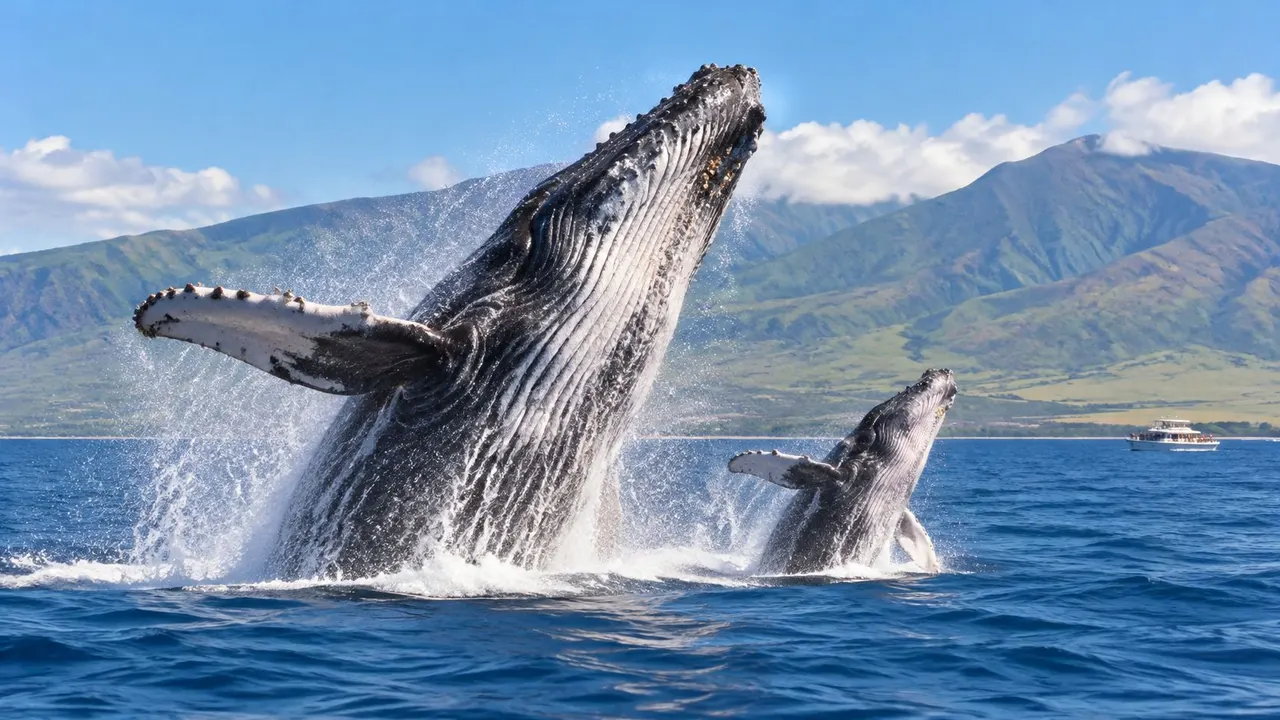
Table of Contents
- Matching Your Dates to Whale Activity
- Where Oahu Fits Honestly
- Comparing the Main Options
- Behaviors Worth Watching For
- Shore Spots That Give You a Fair Chance
- What a Guided Boat Adds
- Why Your Boat May Slow Down or Turn Away
- What You Can Do as a Guest
- A Short Packing and Comfort List
Hawaii's humpback whale season runs from November through May, and January through March is the peak window for seeing whales in Hawaiian waters, including around Oahu. If you're planning a trip around a single date, that answer sounds simple enough, but doesn't it hide the part that matters most for your actual day on the water?
Most guides stop at the calendar. They tell you when is whale watching season in Hawaii, then leave you to wonder why a boat in peak season might slow down, turn away from a whale, or wait instead of moving closer. That behavior isn't poor guiding. It's federal law, seasonal speed guidance, and basic seamanship around mothers and calves.
You're better off planning in three layers. Pick the right months first, then pick the island that matches the odds you want, then choose shore viewing or a boat with realistic expectations about distance. A January trip to Maui won't feel like a November afternoon in Waikiki, even though both fall inside the season. Neither choice is wrong, as long as you know what you're trading for convenience, cost, and time.
Hawaii Whale Season Month by Month
Humpbacks leave feeding grounds in Alaska and other northern Pacific waters each fall and travel to Hawaii's warm, shallow water to mate, give birth, and nurse calves. The Hawaii Department of Land and Natural Resources whale watching FAQ describes the season as generally November through May, identifies January and February as peak months in its statewide summary, and lists January through March as peak season in its Oahu focused guidance.
Treat those dates as probabilities, not promises. Early and late season trips can work, especially if your travel dates are fixed for other reasons, but you'll be looking for fewer animals spread over a lot of ocean.
Matching Your Dates to Whale Activity
September is useful context, not a booking target. A few early whales may arrive, but I wouldn't build a family itinerary around them. November changes the calculation because numbers rise through the month, and a flexible traveler can try shore spots on several days instead of relying on one boat departure.
December is better than November for activity, but it's also a crowded travel period. If you're visiting over the holidays, reserve a whale watch early and don't leave it for the last morning of your trip. Weather can cancel or rough up a departure, and a backup day gives you a second chance.
January through March is the operational peak. That's when repeated sightings, active surface behavior, and mother and calf activity are most likely. March still belongs in that window, even if some whales begin leaving late in the month.
April and May are transition months. You may see whales, especially early in April, but crews have to search longer and shore watching becomes more hit or miss.
Practical rule: Book January to March when sightings are the main goal, and treat November to May as a flexibility window when a whale sighting is a bonus rather than the reason for the trip.
Island-by-Island Differences from Oahu to Hawaii Island
Month tells only half the story. Where you stand, or where your boat leaves from, changes how often whales pass within viewing range.
Maui Nui is the benchmark most visitors hear about, and for good reason. The channels between Maui, Molokai, Lanai, and Kahoolawe hold the largest concentrations, so shore sightings and boat encounters tend to happen more often there. If whale watching is the central purpose of your Hawaii trip and you haven't chosen an island yet, Maui gives you the strongest starting point.
Hawaii Island's Kohala Coast belongs in the same high activity conversation. The shoreline around Kawaihae and Puako is a productive area for both coastal watching and dedicated boat trips. It's a good fit if you're already staying on that coast and want whale activity without island hopping.
Where Oahu Fits Honestly
Oahu is within the seasonal range. Whales pass the island, and you can see them from Waikiki and the south shore during winter. Sightings are generally less frequent than in Maui Nui or along the Kohala Coast, so an Oahu visitor should target January through March rather than relying on the edges of the season.
That doesn't make Oahu a poor choice. It makes it a convenience choice. If you're based in Waikiki with kids, limited days, or no rental car, a short boat trip near your hotel may be worth more than a theoretically better island you'd have to fly to for one morning.
Kauai also gets whales in winter. Density is lower than Maui Nui but the island works well for travelers already there, especially if you can watch on multiple days instead of pinning everything on a single outing.
Comparing the Main Options
Choose Maui or Hawaii Island when you want the highest odds and can plan longer boat days or repeated shore sessions. Choose Oahu when easy access from Waikiki matters more than squeezing out every possible sighting. Kauai fits best as part of a Kauai trip, not as a special detour solely for whales.
Don't judge an island by one slow hour. Whales move, wind changes surface visibility, and a pod that's active near shore in the morning may be gone by afternoon. Give yourself more than one viewing window on any island, particularly on Oahu.
Why Humpbacks Gather in Hawaii and What You Will See
Winter in Hawaii functions as a nursery. The Hawaii Department of Land and Natural Resources Kaiwi State Scenic Shoreline page estimates that up to 10,000 humpbacks arrive annually to mate, give birth, and nurse their young, while its boating guidance gives a higher estimate of up to 12,000 whales during the November through April period. NOAA's Hawaiian Islands Humpback Whale National Marine Sanctuary, as described in that state resource, states that more than half of the North Pacific humpback population seasonally uses Hawaiian waters as its principal winter breeding and calving ground.
Those numbers explain the pace of a good sighting. You're not usually watching a feeding frenzy. You're watching animals rest, socialize, court, and keep vulnerable calves near the surface. If you'd like more background before a Waikiki departure, this overview of whale watching on Oahu helps set expectations for local conditions.
Behaviors Worth Watching For
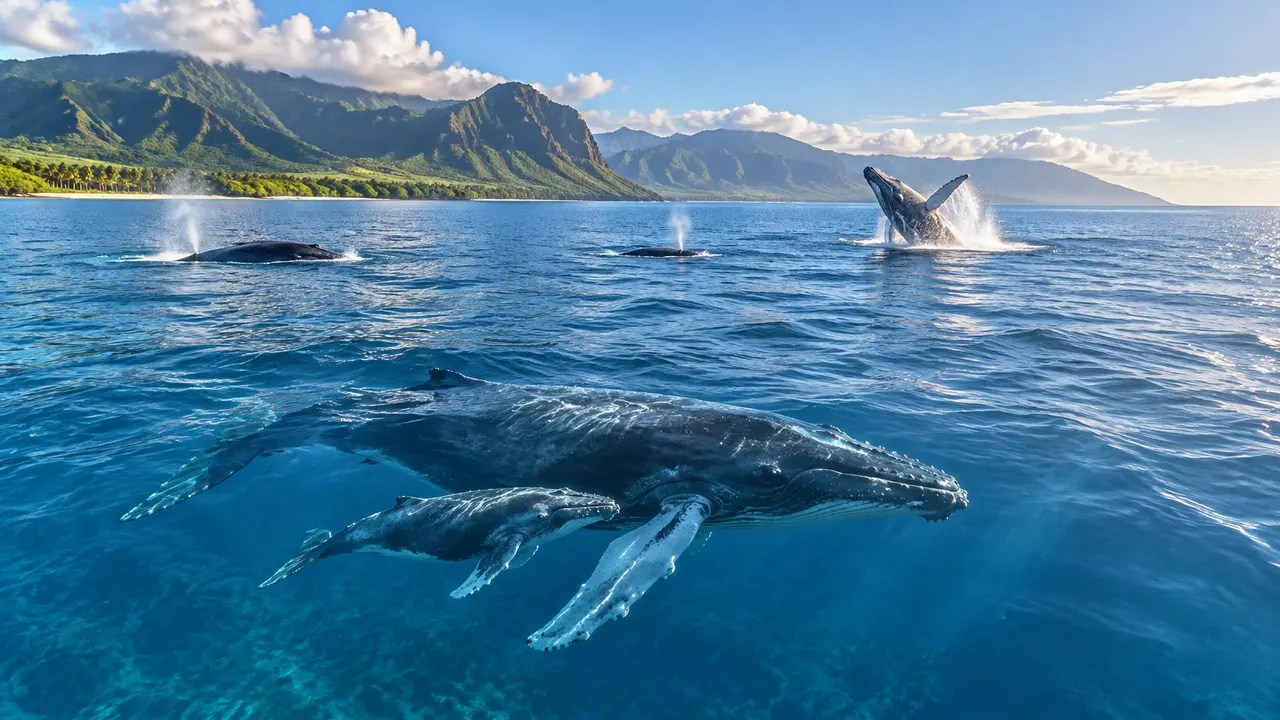
- Breaching: A whale launches much of its body out of the water and lands with a large splash. It's dramatic, brief, and impossible to schedule.
- Tail slapping: The whale lifts its fluke and brings it down hard on the surface, often repeatedly.
- Pectoral fin slapping: A long front flipper strikes the water, creating a white splash you can spot from a distance.
- Spyhopping: The whale rises vertically with its head out of the water, appearing to look around.
- Mother and calf pairs: The calf stays close to its mother near the surface, surfacing more often and staying within her protection.
- Singing males: Songs carry through the water and can sometimes be heard through a boat hull when engines are quiet.
The first sign is usually less theatrical. Watch for a spout, the misty burst when a whale exhales at the surface. A spout tells you where to keep your binoculars trained, because the back, dorsal fin, or fluke may follow in the same small patch of ocean.
Humpbacks are the species to expect in winter. Spinner dolphins and other marine life may appear on the same outing, and they're worth enjoying, but don't count a dolphin sighting as a failed whale watch or assume every distant splash is a whale. Your crew will distinguish size, spout shape, and surfacing rhythm for you.
Shore Viewing Versus Guided Whale Watch Tours
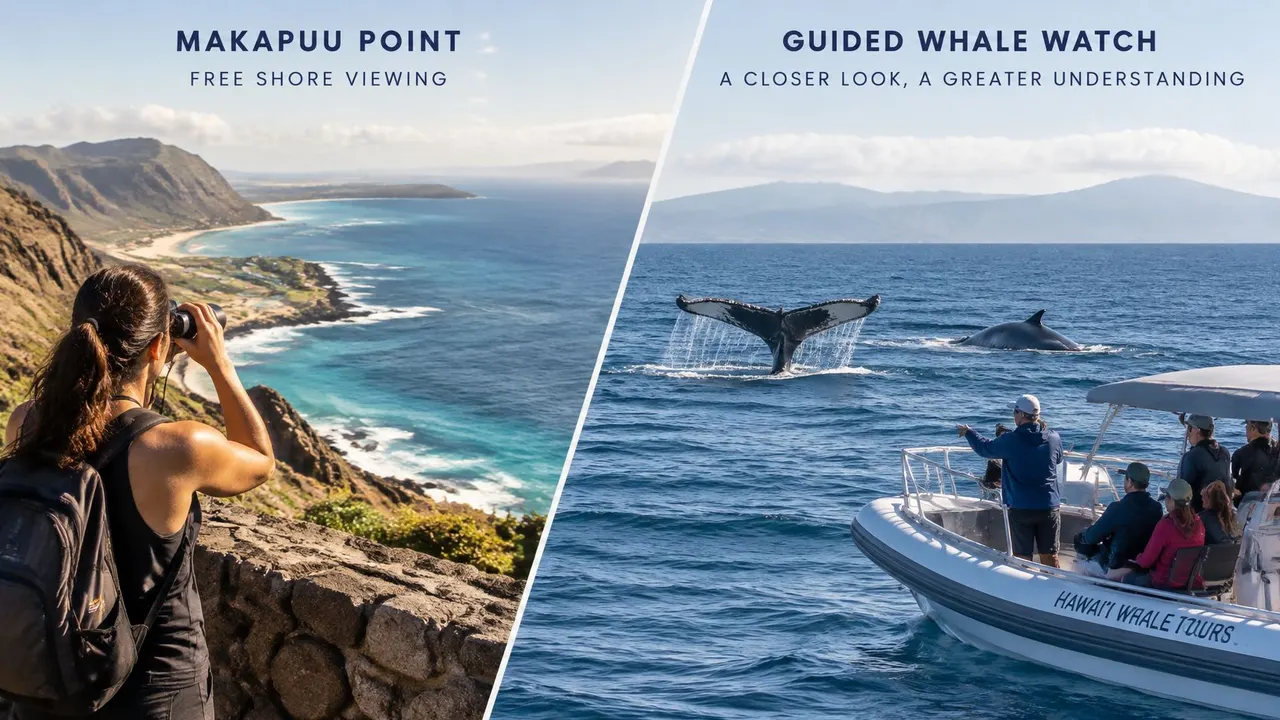
Shore viewing is free and flexible. A guided boat costs more and can place you in better viewing water, but it still operates within federal distance limits. That distinction matters. A boat doesn't buy you permission to approach closely, it buys you mobility, trained spotters, and interpretation while you watch.
Shore Spots That Give You a Fair Chance
- Makapuu Point on Oahu: This east end lookout gives you elevation and a wide view of the channel, which helps you spot spouts that would disappear at beach level.
- Kaanapali and Lahaina coastline on Maui: Whales often pass within shore viewing range here, with Lanai and Molokai visible across the water as useful reference points.
- Kohala Coast on Hawaii Island: Beach access near Puako and Kawaihae lets you combine a coastal drive with repeated stops to scan.
Mid morning usually brings calmer water, which makes spouts and white splashes easier to pick out. Late afternoon offers softer light, but glare can flatten the surface and hide activity when you're looking toward the sun. I would choose a morning session first, then use a late day stop as a bonus attempt.
Give a shore spot at least an hour. Scan slowly with binoculars instead of sweeping quickly, rest your eyes between passes, and move along the coast if a pod is traveling. Pack binoculars, sun protection, water, and a fallback plan such as a coastal walk or beach stop so a quiet hour doesn't feel wasted.
What a Guided Boat Adds
A crew scans from a moving vantage point, communicates sightings around the deck, positions the vessel without chasing, and explains behavior as it happens. That help is substantial for first timers who don't yet know how to find a faint spout against wind chop. This comparison of Oahu whale watching options is useful if you're weighing departure style and trip length.
Living Ocean Tours is the top rated & most reviewed snorkel company on Oahu, and its Waikiki Whale Watching Cruise departs from Kewalo Basin Boat Harbor to view humpback whales that winter in the Hawaiian Islands along the Waikiki Coastline. The convenience is the appeal for Waikiki visitors. You can reach the harbor without planning an interisland flight or a long drive, then spend your time on the water rather than in transit.
Use shore viewing if you're budget conscious, prone to seasickness, or already visiting a good lookout. Use a guided tour if you're a first timer, short on days, or traveling with children who will benefit from a crew calling out sightings. Consider a small group or private charter when your family needs a calmer pace, flexible timing, or more control over how long you stay in one area.
A boat improves your search coverage, not your legal right to get close. If an operator promises a guaranteed close encounter, that's a reason to choose someone else.
Responsible Viewing Rules That Protect the Whales
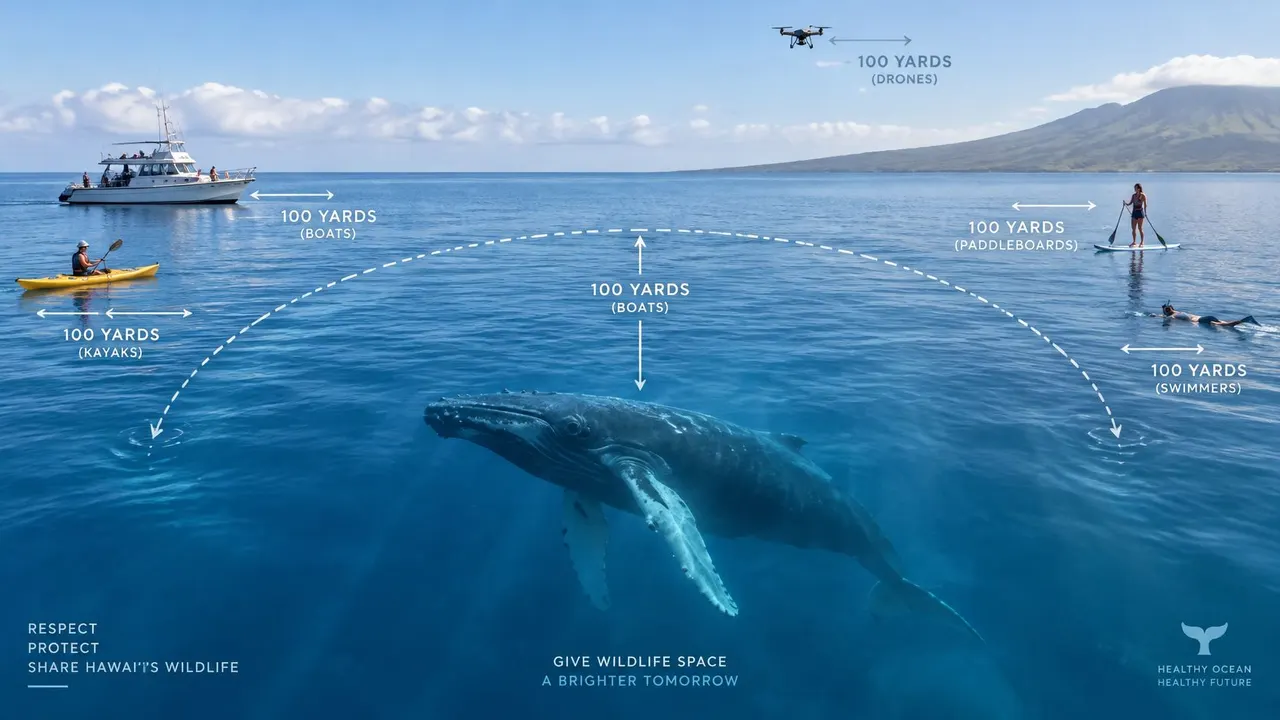
Many visitors assume a careful captain can always ease closer for a better photo. Federal rules say otherwise. The Hawaii DLNR Go Slow Whales Below announcement states that boats are advised to travel at 15 knots or less in water up to 600 feet deep, reduce to 6 knots or less when approaching or departing whales within 400 yards, and never approach within 100 yards.
That 100 yard minimum, equal to 300 feet, applies whether you're on a boat, kayak, or paddleboard, swimming, or flying a drone. It applies year round in Hawaiian waters. A separate question people ask is whether they can get in the water with whales, and this explanation of swimming with whales in Hawaii covers why that idea conflicts with responsible viewing.
Why Your Boat May Slow Down or Turn Away
Speed limits reduce collision risk in shallow winter habitat where calves surface often and may be hard to see in chop. They also give a captain time to change course when a whale appears ahead. That's why a responsible tour may slow, stop pursuing a sighting, or take a wider route around a group.
Operators shouldn't pursue, intercept, or leapfrog a whale by repeatedly moving ahead of its path. If a whale chooses to approach a stopped or slow vessel, the whale has set the distance. The crew's job is to avoid sudden moves and let the animal leave on its own terms.
This creates a real trade off. Compliant viewing can feel less predictable, and a distant whale may remain distant for the whole trip. The benefit is that normal behavior continues. Mothers keep nursing, calves keep resting, and competitive or social groups aren't scattered by engines.
What You Can Do as a Guest
- Use optics instead of distance: Bring binoculars or a camera with a telephoto lens so you don't feel pressured to ask for a closer approach.
- Stay seated when instructed: Sudden movement on deck makes spotting and safe maneuvering harder for the crew.
- Follow crew directions quickly: Children should remain with an adult at the rail, and everyone should keep hands and gear inside the vessel.
- Report serious problems: Tell the crew promptly if you see an injured, entangled, or distressed whale so they can notify the proper authorities.
A distant breach through binoculars is still a genuine sighting. A close pass created by chasing is not a better experience, it's a disturbance with a photo attached.
Planning a Family Whale Watch Trip
Start by telling children the truth in friendly language. You'll search for wild whales, you may see several, and you may see none. Sightings are never guaranteed, even in peak months, so plan a backup activity for the same day and don't stack the boat trip against a flight, luau check in, or another timed reservation.
Families who want age specific preparation can review these notes on whale watching with kids before choosing a departure. Morning trips often bring calmer seas, which usually helps young children settle and makes surface activity easier to spot.
A Short Packing and Comfort List
- Seasickness plan: Take medication before boarding, following the product directions, rather than waiting until someone already feels unwell.
- Center seating: Choose seats near the center of the boat where pitching and rolling usually feel lower.
- Light layer: Wind on open water feels cooler than Waikiki sidewalks, even on a warm morning.
- Sun protection: Apply reef safe sunscreen before departure and bring a hat that won't blow off easily.
- Binoculars or zoom camera: Pack a spare battery or power bank, because cold wind and repeated video clips drain phones quickly.
- Water and small snacks: Young children wait better when they're not hungry, especially during a quiet search period.
- Quiet activity expectations: Prepare kids for scanning, listening, and waiting between brief bursts of excitement.
Explain the distance rule before you board, not after a child asks why the boat won't go closer. A simple script works. We stay back so mothers and babies can rest, and we use binoculars to see details.
Build a small job for each child. One can watch for spouts on the left, another can count fluke dives, and an adult can handle photos. Jobs turn waiting into participation and reduce the pressure on a single breach to make the trip.
If someone in your group is anxious about motion, eat a light meal beforehand, keep eyes on the horizon, and tell the crew early. They can suggest the steadiest spot available and check on you before discomfort becomes the main memory of the morning.
Book Your Whale Watch in January to March
Make the decision in three steps. First, pick the month. Aim for January to March for dependable sightings, or use November to May if your dates are fixed and flexibility matters more than peak odds. When is whale watching season in Hawaii for booking purposes? For most visitors, the practical answer is the January to March core, not every week when a whale might still be present.
Second, pick the island. Choose Maui or Hawaii Island for the highest concentrations, or choose Oahu for a convenient Waikiki departure that fits easily into a family stay. Third, pick your viewing style. Watch from shore for a free and flexible attempt, book a guided boat for search help, or arrange a private option when your group needs a custom route.
Our Waikiki Whale Watching Cruise runs from January 2nd through March 31st, lasts 1.5 hours, is for ages 3 and up, and costs $49 per person. Tours depart from Kewalo Basin Boat Harbor near Waikiki Beach. Confirm current dates, hours, and price on the booking page before planning the rest of your day, and contact us at info@livingoceantours.com or +1 (808) 436-3483 with questions.
You can review the full Waikiki whale watch tour details before you reserve.
Book early enough to keep a backup morning open in case weather changes. Sightings depend on season, sea conditions, and whale movement, and they're never guaranteed. A realistic plan gives you the best chance without pretending wild animals follow a timetable.
If your Hawaii trip falls between January and March, join us for a Waikiki whale watch from Kewalo Basin and let our crew help you scan for spouts, breaches, and mother and calf pairs along the coast. Visit Living Ocean Tours to choose your date, check current availability, and plan a morning on the water that puts the whales first.


