
Hawaii Swim with Whales Rules for Safe Viewing
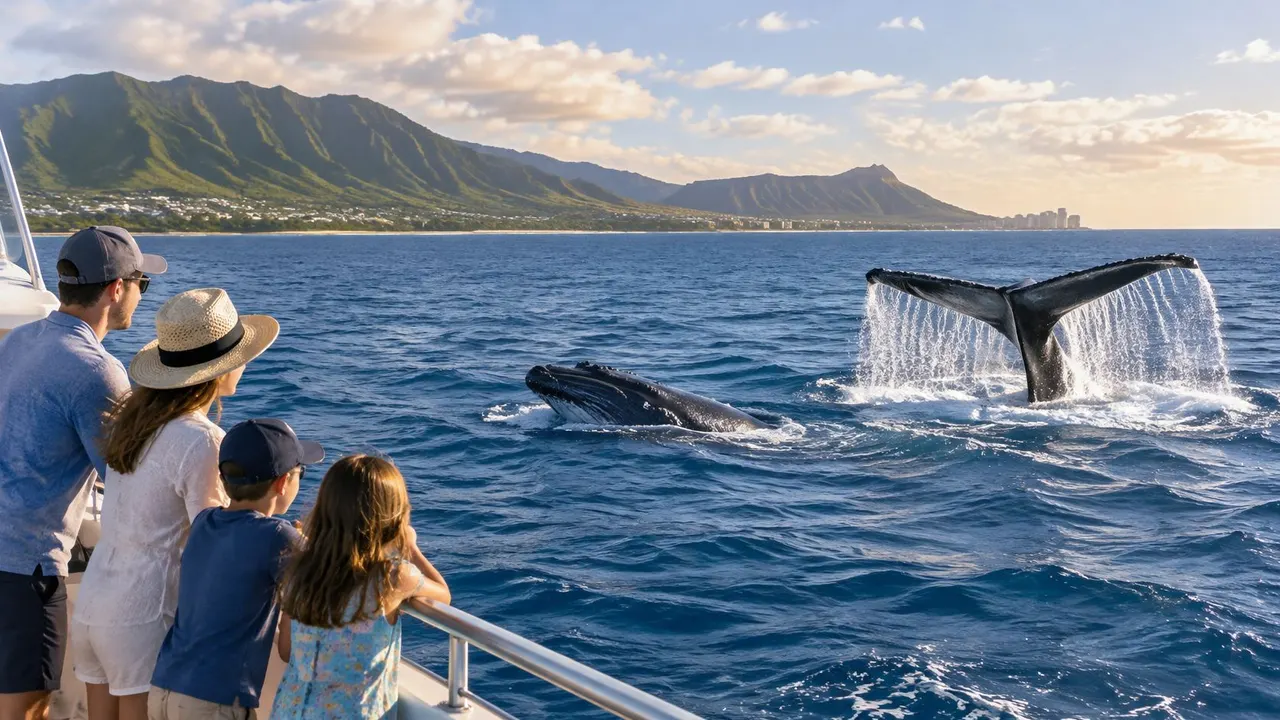
Swimming with humpback whales in Hawaii is illegal, and you can't legally approach one within 100 yards by swimming, boat, or any other means. The lawful Hawaii swim with whales alternative is watching from at least that distance on a compliant boat.
You're probably picturing clear winter water, a mask in hand, and a whale gliding underneath you. That's the image social media sells. Hawaii works differently because the animals arriving here are mothers, newborn calves, and breeding adults who need quiet water, not swimmers dropping in beside them. The good trip isn't a compromise. It's a clear view from deck level, plus a separate snorkel day when you want to be in the water.
Can You Swim With Whales in Hawaii
No, you can't slip into the water when you see a blow from a winter boat. The answer stays no even if the whale looks calm, the sea is flat, and your camera is ready.
Say you're off Waikiki on a bright morning, and a dark back rolls through the surface a few hundred yards away. A calf pops up beside it. Someone on deck asks if strong swimmers can get closer. A good captain doesn't negotiate that one. The engines ease back, guests move to the rail, and everyone watches from the boat.
Hawaii is a breeding and nursing stop for North Pacific humpbacks, not a place that sells a legal swim-with-whales tour. Think of it as a fence around a nursery, not a swim-with-dolphins pen. You're welcome to look, learn, and take photos from outside the fence. You're not welcome inside it.
What replaces the swim
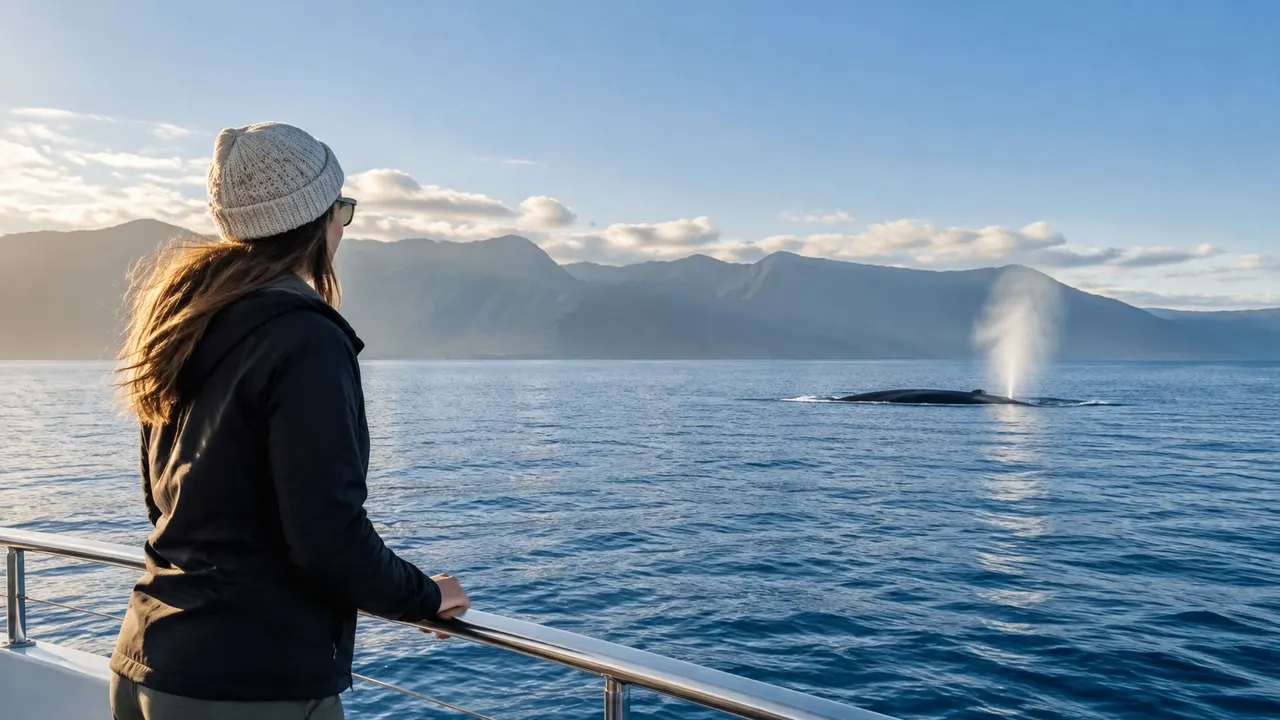
Federal rules bar approaching a humpback within 100 yards by swimming or by boat. The useful plan is guided viewing during the January through March peak, inside the wider November through May migration.
You'll get the distance table, where whales show along the Waikiki coast, and how a careful captain acts when a whale turns toward the boat. You'll also get a backup plan for a quiet whale day, a turtle snorkel or a sunset cruise, so nobody pressures the crew for a closer pass.
A good trip ends with a clear look from the legal line, not a photo taken in the water beside a whale.
The Legal Distance Rules That Replace a Swim
Legal distances around Hawaii humpback whales
| Who or how | Minimum distance | What is prohibited |
|---|---|---|
| Swimmer, kayak, paddleboard, or boat | 100 yards (300 feet, about 91 meters) | Approaching a humpback by any means |
| Aircraft | 1,000 feet (about 333 yards) | Flying closer than the limit |
| Any person, vessel, or object | Stay outside 100 yards | Intercepting so the whale closes the gap |
| Vessel near whales | 6 knots or less inside 400 yards | Speeding or disrupting normal behavior |
| All of the above | Year-round, Hawaiian waters out to 200 nautical miles | Close contact in or out of peak season |
Picture 100 yards as about one football field. That's the image I want you carrying onto any boat, kayak, or paddleboard in Hawaii.
The rule covers more than swimming
The NOAA Hawaiian Islands Humpback Whale National Marine Sanctuary regulations prohibit approaching a humpback within 100 yards, or 300 feet (about 91 meters), by any means, including swimming, boats, kayaks, paddleboards, and drones. There's no swimmer exception and no quiet approach exception.
That restriction applies year-round throughout Hawaiian waters and extends to the sanctuary and waters out to 200 nautical miles. Aircraft have their own line and must remain at least 1,000 feet, or roughly 333 yards, from a humpback.
Don't treat shoulder months as a loophole. A whale in April gets the same space as a whale in February, and a lone animal gets the same space as a mother and calf.
Intercepting is not the same as waiting
You also can't game the distance. Regulations prohibit intercepting a whale by positioning a vessel, person, or object so the animal approaches within the restricted distance, and they prohibit disrupting its normal behavior.
In plain boat terms, the captain shouldn't cut across a whale's line of travel and then claim the whale chose the encounter. The crew shouldn't box an animal against another boat, chase a surfacing pattern, or keep repositioning for one more photo after the whale changes course.
If a whale surfaces closer than expected, the correct move is unglamorous. Slow down, stay predictable, give it a clear path, and create distance when it's safe to do so. Guests stay on board, drones stay packed, and nobody uses the moment as permission to enter the water.
Hawaii guidance also recommends six knots or less when a vessel is within 400 yards of whales. That slower speed gives the captain time to react when an animal turns, dives under the bow line, or pops up where nobody marked its last blow.
Why the buffer is not paperwork
Humpbacks are large, powerful animals. They may travel with calves, breach without much warning, roll, slap a long pectoral fin, or change direction while you're still looking at the last splash.
Distance protects the calf learning to breathe and nurse. It also protects you from becoming the obstacle a surfacing whale didn't plan around. In open water, a swimmer has no rail, no engine, and no quick way to open space again.
Use the table as your booking filter. Reject any listing that promises an in-water whale encounter, a secret swim spot, or close contact if conditions line up. A compliant operator sells guided viewing, education, and careful navigation. That's not weaker language. It's the legal product.
When and Where Humpbacks Show Up
Hawaii humpback season at a glance
| Period | What is happening | How to use it |
|---|---|---|
| November through May | Main migration for breeding, calving, and nursing | Possible sightings, but uneven by week |
| December through April | Male song dominates underwater noise for miles | A scientific sign of local activity, not a surface guarantee |
| January through March | Highest concentration, often in water under 600 feet | Best window for an Oahu or Waikiki boat trip |
| After May | Only limited occasional sightings | Plan turtles, reefs, or a sunset cruise instead |
Timing decides whether a whale watch is a smart booking or wishful thinking. The table gives you the planning window first, then the limits matter just as much.
A nursery, not a feeding stop
The NOAA Ocean Service sanctuary page estimates that up to 12,000 humpbacks, more than half of the North Pacific population, travel to Hawaiian waters each year to breed, give birth, and nurse their calves. Adults arrive after feeding farther north, then use Hawaii's warm, relatively shallow waters for reproduction and early calf development.
That purpose changes how you should read a sighting. A slow mother and calf near the surface aren't performing or inviting company. They're resting, nursing, and conserving energy in the one place built into the migration for exactly that work.
The migration generally runs November through May, while the highest concentration is typically January through March. If whale watching is the main reason for your winter date choice, I'd build the trip inside that peak rather than hoping an early or late week behaves like midseason.
For a deeper month-by-month check before you lock flights, use this guide to whale watching months in Hawaii and match it against your actual travel week.
Why Waikiki boats can work
Whales often gather in water less than 600 feet deep around the main Hawaiian Islands. That habitat preference helps explain why blows can appear along popular boating routes, including the Waikiki coastline, and sometimes from shore on a clear morning.
An Oahu visitor doesn't need a Big Island shore checklist to have a legitimate chance. A winter boat along the Waikiki coast puts you on the water where animals travel and surface, with a crew scanning different sectors instead of one person staring through glare.
Closer to shore never means you may close the distance yourself. A whale visible from the beach is still off limits to a swimmer, paddleboard, or kayak hoping to meet it halfway.
Song tells science one thing, not everything
Male humpback song becomes a dominant underwater sound from December through April, and it can carry for miles. Bottom recorders can show arrival, peak activity, and departure even when chop, glare, or long dives hide animals from people on deck.
That's useful evidence that whales are in the region. It isn't a promise that one will surface beside your boat at a specific hour. Crews still work from fresh sighting reports, sea state, light, and patient scanning.
Planning rule: January through March raises your odds. It doesn't turn wildlife into a scheduled show.
Outside the main season, don't book a whale-only trip and hope for a miracle. Put your money toward turtles, reef fish, or sunset on the water, and treat any rare whale sighting as a bonus rather than the reason everyone showed up.
What a Realistic Whale Encounter Looks Like
Some hours give you a breach close enough to hear the splash. Some give you two distant blows, a long wait, and a dark fluke sliding under. Both are real whale watching.
The better question isn't whether whales exist off Oahu in winter. It's what kind of encounter fits your travel date, your group's patience, and your tolerance for an honest maybe.
A good hour, without the brochure edit
A strong encounter might start with a blow, the white burst a crew member spots before most guests see the animal. Then you may get a rounded back, a dorsal fin, and a fluke as the whale dives. If you're lucky, the next surfacing brings a pectoral slap, a tail lob, or a full breach.
A mother and calf usually move differently. The calf surfaces more often, stays close to the mother's head or side, and may look almost bouncy beside her. The pair can also go quiet and slow, which is exactly when a respectful boat keeps its distance and doesn't keep nudging forward for a better angle.
Another trip may show none of that. Sea state, daylight, glare, and dive time decide what you can find and follow. Whitecaps hide blows. A whale traveling steadily underwater can surface far from its last position. A resting animal may give you only a low profile at long range.
That's not a failed crew. That's the trade you're making when the animal sets the terms.
Counts show scale, not your forecast
In 2024, Big Island Video News reporting on the coordinated whale counts recorded 855 humpback whales across Hawaii, including 282 off Oahu, from 46 observation sites. Use those numbers to understand that Oahu is part of the season in a real way, not to predict your Tuesday morning.
Counts depend on where observers stand, how long they watch, and what the ocean allows them to see. A different statewide count day in the same season can produce a much higher total. That swing is the lesson. One good morning doesn't freeze the pattern for the next boat.
Late March can feel quieter than mid-February even on the same route. Early-season trips can have long gaps between animals. Midseason still produces slow trips when wind builds early or whales stay down and travel.
What a responsible captain may do
A captain may leave an area after a whale changes behavior, turns toward the boat, or disappears on a long dive. That can frustrate guests who want the crew to wait exactly where the animal went down and motor after its next blow.
I'd trust the captain who gives up a marginal view. Chasing a surfacing guess puts the boat in the whale's path, burns the quiet the animal needs, and teaches kids that persistence matters more than the rule.
Define success before you board:
- Clear identification: Your group learns to spot blows, backs, and flukes instead of scanning randomly.
- Natural behavior: The whale keeps traveling, resting, or nursing without reacting to the boat.
- Legal distance: Photos come from zoom and patience, not from closing the last stretch of water.
- A backup plan: Anyone who needs guaranteed-feeling time in the water gets that fix on a separate turtle snorkel.
If your group will count the day as ruined without a breach, a whale watch is the wrong promise to buy. If a distant calf beside its mother sounds worth an hour of scanning, you're booking with the right expectations.
Ethical Ways to See Marine Life Instead
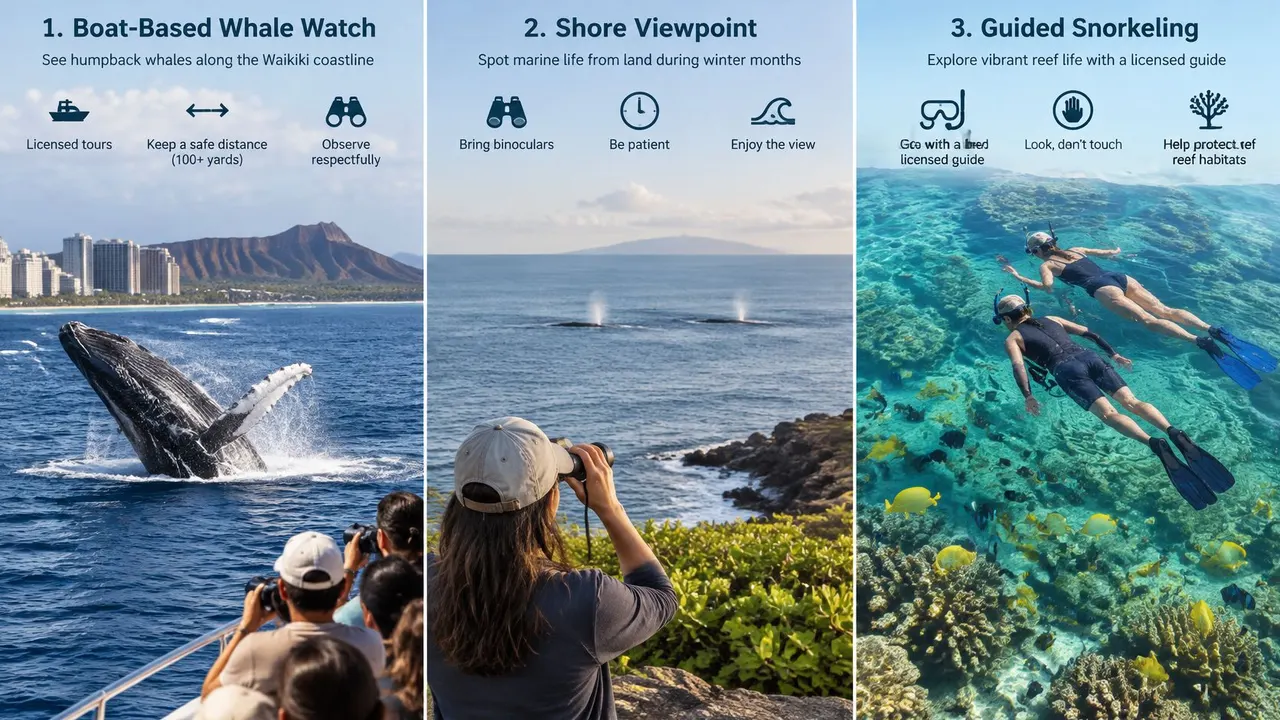
Split the wish into two legal experiences. Watch whales from a boat in winter, then get your in-water animal time with turtles and reef fish on a guided snorkel. Trying to merge them into one Hawaii swim with whales outing creates the problem.
Start with the boat-based whale view
Our Waikiki whale watch tour views humpback whales that winter in the Hawaiian Islands along the Waikiki coastline, from the legal distance. Living Ocean Tours is the top rated & most reviewed snorkel company on Oahu, and we depart from Kewalo Basin near Waikiki.
That separation matters for families. Kids can ask loud questions, grandparents can stay seated, and nobody needs to be a strong swimmer for the whale part of the vacation. If you want background before boarding, browse our overview of Oahu marine life so reef species and seasonal whales don't blur into one promise.
Put the snorkel at Turtle Canyons
The Turtle Canyons Snorkel Excursion visits Waikiki's famous turtle cleaning station, where it's common to see up to 10 Hawaiian green sea turtles. Reef life can include yellow tangs, Moorish idols, triggerfish, rays, and eels, and about 30 percent of Hawaii reef fish are endemic, found nowhere else.
Turtles still aren't touchable wildlife. The NOAA Fisheries humpback whale species page is paired in Hawaii guidance with the rule to stay at least 10 feet (3 meters) from a sea turtle in the water or on land, while some state guidance advises 50 yards whenever possible. Never touch, chase, feed, surround, or block one, and boaters should shift into neutral when appropriate if a turtle approaches the vessel.
If our date doesn't fit, Snorkel Turtle Canyon is a great alternative for the same turtle-focused idea. For a broader boat-and-snorkel format, compare the Waikiki snorkel and waterslide cruise before choosing by headline alone.
Use sunset for the non-swimmers
Not every good ocean plan needs a mask. The daily Waikiki Sunset Cruise suits guests who want the coastline, evening light, and time on deck without snorkeling. Sunset Cruise Waikiki is an exceptional alternative if you need another sunset option.
That three-part split protects the animals and the mood of the group. Whale watchers aren't disappointed that they stayed dry, snorkelers aren't dragged offshore hoping for a whale underwater, and non-swimmers still get a real ocean evening.
What Families and Beginners Should Pack and Expect
A smooth first ocean day starts before anyone touches a mask. We serve Oahu with tours departing from Kewalo Basin Boat Harbor near Waikiki Beach, so build in time to park, find the slip, use the restroom, and walk the dock without rushing kids across hot pavement.
If children are part of the plan, read our notes on whale watching with kids and set the rule early. Whales are watched from the boat. Snorkeling happens only where and when the crew puts you in.
Pack for wind, sun, and waiting
Bring less than you think, but bring the right layers:
- Rash guard: Sun protection that doesn't wash off during a snorkel.
- Light jacket: Winter wind on deck feels colder once the boat moves and spray hits.
- Dry bag: Phones, medication, and a dry shirt stay usable after the ride.
- Reef-safe sunscreen: Apply before boarding, then reapply on deck as directed.
- Motion bands: Useful for anyone who gets queasy in cars or on ferries.
- Binoculars if you own them: Helpful for distant blows, though not required to enjoy the watch.
Skip reef shoes on coral. You shouldn't be standing on the reef at all. Fins, flotation, and a surface float keep your body horizontal and your feet away from the bottom.
The lesson comes before the water
Before snorkeling, we provide a short lesson to familiarize guests with the gear and explain what to expect in the water. You'll practice clearing the mask message in plain steps, learn how the snorkel sits, and hear where to stay relative to the guide and boat.
We offer a snorkel school and flotation vests to help guests stay comfortable at the surface. That's the right model for beginners. You don't need to dive down for a better view, and you shouldn't duck under toward a turtle for a closer photo.
Children should meet the stated age minimum for the trip you choose and be willing to wear a life vest without turning it into a dockside battle. If a child hates face-in-water practice at home, a whale watch or sunset cruise may be the happier first boat day.
Two very different kinds of boat time
On a whale cruise, most of the time goes to scanning the horizon for blows, listening to the crew call directions, and moving carefully around the deck. Bring patience and polarized sunglasses. Leave the expectation that you'll swim at a surprise stop.
On a snorkel stop, you float over a reef away from the crowded shore while guides point out fish and keep the group oriented. Keep hands to yourself around coral, turtles, and rays. Touching coral damages living reef, and reaching for an animal changes its behavior for the next group too.
Don't ask the captain to close the last yards on a whale. Ask where to look next, and teach kids to call out a blow when they spot one.
Use the simple split. Whale watch for the winter view, snorkel for the in-water time. Wildlife is still wild on both trips, but each plan asks the ocean for something it can legally give.
Safety and Eco-Conscious Checks Before You Book
Whales can breach or turn without warning, and mothers traveling with calves need a clear path. The distance rule protects guests as much as it protects animals. Run these checks before you pay:
- Viewing language: Confirm the operator describes a boat-based viewing trip, not an in-water whale encounter.
- Speed discipline: Ask how the captain keeps the vessel slow near whales and avoids placing the boat in an animal's path.
- Turtle response: Ask whether the crew shifts into neutral when a turtle approaches the vessel.
- Guest support: Ask how many guests board and whether snorkelers stay at the surface with flotation.
- Wildlife briefing: Check that guides cover no touching, no feeding, and 10-foot turtle spacing before anyone enters the water.
If a whale surfaces near the boat, stay seated, keep children close, and let the captain create space. Choose smaller groups when you can, pack reef-safe sunscreen, and favor operators who share NOAA guidance plainly.
Booking a legal view isn't a sacrifice. It's the only version that leaves whales and turtles undisturbed.
Book a Legal Whale Watch or Turtle Day
Match the trip to the calendar first, then to the animal your group most wants to see. From January 2 through March 31, our Waikiki Whale Watching Cruise is the direct answer to a Hawaii swim with whales search because it replaces the illegal swim with compliant viewing.
Choose your trip by date and goal
| Option | Best window | Length and ages | Price | Booking |
|---|---|---|---|---|
| Waikiki Whale Watching Cruise | January 2 to March 31 | 1.5 hours, ages 3 and up | $49 per person | Check Availability |
| Deluxe Waikiki Snorkeling and Wildlife Cruise | Year-round reef days | 2.5 hours, ages 3 and up | $79 per person | Check Availability |
| Turtle Canyons Snorkel Excursion | Year-round turtle days | Guided snorkel, ages per booking page | See booking page | Check Availability |
| Waikiki Sunset Cruise | Daily evenings | Evening cruise, ages per booking page | See booking page | Check Availability |
The Deluxe Waikiki Snorkeling and Wildlife Cruise adds a waterslide, water trampoline, and lily pad on a quieter reef, which works well on a separate day when kids want to play as much as they want to look at fish. Turtle Canyons is the cleaner choice when green sea turtles are the must-see and extra water toys would distract from that goal.
Sunset is the right call for guests who won't snorkel, get cold easily in winter water, or want Waikiki from offshore at golden hour. It also gives multigenerational groups one plan where nobody has to prove they're comfortable with a mask.
Use the centered Check Availability buttons placed with each tour earlier in this guide. If you're pairing a whale morning with a snorkel for grandparents, parents, and kids, write info@livingoceantours.com or call +1 (808) 436-3483 and ask us to sanity-check the order of days.
You can also compare background on a company that provides whale watching tours before you commit dates. The decision stays simple. Never book a swim with whales in Hawaii. Book a winter watch from the legal distance, and keep the snorkel for turtles and reef fish.
Book the winter whale view the legal way with Living Ocean Tours, then add a Turtle Canyons snorkel or sunset cruise on a separate day so every age in your group gets the right kind of ocean time. Visit Living Ocean Tours to check your January through March dates and reserve before peak-season boats fill.


