
Whale Watching Oahu: How Tags Reveal Migration Routes
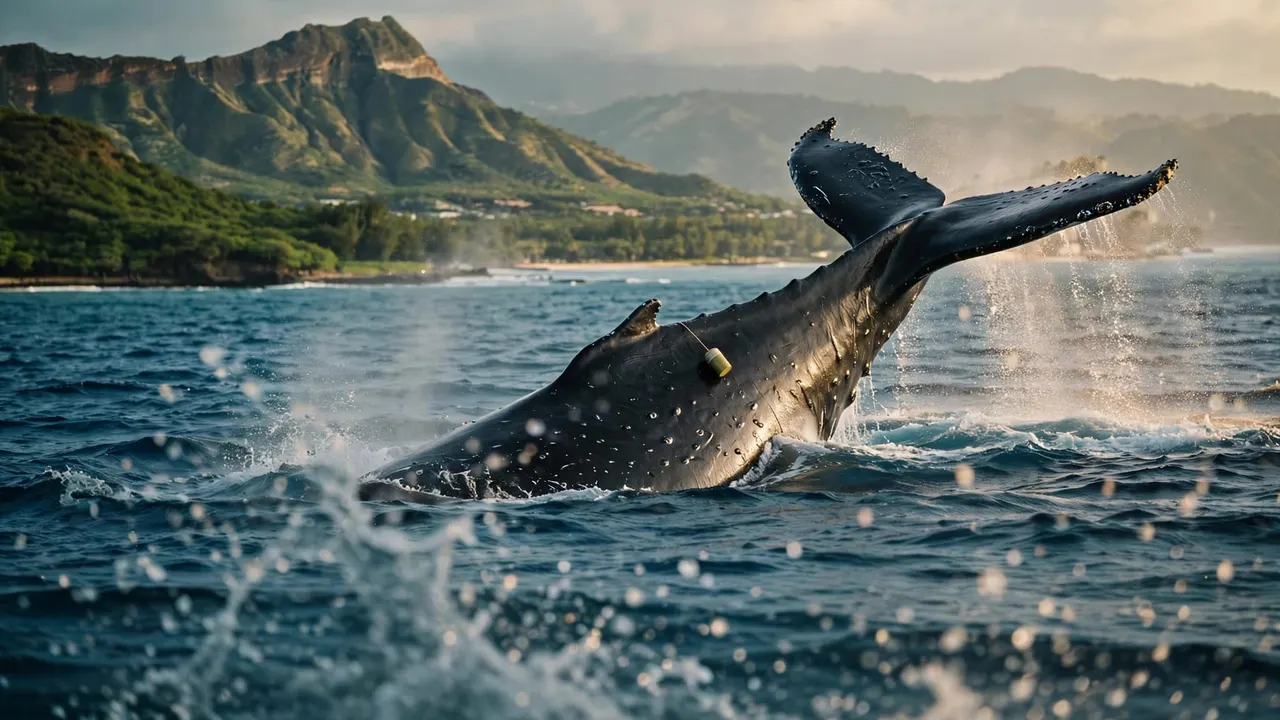
The whale watching Oahu visitors enjoy each winter is part of a much longer journey. Research tags have helped scientists trace humpbacks leaving Hawaii for northern feeding areas, revealing routes that a single afternoon on the water can’t show.
At Living Ocean Tours, we welcome you aboard for a chance to see these whales near Waikiki. Understanding what researchers can learn from a tag adds perspective to every blow and tail lift you spot.
Why Humpbacks Travel to Hawaiian Waters
Humpbacks visit Hawaii as part of an annual cycle that connects tropical breeding areas with colder northern feeding grounds. The whale you see off Oahu may have traveled thousands of miles before reaching the islands.
Cold water provides food
During the feeding season, North Pacific humpbacks eat prey such as krill and small schooling fish. They build energy reserves that help sustain their migration and time in Hawaiian waters.
The journey varies among individuals. Some whales travel between Hawaii and Alaska, while research has documented connections to other parts of the North Pacific. You can read more about humpback migration routes and distances before your trip.
Hawaii provides breeding and nursery habitat
Hawaiian waters are important for mating, giving birth, and nursing. A mother and calf traveling near Oahu are using the islands for a different part of their lives than they do northern feeding areas.
Whales don’t all follow the same schedule. One may move between islands during winter, while another starts its northbound journey. A sighting off Waikiki captures one moment in that larger cycle.
How Research Tags Track Humpback Migration
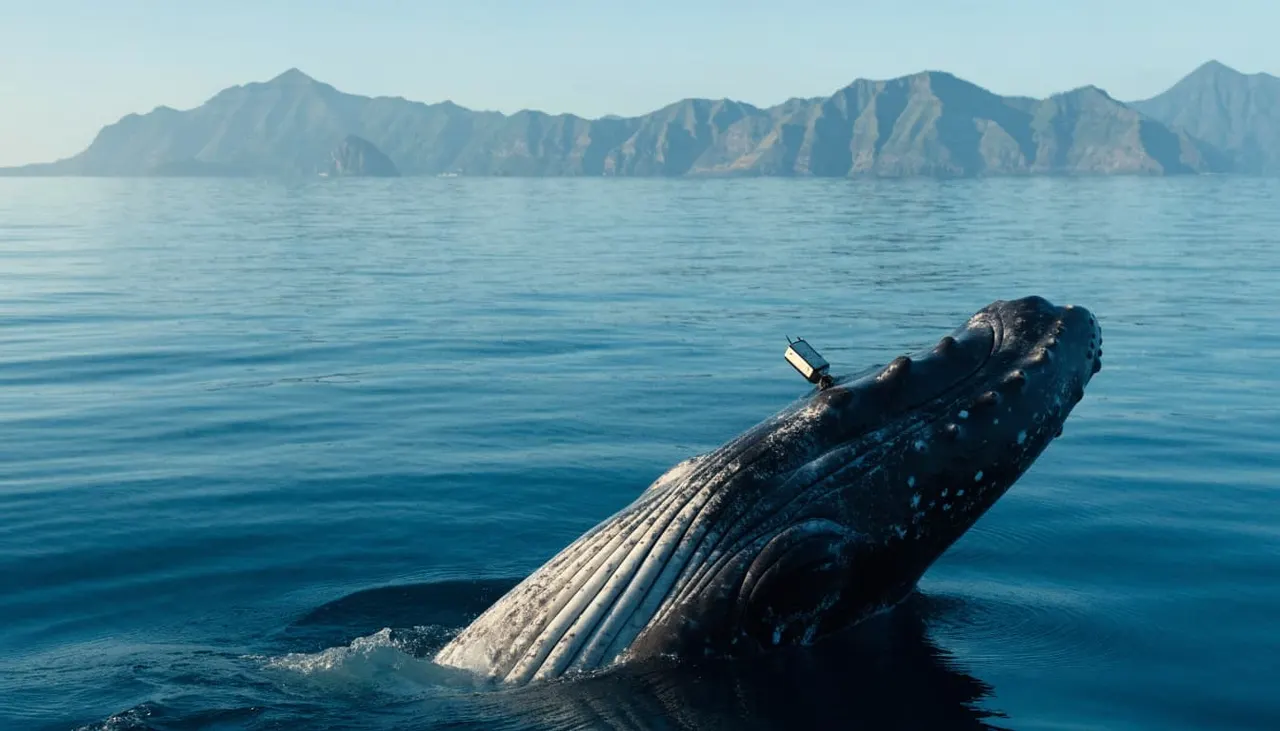
Researchers use telemetry tags to gather information about whales after the animals leave an area where people can readily observe them. Different projects use different tag types, depending on the question researchers want to answer.
Signals help researchers estimate locations
Satellite telemetry can provide location estimates when a tag transmits a signal. By arranging those estimates over time, researchers can map portions of a whale’s movement and calculate its general direction and travel rate.
A whale spends much of its life underwater, so researchers don’t receive a continuous view of every turn. The information comes in as separate observations. NOAA Fisheries’ guide to whale tagging describes how scientists select tags for different research needs.
A track is a record with gaps
On a map, a line between two locations can make a route look precise. In practice, the whale may have changed direction or behavior between those observations.
You also can’t assume a tagged whale represents every humpback near Oahu. Researchers compare tracks from multiple animals and studies to build a broader picture. Each track adds evidence, but its length depends on how long the tag transmits and what information researchers receive.
What a Kauai Tagging Study Recorded
A study by researchers Mate, Gisiner, and Mobley offers a concrete look at what early satellite tracking revealed. In March and April 1995, the team tagged six humpbacks off Kauai as whales were beginning to leave Hawaiian waters.
Three whales headed toward Alaska
Three of the tagged whales traveled independently on roughly parallel north-northeast headings toward the upper Gulf of Alaska. Their tracks showed that whales departing the same general region could travel in similar directions without moving as a group.
The researchers also recorded movement by a female traveling with a calf. Her track covered about 670 kilometers in four and a half days, an average of approximately 150 kilometers per day.
That figure gives you a sense of sustained travel, not a speed you should expect every whale to maintain. Mothers, calves, and other whales can move at different rates.
Transmission length shaped the findings
The six tags transmitted for periods ranging from half a day to 17 days. The resulting tracks ranged from about 30 to 1,860 kilometers.
Those observations documented portions of the whales’ movements after tagging. They didn’t show every moment of each animal’s annual journey. That distinction matters when you see a migration line on a map: its endpoints tell you how much of the trip the research recorded.
What Tracked Routes Reveal Beyond Oahu
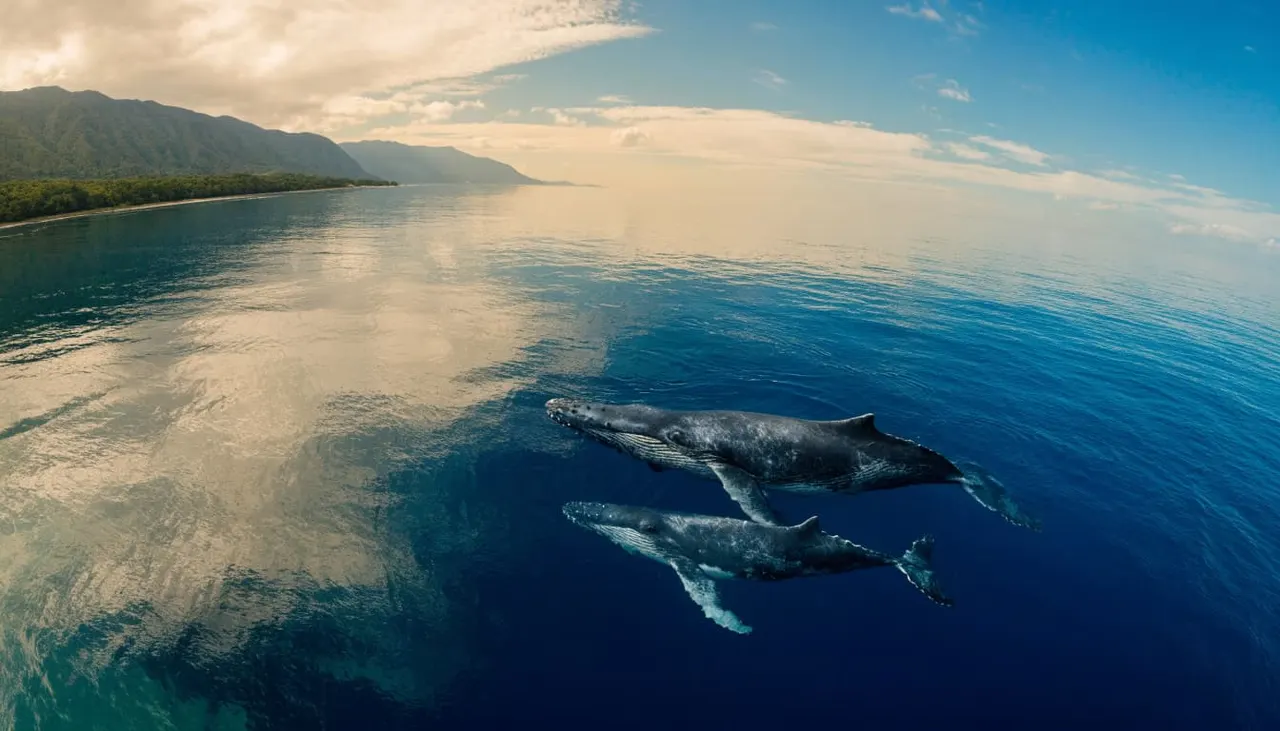
The whale watching Oahu visitors experience connects them to a much wider ocean. Later tracking work shows why you shouldn’t picture every humpback taking one identical route north.
Some whales head beyond Alaska
Oregon State University’s Marine Mammal Institute reports that a humpback tagged in Hawaii in 1997 traveled to Russia by way of the Aleutian Islands. That animal’s route shows how far the connections between Hawaiian winter habitat and northern waters can extend.
Another whale tracked in 1998 traveled from Hawaii to the Queen Charlotte Islands in British Columbia in 30 days. It then spent three months feeding in Southeast Alaska.
These are individual records, not routes assigned to every whale you see. Each helps researchers understand where Hawaiian humpbacks may go after winter.
Routes can be compared across years
Researchers also study whether humpbacks return to similar migratory routes over time. NOAA’s repository includes research on humpback migration route fidelity, a way to examine repeated patterns across years.
Long-term comparisons add context to short tracks. A single location can tell researchers where a whale was at one moment. A collection of tracks can help them investigate how animals use a much larger area of the Pacific.
Why Migration Data Matters for Whale Watching
Research tags help connect the whale you see near Oahu with habitats far beyond the horizon. That matters because conditions in one part of the Pacific can affect animals that spend another part of the year in Hawaii.
Location data can help researchers identify areas whales use and questions that deserve further study. A track may show a travel corridor or time spent in a region, but researchers still need other information to understand exactly what an animal was doing there.
For you, the science offers a useful reminder: a surfaced whale isn’t necessarily staying near the spot where you found it. It could be moving along the coast or spending time with a calf before continuing elsewhere.
A tag also doesn’t turn a whale watch into a live map of every animal offshore. Most whales you see won’t carry a visible research tag, and a sighting alone can’t tell you where an individual fed or which route it followed.
Whale Watching Oahu: Choose Your Winter Window
The whale watching Oahu families enjoy depends on the seasonal return of humpbacks. Whales may be present around Hawaii from November into spring, with January through March generally offering the strongest planning window.
Look for the small signs first
A breach is exciting, but your first clue may be a pale mist above the water. After a blow, watch the same area for a dark back, a dorsal fin, or a tail lifting before a dive.
Scan slowly rather than fixing your eyes on one patch of ocean. Binoculars can help you see a distant animal, although it’s often easier to find a blow with your eyes first. Our guide to reading a humpback’s dive covers more signs to look for.
Give your trip some flexibility
Our seasonal whale watches run from January through March. Booking early in your stay leaves room for another outing if your plans change or you want more time on the water.
Wildlife sightings vary with whale movement, weather, and visibility. You might see a mother and calf, a distant blow, or a tail disappearing beneath the surface. Each is a glimpse of an animal following its own schedule.
Give Humpbacks Room to Move
Hawaii’s waters are a place for whales to travel, rest, and care for calves. Watching respectfully lets you enjoy those moments while giving the animals space.
Federal rules prohibit approaching a humpback within 100 yards by sea or land in Hawaii. Let your captain manage the vessel’s position, and don’t ask the crew to pursue an animal for a closer photograph.
If a whale approaches the boat on its own, follow the crew’s instructions. Stay aboard and never swim toward, touch, feed, or chase a humpback. A calf surfacing beside its mother deserves the same room as an adult traveling alone.
Distance can also make it easier to appreciate the whole scene. With a wide view, you may notice where a whale surfaces again or how a pair moves across the water. The whale sets the pace, and you get to observe without interrupting it.
Join Our Waikiki Whale Watch
For a chance to see humpbacks along the Waikiki coast, join our seasonal whale watching tour. We depart from Kewalo Basin Boat Harbor, close to Waikiki, and our Waikiki Whale Watching experience starts at $49.
Our Coast Guard-inspected vessels offer open viewing areas, shaded seating, and onboard restrooms. We’re also the only tour company with professional snorkel guides, and our crew shares a commitment to respectful wildlife viewing.
Bring sun protection, a secure hat, and binoculars if you have them. Then settle in, enjoy the coastline, and keep an eye on the water.
CHECK AVAILABILITY for your Waikiki whale watch.
Check Availability
See One Moment of a Much Longer Journey
The whale watching Oahu visitors plan for winter offers a brief view of an extraordinary migration. Research tags show that humpbacks leaving Hawaii can take different routes across the North Pacific, and each track reveals only the movement it records.
As you watch from the boat, give the whales space and let your curiosity guide you. A distant blow can connect your day off Waikiki to thousands of miles of open ocean.


