
When Do You See Whales in Hawaii by Month
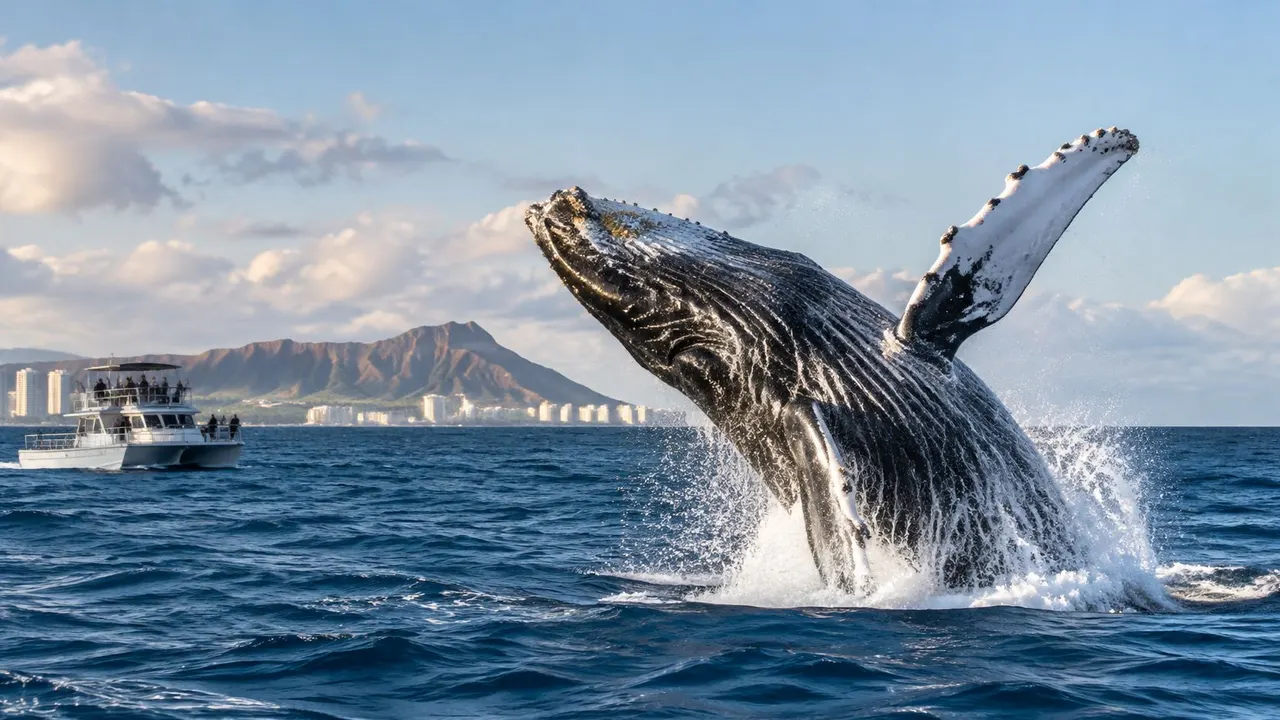
Humpback whales are typically seen in Hawaii from November through May, with NOAA's peak whale-watching period running January through March. For a Waikiki trip, those peak months offer the best seasonal odds, but Oahu isn't where Hawaii's whales gather in the greatest numbers.
The key is to separate when whales are around from where sightings are most concentrated. A winter cruise from Honolulu can be a rewarding way to look for whales, especially when you're already staying in Waikiki, but it's best planned as a chance to see wildlife rather than a promise of a close encounter.
When Do You See Whales in Hawaii by Month
| Month | Season status | Sighting odds | What travelers should expect |
|---|---|---|---|
| November | Season opens | Moderate and rising | First arrivals from northern feeding grounds |
| December | Building | Good | More adults; calves still uncommon |
| January | Peak | Highest | Strong numbers of adults, mothers, and calves |
| February | Peak | Highest | Often the strongest month alongside January |
| March | Peak | Very high | Still inside NOAA's peak window |
| April | Winding down | Moderate to low | Departures increase, but sightings continue |
| May | Late season | Low | Possible early in the month, then sparse |
| June | Off-season | Rare to none | Essentially no breeding-season presence |
| July | Off-season | Rare to none | Not a whale-planning month |
| August | Off-season | Rare to none | Not a whale-planning month |
| September | Off-season | Not recorded in the long photo-ID set | Don't plan a whale trip |
| October | Off-season | Rare | A few early reports only |
Season at a glance: Hawaii's typical viewing window is November through May. January through March is the peak period, not a guarantee of whales on a particular day.
The winter pattern is remarkably concentrated. A NOAA repository analysis examined 37,384 individual humpback whale photo-identification sightings collected from 2002 through 2023. Whales were recorded in every month except June and September, but 99.97% of the sightings occurred between November and May. The analysis reported average annual breeding-season abundance of 11,617 whales and a 37% decline in estimated abundance from the 2014–2015 season to the 2021–2022 season. That variation matters: the season is predictable, but the number of whales seen can change from year to year. (NOAA's photo-identification analysis)
Why do humpbacks come to Hawaii during the northern winter? Think of Alaska as the dining hall and Hawaii as the nursery. Whales migrate from feeding grounds in Alaska and other North Pacific waters to Hawaii's warm, shallow water to mate, give birth, and nurse their calves. Scientists estimate that as many as 12,000 humpbacks, more than half of the North Pacific humpback population, return to Hawaiian waters each winter, according to NOAA's overview of the Hawaiian Islands Humpback Whale National Marine Sanctuary.
For families booking around school breaks or hotel dates, the useful choice is straightforward: aim for January, February, or March if whale watching is a priority. November, December, April, and early May can still bring sightings, but a peak-month booking only improves the odds. It can't guarantee a whale will surface during your particular cruise.
Which Hawaiian Island Has the Most Whales
| Area | Relative concentration | Best known for | Fit for a Waikiki-based trip |
|---|---|---|---|
| Maui, Lanaʻi, and Molokaʻi channel | Highest | Shallow breeding and calving water | Best if whales are the main goal; requires leaving Oahu |
| Kauaʻi north coast | High | Winter sightings along the north shore | Separate island trip, not a Waikiki day |
| Hawaiʻi Island Kohala coast | High | Winter viewing off the Kohala coast | Separate island trip |
| Oahu, including Waikiki and the south shore | Common but less frequent | Convenient winter cruises from Honolulu | Best when whales are a bonus on an Oahu vacation |
The best month and the best island aren't the same question. Official Hawaiʻi guidance says humpbacks may arrive as early as September and remain until May, with January and February the peak months. The highest concentrations are reported in the shallow waters between Maui, Lanaʻi, and Molokaʻi, along Kauaʻi's north coast, and off Hawaiʻi Island's Kohala coast. Sightings around Oahu are common in season, but less frequent than in those higher-density areas. (Hawaiʻi's island-by-island whale-watching guidance)
That creates a practical trade-off. If your family already has a Waikiki hotel booked, you can look for whales without changing islands. If seeing the greatest concentration of whales is the main reason for your vacation, Maui-area waters are the stronger choice. A January or February cruise from Honolulu is a good seasonal bet, but it's not a place to expect a guaranteed close pass.
Island-wide concentration also doesn't predict exactly what one boat will see. A crew scanning a wide area may find whales even where they're less concentrated. Around Oahu, the Waikiki and south-shore coastline is a convenient viewing area, but check current local sighting reports before choosing a place to watch from land. Specific shore vantage points aren't established by the island-level guidance. For a closer comparison of the trade-off, see Oahu whale watching versus Maui.
Use this decision rule: stay on Oahu if whales are a bonus alongside beaches and other wildlife. Consider a trip to Maui, Lanaʻi, or Molokaʻi if whales are the main reason you're traveling.
Best Time of Day and Sea Conditions
For an Oahu whale-watch, a calm morning is often a better choice than a rough afternoon. Whales can surface at any hour, but it's easier to spot a distant blow when the water is smooth or lightly rippled. Wind-driven whitecaps can hide that brief misty puff, while glare can wash out the horizon. If you can choose your position, keep the sun behind you; overcast light can also make the surface easier to scan.
A whale doesn't have to be in deep water for a boat to look for it. Humpbacks use habitat extending to approximately 600 feet, and NOAA guidance advises boaters to remain alert and maintain a maximum speed of 15 knots, or a safe planing speed, while transiting in whale habitat. (Hawaiʻi Division of Aquatic Resources boating guidance)
That slower pace helps the crew do its job. Lookouts have more time to pick out a blow, a back, a fluke, or a calf, and the boat has more time to respond if a whale surfaces ahead. It also means a responsible crew won't race around to chase every possible splash. For more planning detail, see this guide to the best time of day to see whales.
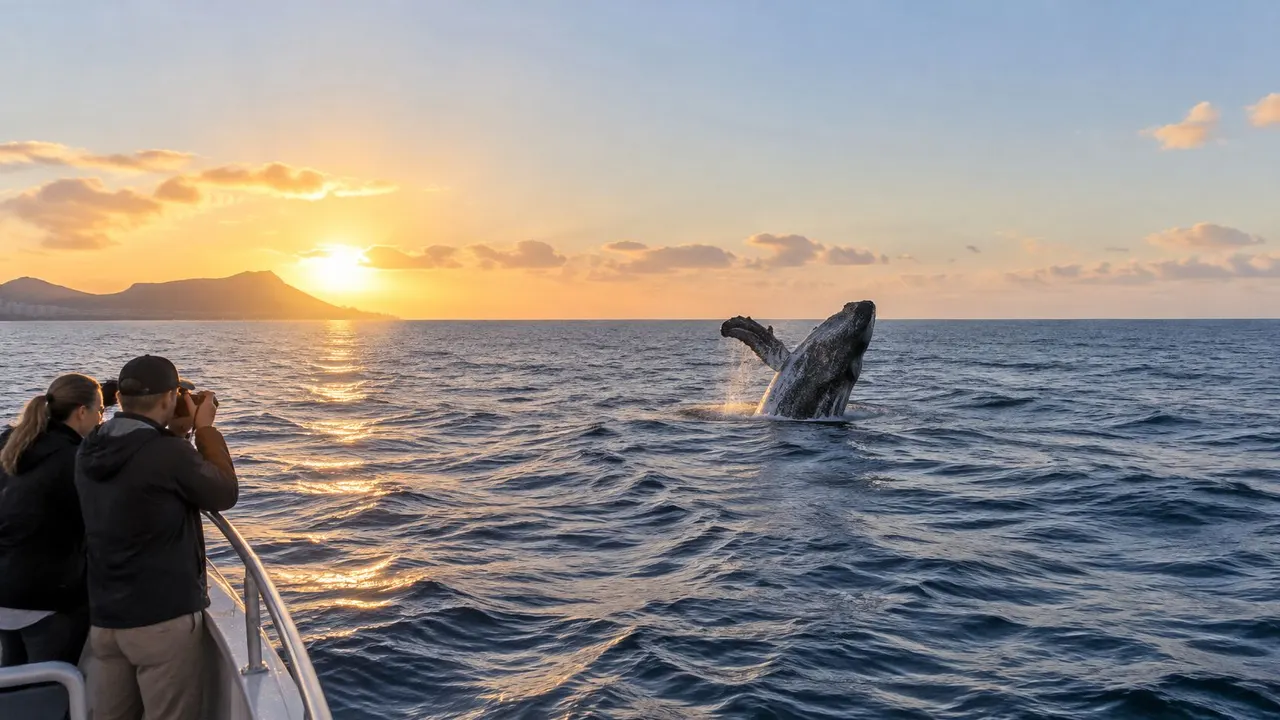
A rough, windy afternoon can be a poor whale-watching hour even in February. A calm November morning may give you a clearer view, even though it falls outside the peak months. Check the marine conditions, not just the weather on land, and favor a departure when wind and swell look manageable.
Prepare children for pauses in the action. Humpbacks surface unpredictably and may disappear for several minutes between breaths. That gap is normal; it doesn't mean the crew has lost interest or that the trip has failed. A practical go-or-wait check is simple: manageable swell, light wind, and a morning departure if your schedule allows.
Behaviors You May See and the Distance Rule
A successful whale sighting doesn't have to be an up-close photograph or a breach. You might spot a blow, a rolling back, a raised fluke before a dive, a pectoral-fin slap, or a breach. You may also see a mother swimming with a calf. All are meaningful glimpses of wild behavior, but none is something a boat can promise.
Whales come to the surface to breathe, then dive again. A quiet stretch is part of watching them, so keep scanning instead of expecting continuous action.
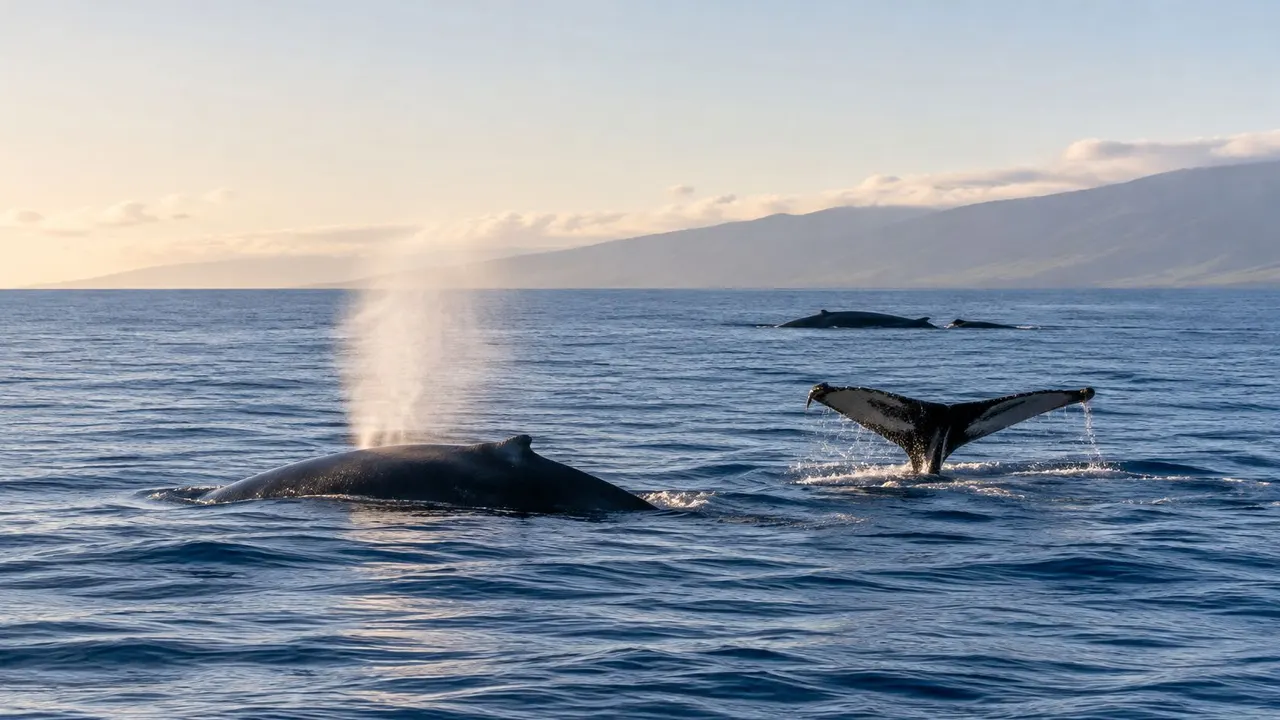
The distance rule shapes every responsible viewing experience. In Hawaiian waters, federal regulations prohibit approaching a humpback whale within 100 yards, whether you're in a boat, swimming, kayaking, or using a drone. Aircraft must stay at least 1,000 feet from a whale. The rule applies around Oahu just as it does around the other islands. If a whale approaches and comes inside the 100-yard limit, viewers must not move toward it; boat operators should put the engine in neutral and wait for the whale to move away. (Hawaiʻi's marine-species protection rules)
One hundred yards is about the length of a football field. From that distance, binoculars can help, while a phone camera may capture only a small back against the water. A legal, distant sighting still counts. Chasing a whale, blocking its path, or leapfrogging ahead in hopes of intercepting its next surfacing isn't responsible viewing.
Patience, binoculars, and no promise of an up-close breach make for better expectations.
Judge an outing by whether the crew scans widely, explains what you're seeing, and keeps a respectful distance, not by how tightly you can crop a photo. For more local viewing context, explore this guide to whale watching on Oahu.
Shore Viewing on Oahu and Waikiki
Watching from shore is a flexible first step if you're staying in Waikiki. Choose a high, open spot with an unobstructed view of the water beyond the reef, ideally along the Waikiki or south-shore coastline. Sightings happen in season, but a whale farther offshore may appear as no more than a small shape or puff.
Bring binoculars and, if you have them, polarized sunglasses to cut surface glare. Scan slowly for a vertical blow rather than waiting to see a whole whale. Give yourself enough time to watch: a quick glance can fall between a whale's appearances, while a longer, steady scan gives you more chances to notice movement.
Morning is often easier for seeing the water clearly. Try to keep the sun behind you so its reflection doesn't wash out the horizon. Overcast light can reduce glare, too. For a local overview of places and approaches, consult this guide to where to see whales on Oahu.
Shore viewing doesn't change the rules. Don't swim, paddle, or send a drone toward a whale to get a closer look. A fluke spotted from the sand is already a worthwhile sighting, and keeping your distance lets the animal continue undisturbed.
How to Watch from a Boat
A boat gives you a higher viewpoint, a wider area to scan, and a crew that can distinguish a whale's blow from white water. The trade-off is that the operator must manage speed and distance carefully. NOAA's whale-safe guidance calls for a maximum transit speed of 15 knots, or safe planing speed, in whale habitat. When observing a whale, vessels must remain at least 100 yards away and travel no faster than six knots within 400 yards. After viewing, they should continue at no more than six knots until they're more than 400 yards away. (NOAA's boating guidance for whale viewing)
Humpbacks commonly gather in water less than 600 feet deep around the main Hawaiian Islands, though they can also be encountered in deeper water. A boat needs room to scan, not a reason to pursue an animal. Before booking, look for a crew that explains the distance rule and holds its position responsibly rather than promising a close pass.
For a comfortable trip, pack binoculars, a secure hat, reef-safe sunscreen, a light wind layer, and a dry bag for your phone. If anyone in your group is prone to seasickness, plan their motion remedy before boarding. Choose non-slip shoes over dress sandals for a wet deck.
Choose a Waikiki Whale Watch for Your Dates
For a family or multigenerational group already staying in Waikiki, a whale watch makes the most sense as a seasonal outing, not a guaranteed close encounter. If whales are a priority, match your plans to the January-through-March peak. November and April can still work if your other travel dates are already set, but they're better treated as a bonus.
Choose a trip that fits your group: consider the departure location, schedule, children's age eligibility, and whether the crew explains responsible viewing before leaving the harbor. Living Ocean Tours is Oahu's top-rated and most-reviewed snorkel company. Its Waikiki Whale Watching Cruise is described as viewing humpback whales that winter along the Waikiki coastline. The company lists its cruise as running from January 2 through March 31, lasting 1.5 hours, welcoming ages 3 and up, and costing $49 per person, with daily departures from Kewalo Basin Boat Harbor near Waikiki Beach. Check the Waikiki Whale Watching Cruise details against your hotel dates and the live booking information before you reserve.
Pick a cruise for the dates you'll be in Waikiki, come for the winter season rather than a promised breach, and let the crew keep the required distance. That makes the outing easier to plan and more respectful of the whales.
Living Ocean Tours offers seasonal whale watching from Waikiki alongside guided ocean excursions from Kewalo Basin Boat Harbor near the beach. If you're planning a winter visit, explore Living Ocean Tours and choose a day that fits your trip, with the understanding that whale sightings are never guaranteed.


