
Best Time of Day to See Whales Off Oahu: When to Go
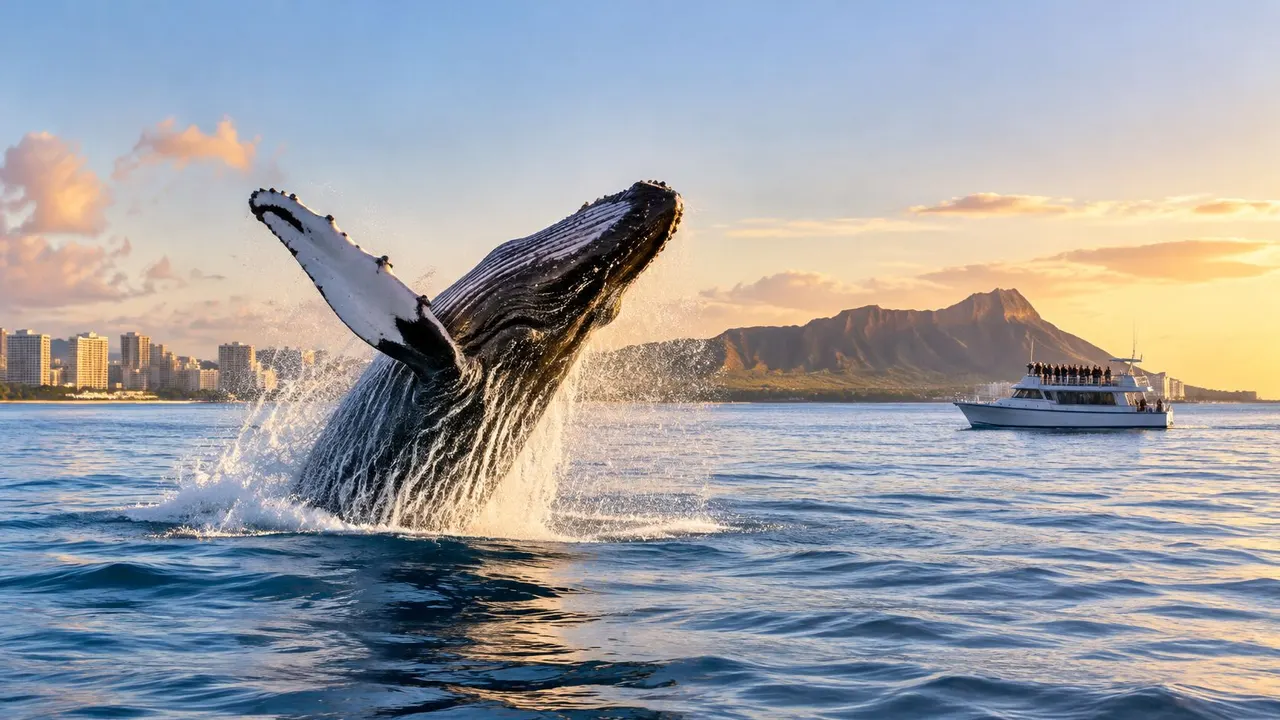
No hour guarantees a whale sighting off Waikiki. The season, wind, and sea state matter more than the clock. Early morning often brings calmer water along the Waikiki coast, making it a practical choice for visibility and comfort, but it cannot guarantee whales or clear viewing.
Advice about a “best” departure time can sound confident, yet whales do not follow tour schedules. Choose a date during whale season, check conditions, and consider how comfortable your group will be scanning the water. Those decisions matter more than betting on a specific hour.
Best Time of Day to See Whales at a Glance
There is no universal best time of day to see whales. The NOAA habitat-use study of Cook Inlet beluga whales found sightings distributed evenly across the observed daytime period, from approximately 10:00 to 17:00, with no significant difference in observation duration by time of day. That study concerns belugas in Alaska, not humpbacks off Waikiki, so use it as a caution against assuming a daily schedule, not as a forecast for Hawaii.
The Cook Inlet study found no time-of-day difference in observation duration. For Waikiki, weigh daylight, wind, and sea state rather than assuming a morning or afternoon rule.
The Waikiki Whale Watching Cruise views humpback whales that winter in the Hawaiian Islands along the Waikiki coastline. These windows describe practical trade-offs, not fixed patterns of whale behavior.
Verdict by Departure Window for Winter Waikiki Trips
| Departure window | Sea and wind | Whale activity | Best for |
|---|---|---|---|
| Before 8:30 AM | Often calmer water and lighter wind | No dependable dawn pattern; calm water can make blows easier to spot | First-time, family and calm-water trips |
| 8:30 to 10:30 AM | Conditions vary; a calm window is possible | No reliable time-of-day schedule | A balance of daylight and potentially calmer water |
| 10:30 AM to 12:30 PM | Wind may begin to build | Surface activity can happen, but noon is not a guarantee | Guests comfortable with changing conditions |
| 12:30 to 3:00 PM | Wind and chop may increase | Spotting can be harder in choppy water | Experienced watchers with flexible plans |
| After 4:00 PM | Light fades | Light fades, so spotting gets harder and it is not a first choice for visual sightings | Earlier daylight departures |
For a first trip, choose the earliest available departure if calmer water is your priority. Choose a later window only if it suits your schedule and you are comfortable with potentially rougher conditions. No departure window promises a sighting.
Living Ocean Tours offers its Waikiki Whale Watching Cruise from January 2 through March 31. The cruise lasts 1.5 hours, is for ages 3 and up, and costs $49 per person.
How Humpback Behavior Shifts Through the Day
A behavioral study of humpbacks wintering in Hawaiian waters found whales appeared to rest around dawn, mating-related behavior began shortly after sunrise, and observations near noon included more breaching and other surface-active behavior. The study of humpback behavior in Hawaiian waters offers context, not a reliable schedule for an individual whale-watching trip.
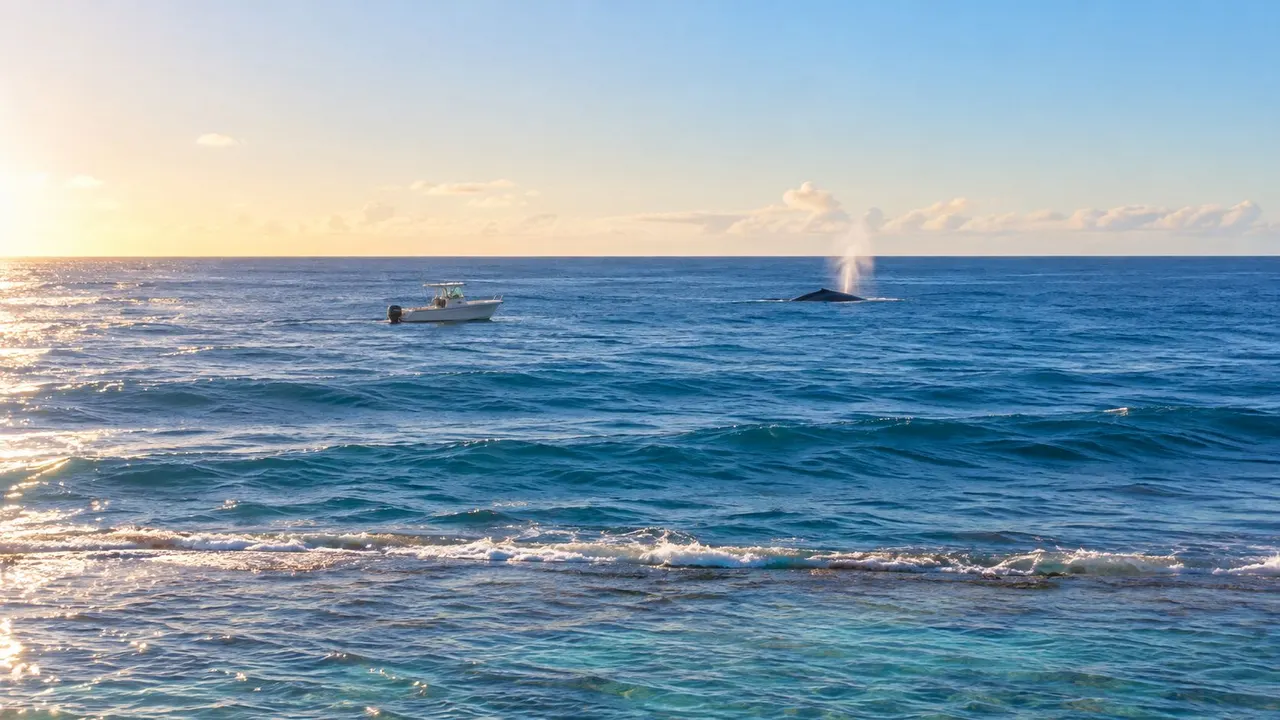
What the Shift Looks Like From a Boat
A whale that is resting or traveling slowly may show a dark back, a blow, or a fluke before diving. Calm water can make these cues easier to pick out, especially for children and first-time watchers.
Breaching, tail slaps, and rolling are conspicuous when they happen, but no time of day guarantees surface activity. A more active whale may be easier to notice; that does not mean more whales are present.
Hearing Whales Is Not Seeing Whales
Acoustic detections are not visual sightings. A multi-site acoustic study of odontocetes found false killer whale detections near Kaua'i were highest during mid-morning, peaking around 10:00 to 11:00 HST, while Cuvier's beaked whale detections at another Hawaiian site peaked around 08:00 to 09:00. Several dolphin species showed substantially lower daytime echolocation detections. These findings concern other cetaceans and acoustic monitoring, not the best time to see humpbacks off Waikiki.
A whale can be present and vocalizing without surfacing where a boat can see it. Visual spotting depends on daylight, visibility, sea state, and where the whale surfaces.
Decide what matters most to your group: a potentially smoother ride or the chance of seeing conspicuous surface behavior. Neither choice guarantees a particular whale encounter.
Humpback behavior also varies with age, reproductive status, sea state, and boat traffic. Since no departure hour captures every behavior, choose based on conditions and your group's comfort rather than expecting a precise daily pattern.
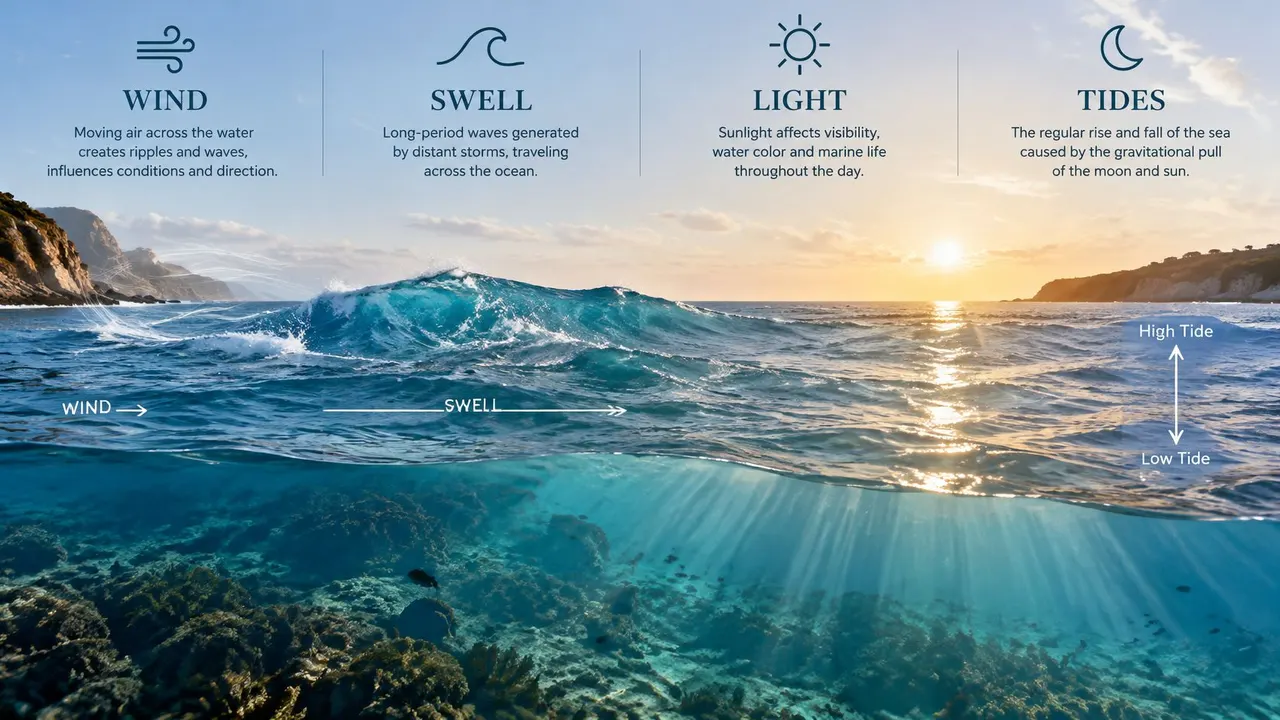
Wind, Swell, Light and Tides on the Water
Two departures can offer very different viewing conditions. On calm water, a blow may stand out clearly; in chop, spray and wave crests make it harder to scan. The whales may be just as present, but spotting them takes more effort. The guide to whale watching conditions off Oahu explains how conditions shape a trip.
Wind and Sea State
Wind can roughen the surface and make a whale's back harder to distinguish between waves. A low, dark back stands out more easily on flat water, while chop breaks up the view. Swell also moves the boat, making it harder to hold binoculars steady.
Forecasts are useful for comparing departure windows, but conditions can change. If comfort and visibility are priorities, favor a forecast with less wind and swell over a particular time on the clock.
Light, Glare and Tides
Low morning sun and bright afternoon glare can both make it harder to scan the water. Overcast skies may reduce reflections. For photos, keep the sun behind you when possible, use a fast shutter speed, and shoot bursts when a whale surfaces. Low sun can warm an image but may backlight a blow.
Tides matter less to whales offshore of Waikiki than they do to reef snorkel sites and harbor conditions. A tide chart is not a useful way to predict humpback sightings.
Your Morning-Of Checklist
- Wind forecast: Check the hourly forecast, not only the daily summary, because conditions can change through the day.
- Swell height: Larger swell means more boat motion and harder binocular work.
- Visibility: Rain squalls and haze can shorten the distance you can scan.
- Recent sightings: Ask the crew what they have seen recently.
- Captain's notice: Listen to the sea-state briefing before boarding and follow the crew's guidance.
A calm late-morning trip can be a better choice than a windy dawn trip. Use the forecast and your group's comfort to decide.
Month by Month Odds for Oahu Whale Watching
The calendar usually matters more than the hour. The Hawaii Division of State Parks guidance on whale watching season says humpbacks can begin arriving in the Hawaiian Islands as early as September, may remain until May, and reach peak abundance in January and February. It also notes that Oahu sightings are generally less consistent than those off Maui, Lanai, Molokai, Kauai's north coast, and Hawaii Island's Kohala coast.
During peak months, different departure times can all be worthwhile, but no hour guarantees a sighting. Outside the peak, a favorable forecast cannot make whale numbers more predictable. The humpback whale watching season in Hawaii explains the seasonal migration behind the timing.
| Period | Humpback presence around Oahu | Scheduling advice |
|---|---|---|
| September to November | Early arrivals, numbers still building | Check recent sightings before booking |
| December | Numbers climbing toward peak | Book for the season; compare forecasts for comfort |
| January to February | Peak abundance | Consider any suitable daylight window; conditions still matter |
| March | Numbers declining as season ends | Book early in the season's final months and keep plans flexible |
| April to May | Few whales remaining | Sightings are less dependable; manage expectations |
| June to August | Humpbacks largely absent from Hawaiian waters | Whale trips are not the right choice |
Living Ocean Tours offers its Waikiki Whale Watching Cruise from January 2 through March 31. The 1.5-hour cruise is for ages 3 and up and costs $49 per person. Sightings are never guaranteed.
For a March trip, keep your schedule flexible if possible. The season is winding down, so a backup day may be more useful than trying to identify a perfect hour.
Responsible Viewing Rules That Apply at Every Hour
A departure time does not change the required distance from humpbacks. The Hawaii Division of Boating and Ocean Recreation guidance on protecting marine species states that people may not approach a humpback whale within 100 yards by boat, kayak, drone, swimming, or any other means. If a whale approaches a vessel, the operator stays stationary, puts the engine in neutral, and waits for the whale to move away.
The Five Rules on Every Trip
- Stay at least 100 yards from a humpback by any means.
- If a whale approaches, the operator stays stationary and motorized vessels shift to neutral.
- Keep to 15 knots or minimal planing speed in waters 600 feet deep or less, as Hawaii officials advise boaters during whale season.
- Slow to 6 knots or less within 400 yards of whales.
- Never cross in front of, pursue, or surround whales.
Sea state affects how easily an operator can hold position and judge distance. In rougher water, viewing takes more care, but the safe distance remains the same.
Photographers should use their lens rather than expect the boat to move closer. Bring the longest lens you have and work with the view from a safe distance. The summary of responsible whale watching on Oahu explains how crews handle close approaches by whales themselves.
Before booking, ask how the operator handles a whale that approaches the boat and whether the crew shifts the engine to neutral. Clear answers help you understand how the trip will protect both passengers and wildlife.
Book the Right Departure and Prepare Your Family
Choose a departure that fits your group and the forecast, not a slogan. For a first trip, an early departure can be a sensible choice if the forecast suggests calmer water. If you prefer a later time, be prepared for wind and chop to affect comfort and visibility. March visitors should keep their plans flexible because whale presence is less dependable as the season ends.
Living Ocean Tours offers its Waikiki Whale Watching Cruise along the Waikiki coastline during winter whale season.
Logistics for Our Waikiki Departure
Tours depart daily from Kewalo Basin Boat Harbor, conveniently located near Waikiki Beach. Parking costs $2 per hour, paid by scanning the QR code on the parking lot signs. Check in 30 minutes before the scheduled departure so you have time to board without rushing.
The whale-watching cruise lasts 1.5 hours, is for ages 3 and up, and costs $49 per person. Review the Waikiki whale watch tour details before choosing a date. The tips for whale watching with kids can help you set expectations before leaving the hotel.
Prepare Your Family Before Boarding
Seasickness can make a trip uncomfortable even when whales are nearby. If your family uses a motion-sickness remedy, follow its directions and plan ahead. A light meal, a seat low near the center of the boat, and looking at the horizon may help reduce discomfort. Children who feel queasy should look up from screens.
The Hawaii Division of Aquatic Resources guidance on marine protected species recommends binoculars and telephoto lenses so observers can watch marine mammals from a distance. Pack binoculars, sunscreen, hats, water, a light layer, and a charged camera. Give children a simple spotting task: scan for blows, dark backs, and tail flukes.
- Binoculars: Bring a pair for each adult if possible, with straps to keep them secure.
- Sun protection: Apply sunscreen before boarding and bring hats that fit securely.
- Clothing: Pack a light layer for wind on open water.
- Camera: Charge it, clear storage space, and use burst mode when a whale surfaces.
Set the Expectation Out Loud
Whales are the goal, but sightings are never guaranteed, and we always keep a safe distance.
Tell children before boarding that a whale may not appear. The trip still offers time on the water and views of the Waikiki coastline and Diamond Head. Setting that expectation helps everyone enjoy the boat ride without treating a sighting as a promise.
Season, wind, and sea state matter more than the clock. Choose a departure that suits the forecast and your group, and treat any whale sighting as a possibility rather than a guarantee.
Join Living Ocean Tours from January 2 through March 31 for a 1.5-hour Waikiki Whale Watching Cruise from Kewalo Basin Boat Harbor. Scan the Waikiki coastline for wintering humpbacks, with the day's conditions shaping what you can see. Check availability for the Waikiki Whale Watching Cruise.


