
Whale Watching Oahu: Reading Humpback Fin Slaps
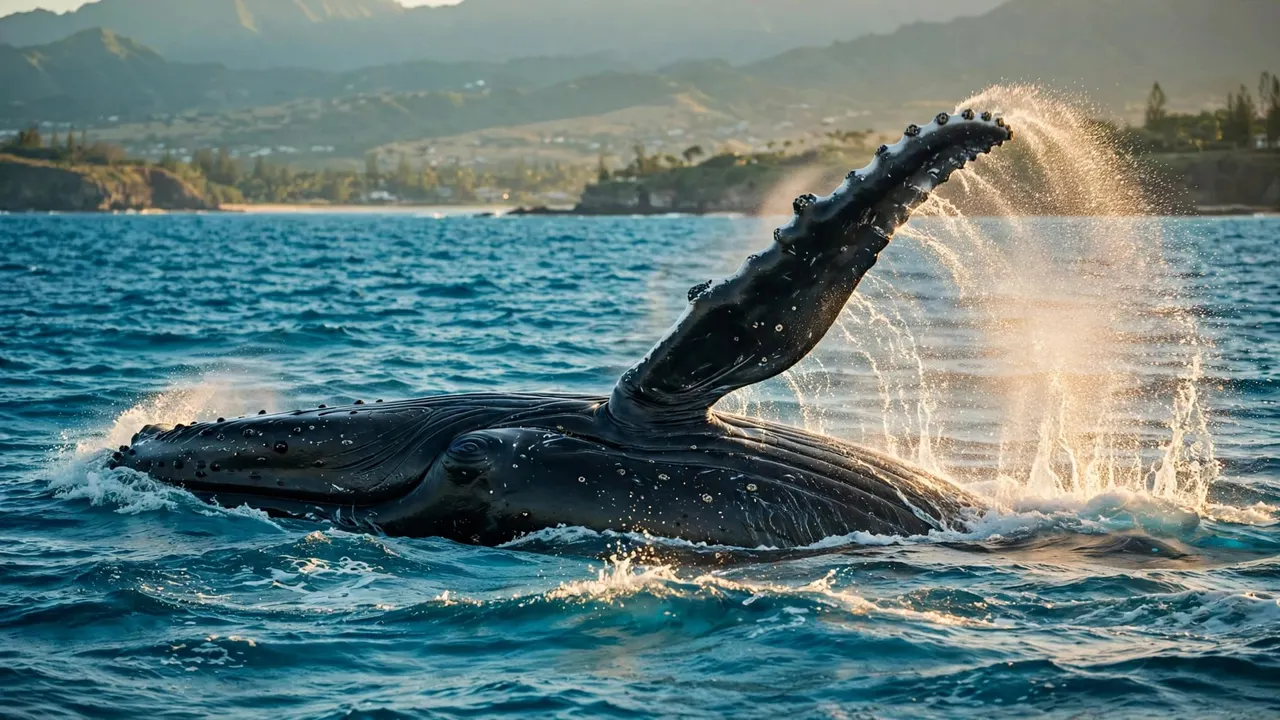
A humpback’s pectoral-fin slap is a surface display you can recognize, but you can’t reliably translate one splash into a specific message. During a whale watching Oahu outing, watch the whale’s position and what happens before and after the strike.
At Living Ocean Tours, we encourage patient observation on our Oahu ocean tours from Honolulu. Your most useful starting point is what you can see, beginning with the long flipper that makes this behavior so distinctive.
What a Humpback Pectoral-Fin Slap Looks Like
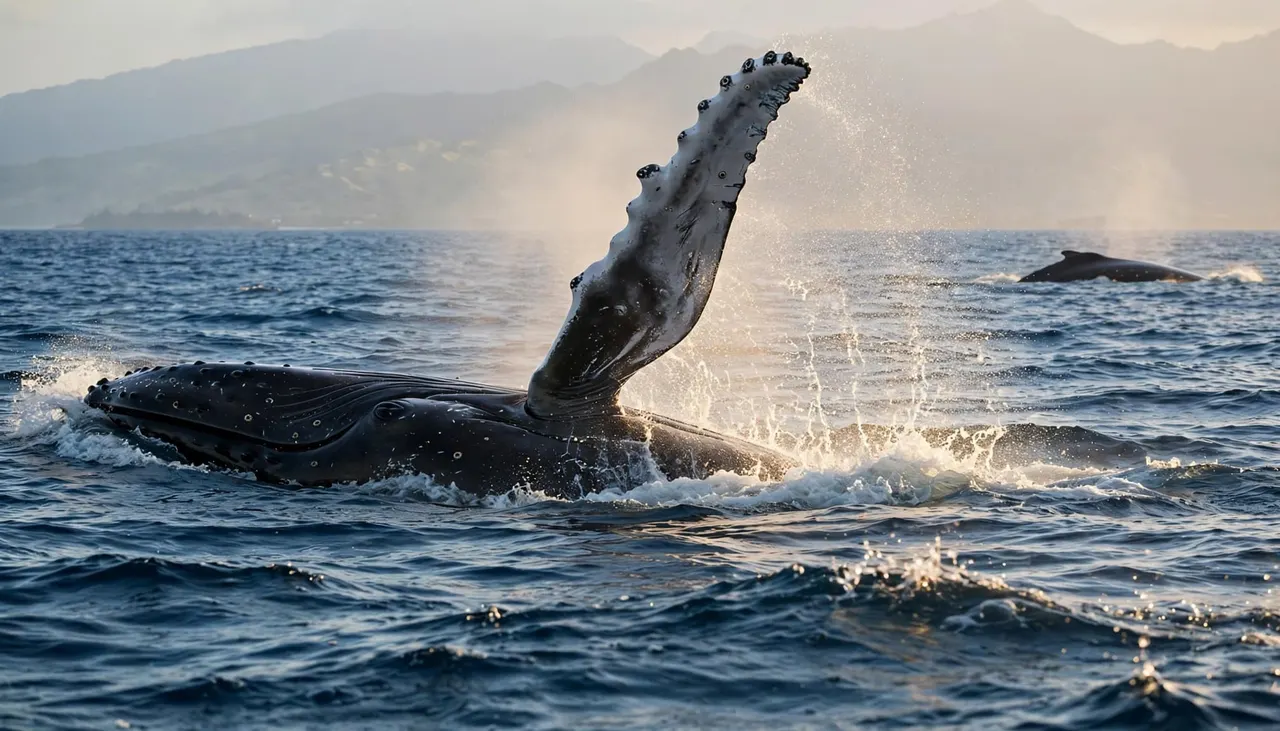
Follow the long flipper
A humpback has two pectoral fins, one on each side of its body. These long flippers help it maneuver underwater. During a fin slap, the whale lifts a flipper above the surface and brings it against the water.
You may see the whale roll onto its side or back during the movement. Sometimes the sequence includes repeated strikes. The Marine Mammal Center’s guide to whale surface behaviors describes flipper slapping as something you can both see and hear, especially among humpbacks.
Separate a slap from a raised fin
A flipper held above the surface hasn’t necessarily slapped the water. Watch for contact and the resulting splash before naming the behavior.
Also, follow the body part rather than judging by splash size. A tail slap involves the broad tail flukes, while a breach brings much of the whale’s body out of the water. From a distance, whitewater can hide those differences.
If you only catch the splash, describe the splash. You need to see the flipper to confidently identify a pectoral-fin slap.
That distinction makes your whale watching Oahu experience more interesting because you start recognizing movements rather than counting splashes.
What Pectoral-Fin Slaps Can Tell You
Consider possible social meaning
A fin slap creates a visible disturbance and a sound. That makes communication or social display a possible interpretation, especially when other whales are nearby.
However, a single strike doesn’t tell you its intended recipient or purpose. You can’t confidently label it a greeting, warning, invitation, or challenge from the deck of a boat.
For your whale watching Oahu trip, a useful description stays close to the action: one whale rolled, raised a flipper, and struck the surface several times. That gives you a clearer account than deciding the animal was excited or angry.
Keep intention separate from observation
A dramatic movement can feel directed at you, particularly when a flipper rises on the side facing your boat. That position alone doesn’t establish that the whale is acknowledging people.
Likewise, several whales near one another don’t prove that every surface movement belongs to a coordinated exchange. You may be watching animals traveling or surfacing independently.
You can enjoy the possibility of communication without claiming to know the message. Notice whether another whale surfaces, changes direction, or displays afterward. Those observations add context, even when the reason for the original slap remains uncertain.
Read the Sequence Around the Splash
Watch before and after the strike
Once you spot a raised flipper, resist narrowing your attention to that single patch of water. Keep enough of the surrounding ocean in view to notice the whale’s next movement.
Look for a roll, another flipper lift, a breath, or a return to steady travel. If several strikes occur, notice whether the whale remains in roughly the same area or changes position.
These details give your memory a sequence. They also help you distinguish an extended surface display from one brief movement glimpsed between waves.
Describe nearby whales without assigning roles
When more than one humpback appears, pay attention to spacing and direction. Two animals surfacing close together offer different visual context than a lone flipper appearing far from other visible whales.
Still, proximity doesn’t establish a relationship. Unless you have clear supporting evidence, avoid deciding that the animals are partners, rivals, or members of a family.
Children can join this observation easily. Ask them to describe the body part, movement, and nearby activity they noticed. Their account might be “one long fin, two splashes, then a back,” which is useful wildlife observation without an invented explanation.
Notice More Between the Big Displays
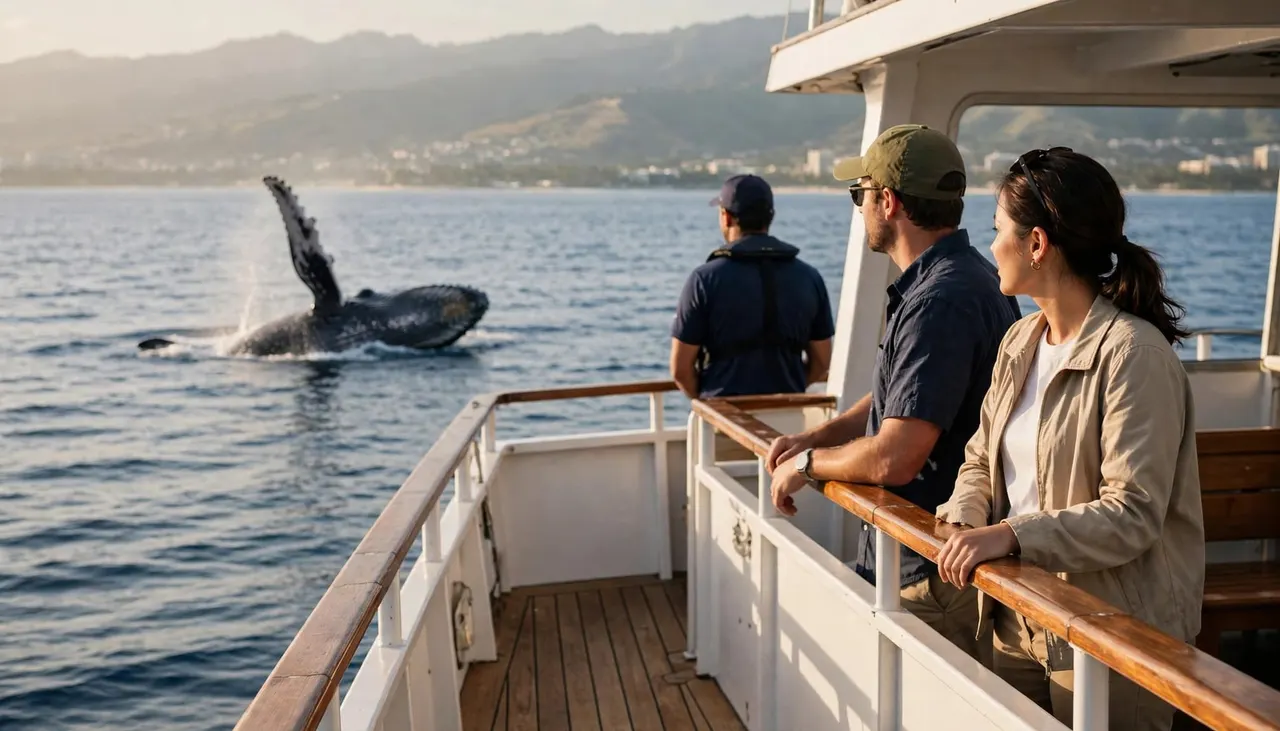
A rewarding whale watching Oahu outing includes quieter moments. A brief blow, rounded back, or dorsal fin can reveal a whale before any dramatic surface activity occurs.
Begin with your eyes rather than keeping binoculars pressed to your face. A wider view helps you locate movement. Then use binoculars to examine the area once you have a reference point.
If you’re taking photographs, leave room around the whale in your frame. An extremely tight view can cut off the flipper or hide the body position that explains what you’re seeing. A short video can also preserve the order of movements.
Keep your camera secured when moving around the deck. Also, pause occasionally to watch without a screen. Surface appearances can be brief, and adjusting camera settings can consume the entire moment.
When someone spots activity, use a clear direction and describe what you saw. “A blow off the left side” helps other guests more than shouting without pointing out a location. Then give everyone room to look without rushing across the deck.
Give Humpbacks Room to Choose Their Course
NOAA’s humpback whale viewing guidance calls for observing large whales from at least 100 yards away. Keep that distance in mind even when a long flipper makes the animal appear close.
Your captain manages the vessel’s position. Don’t ask the crew to chase a whale, cut across its route, or arrange a tighter photograph. If a whale moves toward the boat, follow crew instructions and let the captain respond.
A fin slap doesn’t give you permission to approach. Neither does a calm surface pause or a whale appearing to face the vessel.
Keep the encounter aboard. Never swim toward, touch, feed, or try to attract a humpback. Avoid calling toward the animal or attempting to provoke another display. These boundaries matter especially around mothers and calves, which need room to travel, surface, and rest.
Your movements on deck matter, too. Keep railings clear, help children stay safely positioned, and avoid leaning over the side for a photograph. If something falls overboard, tell the crew rather than reaching after it.
Respectful whale watching Oahu means allowing the animal’s next movement to happen without pressure from your boat or your camera.
Plan Your Outing With Living Ocean Tours
You can join our Waikiki humpback whale watching tour from Kewalo Basin Boat Harbor, close to Waikiki. Our family-friendly outings give you time on the water to search for blows, surfacing backs, and possible fin displays.
Our double-decker vessels offer open viewing areas, shaded seating, onboard restrooms, and dry storage. Those practical comforts help you stay attentive without spending the entire outing standing at the rail.
Bring sunglasses, sun protection, a secure hat, and a light layer for wind. Shoes with reliable grip make moving around the vessel easier. Keep your phone or camera attached to a strap when you’re using it.
If your ocean plans also include reef time, we’re the only Oahu tour company with professional snorkel guides. Whale viewing remains an above-water experience, with the crew directing your time aboard.
You can CHECK AVAILABILITY for a whale-watch departure that fits your visit. Bring flexible expectations: neither a sighting nor a particular surface behavior can be promised.
Key Takeaways for Your Whale Watch
- Identify the body part before naming the behavior. A long side flipper distinguishes a pectoral-fin slap from a tail slap.
- Watch the entire sequence, including body rolls, repeated strikes, nearby whales, and the return to travel.
- Treat a particular message or emotion as uncertain. A visible display doesn’t prove the whale is communicating with your boat.
- Let the captain manage distance and positioning. Stay aboard, keep your camera secure, and leave humpbacks free to choose their course.
These habits give you a richer whale watching Oahu experience without requiring a dramatic encounter or a definitive explanation.
Frequently Asked Questions
Does a pectoral-fin slap mean a whale is angry?
You can’t determine anger from a fin slap alone. The movement is observable, but the whale’s emotional state isn’t. Describe the strike and surrounding activity rather than assigning a feeling. Even repeated slaps don’t provide a simple translation of intent.
Is a flipper slap the same as a tail slap?
The body part makes the difference. A pectoral-fin slap uses a long flipper on the whale’s side. A tail slap uses the tail flukes. If you miss the movement and only see whitewater, you may not have enough information to distinguish them.
Will you see fin slapping on every outing?
Fin slapping isn’t guaranteed. You might see quiet travel, a few breaths, another surface behavior, or no whales. Weather, visibility, ocean conditions, and the animals’ movements all affect the experience. Patience helps you appreciate whatever becomes visible without expecting a scheduled display.
Let the Whale’s Behavior Tell Its Own Story
A pectoral-fin slap gives you something memorable to observe, even when its exact meaning remains unknown. Follow the flipper, watch the surrounding sequence, and keep observation separate from interpretation.
Your strongest whale watching Oahu memory may be the splash itself or the quiet surfacing that follows. Give humpbacks space, follow the crew’s directions, and enjoy seeing the animal choose its next move.


