
When Can You Whale Watch in Hawaii? a Month-by-Month Guide
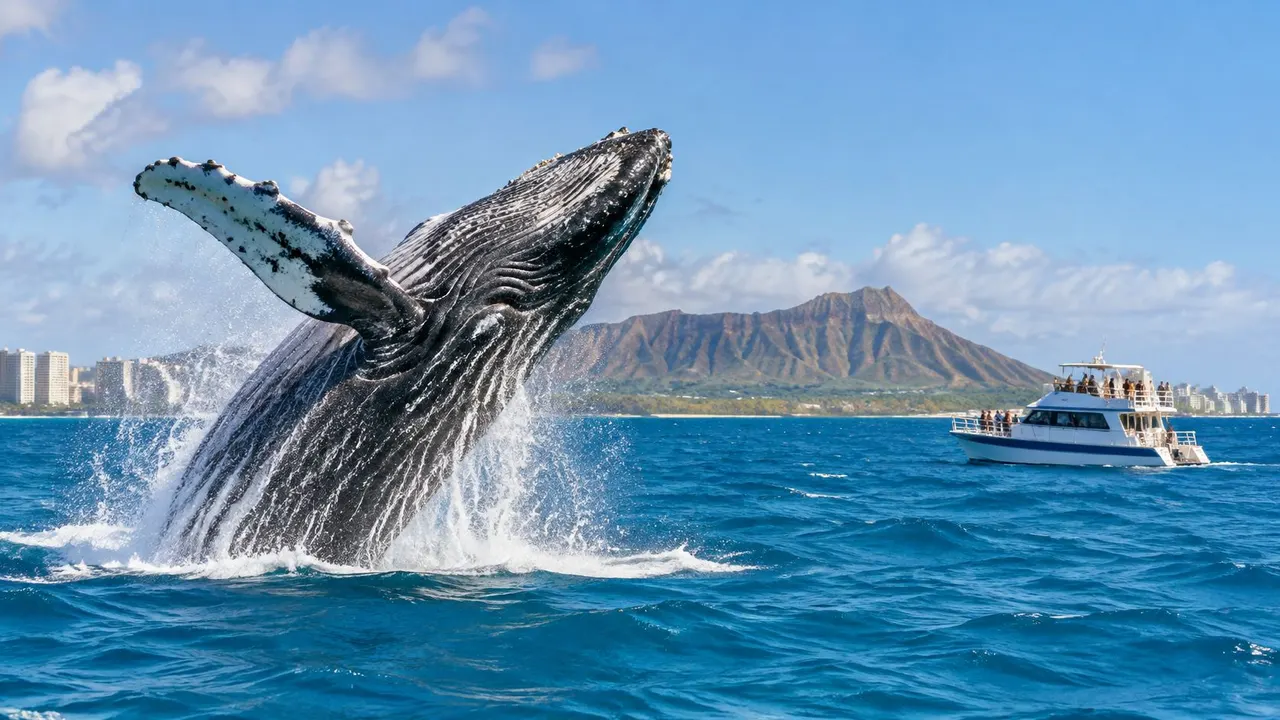
Table of Contents
- Month by month odds
- Best odds is not the same as Oahu odds
- Shoulder months, in one family example
- Shore first, then the boat
- What the boat actually does
- What families should expect
- How to lock the date
You can whale watch in Hawaii from November through May, and January through March is the peak window with the highest chance of sightings. Those midwinter months are when the most whales are in island waters at the same time.
The scale of that arrival is easy to underestimate. NOAA estimates that as many as 12,000 humpback whales, more than half of the North Pacific population, return to Hawaii for the seasonal migration. They leave cold feeding grounds and spend the winter in warm, shallow water to breed, give birth, and nurse calves. A quiet morning off Waikiki can still produce a spout. A windy afternoon on the same beach can look empty. The calendar sets the odds. The island, the wind, and plain luck decide the day.
Hawaii Whale Season Month by Month
Humpback whales are in Hawaiian waters from November through May, and the Hawaiian Islands Humpback Whale National Marine Sanctuary identifies January through March as the peak viewing period. That is the strongest choice if you want the greatest likelihood of whale activity. Sightings happen from shore and by boat, including around Oahu, but whale distribution changes by island and by day.
The timing follows the whales' yearly cycle. Arrivals build in late fall and early winter. Activity is typically highest in midwinter. Many whales start leaving in spring for northern feeding areas. For a Waikiki-based trip, January through March is the most favorable window. November, December, April, and May can still produce sightings, often with fewer whales and more variable encounters.
Month by month odds
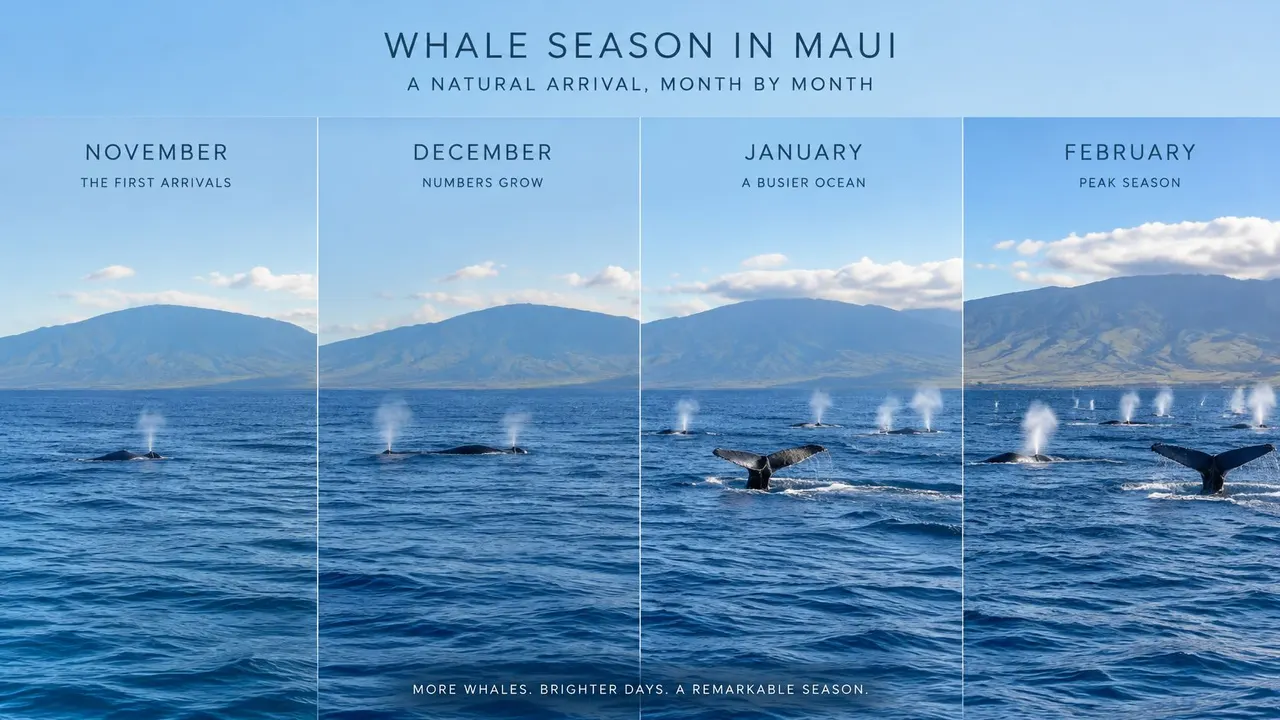
November is an opening month. Whales are arriving, not packed in. Book a flexible morning rather than staking the whole vacation on one outing.
December is better. Numbers climb through the holidays, so a Waikiki stay over Christmas or New Year's is a reasonable whale trip, not a long shot.
January, February, and March are the high-confidence months. Abundance is at its seasonal high, and an Oahu boat has its best shot at spouts, backs, and tail flukes.
April is a leaving month. Whales head back toward northern feeding areas, so counts drop, yet mothers with calves can still be around.
May is the last stretch. Sightings happen, then they don't. Treat it as a bonus, not the reason you booked the flights.
June through October is the off season. Most whales have gone. A random spout is possible and not something to plan around.
Practical rule: If your dates can move, aim for mid-January through March. If they can't, any week from November through May can still hold whales, just fewer of them and less predictably.
Why the Odds Shift Across the Season and Islands
Whale numbers follow the calendar of breeding, calving, and nursing. Late fall is a build. Midwinter is the crowd. Spring is the exit. The island you sleep on changes your odds more than the exact Tuesday you pick.
Best odds is not the same as Oahu odds
Statewide advice hides the map. Hawaiʻi DLNR identifies the strongest concentrations around Maui, Lānaʻi, and Molokaʻi, northern Kauaʻi, and the Kohala Coast. Oahu is not the highest-concentration location, even though whales pass the Waikiki coastline and people do see them from town.
The National Marine Sanctuary describes most sightings as occurring from November through April, inside a general season that runs through May. That gap matters. A traveler in early November or late April is not "too early" or "too late." They are in a thinner part of a real season.
If you're choosing between islands for whales alone, Maui's channels usually beat a Waikiki hotel stay. If you're already booked into Waikiki, you still have a workable season. You just shouldn't expect Maui density on an Oahu afternoon. Our side-by-side look at Oahu whale watching versus Maui is the cleaner way to match the island to the trip you already have.
Shoulder months, in one family example
Say a family lands in Waikiki in early May. They should expect fewer whales than a visitor in late January. They should not expect a blank ocean. Late-season viewing can include mothers and calves, and a single pair at the surface still counts as the day working.
That is the difference between best odds and only possible dates. January through March is best odds. November, April, and May are possible dates with a trade-off: fewer encounters, sometimes a calf beside an adult, and days that stay quiet.
Keep a spare morning on the calendar. One windy day shouldn't be the only chance you gave the whales.
Don't let anyone promise a sighting on a named day. Whales move. Boats follow rules, not the animal. A second date, when the week allows it, is the honest way to raise your chances without pretending the ocean is a schedule.
Best Times of Day and Where to Watch from Waikiki
Mornings are the better window. Seas are usually calmer, and a flat surface makes a spout easier to pick out. Afternoon wind often builds along this coast and chops the water, which hides the very thing you're scanning for. Put the main plan in the morning. Keep the afternoon as a backup, not the other way around.
Shore first, then the boat
From the beach, scan for a white blow, a dark back, or a tail fluke lifting before a dive. Midwinter gives you the fairest shot at that from Waikiki sand and nearby vantage points. Shore watching is a bonus. It isn't a plan, because this island isn't where the densest groups gather.
A boat changes the geometry. We leave from Kewalo Basin Boat Harbor, a short ride from Waikiki Beach, and that harbor puts you past the surf line into water the beach can't see. The wider view is the point. You're not buying a guarantee. You're buying range.
Bring binoculars. Check wind and swell the day before, and keep a second morning open if the forecast turns. A short stay can live on the free shore row. A family that wants more looks should take the morning boat. For a street-by-street sense of lookouts, see where to watch whales on Oahu.
What a Compliant Whale Tour Looks Like on the Water
A better whale tour is not the one that gets closer. Federal rules prohibit any person or vessel from approaching a humpback within 100 yards, and that limit applies throughout Hawaiian waters out to 200 nautical miles, not only inside the sanctuary. Boats, kayaks, canoes, paddleboards, swimmers, and drones are all covered, and the rule is year-round. Aircraft must stay at least 1,000 feet away. The NOAA sanctuary regulations are the place those distances are written down.
Hawaii guidance goes further and recommends remaining at least 400 yards away whenever feasible. The 2026 "Go Slow, Whales Below" guidance recommends 15 knots or less in waters 100 fathoms (600 feet) deep or shallower, and six knots or less when approaching or departing whales within 400 yards, as Hawaii DLNR describes. Those speeds exist because this season is about breeding, calving, nursing, and social behavior.
What the boat actually does
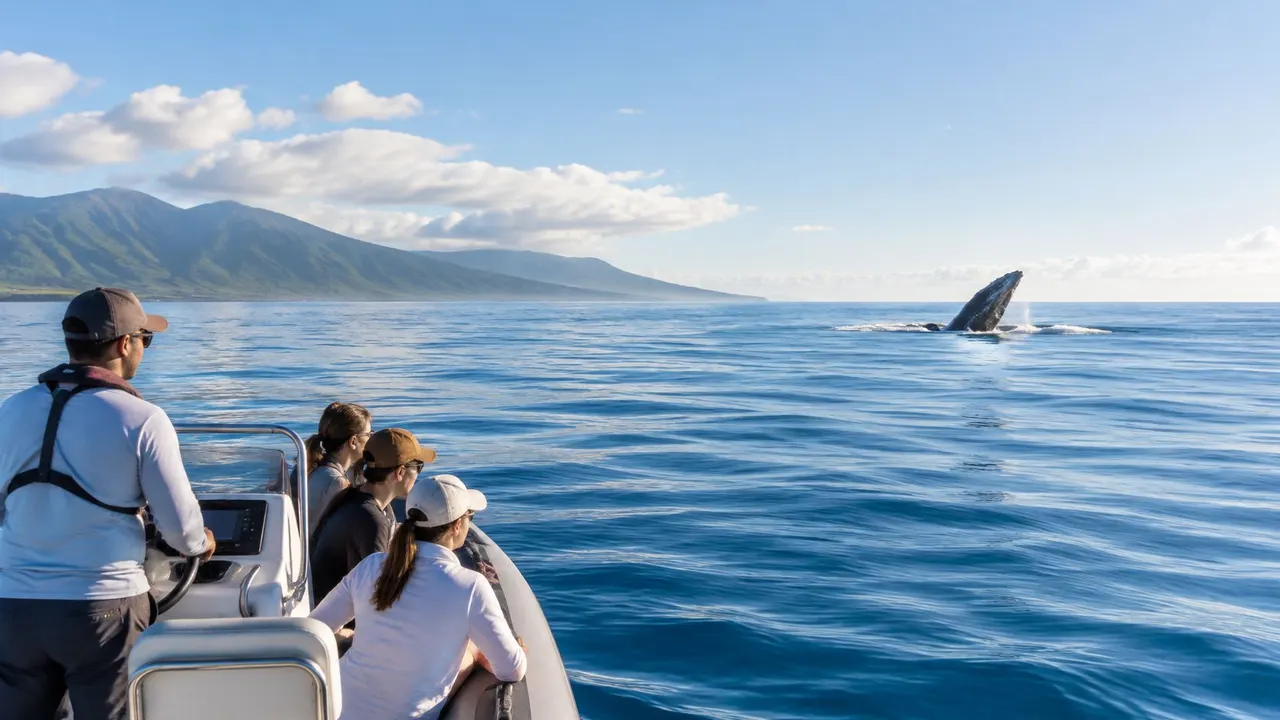
The boat travels slowly. Crew scan for spouts and tails. When a whale is spotted, the captain holds distance instead of chasing a breach.
Picture a calf that surfaces beside the boat without warning. Calves are hard to see, they spend more time at the surface, and Hawaii DLNR marine species guidance is blunt about that. The right move is to stay put. If a whale turns toward the boat, NOAA's advice is to remain stationary until it moves away. The vessel shifts to neutral or no-wake and lets the whale pass. Operators don't pursue, encircle, cut across a travel path, or keep repositioning for a photo. A captain may also leave an area after whales have already been seen, because time on one group isn't a trophy.
What families should expect
Most sightings are distant. Binoculars and patience beat any hope of a close encounter. A spout or a tail is a success. Children can be on the water safely. They shouldn't be promised a whale next to the rail.
You stay seated, you keep voices down, and you follow the crew. Swimming with whales isn't a responsible add-on, which is why swimming with whales in Hawaii is a separate conversation from a legal watch. If you see a boat crowding whales, report it to the NOAA Fisheries Enforcement Hotline at 1-800-853-1964.
A compliant trip can mean slow transit, long looks from hundreds of yards, and stretches with no close view. That is the better version. You see natural behavior, breaching, tail slaps, and maternal care, without turning the nursery into a chase. Fewer dramatic photos, better stewardship.
Family and First-Timer Tips for Whale Watching
Pack for distance and wind, not for a pool deck. The boat is cooler than the beach, and most of what you'll see sits at a legal distance.
- Binoculars or a strong zoom: Spouts and flukes often sit far past what a phone camera can resolve.
- A windproof layer over a light shirt: Spray and a breeze make the rail colder than Waikiki sand at the same hour.
- Hat, sunscreen, and sunglasses: Glare off the water hides the blow you're trying to find.
- Water and simple snacks: Kids fade faster when the boat is slow and the whales are quiet.
- Motion-sickness medicine before you board: After you're queasy, the dose is late.
- A small dry bag: Phones and room keys don't like spray.
Three habits make the morning easier. Arrive early enough to choose a seat with a clear rail. Pick shade if the sun is already high. Before you leave the hotel, tell children that a spout or a tail counts, so a distant blow feels like a win instead of a miss.
If open water is new for someone in the group, choose a larger boat with shaded seating and an enclosed spot to step into. Keep the rest of the day loose in case wind moves the plan. More on pacing a trip with children is in our notes on whale watching with kids.
Book a Waikiki Whale Watch Tour
Living Ocean Tours is the top rated and most reviewed snorkel company on Oahu. For a dedicated whale outing, the Waikiki Whale Watching Cruise runs January 2 through March 31, lasts 1.5 hours, is for ages 3 and up, and costs $49 per person. It looks for humpbacks wintering along the Waikiki coastline, which lines up with the months when an Oahu trip has its best odds.

How to lock the date
- Use the month table and choose January through March if your flights can move.
- Take a morning departure from Kewalo Basin, before the wind usually builds.
- Book early for holiday weeks, when December boats fill even though abundance is still rising.
- If the forecast turns, email info@livingoceantours.com or call +1 (808) 436-3483. The office is open seven days a week.
Confirm the cancellation and rebooking policy with the office before you pay. Sightings are never guaranteed, and a compliant, distance-based trip is the goal, not a whale at the rail.
Living Ocean Tours runs seasonal whale watches from Kewalo Basin along the Waikiki coast, with the same crew focus on safety and respectful wildlife viewing that shapes our snorkel and sunset trips. If your dates fall in the winter window, a morning on the water is the most direct way to meet the season without crowding the whales. See current departures and plan the rest of your Oahu time at Living Ocean Tours.


