
Where to Watch Whales in Oahu: 7 Best Spots for 2026
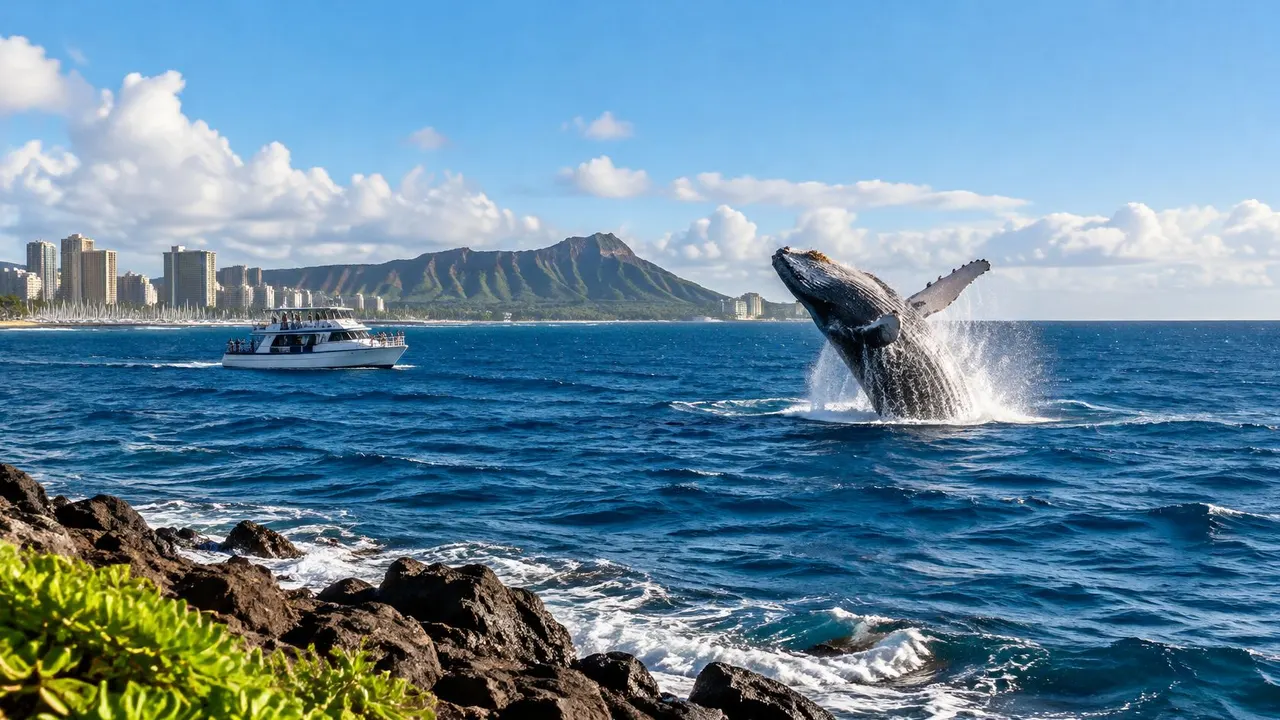
You're standing on Oahu's coast on a clear winter morning, coffee in hand, kids already asking if that splash counts. Then a humpback spout breaks the horizon. That's the moment most visitors chase, and timing decides whether you get it.
Humpbacks, known in Hawaiʻi as koholā, winter here to breed, calve, and nurse. Go Hawaii's Oahu whale watching guide puts Oahu viewing from December through May in southern waters, including the coast visible from Waikiki. Weather, glare, and patience shape every sighting. Nothing's guaranteed.
That's why I've ordered these seven spots by effort. Some need only a short walk from your car. Others ask for a real hike. The boat option at the end puts you on the water with the widest search area. Match the spot to your fitness, schedule, and travel group, and you'll waste less time driving to the wrong lookout. If you're deciding where to watch whales in Oahu with children or grandparents, start with the easier stops and work up.
1. Kaena Point State Park (Northwest Tip of Oahu)
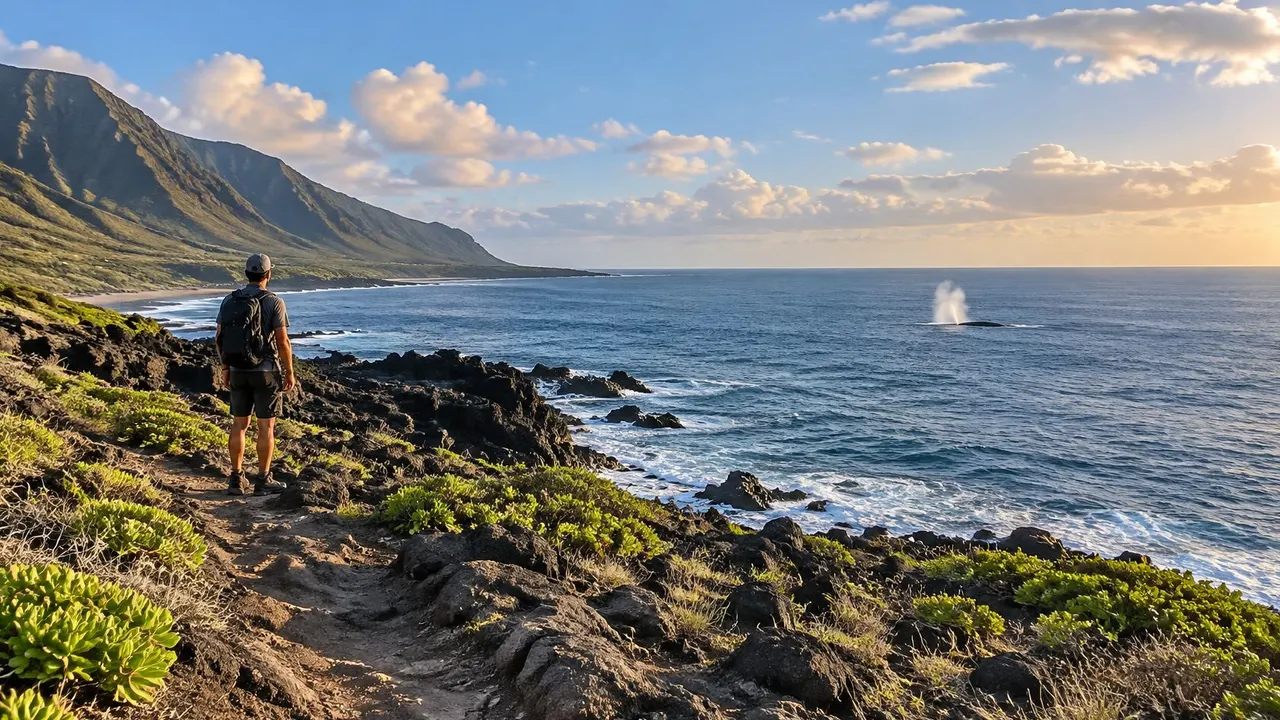
Kaena Point is the westernmost tip of Oahu and the wildest pick on this list. The coastal trail leads to a rocky headland inside the Kaena Point Natural Area Reserve, where dunes and seabird habitat replace beach crowds. You'll scan open Pacific water, not a sheltered bay.
What Works Here
Go in the morning. The water's often calmer, glare drops, and a distant blow stands out against darker water. Volunteer and state monitoring programs regularly record humpback activity along Oahu's leeward and northwest coasts during winter, so this isn't a hopeful guess. It's a known travel corridor.
For a practical example, say you're staying on the west side without kids and you want quiet. Walk out early, settle on high ground away from nesting areas, and give yourself an hour of scanning in slow passes. That's a better plan than rushing the point at noon.
- Bring more water than you think: There's little shade and no quick refill.
- Pack binoculars and sun protection: You'll spot spouts long before bodies.
- Stay on marked trails: It protects dune plants and nesting seabirds.
If you want background before you go, read this guide to whale spots around Oahu. Don't approach any marine mammal you find hauled out or close to shore. Give it space and move on.
2. Makapuu Point Lighthouse Trail
If Kaena Point is effort first, Makapuu is reward for moderate effort. This paved trail on Oahu's southeastern tip climbs gently along the cliffs to an overlook above the lighthouse. Most walkers can manage it, and the view opens fast.
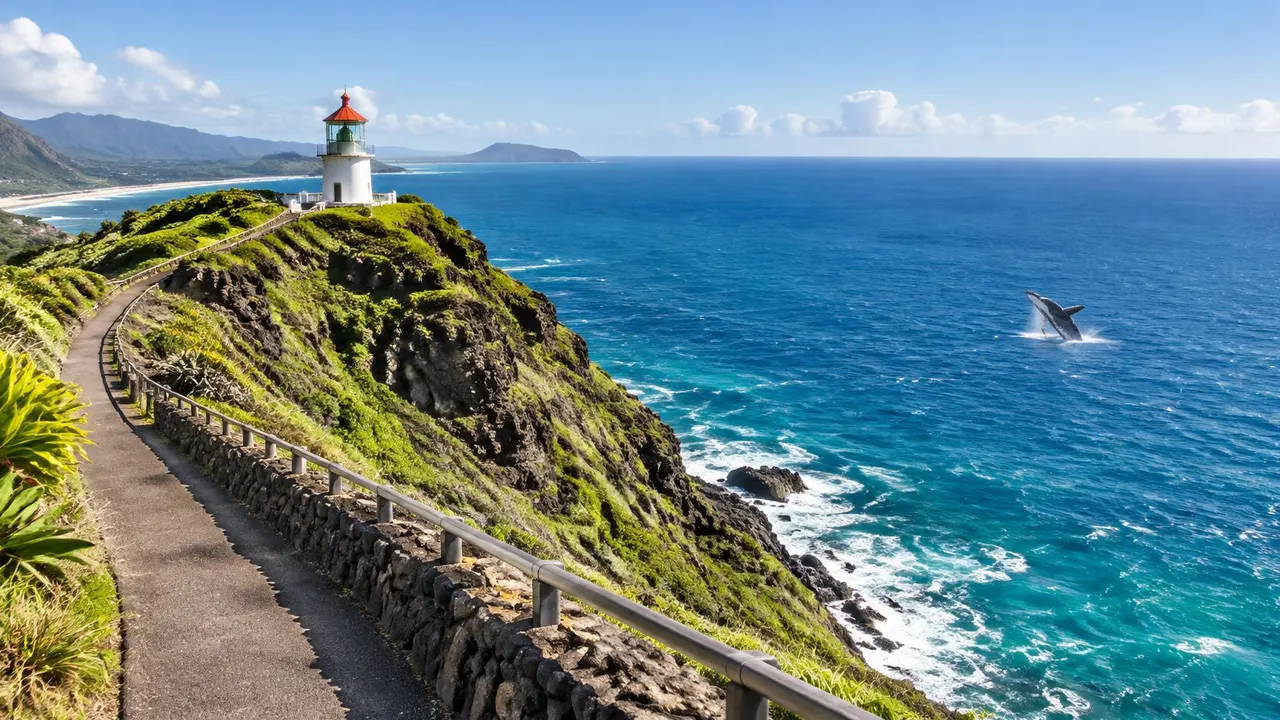
The Hawaiian Islands Humpback Whale National Marine Sanctuary overview places humpbacks around Hawaiʻi from November through April, with peak activity from January through March. Makapuu's height helps during those peak weeks. You can watch a blow, a dark back, then a fluke, all without leaving land.
Many visitors use this hike as a first pass, then book water time later. Say you spot two animals moving south from the overlook in the morning. You'll board an afternoon boat already knowing what a spout looks like at distance, which helps kids spot the next one.
Parking rule: Arrive early or come late in the day. Midmorning lots fill, and circling wastes your best light.
Wear sturdy shoes even though it's paved. Carry water, sunscreen, and a hat, and stay behind railings because the cliffs drop steeply. For route context before a boat day, see these Makapuu and east side whale watching notes.
3. Halona Blowhole Lookout (Halona Point)
You don't need a hike here. Halona Blowhole Lookout sits right along Kalanianaole Highway, just east of Hanauma Bay, and it's one of the easiest stops when you're deciding where to watch whales in Oahu on a driving day.
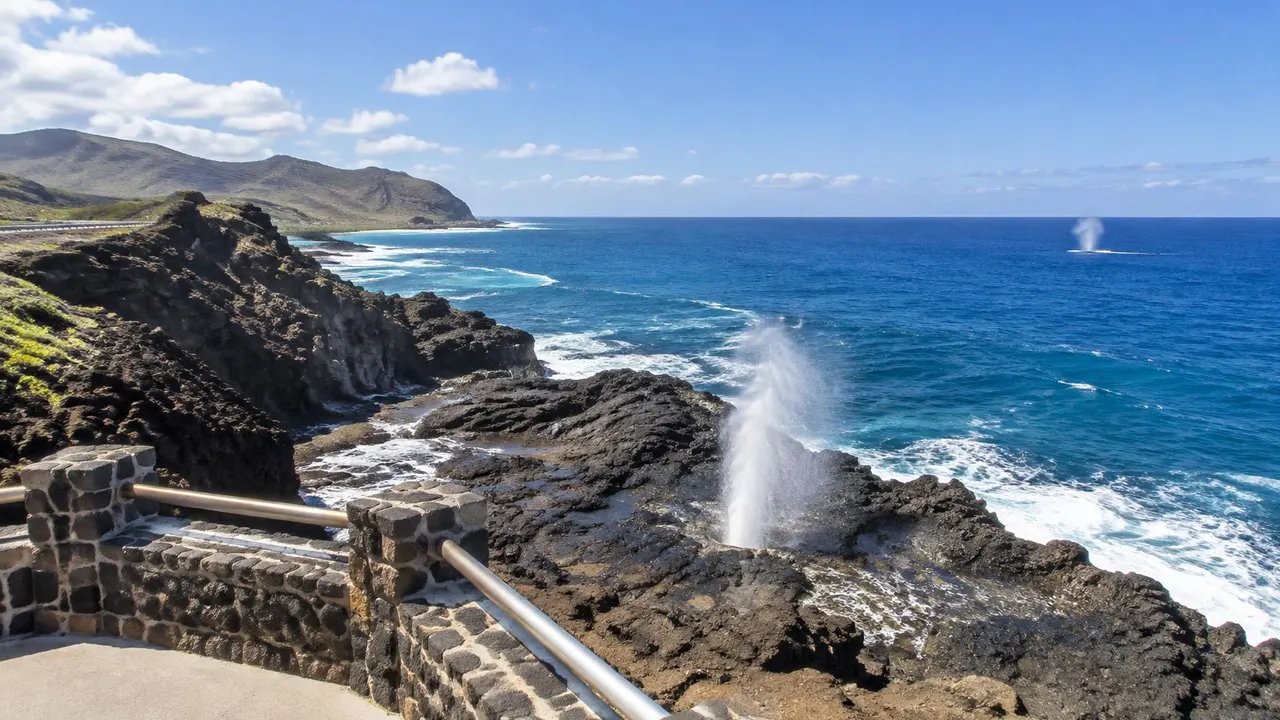
The overlook faces the southeastern channel where humpbacks travel in winter. Local guides use it as a quick add-on during an east side loop with Hanauma Bay or Sandy Beach. That convenience is the draw. You park, scan for fifteen minutes, and keep moving if the water's empty.
Best Use Case
Say your group includes a grandparent who can't do Diamond Head and a child who won't sit through a long trail. Halona works. Everyone stays in the designated lookout area, you scan with binoculars, and nobody has to commit to an hour uphill.
Keep children close. Waves can surge over rocks below the lookout without much warning, so don't climb down for a better angle. A camera with zoom helps, but polarized sunglasses help more on bright days.
Responsible viewing matters even from shore if you later get in a kayak or on a board nearby. NOAA Fisheries marine life viewing guidance sets a 100 yard minimum distance from humpback whales in Hawaiian waters. That's about a football field. Keep that picture in your head at every stop.
4. Lanai Lookout (Makapuu Area)
Lanai Lookout is the lowest effort scenic stop in the Makapuu area. You pull into a designated area along the southeastern coast, step out, and look across the channel toward Lanai on clear days. There's minimal walking, which changes who can enjoy it.
Visitors stop here during island drives to photograph layered lava rock and scan for spouts. I recommend it when your schedule's tight. You won't get the elevation of the lighthouse trail, but you also won't lose an hour if the whales aren't moving.
How to Work the Stop
Don't just glance once. Pick a fixed point on the horizon, scan left slowly, then reset and scan lower. Whale blows fade fast in wind. A second pass often catches what the first missed.
- Pull over only in designated areas: Traffic moves fast and pedestrians cross near the lookout.
- Bring binoculars: Spouts here are distant and easy to miss with the naked eye.
- Try late afternoon: Softer light cuts glare and crowds usually thin.
- Check local reports when available: Recent activity helps you choose between here and Makapuu.
For families, this is a good test stop. If kids enjoy scanning here for ten minutes, they'll likely handle a boat. If they're bored in three, don't force a longer hike hoping for a different result. Save your energy for a spot with a beach or picnic area built in.
5. Diamond Head Summit Lookout
Diamond Head asks the most from shore watchers near Waikiki, and it gives you the widest Waikiki view in return. From the crater rim you see Honolulu, the Waikiki coastline, and open ocean where humpbacks travel offshore during winter.
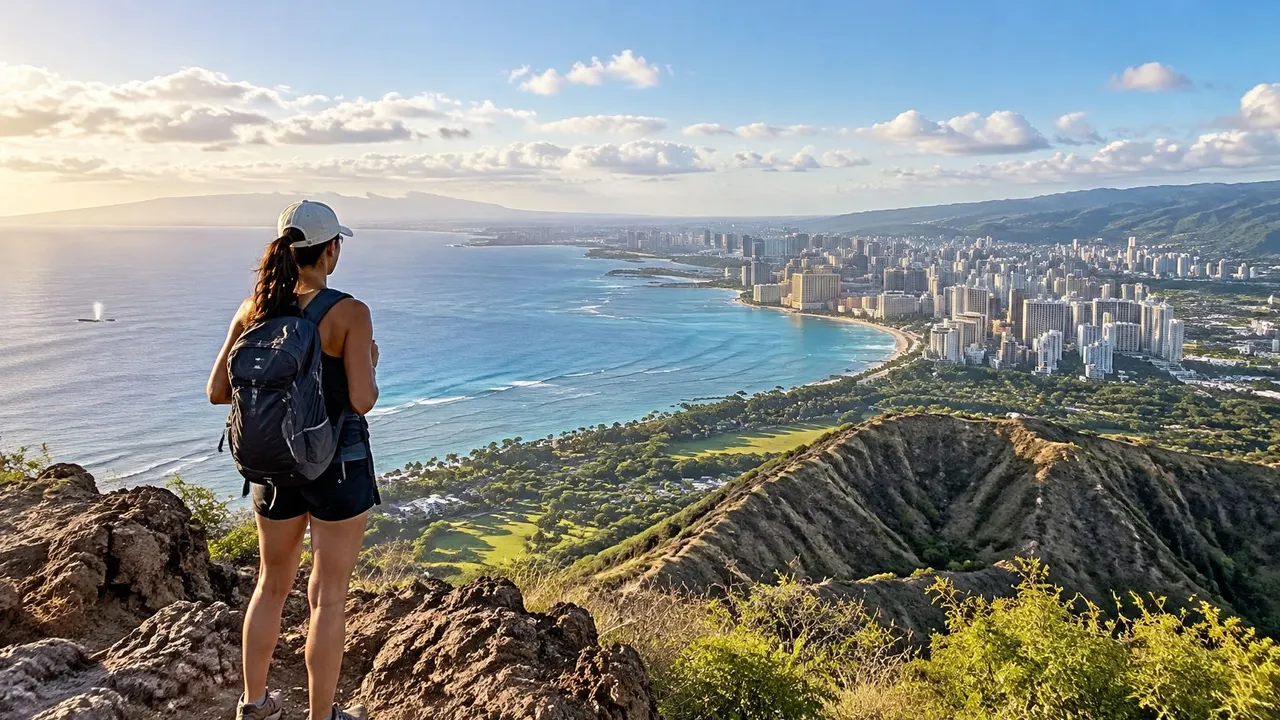
Many visitors hike for sunrise, then scan while the water's still calm. That timing matters because Hawaiʻi Department of Land and Natural Resources whale watching FAQs identify January and February as the peak of humpback season. The department also notes sightings around Oahu are generally less frequent than at some other Hawaiian locations, so elevation and peak timing improve your odds but don't promise a show.
Book entry in advance when possible, especially on weekends. Start early to avoid heat and the heaviest crowds. You'll need water, sun protection, and sturdy shoes for stairs, tunnels, and uneven summit areas.
A distant spout from the summit is a good sighting. Don't grade it against a boat photo taken at water level.
Say you're staying in Waikiki without a car. This is your strongest shore option. Hike early, scan from the top with binoculars, and use these Diamond Head whale watching details to plan the rest of your day.
6. Kualoa Regional Park and Mokolii (Chinaman’s Hat) Viewpoint
Kualoa Regional Park trades height for space. On Oahu's windward coast, the open shoreline faces Mokolii, commonly called Chinaman's Hat, with mountain ridges behind you. Families picnic here, kids play on the beach, and adults take turns scanning the channel.
That setup solves a real problem. At a roadside lookout, children have nothing to do while you wait. At Kualoa, waiting feels like a beach afternoon, not a stakeout. Bring a picnic, set up in shade where you can, and keep binoculars on the table instead of buried in a bag.
Make It a Longer Stop
Arrive early on weekends for parking. Check tide and surf conditions before anyone swims. Windward water can change quickly, and whale watching shouldn't turn into an unplanned rough swim.
Visit in late winter for your best chance at activity. The NOAA Hawaiian Islands Humpback Whale sanctuary page notes the sanctuary was designated in 1992 and protects 1,370 square miles around the main Hawaiian Islands. Those waters serve as breeding, calving, and nursing grounds, which is why surface behavior can include blows, breaches, and tail displays.
Say your group spans three generations. This is often the compromise that works. Grandparents get a seat and a view, kids get sand, and you get repeated chances to scan without hiking anyone up a crater.
7. Waikiki Boat-Based Whale Watching from Kewalo Basin
A boat changes the search. From Kewalo Basin Harbor near Waikiki, seasonal tours run into south shore waters where humpbacks gather during winter. A crew watches from multiple angles, reads surface behavior, and repositions legally instead of waiting for whales to pass one fixed lookout.
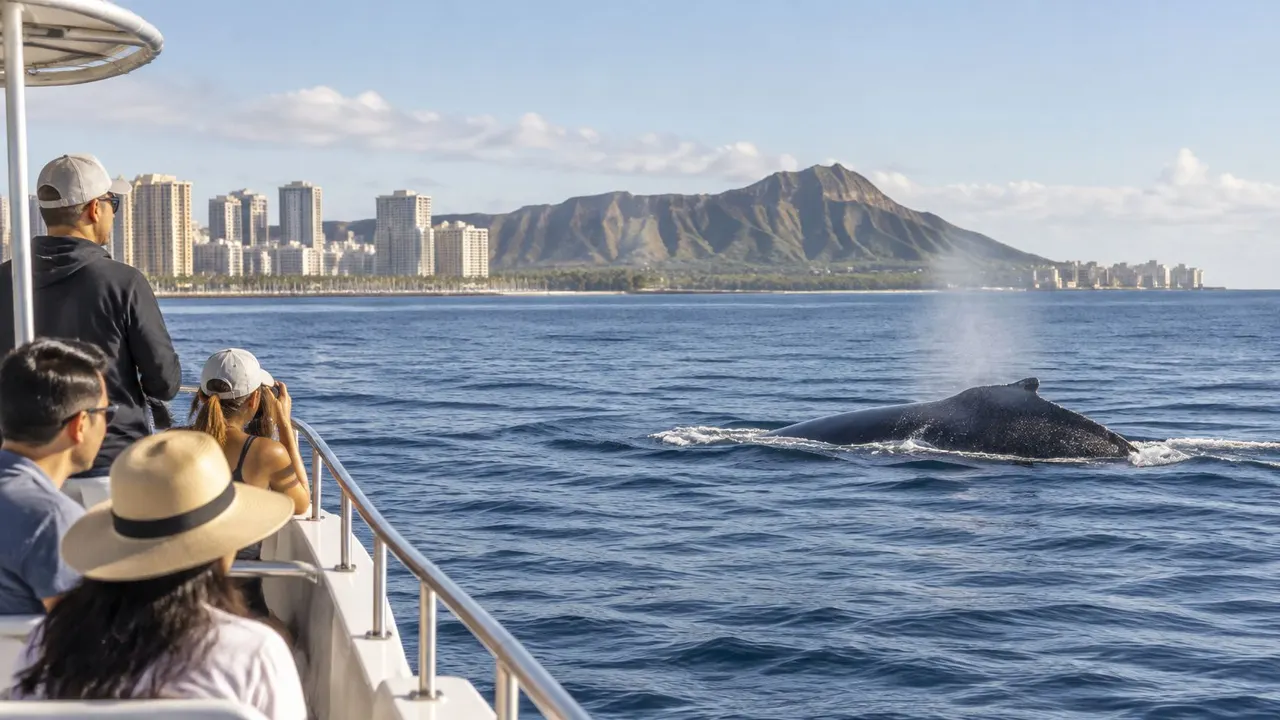
Visitors on seasonal Waikiki trips may see breaching, tail slapping, and animals traveling in pods. You may also see only blows and backs. Both count, and a good crew will say so plainly rather than chase a closer photo.
That distance rule shapes the whole trip. Hawaiʻi Department of Land and Natural Resources marine species guidance explains that if a whale approaches a vessel and closes the distance, the operator should place the engine in neutral and wait for the whale to move away. The whale controls the encounter. You don't.
- Book ahead in peak weeks: Seasonal departures can sell out.
- Handle motion sickness early: Take medication before boarding if you're prone to it.
- Bring layers and sun cover: Wind on the water feels cooler than Waikiki streets.
- Use binoculars or zoom: Legal distance still leaves plenty to see.
For departure details, review this Waikiki whale watching option and the seasonal Waikiki Whale Watch tour. Follow crew instructions, keep children off railings, and never enter the water to approach a humpback.
Table of Contents
- What Works Here
- Best Use Case
- How to Work the Stop
- Make It a Longer Stop
- Oahu Whale-Watching Spots at a Glance
Oahu Whale-Watching Spots at a Glance
Plan Your Winter Whale Day Around Season and Conditions
Pick your spot like you'd pick a hike. Match it to mobility, heat tolerance, and how long your group can wait. Halona and Lanai suit short stops and mixed mobility. Makapuu suits most walkers who want height without a summit. Diamond Head and Kaena Point demand fitness and early starts. Kualoa suits families who need a beach and picnic space built into the wait.
Go early when you can. You'll get calmer water, lower glare, and easier parking at most trailheads and lookouts. Check wind and surf before you leave, because whitecaps hide blows and rough shorebreak makes rocky lookouts risky. If conditions turn poor, switch plans instead of forcing the original stop.
Keep respectful distance everywhere. Federal sanctuary rules prohibit approaching within the legal zone by boat, swimmer, kayak, drone, or other means. Harassment includes placing a vessel in a whale's path, repeatedly moving ahead to intercept it, or disrupting normal behavior. If you see a distressed or entangled whale, don't approach it. Report it and keep people back.
For a guided option, we run seasonal whale watching from Kewalo Basin Boat Harbor near Waikiki Beach. Living Ocean Tours is Oahu's top rated and most reviewed snorkel company, and our Waikiki Whale Watching Cruise runs January 2nd through March 31st, lasts 1.5 hours, is for ages 3 and up, and costs $49 per person.
Check the season dates first, then choose shore or boat based on your group. If you're traveling in peak winter, book early and keep one backup morning open in case weather closes in.
Ready to get on the water during whale season? Living Ocean Tours runs seasonal Waikiki whale watching from Kewalo Basin, plus snorkeling and sunset cruises for the rest of your Oahu days. Visit Living Ocean Tours to choose your date and book before peak departures fill.


