
What to Wear Whale Watching from Waikiki
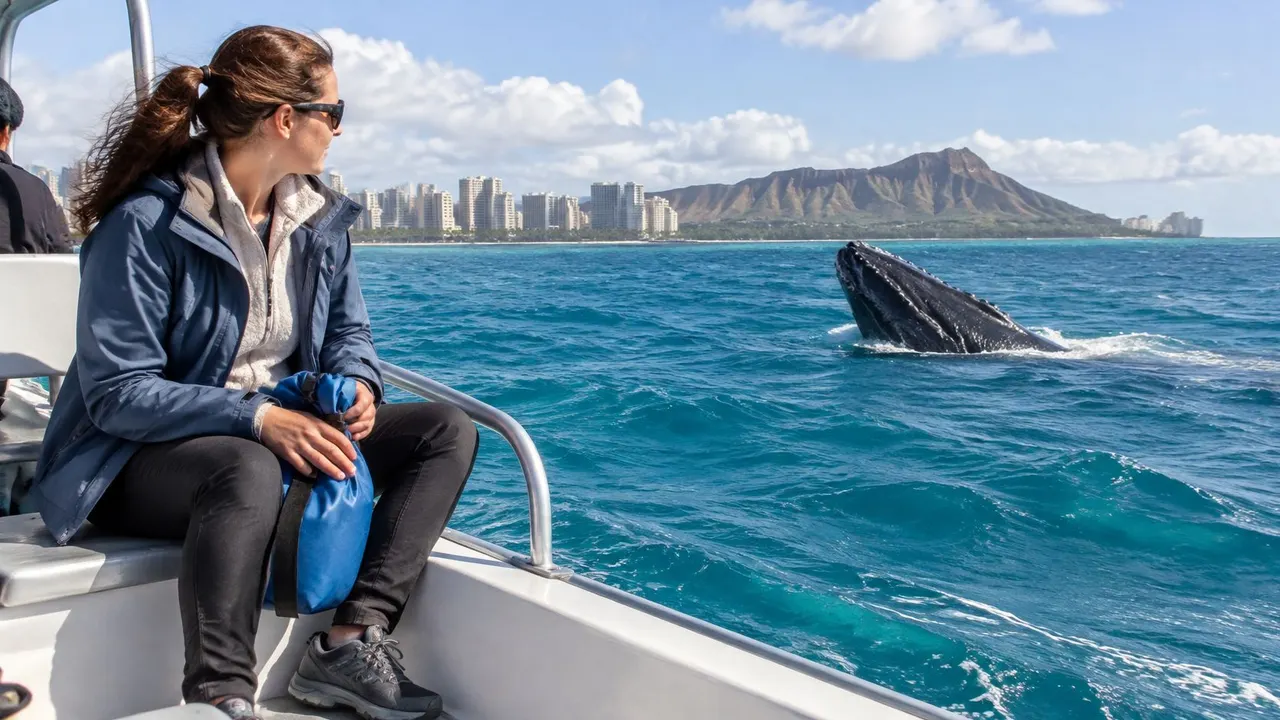
Wear a moisture-wicking base, a light fleece, and a packable water-resistant shell, plus closed-toe, non-slip shoes. Even at 60°F (15.6°C), wet, prolonged exposure can bring hypothermia, so harbor warmth isn't a reliable guide offshore.
Maybe you're walking from Waikiki to Kewalo Basin in a T-shirt, enjoying the sun and wondering if you really need a jacket. Then the boat clears the harbor, the wind picks up, and spray reaches the deck. For this trip, a light layering system is easier to adjust than beachwear alone or a bulky coat.
Why Waikiki Feels Colder on the Water
A sunny walk to Kewalo Basin can feel comfortably warm in a T-shirt. Once the boat gets underway, wind and spray can make the same outfit feel chilly, especially when you're sitting still to watch whales. The cruise follows humpback whales that winter along the Waikiki coastline, so expect time outdoors while the boat keeps a responsible viewing distance.
Hawaii's humpback whale season generally runs from November through May, with abundance usually peaking in January and February, according to NOAA's Oahu whale-watching guidance. That makes this a winter boat trip, even when the beach looks like summer. A heavy coat can be cumbersome to stow and awkward to take off; a light shell is easier to keep close when the wind changes.
The layer table in the next section gives you a simple way to choose what to wear before boarding. For now, think beyond the temperature at the hotel: you'll want clothes that stay comfortable if the boat gets breezy, you catch a bit of spray, or the sun comes and goes. The following sections also cover sun and showers, deck-safe shoes, family outfits, and what to keep in your bag.
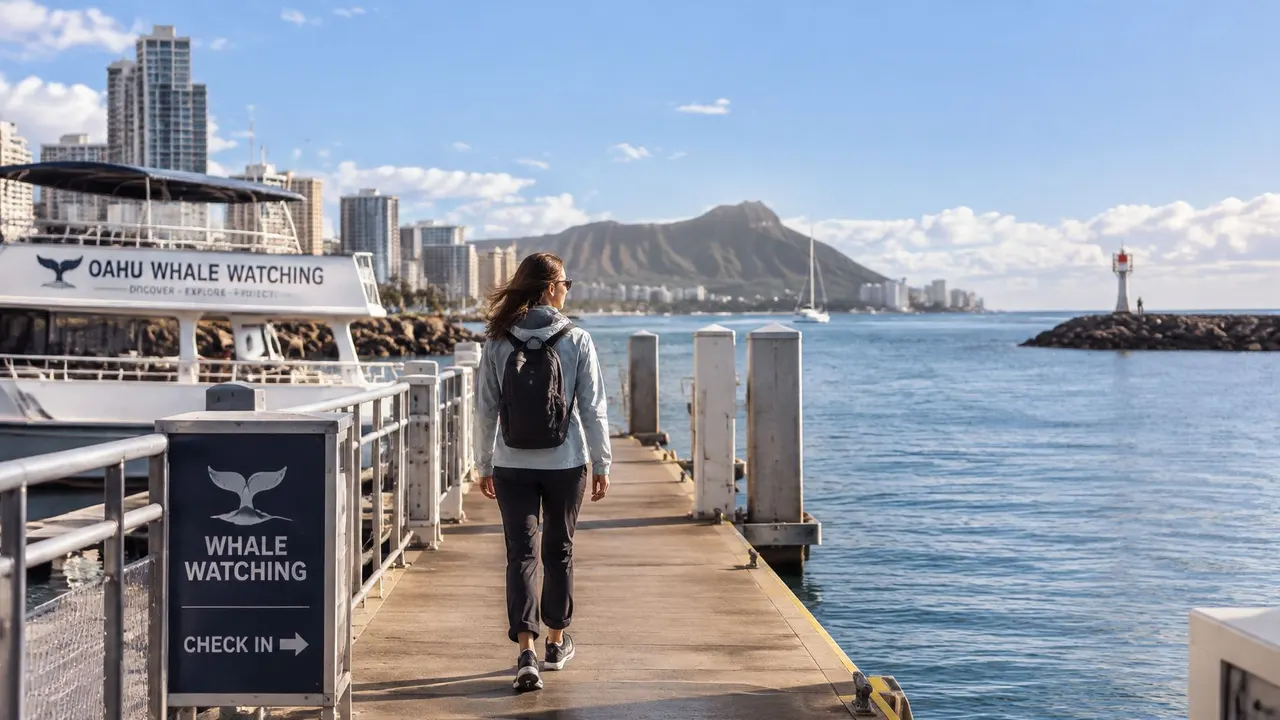
You can take a layer off if you get warm, but you can't put on a jacket you left at the hotel.
The Three Layer Outfit That Actually Works
Start with the three-layer rule: a moisture-managing base, an insulating middle layer, and a wind- and splash-resistant shell. The layers work by trapping air, not by piling on bulk. The National Weather Service recommends several loose-fitting, lightweight layers, a tightly woven water-repellent outer garment with a hood, and protection for your head and hands. It also notes that hypothermia can occur at air temperatures as warm as 60°F (15.6°C) when someone is wet or exposed outdoors for an extended time. (National Weather Service cold-weather guidance)
| Layer | Wear this | Why it works | Leave behind |
|---|---|---|---|
| Base | Moisture-wicking T-shirt or light long sleeve | Moves sweat off your skin so spray doesn't chill you | Cotton shirt |
| Mid | Thin fleece or sweatshirt, loose fit | Traps air and comes off if you overheat at the dock | Heavy wool coat |
| Shell | Packable water-repellent jacket with a hood | Blocks wind and light spray | Non-waterproof windbreaker with no hood |
| Bottoms | Quick-dry shorts or light pants | Dry fast after spray; pants help on early or shaded rides | Jeans or long, soggy cotton |
| Feet | Closed-toe shoes with non-slip soles | Grip on wet decks and protect your toes | Loose flip-flops |
| Head and hands | Secured cap or snug hat; light gloves if you run cold | Stays on in wind and covers ears and fingers | Wide, loose sunhat |
| Spare | Dry shirt and socks in a waterproof bag | Replace anything that gets wet before the ride back | A second bulky jacket |
Start close to your skin
Choose a wicking shirt rather than cotton next to your skin. Cotton holds moisture, so a shirt that feels fine on the dock can become heavy and cold after spray. A light long-sleeved base also gives you more coverage when the sun is strong.
Add a thin fleece or sweatshirt over it. Keep the fit loose enough to layer comfortably, but not so bulky that it catches on seats or handholds. If you start sweating while walking to the harbor, take the fleece off before boarding and put it back on when you cool down. Sweat can leave you chilled once the boat picks up speed or the wind shifts.
Use the shell as your weather switch
Choose a tightly woven, water-repellent shell with a hood. It should block wind and handle light spray, while still packing down small enough to stow when you don't need it. A loose sunhat can blow away, so use a snug cap or a hat you can secure. Carry a dry shirt and socks in a waterproof bag, and change promptly if your clothes get wet.
The practical test is simple: if the shell fits in a small daypack and your shoes won't slide on a wet deck, your outfit is ready. Skip the bulky parka, cotton hoodie, and shoes that leave your toes exposed.
Sun Glare Showers and Wind on the Same Trip
One departure can bring bright glare, a steady breeze, and a passing shower. Rather than packing a separate outfit for every forecast, make small changes to the same base layers.
| Condition | Change to the outfit | Why |
|---|---|---|
| Bright sun and glare | UPF or tightly woven sleeves, clipped broad-brim hat, SPF 15+ sunscreen, strapped polarized sunglasses | UV reaches skin directly and reflects off the water |
| Steady trade wind | Hooded shell over the fleece; hat with a chin strap | Wind strips heat and can blow loose brims away |
| Light spray at the rail | Shell zipped; quick-dry bottoms; dry spare sealed | Wet fabric cools faster than dry fabric |
| Passing winter shower | Compact rain jacket or poncho over the same layers | Hawaii winter is changeable; a parka is unnecessary |
| Early departure | Light pants or an extra layer for the first part of the ride | The first minutes can feel cooler in the shade |
| Boat feels warm underway | Remove the fleece; keep the shell in the bag | Sweat can chill you if the wind picks up again |
Hawaii's winter is also its rainy season. Cold fronts can bring more unsettled weather, including clouds, showers, and occasional heavier thunderstorms. At lower elevations, daytime temperatures are usually in the upper 70s Fahrenheit and nighttime lows are commonly in the mid-to-upper 60s, according to the National Weather Service Honolulu forecast office. A compact shell and quick-drying clothes are more useful for this mix than a winter parka.
Cover up without getting in the way
Ocean glare makes sun protection worth planning, even when clouds pass overhead. The CDC's guidance on ultraviolet radiation recommends tightly woven clothing, coverage for arms and legs when practical, a broad-brimmed hat, and broad-spectrum sunscreen rated SPF 15 or higher on uncovered skin. Reapply according to the product label, especially after sweating or getting sprayed.
A baseball cap leaves your ears and neck exposed, while a floppy brim can get in another guest's way. Pick a hat that stays secure, and use sunglasses with a strap so glare doesn't interfere with spotting whales. For more help choosing a pair, see our guide to sunglasses for a boat tour.
If a shower starts, zip the shell and keep your phone tucked away. If the deck warms up, remove the fleece first and leave the shell within reach. Check the morning radar, then adjust one or two items from the table rather than rebuilding the whole outfit.
Shoes Seasickness and a Safe Deck
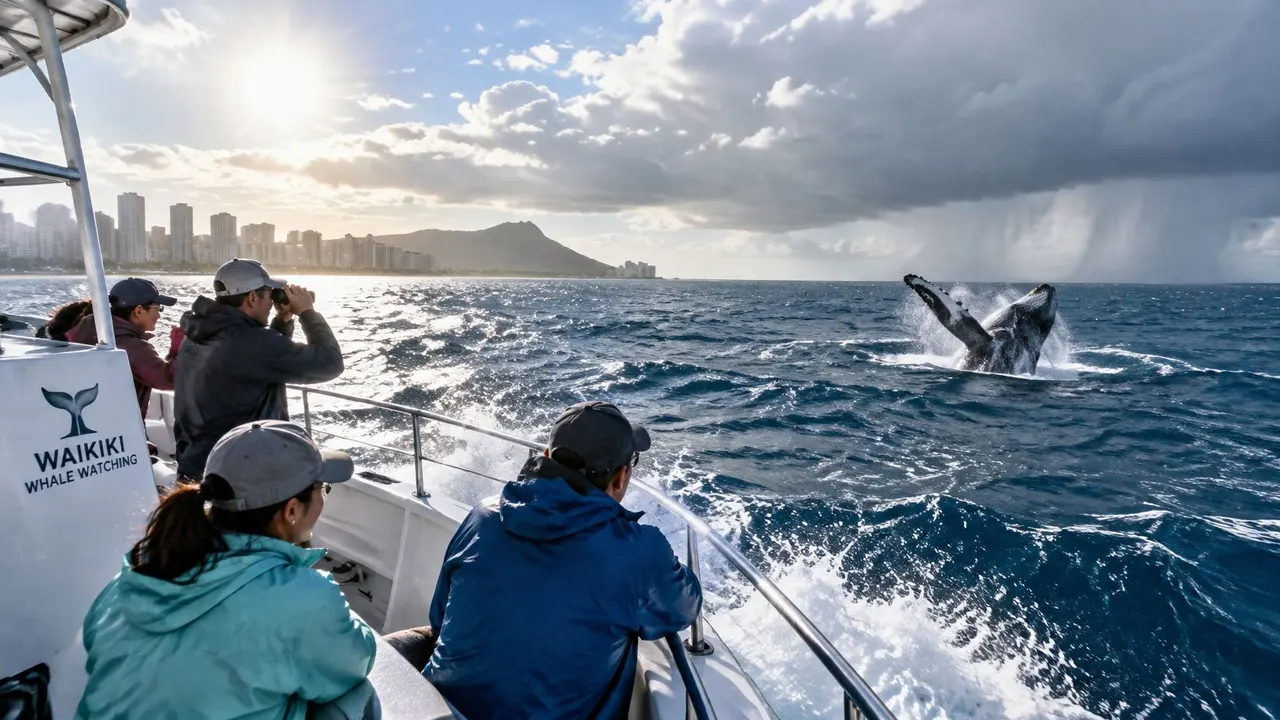
A wet boat deck can be slippery, and the vessel can move unexpectedly. Choose closed-toe shoes with non-slip soles so your feet stay protected and planted. Loose flip-flops can twist or come off, while long hems, dangling straps, and scarf ends can catch on seats or railings. NOAA's whale-watching safety tips warn that vessels may be slippery when wet and caution families against children running, standing on benches, or being held at railings.
Keep your outfit comfortable when you're seated, too. A soft waistband and breathable clothes are easier to tolerate if you're prone to seasickness. Sit where you can see the horizon, avoid overheating below deck, and keep your shell easy to remove or put on. If you already use a motion remedy, bring it and follow its label.
For children, clothes should let an adult keep a steady hand on them without loose fabric getting in the way. Don't let kids run or climb onto benches to get a better view. A secured camera strap or binocular strap helps prevent optics from swinging into another passenger.
Watch whales responsibly and stay ready
Hawaii's whale-watching guidance keeps boats and people at least 100 yards from humpback whales. A zoom lens or binoculars are the right way to see details, not leaning out or expecting a closer pass. If you want to learn more about the experience, read our guide to whale watching in Oahu.
Boats in Hawaii are required to provide life jackets. On Living Ocean Tours, life jackets and snorkel vests are available on all tours. Wear a provided life jacket when the crew asks you to, put it over your shell if needed, and check that it fits securely and doesn't ride up. A New Jersey State Police Marine Services Bureau report says that in 2023, 87% of fatal boating-accident victims whose cause of death was known were not wearing a life jacket. Cold shock is also a risk if someone falls into the water, as the National Weather Service explains in its cold-water safety guidance.
Your clothing check is straightforward: nothing loose, nothing slippery, and nothing that blocks a handhold.
What Families and Kids Should Wear
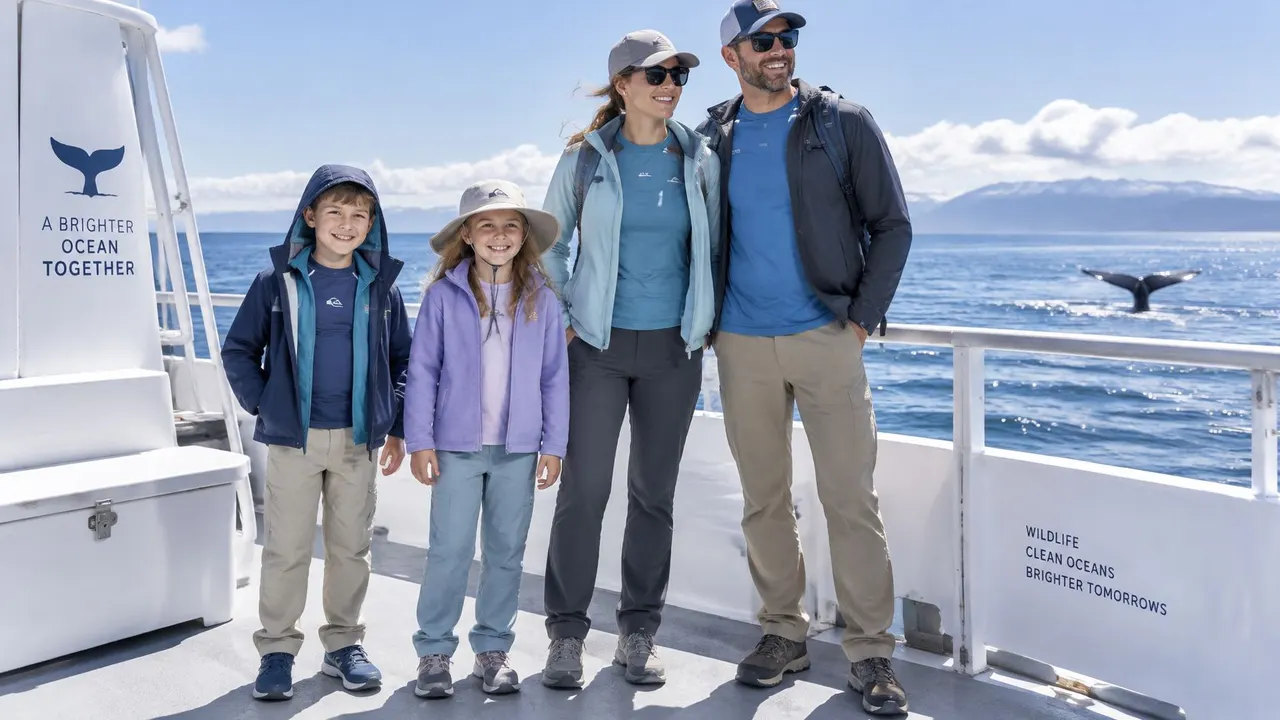
A family doesn't need matching outfits. Each person can dress for their own comfort while using the same basics: clothes that stay comfortable in wind, shoes that grip, and an extra dry layer close at hand.
| Rider | Core outfit | Extra step |
|---|---|---|
| Child ages 3 and up | Rash guard or wicking shirt, light pants, thin fleece, small hooded shell, strapped water shoes with grip | Pack a full dry shirt and socks |
| Teen who wants shorts | Quick-dry shorts, wicking top, hooded shell, closed-toe grip shoes | Shell stays in the dry bag until spray starts |
| Older relative who runs cold | Loose fleece kept on, light gloves, secured hat, no knee-length coat | Choose a removable outer layer |
| Motion-prone adult | Loosest breathable layers, no restrictive waistband, seat away from exhaust | Shell only when spray begins |
A child can start with a rash guard or wicking shirt, light pants, and a thin fleece under a small hooded shell. Strapped water shoes with grip help keep feet secure, and a full dry shirt and socks are useful if the child gets wet. For more family planning, see our guide to whale watching with kids.
A teen who prefers shorts can wear quick-dry fabric rather than denim. Keep the shell in a dry bag until spray begins, and make sure the shoes won't slip. An older relative who runs cold can keep a light fleece on and add gloves, but a knee-length coat may get in the way at the rail. A motion-prone adult can choose the loosest layers, avoid a tight waistband, and sit away from exhaust.
Plan for the slower viewing time
The boat ride can feel cooler during a long whale-watching pause than a sunny walk on land. NOAA recommends a maximum transit speed of 15 knots, or safe planing speed, and a maximum speed of six knots within 400 yards of a whale, while still keeping at least 100 yards away. These operating limits can mean more time moving slowly or observing, so a light fleece under a windproof shell, sunglasses, and a hat secured against wind all make sense. (NOAA's whale recreation guidance)
A watch cruise is not a snorkel trip, so swimming attire and a full wetsuit aren't necessary for the whale-watching part. Put the children's dry clothes and socks in one waterproof bag, and have one adult carry it aboard. That way, the spare layer won't get left in the hotel room or buried at the bottom of a beach tote.
The Bag to Pack Before You Leave the Hotel
Pack for the things that can change during the cruise: sun, wind, light spray, and a wet sleeve or sock. A waterproof pouch or dry bag protects spare clothes better than a canvas tote. Put the dry shirt and socks near the top so they're easy to reach if someone gets wet.
Pack
- Sun protection: Reef-safe sunscreen, a secured hat, and sunglasses with a strap.
- Weather layer: The hooded shell, plus the fleece if you aren't already wearing it.
- Dry backup: A dry shirt and socks sealed in a waterproof pouch.
- Small essentials: A towel, phone or camera with a strap, and any personal motion remedy you already use.
- Family extra: A labeled shell or spare outfit for a child if several people have similar gear.
Guests should bring towels, hats, sunglasses, sunscreen, swimming attire, and cameras; swimming attire is optional for a watch cruise, but a camera can be handy. For a broader list of what to bring on the water, use our boat tour packing guide.
Leave jeans, cotton hoodies, loose flip-flops, glass bottles, drones, and valuables you'd hate to splash behind. Wear the non-slip shoes rather than carrying them. If any clothing gets wet, change into the dry spare as soon as you can.
Before you leave the hotel, make one quick pocket check: shoes on, shell in hand, sunscreen, sunglasses, dry bag. If those five are set, the rest of the outfit can stay simple.
Book the Waikiki Cruise in Your Layers
Living Ocean Tours' Waikiki Whale Watching Cruise runs from January 2 through March 31, lasts 1.5 hours, is for ages 3 and up, and costs $49 per person. Tours depart daily from Kewalo Basin Boat Harbor near Waikiki Beach to view humpbacks wintering along the coastline. Living Ocean Tours is Oahu's top rated and most reviewed snorkel company. See the Waikiki whale watch tour details.
Wear the three layers and non-slip shoes you've chosen, and bring the camera and reef-safe sunscreen from your checklist. Life jackets are available on board, so make sure your shell leaves room for one to fit comfortably.
Confirm that your date falls between January and March, dress for wind rather than the hotel pool, and check availability before peak weeks fill.
Living Ocean Tours offers seasonal whale watching along the Waikiki coastline, with departures from Kewalo Basin near Waikiki Beach. Visit Living Ocean Tours to explore the cruise and plan your trip with the right layers packed.


