
What to Wear on a Whale Watching Tour in Waikiki
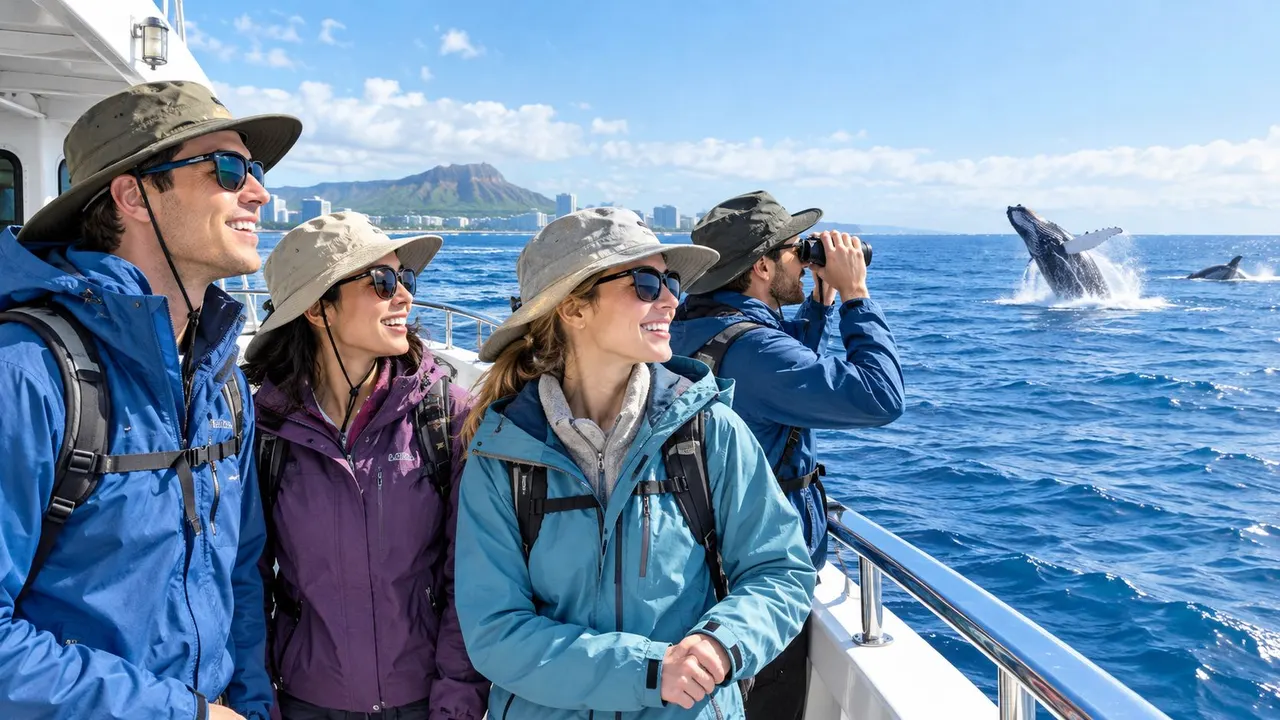
You're at Kewalo Basin, the morning air feels comfortable, and a hoodie seems like enough. Then the boat clears the breakwater. Wind pulls warmth from your arms, spray dampens your sleeves, and that cotton hoodie turns clammy. The dock gave you the wrong idea: on a Waikiki whale watch, wind and spray matter more than the temperature on shore.
The fix isn't a bulky winter outfit. It's a light, adjustable set of layers, shoes that grip a wet deck, and a dry spare layer tucked away. NOAA says humpback whales generally occupy Hawaiian waters from November through May, with peak abundance from January through March. The Hawaiian Islands Humpback Whale National Marine Sanctuary estimates that as many as 12,000 whales, more than half the North Pacific humpback population, return to Hawaiʻi during the broader season (NOAA's sanctuary information).
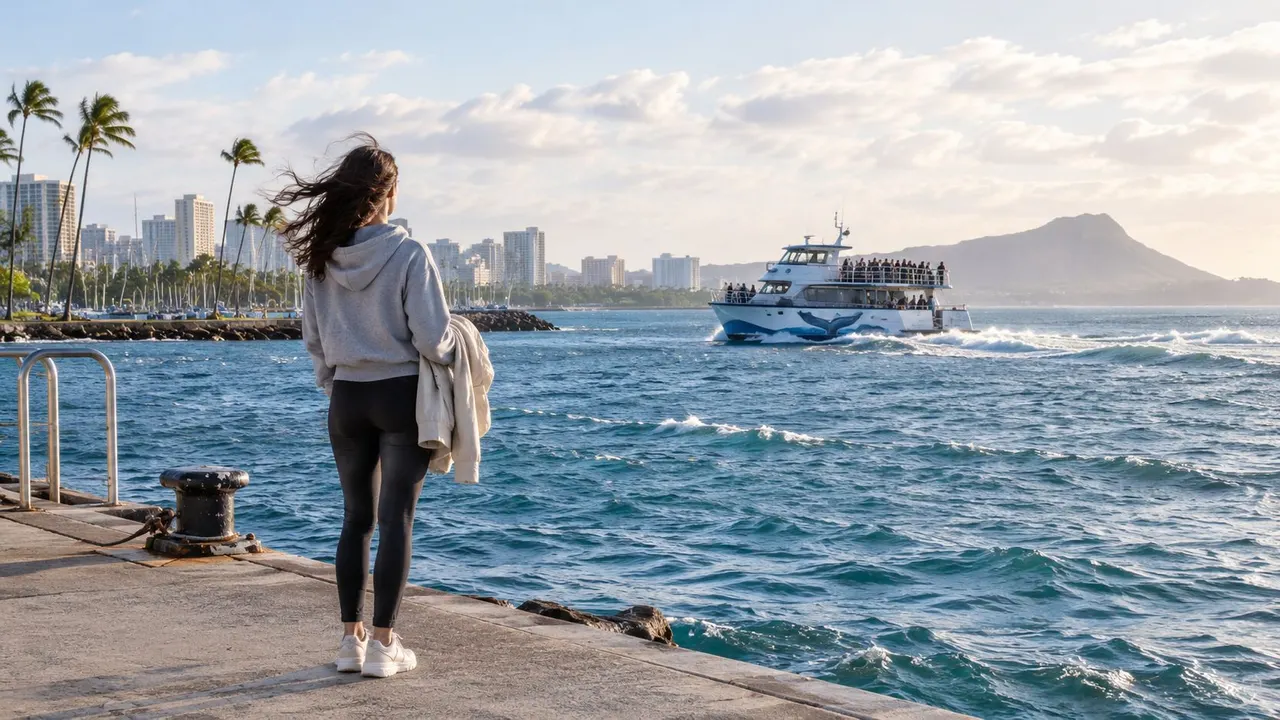
Why a Waikiki Whale Watch Is Not a Beach Day
At the dock, a hoodie may feel sensible. On an exposed deck, it's a poor outer layer if it gets wet: cotton dries slowly, and wind can make damp clothing uncomfortable. The mistake is dressing for a stroll around Waikiki rather than for several hours near moving water.
A boat adds two things your hotel or beach doesn't: sustained airflow and ocean spray. Even when Honolulu feels warm, those conditions can make you feel substantially cooler. The right question isn't “How warm is it outside?” It's “What will keep wind off me, and what can I change if I get wet or the sun comes out?”
Deck rule: Dress for the boat ride, not the walk from your hotel to the dock.
That doesn't mean packing a parka. For a tropical whale watch, a breathable shirt, a light insulating layer, and a shell that blocks wind and moisture are usually more useful than one heavy garment. Long pants and a dry spare top round out the basic plan. If you're sitting inside a cabin, you may need less on than someone watching from the open deck; on a rainy or windy day, keep the shell within reach.
The same adjustment matters for a family or multigenerational group. A child or older adult may want an extra layer sooner than a healthy adult, while someone in the sun may want to remove theirs. Living Ocean Tours runs seasonal whale-watching trips from Kewalo Basin near Waikiki, where passengers head out from the harbor into open-water conditions. Pack for that transition, not for the temperature you felt while waiting at the dock.
The Three-Layer System That Works Offshore
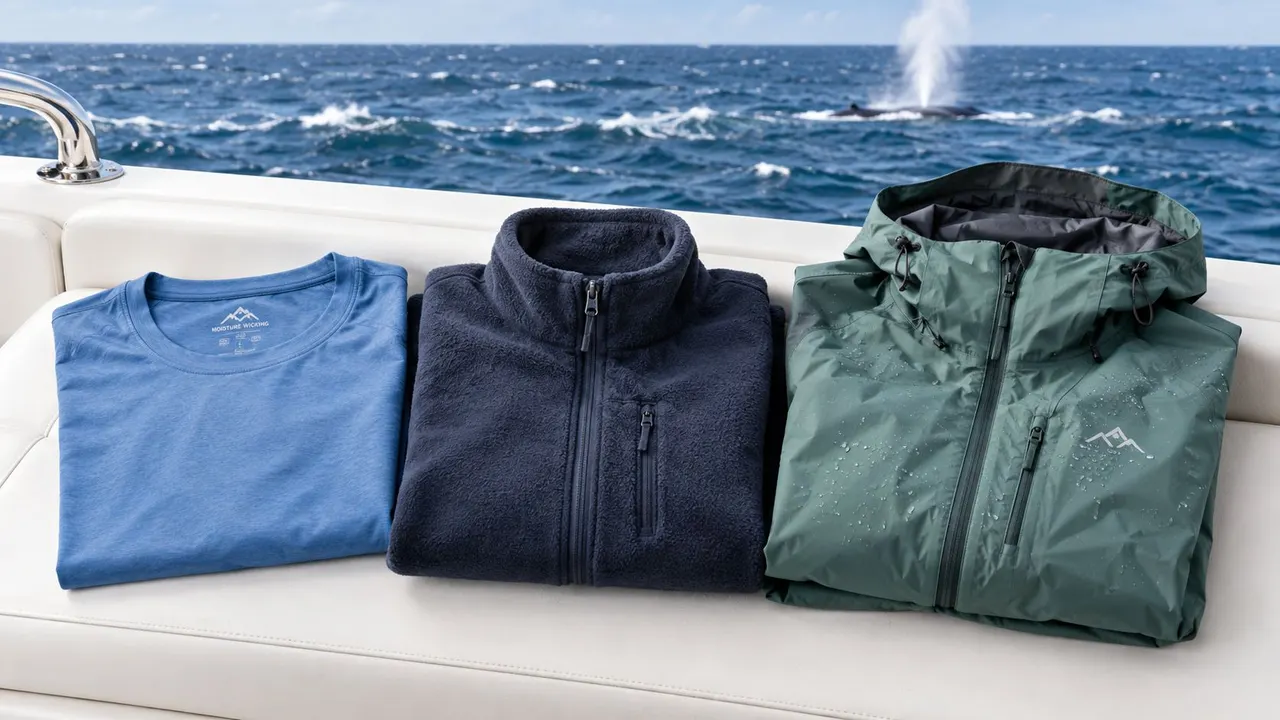
A useful whale-watch outfit has three parts: a moisture-managing base, a light insulating middle layer, and a wind- and water-resistant shell. You can add or remove a layer without changing your whole outfit, which is more practical in Hawaiʻi than bundling up in a single heavy coat.
Start with a dry-feeling base
Wear a synthetic quick-drying shirt or merino wool next to your skin. A lightweight long-sleeve shirt works well if you want more sun coverage. Skip cotton as your main base layer: once it's damp, it takes longer to dry and can keep drawing warmth away from your body.
Add insulation, then block the wind
A lightweight fleece or synthetic mid-layer provides warmth without the bulk of a thick sweatshirt. The outer shell does a different job: choose a tightly woven, water-resistant or waterproof jacket with a hood to block wind and spray. Fleece on its own won't stop the breeze.
For your legs, choose long pants made from a quick-drying fabric. Denim can stay damp and uncomfortable, so it's a poor choice if spray reaches your clothes. Keep a dry spare top in a sealed bag in case your first layer gets wet. For more detail on how airflow affects comfort offshore, use this guide to wind on a Waikiki boat tour.
This clothing system also makes sense as a safety precaution. The National Weather Service warns that cold shock can be severe in water temperatures of 50–60°F (10–15°C), and that hypothermia begins when core body temperature falls below 95°F (35°C). Its cold-water guidance advises dressing for water temperature rather than air temperature and says a life jacket significantly improves survival chances during unexpected immersion (National Weather Service cold-water safety). Follow the boat operator's life-jacket instructions, and secure anything loose that could snag or blow away.
Footwear, Hats, and Eyewear for a Moving Deck
Your jacket won't help if you're sliding around in sandals. A boat deck can be wet, and passengers need footwear that stays on and grips the surface. Wear closed-toe shoes with non-slip soles. Leave bare feet, flip-flops, and smooth-soled fashion shoes for the shore.
A fitted cap or warm hat is often more practical than a loose, wide-brimmed hat on a breezy deck. A brim can help shade your face, but it can also catch the wind, so use a secure strap or wear it under a hood. If you bring a warm cap, keep it accessible rather than buried at the bottom of your bag.
Keep your eyes protected and your gear secure
Sunlight reflects off the ocean, so sunglasses are useful even when the air feels cool. Choose sunglasses that fit securely, and use a retainer strap so they don't get knocked off by wind or boat movement. If you wear prescription glasses, a microfiber cloth and an anti-fog product can help when spray and changing temperatures affect your lenses.
The World Health Organization recommends tightly woven clothing, a wide-brimmed hat, and wraparound sunglasses that provide 100% UVA and UVB protection for outdoor UV protection (WHO guidance on protection from UV radiation). A long-sleeve shirt with a high UPF rating can cover skin continuously; apply broad-spectrum sunscreen to skin your clothing doesn't cover, and follow the product directions for reapplication.
Gloves are optional in Honolulu, but light gloves or fingerless liners can make a breezy ride more comfortable, especially if your hands are gripping a rail or camera. Keep accessories close-fitting. For more on footwear choices for a Waikiki boat deck, see this guide to shoes for a Waikiki boat tour.
Outfit Examples for Every Type of Passenger
The same compact outfit won't feel identical to every passenger. Use the core clothing system, then adjust for age, comfort, and how you plan to spend the ride.
| Passenger | Wear and pack | Commonly forgotten |
|---|---|---|
| Adult couple | Quick-drying base layer, fleece, shell, long pants, warm hat, and light gloves for an early start. | A spare dry shirt for after the ride. |
| Family with children | A breathable long-sleeve or rashguard-style top, easy-to-remove layers, long pants, and a labeled dry bag with a full spare outfit for each child. | Dry socks. |
| Older traveler | A warmer mid-layer, a hooded wind-resistant shell, and closed-toe shoes with dependable traction and support. | A layer that's easy to put on and take off without losing balance. |
| Seasickness-prone guest | Comfortable adjustable layers, secure footwear, and a brimmed hat if a hood feels too warm. Bring any motion-sickness remedy you've chosen in advance and use it according to its directions. | A plastic bag for the return trip and a light snack. |
Children and older adults may become uncomfortable sooner, so make their extra layers easy to reach. A dry bag works better than a loose pile of clothes: label each child's spare outfit and keep the bag closed until needed. Give each family member a small personal item they can carry on and off the boat without juggling loose belongings.
For a passenger prone to seasickness, avoid clothing that traps heat or feels restrictive. Keep the shell and an extra layer available, but don't start out overdressed. A hat should stay secure without pressing uncomfortably, and a small snack or water bottle can be more useful than another bulky garment.
How Time of Day Changes the Outfit
Keep the layers packed; change what you wear as conditions shift. A morning departure may feel cool and breezy on deck, while sun exposure later can make the same shell and fleece unnecessary. During a late-day trip, the air can feel cooler again once the sun drops and wind reaches the deck.
At an early departure, start with your base layer, mid-layer, and shell. Add a warm hat if your ears feel exposed, and keep gloves where you can reach them. You can remove layers once you're comfortable, but you can't put on a jacket you left in the hotel.
Let the dry bag manage the changes
For a sunny middle-of-the-day ride, use the same kit but wear less of it at once. A long-sleeve UPF shirt, hat, and sunglasses can protect you while the shell and fleece stay in your dry bag. Apply sunscreen to uncovered skin, and reapply according to the product label, particularly after sweating or getting splashed.
As the day cools, put the mid-layer back on before you start shivering. Don't wait until you're uncomfortable to retrieve it. A dry bag is a simple wardrobe control: keep the spare top, shell, and any layer you've taken off together, away from spray.
There isn't one outfit that suits every departure. If you'll spend most of the trip in a cabin, keep a lighter set handy for stepping onto the deck. If the forecast calls for rain or stronger wind, wear the shell from the start and make sure it closes comfortably over your other layers.
Your Pre-Departure Packing Checklist
Pack the night before, and keep the items you may need quickly near the top of a small day bag or dry backpack. The goal is to stay comfortable without bringing a suitcase onto the boat.
Clothing and deck gear
- Base layer: Swimsuit or light synthetic shirt.
- Legs: Long quick-drying pants.
- Warmth: Fleece or synthetic mid-layer.
- Wind and spray: Hooded, wind- and water-resistant shell.
- Footwear: Closed-toe shoes with non-slip soles.
- Head and eyes: Warm hat or hood, sun hat, and sunglasses secured with a retainer.
- Dry backup: Spare top and a change of clothes sealed in a dry bag. Pack a labeled full outfit for each child.
Comfort and sun protection
- Skin protection: Broad-spectrum sunscreen and SPF lip balm.
- Hydration: Reusable water bottle and a light snack.
- Motion comfort: A remedy you've selected in advance, if you're prone to seasickness.
- Small essentials: Phone in a sealed pouch and a small towel.
If you're traveling with children or an older relative, make sure each person has a personal item they can manage on and off the boat. For additional packing guidance, consult this Waikiki boat-tour packing guide.
Common Mistakes and What to Bring Instead
Mistake one: dressing for the hotel lobby. Waikiki air conditioning makes a hoodie feel right indoors. Offshore, wind over open water cuts straight through it once the boat is moving. Wear a breathable base, carry a windproof shell, and add warmth only when needed.
Mistake two: trusting cotton or denim. Both fabrics hold spray and stay damp for the whole trip. A wet cotton shirt at speed will chill you faster than no shirt at all. Choose quick-drying synthetics or merino under a wind- and water-resistant shell.
Mistake three: expecting your phone to replace binoculars. Federal law prohibits approaching humpback whales within 100 yards in Hawaiian waters, so bring binoculars or a camera with a zoom lens for distant viewing (NOAA's marine-life viewing guidance). If a whale closes the distance on its own, stay put and follow the crew's directions; Hawaii guidance says a motorized vessel should shift into neutral and wait for the whale to move away. Keep hats, straps, and loose accessories secured while the boat is alongside whales.
Mistake four: packing one outfit per person. Spray finds someone in every family. A labeled dry top for each passenger, sealed in a bag, fixes the ride home, and kids and grandparents should each get a full change.
Mistake five: waiting until you feel sick. Motion remedies work best taken before departure according to the product directions. Decide at the hotel, not at the rail.
Living Ocean Tours runs seasonal whale-watching departures from Kewalo Basin near Waikiki; see the Waikiki whale watch tour for details. For eyewear that stays on your face through wind and spray, read this guide to sunglasses safety on a Waikiki boat tour.


