
What to Wear for Whale Watching in Hawaii: A Packing Guide
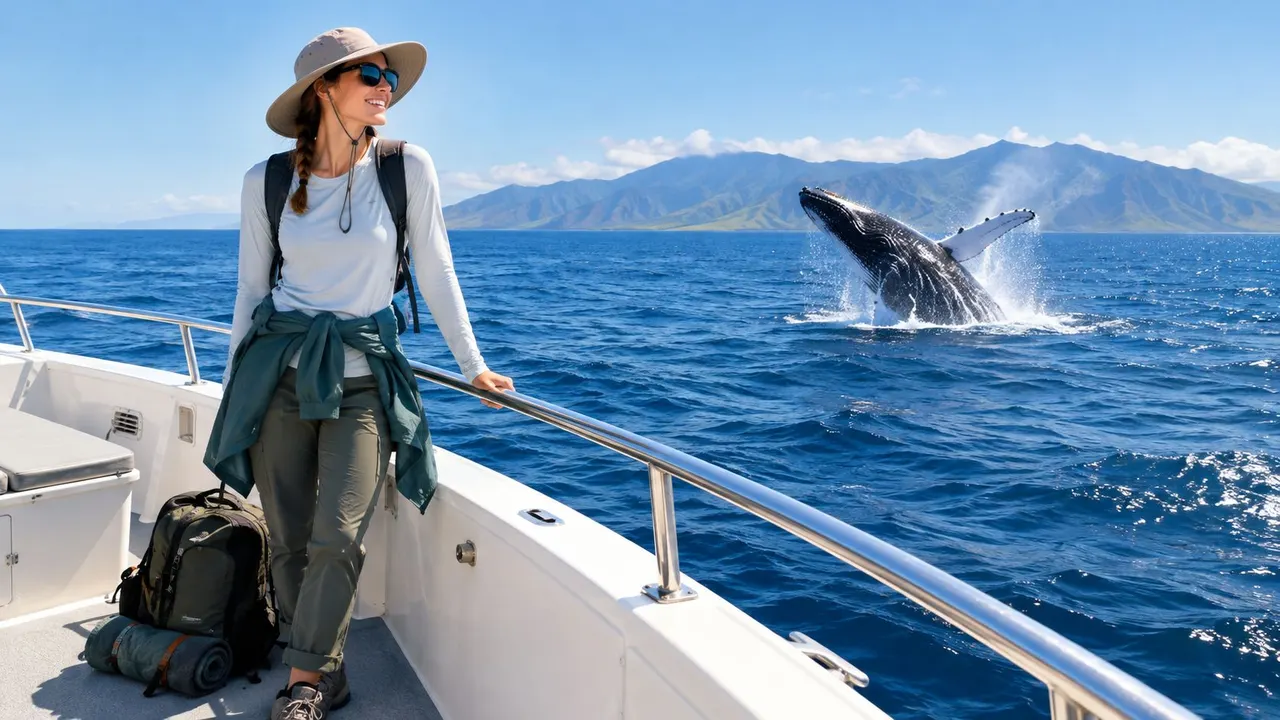
You're getting ready to leave your Waikiki hotel, and the weather looks like a beach day. Shorts, a tank top, and sandals seem reasonable until you start wondering whether the boat will be windy or wet. What to wear for whale watching in Hawaii comes down to a simple choice: dress for the sun, then carry enough protection for spray and moving air without packing a winter wardrobe.
For a south-shore departure from Kewalo Basin Boat Harbor, start with a UV-protective shirt, sunglasses, and a secure hat. Add quick-drying bottoms, grippy shoes, and a compact outer layer you can reach without unpacking your whole bag.
Why Your Outfit Matters More Than You Think
Think of two passengers stepping back onto the dock. One has dry clothing and both hands free; the other is holding a damp towel around their shoulders while trying to keep a loose hat from blowing away. That's an illustration, not a guest story, but it captures the difference between dressing for the beach and dressing for a boat.
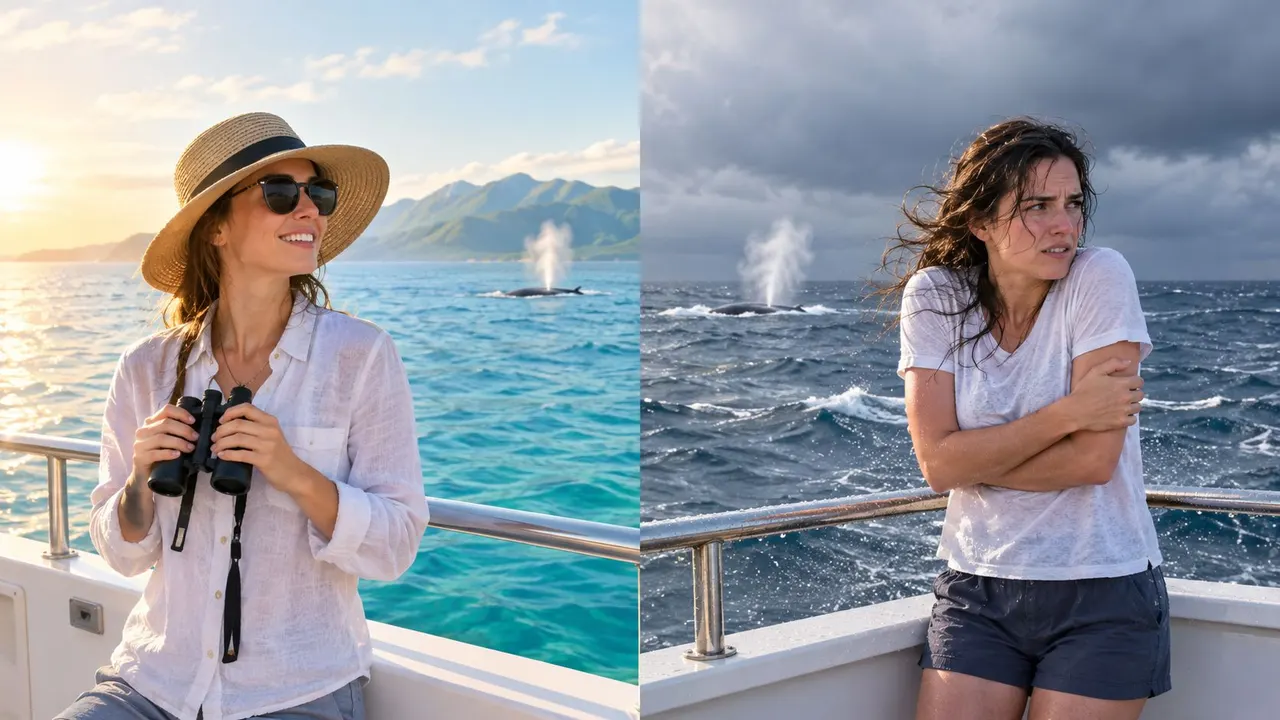
Hawaii's humpbacks generally visit November through May, with peak abundance typically January through March, according to NOAA's Hawaiian Islands sanctuary overview. That puts whale watching squarely in the season when a sunny departure doesn't tell you everything about the conditions ahead.
The National Weather Service's Hawaii weather guidance identifies October through April as winter, when clouds, rainstorms, and southerly or westerly winds become more frequent. You don't need to dress as though every outing will be stormy. You need an outfit that remains useful if the weather changes.
Dress for the deck, not the hotel entrance
Once the boat leaves Kewalo Basin, sun, spray, and wind can affect you at the same time. A heavy jacket may feel excessive while you're waiting at the harbor, yet a bare-shouldered beach outfit leaves little room to adjust underway.
The practical trade-off is coverage without bulk. Choose clothing you can sit, stand, and move in comfortably, with an outer layer available rather than permanently zipped around you.
Deck rule: Wear the sun protection. Pack the weather protection.
On a two- to three-hour outing, this approach matters because you're staying outdoors rather than stepping briefly between air-conditioned buildings. The operator's Waikiki whale-watching clothing guidance addresses that sun-plus-wind trade-off. Your outfit should let you watch the water, not spend the trip managing uncomfortable clothes.
The Three-Layer Method Built for the Pacific
A three-layer system doesn't mean wearing every layer at once. It means having separate pieces for separate jobs, so you can adjust without choosing between being too warm and being underdressed. For a typical warm Waikiki departure, the base layer does most of the work; the others can stay in your bag.
Start with fabric, then choose the extras
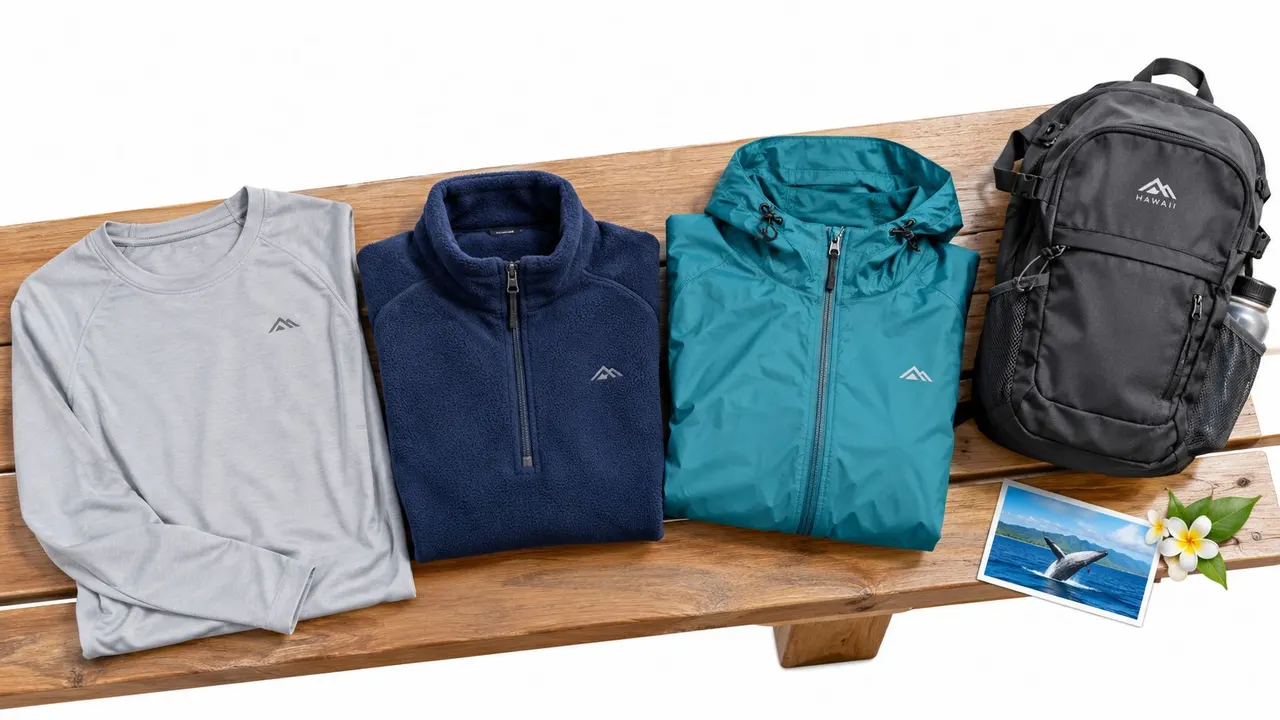
- Base layer: Wear a breathable, quick-drying shirt with quick-dry shorts or lightweight trousers. A synthetic sun shirt is a straightforward choice; lightweight wool is another option if you already own it.
- Optional insulation: Pack a thin fleece or light long-sleeved layer if you feel cold easily or have an early departure. It's a reserve for exposed stretches and the return trip, not a reason to board bundled up.
- Outer protection: Carry a compact wind- and rain-resistant shell. During a rainstorm, it's useful, but on a warm Oahu outing it may never leave the bag.
The National Weather Service's Hawaii climate summary supports planning for a mild but changeable marine environment. Wind and spray matter more to deck comfort than the shoreline temperature alone. Synthetic or wool layers are preferable to relying on cotton for insulation because cotton stays wet after a soaking.
If you arrive unprepared, prioritize a sun shirt over a bulky souvenir hoodie. At a Waikiki clothing shop, check the fabric label, try lifting your arms, and make sure the garment doesn't bind across your shoulders. Choose a light color if that's your preference, but don't treat color as a substitute for a UPF rating.
Make the fit work underway
A shell should close comfortably without long cords or loose hems getting in your way. Keep the hood down when you don't need it, and secure any adjustment straps before boarding.
Use this Kewalo Basin pre-boarding test: stand in the harbor breeze, turn your head, and reach as though you're holding the rail. If your hat shifts or your jacket flaps excessively, adjust it on land. The boat-tour wind preparation guide is a useful companion when deciding which outer layer to bring.
Sun and Spray Protection That Actually Works
The wardrobe essentials are sunglasses, a hat, and a UV-protective shirt. Those are the operator's core recommendations, and they're a better starting point than buying a substantial boat jacket. Cover the skin you can comfortably cover, then use sunscreen to reinforce the outfit.
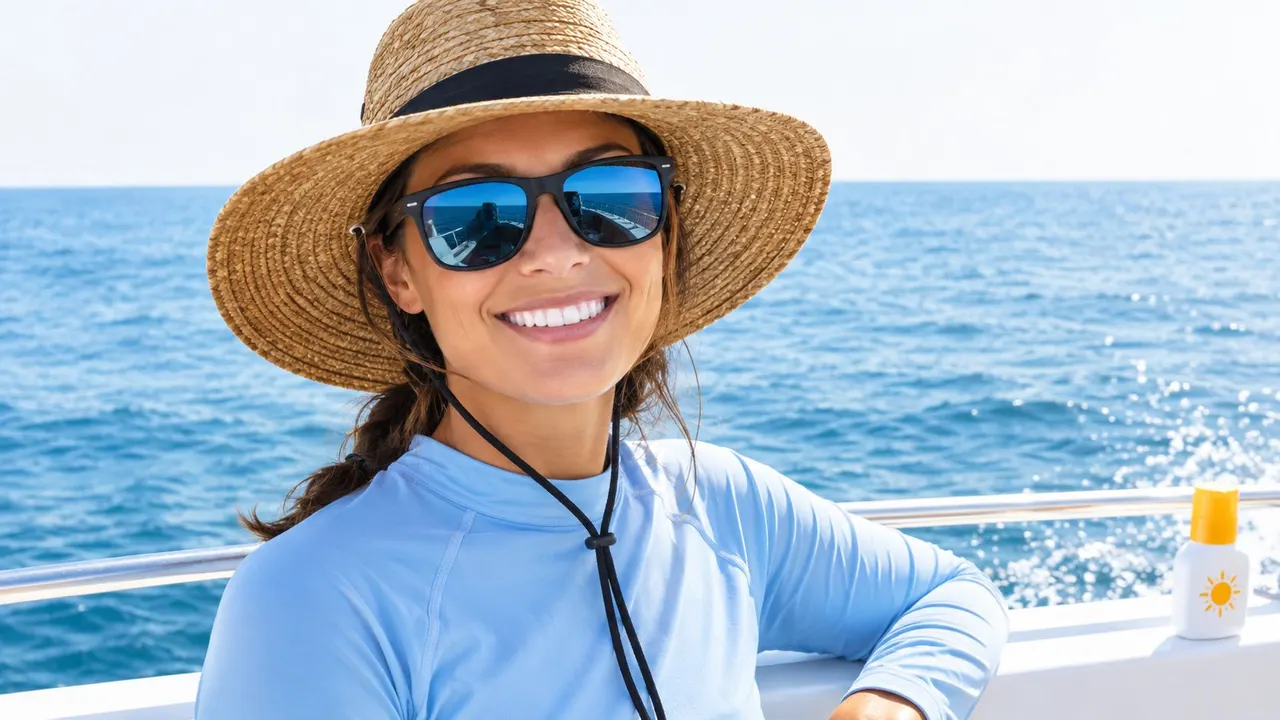
Polarized sunglasses reduce surface glare and can help you pick out distant blows. Add a retainer so you're not choosing between holding your glasses and holding the rail. A brimmed hat should also have a retention strap; an unsecured brim is something you'll be chasing rather than wearing.
Apply broad-spectrum, water-resistant sunscreen before boarding, and reapply after substantial spray or sweating, following the product's directions. These sun-protection and secure-accessory recommendations fit NOAA's responsible recreation guidance, which also recommends optical aids for viewing while maintaining the required 100-yard distance from humpbacks.
Sun and Spray Protection on Deck
| Item | Why It Matters | Quick Tip |
|---|---|---|
| UPF-rated long-sleeve shirt | Provides wearable sun coverage | Choose a breathable fit |
| Polarized sunglasses | Reduce water-surface glare | Attach a glasses retainer |
| Brimmed hat | Covers the face | Tighten the retention strap |
| Water-resistant sunscreen | Protects exposed skin | Apply before leaving the harbor |
| Compact shell | Adds spray protection | Store it where you can reach it |
Choose reef-safe sun protection, but still check the label for broad-spectrum coverage and water resistance. For preparation before your departure, use the Waikiki boat-tour sun safety guide.
Phone-save check: Sleeves on, glasses secured, hat fastened, exposed skin protected. Check those before you settle into your seat, not after the boat starts moving.
Dressing to Prevent Seasickness Before It Starts
A jacket won't prevent seasickness, and the right shirt isn't a treatment. Clothing can, however, remove avoidable discomfort from an outing when you're already sensitive to motion. Don't make yourself hot, squeezed, or unsteady before nausea becomes an issue.
Choose a waistband that stays comfortable when you sit down. Skip a tightly cinched belt and leave room to breathe naturally. A breathable outfit with a removable outer layer is more practical than a heavy jacket you feel obliged to keep wearing.
Give yourself room to adjust
- Keep water accessible: Don't bury your bottle under spare clothing.
- Make layers removable: Use a front-opening jacket you can take off while seated.
- Choose secure footing: Wear closed-toe shoes with grippy soles rather than loose flip-flops.
- Pack for recovery: A small towel and a sealed change of clothes let you deal with a wet or uncomfortable outfit.
Practical Hawaii whale-watching tips emphasize avoiding heat, keeping the horizon visible, and taking preventive medication before boarding when appropriate. If you're considering medication, check suitability and timing with a pharmacist or clinician, especially for children and older travelers.
Comfortable clothing won't stop the boat moving. It can keep heat, pressure, and wet fabric from becoming extra problems.
Tell the crew early if you feel queasy, and ask where you can sit safely with a view of the horizon. Don't move around the deck looking for a supposedly perfect spot without following their directions.
Morning departures may suit motion-sensitive travelers when afternoon breezes bring chop, but that isn't a guarantee. Check the marine forecast and ask about the expected conditions rather than booking by the clock alone. The Oahu whale-watching preparation guide can help you organize those questions before boarding.
Outfits for Families, Kids, and Multi-Generational Crews
Pack for each person's comfort, not one matching family outfit. A child who dislikes sleeves, a grandparent who feels cold easily, and an adult who runs warm may need different combinations. The useful common ground is clothing that's easy to adjust and a dry backup that doesn't fill the whole day bag.
Winter and spring viewing can involve more demanding sea conditions: NOAA's sanctuary boating guidance notes larger winter waves and rougher conditions in channels between islands. That doesn't describe every Waikiki south-shore departure, but it's a good reason to ask about the actual route rather than assume every Hawaii boat trip feels alike.
Make the family bag easy to use
- For children: Pack a spare shirt and bottoms together in a sealed bag. Use a hat that stays secure without needing constant adjustment.
- For older travelers: Choose light layers with easy closures. Closed-toe slip-on shoes can be convenient, provided they grip the foot securely and have non-slip soles.
- For anyone needing assistance: Favor a front-opening layer over a tight pullover. Keep it within reach so a companion can help without rummaging through luggage.
For a late January morning or an early February return trip, a traveler who chills easily may appreciate a small fleece blanket. Treat it as seated comfort only, keep it away from walking areas, and skip loose shawls that trail or flap.
Family packing shortcut: Give each traveler a labeled dry-clothing bundle instead of carrying loose spare garments.
Ask about boarding assistance and seating needs before booking. Guided Kewalo Basin departures have crew available for boarding guidance, but don't assume a particular accessibility arrangement without confirming it. Families bringing very young passengers can use the Oahu whale-watching toddler preparation tips to plan ahead.
Common Packing Mistakes and What to Leave Behind
Run a quick audit before leaving the hotel. Remove anything that needs constant holding, dries poorly, or makes moving harder. You're not packing for swimming, a fashion shoot, or a cold-weather expedition.
- Cotton hoodie as your only backup: It's comfortable dry but a poor sole insulating layer once soaked. Replace it with the fabric choices described earlier.
- Smooth-soled sandals or loose flip-flops: They offer less secure footing. Choose shoes that stay attached when you step and turn.
- Wide-brim hat without a strap: A useful brim becomes a nuisance if you must hold it throughout the ride.
- Heavy denim: It's an impractical choice if it gets wet. Lightweight trousers are easier to manage.
- Bulky jacket: Don't sacrifice bag space to insulation you're unlikely to wear. Carry an adjustable system instead.
- Dangling accessories: Leave loose scarves and long jewelry ashore rather than managing them around rails and other passengers.
The missing item worth prioritizing
The operator's guest feedback identifies the sun shirt as an item people have wished they'd brought. That's the purchase to prioritize if you're standing in a shop choosing between another beach accessory and useful coverage.
Loaner jackets and binoculars aren't provided on this whale watch. Bring your own jacket if you want one; binoculars are optional, and you can watch with your eyes. Keep the bag compact enough that you can reach your essentials without spreading belongings across the deck.
Your Printable Whale Watching Checklist and Booking Details
Use this boarding-order checklist to separate what you wear from what you carry. Everything should fit into a manageable day bag, with weather layers near the opening and the dry change sealed underneath.
Wear before leaving your hotel
- Upper body: Breathable UV-protective shirt.
- Lower body: Quick-drying shorts or lightweight trousers.
- Feet: Secure, closed-toe shoes with non-slip soles.
- Face and eyes: Fastened hat and sunglasses with a retainer.
Keep accessible at Kewalo Basin
- Weather backup: Compact shell and optional light insulation.
- Sun care: Water-resistant sunscreen for exposed skin.
- Comfort supplies: Water and a small towel.
- Dry reserve: Spare clothes in a sealed bag.
Quick answers before you book
Are reef shoes necessary? No special reef footwear is needed for watching from the boat. Secure athletic shoes or boat shoes are sensible choices, subject to the operator's footwear guidance.
What if I forget sunglasses? Buy or retrieve a pair before boarding if possible. Don't depend on loaner eyewear being available.
Is morning always smoother? No. Use the forecast and the crew's advice rather than assuming an early departure guarantees calm water.
Living Ocean Tours is the top rated & most reviewed snorkel company on Oahu and also offers seasonal whale watching along the Waikiki coastline. Review the Waikiki Whale Watching Tour details for current departure information, then choose your date below.
Check the meeting instructions before heading to Kewalo Basin, and confirm any family boarding needs in advance. Arrive dressed for sun, with your backup layer packed rather than worn unnecessarily.
Living Ocean Tours offers guided seasonal whale watches departing from Kewalo Basin along the Waikiki coastline. Put your sun shirt, secure hat, and sunglasses together now, then visit the site to choose a departure and confirm the details for your crew.


