
Whale Watching Waikiki: Weather and Rescheduling Guide
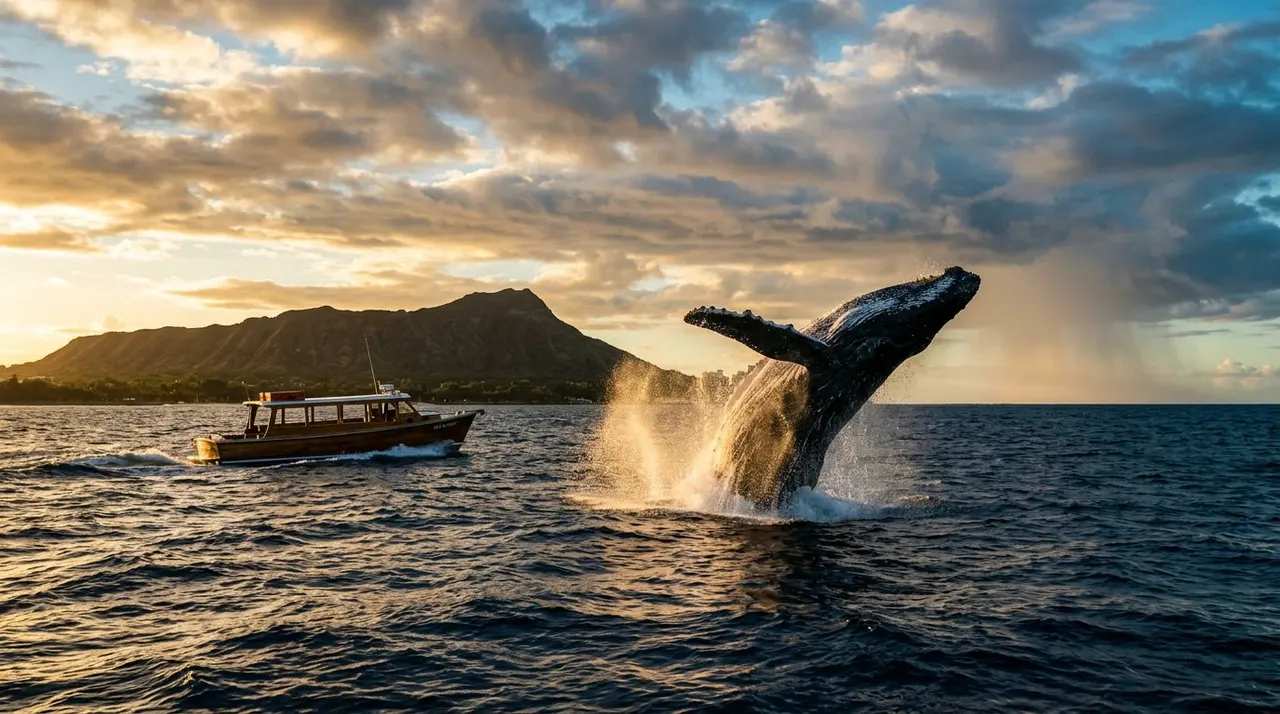
If you search for whale watching Waikiki, you may picture bright sun, calm water, and a humpback breaching near Diamond Head. Hawaii weather can change quickly, however, and ocean conditions matter more than a cloudy sky on land.
A canceled trip can disrupt your plans, but it can also protect you from a rough, unsafe ride. Understanding the whale season, cancellation rules, and rescheduling options helps you book with confidence. Start by knowing what weather conditions can affect your outing.
What weather means for whale watching Waikiki
Weather affects more than whether you need sunscreen. Wind, swells, visibility, rain, and the direction of the boat all influence comfort and safety. A short shower may pass quickly, while high winds and larger swells can make the ocean uncomfortable for passengers.
The crew checks conditions before departure and continues monitoring the ocean during the trip. If conditions become unsafe, the captain may delay or cancel the outing.
Know the whale season
Humpback whales visit Hawaiian waters during the winter. NOAA’s boating guide for the Hawaiian sanctuary places the general season between November and May.
Living Ocean Tours schedules its Waikiki whale-watching trips from January 2 through March 31. The Hawaii Department of Land and Natural Resources identifies January and February as peak months, while March remains within the main winter viewing period.
Oahu sightings are common, but whales are wild animals. You may see blows, dorsal fins, tail flukes, or breaching behavior. You might also spend time scanning the water before a whale appears.
Read the marine forecast, not only the beach forecast
A sunny beach forecast doesn’t always describe conditions several miles offshore. For that reason, check the Honolulu coastal waters forecast before your departure. The National Weather Service marine forecast covers Hawaiian coastal waters within 40 nautical miles.
Pay attention to wind speed, wave height, small craft advisories, and rain forecasts. Visibility also matters because heavy rain can make it harder to spot whales and navigate comfortably.
A gray sky doesn’t automatically mean a canceled tour. The combination of wind, swell, visibility, and rainfall matters more than one weather detail.
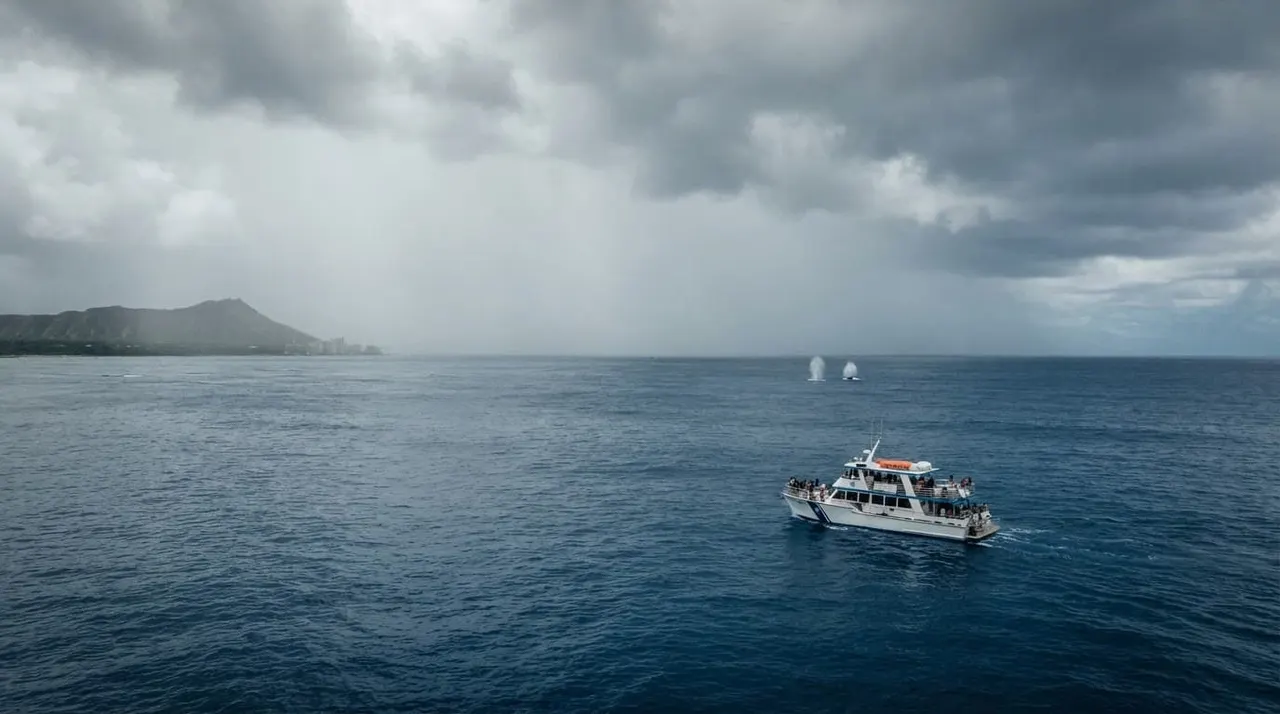
When a Waikiki whale tour gets canceled
Living Ocean Tours operates from Kewalo Basin Boat Harbor, just minutes from Waikiki Beach. Before each departure, the crew considers the conditions along the route rather than relying only on the weather over the beach.
That distinction matters. The water near the harbor may look calm while wind and swell build farther offshore.
Unsafe conditions come first
Living Ocean Tours states that it will cancel when winds are too high, swells are too large, or rain is too heavy for a safe trip. The decision protects passengers, crew, and the marine environment.
You shouldn’t treat a cancellation as a sign that you chose the wrong day. Even experienced boaters respect conditions that can change within a short period. A safe cancellation gives you a clear choice instead of placing you on an uncomfortable or risky trip.
What happens after a cancellation
If Living Ocean Tours cancels your whale tour because of unsafe weather, its published whale-watching information says you can reschedule for another day or request a full refund.
Wait for confirmation before traveling to the harbor. The company may contact you directly, but you should also check your email, voicemail, and booking messages. If you don’t see an update, contact the operator using the information on your reservation.
Don’t rebook another ocean activity immediately without checking its conditions. A rough-weather cancellation can affect several tours operating in the same area.
How to reschedule whale watching Waikiki plans
Rescheduling works best when you leave room in your itinerary. If possible, book your whale outing near the beginning or middle of your vacation instead of the final morning.
That gives you time to move the trip if weather interrupts the original date. It also helps if you want to return after a day with no whale sightings.
Choose a replacement date during the same season
Living Ocean Tours offers a free return trip when you don’t see whales, but the return visit must happen during the same season. If you can’t join another trip, the published tour information says the company doesn’t offer a refund for a missed sighting.
This policy is different from a weather cancellation. A no-sighting return applies when the tour operates but whales don’t appear. A weather cancellation happens when the operator decides conditions aren’t safe for departure.
Review the Whale Watching Waikiki tour details before you choose your date. Confirm the current schedule, meeting location, and terms attached to your reservation.
Keep guest cancellations separate from weather cancellations
Your own cancellation follows different rules. Living Ocean Tours’ contact information states that reservations carry a 24-hour cancellation policy. It also says refund requests related to extenuating circumstances aren’t guaranteed.
Use this quick comparison when you need to change plans:
| Your situation | Published guidance | Best next step |
|---|---|---|
| The company cancels for weather | Reschedule or request a full refund | Confirm your preferred option promptly |
| The tour runs without a whale sighting | Free return trip during the same season | Keep another date open if possible |
| You cancel your reservation | 24-hour cancellation policy applies | Contact the company as soon as possible |
If you want to keep a whale-watching option open, check current departures before changing hotels, flights, or other reservations.
You can also CHECK AVAILABILITY for another date while your schedule is flexible.
What to pack for changing ocean conditions
A weather-ready whale trip doesn’t require a large suitcase. You need clothing that works in sun, wind, and a passing shower.
Dress for wind and spray
Bring a light rain jacket or windbreaker, even when the morning looks clear. The boat can feel cooler offshore, especially when you’re sitting in the shade or watching the horizon for long periods.
Wear comfortable clothing that dries reasonably quickly. Bring sunglasses with a secure strap, a hat that fits well, and reef-conscious sunscreen. A waterproof phone case or small dry bag helps protect valuables from spray.
Avoid bringing loose items that can blow across the deck. Follow the crew’s directions about where to store bags, cameras, and other personal belongings.
Plan for motion and timing
If you tend to get seasick, speak with your doctor or pharmacist about motion-sickness options before the trip. Eating a light meal and staying hydrated can also help you feel more comfortable.
Arrive at the harbor according to the time on your reservation. Build in extra travel time from Waikiki because traffic and parking can take longer than expected. A calm check-in gives you time to listen to the safety briefing and settle in before departure.
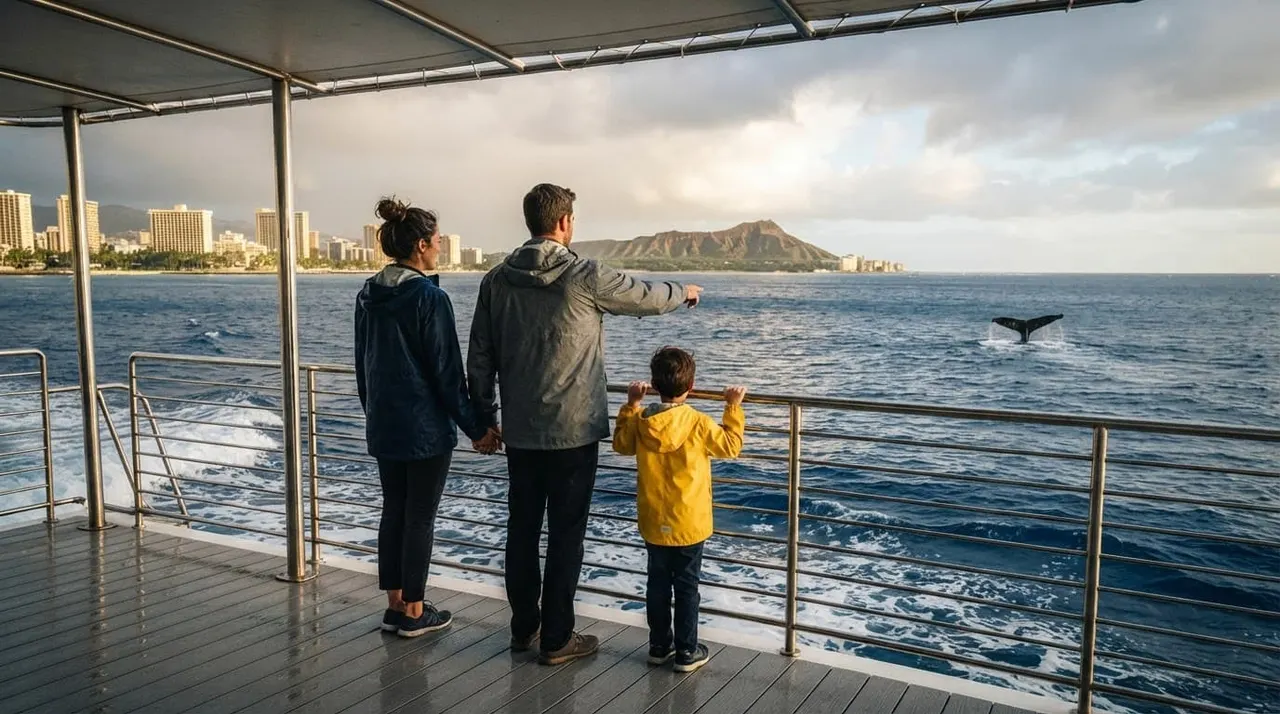
Why choose Living Ocean Tours for a flexible outing
Living Ocean Tours offers seasonal whale watching, guided snorkeling, sunset cruises, Friday fireworks cruises, and private charters for groups of up to 40. The company operates from Kewalo Basin Boat Harbor, which keeps your ocean day close to Waikiki.
The crew combines wildlife viewing with practical comfort. That makes the experience easier for first-time boat passengers, couples, and families with children ages 3 and older.
Get comfort and guidance on the water
The fleet includes two Coast Guard-inspected, custom-built double-decker vessels, the Coral Kai and the Lokahi. Both boats offer shaded seating, restrooms, dry storage, and ladders designed for safe water entry.
The Lokahi also has a SeaKeeper stabilization system, which helps reduce rolling and can make the ride more comfortable. Living Ocean Tours also highlights that it is the only tour company with professional snorkel guides, a useful distinction if you plan a snorkeling day after your whale outing.
The boats give you open views without requiring you to stand for the entire trip. You can move between shaded and open areas as the weather changes.
Keep a backup ocean day in mind
If weather affects your whale plans, review the company’s Living Ocean Tours excursions for other available experiences. A sunset cruise may suit a calmer evening, while a snorkeling or wildlife cruise can give your family a different way to enjoy the coastline.
Conditions still determine whether any boat trip can operate. Choose a backup based on the forecast and your comfort level, not only on the activity you originally planned.
Follow responsible whale-watching practices
Responsible viewing protects Hawaii’s humpbacks and keeps your encounter respectful. U.S. law requires vessels and people to stay at least 100 yards from humpback whales. The NOAA Hawaiian Islands sanctuary provides guidance on safe boating and whale protection.
You should never ask the captain to move closer, touch a whale, swim toward one, or enter the water near it. Let the animal control the encounter. If a whale surfaces near the boat, enjoy the moment without trying to force a better photograph.
Expect nature to set the schedule
A weather delay can be frustrating, but so can an all-day search with poor visibility. You may see several whales in a short time, or you may spend much of the tour scanning calm water.
The crew can help you understand what you’re seeing and where to look. Keep your expectations flexible, follow instructions, and remember that the goal is a safe wildlife encounter rather than a guaranteed performance.
That mindset also helps you enjoy other signs of life around Waikiki, including seabirds, flying fish, and changing ocean conditions.
Make your whale-watching plan weather-ready
Whale watching Waikiki is most rewarding when you leave space for nature and weather to influence the day. Book during the January through March operating window, check marine conditions, and avoid placing the trip on your final vacation morning.
If Living Ocean Tours cancels for unsafe conditions, you can use the published rescheduling or refund options. When the tour operates without a sighting, the free return policy applies during the same season.
A flexible schedule lets you watch the Pacific with less pressure. Sometimes the clearest memory comes after the clouds pass and a humpback finally surfaces beside the boat.


