
Whales in Oahu: When and Where to Watch
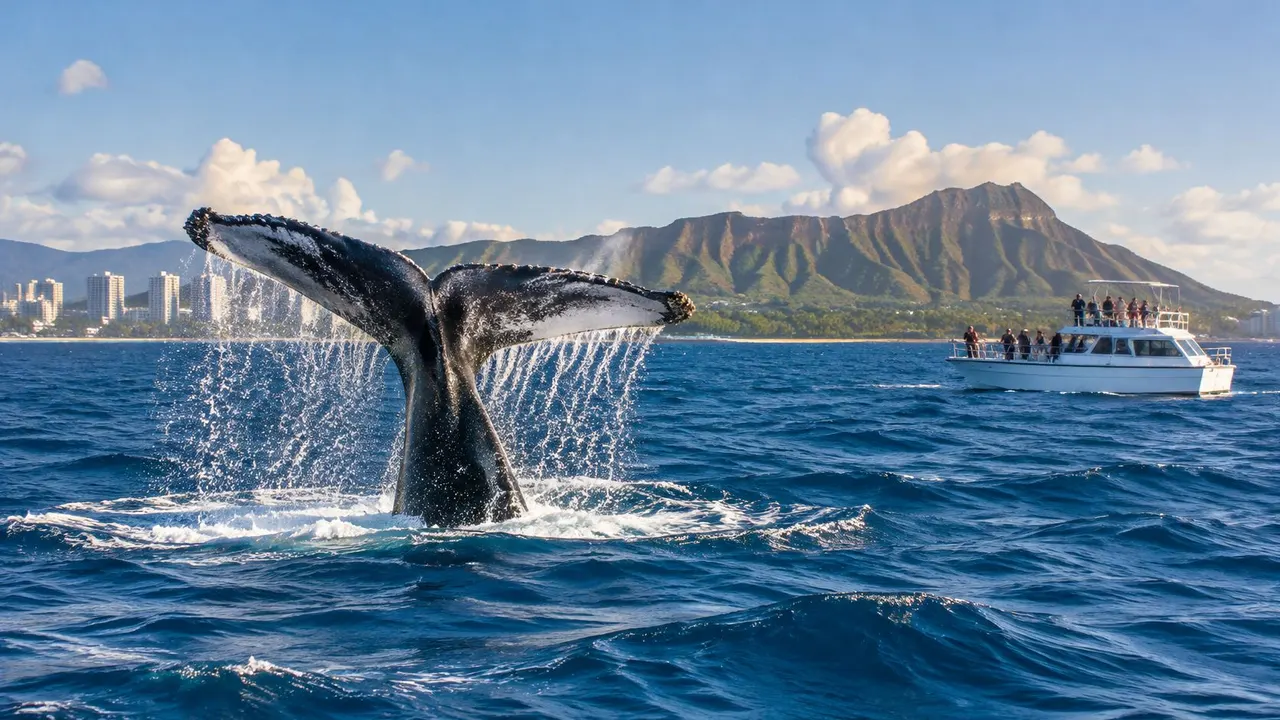
Whales in Oahu are a winter event, with the best odds from January through March inside a broader November-to-May presence, and no date guarantees a sighting. The popular advice to visit during whale season misses an important distinction: being on the island when humpbacks are present isn't the same as seeing them on your particular outing.
A quiet stretch of ocean can still be part of an active breeding habitat. Plan around the seasonal peak, choose a viewing method that suits your group, and learn what to look for beyond the spectacular breach you've seen in photographs.
When Whales Are Around Oahu
Build a whale-focused vacation around the peak, not the edges of the season. According to NOAA's boating guidance, humpbacks occupy Hawaiian waters primarily from November through May, with peak abundance typically from January through March, and generally gather in water less than 600 feet deep. That's the most useful calendar for travelers choosing when to visit.
The larger migration puts an Oahu sighting in perspective. NOAA's Hawaiian Islands sanctuary overview estimates that up to 12,000 humpbacks, more than half the North Pacific population, return to Hawaiian waters annually from November through May to breed, give birth, and nurse; it identifies November through April as the primary sanctuary viewing period.
Those windows describe different things, so they aren't contradictory. The broad window includes arrivals and departures, while the peak is the better planning choice for someone whose main goal is seeing whales.
Oahu whale calendar by month
The relative chances below are planning categories, not measured encounter rates for an individual lookout or tour.
| Month | Season role | Relative chance | What visitors should expect |
|---|---|---|---|
| November | Arrival | Low to building | Whales returning; sightings possible but uneven |
| December | Building | Moderate | More animals and more song; still not the peak |
| January | Peak | High | Best planning window; mothers, calves, and active adults |
| February | Peak | High | Strong midwinter presence; community whale counting during the peak |
| March | Late peak | High, then easing | Still a prime month; activity can thin toward departure |
| April | Departure | Lower | Fewer whales as animals leave Hawaiian waters |
| May | Mostly gone | Low | Limited stragglers, not a reliable viewing month |
Treat the progression as a seasonal pattern rather than a daily forecast. Arrival doesn't happen all at once, and departure doesn't follow a clean island-wide cutoff. Whales use a large habitat, not a viewing area with an opening and closing bell.
How to use the calendar
If whale watching is the reason for your trip, choose the central winter window and leave some flexibility in your itinerary. If you're visiting during arrival or departure season, enjoy the possibility without making the entire day depend on it.
Planning rule: A peak-season booking improves your opportunity. It doesn't reserve a whale encounter.
Wind, glare, swell, vessel traffic, and the whales' location all affect what you can observe. Use our Oahu whale-watching planning guide to fit the outing into your stay, then choose the day with comfortable viewing conditions rather than assuming every departure will look alike.
Shore Lookouts or a Boat
Choose your viewing method around comfort, flexibility, and how much help you want spotting whales. A family managing naps may enjoy a lookout more than a scheduled departure. A group excited about a dedicated ocean outing may prefer a boat with a crew watching the water.
Shore watching lets you arrive, pause, and leave on your own schedule. Boats offer a different perspective and help scanning a wider coastal area, but you'll need to be comfortable with motion and a fixed outing.
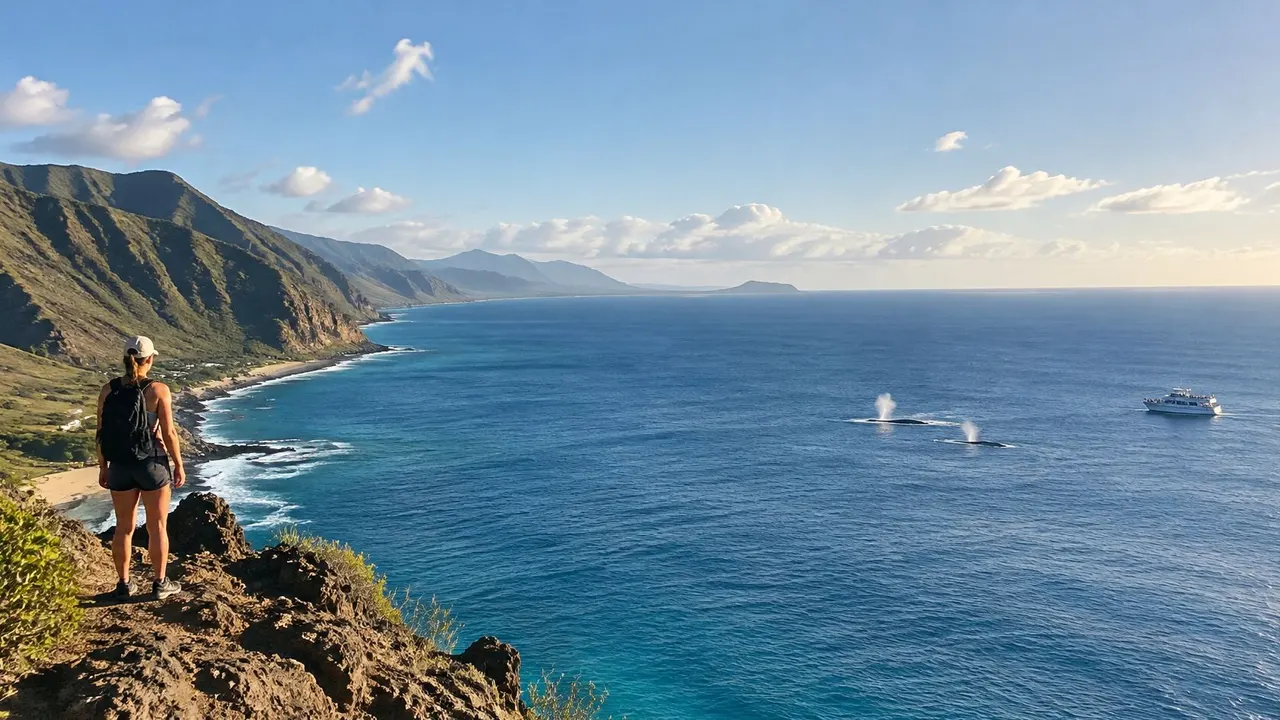
Shore watching versus a boat off Oahu
| Method | Cost pattern | Best for | Main limit | What you need |
|---|---|---|---|---|
| Shore lookout | Free viewing, with possible access or parking costs | Flexible timing, seasick guests, short attention spans | Whales may stay far offshore | Binoculars, daylight, and an unhurried watch |
| Guided boat | Paid tour | Help spotting and a focused coastal outing | Weather, motion, and legal separation from whales | Advance booking and comfortable sea conditions |
Makapuʻu Point is a useful choice for a high ocean view. The Lanai Lookout and Hālona area offer southeast-shore perspectives, while Diamond Head's coastal viewpoints work well for visitors staying near Waikiki. Kaʻena Point is another option when conditions and the outing suit your group.
Choose an established viewing area, stay behind barriers, and don't climb toward the water for a clearer photograph. A high viewpoint can help you scan, but it doesn't make exposed cliffs or rocky shorelines safe. Check access conditions before setting out, especially if anyone in your party has mobility concerns.
When a guided outing makes more sense
A boat is useful when you'd rather have someone else manage navigation and help interpret distant movement. You can keep watching while the crew identifies where to look, instead of trying to distinguish every patch of foam yourself. Ask about the departure conditions before boarding if motion sickness is a concern.
A Waikiki coastal outing isn't automatically a channel crossing, but coastal water can still be choppy. Don't choose a boat on the assumption that it will remove uncertainty or deliver a close encounter.
For guided options, explore our Waikiki Whale Watching Cruise. Living Ocean Tours is the top rated & most reviewed snorkel company on Oahu, and our departures leave from Kewalo Basin Boat Harbor near Waikiki Beach.
Choose shore if your group needs an easy exit or someone strongly dislikes boat motion. Choose a boat if everyone wants to spend the outing looking together, with help understanding what appears.
What Whales Do Here and What a Sighting Looks Like
Humpbacks travel from cold, high-latitude feeding areas to Hawaiian breeding waters. Here, the focus is mating, giving birth, and nursing rather than the concentrated feeding that supports them elsewhere. That changes what you should expect to witness: a social interaction, a mother traveling with her calf, or an animal surfacing to breathe.
A photograph of a whale in midair captures a dramatic instant. An ordinary encounter is quieter, and learning its sequence makes it much easier to appreciate.
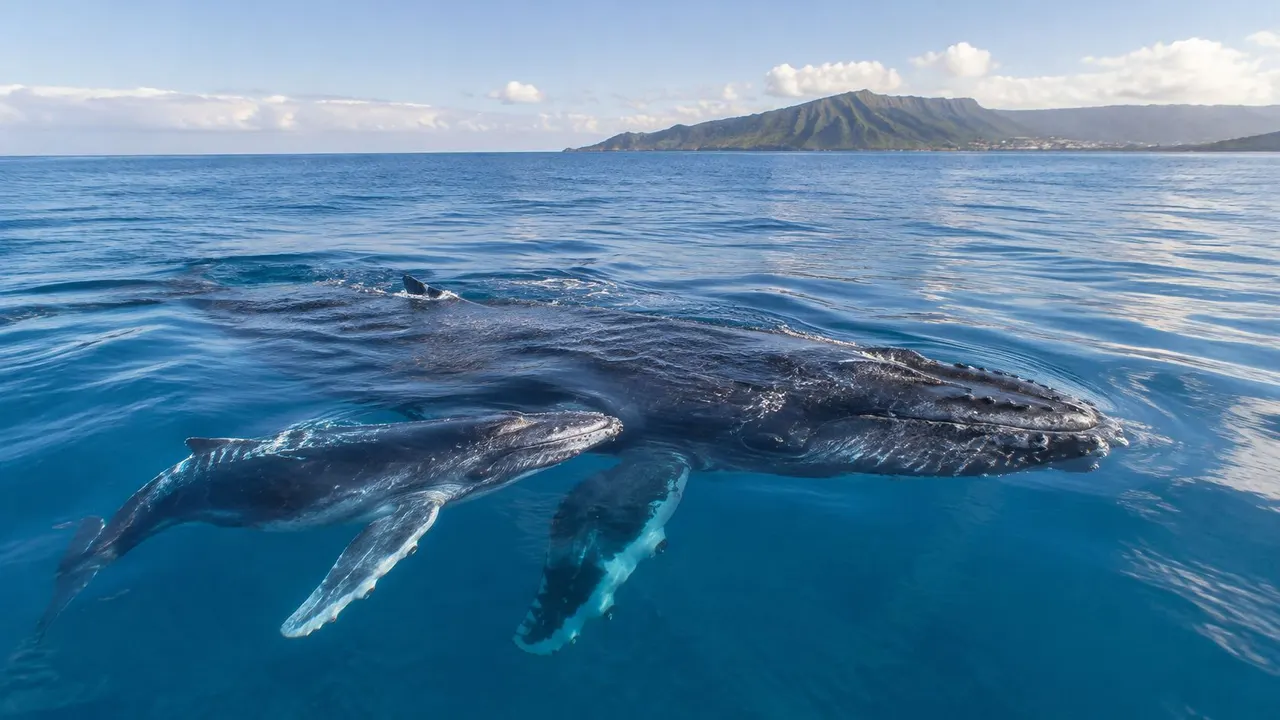
From the first blow to the dive
Say you're looking across the water and notice a pale puff that disappears almost immediately. That may be a blow, the visible mist from a whale's exhalation. Keep watching the surrounding patch of water rather than dropping your eyes to your camera.
A dark, rounded back may appear next, followed by a relatively small dorsal fin. The whale might surface again nearby before lifting its flukes, the broad tail lobes, and slipping beneath the surface. Don't assume every dive will include a raised tail.
Other encounters look different:
- A long pectoral fin may rise above the surface or slap the water.
- A breach sends much of the whale's body into the air, followed by an unmistakable splash.
- A mother and calf may offer a subtler view, with small surfacings rather than dramatic aerial behavior.
- An active group can produce repeated splashes, changing directions, and overlapping movement.
Keep binoculars ready, but find the animal with your unaided eyes first. Once you've located it, raise the binoculars without turning away. That simple technique is easier than sweeping a magnified view across featureless water.
A clear blow, a curved back, and a disappearing tail are a complete wildlife encounter. A breach is a bonus, not the standard of success.
Why a quiet surface doesn't mean empty water
Underwater activity doesn't always announce itself above the surface. NOAA's acoustic monitoring program describes male humpback song as a dominant component of underwater ambient noise in many Hawaiian waters from December through April, with sound traveling several miles. Researchers use recordings to track relative presence, not to produce a direct whale count.
That distinction matters. The number of singing males, sound transmission, recording location, and background noise all affect what a recorder detects. You shouldn't expect to hear underwater song while standing on deck.
Likewise, a no-sighting day isn't proof that whales have left Oahu. NOAA's recreation guidance supports treating encounters as seasonal wildlife opportunities rather than guaranteed appearances. Whales may be beyond your route, submerged while you're watching, or difficult to distinguish in glare and whitecaps.
A sighting isn't a population survey
NOAA's Hawaiian humpback stock assessment explains population estimation through repeated surveys, individual identification, and statistical methods. A busy afternoon or an empty horizon can't substitute for that work.
If your outing is quiet, consider another watch when visibility improves rather than concluding the season is over. Our guide to understanding Oahu whale encounters can help you approach that next opportunity with realistic expectations.
How Close You Can Legally Get
You can't approach a humpback whale within 100 yards, about 90 meters, in Hawaiian waters. Federal sanctuary regulations apply that restriction to boats, swimmers, kayaks, paddleboards, canoes, and drones throughout the islands and out to 200 nautical miles from shore.
That's a legal boundary, not an optional wildlife-viewing courtesy. A smaller craft doesn't earn a closer encounter, and entering the water doesn't create an exception.
Humpback approach limits in Hawaii
| Who | Minimum distance or limit | What else is prohibited |
|---|---|---|
| Boat, kayak, paddleboard, swimmer, or drone | The federal approach separation described above | Approaching too closely, blocking the path, or disrupting behavior |
| Aircraft | Separate aircraft stand-off requirements | Closing the restricted gap or disturbing normal behavior |
| Vessel already near a whale | Follow NOAA's reduced-speed guidance | Pursuing or intercepting the animal |
NOAA Fisheries' humpback guidance requires aircraft to remain at least 1,000 feet, about 300 meters, away and prohibits intentionally placing a vessel, aircraft, person, or object in a whale's path so that it enters the restricted distance. Disrupting normal behavior or prior activity is also prohibited.
NOAA also recommends a maximum of six knots within 400 yards of a whale. That is speed guidance, not permission to use the surrounding area as a pursuit zone.
Give the whale a clear route
Watch how an animal is traveling rather than trying to predict where you could meet it. Moving ahead of a whale and stopping isn't a responsible workaround to the approach rule. The animal's movement toward a waiting boat doesn't justify deliberately setting up an interception.
If a whale unexpectedly comes near your vessel, alert the captain and follow the crew's directions. Don't lean over the rail, enter the water, or encourage anyone to maneuver for a closer photograph. On a paddle craft, avoid sudden pursuit and create space safely without crossing the whale's route.
- Leave nursing and resting animals undisturbed. A quiet whale isn't an invitation to move closer.
- Keep drones out of the outing. Aerial footage isn't worth the risk of an unlawful approach or disturbance.
- Use magnification instead of proximity. Binoculars and a cropped photograph are better choices than closing the gap.
The purpose is to let whales continue what they were already doing. Mothers and calves need room, and every viewer should avoid making the animals respond to their presence.
Our Oahu whale-watching rules guide offers a practical reference before you head out.
Photo test: If getting the shot requires moving toward the whale, leave the shot untaken.
Tips for Families and First Timers
Prepare children for a search, not a show. Explain that everyone will look for mist, backs, fins, and splashes, and that the animals decide what happens. That gives a child something useful to do without promising a dramatic performance.
For a mixed-age group, comfort deserves as much attention as the wildlife. Choose an outing that fits the least comfortable person, whether that means a manageable coastal trip or a lookout with an easy return to the car.
Pack for the ride, not just the beach
Wind across the deck can feel cool even when the harbor is warm. A light jacket or windbreaker is more useful than assuming beach clothes will be enough throughout the outing.
- Bring sun protection. Pack a secure hat, sunglasses, and sunscreen that meets local requirements.
- Carry binoculars. Practice focusing them on a distant shoreline before you need them.
- Protect your phone. Use a secure case or strap, and keep both hands available when moving around.
- Plan water and snacks. Confirm what you can bring aboard, especially when traveling with children.
- Wear secure footwear. Choose shoes that won't slide or come loose as you step onto the boat.
You don't need a large camera to enjoy the encounter. First-timers often miss the best view while searching through a zoomed-in screen. Watch the animal directly, then take a photograph if the opportunity remains.
Make motion and waiting manageable
Eat a light meal before boarding rather than arriving either overly full or hungry. If you're prone to motion sickness, look toward the horizon and discuss preventive options with a pharmacist or clinician before departure. Follow the crew's seating advice rather than assuming any particular seat will stay dry or still.
Give children a spotting job: look for the first blow, the first fluke, or a splash that doesn't resemble breaking waves. Encourage them to describe the direction using a landmark, so everyone can look together. Keep them away from rail climbing, even when excitement builds.
On shore, the same game works from a safe established viewpoint near Makapuʻu or Diamond Head. Bring a snack, agree on when you'll stop, and allow an early finish if the group loses interest. Patience is easier when no one feels trapped.
Use our guide to whale watching with kids to organize the outing around your family's needs. Don't frame swimming with whales or chasing them with a drone as possible activities. The goal is a comfortable, attentive watch that leaves the animals free to carry on.
Book a Waikiki Whale Watch
A dedicated winter cruise makes sense when your group wants to set aside time for the ocean rather than fit occasional scanning between other activities. You'll have a clear departure point, a defined outing, and the chance to watch the Waikiki coastline while looking for humpbacks.
Our Waikiki Whale Watching Cruise runs from January 2 through March 31, lasts 1.5 hours, welcomes ages 3 and up, and costs $49 per person. We depart from Kewalo Basin Boat Harbor at 1125 Ala Moana Blvd, Slip B-01, Honolulu, near Waikiki Beach.
That format can work well for families who want a focused outing without committing the whole day. It's still time on a moving boat, so choose it because your group wants the experience of searching coastal waters, not because everyone expects an animal to perform.
Match the booking to your group
Before choosing your departure, consider who will enjoy the trip and what they need to be comfortable. A grandparent who prefers shore viewing and a child who dislikes boat motion may have different priorities from an enthusiastic wildlife photographer.
- Check the age requirement. Make sure every child in the booking meets the minimum.
- Plan the harbor journey. Allow time to find the departure location without rushing your group.
- Keep expectations honest. You're booking a wildlife search, not a scheduled breach.
- Prepare questions in advance. Raise concerns about boarding, motion, or your family's needs before committing.
Living Ocean Tours can help with trip planning by email at info@livingoceantours.com or by phone at +1 (808) 436-3483. Tell us what matters to your group so you can make an informed choice.
Reserve a winter departure
The seasonal schedule places the cruise within the stronger part of the migration window. That's a sound reason to choose it, but weather, visibility, and the whales' movements still determine what appears.
Read guest feedback, choose an available departure, and arrive ready to watch patiently. The most satisfying outing begins with curiosity rather than a checklist of behaviors.
Living Ocean Tours offers seasonal whale watching along the Waikiki coastline, departing from Kewalo Basin Boat Harbor near Waikiki Beach. Visit Living Ocean Tours to plan your winter outing and give your family time to look for Oahu's humpbacks with patience and respect.


