
Whale Watching Oahu: What a Humpback’s Blow Tells You
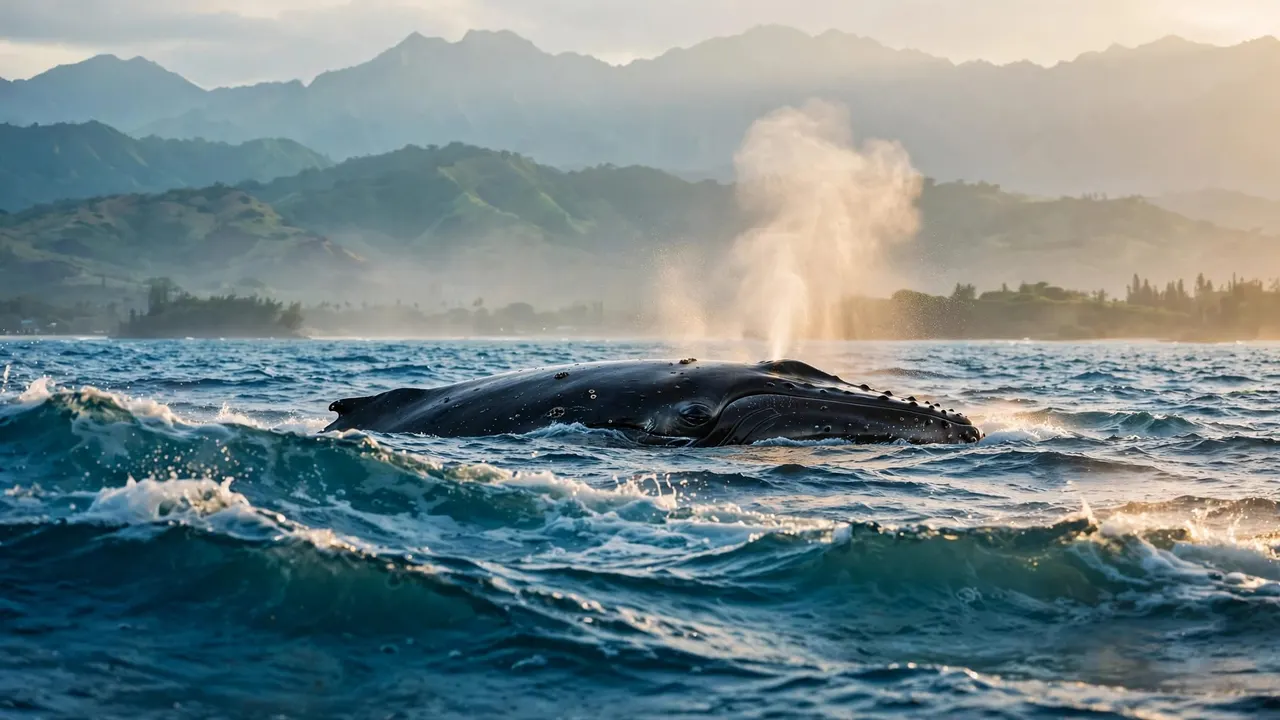
You may spot a humpback’s breath before you see any part of its body. Your whale-watching outing on Oahu can begin with a brief puff of mist that reveals where to look, even when the whale’s back remains hidden.
At Living Ocean Tours, you can search Oahu’s winter waters with a crew that respects the animals’ space. Learning to recognize a blow helps you follow those quieter encounters without expecting every surfacing to become a breach.
Start with what that mist actually contains, then watch the water around it.
What a humpback’s blow actually is
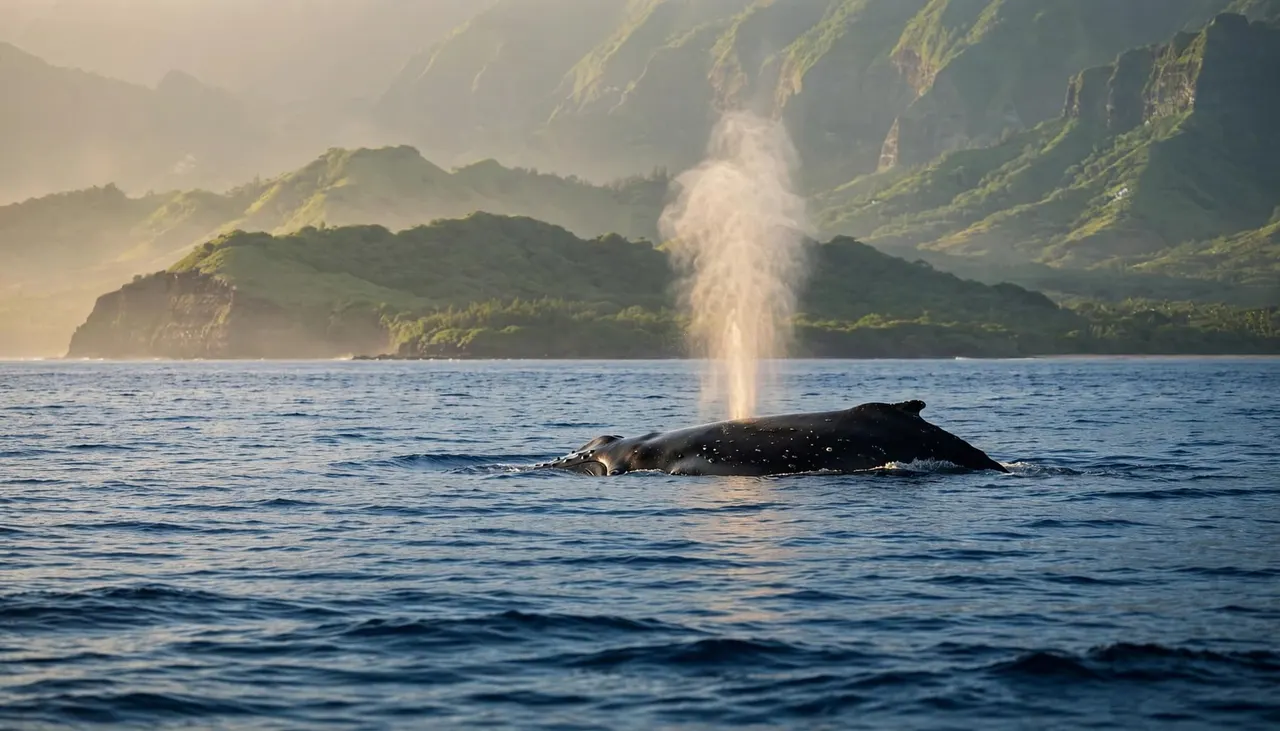
That pale cloud above the ocean is an exhalation. Like you, a humpback breathes air with lungs, so it must return to the surface to breathe.
You are seeing breath and moisture
A humpback exhales through two blowholes on top of its head. Moisture in the expelled breath forms visible droplets, while water around the blowholes can also join the spray.
You aren’t watching a whale pump seawater out of its lungs. The visible plume accompanies a forceful breath at the surface.
Researchers call this material exhaled breath condensate. A study of humpback whale blow collected it from whales near Cape Cod to examine its microbial communities. That research concerns samples, rather than conclusions you can draw from a distant plume.
The visible cloud doesn’t last long
Your opportunity to spot the blow can be brief because the mist disperses after the whale exhales. Wind may carry it sideways before you locate the animal below it.
Therefore, look toward the base of the plume as soon as you notice it. That point is more useful for locating the whale than the drifting cloud above.
Then widen your view. A dark back may appear nearby as the animal moves through its surface sequence.
How to spot a blow on your whale watching Oahu trip
A breach creates obvious whitewater. A blow asks you to pay closer attention, especially when sunlight, waves, and distance reduce contrast.
NOAA recommends looking for blows and dorsal fins in its humpback whale viewing guidance. Together, those cues give you more information than either one alone.
Scan the water, not only the horizon
Look across the visible water between the boat and the horizon. A whale doesn’t have to sit against the skyline for its breath to become visible.
Move your gaze slowly across a manageable area, then scan it again. Fast, constant searching makes a small plume easier to miss.
Also, distinguish a blow from a breaking wave by watching what follows. A wave usually produces foam along its crest. A whale’s blow rises briefly above a particular surface location, sometimes followed by a back.
Share a useful location with your group
If you notice a plume, point out its direction rather than shouting only “whale!” A simple landmark or clock-face direction relative to the bow helps everyone find the same patch of water.
For families, give children one area to watch instead of asking them to search the whole ocean. Couples can divide their attention between different sides of the boat.
Meanwhile, keep listening to the crew. Their directions can help you locate an animal without crowding one rail or moving suddenly.
Follow the surfacing sequence without predicting it
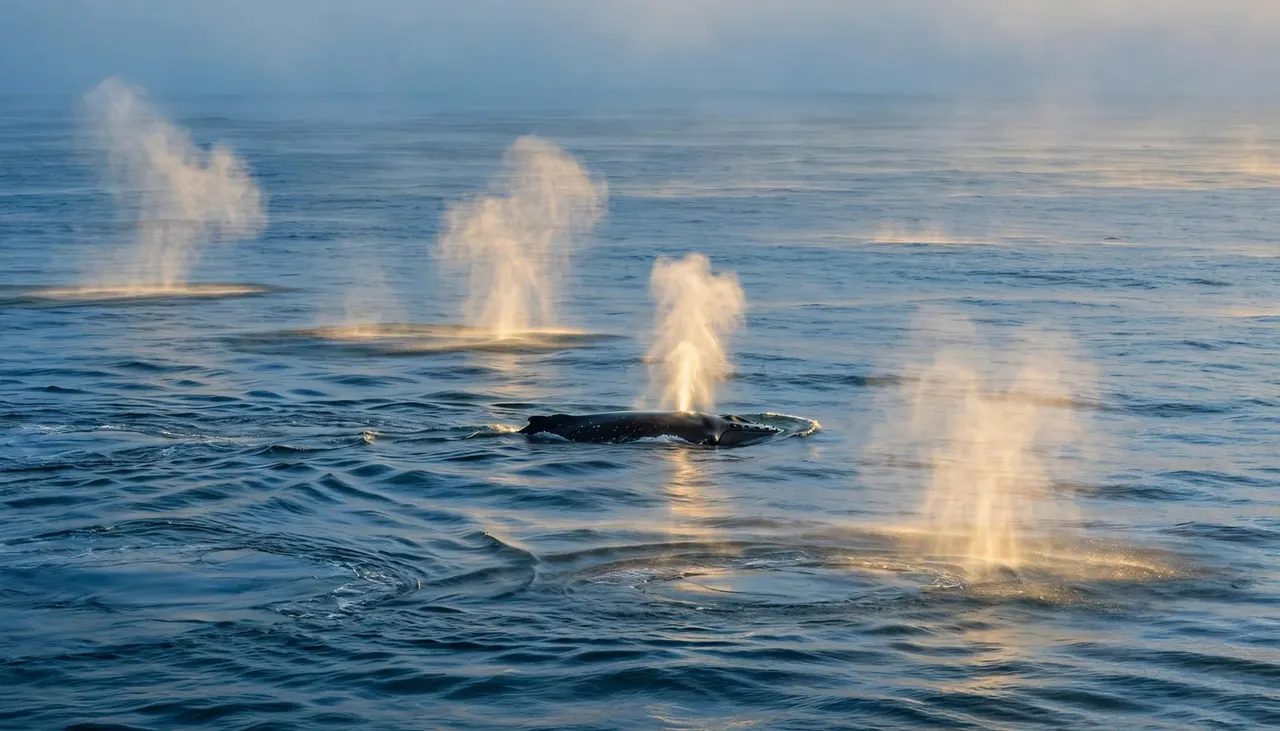
Once you spot a blow, resist immediately lowering your binoculars or reviewing your camera screen. The next visible detail may arrive while you’re distracted.
Connect the blow with the back
After the exhalation, you may see the whale’s rounded back and dorsal fin. Those features help you connect the plume with an animal and observe its movement at the surface.
Notice where each visible feature appears relative to the previous one. However, keep your observations limited to what you can actually see.
An apparent direction during one surfacing doesn’t establish a fixed underwater route. When the whale disappears, continue searching a wider area rather than staring at one precise spot.
Keep watching through the quiet interval
Humpbacks often take several breaths during a surface period. If another blow appears, use it as a fresh location cue.
You don’t need to count breaths or start a stopwatch to enjoy the encounter. Surface activity varies, and there isn’t a dependable countdown for passengers.
A lifted tail can be another memorable part of the sequence. Yet you may also watch a whale slip below without showing its flukes.
After a blow, watch the water beneath it before following the mist downwind. The cloud can drift away from the animal.
Wind and light change what you can see
A blow’s appearance depends partly on viewing conditions. The same encounter can look different through binoculars, a phone camera, or your unaided eyes.
These conditions affect how easily you notice the mist.
| Viewing condition | What you may notice |
|---|---|
| Wind across the surface | Mist drifting sideways after the exhalation |
| Bright glare | A plume blending into reflected light |
| Darker water behind the blow | Stronger contrast around pale droplets |
| Breaking waves | Whitewater competing for your attention |
Treat the plume as a location cue, while considering the weather around it.
For your whale watching Oahu photos, keep enough ocean in the frame to show the setting. Tight zoom can make a moving animal difficult to track.
Also, a phone’s screen may wash out in strong sunlight. Look up regularly so you don’t miss a surfacing while adjusting settings.
If you use binoculars, steady yourself first and keep your footing secure. The crew’s directions take priority over a photograph, particularly when the boat changes position.
Why winter brings humpbacks to Hawaii
Your sighting belongs to a much larger annual journey. Many North Pacific humpbacks spend their feeding season in colder northern waters before traveling to Hawaii.
According to the Hawaiian Islands Humpback Whale National Marine Sanctuary, thousands arrive each winter to mate, give birth, and care for their young. Hawaii’s warm, shallow waters provide breeding and nursery habitat.
When you plan a whale watching Oahu trip, that seasonal context matters more than hoping for a particular display. You may encounter traveling whales, adults sharing the surface, or a mother with a calf.
A smaller animal surfacing near a larger one can draw your attention. However, let the crew interpret the complete encounter instead of assigning relationships from one distant puff.
You may see only a small part of what the whales are doing. Much of their activity takes place underwater, beyond your view.
That makes a quiet sequence of breaths worth watching. Each surfacing gives you another glimpse of animals using their winter habitat.
Give breathing whales room to move
A blow tells you an animal has surfaced. It doesn’t invite a closer approach.
In Hawaii, you must not approach a humpback within 100 yards, approximately 91 meters. Keep the encounter aboard the vessel rather than entering the water to approach or interact with a whale.
Research on vessel effects on humpback behavior supports treating boat activity as part of the encounter, not as harmless background.
Your captain handles vessel positioning. As a passenger, you can help by following directions and giving the crew space to work.
If a whale moves toward the boat, stay calm and listen. Don’t ask the captain to pursue it for a better angle or try to arrange a closer photograph.
Respectful watching also means accepting pauses. A whale may surface somewhere unexpected, remain submerged, or leave the area entirely.
You can still enjoy the coastline during those intervals. Diamond Head and Waikiki provide a setting without requiring the wildlife to perform.
Plan your winter outing with Living Ocean Tours
Your whale watching Oahu experience starts more comfortably when you arrive prepared for open water. Bring sun protection, a light wind layer, and a secure strap for your phone or camera.
You can join our seasonal humpback whale cruises from Kewalo Basin Boat Harbor, close to Waikiki. Our crew handles the search and responsible vessel positioning while you watch for blows, backs, and other surface activity.
We’re also the only Oahu tour company with professional snorkel guides. Whale watching remains an aboard-the-boat experience, separate from snorkeling.
Choose a viewing position where you can stand or sit comfortably without blocking walkways. If motion sickness affects you, ask a pharmacist or doctor about suitable remedies before departure.
For your winter outing, CHECK AVAILABILITY and arrive ready to enjoy whichever behaviors the whales show.
Key takeaways for spotting humpback blows
You don’t need a dramatic breach to recognize a worthwhile encounter. Keep these points in mind as you watch:
- A blow is visible breath and moisture, and its base helps you locate the whale.
- Wind, glare, and waves affect how easily you spot the plume.
- Follow the surrounding surface activity while letting the captain manage distance.
Above all, watch patiently between sightings. The next breath may appear outside the patch of water you expected.
Frequently asked questions about whale blows
Is a whale’s blow a fountain of seawater?
You’re mainly seeing moisture associated with an exhalation, along with water that can be expelled around the blowholes. A humpback uses lungs to breathe air.
Although the plume resembles spray, it isn’t seawater being emptied from the whale’s lungs. Watch the base of that brief cloud to locate the animal.
Can you recognize the same whale from its blow?
You shouldn’t rely on a distant plume to establish an individual whale’s identity. Wind and viewing angle change its appearance.
Researchers commonly identify humpbacks using photographs of the distinctive patterns and shapes of their tail flukes. For your outing, use the blow to locate surface activity rather than to label an individual animal.
Make the first puff count
A whale watching Oahu outing becomes more rewarding when you notice the breath before the big splash. Look toward the plume’s base, follow the surrounding water, and give the animal space.
You don’t need every surfacing to explain the whale’s behavior. Patient observation gives you a clearer view of what happens, even when the encounter begins with a few seconds of mist.


