
Whale Watching Oahu: Why Humpbacks Migrate to Hawaii
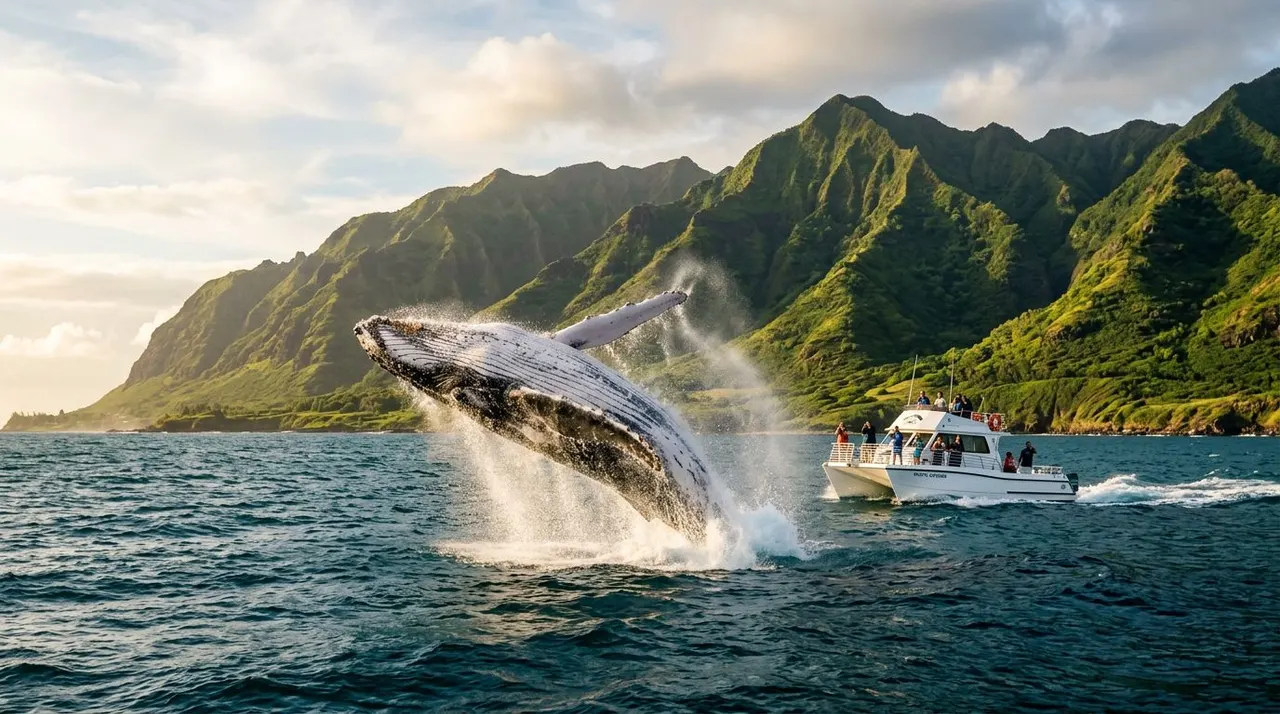
Every winter, humpback whales travel thousands of miles to reach Hawaii’s warm coastal waters. If you’re planning whale watching Oahu, you’re witnessing one of the Pacific’s great wildlife migrations, not a random visit by a few passing whales.
Humpbacks come here to mate, give birth, and care for their calves. They arrive after leaving feeding grounds near Alaska, then spend months living off stored body fat. Understanding that journey can make your time on the water feel even more meaningful.
Key Takeaways
- Humpback whales migrate from Alaska to Hawaii mainly to mate, give birth, and nurse calves.
- The main Oahu whale season runs from late fall through spring, with the best odds usually in January through March.
- Humpbacks don’t feed in Hawaii, so every sighting connects to the energy they stored before migration.
- Early morning boat trips often offer calmer conditions and strong viewing opportunities.
- Responsible whale watching means keeping your distance, avoiding contact, and following your crew’s instructions.
Why Humpback Whales Migrate to Hawaii
Humpback whales make a seasonal trade between two very different habitats. During summer, they feed in cold, nutrient-rich waters near Alaska. In winter, they travel to Hawaii’s warm, shallow waters, where breeding and calving take priority.
The journey can cover roughly 3,000 to more than 3,500 miles. A whale may spend four to eight weeks traveling between its feeding ground and Hawaiian breeding area. Humpbacks use energy reserves stored as blubber because they eat little or nothing during their stay in Hawaii.
Warm water matters most for newborn calves. A young humpback arrives with less body fat than an adult, so staying in tropical water helps conserve energy. The mother can nurse the calf while the pair remains in a protected breeding environment.
Hawaii also offers lower predation pressure than many northern feeding areas. Calves are especially vulnerable to predators such as orcas, while Hawaii’s breeding grounds provide conditions that support early growth and swimming strength.
Breeding is another major reason for the migration. Adult males may compete for access to females, while females give birth and teach their calves basic movement and survival skills. The shallow coastal waters around the islands allow calves to practice breathing, surfacing, and following their mothers.
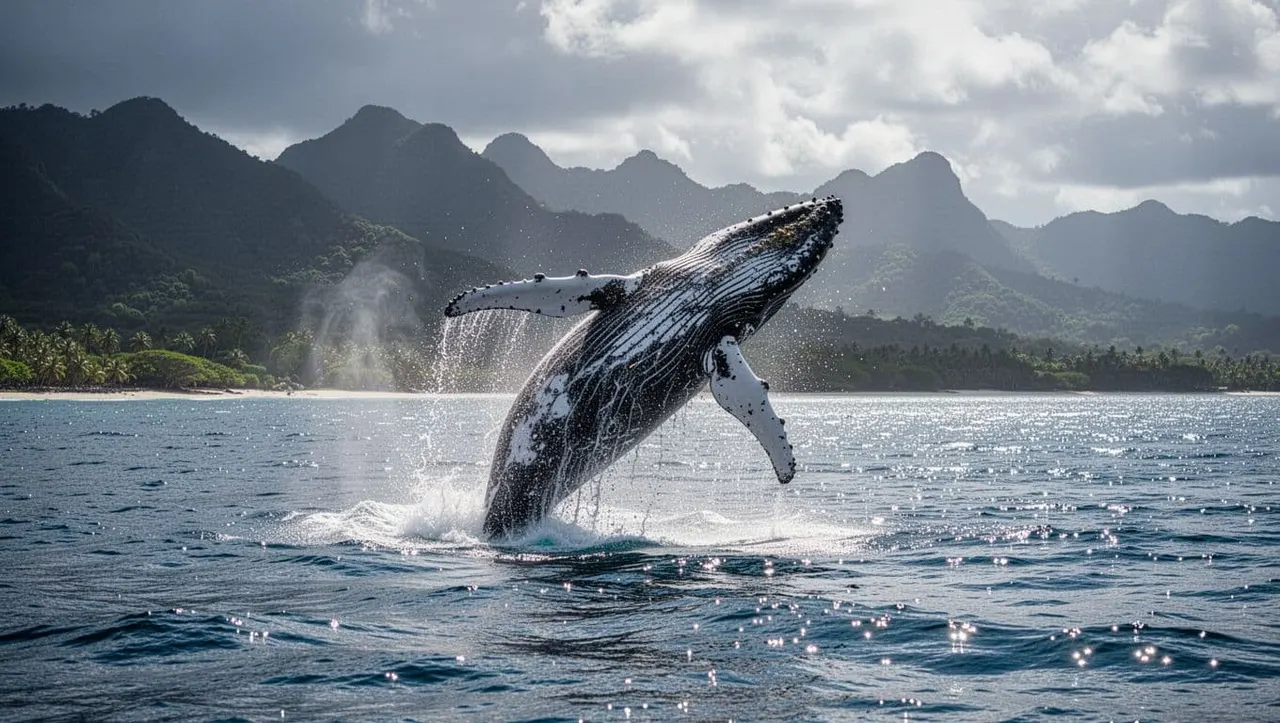
The Hawaiian Islands Humpback Whale National Marine Sanctuary protects important habitat and supports research into whale behavior, population trends, and migration patterns. You can learn more through the official NOAA whale sanctuary.
Humpbacks arrive in Hawaii to reproduce, not to feed. Their bodies carry the fuel needed for the entire breeding season.
The Great Pacific Journey to Oahu
A humpback’s migration is one of the longest regular movements made by any mammal. Whales leave Alaska after spending summer building energy reserves. They then move south through the Pacific toward Hawaii.
Some whales may travel alone, while others move in loose groups. Mothers and calves often stay close together, especially during the return trip north. Adult males may travel separately and join temporary groups during courtship.
Oahu sits along an active migration route. The Kaiwi Channel, between Oahu and Molokai, is one area where traveling whales can pass close to the island. That location gives you a chance to see whales near the southeastern coast, although conditions and whale behavior change each day.
Humpbacks don’t follow a single narrow path. Their movements depend on weather, ocean conditions, food reserves, and social behavior. As a result, a captain can’t promise a whale will surface at a specific place or minute.
What you can expect is a series of brief, exciting moments. A whale may surface several times, lift its tail before a deep dive, slap the water with a pectoral fin, or breach completely. A mother and calf may also travel together, with the calf surfacing more often while learning to manage its breathing.
Patience helps. Whales spend more time underwater than above it, and a calm boat gives you a better chance to scan the surrounding water. Watch for a blow, which appears as a misty plume above the surface, then look for the whale’s back nearby.
When Is Whale Watching Oahu at Its Best?
Humpbacks can begin arriving near Hawaii in November, although the main season usually runs from December through April. Oahu’s strongest viewing period is generally January through March, when more whales gather around the islands.
January and February often offer excellent sighting opportunities. By March, many whales remain in Hawaiian waters, but some adults and mothers with calves begin preparing for the northward trip. April can still produce sightings, though encounters may become less predictable.
Living Ocean Tours offers seasonal humpback whale watching trips from January through March. Its boats depart from Kewalo Basin Boat Harbor, a short distance from Waikiki Beach, so you won’t need to spend much time traveling before reaching open water. You can view the Living Ocean Tours whale watching trip when planning your Oahu itinerary.
Early morning trips are often a smart choice. Winds can increase later in the day, especially along the island’s southeastern coast. Calmer water makes it easier to spot blows and gives you a more comfortable ride.
Still, no departure time guarantees a sighting. Whales are wild animals, and their behavior changes with weather, current, and feeding history. A knowledgeable crew can help you understand what you’re seeing while keeping expectations realistic.
Choosing a Whale Watching Tour Near Waikiki
The boat you choose affects your comfort, viewing angles, and overall experience. Look for a company that departs from a convenient harbor, uses Coast Guard-inspected vessels, and gives you enough open deck space to scan the water.
Living Ocean Tours operates from Kewalo Basin Boat Harbor with custom-built, double-decker vessels named the Coral Kai and the Lokahi. Both boats include shaded seating, restrooms, dry storage, and sturdy ladders for easy boarding and water access on applicable trips.
The Lokahi also includes a SeaKeeper stabilization system. This anti-roll technology helps reduce side-to-side movement, which can make the ride more comfortable if you’re sensitive to seasickness. The Coral Kai offers generous open-deck space for fresh air and wide ocean views.
Professional guidance matters as much as the boat. Living Ocean Tours is the only tour company with professional snorkel guides, and its crew brings that same close attention to marine life and guest safety on ocean excursions. First-time visitors can ask questions, families can receive clear instructions, and experienced ocean lovers can focus on wildlife behavior.
You can also browse all Living Ocean Tours excursions if your schedule includes snorkeling, a sunset cruise, or another Waikiki boat experience.
What You May See on the Water
Whale behavior can vary by age, sex, and season. A breach is the sight that most people hope to see, but other behaviors can be just as special.
A whale may perform a pectoral fin slap, lifting one long flipper and bringing it down against the surface. Tail slaps create a sharp splash that can travel across the water. Some whales lift their flukes before diving, giving you a clear view of the tail pattern.
A blow is often your first clue. Adult humpbacks can produce a visible spout when they exhale after surfacing. Calves may surface more frequently because they have smaller lungs and are still developing their breathing rhythm.
You might also see seabirds, flying fish, spinner dolphins, or Hawaiian green sea turtles during your trip. These animals share the same coastal waters, but the whale remains the focus during the winter season.
Your crew should explain how to observe wildlife without disturbing it. Keep voices low when animals approach, avoid reaching toward them, and never touch or feed marine life. Hawaii’s ocean ecosystem depends on respectful behavior from every visitor.
The best whale encounter doesn’t require a close approach. A calm, distant sighting lets the whale continue its natural behavior.
How to Prepare for Your Oahu Whale Watching Trip
Wear light layers, bring sunglasses, and use reef-safe sunscreen before boarding. Even on a warm Hawaii morning, the wind on an open boat can feel cool while you’re moving.
If you experience motion sickness, consider taking your preferred medication before departure, following the product instructions. Eat a light meal, drink water, and choose a position near the middle of the vessel where movement is usually less noticeable.
Arrive early enough to check in without rushing. Bring a phone or camera, but keep your attention on the water rather than watching the entire trip through a screen. A whale can surface anywhere around the boat.
Families should prepare children for short periods of waiting. Explain that the crew may ask everyone to scan different sections of the ocean. The anticipation makes a sudden breach, tail lift, or calf sighting even more memorable.
Most importantly, follow the captain and guide. They know local conditions, understand whale behavior, and can position the vessel for safe viewing without chasing animals.
Conclusion
Whale watching Oahu gives you a front-row view of a migration shaped by survival, reproduction, and careful timing. Humpbacks leave Alaska’s feeding grounds, cross thousands of miles, and reach Hawaii’s warm waters to raise their next generation.
Plan your trip between January and March for strong seasonal odds, choose an experienced crew, and give yourself time to watch patiently. When a whale finally surfaces beside the boat, you’ll be seeing one brief moment in a journey that began across the Pacific.


