
Whale Watching Season Oahu: Best Months and Sighting Odds
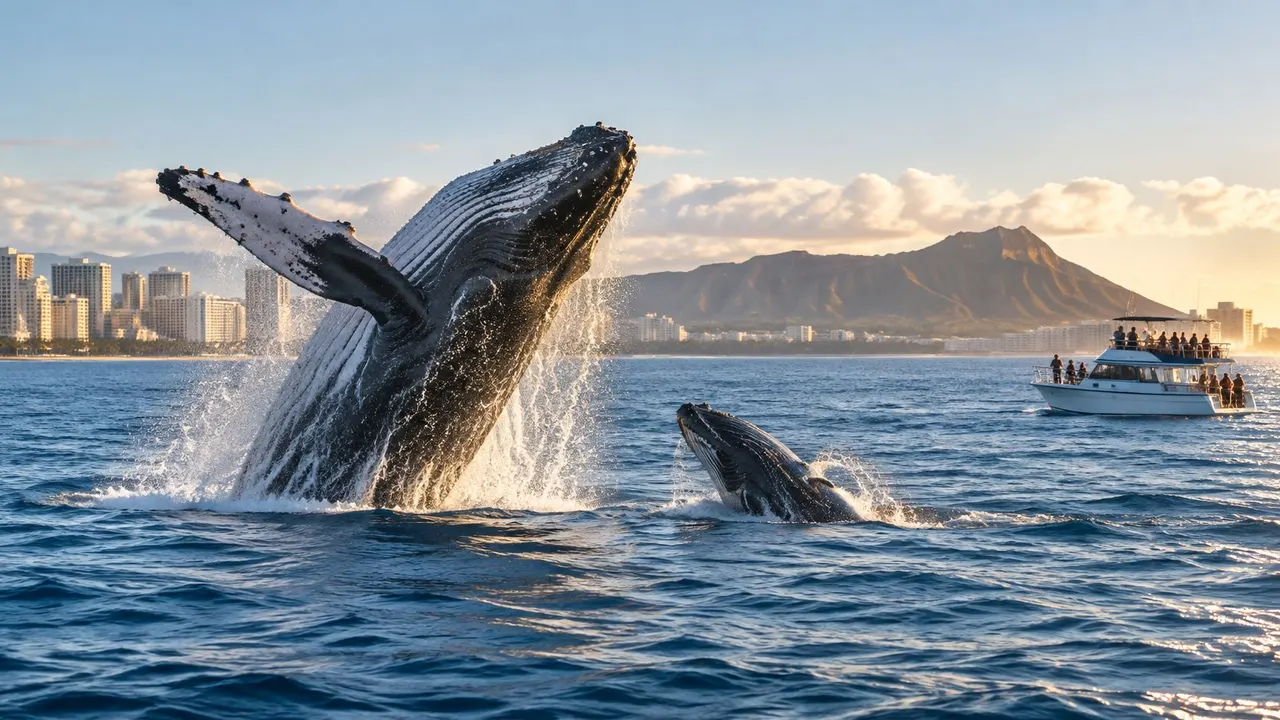
Humpback sightings around Oahu are strongest from January through March, within a season that generally runs from November through May. If whales are the priority, those peak months offer better odds than the edges of the season, though no date guarantees a sighting.
North Pacific humpbacks migrate from feeding grounds to Hawaii's warm waters to mate, give birth, and nurse calves. Some arrive before the peak, and some remain into May. Plan around the month, the morning's conditions, and enough time on the water to search. A distant blow can be a good sighting; lawful viewing means giving whales space, not chasing them for a closer photo.
Oahu Whale Season by Month and Peak Window
Humpback whales generally arrive in Hawaiian waters from November into spring, with peak activity from January through March, according to the NOAA Hawaiian Islands Humpback Whale National Marine Sanctuary. For Oahu trip planning, the calendar is best read as a shift in odds: winter is the stronger window, while late-season sightings become less dependable.
Month by month
| Month | Season status | Sighting outlook | Planning note |
|---|---|---|---|
| November | Season opens | Early arrivals; sightings possible but less frequent | Use as a backup date |
| December | Activity rising | Male song builds from December; sightings increasing | Good shoulder-season option |
| January | Peak | Most reliable; a whale was seen on 89% of count mornings by 9:15 a.m. | Top choice for a whale-focused trip |
| February | Peak | Same pattern as January; 89% of count mornings by 9:15 a.m. | Top choice for a whale-focused trip |
| March | Late peak | Still productive; 77% of late-March counts by 9:15 a.m. | Strong backup date |
| April | Tail of season | Sightings occur less often as whales head north | Confirm the operator is running |
| May | Edge of season | Occasional sightings possible | Treat as a bonus, not a plan |
January and February are the strongest choices for a whale-focused trip. March remains productive, particularly early in the month, then sightings become less frequent as whales head north. April and May are better treated as backup dates when travel plans are fixed.
Shoulder months can still bring a blow, a fluke, or a mother with a calf. A short look on a windy afternoon can come up empty, even in February, so choose a date within the peak window when you have flexibility.
Practical rule: Choose a January or February departure, and keep a late-March date as the second choice.
How Likely a Sighting Is by Time of Morning
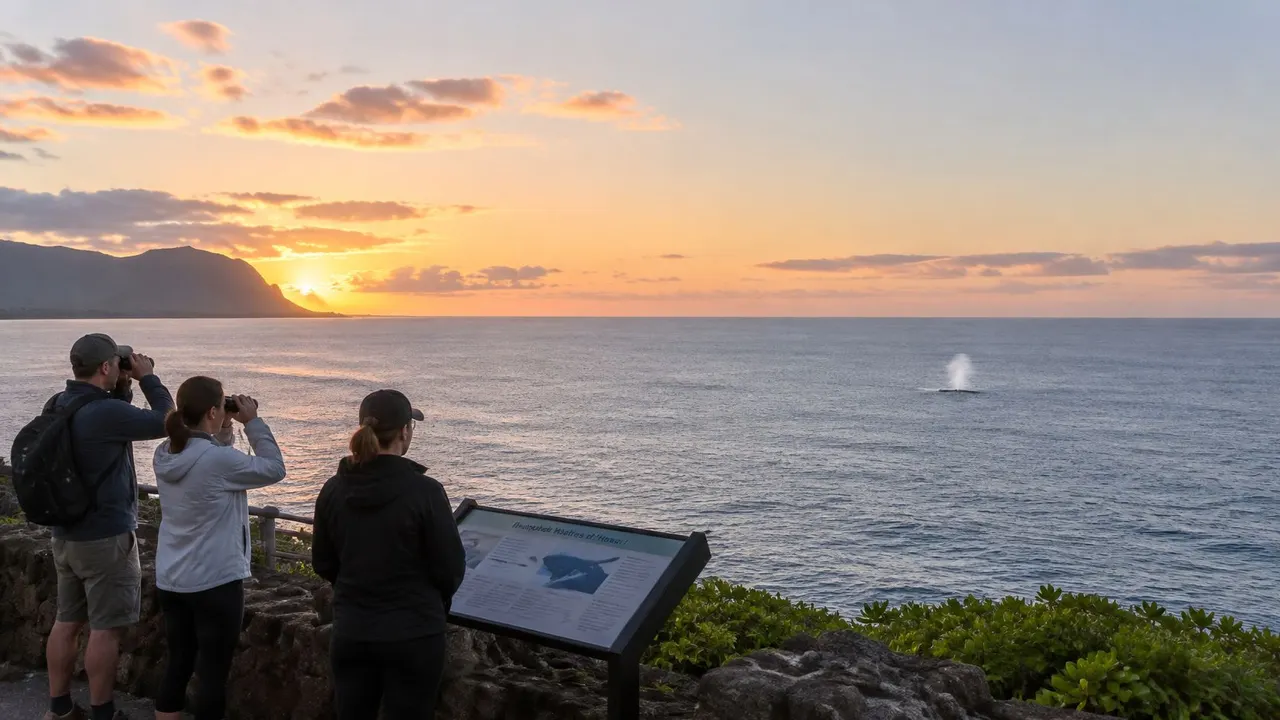
89% is the number that should set your morning plan. Across Oahu shore-count sites from 2007 through 2026, NOAA community-science counts summarized by Love Big Island found at least one whale on 89% of January and February count mornings during the first three 15-minute periods, from 8:00 to 9:15 a.m. By noon, at least one whale had been seen on 96% of those mornings. In late March the same windows fell to 77% by 9:15 a.m. and 88% by noon, which is what northbound migration looks like in the numbers.
What each window is worth
| Observation window | January-February | Late March | Planning note |
|---|---|---|---|
| First three scans, 8:00-9:15 a.m. | 89% | 77% | Best window for a morning trip |
| By noon | 96% | 88% | Still good if a morning trip is missed |
| Single 15-minute scan | About 70% of scans had a whale | Not reported | Short looks miss whales about 30% of the time |
The scan gap is the part often skipped. Oahu counters recorded no whale during roughly 30% of individual 15-minute scans in January and February, even though only about 4% of entire count mornings had no whale at all. A single glance can miss animals that a longer watch finds. Search time beats the calendar date once you are already inside the peak.
These counts come from shore, on standardized watches, including the sanctuary program's counts on the last Saturday of January, February, and March. They describe the season's pattern near Oahu. They are not a promise for one boat, one harbor, or one choppy hour. Visibility still depends on sea state, where the whales are traveling, and whether they are logging at the surface or staying down.
A full morning of looking beats a quick stop that ends after one scan.
Before you pay, ask the operator two things. How long does the boat search, not just how long is the ticket? And if the forecast looks poor, can the departure move to a calmer morning? A vessel that runs only a short loop, then heads in, gives you the weak end of these odds even in February.
What Humpbacks Do and What You Will See
Say it is a February morning out of Waikiki. The water is gray-blue and fairly flat. The first sign is not a full body. It is a thin spray a few hundred yards off, a blow that hangs for a second and drops. A minute later a fluke or a fin rises in the same patch, then the spot goes quiet. That sequence is a normal, successful sighting.
Spotting whales is like watching a shoreline from a moving car. You catch flashes first, and the fuller view comes only if you stay with that patch of water.
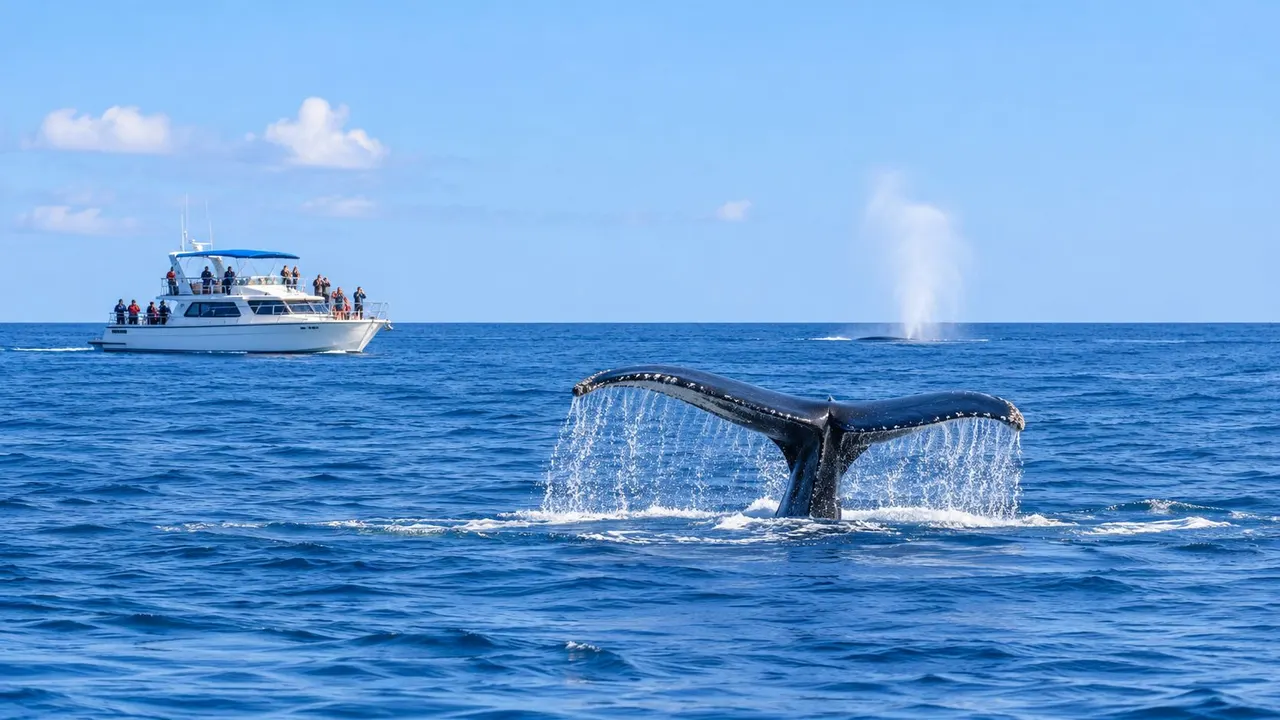
The Hawaii Division of State Parks whale-watching FAQ notes that whales may begin arriving in the main Hawaiian Islands as early as September and remain through May, with peak abundance generally from January through March. Oahu can produce frequent sightings, although its encounter rate is typically lower than Maui-area waters. January through March still gives the strongest chance of surface activity.
What shows up, in the order you usually see it
- Blows: A misty spout is the everyday signal, and it is often the only thing you see for several minutes.
- Tail and fin movements: A fluke on a dive, or a fin cutting the surface, tells you the animal is still in that spot.
- Pectoral-fin slaps: A long fin smacks the water. It is louder and easier to point out to kids than a distant blow.
- Breaches: A whale launches clear and crashes back. Treat this as a bonus, not the standard you paid for.
- Mother-and-calf pairs: Calves spend more time near the surface, so pairs are easier to spot, and they are the animals you watch from the farthest comfortable distance.
Between December and April, male humpback song becomes a dominant part of underwater sound in many Hawaiian waters. NOAA recorders use that song to track arrival, peak presence, and departure. You will not hear it from the deck unless the boat has a hydrophone, but it is why December already feels busier than November even before the visual counts peak.
Bring binoculars, sit where you can see past other passengers, and keep watching through the quiet spells. Note the direction the animals are traveling so you are looking ahead of the last blow, not behind it. A distant sighting on Oahu is a normal result, not a failed trip.
Distance Rules That Shape Every Sighting
The lawful viewing distance is at least 100 yards from a humpback whale. The Hawaii Division of Aquatic Resources marine-protected-species guidance covers this limit for boats, kayaks, swimmers, and drones. Aircraft must remain at least 1,000 feet away. The same 100-yard rule applies to anyone considering swimming with whales.
Humpbacks can surface without warning, and a whale that approaches a boat still needs room. For passengers, that may mean watching a blow or a breach from a distance. Binoculars help; pursuing an animal for a closer photo does not.
How a careful boat is run
- Transit at a safe speed and keep a lookout for whales.
- Slow down as you approach whales, and avoid sudden changes in speed or direction.
- If a whale comes within the required distance, stop and wait for it to move away. Do not maneuver for a better angle.
- If whales are in the vessel's path, avoid crossing in front of them or splitting a pair or group.
- Keep the encounter calm and brief, then give the whales room.
| Situation | What to do |
|---|---|
| Boat, kayak, swimmer, or drone near a humpback | Stay at least 100 yards away |
| Aircraft near a humpback | Stay at least 1,000 feet away |
| Vessel approaching whales | Slow down and avoid sudden changes in speed or direction |
| Whale comes close to a vessel | Stop and wait for it to move away |
| Whales in the vessel's path | Avoid crossing in front of them or splitting a group |
A captain who turns away from an approaching whale is protecting the animal and following the distance rule. A quiet, distant sighting is still a real encounter. Teach children to watch patiently rather than expect the boat to close the gap.
Where and When to Head Out on the Water
Humpbacks gather most often in water less than 600 feet deep around the main Hawaiian Islands, though sightings also occur in deeper water. The NOAA sanctuary boating page places the usual peak of abundance from January through March, within a broader season that generally runs November through May. Along Waikiki, Living Ocean Tours departs from Kewalo Basin Boat Harbor, near the beach.
A February sunrise versus a March midday
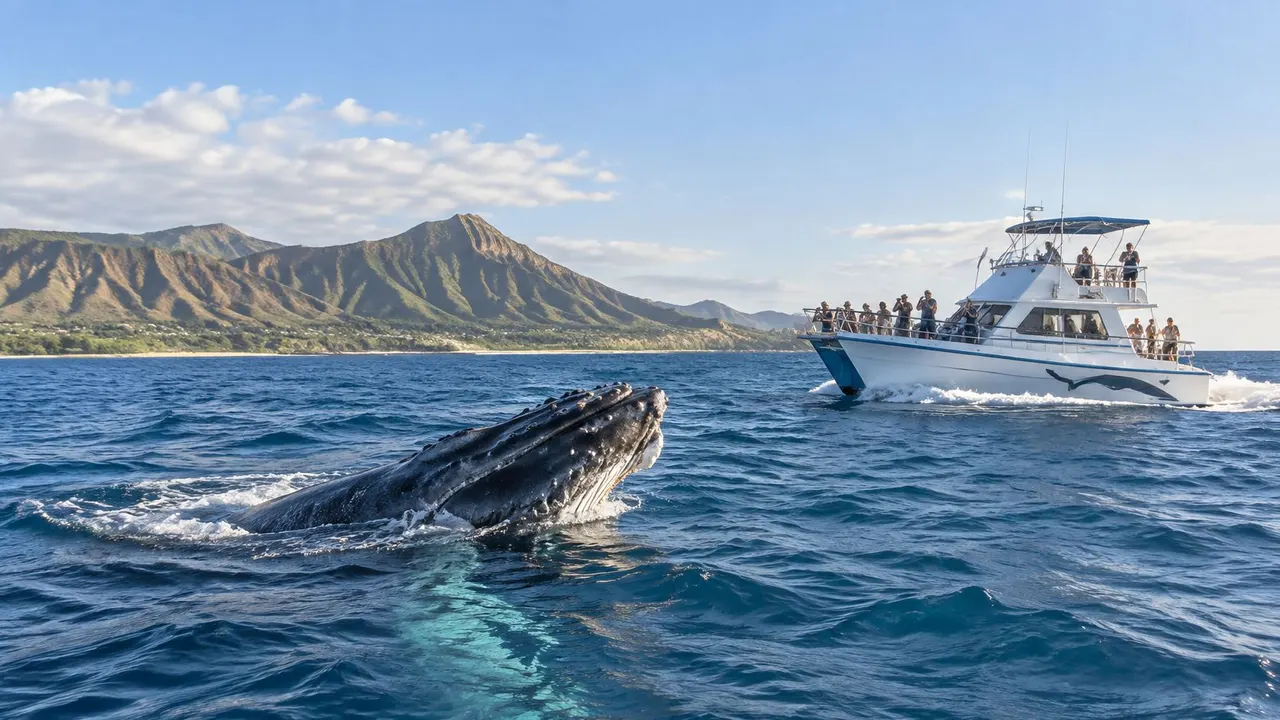
An 8 a.m. departure in February falls within the strongest January-February shore-count window. Morning light can make blows easier to spot against the sea, and conditions may be calmer before the trade winds build. A midday trip in March can still produce sightings, but whale numbers are generally thinning by then, and wind-driven chop can make surface activity harder to see. Sightings are never guaranteed; date, wind, and swell all affect the odds.
If you are considering the North Shore, check these Oahu North Shore whale-watching conditions before choosing a departure. Exposure, swell, and the length of the boat run affect how comfortable a trip may be.
The order I would plan in
- Start with a January or February date.
- Favor a morning departure.
- Check the ocean forecast and choose the calmest available day.
- Keep a late-March date as a backup if weather disrupts your first choice.
A Waikiki departure keeps the outing to one morning, which can suit families with young children or older travelers who prefer to avoid a longer transfer. Confirm the departure harbor when booking.
Choosing a Tour and Booking Your Whale Watch
I would book a Waikiki boat that already runs the south shore every day, rather than a one-off charter you cannot question about search time. Living Ocean Tours is the top rated & most reviewed snorkel company on Oahu, and the whale-watch trips leave Kewalo Basin Boat Harbor near Waikiki Beach. The Waikiki whale watch tour is the seasonal cruise for humpbacks wintering along that coastline. It runs from January 2 through March 31, lasts 1.5 hours, is for ages 3 and up, and costs $49 per person. We also keep an excellent safety record, which matters more than a promised close pass.
More on how we set expectations for a south-shore morning is in our Oahu whale watching guide.
Confirm these three things before you pay
- Ages: Our whale watch is ages 3 and up. If you are comparing another boat, get the minimum age in writing, especially with toddlers or grandparents who may not want a long exposure.
- Length for a mixed group: Ask how much of the ticket is actual searching versus transit. A short loop is a weak match for the scan gap.
- A poor forecast: Ask whether a morning can move, and what you are owed if the trip does not run. Do not assume a weather cancel is automatic.
Pack snacks, water, and a motion-sickness remedy you have used before, not a new one you try on the dock. Bring binoculars or a camera with real telephoto zoom if you own them. Polarized sunglasses help on glare. Leave the drone at the hotel. It is covered by the same approach ban as the boat.
Oahu Whale Watching Questions Answered
Can you see whales from shore?
Sometimes. Volunteer counters work from Oahu shore sites, so a patient person with binoculars at a high lookout can catch a blow. A boat still does the useful job, because it reaches the water the whales are traveling and lets you stay with one animal's direction instead of hoping it crosses your view.
What if the tour sees no whales?
Sightings are never guaranteed, in peak months or out of them. Ask how long the boat keeps searching, and what the operator does if the trip is canceled or comes back without a sighting. A honest answer about search time is worth more than a slogan about guarantees.
Is a November or May trip worth it?
Yes, as a backup, when those are the dates you already hold. The season's edges still produce occasional animals, including later mother-and-calf sightings as the migration turns over. If you can choose, the middle of the season is the reliable plan, and November or May should stay a bonus.
How do Oahu whales compare with Maui?
Oahu's encounter rate is typically lower than Maui-area waters, so expect a longer look and count a distant blow as a good result. Our whale watching on Oahu notes are the place to set that expectation before you promise kids a breach. Maui can feel busier. Oahu wins on convenience when you are already staying in Waikiki and you want one calm morning, not an interisland day.
Living Ocean Tours runs seasonal humpback whale watching from Kewalo Basin along the Waikiki coastline, with the same daily harbor routine we use for the rest of our Oahu trips. If you want a January or February morning built around legal viewing, real search time, and a crew that will not chase a closer photo, start with the whale watch and pick the calmest day in your window. Visit Living Ocean Tours to see dates and plan the outing with us.


