
Whale Watching Oahu North Shore: Best Months and Spots
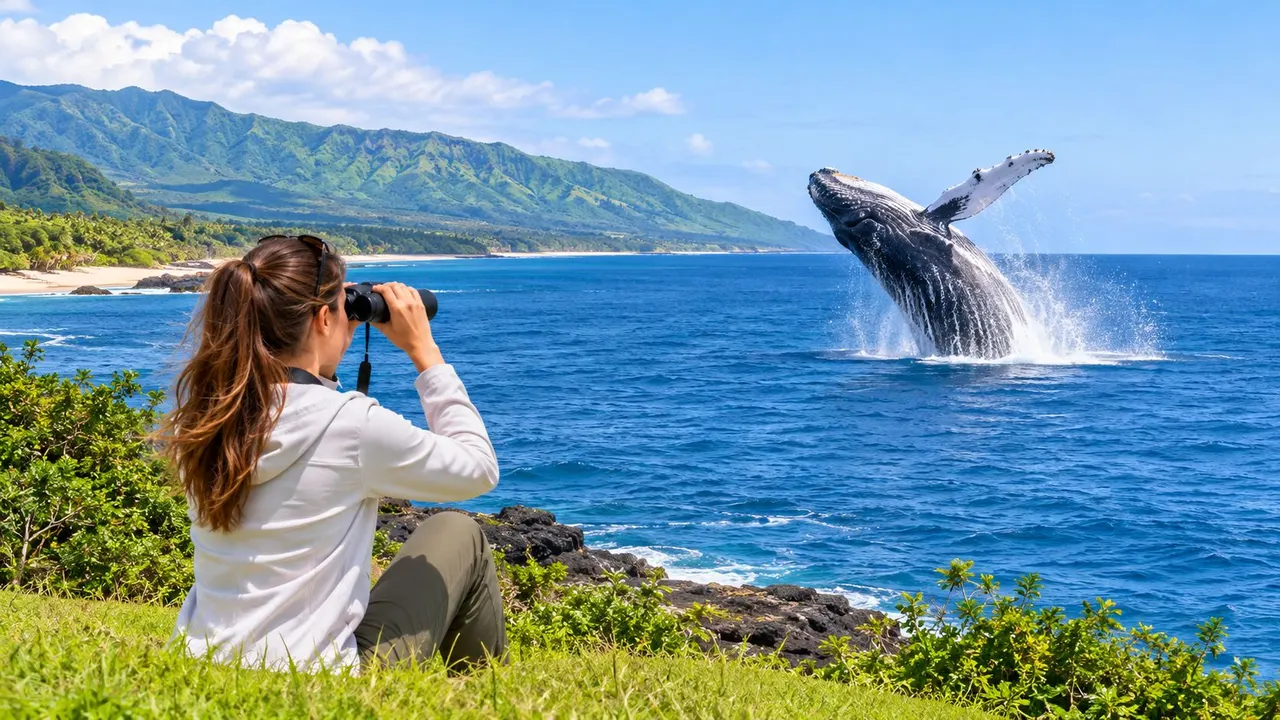
January through March is the peak window for humpback whales off Oahu, within the broader November through May season. You're likely staring at a North Shore map from a Waikiki hotel, wondering if the drive is worth it, if your kids will see anything, and whether a boat gets you closer. That's the right question to ask before you book anything.
Whale watching Oahu North Shore rewards patience more than drama. On a calm morning you might spot a white blow on the horizon, a dark back rolling over, then a fluke lifting before a dive. On a windy day with heavy surf and glare, whales can be there and still be hard for anyone to pick out. Neither outcome means you chose wrong.
The honest starting point is simple. Shore watching can be excellent and free. A guided boat adds trained eyes, explanation, and seats. It doesn't add a guarantee, and it doesn't legally add closeness. Once you understand that trade off, choosing months, spots, and plans gets much easier.
Best Months to See Humpbacks Off the North Shore
January through March is when you should plan a first trip if your dates are flexible. The season in Hawaiʻi generally runs from November through May, and NOAA's recreation guidance for the Hawaiian Islands Humpback Whale National Marine Sanctuary identifies January through March as the usual peak in humpback abundance, with smaller numbers possible outside the main season.
These whales return to Hawaiian waters to breed, give birth, and nurse calves in relatively warm, shallow water. They don't feed much here. They're using Hawaii as a nursery and breeding area, which is why you see surface behavior like breaches, tail slaps, and mother and calf pairs traveling slowly near shore.
Peak months raise your odds. They don't promise a sighting on a particular Tuesday. Sea state, wind, and where animals happen to be traveling that morning still decide what you can identify, especially from land.
Humpback Whale Presence and Odds by Month
| Month | Whale presence | What to expect |
|---|---|---|
| November | Season opens, whales arriving | Growing numbers, early-season chances |
| December | Numbers rising steadily | Good odds, building toward peak |
| January | Peak period | Strongest odds, best window for a first trip |
| February | Peak period | Strongest odds, mother and calf activity common |
| March | Peak period , still strong | Strong odds through the month |
| April | Late season, tapering | Lower odds, sightings still possible |
| May | Final weeks | Fewest whales, treat as a bonus rather than the plan |
Use the table as a booking filter, not a promise. December can be productive, and April can still produce a memorable blow or breach, but you're working with fewer animals in those shoulder weeks.
If you're also considering a Honolulu departure, our Waikiki Whale Watching Cruise views humpback whales that winter in the Hawaiian Islands along the Waikiki coastline, which suits visitors who don't want to spend the day driving.
Practical rule: Build your plan around mid-January to early March when you can, and keep one flexible day so rough water or glare doesn't end your only chance.
Where to Watch From Shore and How the Sea Affects It
Two North Shore names come up for a reason. Shark's Cove and Turtle Bay are established whale count locations, and Shark's Cove reportedly records the highest average count among monitored Oahu sites. Both give you elevation and a wide horizon, which matters more than being right at the water's edge.
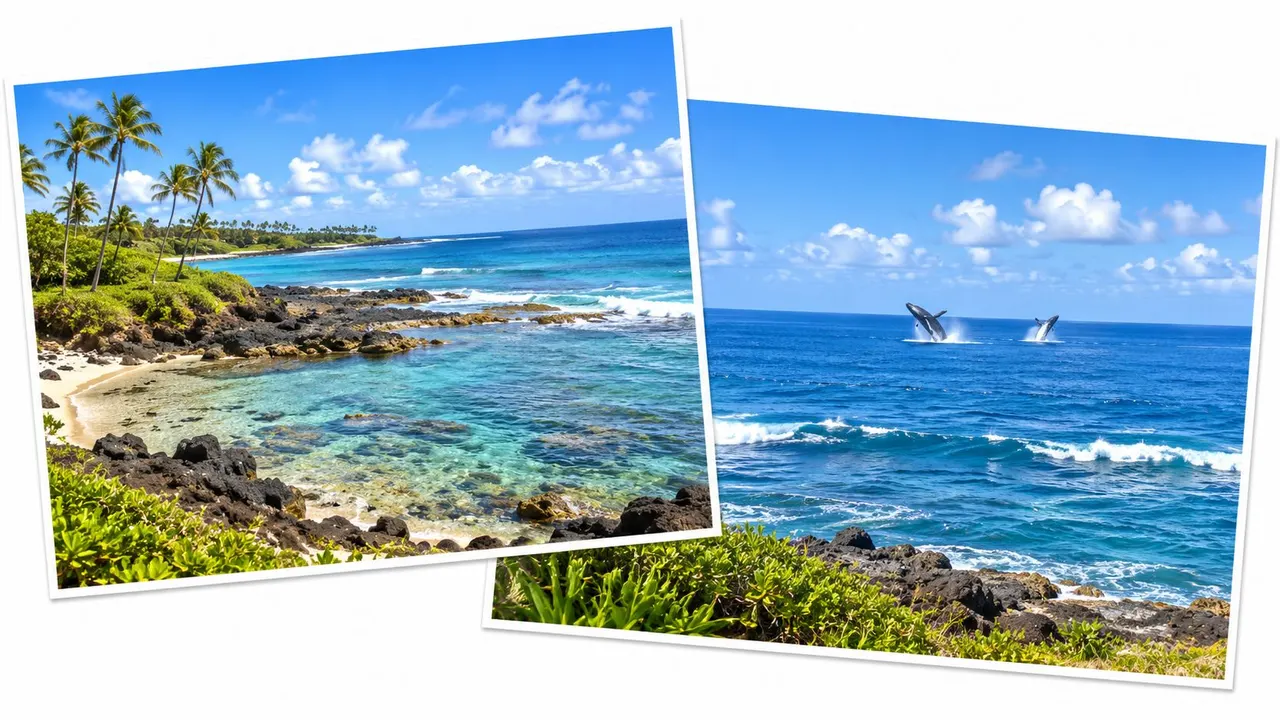
Shore watching isn't a lesser option. On the final 2024 coordinated whale-count day, Big Island Now's report on the Pacific Whale Foundation and sanctuary counts recorded 282 humpback-whale sightings from Oʻahu shore locations.
Why Calm Water Changes Everything
You're mostly looking for brief signs. A blow looks like a small white puff that appears and vanishes. A back looks like a dark, smooth rise. A fluke lifting straight up usually means a deeper dive.
Calm water makes those signs easy to separate from whitecaps. Winter surf, wind chop, and bright glare do the opposite. A whale can surface in front of you and you'd only catch foam and sparkle, which is frustrating for kids and older travelers who need a clear, repeated cue.
A Simple Shore Routine
- Check surf and wind first: Pick the calmest morning in your window, because visibility matters more than arriving on a specific date.
- Arrive early: Low glare helps you see blows against the water.
- Scan slowly from high ground: Move your eyes in sections along the horizon instead of staring at one spot.
- Use binoculars and note times: Repeating blows in one area help you predict the next surfacing.
- Stay well back from rocks and surf: Firm, dry footing keeps your attention on scanning, not on your balance.
If you want more context before you drive, our overview of whale watching on Oahu helps you compare shore spots with departures closer to Waikiki.
A good shore session doesn't need a breach beside the rocks. Several clear blows, a dorsal back, or a fluke seen through binoculars is a successful morning.
Getting There, Safety and Accessibility
Leave Waikiki earlier than feels necessary. Allow more than an hour each way to Shark's Cove or Turtle Bay, and longer on weekends. Roadside parking fills quickly, and rushing to find a space often leads families onto uneven shoulders or closer to the surf than they intended.
Pick Your Spot Before You Leave the Hotel
Check the distance from the parking area and the path surface. A paved, level route makes a real difference for strollers, wheelchairs, walkers, and grandparents who need frequent rests. Grass or packed sand set back from the edge is usually a better viewing base than wet lava rock, even if the rock looks closer to the water.
Winter swells can sweep across rocks without much warning. Don't turn your back on the ocean, don't climb down for a photo, and avoid the water's edge at high tide. Keep children within arm's reach when you're near any drop or slippery surface, and assign one adult to watch the kids while another adult scans with binoculars.
Bring water, sun protection, and snacks even for a short stop. North Shore wind can feel cool while the sun is still strong, and hungry kids lose patience for horizon scanning quickly.
For a Boat Departure Instead
For a boat trip, check in at Kewalo Basin Boat Harbor and tell us about mobility needs before boarding, not at the dock when everyone's lined up. Ask about seasickness options and cancellation rules if the sea state is rough. Conditions that are fine for an experienced boater may not suit a toddler or an older parent.
Also ask whether drones or paddleboards are allowed near your viewing area. Rules for whales apply beyond tour boats, and it's easier to leave gear in the car than to discover a restriction on the beach.
Confirm access details with the operator or land manager before you go. Surf, parking, and path conditions change with the season and the day.
Shore Versus Boat and Choosing for Your Group
Choose shore watching for a free, self-paced morning, and choose a guided boat for interpretation, a steadier seated view, and a set outing. That's the verdict. Everything below helps you apply it to your group.
Many first timers get confused here because both options can show you the same whale. The difference isn't which one guarantees action. It's who does the spotting, how comfortable you are while you wait, and how much control you have over the schedule.
Shore Watching Versus a Guided Boat Trip
| Factor | Shore watching | Guided boat trip |
|---|---|---|
| Cost | Free beach access | Paid tour |
| Distance to whales | Distant blows and backs, shaped by sea state | Must still keep 100 yards away |
| Interpretation | Self-guided with binoculars | Guide shares local marine knowledge throughout |
| Comfort | Uneven footing, possible glare | Seated platform, motion shaped by sea state |
| Flexibility | Stop and start any time | Fixed departure time |
| Best for | Budget travelers, photographers, flexible schedules | Families with young children, first-timers, limited mobility |
Shore watching asks you to be the spotter and interpreter. You'll decide if that white puff was a blow or spray, and you'll explain it to your kids in the moment. Some families love that puzzle. Others find that a child loses interest before the second surfacing.
A boat changes the work, not the legal distance. Crew scan in different directions, call out a blow before most guests see it, and explain what a fluke dive or a calf riding near its mother means. Our guides share knowledge about the local marine ecosystem throughout the tour, which turns a distant shape into a story kids can follow.
That guidance is also why our pages on whale watching in Waikiki focus on comfort and interpretation for short Honolulu based outings rather than promising close approaches.
Match the Option to Your Travelers
- Families with young children: Pick a boat when you want help spotting, a clear start and finish, and adults who can point and explain. Bring child sized binoculars anyway, because holding them gives kids a job.
- Travelers with limited mobility: Pick a shore spot only after you've confirmed level access and nearby parking. A boat in calm seas can also work well if boarding is manageable and everyone can stay seated during maneuvers.
- Photographers: Use shore time for good light and a long lens. Chasing closeness wastes the morning and breaks the rules. A clean blow against dark water often reads better than a rushed, blurry breach.
- Budget travelers: Shore watching is your strongest option. Go early, stay patient, and spend your money on binoculars you'll reuse all week.
- First timers: Count a distant blow as a real sighting. Expect an encounter, not a show, and you'll enjoy either platform more.
We are Living Ocean Tours, Oahu's top rated and most reviewed snorkel company, and our tours depart daily from Kewalo Basin Boat Harbor near Waikiki Beach. If a guided trip fits your group, you can review our Waikiki whale watch tour before choosing dates.
Choose based on attention spans, mobility, and how much structure your day needs. Don't choose based on which option sounds more dramatic in an advertisement.
Responsible Viewing Rules and Safe Distances
Start with the one rule that overrides every photo plan. Federal regulations summarized by the Hawaiian Islands Humpback Whale National Marine Sanctuary prohibit approaching a humpback whale within 100 yards, or 300 feet, by any means in Hawaiian waters, and the rule applies to boats, kayaks, paddleboards, swimmers, drones, and other objects.
That means you don't swim out toward a whale, paddle toward it, fly a drone over it, or steer a boat into its path. Distance isn't a suggestion for better manners. It's the legal boundary that protects mothers, calves, and resting adults.
Distances, Speeds and Responses for Whale Encounters
| Situation | Required response | Source |
|---|---|---|
| Any humpback within 100 yards (300 feet) | Prohibited to approach by any means | Federal regulation |
| Vessel within 400 yards of a whale | Maximum speed of 6 knots | NOAA boating guidance |
| Whale surfaces within 100 yards | Stop, shift to neutral, wait for it to move | NOAA boating guidance |
| Leaving a whale's area | Go around from behind, stay more than 100 yards away | NOAA boating guidance |
| Time spent observing from one vessel | 30 minutes or less | Hawaii state guidance |
The speed limit matters because a slow vessel gives everyone more reaction time. It reduces collision risk and wake, and it keeps the boat from suddenly appearing in front of a traveling animal.
When a Whale Surfaces Too Close
Visitors often imagine the captain should quickly back away. Don't chase the whale, turn toward it, or accelerate away abruptly.
Stop, shift the engine to neutral, and wait for the whale to move away.
Staying still is clearer and safer than guessing where the whale will surface next. Passengers should remain seated and supervised during any maneuver, with children kept away from rails while the vessel changes speed or direction.
Leapfrogging and Why It Is Not Clever Spotting
Leapfrogging means repeatedly repositioning ahead of a traveling whale to force another encounter. The whale has to keep meeting the boat instead of choosing its own path. Responsible operators pass behind the animal, keep the required distance, and accept when the viewing window ends.
The same thinking applies on shore. Launching a paddleboard or drone from the beach to close the gap doesn't make you a better observer. Our explanation of why you cannot swim with whales in Hawaii covers the in-water boundary in plain language for families who hear mixed advice.
Teach kids this standard before you arrive. A distant blow, breach, or tail slap counts as success. You're watching protected wildlife behave on its own schedule, not collecting proximity.
Itinerary and Packing List for a Whale Day
A half day works best for most families. You get enough scanning time without asking young children or grandparents to stay focused through heat, wind, and a long drive home.
Shore Plan
- Check the surf forecast the evening before: Swap days if heavy surf will hide blows behind white water.
- Leave Waikiki early: Calmer water and lower glare make the first scan more productive.
- Spend about two hours at Shark's Cove or Turtle Bay: Rotate who uses the binoculars so nobody's arms tire out.
- Break for lunch in the shade: Rest your eyes. Constant scanning through glare causes headaches faster than people expect.
- Return for a late afternoon watch: Softer light can make blows easier to see once glare drops.
Boat Plan
- Arrive at Kewalo Basin Boat Harbor near Waikiki Beach for check-in: We serve the Oahu area and depart from this harbor, so plan parking and walking time.
- Listen to the crew briefing: You'll hear where to sit, how distances work, and how the crew will call out sightings.
- Scan during transit: Don't wait for a designated whale spot. Blows often appear while the boat is traveling within speed limits.
- Watch for the allowed observation time: Use repeated surfacings to help kids track one animal instead of searching everywhere at once.
- Log sightings after you return: Note blows, backs, flukes, and any calf. Kids remember more when they record it.
For clothing details by wind and spray, our guide to what to wear whale watching is worth checking the night before.
Packing Checklist
- Binoculars: One pair per two people works, one per person is better.
- Reef-safe sunscreen and a hat: Apply before you start scanning.
- Water and snacks: Bring more than you think a short outing needs.
- Layered clothes for wind: Add a light rain jacket on unsettled days.
- Camera with zoom: Set it before a whale surfaces, not during a breach.
- Motion-sickness remedy: Take it early if boat motion is a known issue.
- Printed backup plan: Keep lunch, beach, or museum options ready if sea state ruins visibility.
Book a Guided Whale Watch or Plan Your Shore Day
Choose shore viewing for a free, flexible morning, and book a guided trip when families, first-timers, or travelers with limited mobility want interpretation and comfort. If your group likes solving the spotting puzzle and can wait on uneven ground, shore is enough. If your group needs someone to find the blow, explain it fast, and keep the outing to a clear schedule, book the boat.
Living Ocean Tours is the top rated & most reviewed snorkel company on Oahu, and recent guest reviews are a useful way to judge whether our pace and crew style suit your family.
Our Waikiki Whale Watching Cruise runs from January 2 through March 31, lasts 1.5 hours, welcomes ages 3 and up, and costs $49 per person. That short format suits children, grandparents, and anyone who wants a guided attempt during peak season without giving up a full vacation day to driving and waiting.
You're paying for scanning help, local interpretation, a seated platform, and a crew that follows distance rules while you watch. You're not paying for a guaranteed breach, and any operator who implies otherwise is selling certainty wildlife can't provide. A calm trip with repeated blows and a calf beside its mother can be the highlight of a trip even without a jump.
You can visit us at 1125 Ala Moana Blvd Slip B-01, Honolulu, HI 96814, email info@livingoceantours.com, or call +1 (808) 436-3483 with questions about ages, mobility, or sea conditions. Ask those questions before you pay, especially if someone in your group gets seasick or needs a steadier boarding plan.
Before you lock in either plan, confirm the current season dates and look at the sea forecast for your chosen morning. For shore watching, move the outing to your calmer backup day if surf and glare will hide everything. For a boat, check in early, bring layers, and tell children in advance that a blow spotted together is the win.
That expectation protects the day. You won't spend it chasing a closer view, arguing about whether a distant fluke counted, or blaming the North Shore for behaving like wild ocean. You'll spend it watching carefully, which is exactly how humpbacks are found.
Ready to trade horizon guessing for a guided scan with crew who can spot, explain, and keep the proper distance? Living Ocean Tours offers seasonal whale watching from Kewalo Basin Boat Harbor near Waikiki, alongside snorkeling and sunset options for the rest of your Oahu week. Visit Living Ocean Tours to choose a peak season date and plan your day on the water.


