
Whale Watching Oahu: How Scientists Estimate Populations
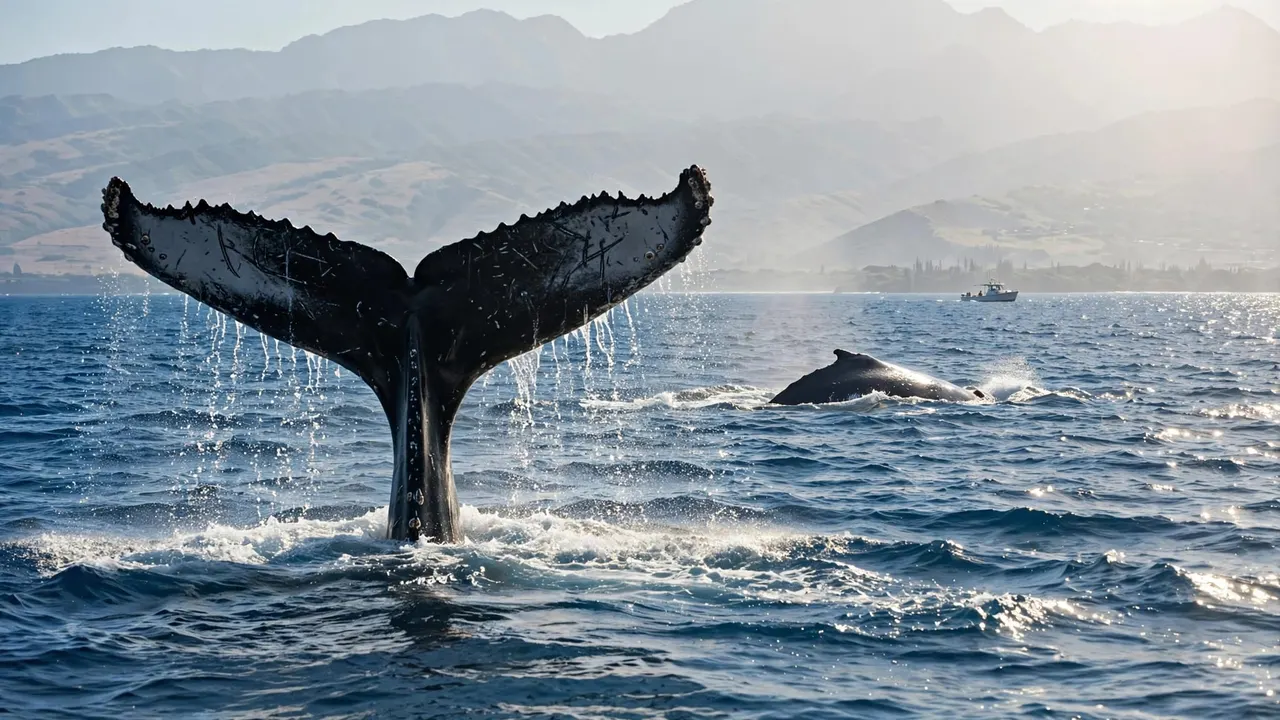
Scientists estimate humpback populations by combining sightings, photographs, and statistical models. The whales you spot on a whale watching Oahu trip are part of that larger picture, but a single outing can’t tell you how many live in Hawaii’s waters.
At Living Ocean Tours, our seasonal whale watching tour gives you a chance to see these winter visitors off Waikiki. Understanding the science can make each blow or tail fluke even more interesting.
Why humpbacks gather around Hawaii
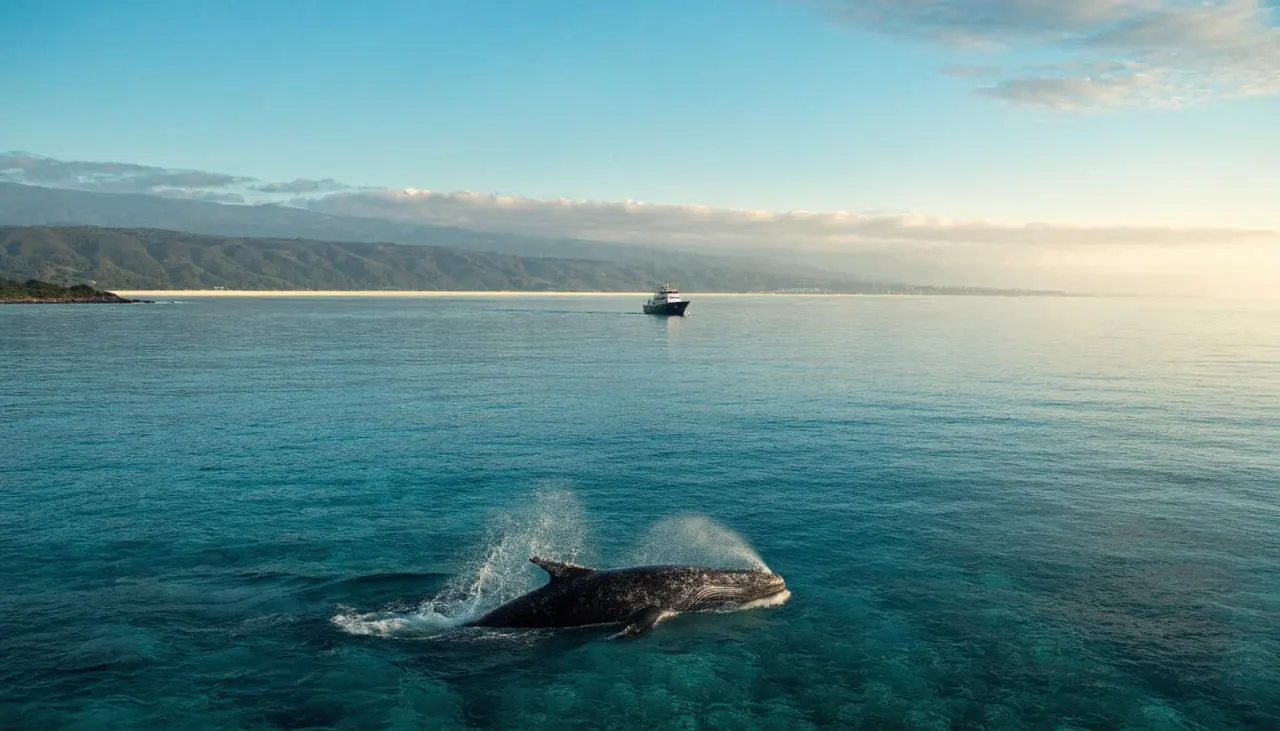
A winter breeding and nursery habitat
Many North Pacific humpbacks spend their feeding season in colder northern waters. During winter, they travel to Hawaii to mate, give birth, and care for their calves.
You might see a mother and calf traveling together, several adults moving in a group, or a single whale surfacing between dives. A group can include whales competing for access to a mate, but splashing alone doesn’t reveal each animal’s role.
A seasonal window for visitors
Whales can appear around Hawaii over a broad winter season. January through March is a strong window for planning an Oahu whale watch, and those are the months when we schedule our seasonal trips.
A season describes when whales are present across the islands. It doesn’t mean the same animals remain off Waikiki every day. Individual whales move between areas, and weather and visibility affect what you can see.
What whale watching Oahu sightings can reveal
A blow on the horizon is a real observation. Turning that observation into a population estimate takes more work because whales spend much of their time underwater and can travel substantial distances.
A sighting is not always a new whale
On your whale watching Oahu outing, you might see a whale surface, disappear, and return several minutes later. Without a way to recognize it, a second sighting could be the same animal or a different one.
Researchers face the same challenge. Counting every blow as a separate whale would risk counting individuals more than once. On the other hand, whales that stay submerged while observers pass may never enter the count.
Search effort changes the picture
A boat that spends more time looking has more chances to find whales. Sea conditions matter, too: glare, wind, and rough water can hide a distant blow.
Researchers record where and when they look so they can account for these differences. A quiet day on the water can tell you about that trip, but it doesn’t establish that Hawaii’s humpback population has declined.
How scientists estimate the Hawaii humpback population
NOAA’s Hawaii humpback stock assessment identifies 11,278 whales as its best abundance estimate for the Hawaii stock as a whole. The estimate describes abundance in 2020, rather than a count of whales visible off Oahu on a particular day.
A model fills gaps between sightings
Researchers used ship-survey observations collected between 2002 and 2020 alongside environmental information to model whale density across the Hawaiian Islands Exclusive Economic Zone. They then used the model to estimate abundance across that larger area.
That figure isn’t a tally of 11,278 individually photographed whales. It is a statistical estimate that accounts for what the surveys observed and the waters they couldn’t examine continuously.
The range matters as much as the number
The estimate has a 95% confidence interval of 4,049 to 31,412 whales. That wide range communicates substantial uncertainty around the central estimate; it doesn’t mean researchers counted the population at either endpoint.
You’ll find stock assessments among NOAA’s Pacific marine mammal reports. Their estimates help managers understand populations over large areas, while keeping the limitations of each method in view.
An estimate for Hawaii’s humpback stock is not a count of the whales near Oahu on the day you sail.
How scientists identify individual whales
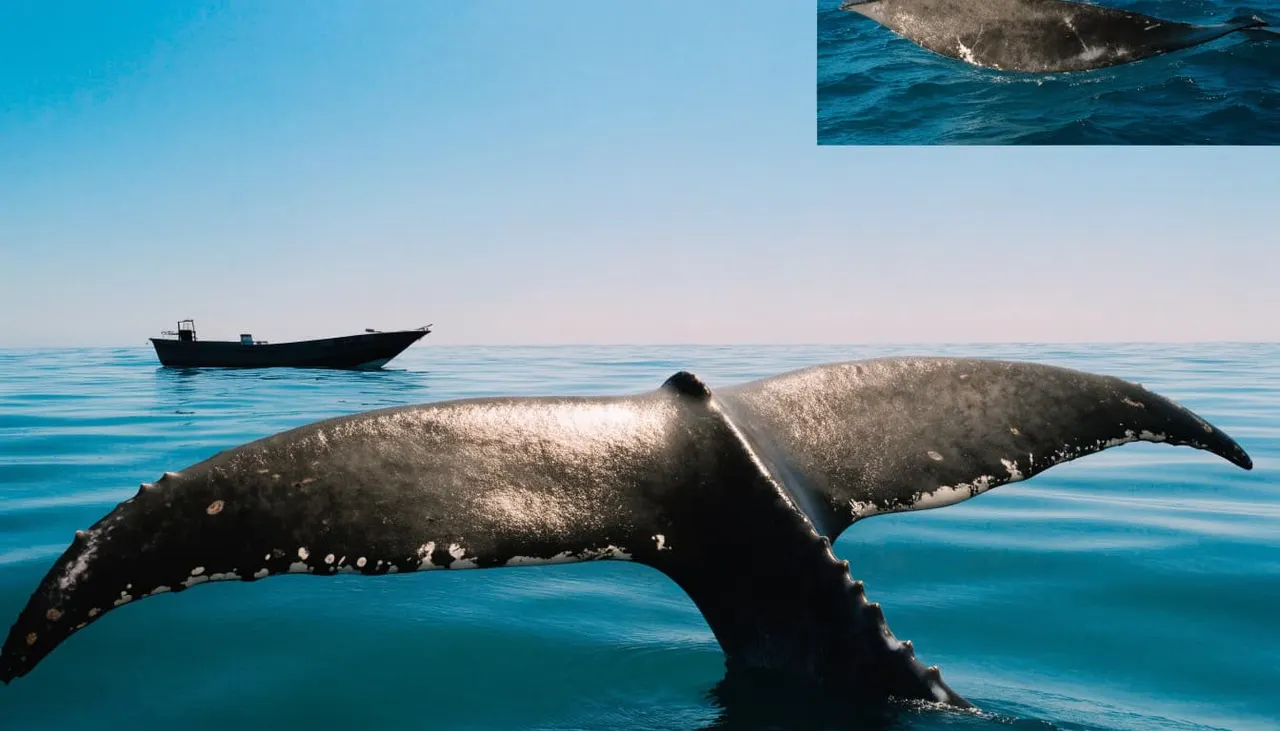
Illustration of a tail fluke and a comparison image.
Tail flukes make useful photographs
When a humpback raises its tail before a dive, you may see the underside of its flukes. Patterns of light and dark, along with marks and the shape of the trailing edge, can help researchers distinguish one whale from another.
Scientists compare photographs with catalogs to find matches. A match can connect sightings across seasons or places, giving researchers information about movements as well as abundance. Not every whale raises its tail in a position that produces a usable photograph, though.
Repeat sightings support population estimates
In a method called mark-recapture, a whale’s recognizable photograph acts as its mark. Researchers compare identified animals across samples and examine how often they encounter the same individuals again.
If relatively few photographed whales appear again, that can suggest a larger population than a sample with many repeat matches. The calculation also depends on assumptions about sampling and the chance of identifying each animal. NOAA describes the use of photo catalogs and mark-recapture in its marine mammal research.
The North Pacific SPLASH study used photo identification in Hawaii’s wintering areas during 2004 through 2006. A later analysis estimated 11,540 whales for Hawaii for that period. It is a separate estimate from the 2020 model-based figure.
How ship surveys measure whales across an area
A researcher can’t watch every part of the ocean at once. Instead, survey teams use planned routes to collect observations across a defined study area.
Watching along survey lines
In a line-transect survey, observers search from a vessel traveling along established track lines. They record sightings and their distance from the route. Statistical methods then account for the fact that animals farther away are generally harder to detect.
Whales underwater can also be missed, so researchers must consider what the survey could and couldn’t see. The resulting estimate applies to the area and period covered by the survey, rather than automatically describing every whale in the Pacific.
Why study boundaries matter
An analysis of the 2020 Hawaiian Islands Cetacean and Ecosystem Assessment Survey estimated 2,975 humpbacks in its main Hawaiian Islands study area. That survey-area estimate is narrower than the Hawaii-wide modeled estimate of 11,278.
You shouldn’t treat the two figures as competing counts of the same stretch of ocean. They use different geographic boundaries and methods, which changes what each number can tell you.
How listening adds to whale research
A whale can be hard to see even when it is present. Underwater sound gives scientists another way to study activity beneath the surface.
Hydrophones record a winter soundscape
Humpbacks produce patterned songs and other sounds that researchers can record with underwater microphones called hydrophones. In Hawaiian breeding waters, song can help researchers study when and where singing activity occurs.
Sound travels through water beyond the range of a person’s view from a boat. As a result, acoustic monitoring can add information during periods when a whale doesn’t surface within sight.
Songs aren’t a complete head count
A recording of singing doesn’t reveal every whale in the area. Singing activity is associated with males, and a whale that isn’t calling won’t appear in the recording.
Researchers therefore interpret acoustic findings alongside visual observations and other evidence. If you hear about an active soundscape, enjoy what it reveals about humpback behavior without treating the number of songs as a population total.
Why whale watching Oahu counts change
During one trip, you may see several blows. On another, you may search the horizon for a single glimpse. Both experiences can happen within a healthy seasonal viewing window.
Local movement affects what you see
A whale watching Oahu cruise covers only a small portion of Hawaiian waters for a limited time. Whales may be elsewhere, underwater, or difficult to spot in the prevailing conditions.
Mothers nursing calves, traveling adults, and resting whales may spend their time differently. A group near the boat one day doesn’t guarantee a similar encounter on the next departure.
Comparing years requires consistent methods
To assess a population trend, scientists need estimates that account for differences in survey coverage, detection, and uncertainty. Two headline numbers aren’t enough if they describe different areas or were calculated in different ways.
For example, the older SPLASH estimate and the 2020 model-based estimate use different methods and survey periods. Their similar central figures alone don’t establish that the population stayed unchanged between those dates.
Give whales room while you watch
Hawaii’s waters are important habitat for breeding whales and young calves. Keeping your distance lets you observe their natural behavior while giving them space to travel and surface.
Follow the 100-yard rule
In Hawaiian waters, you must not approach a humpback whale within 100 yards by boat, while swimming, or by other means. If a whale approaches unexpectedly, avoid intercepting or pursuing it and give it room to move away.
Our crew keeps respectful viewing at the center of the trip. Your role is to watch rather than touch or try to enter the water near a whale.
Look for small signs
A distant misty blow may be your first clue. Scan the surrounding water for a dark back, a raised fluke, or another breath. Binoculars can help, but keep some time for watching the wider horizon with your own eyes.
A breach is exciting, yet a quiet sighting is worth your attention, too. You may be watching an animal rest or a calf stay close to its mother.
Plan your whale watching Oahu trip
Our seasonal Waikiki whale watch departs from Kewalo Basin Boat Harbor, near Waikiki. You can join us from January through March for a chance to look for humpbacks along the coast.
The cruise is $49 and lasts approximately 1.5 hours. Bring sun protection and a light layer for the breeze, then settle in and let the whales decide what you’ll see.
You can CHECK AVAILABILITY for your whale watch or browse our departures below.
You can also see what guests have shared about their time with us.
Key takeaways for your whale watch
A Hawaii-wide population estimate gives you context for the migration, but it can’t predict what you’ll see on one Oahu departure. Scientists use surveys and individual identification to account for whales they might miss or encounter more than once.
January through March gives you a strong seasonal window. Once you’re on the water, patient observation and respectful distance make room for a natural encounter.
Frequently asked questions
How many humpback whales are in Hawaii?
NOAA’s best estimate for the Hawaii stock is 11,278 whales for 2020, with a wide confidence interval. It describes a larger population and geographic area than the whales visible near Oahu on any single day.
Can you tell individual humpbacks apart?
Researchers can often identify individuals using photographs of tail-fluke patterns and markings. From a moving boat, however, you may not get a clear enough view to recognize a whale confidently.
Does a slow whale watch mean the population is declining?
No. Local whale movement, viewing conditions, and the time spent searching all affect sightings. Scientists need comparable research over time to assess a population trend.
See the bigger picture offshore
Every humpback you spot is part of a population scientists study across a vast stretch of ocean. Their estimates carry uncertainty, but they help turn scattered sightings into a clearer picture of Hawaii’s winter visitors.
When you head out with us, bring that perspective along. Give each whale space, watch patiently, and enjoy the view it chooses to share.


