
Whale Watching in Oahu Hawaii: Season, Spots and Tours
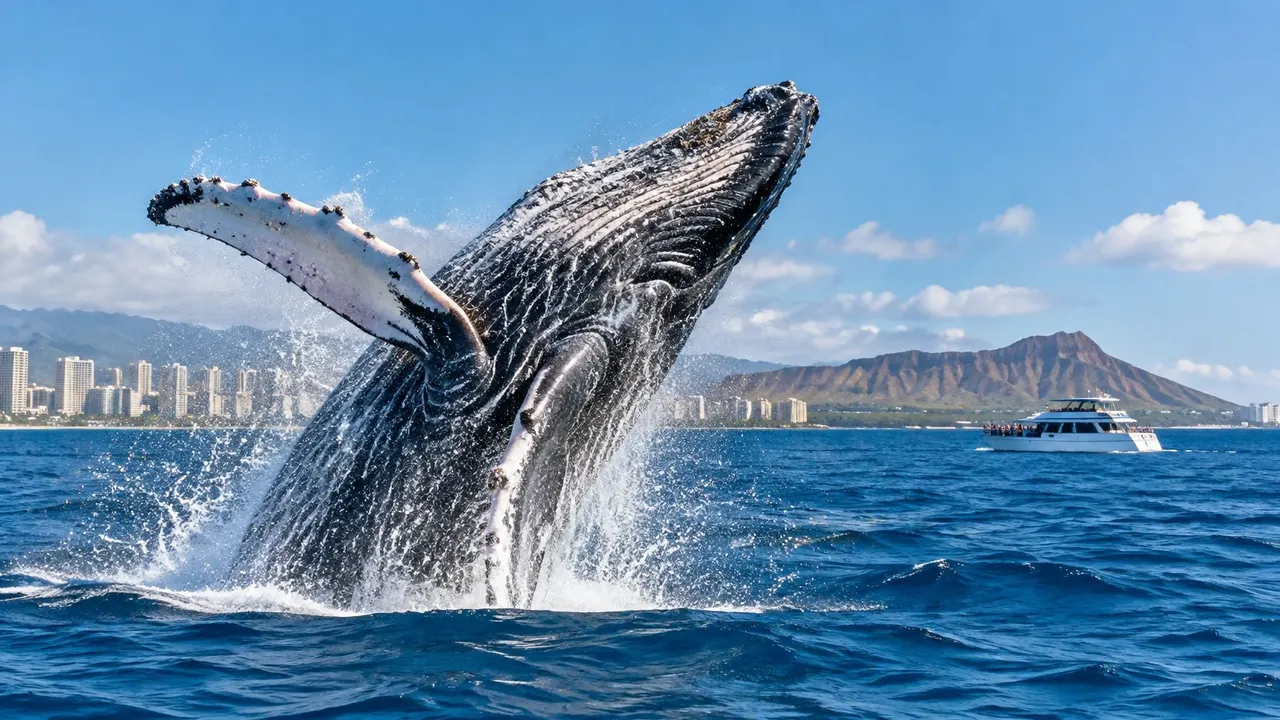
Table of Contents
- Humpback whale activity in Oahu waters by month
- Choose the date before the boat
- Shore and boat viewing spots on Oahu
- How to search without missing the obvious
- Match the trip to the least comfortable passenger
- A practical booking checklist
- Searching and settling into a sighting
- Minimum viewing distance from humpback whales
- What guests should do while watching
- Photograph the encounter you have
- Set up a comfortable departure
- Can I see whales from shore?
- Are sightings guaranteed?
- Can young children come?
- Do I need binoculars?
- Can I fly a drone for a better shot?
- Is a helicopter tour the same as a whale watch?
- What's the best month for a family trip?
- Should we watch from land before booking?
- Make the morning easy
- Contact and departure planning
Oahu volunteers recorded 399 whale sightings on January 25, 2025, according to the Sanctuary Ocean Count results. That's a useful reminder that you don't have to head far offshore to watch humpbacks. For families planning whale watching in Oahu, Hawaii, the bigger decisions are when to visit, whether to watch from land or a boat, and what counts as a rewarding encounter when the animals don't put on a show.
A distant blow, a curved back, or a calf traveling beside its mother can be the highlight. Choose the right season and viewing format, then let the whales decide how much you see.
When Humpback Whales Visit Oahu Each Month
November through May is the main viewing season, with January through March the peak window, according to the Hawaiian Islands Humpback Whale National Marine Sanctuary. NOAA estimates that as many as 12,000 humpbacks, more than half the North Pacific population, may return to Hawaiian waters in a season; a NOAA-supported demographic study found 99.97% of recorded sightings occurred between November and May.
These whales migrate from feeding grounds near Alaska and the Bering Sea to mate, give birth, and nurse calves in warm Hawaiian waters. They aren't coming to perform for boats, and their presence doesn't mean every outing produces breaches.
Humpback whale activity in Oahu waters by month
Use this as a relative planning guide, not a forecast for a particular departure. Surface behavior remains unpredictable even during the busiest part of the season.
The distinction between whale presence and visible activity matters. A whale can be nearby without breaching, slapping its tail, or staying at the surface long enough for an easy photograph.
December is a reasonable choice if that's when your family is traveling. Don't cancel a suitable winter outing because it falls outside the peak, but don't treat an early-season booking as equivalent to the busiest winter months either.
Choose the date before the boat
If whales are the reason for your trip, prioritize the peak window over a particular vessel or departure time. If your vacation dates are fixed in the shoulder season, allow room for a lookout visit as well as a cruise rather than expecting a single outing to deliver everything.
Planning rule: Book for the season, not for a promised breach.
Off-season encounters are possible, but they shouldn't anchor a family itinerary. Keep summer ocean plans focused on activities that don't require migrating humpbacks to appear, and regard any whale sighting as an unexpected bonus.
Where to Spot Whales from Shore and Boat
Start from land if you want a flexible outing with no boat booking. You can leave when children lose interest, avoid motion sickness, and practice spotting blows before committing to a cruise.
Shore watching is a genuine option, not merely a substitute for a boat. During the 2024 season's final count, 282 whales were recorded from Oahu shorelines, as reported by the Hawaiian Islands Humpback Whale National Marine Sanctuary through its Ocean Count program in Big Island Now's coverage.
Shore and boat viewing spots on Oahu
Makapuu suits families who want a broad ocean view and a deliberate whale-watching stop. The coastal perspective around Koko Head also helps you follow movement across the water rather than searching through beach-level distractions.
Kaena Point is a better fit when a remote coastal outing is part of the appeal. Plan for the access route, exposure, and your group's walking ability instead of treating it as a quick roadside stop. For grandparents, small children, or anyone with limited time, Waikiki's shoreline is the easiest place to fit a scan into an ordinary beach day.
How to search without missing the obvious
Look for a brief pale plume against the darker ocean, then keep watching that patch of water. A blow is usually a more useful search cue than waiting for an entire whale to jump.
Humpbacks commonly concentrate in water shallower than 600 feet, although sightings also occur deeper, according to the Hawaii Division of State Parks whale-watching guidance. That makes nearshore observation worthwhile, but it doesn't mean every stretch of beach offers the same view.
Bring compact binoculars and start with your unaided eyes. Once you locate a blow or dark back, lift the binoculars without looking away from that position.
I'd try a morning lookout visit, when conditions can be easier for scanning, but check the actual wind and glare rather than assuming mornings are always calm. Pair that visit with a boat trip if your family wants guided interpretation and a different viewing angle, not permission to crowd the animals.
Choosing the Right Whale Watch Tour
A dedicated whale watch makes sense when your family wants the captain's attention focused on finding and observing humpbacks. The practical advantage is the purpose of the outing: swimming stops or sunset timing aren't competing with the wildlife search.
A snorkel-focused trip suits a different priority. Choose it because your group wants reef time, not because you expect a whale watch and a swimming excursion to be interchangeable. For a sunset outing, the coastline and evening atmosphere should be enough to make the booking worthwhile without wildlife.
Match the trip to the least comfortable passenger
Ask what everyone needs to enjoy being aboard. A keen photographer might happily scan open water, while a young child needs shade, snacks, and a clear explanation of why there may be stretches with nothing visible.
Non-swimmers don't need to choose a swimming trip to enjoy the ocean. Likewise, a family eager to get in the water may find a dedicated wildlife search less satisfying than an activity built around snorkeling.
Our Oahu whale-watching planning guide provides more context for comparing an ocean outing with your vacation plans. Living Ocean Tours serves Oahu from Kewalo Basin Boat Harbor near Waikiki Beach, with daily departures across our tour offerings.
Living Ocean Tours is the top rated & most reviewed snorkel company on Oahu. Reviews are useful for assessing crew communication and guest comfort, but they can't predict what wild whales will do on your departure.
A practical booking checklist
- Choose the main activity. Pick a dedicated wildlife cruise when whales matter most, or a swimming outing when time in the water is the priority.
- Check passenger suitability. Read the age requirements and consider whether everyone can manage boarding and a moving deck.
- Ask about sighting procedures. A useful answer explains observation, positioning, and what happens when whales move away.
- Read the cancellation terms. Distinguish a weather cancellation from a departure that operates but doesn't encounter whales.
- Reserve your preferred departure. During peak travel periods, booking ahead gives you more control over the day's schedule.
Avoid choosing solely from photographs of spectacular breaches. Those images show what's possible, not what every passenger receives.
What Happens on the Water and the Distance Rules
At Kewalo Basin Boat Harbor, the outing begins with check-in and the crew's boarding directions. Keep children beside an adult, leave your camera packed while stepping aboard, and listen before choosing where to sit.
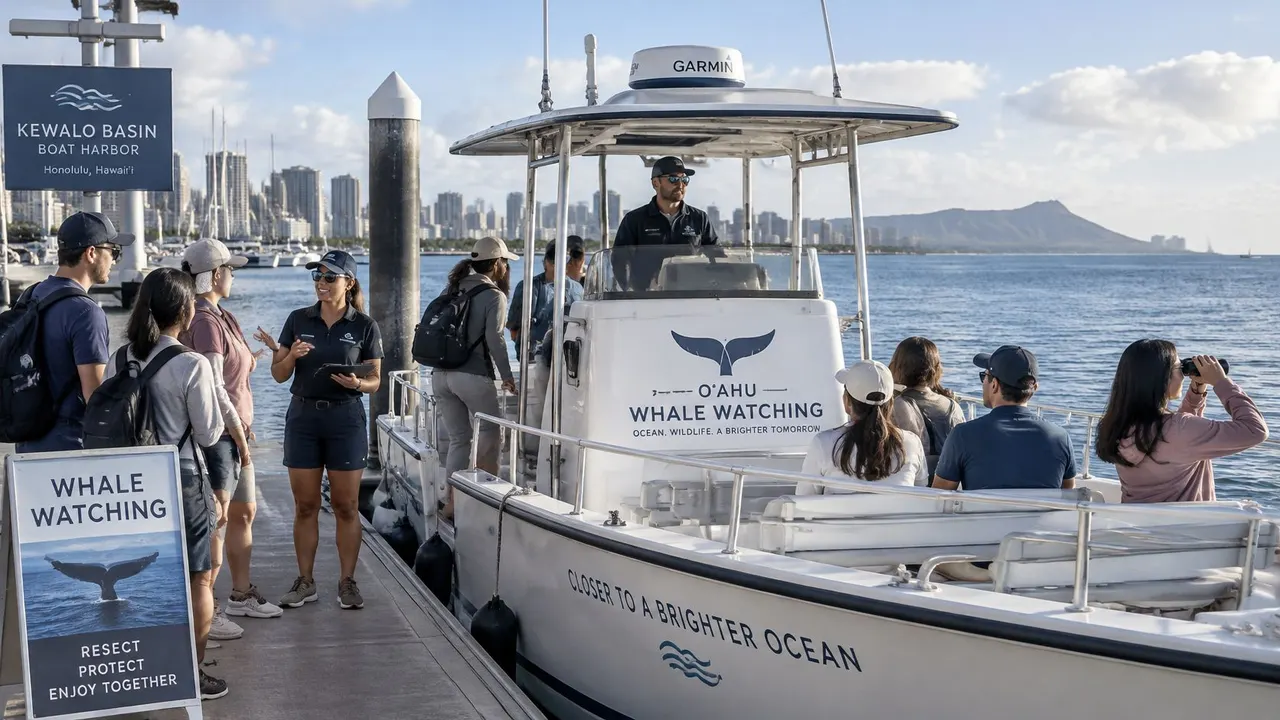
The safety briefing should establish where you can move, when to stay seated, and how to alert the guide to a sighting. It's easier to absorb those directions at the dock than while everyone is looking toward a sudden splash.
Searching and settling into a sighting
Once underway, scan a broad area rather than staring at the boat's bow. Tell the guide where you saw activity using a clear direction, then let the crew assess it instead of encouraging everyone to rush to the same rail.
A typical encounter may begin with a blow, followed by a back rolling through the surface. The whale might dive before you raise your camera. Keep watching without assuming the next surfacing will be in precisely the same place.
The captain should slow early and establish room to observe without following every movement. The Hawaii Department of Land and Natural Resources wildlife guidance requires at least 100 yards, or 91 meters, from humpbacks and warns against disrupting their behavior or putting a vessel in their path.
Minimum viewing distance from humpback whales
The sanctuary's federal regulations prohibit approaching within 100 yards, approximately 300 feet, by vessel, swimmer, kayak, paddleboard, drone, or other means throughout Hawaiian waters, including waters extending 200 nautical miles offshore. Aircraft have a separate 1,000-foot, about 333-yard, viewing restriction under NOAA Fisheries humpback-whale guidance.
These are minimum limits, not targets a captain needs to reach. A drone also raises aircraft-rule considerations, so don't treat the sea-level approach limit as permission to fly over a whale.
A captain can't cut across a whale's route or position the boat so it must surface inside the protected space. This is why the vessel may stop well back, change position, or leave an encounter that looks photographically promising.
A captain who stays back isn't withholding the experience. The distance is part of responsible whale watching.
What guests should do while watching
Give mothers and calves a broad, unobstructed viewing angle rather than expecting repeated repositioning. Nursing and resting animals need space, and a calf's presence isn't a reason to move closer.
- Stay seated when directed. A sudden shift toward one rail makes the crew's job harder.
- Keep everyone aboard. Never enter the water to approach whales.
- Leave drones packed. An overhead shot isn't worth disturbing an animal or breaching restrictions.
- Report sightings calmly. Give the guide a direction instead of shouting or pointing without context.
- Accept an early departure. Traffic, visibility, or whale movement may make leaving the responsible choice.
Vessel strikes are a real concern in coastal waters, and NOAA's Hawaii marine-wildlife viewing guidance emphasizes cautious, non-disruptive observation. Slowing down protects animals and gives operators more time to respond.
On the return, follow the same movement directions even if the main viewing period appears finished. For additional preparation, our Oahu whale-watching overview helps put the outing in context. If the captain declines to pursue a whale, that's responsible operation, not a missed opportunity.
What to Pack and How Families Can Prepare
Pack for wind, glare, and distant subjects rather than a beach swim. Keep essentials together so you're not opening several bags while the boat is moving.
- Sun protection. Bring reef-safe sunscreen, a secure hat, and sunglasses that cut glare.
- A light layer. A windbreaker is useful when spray or moving air makes the deck feel cooler.
- Drinking water. Carry a reusable bottle that closes securely.
- Motion-sickness preparation. Choose a suitable remedy before departure and follow the label; ask a pharmacist about options for children.
- Compact binoculars. Pick a pair you can hold steadily without leaning over a rail.
- A camera with telephoto zoom. Reach matters more than a close-range lens for distant wildlife.
- A dry bag. Protect phones, wallets, and spare clothing from spray.
- Children's snacks. Bring manageable food if the operator permits it, avoiding loose packaging.
Photograph the encounter you have
Use burst mode for surfacings and leave enough room in the frame to accommodate movement. A tightly zoomed image is easy to lose when the boat rocks or the whale changes direction.
Crop afterward rather than asking the captain to close the gap. Take a few photographs, then lower the camera so you don't spend the whole encounter trying to relocate the subject through a screen.
Family comfort: A child who knows that a blow or a tail counts as a sighting is less likely to spend the trip waiting only for a breach.
Set up a comfortable departure
I'd favor a morning departure for a family's energy level and the possibility of gentler conditions, not because whales follow a morning performance schedule. Ask the crew about an appropriate seat near the middle of the boat if someone is sensitive to motion.
Follow crew directions on life jackets and moving around the deck. Our guide to what to wear for whale watching in Hawaii can help you finish packing without bringing unnecessary gear.
Frequently Asked Questions About Whale Watching in Oahu
Can I see whales from shore?
Yes. Makapuu Point, the Koko Head area, Kaena Point, and Waikiki's shoreline offer different levels of access and visibility. Choose a safe, established viewing area and stay back from exposed edges while using binoculars.
Are sightings guaranteed?
No. Whales are wild animals, and a departure can operate without producing a sighting. Choose a trip whose ocean setting and interpretation you'll still appreciate, and read any sighting-related terms before paying.
Can young children come?
Our Waikiki whale watch is for ages 3 and up. Consider your child's tolerance for wind, waiting, and boat motion as well as the minimum age; our guide to whale watching with kids can help with that decision.
Do I need binoculars?
They're helpful rather than essential. Find the animal with your eyes first, then use binoculars to inspect details; trying to search the whole ocean through a narrow magnified view can be frustrating.
Can I fly a drone for a better shot?
Don't plan to launch a drone during a whale encounter. Wildlife approach restrictions still apply, and an aerial camera isn't a workaround for the space the captain maintains.
Is a helicopter tour the same as a whale watch?
No. A helicopter provides an aerial coastal perspective, while a dedicated boat outing focuses on observation from the water. Aircraft viewing restrictions also mean you shouldn't expect close overhead whale photography.
What's the best month for a family trip?
Choose the peak winter window if humpbacks are the deciding factor. If your dates fall near the opening or end of the season, keep the rest of the day worthwhile without relying on a whale encounter.
Should we watch from land before booking?
That's a useful option for a family unsure about boat travel. A lookout visit lets children practice scanning and helps adults judge whether guided time on the water is something the whole group will enjoy.
Book Your Whale Watch and Plan Your Morning
Choose a dedicated winter outing if observing humpbacks is your priority. Our Waikiki Whale Watching Cruise runs January 2 through March 31, lasts 1.5 hours, welcomes guests ages 3 and up, and costs $49 per person.
The cruise watches humpbacks that winter along the Waikiki coastline. Review the Waikiki whale-watch tour page and the available departure calendar before arranging the rest of your day.
Make the morning easy
- Choose a winter date. Leave some flexibility in your vacation schedule rather than placing the outing immediately before an airport transfer.
- Select a morning departure. Choose an available time that works with breakfast, transportation, and your children's routine.
- Plan your arrival at Kewalo Basin Boat Harbor. Allow time to locate the correct slip and complete check-in without rushing.
- Prepare everyone for responsible viewing. Explain that the captain controls the boat's position and that passengers won't enter the water with whales.
- Pack a small, organized bag. Keep sun protection, water, motion-sickness supplies, and camera equipment accessible.
Don't build an inflexible chain of reservations immediately after the cruise. A relaxed return gives your family time to collect belongings and disembark without turning a wildlife outing into a race.
Contact and departure planning
Our location is 1125 Ala Moana Blvd, Slip B-01, Honolulu, HI 96814. The office is open seven days a week to help with trip planning and operations.
Email info@livingoceantours.com or call +1 (808) 436-3483 for help coordinating your visit. Use your booking confirmation for departure-specific instructions, and make sure everyone in your group knows the meeting location rather than navigating only to the general harbor area.
If the seasonal dates don't fit, consider a sunset or snorkel outing for its own appeal rather than expecting an off-season whale watch. The right choice is the activity your group will enjoy even when no whale appears.
Living Ocean Tours offers seasonal whale watching along the Waikiki coastline, with departures from Kewalo Basin Boat Harbor near Waikiki Beach. Visit Living Ocean Tours to choose your winter outing and plan a morning built around patient, responsible humpback viewing.


