
Waikiki Snorkeling Tours Guide for Families and Beginners
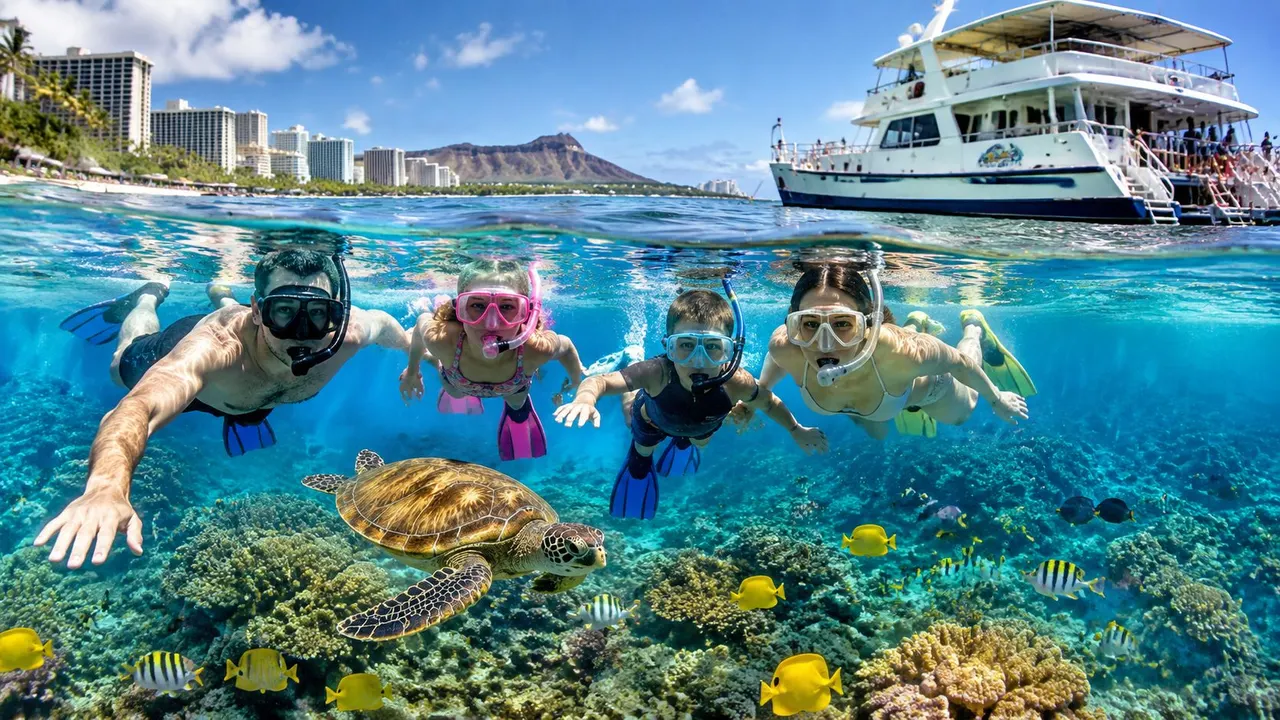
Your family's on the Waikiki trip planner, the kids are excited about seeing turtles, and you're staring at a dozen tour pages that all sound the same. That's where many visitors get stuck, because the key question isn't “Can we snorkel?” It's which Waikiki snorkeling tour fits our group, our comfort level, and our schedule.
If you've never snorkeled before, don't overcomplicate it. Waikiki's boat-based tours are built around short rides, shallow reef viewing, and guided wildlife encounters, with Turtle Canyon doing most of the heavy lifting for the experience. The trick is matching the boat, the pace, and the expectations to your crew, especially if you're traveling with kids, weak swimmers, or first-timers.
For a quick local overview of the area's beach-and-offshore reef setup, start with this Waikiki snorkeling guide.
Introduction
A lot of families land in Waikiki with the same plan. They want one ocean day that feels easy, safe, and memorable, but they don't want to waste money on a tour that's too long, too rough, or too advanced for the kids. That's why waikiki snorkeling tours work so well when they're chosen with care.
The good operators keep it simple. Most boat-based trips depart from Kewalo Basin Harbor, head to Turtle Canyon, and build the outing around a short transit, a guided snorkel window, and a relaxed cruise back along the coast, as described in this Waikiki offshore reef guide. That format matters because it lowers the friction for beginners and keeps the day from turning into a stamina test.
Practical rule: if a tour page can't clearly tell you where it launches, how long you're in the water, and whether non-swimmers can realistically join, skip it.
This guide focuses on the essential information people need before booking. You'll get a clear understanding of the tour flow, the difference between family trips and premium outings, the gear that's worth packing, the wildlife timing that matters, and the booking windows that keep you from getting shut out.
What to Expect on a Waikiki Snorkeling Tour
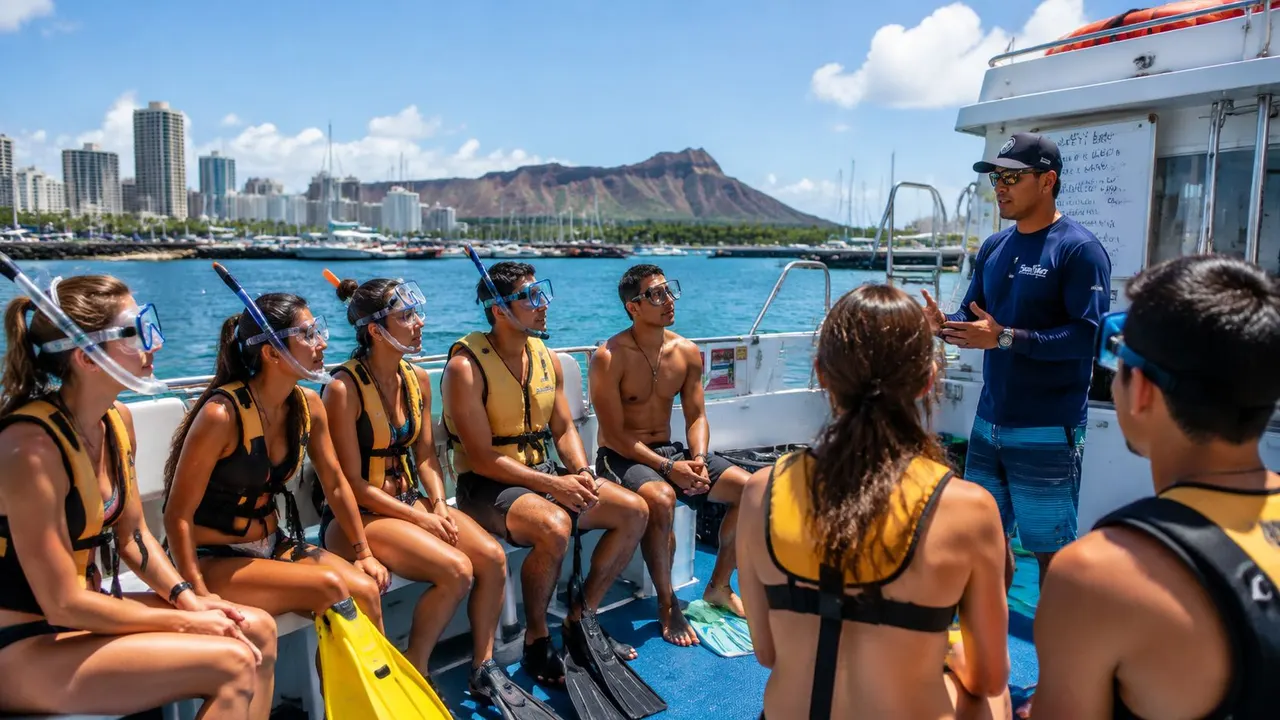
Most Waikiki snorkeling tours follow a pretty tight rhythm. You check in, get a safety briefing, collect gear, and then head out for a short boat ride from Kewalo Basin Harbor toward the reef, with most boat-based trips running 2 to 2.5 hours total and spending about 1 to 1.5 hours snorkeling at Turtle Canyon cleaning-station reefs, according to The Hawaii Vacation Guide's Turtle Canyon overview. That structure is deliberate, because beginners usually do better when the transition from dock to reef is fast and the in-water window is focused.
The flow of the day
First comes the briefing. Good crews explain how to clear a mask, how to use flotation support, and where to stay once you're in the water. If the tour is run well, nobody feels rushed, and the crew keeps the instructions practical instead of theatrical.
Then comes the boat ride. One operator describes the trip to Turtle Canyon as 10 to 15 minutes, which is exactly what you want for a snorkeling outing, because short transit keeps energy up and preserves the best viewing conditions before anyone gets tired, as noted in Living Ocean Tours' boat ride details.
After that, you're in the water at a shallow reef where turtles are the main draw. The return ride usually includes coastal sightseeing, which is a nice bonus for people who don't want the whole day to feel like a workout. Refreshments are commonly part of the package, and the best tours also include snorkel gear, life vests, and guides who stay close enough to help without crowding the group.
The smartest move is to treat the whole outing as a compact wildlife cruise with a snorkel segment, not a beach hangout. That mindset helps families pack better, pace the kids better, and choose a tour that feels fun instead of exhausting.
Choosing the Best Tour for Your Needs
The biggest mistake travelers make is assuming every snorkeling boat is basically the same. It isn't. Some tours are built for calm family outings, some are better for cautious beginners, some are more about sunset cruising, and some lean into seasonal wildlife viewing.
| Tour Options Comparison | Best For | Duration | Age Requirement | Price Range |
|---|---|---|---|---|
| Family-Friendly Snorkeling | Families with kids, beginners, mixed comfort levels | Short, usually around 2 to 2.5 hours | Some operators market ages 3+ or 4+ | Entry-level shared tours to premium outings |
| Beginner Intro Tours | First-time snorkelers who want close guidance | Typically short and structured | Often open to non-experts with flotation support | Varies by operator |
| Sunset Cruises | Couples, groups, travelers who want a calmer evening on the water | Evening departure, duration varies | Usually flexible for adults and families | Varies by boat and inclusions |
| Winter Whale-Watching Trips | Seasonal travelers who want a broader marine-wildlife experience | Seasonal cruise length varies | Family-friendly on most boats | Varies by operator |
For a practical comparison point, a Waikiki tour listing from Living Ocean Tours' Honolulu snorkel company page fits the same general market that many families are looking at, short offshore time, wildlife focus, and an easy departure point near Waikiki.
My recommendation
Choose the simplest tour that still matches your comfort level. If you've got kids or weak swimmers, pick a trip that emphasizes flotation, guide attention, and minimal boat time. If you're mainly after a relaxed evening, a sunset cruise makes more sense than forcing snorkeling into the day just because you're in Hawaii.
If your group is made up of confident swimmers who want the classic turtle experience, stick with Turtle Canyon. That's where Waikiki's snorkeling market is clearest, and it's where the format makes sense for most travelers.
Essential Safety Gear and Packing List
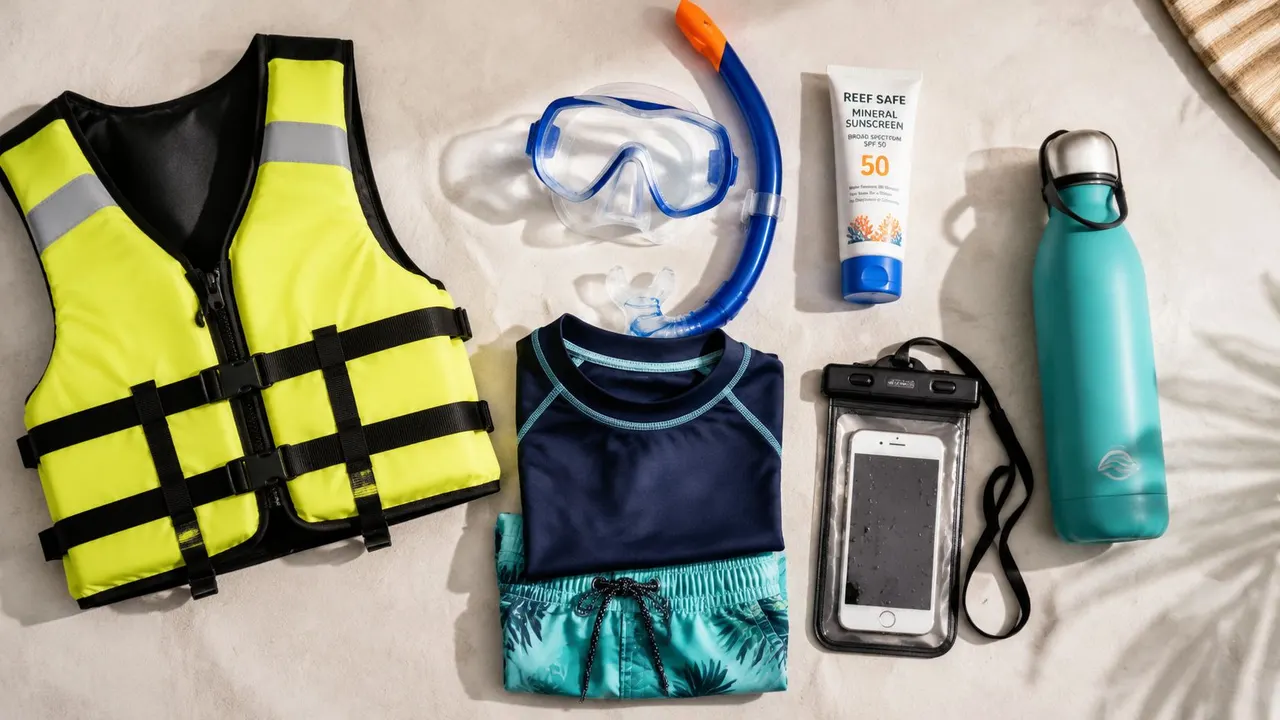
Pack for comfort first, then for convenience. The ocean doesn't care if you forgot your sunglasses or brought the wrong shirt, and families feel the difference fast when they're half-dressed for a boat day.
Start with the basics. A well-fitting mask, snorkel gear, a life vest, and reef-safe sunscreen belong on every packing list, along with quick-dry swimwear and a rash guard if you burn easily. A reusable water bottle is smart because boat days are easier when nobody's stuck waiting for drinks.
What actually helps
- Rash guards and swim shirts: Good for sun protection and for kids who hate reapplying sunscreen.
- Waterproof phone case: Worth it if you want photos without babying your phone every minute.
- Reusable water bottle: Simple, but it keeps everyone more comfortable after time in the sun.
- Floatation extras for kids: A float or noodle can help nervous children feel stable, but only if the crew allows it.
- Your own mask, if you have one: Fit matters more than brand. A mask that leaks ruins the whole outing.
If you're debating whether to bring gear or rent it, bring your own mask if it fits well, and let the operator handle the rest. Living Ocean Tours' gear guide is a useful benchmark for what a solid checklist looks like before boarding.
Don't overload the boat with gear you won't use. One good mask, proper sun protection, and a dry bag beat a pile of extras every time.
Best Times for Wildlife Viewing and Responsible Practices
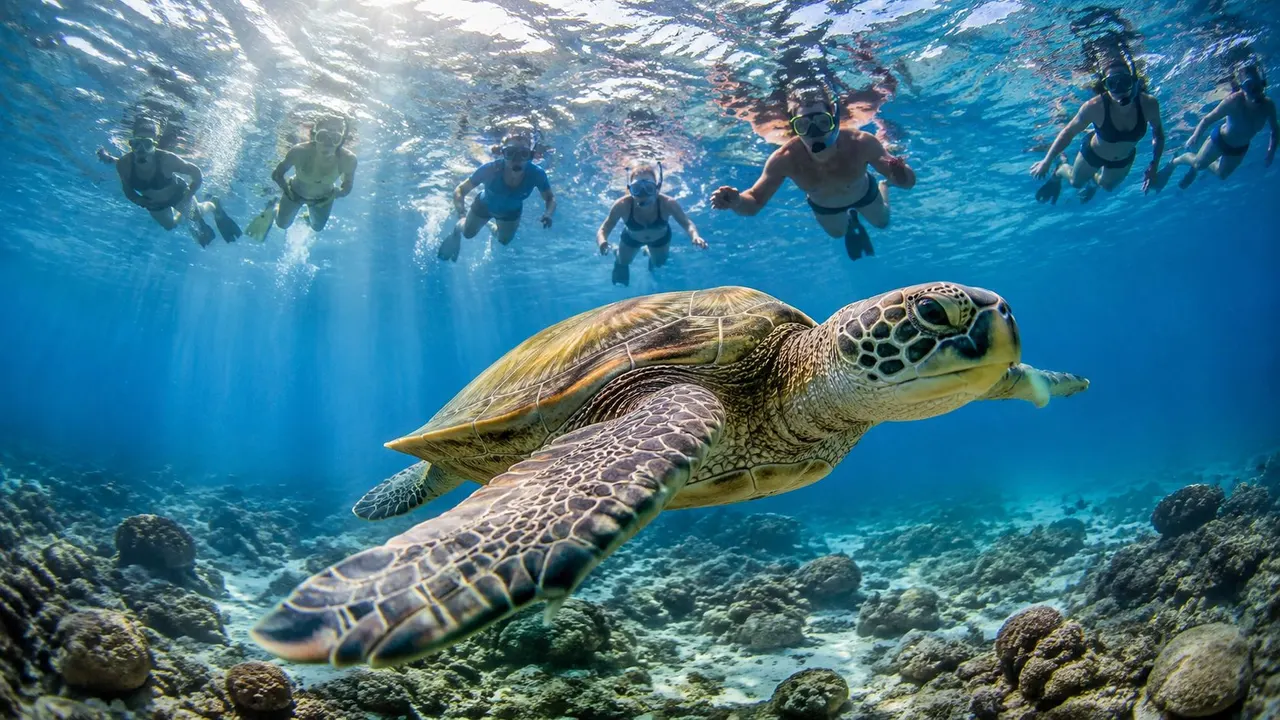
Book Turtle Canyon if your priority is seeing Hawaiian green sea turtles in a place built for that kind of encounter. The reef acts as a natural cleaning station, so it draws consistent wildlife activity and gives guided Waikiki trips a predictable, high-value stop.
Winter adds another layer. Living Ocean Tours reports humpback whales are commonly seen from January through March, so a snorkeling outing can also turn into a marine-life watch from the boat. If you are choosing dates for a trip that needs more than a reef swim, winter is the smarter pick.
The rules that matter
NOAA's distance rule is clear. Keep at least 10 feet from Hawaiian green sea turtles, and do not touch or chase them. Living Ocean Tours explains why Turtle Canyon sea turtles need that space, and independent guidance on Oahu turtle snorkeling says the same thing in plain language. Any tour worth booking should say this before guests get near the water.
Use the guide's briefing as your test. If the crew talks only about “getting close,” skip that operator. Good guides set the tone early, tell everyone to stay calm, and keep the turtles in control of the encounter.
I also look for tours that treat conservation as part of the experience, not as a side note. Ocean Alliance Project's Turtle Canyons program describes marine-biologist training, conservation-diver support, and turtle image data collection for identifying individual animals. That approach respects the reef as a working ecosystem, not just a backdrop for photos.
Top Itineraries and Featured Living Ocean Tours Excursions
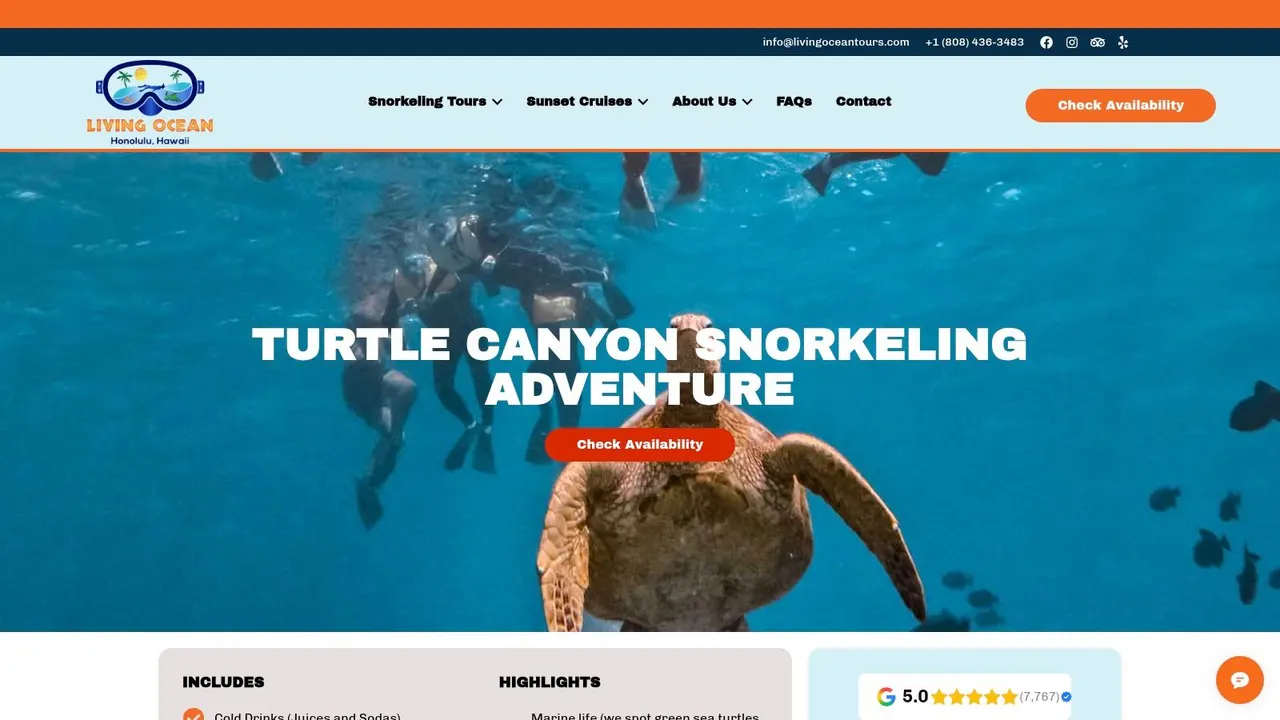
Living Ocean Tours is the one company I'd put in front of travelers who want a straightforward Waikiki ocean day with a strong wildlife angle. The company's own materials describe daily departures from Kewalo Basin Boat Harbor, turtle-focused snorkeling, sunset cruises, and seasonal whale watching, which makes it a flexible option for families and small groups planning around one base.
The signature trip is the Turtle Canyons Snorkel Excursion. Living Ocean Tours reports a 99% success rate for turtle sightings on that guided outing, which is exactly the kind of clear performance claim travelers should look for before they book, and the trip page is here: Turtle Canyons Snorkel Excursion. That doesn't mean every minute is crowded with action, but it does mean the tour is designed around a highly reliable wildlife encounter.
For families who want more play than pure snorkel time, the Deluxe Waikiki Snorkel & Wildlife Cruise is the better fit. It's the kind of product that works when one person wants to swim and another wants to stay aboard and enjoy the boat. If your group prefers evening views instead, the Waikiki Sunset Cruise is the cleaner choice, and there's also an exceptional alternative at Sunset Cruise Waikiki plus the booking page for the cruise itself at Living Ocean Tours' sunset cruise tour.
Pricing Booking Tips and Availability
Don't wait until the week of your trip if snorkeling is a priority. Living Ocean Tours recommends booking 2 to 6 weeks ahead for high-season slots and 7 to 14 days in advance on slower weekdays, and that's the kind of planning window I'd trust for Waikiki.
Pricing usually splits the market into two camps. Shared tours are the entry point, while premium family outings and private charters sit higher, with the market example showing a $79 per person Turtle Canyons trip and family-oriented tours reaching up to $225 in the broader comparison cited earlier. That gap tells you something important, a lower price usually means a more standard shared boat, while the higher end buys more space and less compromise.
What to do before you book
- Lock in holiday dates early: Peak weekends and school breaks fill first.
- Choose by group comfort, not just price: A cheaper boat is not a better deal if half your group won't enjoy it.
- Look at the launch point: Kewalo Basin is the practical choice for Waikiki access.
- Read the duration carefully: Two hours and 2.5 hours feel different when you're traveling with kids.
- Use weather flexibility wisely: If your schedule is loose, keep one backup day open.
A lot of travelers try to “shop later” and end up with the only option left, which is usually the wrong one. Book the tour that matches your family's energy level, not the one that happens to still have seats.
Frequently Asked Questions
Do you need to be a strong swimmer?
No, not always, but do not assume every Waikiki snorkeling tour works for weak swimmers or complete beginners. Some operators still expect guests to be okay swimmers, even when flotation devices are available, while others are more flexible if people stay close to the boat and follow the crew's instructions. The key question is how much in-water independence the crew expects, and whether the tour is built around relaxed supervision or more self-directed snorkeling.
How close can you get to turtles?
Keep your distance. Hawaiian green sea turtles are protected, and NOAA guidance says snorkelers should stay at least 10 feet away and never touch or chase them, which keeps the encounter legal and respectful. The best crews make that rule feel natural, not restrictive, so you still get a good view without crowding the animal.
What if the weather turns bad?
Ask before you book, and ask again if the forecast shifts. Cancellation and rescheduling policies vary by operator, so do not assume anything until you see the terms in writing. A serious crew explains the weather plan clearly and tells you what happens if conditions are unsafe or the water gets rough.
Are reef-safe sunscreens required?
Use reef-safe sunscreen and treat it as standard practice. Even if a company does not list it as mandatory, it is the right choice for a protected marine environment and for a tour that depends on healthy reef viewing.
If you are choosing between tours for a family, match the boat to your swimming comfort, your wildlife goals, and the amount of planning you want to do. Non-swimmers should look for calm water, close crew oversight, and a tour that spells out support clearly. Travelers who want a quieter, more natural experience should also check whether the operator follows responsible wildlife practices and keeps a clean distance from turtles and other marine life. Book early if your dates are fixed, because the better slots go first, and once they are gone you usually end up compromising on timing or tour style. A well-chosen Waikiki snorkel day should feel easy, calm, and worth the trip, and Living Ocean Tours is a practical place to start checking dates, comparing tour styles, and locking in the outing before the good spots disappear.


