
Oahu Snorkeling for Beginners: Dry vs. Traditional Snorkels
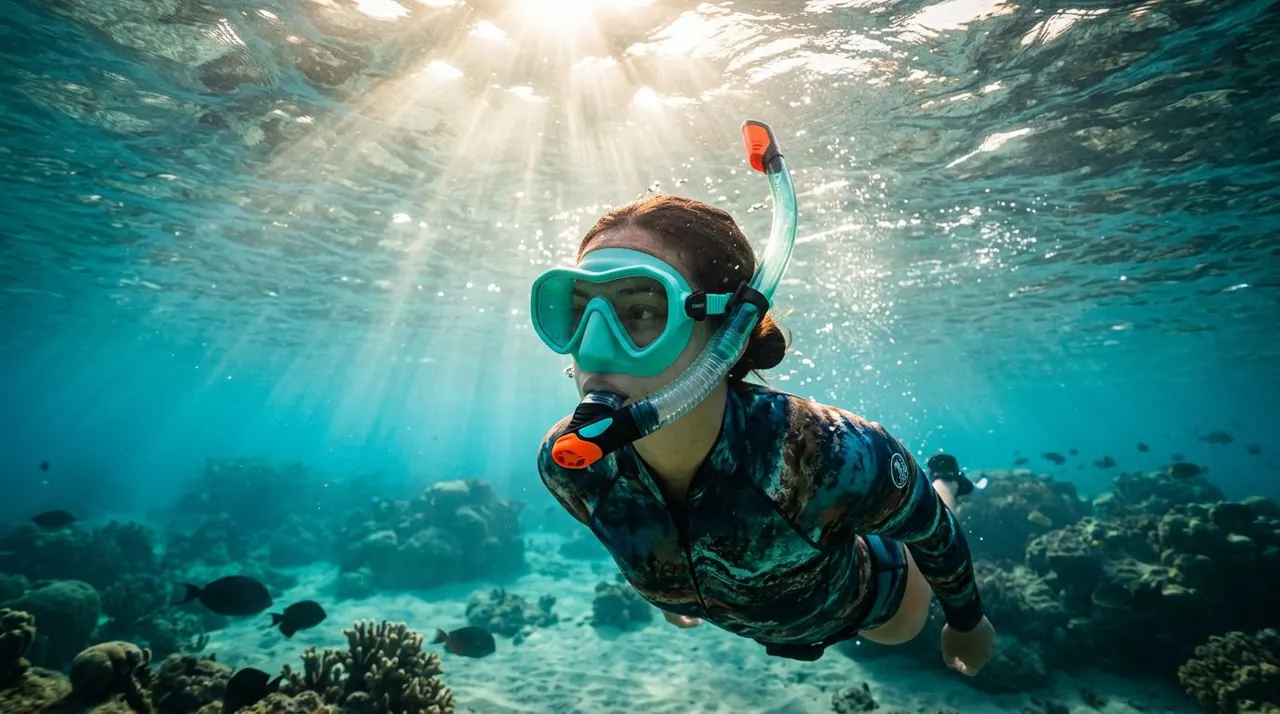
Choosing your first snorkel can feel harder than choosing a beach. A dry snorkel promises fewer mouthfuls of seawater, while a traditional snorkel offers a lighter, more natural setup.
For most first-time visitors, comfort and proper instruction matter more than the snorkel style alone. Once you understand how each design works, you can choose your gear with confidence and enjoy Oahu snorkeling at your own pace.
Key Takeaways
- A dry snorkel blocks water when the tube submerges, which can help nervous beginners.
- A traditional snorkel is lighter and gives you a more natural feel in calm water.
- Neither snorkel lets you breathe underwater, and both require proper technique.
- A well-fitting mask and professional guidance matter as much as the snorkel itself.
- Living Ocean Tours provides professional snorkel guides for beginner-friendly trips near Waikiki.
Dry Snorkel vs. Traditional Snorkel: What’s the Difference?
A snorkel is the tube that lets you breathe while your face stays in the water. The two main designs work in similar ways, but their features feel different during your first few swims.
A dry snorkel has a float valve at the top. When the tube dips below the surface, the valve rises and seals the opening. That design helps keep water out when a wave passes over you or when you briefly lift your face underwater.
A traditional snorkel has an open top. If the tube submerges, water can enter. You then clear it by exhaling firmly through the mouthpiece after lifting your face toward the surface. The technique is simple, but you need to practice it before heading into deeper water.
| Feature | Dry snorkel | Traditional snorkel |
|---|---|---|
| Water entry | Float valve helps block water | Water can enter when submerged |
| Weight | Usually a little bulkier | Usually lighter |
| Clearing | Less frequent, but the valve can need attention | Requires regular clearing practice |
| Best for | Nervous beginners and surface swimming | Confident swimmers and a natural feel |
| Underwater breathing | Not possible | Not possible |
A dry snorkel doesn’t turn the tube into an underwater breathing device. The valve closes when submerged, so you must return to the surface before taking another breath. You also shouldn’t rely on the valve in rough conditions. Waves can still splash across the top, and a poorly fitted mask can fill with water.
Traditional snorkels remain popular because they feel light and flexible. Freedivers and experienced snorkelers often prefer them because they create less resistance when you swim below the surface. For a beginner, however, the need to clear water can add one more skill during an already unfamiliar experience.
Which Snorkel Should You Choose for Oahu?
If you feel uneasy about putting your face in the ocean, a dry snorkel is often the easier starting point. You can focus on slow breathing, relaxed kicking, and looking beneath the surface instead of worrying about every splash. The extra valve gives you more comfort while you learn.
A dry snorkel can also suit families with older children who follow instructions well. However, the snorkel may feel heavier on your face, especially if the tube has a large purge valve or bulky top. A poor fit can cause jaw fatigue or pull the mask sideways.
Choose a traditional snorkel if you already swim comfortably and want lighter gear. You will need to learn one basic skill: exhaling through the tube to remove water. A professional guide can show you the process in shallow water before you swim toward the reef.
Your mask fit matters more than the dry-versus-traditional decision. To test a mask, place it gently against your face without using the strap. Inhale lightly through your nose. If the mask stays in place for several seconds, it may have a good seal. Hair across the seal, facial sunscreen, or the wrong size can cause leaks.
The mouthpiece should rest comfortably without forcing your jaw forward. If you need to bite down hard, ask for another size. You should also adjust the strap so it holds the mask in place without pressing painfully against your head.
At a guided Oahu snorkeling trip, you can ask the crew to check your mask, snorkel, and fins before entering the water. That small adjustment can make the difference between spending the trip exploring and spending it fixing your equipment.
Beginner Snorkeling Tips That Make the Ocean Feel Easier
Start in calm water and keep your first breaths slow. Place your face in the water while standing or holding a ladder, then breathe through the mouthpiece until the sensation feels normal. Your body may tense up at first, but relaxed breathing helps you float more naturally.
Keep your fins behind you and kick from your hips. Short, fast kicks waste energy and can stir up sand. Slow kicks move you forward with less effort, leaving more time to watch the reef and marine life.
If water enters a traditional snorkel, raise your face toward the surface and exhale sharply through the mouthpiece. A dry snorkel can still need clearing if water reaches the valve or enters through the mouthpiece. Ask your guide for help instead of removing your mask in deep water.
Stay near your group and follow the guide’s directions about currents, boat traffic, and water depth. Conditions can change along the Waikiki coastline, even when the beach looks calm. If you feel tired, cold, anxious, or short of breath, signal the crew and rest.
Never hyperventilate before putting your face underwater. Avoid breath-holding contests, and don’t swim away from the boat or guide to get closer to wildlife. Snorkeling should feel controlled, not like a test of endurance.
Your first goal is comfort, not distance. Once your breathing is steady, the reef becomes much easier to enjoy.
You should also protect your eyes and skin from strong sunlight. Wear a rash guard when possible, and use reef-conscious sunscreen according to local guidance. Most importantly, keep your hands off coral and marine animals. Hawaiian green sea turtles need space, so watch them without touching, chasing, or blocking their path.
Finding Beginner-Friendly Oahu Snorkeling Tours Near Waikiki
Your equipment choice matters, but the tour setting can matter just as much. Living Ocean Tours departs from Kewalo Basin Boat Harbor, only minutes from Waikiki Beach in Honolulu. The company is the only tour company with professional snorkel guides, so you have trained support while you learn to use your gear and read the water.
The Coast Guard-inspected fleet includes the Coral Kai and Lokahi, custom-built double-decker boats with shaded seating, restrooms, dry storage, and sturdy ladders for water entry. The Lokahi also has a SeaKeeper stabilization system that helps reduce boat movement, which can be useful if you worry about seasickness.
For a wildlife-focused outing, the Turtle Canyon Snorkel Excursion takes you toward a natural underwater cleaning station. Living Ocean Tours reports a 95% success rate for spotting Hawaiian green sea turtles, although wildlife remains wild and sightings can never be guaranteed. Your professional guide helps you keep a respectful distance while pointing out marine life and demonstrating safe snorkeling habits.
The Deluxe Waikiki Snorkeling and Wildlife Cruise offers another option for families and active swimmers. The boat visits a less-crowded reef and includes a water slide, water trampoline, and floating lily pad. You can choose how much time you spend snorkeling and how much time you spend enjoying the boat’s water features.
For the Turtle Canyon trip, you can CHECK AVAILABILITY before planning the rest of your Waikiki day.
If you prefer the deluxe experience, you can CHECK AVAILABILITY for the Waikiki snorkeling and wildlife cruise.
What Should You Bring for a Snorkeling Trip?
Most guided snorkeling tours provide the essential equipment, including a mask, snorkel, and fins. You should still bring a swimsuit, towel, reef-conscious sunscreen, sunglasses, and a change of dry clothes. A waterproof phone pouch can protect your phone between the boat and shore.
Arrive with enough time to check in and listen to the safety briefing. Avoid a heavy meal immediately before boarding if you are sensitive to motion. Water and light snacks can help you stay comfortable, especially after swimming.
Ask about the available snorkel styles when you book. A tour may carry both dry and traditional designs, allowing the crew to match your equipment to your comfort level. You can also request help with mask fit before entering the water.
If you are traveling with children, confirm age and swimming requirements in advance. A child who can follow directions may enjoy a guided snorkel, while a younger or less confident swimmer may prefer staying close to the boat ladder or using the flotation equipment provided by the crew.
The best gear is the gear that fits your face, stays comfortable, and lets you breathe calmly. A more expensive snorkel won’t compensate for a leaking mask or poor technique.
Conclusion
For most first-time visitors, a dry snorkel offers extra comfort during surface swimming, while a traditional snorkel gives experienced swimmers a lighter, simpler setup. Neither choice replaces a well-sealed mask, calm breathing, and good instruction.
When you choose Oahu snorkeling with Living Ocean Tours, professional snorkel guides can help you find the right gear and feel comfortable before you explore. With the right setup, your attention stays where it belongs, on the reef, the clear Pacific water, and the wildlife you came to see.


