
Waikiki Snorkeling Tours: A Complete Insider Guide
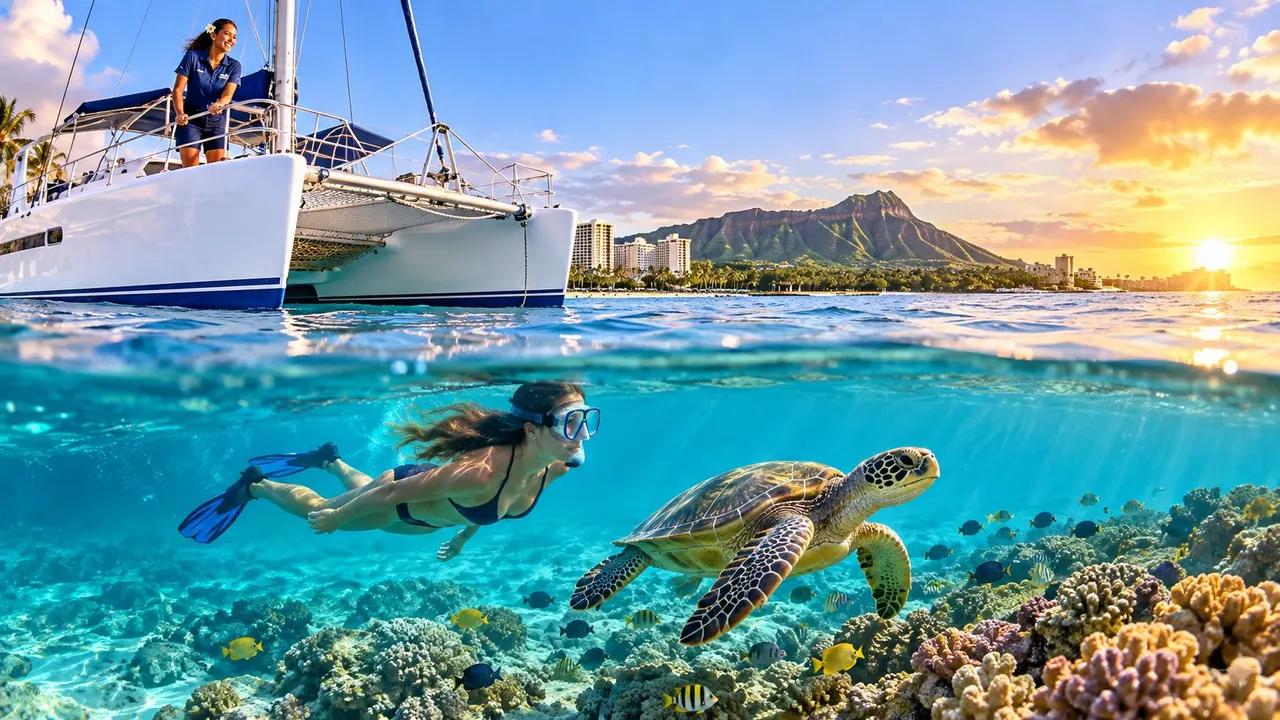
You've got the mask packed, the kids are asking whether they'll see turtles, and Waikiki's water looks calm from the beach. That last detail can be misleading. The right Waikiki snorkeling tour isn't just the one promising the most wildlife. It's the one that matches the day's sea state, your group's swimming ability, and the way the crew manages people around animals.
A good trip feels simple from the guest's perspective. The crew checks conditions, fits your gear, explains what to do, chooses an appropriate site, and keeps the group together. Underneath that ease is careful decision-making about wind, swell, currents, visibility, boat traffic, and wildlife behavior.
What Waikiki Snorkeling Tours Actually Are
A family arriving at Kewalo Basin usually has one immediate choice. They can carry their gear down to the beach and try to read the surf themselves, or they can board a guided boat and let a captain choose the safest workable route.
On a typical boat morning, guests check in at the harbor, fit masks and fins, and listen to a briefing before departure. The boat moves slowly along the coast, often giving passengers views toward Diamond Head, then heads offshore toward a reef such as Turtle Canyons. When the anchor or mooring is set, the important part begins, with guides helping guests enter the water, maintain position, and observe marine life without crowding it.
The difference isn't the distance you swim. It's access, instruction, supervision, and interpretation. A shore snorkel can be inexpensive and flexible, but it leaves you responsible for judging currents, finding productive habitat, and managing tired swimmers. A guided trip adds equipment, route selection, flotation support, and a crew that knows when conditions have changed.
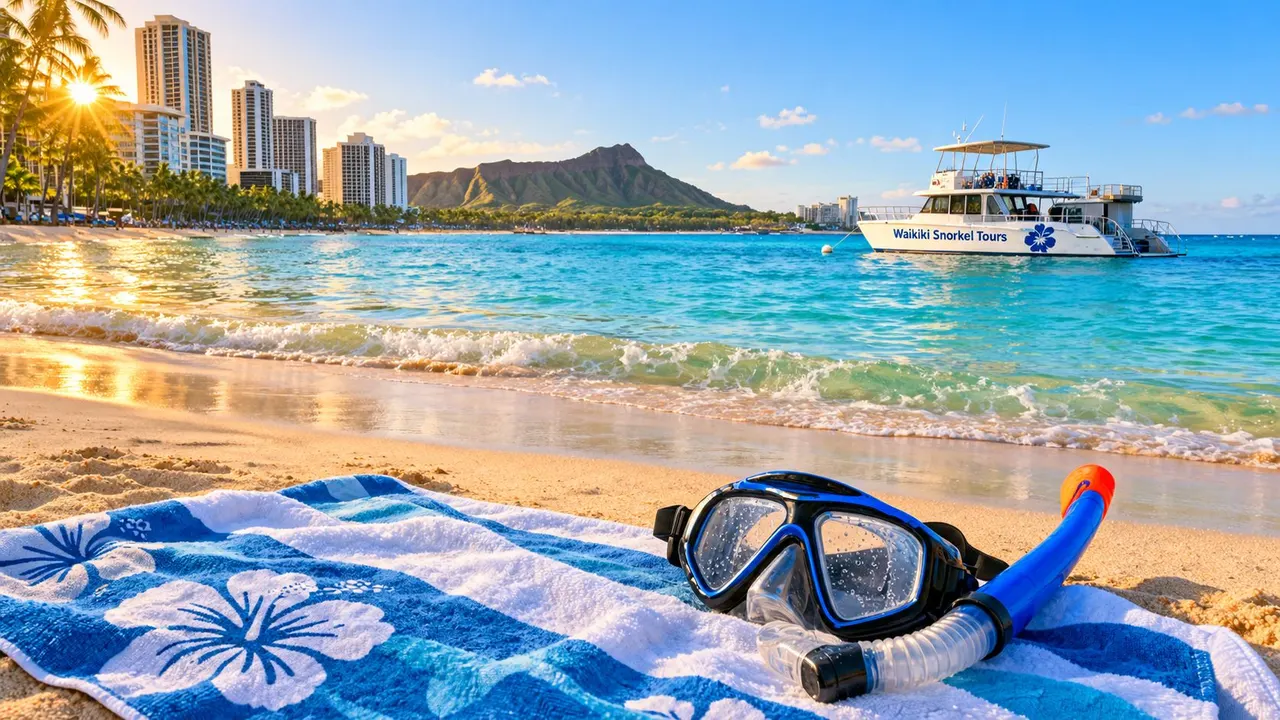
Captain's rule: A tour should make the ocean easier to understand, not merely take you farther from shore.
Families with children, first-time snorkelers, couples, and visitors who don't want to negotiate Waikiki's currents alone usually benefit from the guided format. Confident swimmers who want a short, self-paced outing may prefer the conservation district from shore, provided conditions and ability line up.
| Option | Best for | Wildlife likelihood | Effort level | Main trade-off |
|---|---|---|---|---|
| Guided turtle boat tour | First-timers and turtle-focused visitors | Often stronger access to turtle habitat | Lower navigation burden, but still requires water comfort | Paid trip and fixed departure |
| Family wildlife cruise | Mixed-age families | Reef wildlife with added onboard activities | Moderate, with opportunities to rest aboard | Less focused on uninterrupted snorkeling |
| Waikiki shore snorkeling | Confident swimmers seeking flexibility | Depends heavily on site and conditions | Highest self-management | No crew, route selection, or boat-based access |
How a Guided Turtle Canyons Snorkel Works
The cleanest way to understand a guided excursion is to separate what the boat controls from what you control.
Before entering the water
A mid-sized catamaran departing from Kewalo Basin typically gives the crew room to organize guests, equipment, and flotation devices without turning the experience into a private expedition. The crew fits each participant with a mask, snorkel, and fins, then explains how to clear a mask, breathe calmly, use flotation, and respond if discomfort starts.
The briefing matters because many first-timers don't struggle with swimming distance. They struggle with a leaking mask, an unfamiliar breathing rhythm, or the instinct to lift their head and kick hard when nervous. A guide can correct those problems before they become tiring.
The route is another layer of control. The captain checks conditions, selects an appropriate site, and adjusts the plan if wind, swell, current, or visibility makes the original location unsuitable. A guest can't control those variables, but a professional operation can respond to them.
At the cleaning station
At Turtle Canyons, the experience centers on a reef area where Hawaiian green sea turtles may rest while reef fish interact with them. A planned in-water period of roughly 30 to 45 minutes gives guests time to settle, look for animals, and watch behavior rather than jumping in and immediately rushing after the first turtle.
You still have responsibilities. Keep your breathing relaxed, remain within the guide's area, use flotation if you need it, and hold your position instead of finning toward wildlife. The guide can point out turtles and fish, but no crew can make a guest comfortable who ignores fatigue or anxiety.
A useful reference for the setting is this guide to Turtle Canyon on Oahu. The central advantage of a boat trip is access to habitat that isn't available from every beach entry, combined with supervision and a backup plan when the ocean refuses to cooperate.
Choosing Between a Boat Tour and Shore Snorkeling
There are three practical choices for most visitors: a turtle-focused boat excursion, a family cruise with extra water activities, or shore snorkeling inside the Waikīkī Marine Life Conservation District.
The turtle boat is the clearest choice for first-time snorkelers and guests whose priority is observing honu. You trade money and a fixed schedule for site access, gear, instruction, and a crew that can manage the group. The Deluxe Waikiki Snorkeling and Wildlife Cruise suits families with children of different ages because a waterslide, water trampoline, and lily pad give non-snorkelers something to do while others are in the water.
Shore snorkeling costs less and gives confident swimmers more freedom. The Waikīkī Marine Life Conservation District extends from the groin at the end of Kapahulu Avenue to the western wall of the Natatorium, with an offshore boundary reaching 500 yards from the high-water mark or the edge of the fringing reef, whichever is farther, according to Oʻahu's official marine-life conservation district guidance. Fishing, collecting marine life, removing coral, and altering geological features are prohibited there.
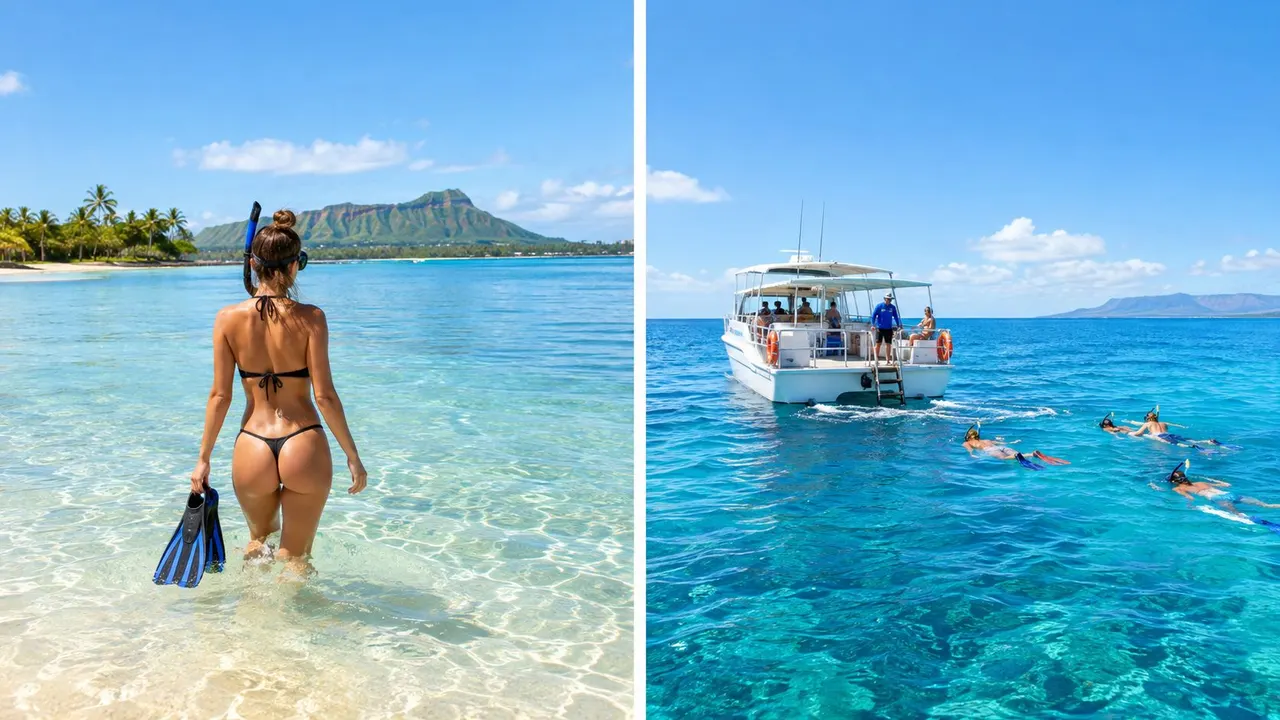
The trade-off is exposure. At the beach, you must judge entry and exit, current, shorebreak, visibility, and your own fatigue. Even an inviting shoreline doesn't provide a guide, a lookout, or a vessel that can relocate you.
The best option is the one that removes the risk you personally aren't equipped to manage.
For first-timers and turtle lovers, choose the guided boat. For mixed-age families who need onboard variety, choose the Deluxe Waikiki snorkeling experience. For confident swimmers who want flexibility and accept responsibility for conditions, the conservation district can work.
Who These Tours Are Best For and What to Bring
A first-time family of four usually does better on a guided boat, especially if one child is nervous or a parent has never snorkeled. The crew can fit equipment, demonstrate breathing, and offer flotation while the family stays within a supervised area.
A honeymooning couple may prefer a focused turtle excursion if wildlife is the priority, or a quieter scenic trip if the main goal is time together. An older parent visiting with adult children should treat participation as optional, not a test of enthusiasm. A single eco-conscious traveler may value the guide's interpretation and the chance to observe without joining a crowd at the shoreline.
Bring less than you think, but bring the items that solve real problems:
- Sun protection: Pack reef-conscious sunscreen, a rash guard, and a hat for time on deck.
- Comfort: Wear a swimsuit under clothing and bring a towel, dry bag, and water bottle.
- Foot protection: Ask the crew whether water shoes or booties make sense for the entry and site.
- Motion planning: If boat movement affects you, discuss motion-sickness precautions with a qualified clinician before the trip.
- Timing: Plan to arrive 20 to 30 minutes before departure for check-in and fitting.
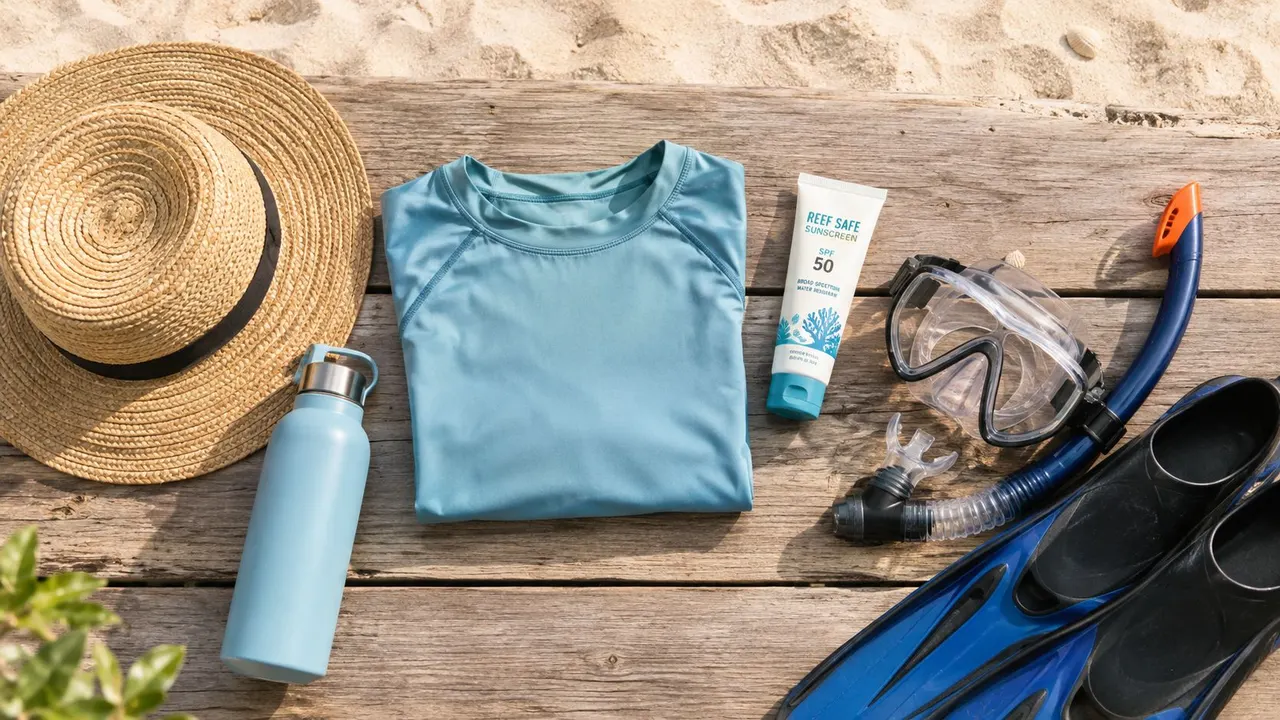
A sample morning might look like this: arrive at 7:30 a.m., depart at 8:30 a.m., enter the water around 9:15 a.m., and return to the dock near 11:30 a.m. Those times are a planning example, not a promise. Harbor procedures, conditions, and the operator's schedule can change the day.
| Category | Items | Notes |
|---|---|---|
| Clothing | Swimsuit, rash guard, light layer | Rash guards help with sun exposure and deck comfort |
| Sun care | Reef-conscious sunscreen, hat, sunglasses | Apply sunscreen before boarding |
| Water comfort | Towel, water bottle, dry bag | Keep phones and valuables protected |
| Personal needs | Medication, motion-sickness supplies | Follow professional medical advice |
| Provided equipment | Mask, snorkel, fins, flotation | Confirm inclusions when booking |
Safety, Sea Conditions, and the Snorkel-Readiness Checklist
Sea-state screening is the first safety decision, not an administrative detail. Hawaiʻi Ocean Safety identifies high surf, strong winds, heavy shorebreak, and strong currents as unsuitable conditions, while noting that morning commonly brings better visibility, calmer water, and more active marine life in its snorkeling safety guidance.
A captain should check surf, wind, current, and visibility before departure, then delay, reroute, or cancel when the risk rises. A calm-looking surface doesn't prove that the water is physiologically easy. Wind and swell can increase turbulence and swimming effort, reduce mask visibility, and make it harder for inexperienced guests to hold position.
Check the swimmer, not just the ocean
Older adults, people with heart or respiratory conditions, and anxious or infrequent swimmers deserve a conservative readiness decision. Hawaii Department of Health data reported by Civil Beat found that snorkeling made up roughly one-quarter of ocean drownings in the state from 2015 through 2024, and that about 42 tourists drown in Hawaii's oceans in an average year. The same Civil Beat coverage discusses snorkeling-related pulmonary edema, where fluid can enter the lungs and lead to weakness, confusion, or loss of consciousness.
Anyone with a relevant medical condition should consult a clinician before snorkeling. During the trip, unusual breathlessness, chest tightness, confusion, sudden weakness, or unexplained fatigue means stop immediately and tell the crew. Don't push through symptoms to reach the next turtle.
A practical readiness check includes:
- Can you float comfortably without panicking?
- Can you breathe through a properly fitted mask and snorkel?
- Can you signal for help and follow a guide's instruction?
- Will you accept flotation or remain aboard if conditions or symptoms make entering unwise?
Practical rule: Staying aboard is a successful safety decision, not a failed excursion.
Guides should also tell guests to remove the snorkel, remain calm, and exit safely if discomfort begins. This is one reason a guided Oahu snorkeling trip can suit families better than an unsupervised beach entry. A boat crew can monitor participants, provide flotation, and change the plan before a marginal situation becomes an emergency.
Responsible Turtle Viewing and the Waikiki Conservation Story
The Hawaiian green sea turtle is not a new visitor attraction. It represents a long recovery shaped by protection, monitoring, and careful management.
When scientific monitoring began in the 1970s, the nesting population was severely depleted. Hawai'i's nesting population rose from 67 nesting turtles in 1973 to almost 500 nesting females annually in recent estimates, roughly a sevenfold increase, while the population grew by approximately 5% per year over the last two decades. A broader demographic analysis estimated an average increase of 5.4% annually since 1973, and researchers examined records from 3,677 tagged nesting turtles between 1973 and 2010. Estimated annual adult-female survival was approximately 92.9%, with a 95% confidence interval of 92.4% to 93.3%, according to the NOAA repository research on Hawaiian green sea turtles.
Those figures explain why honu encounters are now a defining part of O'ahu marine recreation, but they don't mean the animals can absorb careless tourism. The population remains conservation-dependent, and its genetic distinctiveness makes local viewing behavior important.
The distance that protects the encounter
Keep at least 10 feet, or 3 meters, from a turtle. Don't touch, chase, feed, pursue, restrain, ride, block, or surround it. Hawaiʻi's Division of Aquatic Resources guidance explains that approaching a resting turtle can force it back into the ocean and compromise its safety.
On a boat, the captain should proceed slowly near shallow reef habitat, harbors, and boat ramps. NOAA recommends approximately 5 to 10 knots in relevant areas, and Hawaiʻi boating guidance recommends a second lookout where possible.
In the water, good spacing means positioning guests down-current or laterally from a turtle, rather than allowing swimmers to converge from every direction. Guides should keep the group compact enough for continuous headcounts and redirect people who drift into the animal's path.
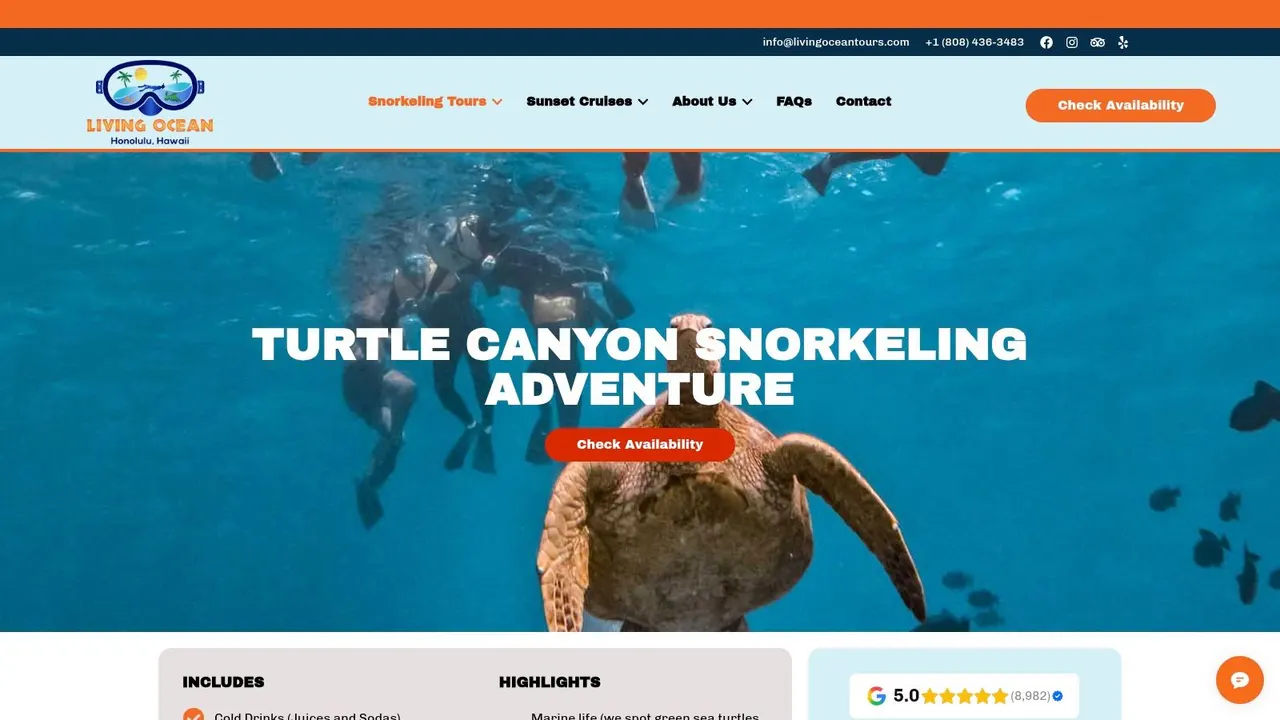
The deeper story appears in this Oahu turtle conservation resource. A high sighting rate isn't the same as a good encounter. If several swimmers trap one turtle against a reef or force it to abandon a resting site, the photograph may be memorable for the wrong reason.
Seasonal Conditions, Visibility, and When to Book
The south shore often offers calmer water and better underwater visibility during the warmer part of the year, generally April through October. That can make summer a sensible choice for first-time snorkelers and families, although the captain still has to evaluate the actual day.
Winter, particularly December through March, brings humpback whales to Hawaiʻi's waters, but south-shore snorkeling becomes more dependent on the day's swell and wind. A calm January morning can produce an excellent snorkel, while a windy July afternoon can make a beach that looks attractive from land a poor choice.
Operators should read the harbor camera and surf report before committing to a route. The decision isn't “summer equals safe” or “winter equals bad.” It's whether today's conditions match the group aboard.
| Season | Water conditions | Wildlife focus | Best tour type |
|---|---|---|---|
| April to October | Often calmer south-shore water and useful visibility, subject to daily changes | Turtles and reef life | Guided snorkel for families and beginners |
| December to March | More swell-dependent for snorkeling | Humpback whales plus turtles when conditions allow | Snorkel on suitable days, whale watch when whales are the priority |
| Any season | Conditions vary by wind, surf, current, and visibility | Wildlife depends on habitat and animal behavior | Choose the route that matches the day |
If marine life is the priority in winter, a Waikiki whale-watching tour may make more sense than forcing a snorkel. Couples who mainly want coastline views can choose a sunset cruise. Families seeking the most forgiving plan should keep the booking flexible enough to accept a route change.
Booking Tips, Pricing, and Picking the Right Departure
Don't choose a Waikiki snorkeling tour from the headline promise alone. Confirm the departure harbor, total duration, included mask and fins, flotation options, safety briefing, in-water supervision, cancellation policy, and what happens if conditions deteriorate.
Exact prices change, so check live availability and the current booking page rather than relying on an old guide. A useful comparison includes the full value of gear, instruction, snacks or drinks when included, and the crew's ability to move the group to a better site. The cheapest shore option can become a poor bargain if your family spends the morning managing currents, uncomfortable equipment, or tired swimmers.
Match the departure to the traveler
- Turtle lovers and first-timers: Choose a focused Turtle Canyons excursion and prioritize the crew's wildlife spacing over a promise of constant sightings.
- Families with mixed-age children: Choose the Deluxe Waikiki Snorkeling and Wildlife Cruise, especially when a waterslide, trampoline, and lily pad will keep non-snorkelers engaged.
- Couples and photographers: Choose a Waikiki sunset cruise when golden-hour scenery matters more than time in the water.
- Winter wildlife travelers: Consider whale watching from December through March when humpbacks are your main priority.
Before paying, screenshot this checklist:
- Departure harbor and arrival time
- Tour length and in-water time
- Included gear and flotation
- Weather and cancellation terms
- Medical or swimming-readiness concerns
- Turtle-distance and no-touch policy
- Alternative plan if visibility or currents worsen
For a broader look at available formats, review these Oahu snorkeling tour options. Living Ocean Tours operates guided snorkeling, wildlife cruises, sunset cruises, and seasonal whale watching from Kewalo Basin, with equipment, instruction, and guide support included on its snorkeling experiences.
For a guided Waikiki snorkeling experience, Living Ocean Tours offers Turtle Canyons snorkeling, family wildlife cruises, and other ocean trips with equipment, instruction, and crew support. Visit Living Ocean Tours to compare departures and choose the option that fits your group, swimming comfort, and priorities for the day.


