
Waikiki Snorkeling Tours How to Choose Your Perfect Day
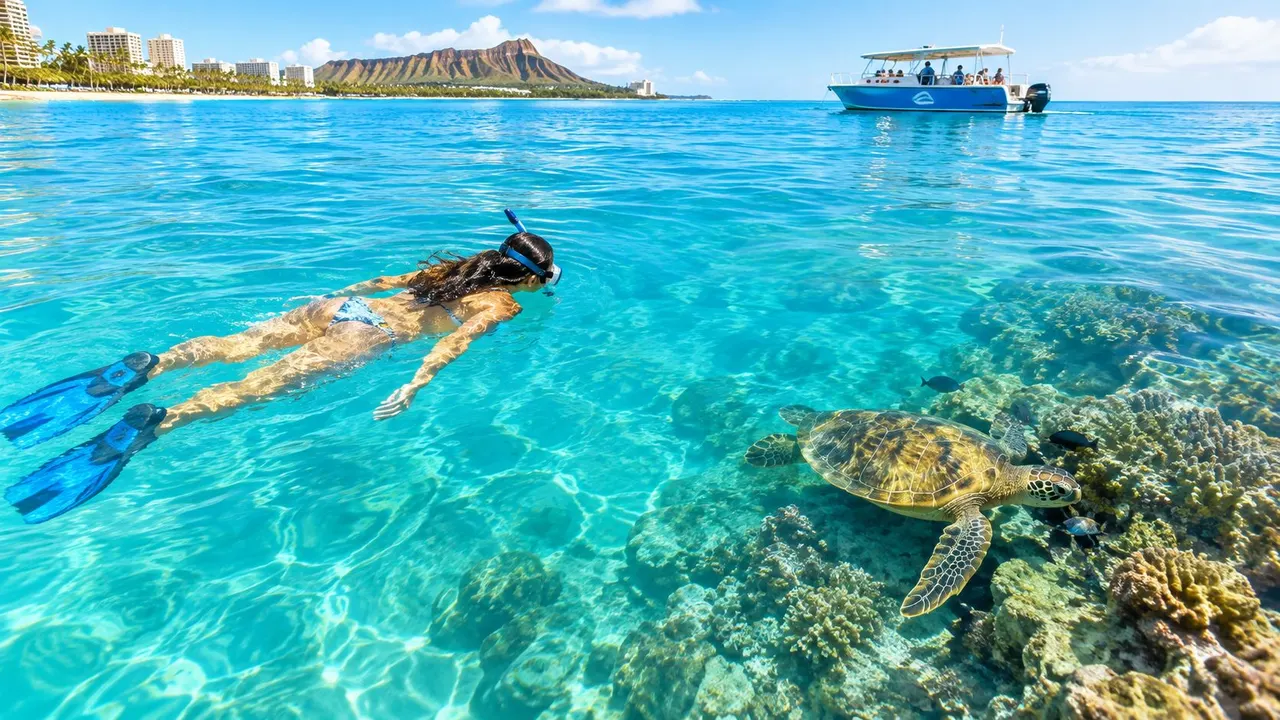
You've just arrived in Waikiki, the sun is already climbing, and someone in your family is asking the question everyone asks: should we walk down to the beach and try snorkeling, or book a boat? The answer depends less on the promise of a turtle photo and more on how comfortable your group is in open water, how much supervision you want, and what kind of marine experience you're looking for.
Waikiki snorkeling tours exist because snorkeling here is a mainstream visitor activity, not a niche adventure. One Hawaii visitor-economy summary found that more than 80% of Hawaii visitors participate in coastal and marine recreation, while about 3 million snorkelers visit Hawaiian reefs each year. The same research documented substantial snorkeling and scuba participation among Oahu visitors, including U.S. West visitors rising from 25.7% in 2005 to 27.9% in 2006, with total participation moving from 30.9% to 32.6%. The Waikiki and Diamond Head marine recreation report provides the historical context.
Introduction to Waikiki Snorkeling Tours
A beach entry can be perfect for a confident swimmer who wants a flexible, low-commitment outing. But first-timers often discover that the hardest part isn't seeing fish. It's choosing a safe entry, judging surf and currents, fitting unfamiliar equipment, staying with a buddy, and knowing when conditions have changed.
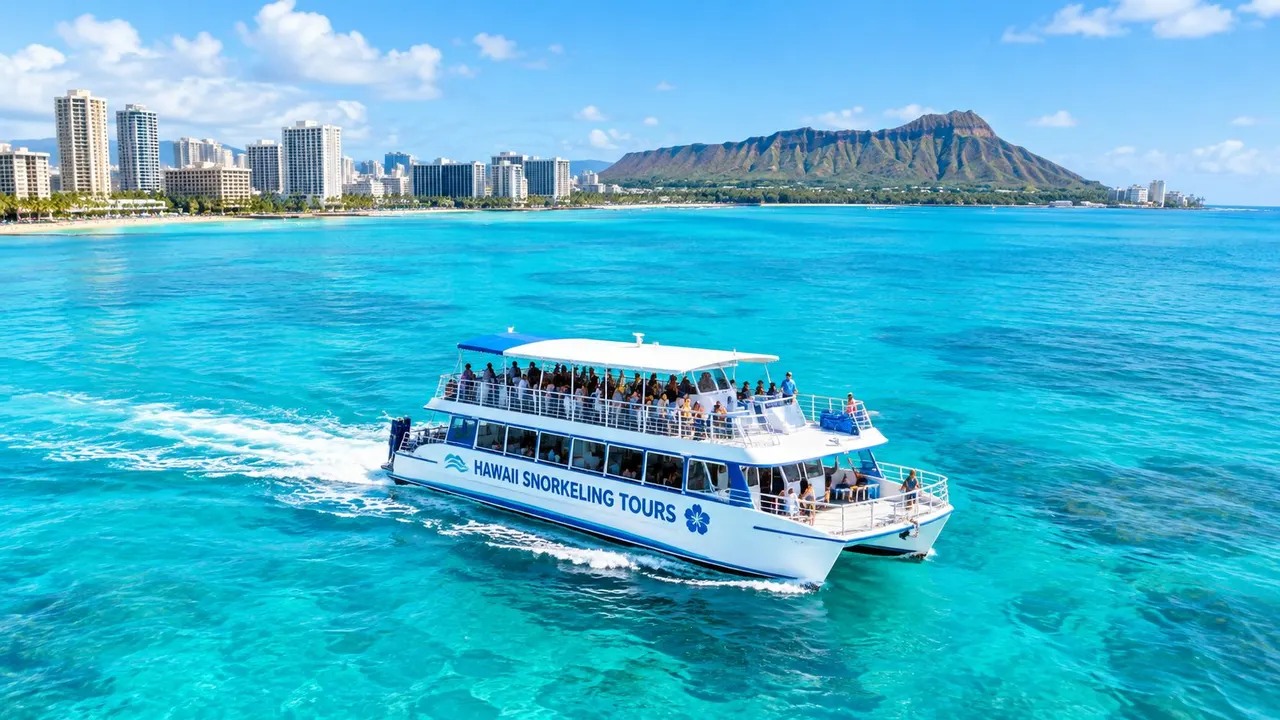
A guided boat tour solves several of those problems at once. You check in with a crew, receive equipment, listen to an orientation, travel to a selected water area, and have guides watching the group while you're in the ocean. Departures commonly use Kewalo Basin Boat Harbor, rather than beginning directly from the sand, which changes the experience from a spontaneous beach activity into a supervised marine outing. You can read more about the local format in this Waikiki snorkeling guide.
Waikiki's nearshore setting also explains the activity's staying power. A Hawaii environmental assessment reported at least 38 fish species on the Waikiki reef flat, while surveys across the broader project area identified 58 fish species. Historical reef research recorded fish biomass of 68.8 g/m² at Waikiki, more than five times the average of nearby Maunalua sites. These figures come from the Waikiki Beach maintenance environmental assessment.
A useful way to think about the choice: shore snorkeling gives you independence, while a guided boat tour gives you structure, supervision, and access to a managed wildlife-viewing experience.
This guide will help you compare the main tour formats, understand what happens from check-in to return, choose a suitable time and ocean state, prepare children and nervous swimmers, and book without relying on exaggerated wildlife promises.
Types of Waikiki Snorkeling Tours and How They Differ
Not every Waikiki snorkeling tour serves the same traveler. A short beach session and a boat trip to a turtle cleaning station can both involve a mask and fins, but the demands, supervision, and overall rhythm are different.
| Tour Type | Best For | Wildlife and Experience | Departure and Features |
|---|---|---|---|
| Shore snorkeling | Confident swimmers, flexible travelers, short outings | Close-in reef viewing, with conditions and crowding changing throughout the day | Begins from a beach, usually with personal or rented gear |
| Guided boat snorkeling | First-timers, families, casual swimmers, and visitors seeking support | Reef habitat away from the immediate shoreline, with crew-led wildlife viewing | Departs from Kewalo Basin, with instruction, flotation, and crew supervision |
| Turtle-focused excursion | Travelers prioritizing Hawaiian green sea turtles | A natural cleaning-station setting where reef fish remove algae, barnacles, and parasites from turtles | Boat-based access, guided observation, and strict wildlife etiquette |
| Family wildlife cruise | Multigenerational groups and children who want more than snorkeling | Marine viewing combined with water activities and time on the boat | Family-oriented features can include a waterslide, water trampoline, and lily pad |
| Sunset or seasonal whale combination | Couples and travelers building a broader ocean day | Golden-hour scenery, or seasonal humpback viewing during the appropriate months | Usually a separate cruise format, with whale rules applying during encounters |
The main trade-off is control versus support. Shore snorkeling lets you decide when to enter and leave, but you're responsible for reading the water and managing your equipment. A boat tour takes away some flexibility, yet the crew can select a site, explain the conditions, and keep watch while guests are in the water.
Turtle-focused trips also require a realistic expectation. A cleaning station isn't an aquarium exhibit. Turtles control when they arrive, dive, or leave, and the experience depends on the condition of the habitat, the fish, currents, and patient observation. A Waikiki boat tour overview can help you compare that guided format with a more general wildlife cruise.
For families, the boat itself may be part of the value. A child who tires quickly in the water can rest on deck, while a confident swimmer can continue under crew supervision. That flexibility is harder to create during an entirely self-directed beach session.
What to Expect on a Guided Snorkeling Tour
At Kewalo Basin, a first guided trip begins with simple decisions. Arrive on time, answer the safety questions truthfully, and tell the crew if you feel nervous or need extra help. You do not need prior experience clearing a mask or judging a reef site. The crew teaches those steps before you enter the water.
From check-in to the water
Check-in lets the crew confirm your reservation, answer questions, and identify anyone who may need closer assistance. Once aboard, you'll learn where to sit, store personal items, and use the boat's entry and exit points.
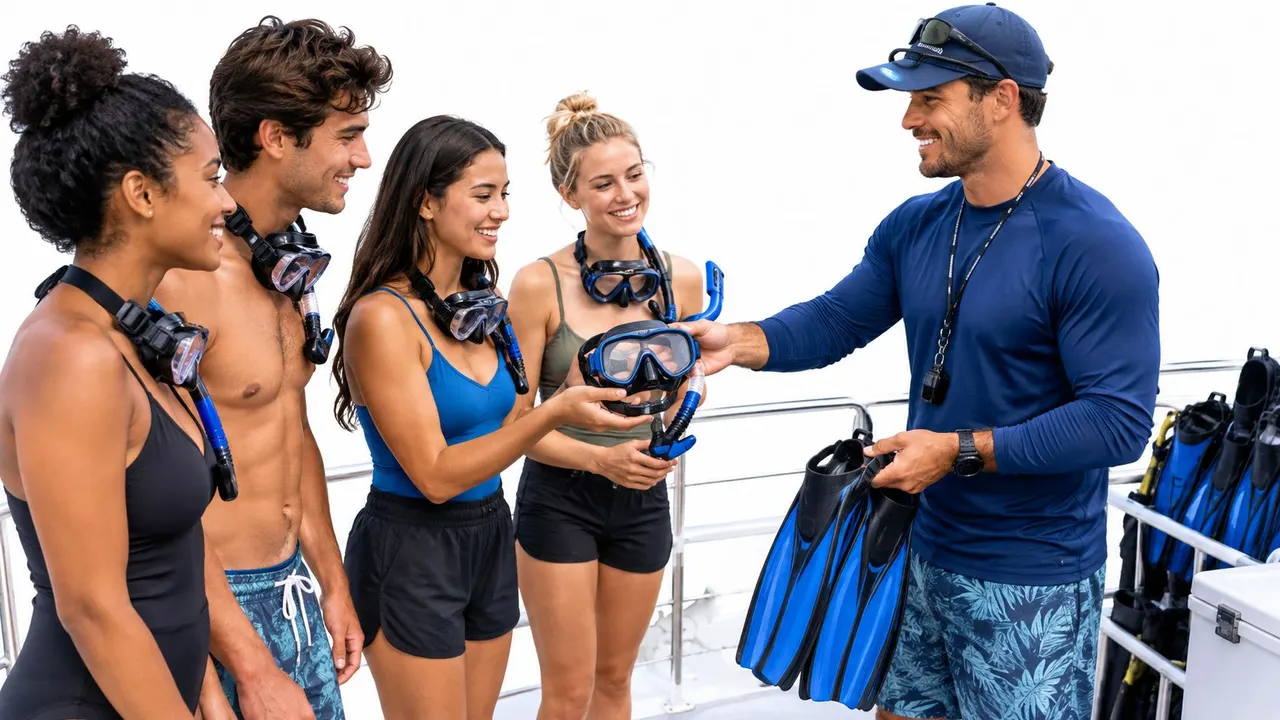
The crew fits masks, snorkels, fins, and flotation equipment. Fit affects confidence. A leaking mask can make a beginner anxious, while a loose flotation belt can distract you from breathing calmly. Guides should give you time to test each item and explain how to signal for help.
Before the boat reaches the snorkeling area, the crew reviews entry and exit procedures, group boundaries, hand signals, and the return process. A guided Waikiki boat experience makes these steps familiar before you float above the reef.
That supervision is the main difference from shore snorkeling. At the beach, you choose when to enter and leave, but you also read the water, manage your gear, and monitor your group. On a boat, you give up some control of the schedule in exchange for site selection, instruction, and crew watchfulness. For children or nervous swimmers, that support can reduce the risk of a small problem becoming an emergency.
What happens at a turtle cleaning station
At a Turtle Canyon-style site, fish may gather around Hawaiian green sea turtles and remove algae, barnacles, and parasites from their shells and skin. The area is a natural cleaning station, not an aquarium exhibit where turtles appear on demand.
Guides can point out turtles and fish, but wildlife determines the encounter. Stay calm, float horizontally, and let the turtle set the distance. Marine guidance recommends staying at least 10 feet away. Never touch, chase, feed, or block a turtle's route to the surface. A practical explanation of Turtle Canyon snorkeling explains why patience and habitat respect matter.
After snorkeling, use the ladder to board, return your equipment, and dry off during the ride back. The boat is part of the outing, offering views of the Waikiki coastline and Diamond Head rather than serving only as transportation.
Best Times and Conditions for Waikiki Snorkeling
清晨出發通常較有利於看清水下景象。Hawaii Ocean Safety指出,早上一般能見度較佳,海洋生物也較活躍。相反地,高浪、強風、猛烈碎浪與海流都會增加浮潛難度。Hawaii Ocean Safety's snorkeling guidance說明了入水前查看海況的重要性。
原因很直接。風會吹皺水面,讓你更難保持面鏡清晰,也更難維持方向。碎浪會使下水和上岸變得不舒服,海流則可能讓同行者分散,或把人帶離原本的活動範圍。早上的海水不一定平靜,但常能提供較有利的開始時段。
預訂前先讀懂當天海況
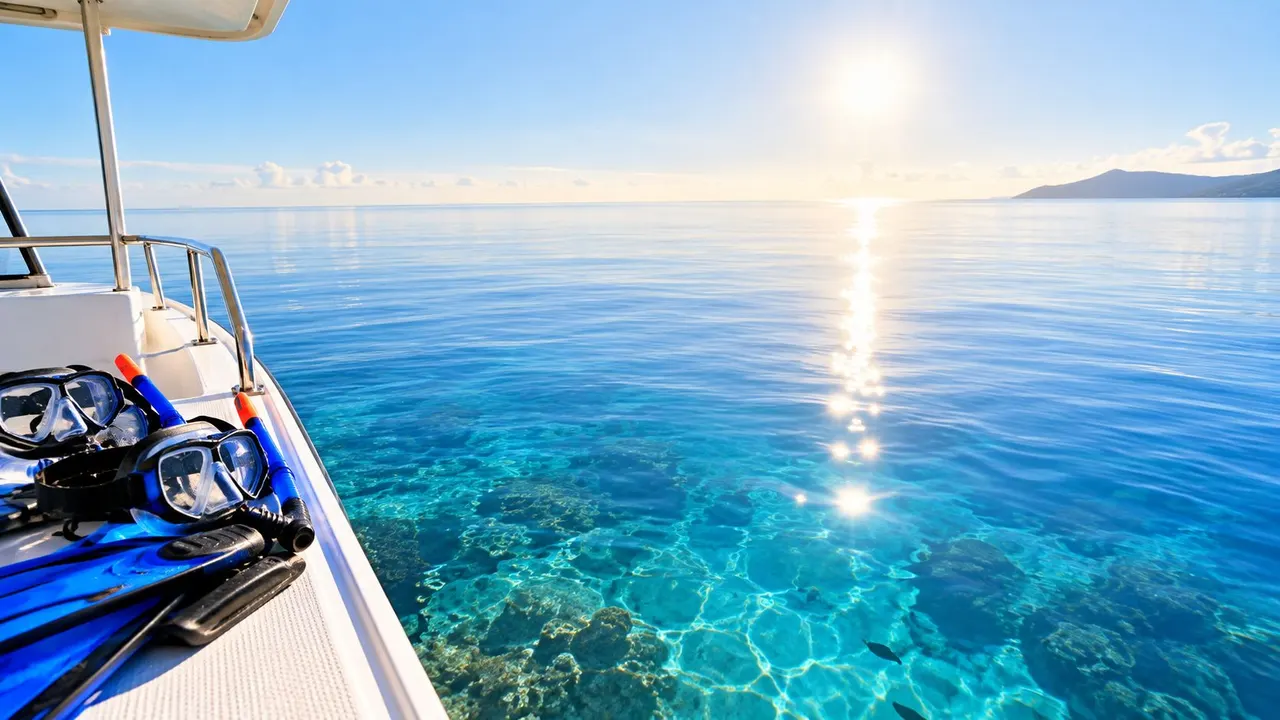
負責任的營運商會查看官方海況,必要時調整行程。調整可能包括更換地點、延後入水、縮短下水時間,或在條件不合適時取消。從飯店窗戶看見的平靜海灘,不能代表外海同樣安全,因為風和海流可能不同,正如這份歐胡島浮潛海況指南所解釋。
如果你最在意能見度和海洋生物活動,預訂早上的時段較合適。下午行程仍可能很愉快,尤其適合想放慢步調的家庭。不過,報名前應詢問營運商如何處理海況變化,也要確認岸邊浮潛與有船員陪同的行程,在監督和前往外海觀察野生動物方面有何不同。對初學者而言,船上支援可減少獨自判斷海流的壓力,但不能消除開放水域的風險。
季節性賞鯨
根據Hawaii's whale-watching information,夏威夷通常在十一月至四月可以看到座頭鯨,旺季為一月至三月。夏威夷土地與自然資源部表示,鯨魚最早可能九月抵達,最晚五月仍會留下,旺季則在一月和二月。歐胡島也常有目擊紀錄,但頻率低於茂宜島、可愛島和夏威夷島。The DLNR seasonal guidance提供了各島的季節背景。
賞鯨必須遵守明確的距離規定。NOAA表示,船隻和人員不得接近座頭鯨至一百碼以內。NOAA's Hawaiian Islands Humpback Whale National Marine Sanctuary也提供航行指引,以及回報鯨魚纏繞或違規接近的資訊。
Safety and Accessibility Tips for Beginners and Families
From the beach, snorkeling can look as gentle as floating in a pool. Once you enter open water, breathing, balance, currents, and fatigue all matter. Hawaii ocean-safety research recorded around 45 tourist ocean drownings per year between 2019 and 2023, with snorkeling as the number one contributing activity. The Hawaii Snorkel Safety Study summary puts that risk in context. It does not mean beginners should avoid the ocean. It means the setting and support deserve careful thought.
A shore entry may suit a confident swimmer who understands local conditions. A guided boat tour from Kewalo Basin gives the crew another way to monitor the group, provide flotation, and help with entry or exit. It also reaches wildlife areas that may be inaccessible from shore. Those advantages reduce uncertainty, but they do not remove open-water risk.
Tell the crew if you are a weak swimmer, have not been in the water recently, feel short of breath while wearing a mask, or have a child who may panic when water reaches the face. Honest information lets the crew recommend a safer plan.
A practical beginner checklist
- Start where help is available: Hawaii ocean-safety guidance recommends swimming at a lifeguarded beach, never snorkeling alone, testing gear in shallow water, and considering a delay of a day or two after flying before entering the ocean.
- Use flotation as support: A flotation belt or life jacket can help you rest and hold position. It does not replace swimming ability. Ask which option fits each child or adult.
- Practice breathing before moving: Put on the mask and snorkel in shallow water or while seated near the boat. Breathe slowly through the snorkel before looking down.
- Stay with your buddy and the crew: Do not swim ahead for a closer photograph. Keep the guide, boat, and group within easy awareness.
- Plan for seasickness: If motion affects you, choose a steadier seating area, follow the operator's food and medication advice, and tell the crew before departure.
- Respect physical limits: Older adults and guests with limited mobility should ask about dock access, boarding steps, ladders, flotation, and crew assistance for entering and leaving the water.
Parents should judge readiness by water confidence, not age alone. A child may be excited on deck, then feel trapped when a mask seals over the face. A family-friendly boat can provide a useful pause between supervised water time and shaded rest aboard.
The safest snorkeler is the one who says, “I need a break,” before fatigue becomes an emergency.
No guest should feel pressured to enter the water. Watching wildlife from the boat is a valid part of the experience.
How to Choose and Book the Right Waikiki Snorkeling Tour
Start with your group, not the advertised turtle promise. Ask what happens if the water is rough, how guides supervise swimmers, what flotation is available, and whether the crew offers a real equipment check before entry.
Compare operators by the details that affect your day
Departure point matters. Confirm whether you're leaving from Kewalo Basin, another harbor, or a beach. A harbor departure can provide a more structured boarding process, but you'll need to allow time to reach the dock and locate the check-in area.
Read the inclusions carefully. Look for masks, snorkels, fins, flotation, instruction, guide supervision, and any food or drinks that matter to your group. “Snorkeling included” doesn't always tell you how much time you'll spend in the water or whether the boat has family-friendly features.
Check the policy language. Weather, cancellation, rescheduling, late arrival, and no-show policies can affect your plans. Choose an operator that explains what happens when ocean conditions aren't safe instead of treating every departure as guaranteed.
Use reviews as evidence of operations. Look for recurring comments about communication, equipment fit, crew attention, check-in clarity, and how staff handled nervous swimmers. One excited wildlife story is less useful than consistent feedback about safety and professionalism.
Living Ocean Tours is described as the top rated and most reviewed snorkel company on Oahu. Its options include the Waikiki Snorkel Waterslide tour, as well as turtle-focused and wildlife-focused formats.
Pack for the actual experience
Bring swimwear, a towel, sun protection, water, and a secure way to store essential items. Reef-safe sunscreen helps reduce avoidable harm to the marine environment, while a light cover-up makes the boat ride more comfortable after swimming.
Book the time that matches your priority. Choose morning when visibility and active marine life are central, and choose a later cruise when your group values a relaxed schedule or wants to combine the ocean with another Waikiki activity. Don't select solely by price. Compare the quality of supervision, equipment, departure logistics, and the way the operator communicates risk.
Sample Itineraries and Eco Conscious Practices for Responsible Viewing
A well-planned ocean day balances time in the water with recovery. Families often enjoy a morning wildlife cruise, lunch, shade, and an unhurried afternoon more than a second demanding activity. The goal is a comfortable pace, not a packed schedule.
A family wildlife morning
Arrive at Kewalo Basin early enough for the safety briefing and equipment fitting. A guide can explain where to enter, how to use flotation, and when to remain aboard. Confident swimmers may spend more time in the water, while younger children or nervous guests can watch from the boat or enter only when ready. A family-friendly Oahu snorkeling option offers a useful example for groups that want snorkeling with supervised boat time.
This guided structure matters for beginners. Shore snorkeling can seem simpler, yet waves, currents, slippery entry points, and changing conditions may leave a family managing risks alone. A boat crew can watch the group, adjust the session, and end the water time when conditions or fatigue call for it.
After returning, bring dry clothes and choose a relaxed meal. Leave enough time between reservations for children to warm up, eat, and talk about what they saw. The guide's help, the boat ride, and a supported first swim can matter as much as a close wildlife encounter.
A turtle-focused ocean day with sunset
Couples and small groups can schedule a morning or early-day turtle excursion, then reserve several hours for food, water, and rest before a sunset cruise. If whale season overlaps with the visit, keep expectations flexible and follow the crew's distance rules. Wildlife access is a benefit of a guided boat trip, not a promise of a close approach.
Responsible viewing protects animals and keeps the reef usable for future visitors:
- Keep your distance: Stay at least 10 feet from sea turtles. Never touch, chase, feed, or block a turtle's route to the surface.
- Leave the reef in place: Do not stand on coral, collect marine life, or drag equipment across the bottom.
- Use reef-conscious sun protection: Apply reef-safe sunscreen and cover exposed skin when practical.
- Follow the crew: Guides decide when to move, pause, or end the session.
- Let wildlife choose the encounter: A turtle swimming away is normal wild-animal behavior.
The best photograph is the one you take without making the turtle change course.
Living Ocean Tours offers guided Waikiki snorkeling departures from Kewalo Basin, including turtle-focused trips and a Deluxe Waikiki Snorkel and Wildlife Cruise with family-friendly water features. Visit Living Ocean Tours to compare formats, review safety details, and choose a departure suited to your group's swimming confidence.


