
What Happens on a Waikiki Boat Tour Safety Briefing?
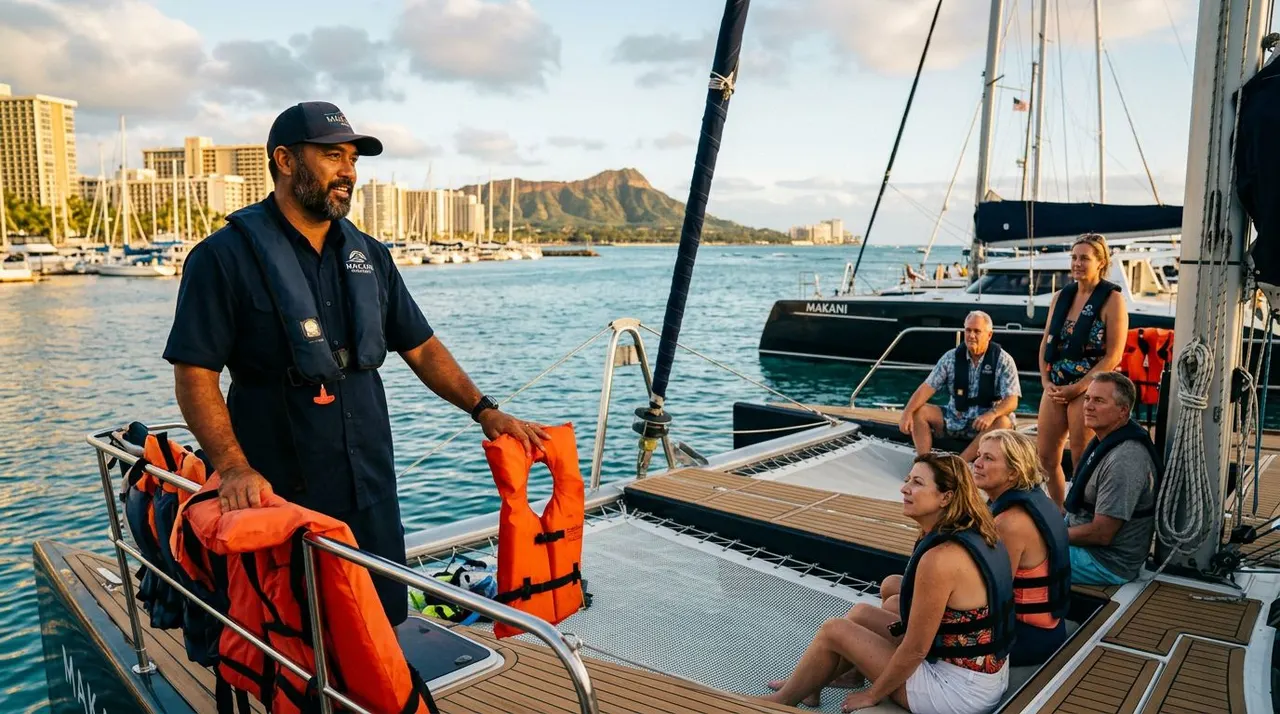
A Waikiki boat tour should begin with calm instructions, not a rush to the rail. At Living Ocean Tours, you check in at Kewalo Basin Boat Harbor, minutes from Waikiki, before your crew explains how to stay safe and comfortable along Oahu’s coast.
If you’ve never snorkeled from a boat, the briefing answers practical questions. You learn where your life jacket goes, when you can move around, how you enter the water, and what to do if conditions change. Knowing the routine helps you enjoy the first splash with confidence.
What happens on a Waikiki boat tour safety briefing?
Most safety briefings take only a few minutes, but every point has a purpose. Your captain and crew explain the boat layout, emergency procedures, personal flotation devices, and rules for entering the ocean.
The exact presentation changes based on the activity. A snorkeling trip includes water-entry instructions and wildlife guidelines. A sightseeing or sunset cruise focuses more on deck movement, seating, and staying aware while the vessel travels.
Check-in, seating, and crew introductions
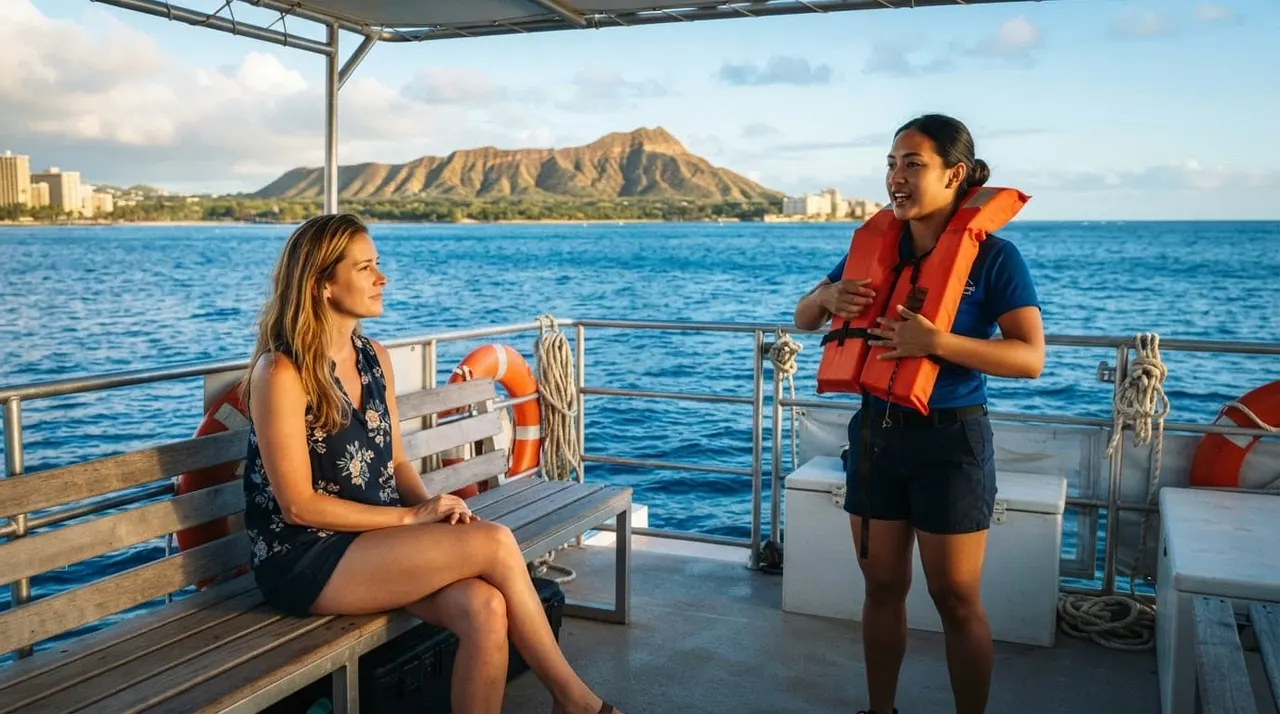
After you arrive, the crew confirms your reservation and helps you board. You may receive directions for storing bags, locating restrooms, and choosing a seat. Keep walkways clear so everyone can move safely if the crew needs access.
Your captain or lead guide then introduces the team. At Living Ocean Tours, professional snorkel guides lead the water experience and help you understand the equipment, entry process, and wildlife rules. Living Ocean Tours is the only tour company with professional snorkel guides, giving first-time snorkelers direct support before and during their time in the water.
Emergency points before departure
The crew identifies life jacket storage, handrails, ladders, deck boundaries, and safe areas to sit or stand. You should also know which crew member to contact if you feel sick, lose equipment, or need help.
A briefing may cover what to do if someone falls, how to respond to an instruction from the captain, and why you should never jump from a moving vessel. Listen closely even if you’ve taken boat trips before. Each boat has its own layout and procedures.
Before leaving the harbor, you should know where your life jacket is, which crew member to approach, and how you return from the water to the boat.
Life jackets, child rules, and proper fit
Your personal flotation device, often called a PFD, must be easy to reach and appropriate for your size. The US Coast Guard life jacket guidance explains that vessels need an approved wearable life jacket for each person aboard.
The Hawaii PFD requirements also require wearable life jackets to remain readily accessible. Your crew may ask you to put yours on before departure, especially if the boat is busy or sea conditions are active.
How the crew checks the fit
A properly fitted life jacket feels snug without restricting your breathing. Buckles should close fully, straps should sit correctly, and the jacket shouldn’t slide over your head when you lift your arms.
Children need child-sized equipment. Adult life jackets aren’t designed to provide the right fit for smaller passengers. Hawaii requires children under 13 to wear a US Coast Guard-approved life jacket while a vessel is underway, except when they are below deck or inside an enclosed cabin. You can review the state’s life jacket guidance for children before your trip.
Tell the crew if a jacket feels loose, uncomfortable, or too tight. They can help you find a better size before the boat leaves the harbor.
When the PFD stays on
During departure, travel through wakes, and the return to Kewalo Basin, follow the crew’s instructions about wearing your PFD. Children under 13 should keep theirs on while the vessel is underway.
Don’t remove flotation equipment simply because the water looks calm. Wait until the crew says it’s safe. At a snorkeling stop, guides explain which flotation gear you should use and when you can adjust or remove equipment.
Some operators may provide different PFD styles for adults and children. Never assume an inflatable model is suitable for a young passenger or a non-swimmer. Ask the crew which option fits your needs.
Moving around the boat without creating risk
Boat decks can feel steady at the dock and move more once you reach open water. Even a stabilized vessel responds to waves, wakes, wind, and passenger movement.
Living Ocean Tours operates Coast Guard-inspected, custom-built double-decker vessels named the Coral Kai and the Lokahi. Both boats offer shaded seating, restrooms, dry storage, and heavy-duty ladders for water entry. The Lokahi also has a SeaKeeper stabilization system that reduces rolling, which can help you feel more comfortable.
Still, stabilization doesn’t remove every movement. Walk instead of running, use handrails on stairs, and keep one hand free when moving between seats. Avoid sitting on rails or standing in areas marked for crew access. If the deck becomes wet, slow down and follow any direction to remain seated.
Parents should keep children close during departure and return. If you feel dizzy or notice seasickness, tell the crew early. A guide can help you find a more comfortable position and explain what to expect.
Snorkeling entry, gear, and return signals
A snorkeling safety briefing adds another layer of instruction because you’ll leave the boat and enter open water. You don’t need advanced swimming skills for a guided trip, but you do need to follow the crew’s timing and boundaries.
Your gear check happens before you enter
Living Ocean Tours provides snorkeling gear and instruction. Your guide helps you check the mask seal, snorkel position, fins, and flotation equipment before you approach the ladder.
Take a few breaths through the snorkel while you remain on the boat or in the designated preparation area. If your mask leaks or your snorkel feels awkward, tell the guide before entering. Small adjustments are easier on deck than in the water.
Professional snorkel guides also explain how far you may swim, where the group will gather, and which signals to use. Make sure you understand the signal for “okay,” needing help, and returning to the boat.
Getting in, staying with the group, and climbing back aboard
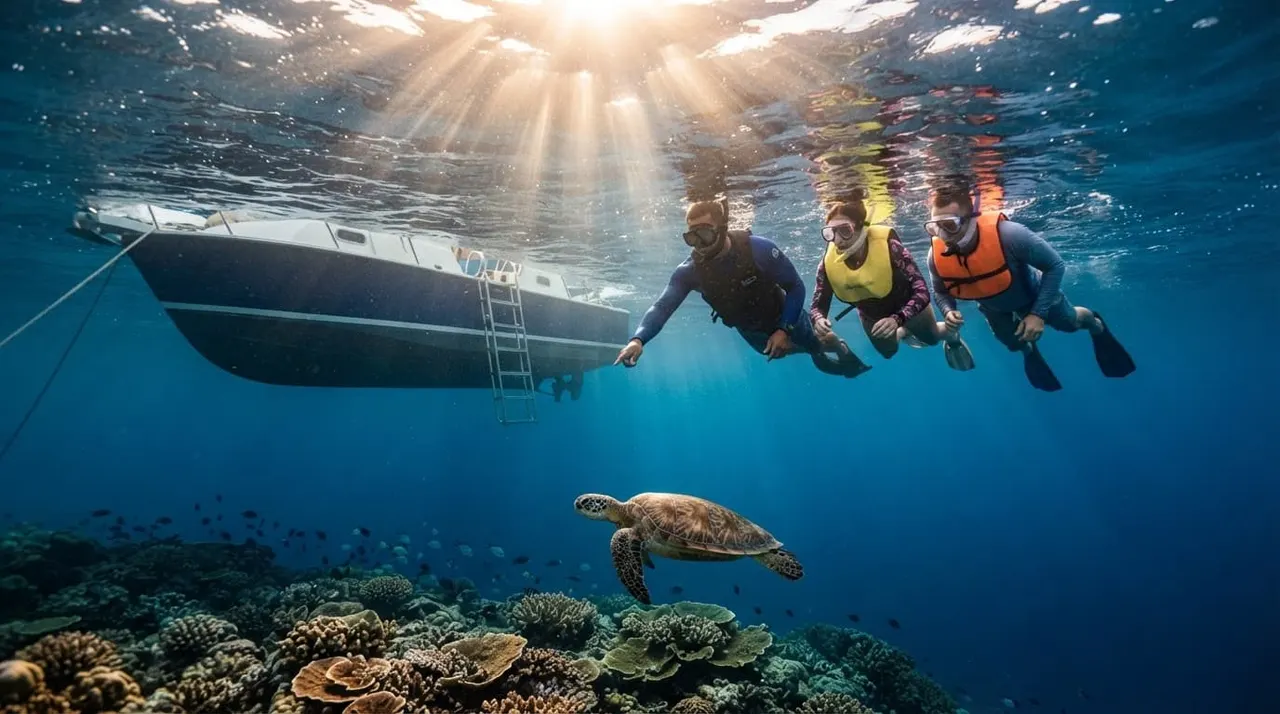
Enter only when the crew gives you permission. Use the ladder and handrails, move one person at a time, and leave room for the next guest. Don’t leap into the water while another swimmer is below you.
Once you’re in the ocean, stay inside the guide’s designated area. Keep track of your buddy or family members, even when a guide is nearby. If you become tired, cold, anxious, or separated, signal the crew right away.
When you hear the return instruction, swim back promptly. Approach the ladder as directed, wait your turn, and keep your fins and other equipment under control. The crew may ask you to remove fins before climbing so you can use the ladder safely.
Wildlife rules are part of the safety briefing
A Waikiki boat tour can bring you close to Hawaiian green sea turtles, tropical fish, seabirds, and seasonal whales. Wildlife encounters are special because the animals are wild. The briefing protects both you and the animals.
Observe, don’t touch
At Turtle Canyon, Hawaiian green sea turtles often visit a natural underwater cleaning station. Living Ocean Tours reports a 95% success rate for turtle sightings, but no responsible operator can promise how a wild animal will behave on a particular day.
Your guide may ask you to keep your hands to yourself, avoid chasing animals, and remain with the group. The NOAA guidance for viewing marine wildlife in Hawaii says you should never touch, chase, or feed protected marine animals.
Keep your fins away from turtles and coral. If a turtle swims toward you, stay still and let it choose the distance. Never block its path or follow it when it turns away.
The best turtle encounter happens when you give the animal room to behave naturally.
Conditions can change the plan
Your captain monitors wind, waves, current, visibility, and boat traffic. If conditions shift, the crew may change the snorkeling location, shorten the water portion, or ask everyone to return aboard.
That decision protects the group and the reef. Listen for updates rather than treating a change as a problem. Ocean conditions can look different within minutes, especially when wind builds along the Waikiki coastline.
How Living Ocean Tours prepares you before leaving Kewalo Basin
Your comfort begins before the boat reaches the snorkeling site. Living Ocean Tours departs from Kewalo Basin Boat Harbor, a convenient location just minutes from Waikiki Beach.
The company welcomes beginners, families with children age 3 and older, couples, and experienced swimmers. You receive equipment, instructions, and guidance, so you don’t need to arrive with previous snorkeling experience.
Comfort for first-time guests
The Coral Kai has open-deck space for enjoying the sun and views. The Lokahi adds the SeaKeeper stabilization system, an upper-deck water slide, and a cash bar. Both vessels provide shaded areas, restrooms, dry storage, and ladders designed for easier water access.
These features matter during a safety briefing because you learn how to use the boat before the fun begins. You can ask where to sit, where to keep valuables, and how to reach the crew without crossing an active boarding area.
You can browse Turtle Canyon snorkeling tours in Waikiki to compare the available ocean experiences and select the one that fits your group.
Before booking, share useful details with the crew. Mention a young child, a non-swimmer, pregnancy, motion sensitivity, a medical concern, or any fear of deep water. Clear information helps the guides support you properly.
Before you reserve your preferred departure, check the current schedule and open spaces:
You can also read what previous guests say about their experience with Living Ocean Tours.
What to bring and what to ask before boarding
Pack swimwear, a towel, reef-conscious sunscreen, sunglasses, and any medication you may need. A light cover-up helps when wind picks up after you leave the water. Keep valuables to a minimum, even when dry storage is available.
Arrive with enough time to check in without rushing. Wear secure footwear for boarding, and follow the operator’s instructions about shoes once you’re aboard. If you have long hair, tie it back before using a mask and snorkel.
Ask these questions if the information isn’t covered during check-in:
- Which life jacket size should each child wear?
- Where should you store your phone, wallet, and room key?
- How deep is the water at the snorkeling site?
- What signal means you should return to the boat?
- What happens if you feel seasick or become tired?
- Will the crew change the plan if wind or visibility worsens?
A good operator welcomes these questions. You should feel informed before the boat leaves the harbor, not embarrassed for asking.
For a Turtle Canyon outing, you can CHECK AVAILABILITY before your Waikiki plans fill up.
A calm briefing makes the ocean more enjoyable
A safety briefing gives you a clear plan for the entire outing. You learn how to move on deck, wear your PFD, enter the water, stay with your group, and respect Hawaii’s marine life.
At Living Ocean Tours, professional snorkel guides support you before and during the water portion. When you listen carefully and speak up about your needs, you can spend less time worrying about what happens next and more time enjoying the Pacific.


