
Waikiki Snorkeling Guide to Spots Tours and Safety
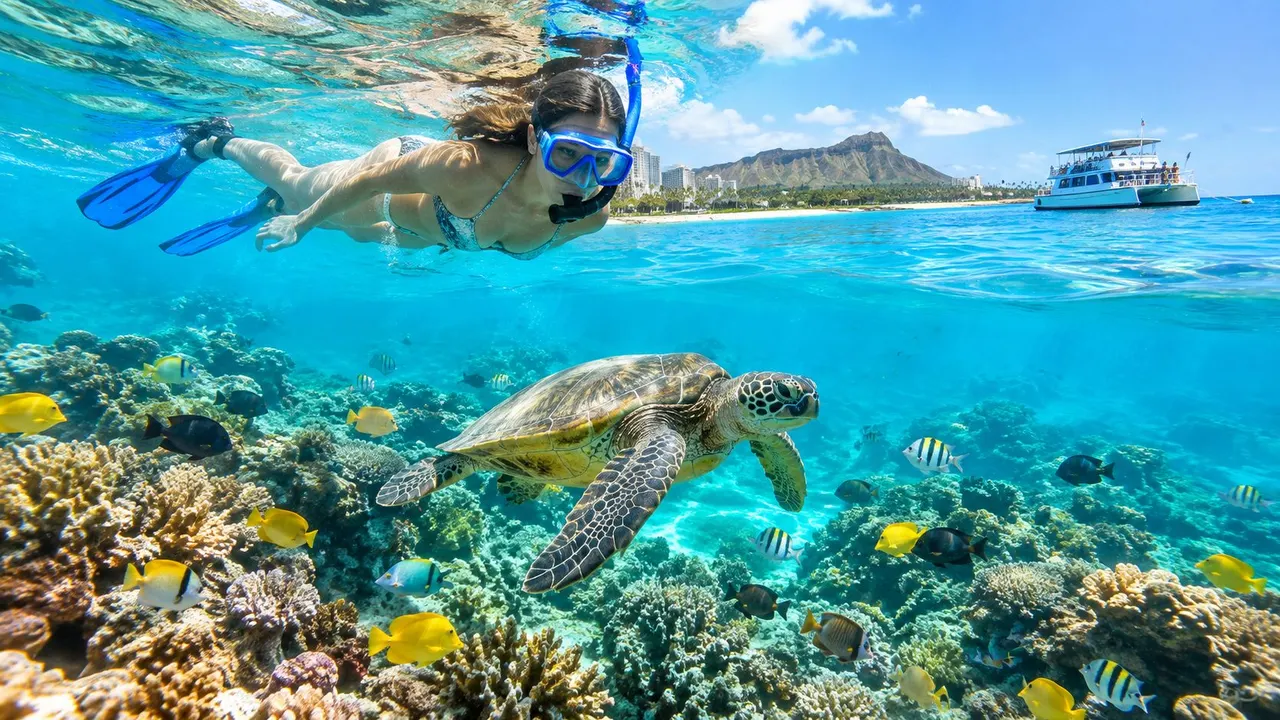
You've just arrived in Waikiki, the morning is bright, and someone in your group is holding a rental mask while asking the question every first-timer asks: “Where do we get in?” The answer depends on more than finding clear water. You'll want the right conditions, a comfortable entry, enough swimming confidence, and a plan for seeing wildlife without chasing it.
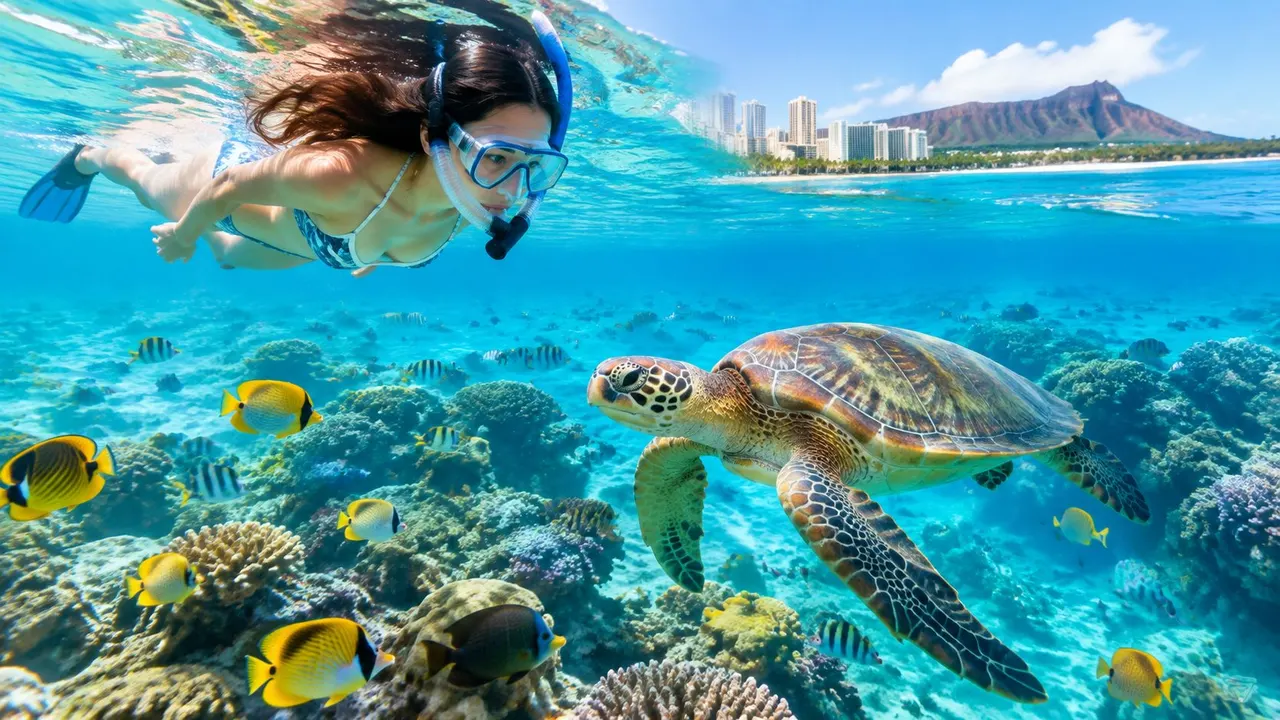
On a calm morning, Waikiki snorkeling can feel wonderfully simple. You float above reef, watch colorful fish move through the rocks, and may see a Hawaiian green sea turtle gliding below. Yet the ocean changes, even when the beach looks peaceful from shore. This guide treats Waikiki as a protected marine environment and a boat-access wildlife destination, not just another beach activity.
Introduction to Waikiki Snorkeling and What to Expect
Waikiki's appeal starts with access. Visitors can reach nearshore reef from the beach, while boat tours can take swimmers farther offshore to habitat that's difficult to reach safely on their own. That combination gives families and beginners options, but it also creates an important distinction: easy to access doesn't mean risk-free.
Hawaii has long depended on coastal recreation. A widely cited marine-use summary estimates that about 3 million people snorkel in Hawaii each year, while more than 80% of visitors participate in coastal or marine recreation. The same research describes Diamond Head shore snorkeling as a relatively high-use site with fewer than 200,000 total users, placing Waikiki within a much larger statewide pattern of nearshore ocean activity. Read the marine-use summary behind these figures.
What your first swim may feel like
The first few minutes usually matter more than the rest of the outing. Your mask may need adjusting, your breathing may feel loud through the snorkel, and your fins may make you kick harder than necessary. Relax your legs, keep your face in the water, and let the equipment do its job.
A turtle encounter also requires patience. You might see one resting near the reef, moving slowly through the water, or disappearing before your group gets close. Wildlife viewing works best when you act like a quiet visitor in an underwater neighborhood, not a person trying to force a photograph.
Captain's rule: If you can float comfortably, breathe steadily, and follow a guide's directions, you can build confidence quickly. If you're fighting your mask or gasping after a short swim, pause before going farther.
The rest of this guide covers the conservation district, shore and boat-access spots, guided tours, weather decisions, family preparation, and a practical half-day plan. The goal isn't to promise identical conditions every day. It's to help you make a calm decision before you enter the water.
Understanding the Waikiki Marine Life Conservation District
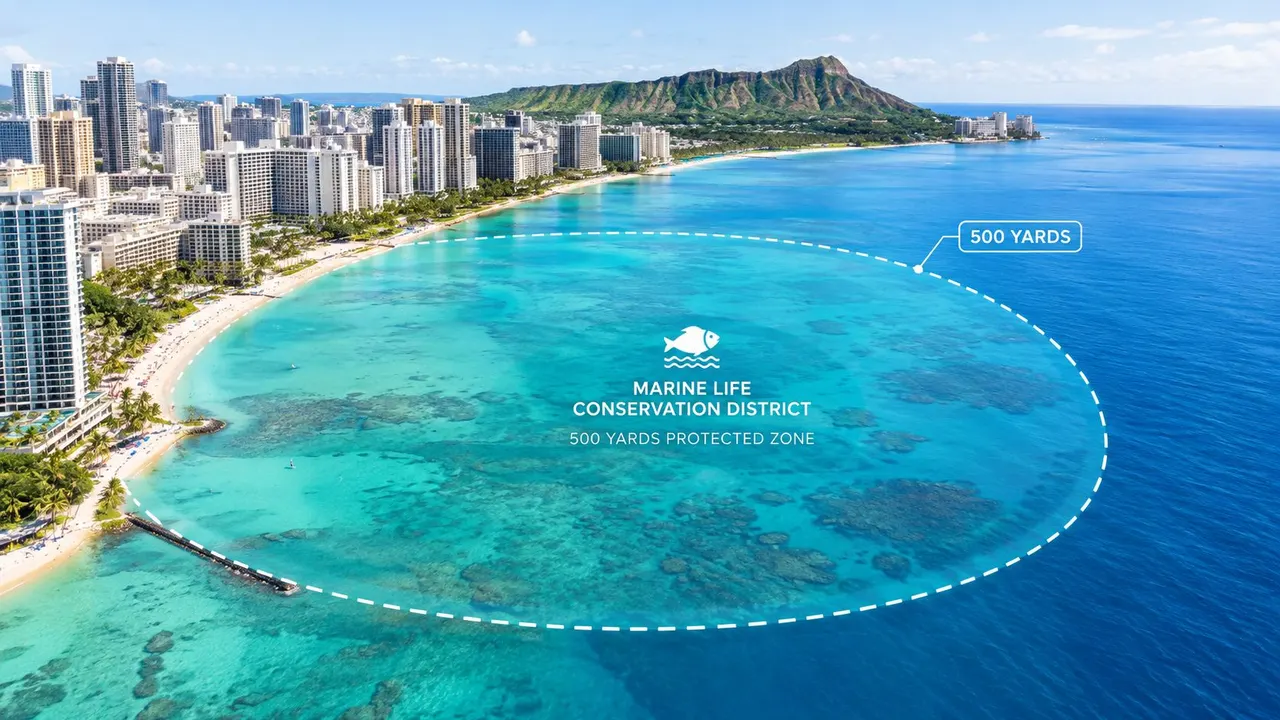
Your Waikiki snorkeling route may begin at the beach, but the water ahead is part of a protected underwater park. The Waikiki Marine Life Conservation District was established in 1988, covers 76 acres, and reaches from the high-water mark to 500 yards offshore, between the Kapahulu Groin seawall and the Waikiki Natatorium. Hawaii's conservation-district rules prohibit fishing and removing sand, coral, or other geological features.
That protection creates the setting for a wildlife encounter rather than an ordinary swim. The reef functions like a national park with water for a trail and fish, turtles, coral, and other reef organisms for residents. Visitors can observe the habitat because its resources receive protection.
Why turtles are part of Waikiki's story
Hawaiian green sea turtles have a long conservation history. The species has been protected under the U.S. Endangered Species Act since 1978, and local conservation reporting says Hawaii's green turtle population has increased by more than 50% over the last 30 years after protection began. Waikiki Aquarium's turtle conservation information explains how that recovery changed the relationship between visitors and Waikiki's nearshore waters. For a closer look at the species and responsible encounters, read this Oahu turtle conservation guide.
A 1993 study of Waikiki Beach described the offshore turtle population as relatively large, perhaps more than 100 individuals, although turtles had not historically been common there. Later monitoring at French Frigate Shoals found nesting females increasing at about 5.7% per year, with roughly 90% of Hawaiian Islands nesting occurring there. These figures describe a wider conservation story, not a promise of a turtle during every swim.
The rules protect your experience too
Use the water like a quiet visitor in an underwater neighborhood:
- Keep your body horizontal: Good buoyancy helps you watch fish without kicking the reef or scraping coral.
- Never stand on coral: Hawaii ocean-safety guidance specifically warns snorkelers not to stand on coral. Review the state's snorkeling-safety guidance.
- Don't feed wildlife: Fish, turtles, and other animals need to behave naturally.
- Give turtles space: Let the turtle choose its direction and distance.
- Take only photographs: Sand, coral, and geological features remain part of the protected district.
Boat access can make Turtle Canyon feel like a guided wildlife visit, especially for families and first-time snorkelers, while shore access requires more personal attention to entry, buoyancy, and conditions. In either setting, controlled movement protects the reef, preserves your energy, and gives animals room to behave naturally.
Best Waikiki Snorkeling Spots and How to Choose
Choosing between shore and boat snorkeling comes down to three factors: your group's swimming comfort, your priority for the day, and the water conditions. Shore access offers flexibility for confident swimmers. A guided boat trip provides crew support and a direct route to an offshore wildlife site.
| Snorkeling Spot | Access and Conditions | Best For |
|---|---|---|
| Waikiki Marine Life Conservation District shore areas | Enter from shore and remain near the protected nearshore reef. Conditions can change with rainfall, wind, waves, and visibility. | Confident swimmers, independent travelers, and visitors who want a flexible beach-based outing |
| Turtle Canyon | Boat-only access from Waikiki. It is described as a natural turtle cleaning station where Hawaiian green sea turtles gather. | Guests whose main goal is a guided turtle encounter, families who prefer crew support, and swimmers who do not want to handle offshore water alone |
The shore areas of the conservation district suit swimmers who are comfortable judging an entry and staying near the reef. Turtle Canyon is different. It is an offshore site, not a beach extension you can walk toward, so reaching it requires a boat.
Wildlife sightings are never scheduled performances. Turtle Canyon is known for turtle encounters, but responsible operators should not promise that an animal will appear or remain in one place. Learn about the Turtle Canyon site and tour approach. You can also review this Turtle Canyon snorkeling excursion to understand how a boat-access visit is organized.
Match the location to your group
For strong swimmers who can read conditions, shore snorkeling can be rewarding. You set the pace, return to the beach when you choose, and shorten the outing if children become cold or tired. The tradeoff is responsibility: each swimmer must judge the entry, maintain position, and leave when visibility, waves, or current feels wrong.
A boat tour changes the day's workload. The crew selects an appropriate site, explains the entry, provides flotation, and keeps watch while guests concentrate on breathing and wildlife. That support often suits first-timers, older adults, and multi-generational families whose swimming abilities differ.
Choose the spot that removes the hardest task for your group. If reaching an offshore site or staying oriented is difficult, use a boat. If keeping your own schedule matters most, consider a shore entry.
Before choosing independently, confirm that every swimmer can float calmly, return to shore if needed, and stop when conditions change. If any answer is uncertain, guided support is a practical safety choice, not a measure of experience.
Guided Waikiki Snorkel Tours and What They Include
A guided tour turns a confusing first swim into a sequence of manageable steps. Departures run from Kewalo Basin Boat Harbor near Waikiki Beach, where the crew can organize equipment, explain the plan, and take guests to an offshore snorkeling area without asking them to find it alone.
Living Ocean Tours offers guided options including the Turtle Canyons Snorkel Excursion and the Deluxe Waikiki Snorkel and Wildlife Cruise. The company provides masks, fins, snorkels, and flotation vests, then gives a pre-water briefing before guests enter. The Deluxe experience also includes a waterslide and water toys, which can help families split the day between wildlife viewing and active play. See the available Oahu snorkeling tours.
What happens before you enter
At the harbor, allow time to get oriented rather than rushing straight to the rail. The crew will help with equipment and explain how the mask should sit, how to clear a snorkel, and how flotation works. Listen for the site-specific information, especially where to enter, where to regroup, and how to respond if you need help.
A good briefing also explains wildlife etiquette. You shouldn't touch turtles, chase fish, stand on coral, or feed animals. These rules make the encounter calmer for everyone and reduce the chance that a guest uses too much energy trying to follow an animal.
How to use the water time well
Enter slowly. Hold the boat or ladder if instructed, place your face in the water, and take a few relaxed breaths before swimming away. Your first goal isn't to reach the farthest point. It's to confirm that your mask seals, your snorkel feels comfortable, and your breathing is under control.
Crew members can help guests who need a slower pace or extra flotation. That matters because a group may include an enthusiastic child, a cautious grandparent, and a strong swimmer who all need different levels of support. A standardized 30–40 minute snorkel survey used by REEF at Waikiki requires participants to identify, count, and record reef fish, and organizers specify that participants should be strong swimmers and competent snorkelers. See the REEF Watch Waikiki survey description. That's a useful reminder that productive observation depends on buoyancy control, efficient fin movement, and enough calm to notice what's below you.
Learn more about the Turtle Canyons Snorkel Excursion, or consider Snorkel Turtle Canyon as another tour-company option for a guided turtle experience.
Safety Tips Timing and Best Conditions for Beginners
Good snorkeling decisions start before you put on your fins. Hawaii ocean-safety guidance recommends checking conditions, snorkeling with a buddy, going in the morning, and avoiding contact with coral. Those steps work because they reduce exposure to changing conditions and give you another person who can notice trouble early.
Runoff creates a special issue near the west side of Waikiki by the Ala Wai outlet. Independent ocean-safety guidance advises avoiding murky water and staying out for about 72 hours after heavy rain. Review the Waikiki rainfall and visibility guidance. Murky water can reduce what you see, while runoff and surface stirring can make a familiar entry feel less comfortable.
Use a simple go or no-go check
Before entering, look at the water rather than trusting yesterday's experience.
- Go cautiously: The water looks clear, the entry feels manageable, and your group can communicate and stay together.
- Wait or choose a different plan: The water is murky after rain, waves are pushing strongly across the entry, or swimmers feel anxious before getting in.
- Use a guide: Someone in the group lacks open-water confidence, needs flotation, or wants help understanding the site.
Morning conditions are often preferred because wind and surface activity may be more manageable. That isn't a promise of calm water, so still check the current conditions when you arrive.
Treat breathing changes as a stop signal
Snorkeling can feel easy while you're floating, then become strenuous when you fight a current, kick too hard, or panic after a mask leak. Hawaii snorkel-safety reporting identifies Rapid Onset Pulmonary Edema as a real danger that can affect even fit swimmers. The practical response is conservative: use flotation, stay with a buddy, pace yourself, and stop immediately if breathing feels unusual.
Breathing check: If you're working hard to breathe, don't swim farther to “see if it passes.” Signal your buddy or guide, return to support, and get out of the water.
Older adults, less confident swimmers, and athletic visitors may all misjudge exertion for different reasons. Calm water can create false confidence, while anxiety can make ordinary effort feel much harder. A flotation vest isn't an admission of weakness. It's a tool that lets you keep your head up, conserve energy, and pay attention to the reef.
For more practical preparation, review this Oahu snorkeling safety guide.
Packing Checklist Family Tips and Responsible Wildlife Viewing
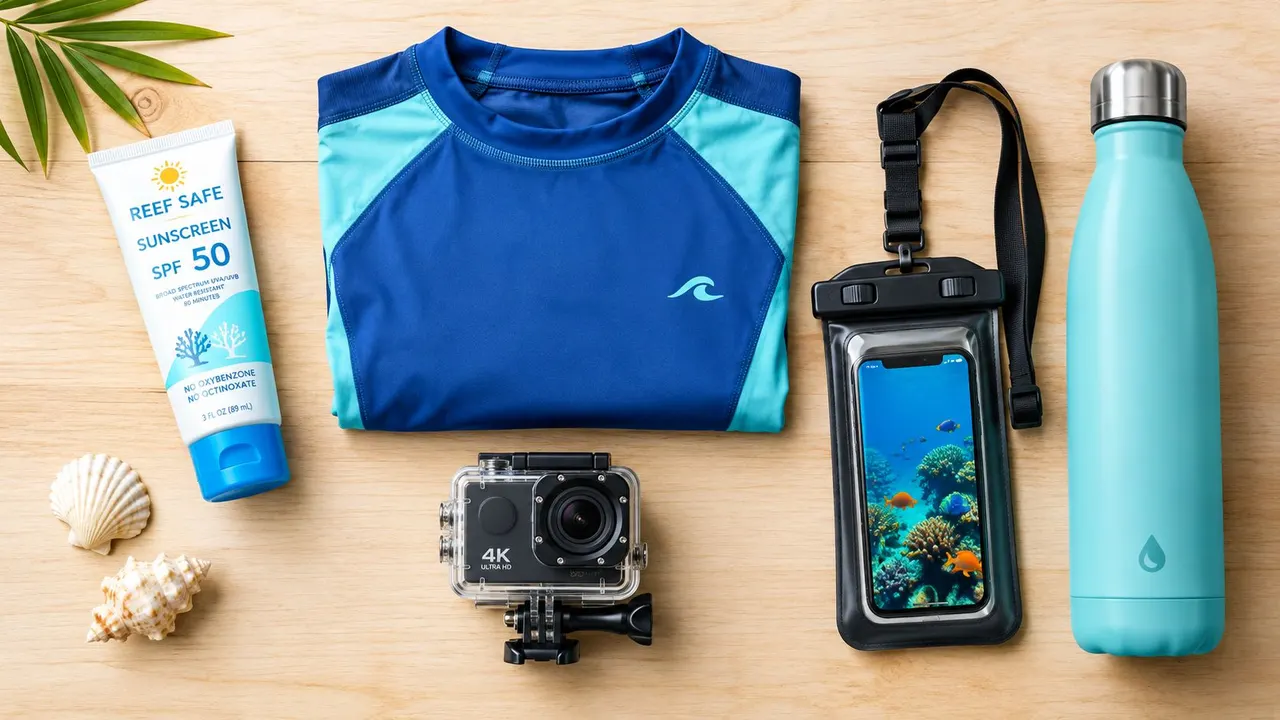
Pack for comfort, visibility, and easy decisions. A rash guard helps protect skin from sun exposure, reef-safe sunscreen reduces concern about what washes into the water, and a secure phone pouch keeps your device from becoming a distraction or a loss.
Bring what helps you relax
- Wear a rash guard: It provides sun coverage and can make a long surface swim more comfortable.
- Choose reef-safe sunscreen: Apply it before entering and follow the product directions.
- Use flotation when useful: Vests improve visibility and reduce effort for children, older adults, and nervous swimmers.
- Carry water: Hydrate before and after the swim, especially in warm weather.
- Skip reef shoes in the water: They can encourage guests to walk where they should float, and standing damages coral.
- Leave valuables behind: Bring only what you can secure.
Families should agree on a simple buddy arrangement before entering. A child may become fascinated by a fish and drift away from the group, while an older adult may slow down without wanting to interrupt everyone. Keep the least confident swimmer near a responsible adult or guide, and make regrouping normal rather than embarrassing.
Watch wildlife without crowding it
Turtles need room to move, breathe, rest, and feed. Don't touch them, block their path, or swim directly over them. If a turtle turns away, let it go. You can still have a memorable encounter without getting close enough to control its movement.
The same principle applies to fish and coral. Don't feed animals, don't collect anything, and don't use your fins to push off the reef. Your body should remain suspended above the habitat, with slow kicks and hands kept away from the bottom.
Screenshot this short checklist before you leave:
- Check conditions: Avoid murky water and reconsider after heavy rain.
- Stay together: Use a buddy system and agree on signals.
- Float, don't stand: Keep fins and feet off coral.
- Give wildlife space: Never touch, chase, or feed animals.
- Stop early: Exit if breathing, anxiety, or fatigue feels wrong.
For a more detailed preparation list, use this Oahu snorkeling packing checklist.
Sample Itineraries Booking and Getting to the Harbor
A well-planned morning keeps snorkeling from becoming the only thing everyone has to think about. The easiest approach is to choose one main water activity, leave room for changing conditions, and avoid scheduling a demanding swim after a long day in the sun.
Plan one for turtle-focused travelers
Start with a morning departure from Kewalo Basin Boat Harbor, near Waikiki Beach. A Turtle Canyons outing gives your group boat access to the offshore cleaning-station habitat, equipment support, a briefing, and in-water guidance. After returning, have a relaxed meal and keep the rest of the day flexible for beach time or a low-effort Waikiki walk.
This plan suits adults, couples, and families whose priority is seeing marine life with help from a crew. Book ahead when your travel dates are firm, then confirm the meeting location and arrival instructions directly with the operator.
Plan two for families who want variety
Choose the Deluxe Waikiki Snorkel and Wildlife Cruise for a mix of reef viewing and onboard play. The waterslide and water toys give children another activity while adults can focus on the wildlife portion and help less confident swimmers stay comfortable.
If you're traveling with a large group, ask about private charter options. Living Ocean Tours offers private charters for groups of up to 40 guests, which can be useful for celebrations, corporate outings, and family gatherings. Transport from Waikiki should include enough time to reach Kewalo Basin, locate the correct boarding point, and organize parking or a rideshare without rushing.
Check the forecast and water appearance on the day, keep a shore-based backup plan, and choose the outing that matches your group's actual swimming ability. Waikiki snorkeling is most enjoyable when the wildlife encounter, safety plan, and conservation habits all fit together.
Living Ocean Tours offers guided Waikiki snorkeling from Kewalo Basin Boat Harbor, including the Turtle Canyons Snorkel Excursion and a Deluxe wildlife cruise with family-friendly water features. Visit Living Ocean Tours to compare the options, choose a date, and prepare for a responsible day on the water.


