
Waikiki Snorkeling: The Complete Guide for Beginners
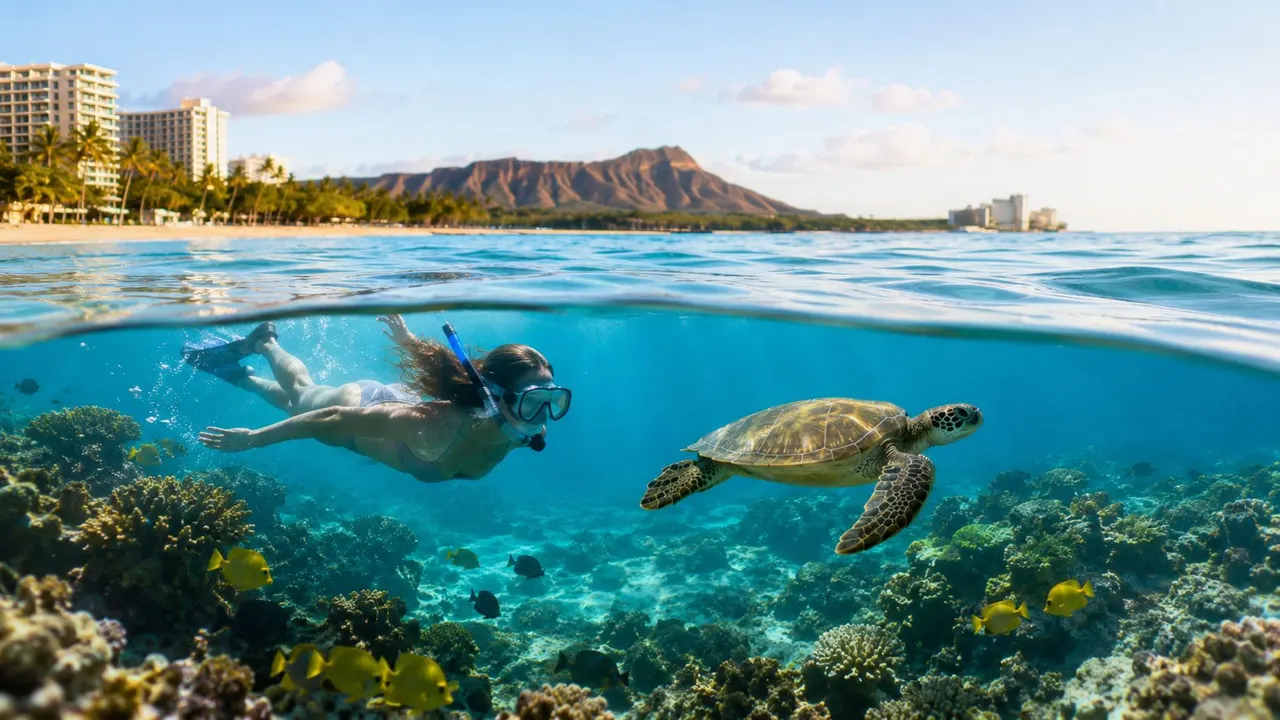
You can stand on Waikiki Beach with a mask in your hand and still end up with a flat snorkel day. That's the part most visitors don't hear until they've already dragged gear across the sand, fought a little chop, and realized the water looks nothing like the postcard they had in mind. Waikiki snorkeling works, but only when timing, location, and conditions line up.
The honest version from the boat side is simple. Calm mornings can give you an easy, memorable swim, while a different beach an hour later can feel murky and tiring. That's why shore entries and boat trips don't belong in the same bucket, especially if what you really want is a cleaner window, a better chance at turtles, and less guesswork for the whole family.
What Waikiki Snorkeling Feels Like for First-Timers
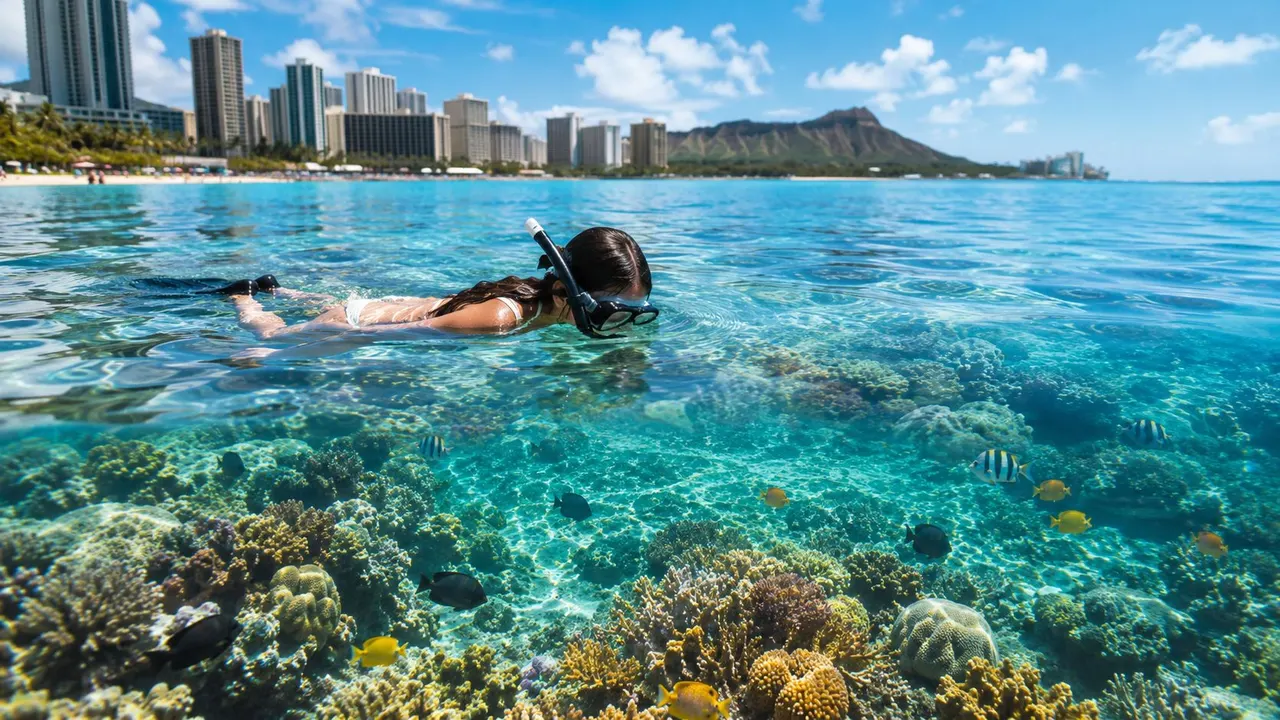
A typical morning at Kewalo Basin starts calm. The crew checks gear, families walk up with towels tucked under their arms, and the water often looks far more manageable than it did the afternoon before. That calm launch can make first-timers assume every Waikiki snorkeling spot behaves the same way. It doesn't.
The first surprise is how much work a shore entry can demand when the ocean is only partly settled. A beach that looks simple from land can still have light surge, suspended sand, and enough surface movement to make nervous swimmers tighten up. Hawaiʻi also has a blunt safety backdrop. State non-resident drowning data shows how often visitors get into trouble in the ocean, and snorkeling appears in that report as a common activity among the cases recorded (state non-resident drowning report).
Shore convenience is real, but it has limits
Most visitors want the same thing, easy entry, a few fish, maybe a turtle, and a relaxed return to the beach. That part is fair. The problem is that shore snorkeling in Waikiki depends on whatever the ocean gives you that morning, and the easiest stretch of sand is not always the place with the clearest water or the most wildlife.
Practical rule: if you are choosing only by the beach map, you are usually choosing too early. Waikiki snorkeling pays off when you match the spot to the conditions, not when you pick the prettiest shoreline.
That is why a lot of first-timers leave saying the outing was fine, not memorable. They got in, they floated, they saw a few fish, and they never really reached the better water. Shore entries can work on the right day, but they also keep you tied to whatever the nearshore conditions happen to be, which is why turtle sightings and clarity often underdeliver. A boat-based trip changes that equation fast, especially for guests who came here wanting a real turtle encounter instead of a generic swim. If you want to compare trips against the tide and swell rather than guess from the beach, use the Waikiki tide chart for snorkel timing before you pick your window. If you want the straightforward version of a guided option, Living Ocean Tours snorkel departures run from Kewalo Basin and take people where the water is more likely to reward the effort.
How Conditions Shape a Snorkel Window in Waikiki
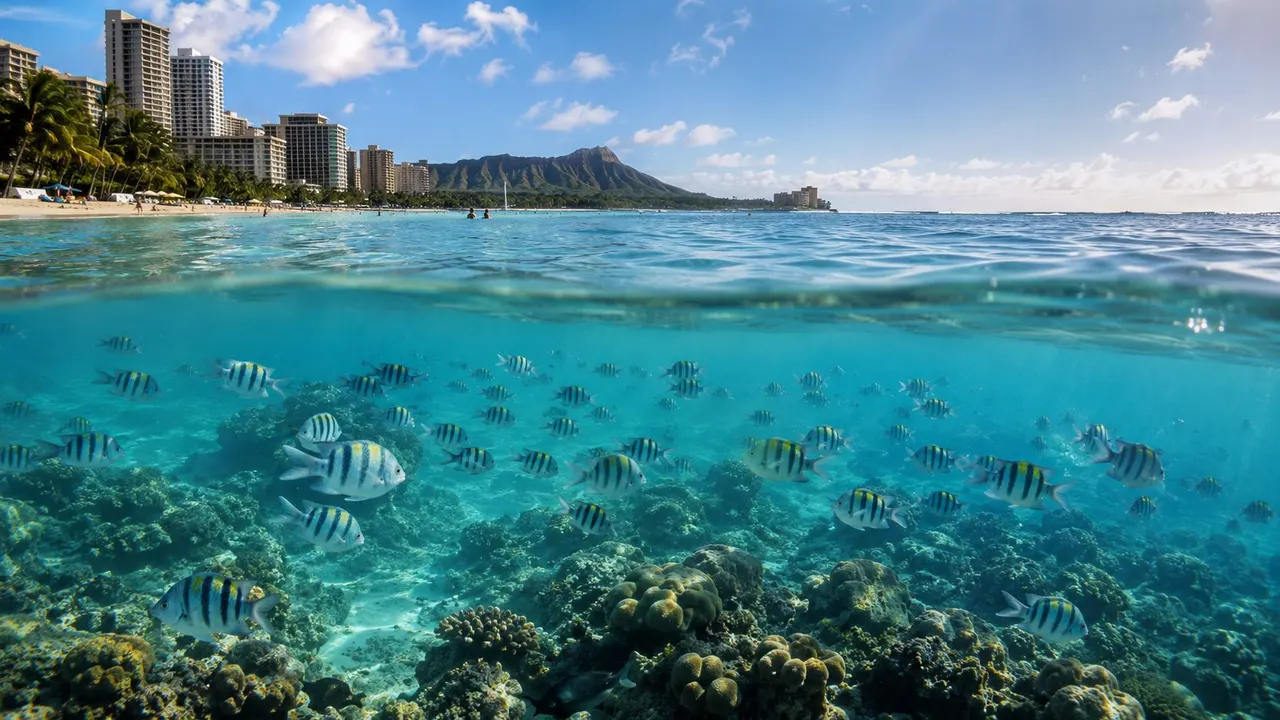
The first thing to read is not the beach name, it's the ocean state. Waikiki snorkeling lives or dies on swell, wind, and runoff, because each one changes how easy it is to see, breathe, and stay relaxed in the water. Calm summer windows usually give the smoothest learning curve, while a conditions report for Waikiki MLCD rated visibility only “Fair” with 2 to 4 ft surge break and light-to-moderate currents under E 15–20 mph trades, which tells you how quickly moderate wind can rough up the nearshore experience (Waikiki conditions report).
The best habit is to think in layers. Overnight settling often helps visibility early in the morning, then the day heats up, trade winds strengthen, and more sand gets suspended. Boat traffic can add to that churn, so the later you go, the more likely the water is to look tired.
Dry weather beats wishful thinking
Rain matters more than most visitors realize. Independent guidance notes that the Ala Wai Canal outfall can reduce clarity after rain and may increase bacteria levels, and the Hawaiʻi Department of Health recommends staying out of the ocean for at least 72 hours after heavy rainfall (snorkeling and water quality guidance). That's not a minor footnote, it's the difference between a decent swim and a poor call.
If you have one rule, make it this one, dry-weather mornings are the highest-value window.
That's why the smartest planning order is simple, check rain first, then wind, then surf, then the tide. For a quick planning tool, use the Oahu tide charts and aim for a morning that's been dry for a few days. If the water looks hazy after rain or the surface chop is already building, don't try to force a beach snorkel because the hotel is close.
Best Waikiki Snorkeling Spots and What They Really Offer
A good Waikiki snorkel starts with the right spot for the day, and the choice changes fast once you factor in tide, crowding, and how much shoreline chop you're willing to tolerate. Around Queen's Beach and Sans Souci Beach, the Queen's Beach and district boundary guide shows you the stretch that sits in or beside the Waikiki Marine Life Conservation District, with the protected area running between the Kapahulu Groin and the north wall of the Natatorium. That gives you a real frame for shore snorkeling here. It is close, simple, and usually short-lived. If you want to line up your timing with the water instead of guessing, start with the Oahu tide charts and check where the day's low-water window falls.
The shore spots are good for convenience, not certainty
Queen's Beach is the easiest place to get in and out without much fuss. It works best for a quick look at reef life when the water is settled and you do not want to haul gear far from the beach. Sans Souci Beach usually feels a little calmer and less hectic, which helps if you are with kids or first-time snorkelers who need time to settle in. Kuhio Beach gets recommended often because it is simple to reach, but convenience does not guarantee a rewarding snorkel. At all three, the key question is whether the water is clear enough and calm enough to make the effort worth it.
These shore entries share the same trade-off. They are easy to access, but the payoff depends heavily on the day.
Turtle Canyon is the different animal
Offshore Turtle Canyon asks for a boat, and that changes the experience in a way shore snorkeling cannot match. The water is usually clearer away from the shoreline churn, and the encounter is more organized, which is why guided trips tend to do better for turtle viewing than a beach attempt. A local guide notes that beachfront snorkeling can be convenient, while offshore snorkeling at Turtle Canyon is more reliable for turtle encounters and clearer water than shore snorkeling (Living Ocean Tours turtle snorkeling article). That matches what crews see over and over. If your group wants a better shot at turtles without spending the whole session fighting for visibility, Turtle Canyon is the stronger bet.
Living Ocean Tours offers a practical snorkel option for that kind of day, the Waikiki snorkel tour page, which gives visitors a direct route to the offshore setup instead of leaving them to gamble on beach conditions.
| Spot | Access | Best Conditions | Best For |
|---|---|---|---|
| Queen's Beach | Easy beach access | Calm morning water | Short shore session, beginners |
| Sans Souci Beach | Easy beach access | Low chop, dry weather | Families, relaxed practice |
| Kuhio Beach | Very convenient | Very calm days only | Quick look, very casual snorkelers |
| Turtle Canyon | Boat access | Guided, offshore calm windows | Turtles, clearer water, stronger payoff |
The choice is not about a single “best” spot. It is about what kind of uncertainty your group can live with. A shore snorkel can be the right call if you want the simplest start and do not mind a limited session. Turtle Canyon makes more sense when you want a cleaner turtle encounter and a better return on the time you spend in the water.
Why a Guided Tour Beats Going Solo for Most Visitors
A lot of first-timers assume guided snorkeling is mostly about having someone point out fish. The core value is simpler and more practical. The crew cuts down the usual failure points, a poor entry, gear that does not fit right, bad timing, and the kind of drift that has beginners burning energy before they settle their breathing. In Waikiki, that matters because one bay can look calm while another has already turned choppy.
For this kind of day, Living Ocean Tours keeps the setup straightforward with the Turtle Canyons Snorkel Excursion and the Deluxe Waikiki Snorkel and Wildlife Cruise. The first goes after the turtle cleaning station. The second adds the waterslide, water trampoline, and lily pad, which works better for families who want the boat time to feel playful instead of technical. If you want the main booking page for the snorkel outing, use the Waikiki snorkel tour page.
What guided support actually changes
A guided trip gives you gear fitting, in-water supervision, and local judgment about whether the day is worth the effort in a given spot. That is a different setup from stepping off a beach and hoping the reef cooperates. Shore snorkeling can be fine on a calm morning, but it also leaves more room for bad entries, weak visibility, and a lot of wasted motion before you ever see anything worth slowing down for.
It helps beginners most, because they need a shallow ramp into the water and a steady hand when nerves start making everything feel harder than it is. Parents feel that difference fast. Instead of spending the whole session watching the kids or talking them through the basics, they can snorkel.
The crew also matches the trip to the day. If the shore looks washed out, the boat can still find a better window offshore. If kids need a break from snorkeling itself, the Deluxe cruise keeps the outing fun without turning it into a grind.
Bottom line: guided snorkeling is about reducing the small mistakes that turn a promising Waikiki morning into a frustrating one.
If you are choosing between the two, Turtle Canyon is the cleaner choice for people who want turtles and are fine with a more focused snorkeling trip. The Deluxe cruise makes more sense when the group includes younger kids, mixed comfort levels, or anyone who wants the boat day to feel like part snorkel, part water play.
Safety and Etiquette Around Turtles and the Reef
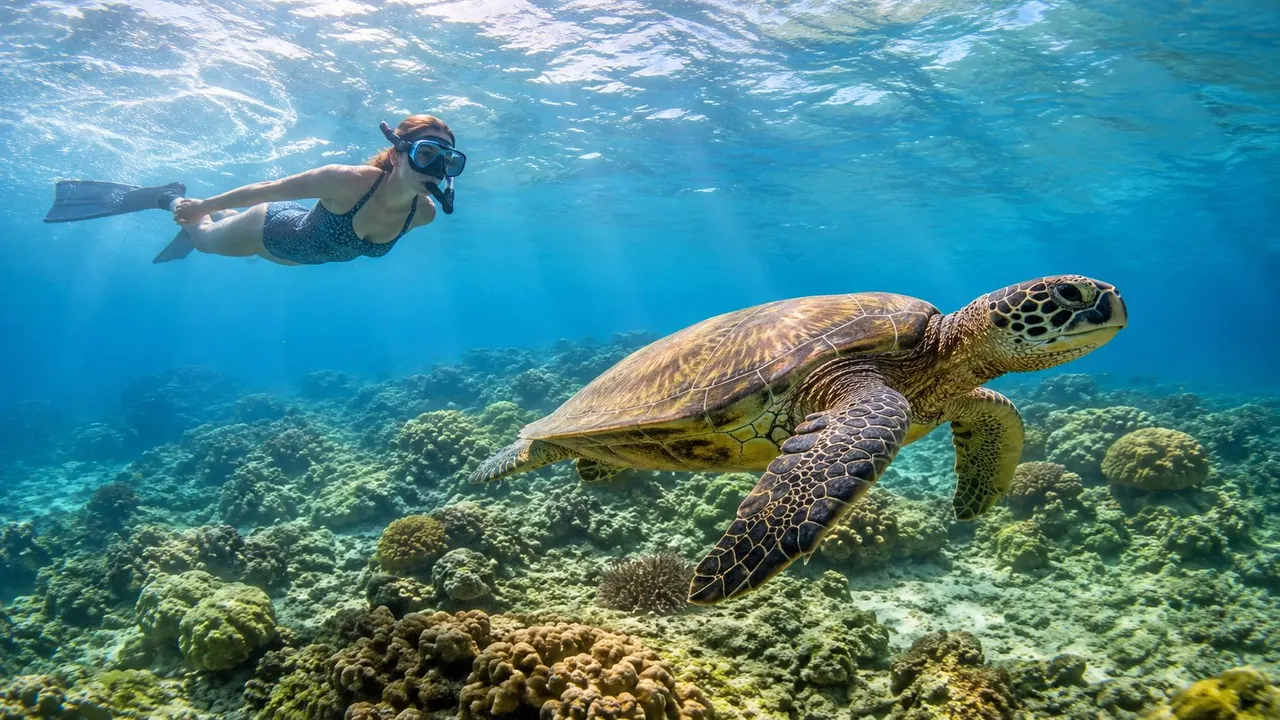
A clean turtle sighting starts with distance, not excitement. Keep at least 10 feet (3 meters) away from Hawaiian green sea turtles, and give spinner dolphins much more room, about 50 yards (45 meters), because swimmers often drift toward movement before they realize it (turtle snorkeling rules). The reef needs the same restraint. Never stand on coral, because it is living structure, not bare rock (Waikiki snorkeling safety guidance).
The right response is usually to slow down
If a turtle comes near you, stop following it, keep your hands close, and hold your position. Let the animal choose the spacing. That is how you get a calm encounter instead of a stressful one for both sides. Staying relaxed also helps when the surface gets choppy, because tight, rushed movement burns air and makes it harder to stay steady.
Use reef-safe sunscreen before you enter the water, not after you are already at the shoreline. The guidance points to zinc oxide or titanium dioxide and says to apply it 20 to 30 minutes before swimming (turtle snorkeling rules). That keeps the product on your skin instead of washing straight into the reef.
For a practical breakdown of turtle distance, reef protection, and what to avoid in the water, see the full Hawaii turtle snorkeling rules.
Don't try to power through a rough patch by swimming harder. Get neutral, breathe, and decide whether the water still deserves your effort.
Current changes deserve the same calm approach. If you start working too hard, shorten the session. Waikiki snorkeling should reward control and patience, not punish overconfidence.
Seasonal Tips for Tides, Visibility, and Whale Season
Summer usually gives the easiest learning curve. The water tends to be calmer, the sessions feel less demanding, and first-timers can focus on breathing and balance instead of fighting the surface. Winter can still produce clean mornings, but bigger surf means the ocean is less forgiving and you need to be choosier about your window.
Tide, rain, and seasonal timing work together
A falling tide often gives a better chance at cleaner reef visibility than a rising tide because there's less water movement stirring up the nearshore zone. That doesn't make tide the only factor, it just makes it one more useful filter when you're deciding whether a beach morning is worth it. Pair that with the earlier rule on dry-weather windows, and you start to see the pattern, the best days are usually the ones that have been dry, settled, and early.
January through March changes the offshore feel in a different way, because that's when humpback whale encounters become part of the experience on the water (Living Ocean Tours whale season page). That doesn't mean you should expect whales on a snorkel run, but it does mean a boat day can feel like more than a swim if you're traveling in season. Some families choose to combine their water time with a whale-focused outing instead of forcing extra snorkeling into a rough winter window.
When the season should change your plan
If your trip lands in summer, book early mornings and lean toward shore or boat based on your comfort level. If your trip lands in winter, be more flexible and assume the ocean may push you toward the offshore option or even a non-snorkel water day. In both seasons, the post-rain 72-hour rule still applies, so don't let a sunny afternoon trick you into ignoring runoff just because the sky cleared (snorkeling and water quality guidance).
What to Pack and What the Boat Already Covers
Overpacking is the classic first-timer move. You don't need a suitcase full of gear to enjoy Waikiki snorkeling, you need the right basics and a realistic sense of what the boat already handles. For planning help, this Oahu snorkel packing list is a solid reference point before you start stuffing bags.
Bring less than you think
At minimum, bring reef-safe sunscreen, a towel, and something that helps with the ride back, like a light layer if you get cold easily. A rash guard is smart because it cuts down on skin friction and sun exposure. If you're prone to motion sickness, take that seriously before you board, not after the boat leaves the harbor.
A few small items make a bigger difference than extra gadgets:
- Dry bag: Keeps phone, keys, and wallet out of the splash zone.
- Phone protection: Use a secure case if you want photos without risking your device.
- Water shoes: Helpful for shore entries, less important if you're boarding a boat and staying off sharp surfaces.
- Snacks for kids: Useful after the water time, especially for younger swimmers.
What's easier for non-swimmers
Non-swimmers don't need to default to shore snorkeling. Starting from the boat ladder, or with close supervision and flotation, is usually simpler than trying to manage surf and sand at the same time. Guided crews can help with flotation and pacing, which matters when confidence is the primary barrier.
The main mistake is trying to solve comfort problems by bringing more stuff. Comfort usually comes from better entry, better supervision, and fewer decisions once you're on board.
Booking, Pricing, and the Questions Everyone Asks First
The same four questions come up often: can a non-swimmer do this, are kids welcome, how clear is the water, and what's the price. The straight answer is that guided Waikiki snorkeling is usually a better fit for families and mixed-skill groups than DIY shore snorkeling, because the crew can control more of the variables. That matters even more when people arrive with different comfort levels and one person plans to “just watch from the boat.”
Living Ocean Tours' snorkel outings are built around that reality, with gear, instruction, and supervision included on the water. If you're comparing options, the better question isn't whether snorkeling is possible in Waikiki, it's which setup gives your group the least stress and the best odds of a clean experience.
The questions that come up first
Can non-swimmers join? Yes, when flotation, supervision, and a calm entry plan are in place.
Are kids a fit? Yes, especially on trips that include more than just the snorkel itself.
How clear is the water? It varies by conditions, which is exactly why timing matters.
What does it cost? Pricing changes, so the safest move is to check live availability rather than assume a generic number from another island tour.
If you want a Waikiki snorkeling day that's built around conditions instead of guesswork, book with Living Ocean Tours. Their snorkel trips depart from Kewalo Basin, focus on Turtle Canyon and family-friendly water time, and give you a practical way to turn a maybe into a real ocean day.


