
Turtle Canyon Snorkel Adventure in Waikiki Oahu: Your 2026
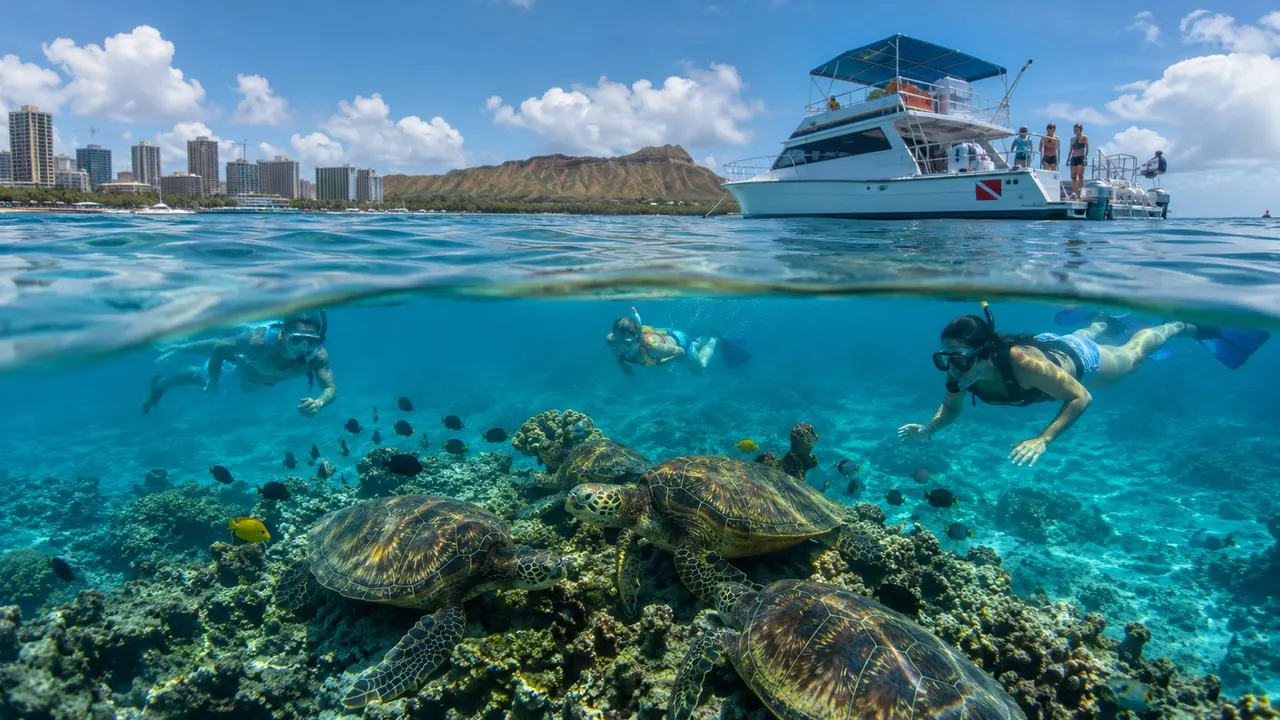
You're in Waikiki, you want to see turtles, and you don't want the day to turn into a complicated boat ordeal. That's exactly why the Turtle Canyon snorkel adventure in Waikiki Oahu keeps landing on people's short lists. It's close to town, it's boat-only, and when it's run well, it gives first-timers and families a real shot at calm, memorable wildlife viewing without needing to be strong swimmers.
Living Ocean Tours' Turtle Canyons Snorkel Excursion is one of the direct ways visitors get out to the reef, and if you're comparing operators, the details matter more than most booking pages admit. The ride, the crew, the briefing, and the way a guide handles in-water time will shape your experience as much as the turtles themselves. If you want the broadest context on where turtles are commonly seen around Oahu, start with this guide to where to see sea turtles in Oahu.
Why a Turtle Canyon Snorkel Adventure in Waikiki Oahu Stands Out
The day usually starts at Kewalo Basin Boat Harbor, not on a beach. That changes the whole mood. You're walking onto a boat with fins, masks, a towel, and maybe a little hesitation, then the shoreline drops away and Waikiki shifts from postcard backdrop to launch point. This is the part that tells you Turtle Canyon is not a casual shore swim, it's a controlled ocean outing, and that's a big reason it works so well for first-timers and families.
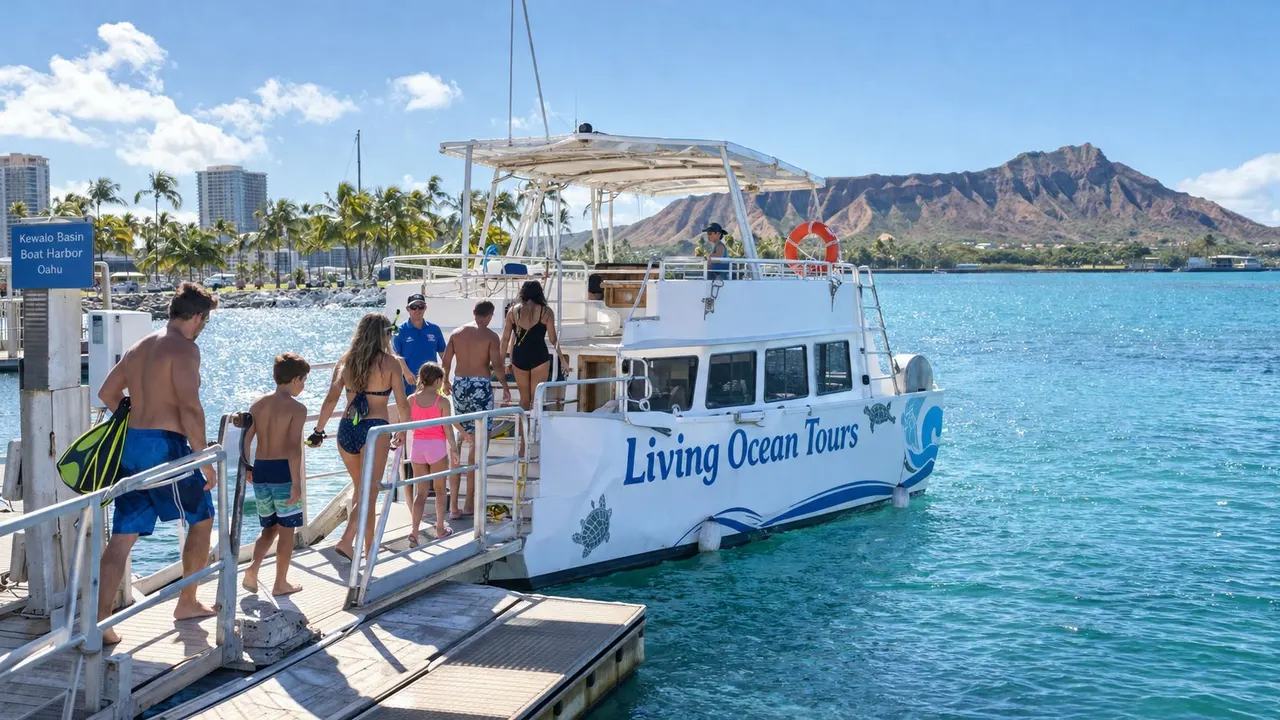
A short boat ride from Waikiki gets you to an offshore reef where the main attraction is the wildlife, especially Hawaiian green sea turtles. Tour references consistently describe Turtle Canyon as a shallow reef on Oahu's south shore, and that geography is a huge part of why people remember it. It feels close enough to be convenient, but distinct enough to feel like you went somewhere.
Practical rule: the easier the departure, the more likely nervous guests are to say yes to the water once they arrive.
Families, couples, and first-time snorkelers tend to book this kind of trip because they want a clear plan, not a self-directed ocean scramble. That's also why operator choice matters. A good crew doesn't just move people offshore, it sets the pace, explains the gear, and keeps the whole outing from feeling rushed or confusing.
For more context on the site itself, see this Turtle Canyon location guide. It helps connect the harbor departure, the reef, and the viewing experience into one simple picture.
What Turtle Canyon Is and Why Turtles Gather There
Turtle Canyon works like a natural turtle cleaning station. That's the easiest way to understand it. Hawaiian green sea turtles come in, hold still, and let reef fish remove algae and debris from their shells. You're not watching a staged show, you're watching a routine that the animals choose for themselves.
A reef that functions like a spa
The reef functions like a small, busy spa. The turtles are the clients, and the fish are the attendants. The fish do the cleaning, the turtles get relief, and snorkelers get a front-row look at a real marine behavior pattern. That's why this site has earned such a strong reputation with visitors who want a better-than-hopeful chance of seeing turtles in the wild.
Independent tour references describe Turtle Canyon as an offshore reef system about 1.5 to 2.5 miles from Waikiki Beach, reachable only by boat rather than from shore. Typical boat rides are about 10 to 20 minutes from Waikiki, and total excursions commonly run 2 to 3 hours. Those numbers matter because they show why this is such a manageable half-day outing, not a long expedition. A Turtle Canyon overview with location details aligns with that offshore setup.
Why the view feels so reliable
The site's cleaning-station behavior is the reason some tour sources describe very high turtle sighting rates, including claims as high as 99% on guided trips compared with under 30% for independent shore snorkelers. Other guides call it “the easiest place in Hawaii” to see green sea turtles. I'd treat those figures as tour-marketing claims, but the practical point holds, guided access makes the encounter much more dependable than trying to luck into one from shore.
Living Ocean Tours' reef guide explains the same basic location and behavior in a more visitor-friendly way. You can compare that with their Turtle Canyon location and snorkeling page if you want the plain-language version before you book.
Typical Itinerary and Duration of a Turtle Canyon Snorkel Tour
Most Turtle Canyon outings feel compact, organized, and easier to manage than people expect. That's part of the appeal. You're not signing up for a full-day charter, you're booking a short open-water trip with a clear beginning, a focused snorkel window, and a return that leaves the rest of your day intact.
The usual flow on the water
The morning usually starts with check-in at the harbor, followed by a safety briefing and gear setup. That briefing matters more than first-timers realize, because it gets rid of the uncertainty that usually slows people down. Once the boat leaves the dock, the ride offshore is short, and the crew uses that time to settle guests into the motion of the boat and set expectations for the snorkel stop.
Typical tours run 2 to 3 hours total, with roughly 45 to 60 minutes in the water, and about a 10 to 15 minute boat ride each way. That means the trip is structured around the snorkeling window, not the transit. The crew's real job is to manage that in-water time safely and comfortably, based on surface conditions and how confident the guests feel. This Turtle Canyon tour duration guide makes the same point about the open-water format and the short ride.
What that means for guests
Here's the part that's easy to miss. The boat ride is rarely the bottleneck. The challenge is setting the pace once everyone reaches the reef. Some guests want to jump in fast. Others need a minute to breathe, adjust the mask, or watch someone else enter first.
A good Turtle Canyon trip doesn't feel hurried. It feels sequenced.
That's why the best outings are usually the ones where the crew watches the conditions, keeps the group calm, and gives people enough time in the water to relax into the experience. The best memory usually comes from that middle stretch, once your breathing evens out and the turtles start appearing below you instead of in the brochure.
For a closer look at the departure side of the experience, see this boat-ride overview for Turtle Canyon.
Who the Tour Is Best For and What Gear and Instruction Are Included
This trip fits families, first-time snorkelers, multi-generational groups, and casual swimmers who want structure and clear support on the water. The reef is only part of the equation. The better question is how the operator handles the people who are not natural snorkelers, because the gear, flotation, briefing, and crew attention have to work together if the day is going to feel calm instead of awkward.
A good Turtle Canyon operator usually provides the basics you need to get in the water and stay comfortable without sorting through random rentals on your own.
- Mask and snorkel: So you arrive with gear that matches the tour.
- Fins: Useful once you settle into the swim.
- Flotation support: Helpful for guests who want to conserve energy or stay relaxed.
- Instruction and briefing: So the first entry does not feel unfamiliar.
- Crew attention: So small problems get handled before they become stressful.
That package matters because a lot of guests do not need advanced snorkeling. They need clear direction, a steady pace, and someone who can show them how to start without rushing. If you can float comfortably and follow simple instructions, you are usually in a good position to enjoy the trip.
Beginner-friendly is not the same as accessible
That distinction matters. A trip can be easy for a first-timer and still be difficult for someone who is motion-sensitive, uncomfortable on ladders, or not ready to enter open water. Turtle Canyon is offshore and boat-only, so the access barrier is real for older travelers, mixed-ability families, and guests who want the turtle experience without necessarily getting in the water.
The practical question is how much support the crew gives before and after entry. Ask whether a slower guest can stay on the boat and still have a worthwhile outing, whether flotation stays available the whole time, and whether less confident snorkelers are allowed to take their time at the entry point instead of being pushed along by the group. Those answers tell you more than a generic “beginner-friendly” label ever will.
Motion-sensitive guests should also ask about the ride itself. A calm departure, a place to sit while the boat moves, and a crew that explains what the water and ladder will feel like can make the difference between a trip that feels manageable and one that does not. If someone in the group knows they get uneasy on boats, the best operators are the ones that say so plainly and give realistic expectations before anyone leaves the dock.
For a tour option that includes Turtle Canyon access with gear and instruction, Living Ocean Tours offers their Turtle Canyons Snorkel Excursion. It is still worth comparing any operator by how much on-water support your group needs, not just by whether turtles are likely to show up.
Responsible Wildlife Viewing at a Crowded Cleaning Station
Turtle Canyon is popular for a reason, and popularity creates pressure. The more boats and snorkelers in the area, the easier it is to crowd the animals, interrupt their cleaning behavior, or turn a calm encounter into a noisy one. That's why the ethical side of the trip matters just as much as the wildlife sighting itself.
What a low-disturbance encounter looks like
The turtles use the reef as a cleaning station, so the best encounter is the one where they decide the distance. Neutral tour references emphasize that the site can be crowded and that the animals should never be chased. That's the right mindset. You're there to observe, not direct traffic.
Hawaiian green sea turtles are protected under federal and state law, and responsible viewing standards call for keeping at least 10 feet away and never touching, chasing, or feeding them. That's not a suggestion for polite tourists, it's the baseline for a respectful trip. This Turtle Canyon rules guide is worth reading before you go so the whole group knows the expectations.
How to evaluate a tour beyond sightings
High turtle odds are nice, but they're not the only thing that matters. A good operator should make the conservation rules clear before anyone jumps in. Crew behavior matters too. If guides keep guests spread out, remind people not to crowd the turtles, and slow the pace when an animal is resting, that tells you a lot about how they handle the reef.
Use this as your quick checklist:
- Clear briefing: Do they explain distance and no-touch rules before entering?
- Crew enforcement: Do they correct bad behavior in the water?
- Group control: Does the outing feel managed, or does everyone drift where they want?
- Respect for the animal: Do they wait for the turtle to choose its path?
That's the key difference between a tourist stop and a responsible wildlife viewing experience. The turtle canyon snorkel adventure in Waikiki Oahu should feel rewarding because you respected the site, not because you crowded your way into a close-up.
Best Times, Seasonality, and What to Bring
Morning trips usually feel better on this reef. The water tends to be calmer, visibility often improves, and the whole boat feels less rushed before the day heats up. If you're booking for the first time, start there. A cooler, quieter departure is easier on both beginners and guests who don't love motion.
What to pack without overthinking it
Keep your bag light and practical. You don't need much, but the right few items make the outing smoother.
- Reef-safe sunscreen: Use it before you board.
- Towel: You'll want it the second you're back on deck.
- Dry bag: Helpful for your phone, ID, and anything that shouldn't get wet.
- Change of clothes: Makes the ride back and the rest of the day easier.
- Motion sickness prep: Bring whatever you normally use if the boat affects you.
- Water and a light snack if allowed by the operator: Don't board overly hungry or overly full.
If you're prone to seasickness, prep matters more than willpower. The short ride is still enough to bother some guests, especially if they're already anxious before leaving the harbor. This Turtle Canyon planning guide is a useful reference point for practical trip prep.
Seasonal differences that affect the day
Winter can add another layer to the boat ride, because humpback whale encounters are part of the broader Hawaiian ocean season. That doesn't change Turtle Canyon itself, but it can change the mood on the water if your trip happens during those months. The reef remains the main event, yet the ride out and back can become part of the memory.
Pack for the boat first, not just the snorkel.
That's especially true for mixed-ability groups. A guest who is cold, queasy, or uncomfortable is less likely to enjoy the water, even if the turtles are showing well. The cleanest, simplest packing list usually wins.
Pricing, Booking, and Alternatives if You Want Something Different
The smartest booking decision starts with use case. Turtle Canyon is the right call if your priority is turtle viewing, short transit, and a guided snorkel stop near Waikiki. Price is usually tied to trip length, what's included, and how much crew support the operator builds into the outing, so compare what's covered instead of looking at the headline alone.
How to judge value before you pay
Direct booking often makes more sense than a third-party reseller when you want clear communication about weather, changes, and what happens if conditions aren't right. You're also more likely to get the operator's exact trip description rather than a generic summary. For ocean trips, that matters. Small differences in departure point, included gear, or group format can change the whole experience.
If you want a direct booking path for Turtle Canyon, use the operator's page and the availability flow attached to it.
Choosing by use case
| Tour | Best For | Key Difference |
|---|---|---|
| Turtle Canyon Snorkel Excursion | Turtle-focused snorkelers, beginners, families | Guided reef stop centered on Hawaiian green sea turtles and responsible wildlife viewing |
| Deluxe Waikiki Snorkeling and Wildlife Cruise | Families who want more onboard play | Adds a waterslide, water trampoline, and lily pad for a more playful cruise feel |
| Waikiki Sunset Cruise | Couples, groups, and relaxed evening plans | Focuses on golden-hour views instead of snorkeling |
| Waikiki Whale Watching Tour | Winter visitors who want offshore wildlife | Shifts attention to humpback whale viewing in season |
If you're trying to decide between pure snorkeling and a more playful family outing, the Deluxe Waikiki Snorkel and Wildlife Cruise is a different kind of day on the water. If your goal is scenery instead of snorkeling, the Waikiki Sunset Cruise fits better, and if you're visiting in winter, the Waikiki Whale Watching Tour is the seasonal wildlife option.
Your Most Common Questions About a Turtle Canyon Snorkel Adventure in Waikiki Oahu
Can non-swimmers join? Yes, many can, as long as they're comfortable on a boat and willing to use flotation. The better question is whether they want to snorkel, stay aboard, or do a little of both. Crew support and clear expectations make a big difference.
What happens if the ocean is rough? A good operator should adjust to conditions, because this is an open-water site and comfort matters. If a guest is motion-sensitive, it helps to plan ahead instead of hoping it won't matter.
How many turtles should I expect? No one can promise a fixed count, because these are wild animals. Turtle Canyon is popular because sightings are often strong, and the cleaning-station behavior gives you a real chance to observe them in one place.
Is it good for younger kids? Often yes, if they're comfortable around water and the boat crew offers the right support. The most important factor is how the child handles floating, gear, and brief boat motion.
What if I only want to watch from the boat? That can be a smart choice for mixed-ability families or anyone nervous about entering the water. Ask the operator how the ride-along option works before you book.
Living Ocean Tours runs guided Turtle Canyon outings from Kewalo Basin near Waikiki, with gear, instruction, and a focus on respectful wildlife viewing. If you're ready to plan a safe, well-run turtle canyon snorkel adventure in Waikiki Oahu, visit Living Ocean Tours and choose the departure that fits your group's comfort level.


