
Turtle Canyon Oahu: A Practical Snorkeling Guide
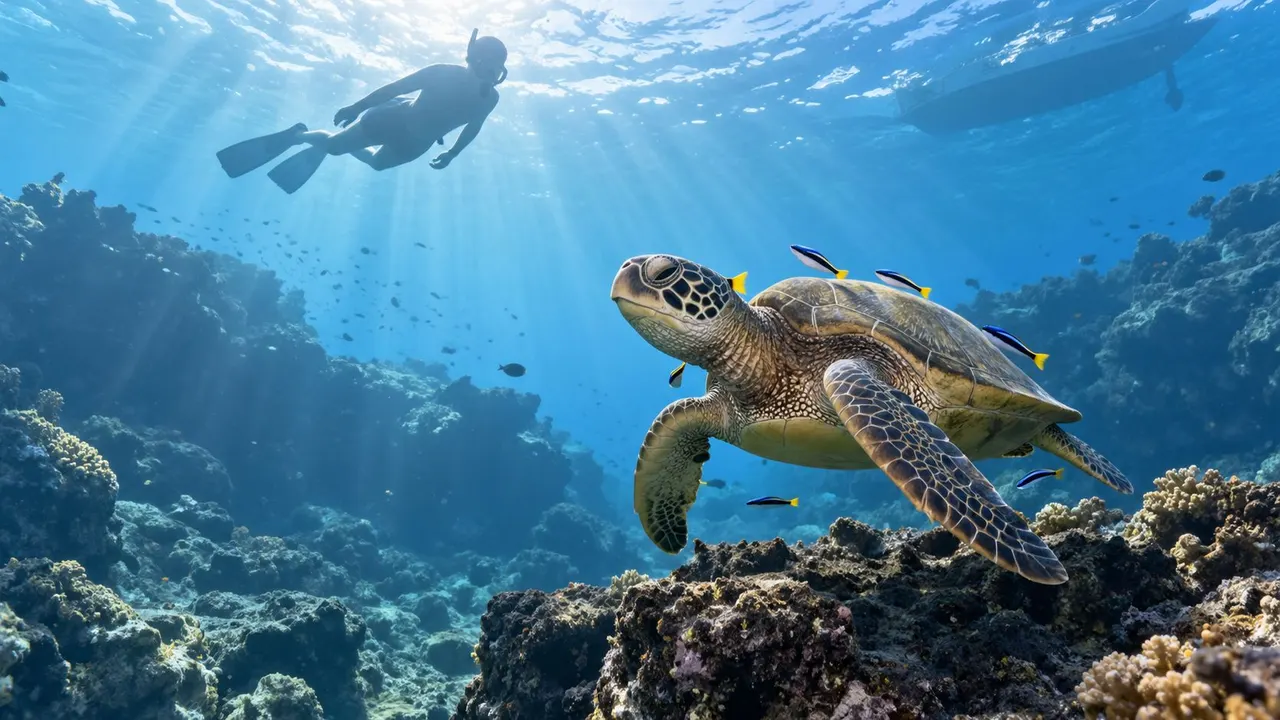
You're in Waikiki, trying to choose one ocean activity that will work for the whole group. The goal sounds simple, see a Hawaiian green sea turtle in the wild, take a few photographs, and get back to shore without turning the morning into a wrestling match with wind, waves, and unfamiliar gear.
Turtle Canyon Oahu can deliver that experience, but the best trip isn't the one that gets you closest to a turtle. It's the one that lets the animal continue its normal routine. This is a cleaning-station habitat, not a marine park, and snorkeler behavior can change how long turtles remain there.
What Turtle Canyon Feels Like on the Water
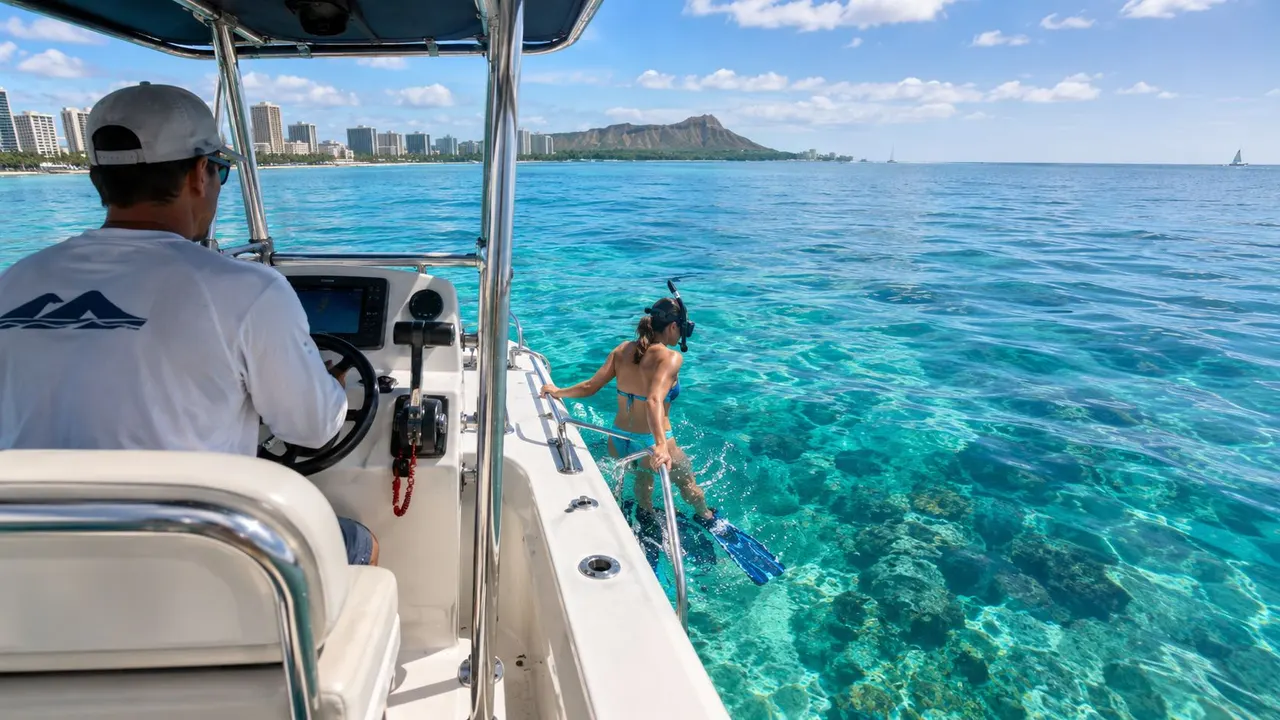
I've watched the scene develop countless times. The boat drifts off Waikiki, the engines go quiet near the reef edge, and the crew checks the water before anyone enters. A snorkeler slips over the side into clear blue water, and the city noise disappears beneath the surface.
At first, the experience feels almost uneventful. You're floating, breathing through a snorkel, and trying not to kick too hard. Around 15 feet down, the water can feel cooler, and the reef comes into focus below you. Then a green turtle rises from a ledge with a slow, butterfly-like stroke while a wrasse works along its shell.
The boat should be positioned over sand, using a sand-line rather than a reef hook. That detail matters because anchoring or hooking directly into living reef structure creates unnecessary damage. A properly run trip keeps the vessel secure without treating the habitat as equipment.
Patience is the main skill
The most memorable encounter I've seen often lasts less than two minutes. A turtle may rise into 8 to 12 feet of water, yawn, take a small jellyfish, and pivot back toward the cleaner wrasse. Nobody needs to chase it. The people who stay flat, quiet, and predictable usually get the best view.
That's the product at Turtle Canyon. You're not buying a guaranteed performance from a wild animal. You're paying for access, local navigation, safety support, and the chance to witness a routine that was happening long before visitors arrived.
Captain's rule: If the turtle changes direction because of you, you're too close or moving too aggressively.
What Turtle Canyon Actually Is
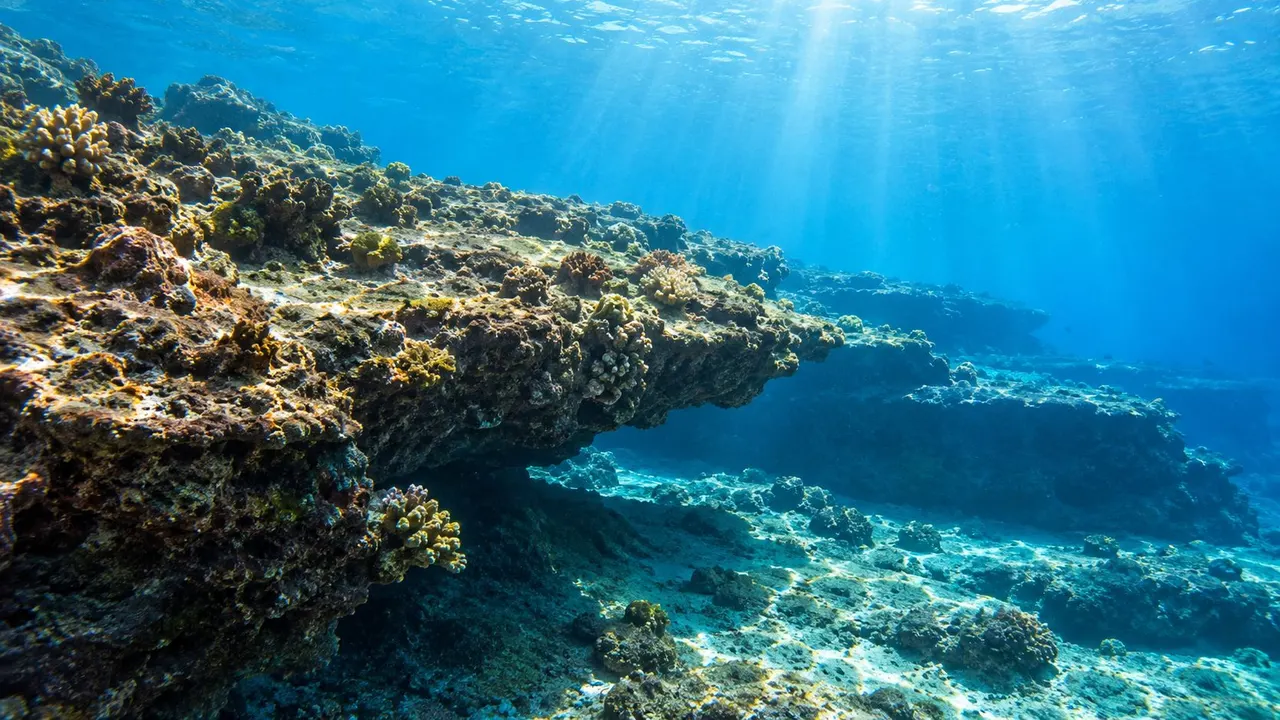
Turtle Canyon isn't one dramatic underwater gorge. NOAA technical material describes it as a defined offshore reef area with low calcareous ridges separated by sand channels, at roughly 9 to 11 meters deep, or approximately 30 to 36 feet in that documented area. Scuba surveys confirmed that the site provides important resting habitat for marine life. NOAA's technical documentation is useful because it shows that Turtle Canyon is more than a tourist nickname.
In practical terms, think of a broken reef platform. Ridges rise from sand, ledges create sheltered resting points, and small changes in depth give turtles places to hover or settle. The reef's shape explains why captains don't stop anywhere offshore and expect the same result.
The cleaning station drives the encounter
The reef itself is only part of the story. Hawaiian green sea turtles gather at particular places where reef fish clean algae and surface parasites from their shells. Independent Hawaiian research identifies Turtle Canyon as one of several recognized Oahu turtle-viewing locations, alongside Waikiki and Kaneohe Bay.
That pattern makes the site reliable for a biological reason. Turtles return to a useful service area, rather than appearing randomly as they pass along the coast. The resting ledges and sand channels give them room to pause while fish work over their shells.
This distinction changes how you should judge a tour. A captain who understands the cleaning station will look for turtle behavior, current direction, visibility, and available space for guests. A boat that arrives, drops swimmers, and encourages everyone to spread toward the nearest animal can turn a functioning habitat into a crowded viewing platform.
What you're observing: The reef is the setting, but the cleaning station is the reason turtles keep using the area.
How a Cleaning Station Brings the Turtles In
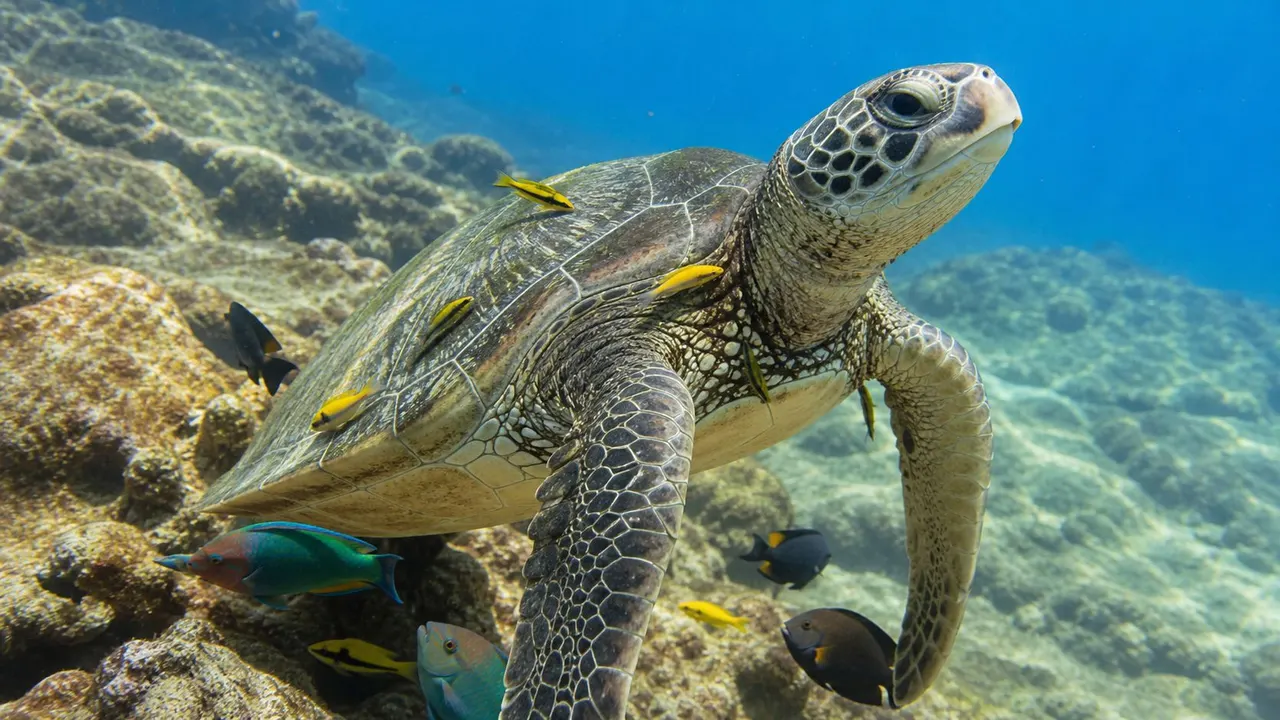
A turtle cleaning station operates like a small underwater service point. Cleaner wrasse move over the turtle's shell and skin, picking at algae, parasites, and dead tissue. Parrotfish also interact with the reef environment by grazing, helping shape the food web around the station.
The sequence is easy to recognize once you know what to watch for. A turtle arrives, hovers at an angle, and lifts its head or flippers. The fish move in quickly, working along the carapace, skin, and sometimes the areas around the flippers. The turtle gets a cleaner surface, and the fish get food.
Research on Hawaiian green turtle cleaning stations describes this relationship as a long-observed interaction between turtles and reef fish. The historical symposium material on Hawaiian green turtles places Waikiki among the islands' established cleaning-station locations, not a recently created tourism attraction.
The question isn't only where the turtles are
Visitors usually ask, “How do we find a turtle?” The more responsible question is, “How much pressure can this site absorb before the turtles leave?”
A recent conservation article cites NOAA monitoring that found a 22% drop in turtle residency time at cleaning stations when snorkelers violated the 10-foot distance rule. The conservation discussion of Turtle Canyon crowding makes the practical implication clear. A close encounter can be exciting for a person while shortening the time the turtle spends receiving the cleaning service.
Turtles aren't arriving for the visitors. They're arriving for maintenance. Some remain on the reef while fish work over them, then leave when the station no longer feels safe or calm. That's why the best guides control spacing, reduce splashing, and avoid turning one turtle into a target for the entire group.
A respectful snorkeler watches the appointment rather than interrupting it. If the turtle rises, keep your position. If it turns away, let it go. You'll often see more by remaining still than by swimming after it.
For a crew-led experience focused on that approach, consider the Turtle Canyon guided snorkel.
When to Go and What Conditions to Trust
There isn't one perfect month that overrides the ocean forecast. The useful decision comes from combining season, wind, swell, tide, rainfall, and the animal's likely behavior.
Seasonal patterns still help. Winter water is commonly described as about 75 to 77°F, while summer water is often around 80 to 82°F. Seasonal Turtle Canyon guidance discusses those ranges and the trade-off, cooler winter water can feel less comfortable, while summer conditions may bring stronger south-shore swell.
Read the forecast before you read the calendar
For a practical selection process:
- Start with swell: Look for a forecast under 3 feet if your priority is clear viewing and comfortable entries.
- Check wind: Wind under 12 knots is a better target for a calm surface. If trade winds are forecast above 15 knots, chop can make the reef harder to see and may push turtles toward ledges.
- Favor the morning: Early departures generally offer flatter light and less wind-driven texture on the surface.
- Watch rainfall: South-shore runoff can reduce visibility after rain, so check recent beach reports and local conditions near the Ala Wai area.
- Avoid dead-low access: A morning tide that doesn't push swimmers onto shallow reef is easier for beginners and safer for fins.
A winter Kona system can close the site entirely. No operator can overcome unsafe swell or poor visibility, and a flexible cancellation or rescheduling policy matters more than a promise printed on a booking page.
Whale season adds a scheduling trade-off
Humpback whales are associated with Oahu's winter season, with the most reliable or peak viewing period concentrated from January through March. The seasonal whale-watching guidance explains why winter boat days can offer a second wildlife opportunity, but whale activity and rougher ocean conditions can complicate scheduling.
Pick the date with the calmest forecast, not the date with the most attractive marketing language. If the sea is smooth, the visibility is good, and the morning tide is favorable, you've made the right call.
Choosing the Right Tour Format for Your Group
Tour format changes the experience more than most visitors expect. The reef may be the same destination, but a shared snorkel boat, sunset cruise, and private charter give the captain very different options for managing swimmers, weather, and animal behavior.
| Criteria | Snorkel Trip | Sunset Cruise | Private Charter |
|---|---|---|---|
| Price per person | Usually the most accessible shared option | Strong value for guests prioritizing atmosphere | Highest overall cost, shared among the group |
| Time on the reef | Dedicated daytime snorkeling window | Lower light reduces turtle-viewing value | Custom timing and more control |
| Turtle-viewing odds | Best fit for a morning turtle objective | Conditional, wildlife is secondary to ambiance | Strong choice when conditions and timing cooperate |
| Non-swimmers and children | Crew support and flotation make it practical | Comfortable for guests who may not want a full snorkel | Most adaptable to mixed abilities |
| Rerouting flexibility | Captain works within a shared itinerary | Route favors scenery and the evening experience | Greatest ability to adjust location and pace |
A standard morning snorkel trip is the sensible choice for first-time visitors who want the “we saw a turtle” memory without making the day complicated. It also works well for larger families who benefit from organized gear, a fixed departure, and crew supervision.
Serious photographers and nervous beginners belong on a smaller morning charter when the budget allows. Fewer people create more room around wildlife, and a captain can respond to changing conditions without balancing every decision against a full shared manifest.
A sunset cruise gets a conditional pass. Choose it for couples, celebrations, and travelers who value golden-hour scenery more than close reef observation. Low light is a poor match for a dedicated turtle mission.
For a Waikiki-based boat option, review the Waikiki boat tour details before comparing departure logistics.
Decision rule: Group size, swimming confidence, and budget are the only filters you need.
How a Guided Snorkeling Excursion Actually Works
The trip starts before departure. A responsible operator checks the marine forecast and makes a weather call, sometimes adjusting the plan when wind, swell, or visibility doesn't support a safe turtle visit.
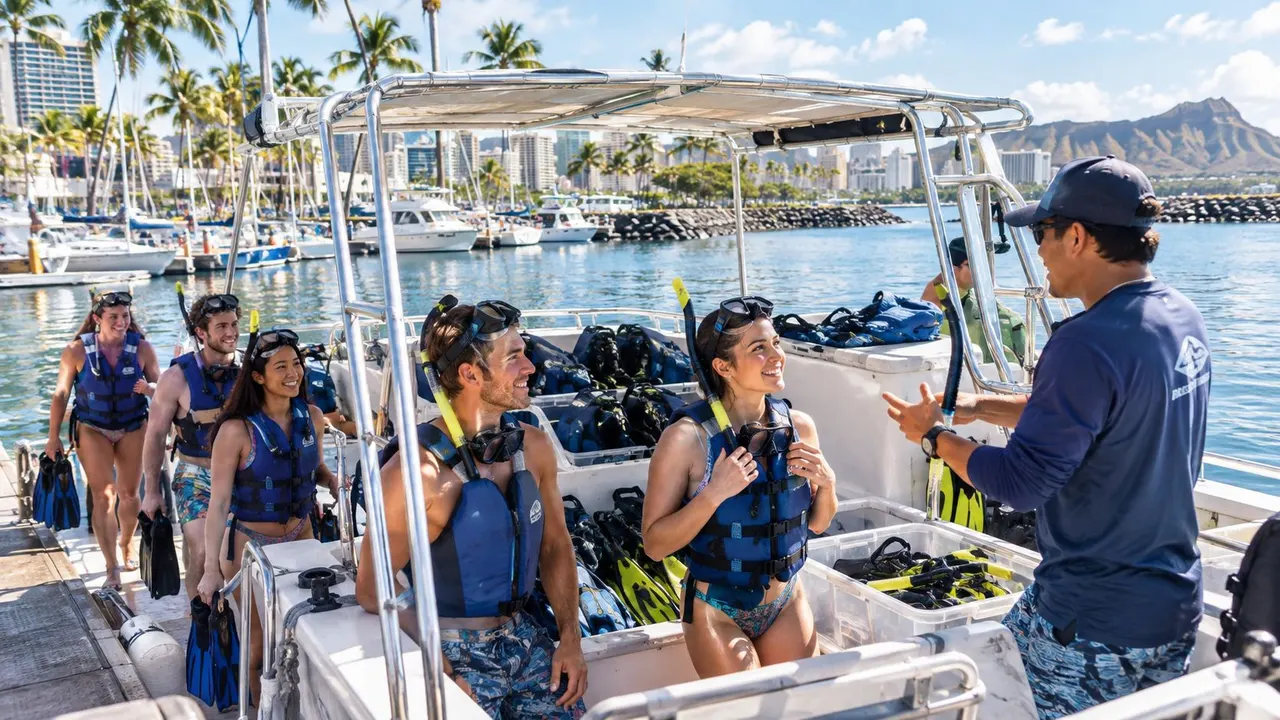
Most Waikiki-area boats leave from a harbor or designated marine departure point, rather than launching directly from the beach. The surface run offshore is short enough to fit into a vacation morning, but long enough for the crew to distribute equipment, answer questions, and explain what the group will see.
The deck briefing prevents water problems
Before anyone enters, the crew should cover the reef layout, entry protocol, hand signals, buddy system, and turtle-distance rules. You'll usually receive a mask, snorkel, fins, and flotation equipment. In cooler conditions, some operators may also provide a shorty wetsuit.
The first few minutes on deck reveal whether a trip is being run well. The crew should check mask seals, show less-confident swimmers how to use the ladder, and explain where to wait when the pickup signal sounds. A giant-stride entry from the swim step is common, while a controlled ladder descent suits guests who don't like jumping into open water.
What the water window feels like
Shared trips can feel busy, especially when guests all enter at once. Good crew positioning solves much of that problem. Guides keep the group together without driving everyone toward a single turtle, and they remind swimmers to leave a clear path for animals that surface.
The snorkeling portion commonly lasts long enough for guests to settle into the breathing rhythm and observe more than one part of the reef. The full excursion can include travel, instruction, gear fitting, and time on deck, so don't judge the experience only by the minutes your face is in the water.
A strong operator also knows when to end the water portion. Fatigue creates poor fin control, accidental coral contact, and rushed turtle encounters. When the crew signals pickup, return calmly, use the ladder one person at a time, and keep your fins clear of the swimmer behind you.
Etiquette, Safety, and What to Bring
The most important rule is simple: stay at least 10 feet from a sea turtle. During humpback season, federal guidance also calls for 150 feet from humpback whales. Hawaii's HAR-16 rules prohibit touching, chasing, riding, or blocking a turtle's path. This guide to Hawaii turtle-snorkeling rules provides useful context for translating those requirements into actual behavior.
If a turtle swims toward you, don't reach out. Hold your position or move gently backward. Stay parallel to its direction rather than cutting across its route, and avoid fin splashes that can startle the animal.
Pack for comfort, not clutter
Bring only what you'll use:
- Rash guard: Reduces sun exposure and helps you stay comfortable on the surface.
- Reef-safe sunscreen: Choose an oxybenzone-free product and apply it before boarding.
- Reef booties: Useful protection from sharp urchin spines and accidental contact with rough reef.
- Defogged mask: Ask the crew to help with fit and fogging before entry.
- Dry bag: Keeps a phone, identification, and other essentials protected.
- Towel and dry clothes: A change after the water makes the ride back more pleasant.
- Water and a light snack: Helpful after swimming, especially for children.
Motion sickness medication works best when taken according to its label before symptoms begin. Many travelers plan it 60 to 90 minutes before departure, but you should follow the product directions and consult a medical professional if you have concerns.
Families need an honest water assessment
Children should wear properly fitted flotation equipment, and parents should tell the crew about nervous swimmers before the briefing. The site's 15 to 25-foot water depth can feel comfortable for confident swimmers, while beginners may prefer surface viewing from the boat, a float belt, or a crew-supported position. This Turtle Canyon overview describes the typical depth and notes that visitors often spend about 45 minutes in the water, within an excursion lasting about 2 hours.
Never make a tired or frightened child stay in the water. A calm observer on the boat is still participating in a wildlife experience.
Questions Readers Ask Before They Book
How close can you swim to a turtle in Hawaii?
Keep 10 feet between yourself and the turtle. Captains often teach a practical one-body-length rule as an easy visual reminder, but the legal distance remains the important standard. If the turtle closes the gap, you're responsible for creating space rather than treating its approach as permission to touch or follow.
Is Turtle Canyon suitable for kids?
It can be, especially on a calm morning with a crew that provides clear instruction and flotation. Minimum-age policies vary by operator, often beginning around 3 to 4 years old, so confirm the policy before booking. Skip the trip if a child won't tolerate a mask or if the forecast calls for rough water.
What's the best month to visit Turtle Canyon?
May through September is commonly favored for calmer south-shore conditions. December through March adds the possibility of humpback sightings, but winter weather can change quickly, so flexible booking terms are valuable. The condition forecast matters more than choosing a single “perfect” month.
What are the realistic odds of seeing turtles?
Guided morning trips are designed around a recognized turtle aggregation and cleaning-station habitat, so sightings are often highly likely. Still, these are wild animals. Afternoon wind, chop, poor visibility, crowding, or a turtle choosing another ledge can reduce the experience, and a rare no-show remains possible.
Compare two or three operators, confirm that the HAR-16 briefing and flotation support are included, and check conditions the night before. If the forecast looks rough, rescheduling is a better conservation decision than pushing through for a crowded, stressful encounter.
Living Ocean Tours offers a guided Turtle Canyons Snorkel Excursion with gear, instruction, and crew support for visitors who want to observe Hawaiian green sea turtles responsibly off Waikiki. Visit Living Ocean Tours to review the excursion and choose a departure that fits your group and the ocean conditions.


