
Snorkeling Waikiki: Your Ultimate Guide to Oahu’s Reefs
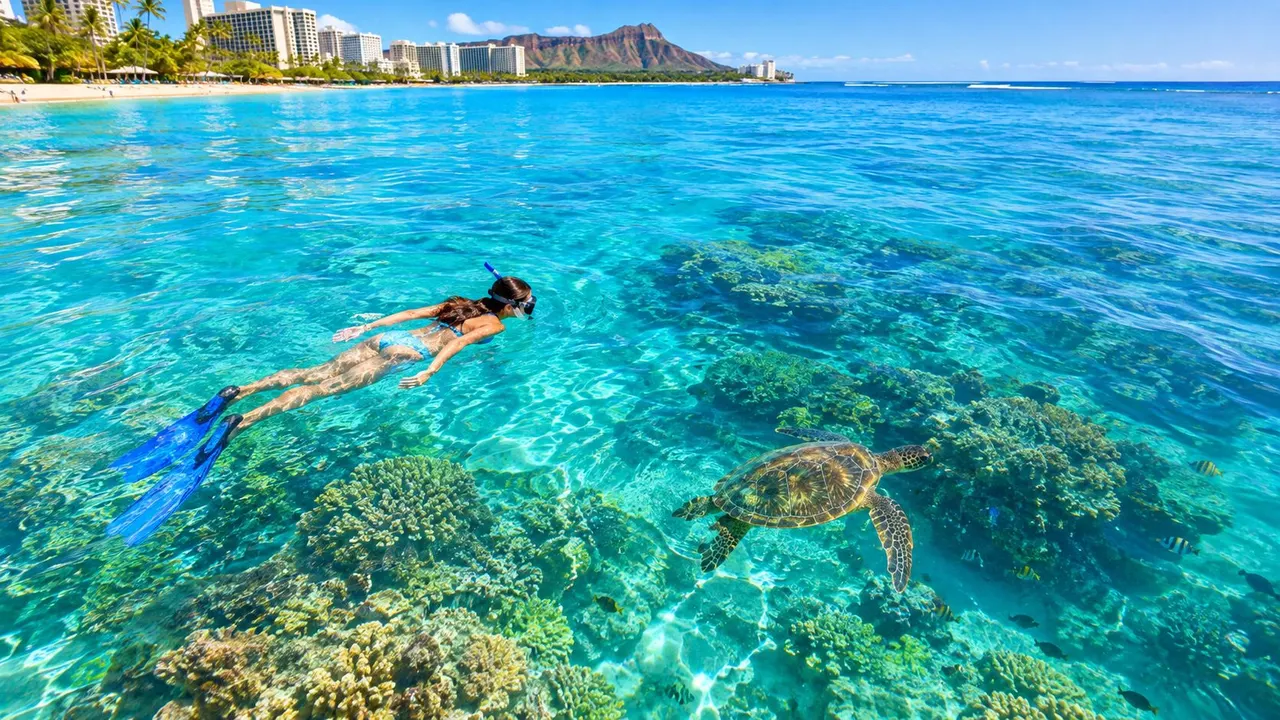
You've checked the forecast, saved a few turtle photos, and now you're wondering whether snorkeling Waikiki means walking into the nearest patch of blue water or booking a boat. The right choice depends on your group, the ocean conditions, and whether you want a shallow shoreline experience or a guided visit to deeper reef habitat.
Waikiki can offer memorable marine encounters, but a good day on the water isn't measured only by how many turtles you see. It also depends on calm decision-making, proper supervision, buoyancy control, and giving wildlife enough room to behave naturally.
Why Snorkeling Waikiki is Unforgettable
The moment often begins with a hush. A swimmer adjusts a mask, lets the waves settle, and looks down through the surface. The city remains visible behind the reef, but attention shifts to the water below, where fish move across rock and coral and a Hawaiian green sea turtle, or honu, may glide past without acknowledging the people watching.
That contrast gives Waikiki its character. You can start near a busy shoreline, then find yourself observing an animal that belongs to a long-running conservation story. NOAA monitoring began in 1973, when only 67 nesting females were recorded in Hawai'i. After years of federal and state protection, the nesting population grew by roughly 5% per year over the following two decades, reaching almost 500 nesting females annually, according to NOAA's documentation of Hawaiian green turtle recovery.
A turtle sighting therefore carries more meaning than a simple wildlife photo. The broader Hawaiian population is estimated at fewer than 4,000 total nesting females, and the Central North Pacific population is genetically distinct. Honu remain threatened under the U.S. Endangered Species Act and protected under Hawai'i law, so visitors are entering a conservation setting, not an aquarium.
What the reef actually feels like
The best encounters usually happen when swimmers stop trying to manufacture them. A turtle may rest near the reef, rise for air, feed along a rock, or move toward a cleaning area. Your job is to observe the route it chooses rather than steer it toward your group.
A guide to Turtle Canyon snorkeling can help first-time visitors understand that the experience combines open-water awareness with patient wildlife viewing. The reef isn't a stage, and a reliable sighting doesn't justify crowding an animal.
Practical rule: The calmer and more predictable your movements, the longer wildlife is likely to continue its natural behavior.
The appeal extends beyond turtles. Waikiki's nearshore reefs bring visitors close to tropical fish, coral structures, lava formations, and the changing light beneath the surface. Experienced snorkelers may enjoy searching for small details, while beginners often remember the first moment they realize they can float comfortably and see clearly below them.
That makes this coastline suitable for different levels of confidence, but not under every condition. A reef can look inviting from the beach while current, shorebreak, wind, or poor visibility makes it unsuitable for a nervous swimmer. The memorable part of the day comes from choosing the right setting, not forcing the most ambitious one.
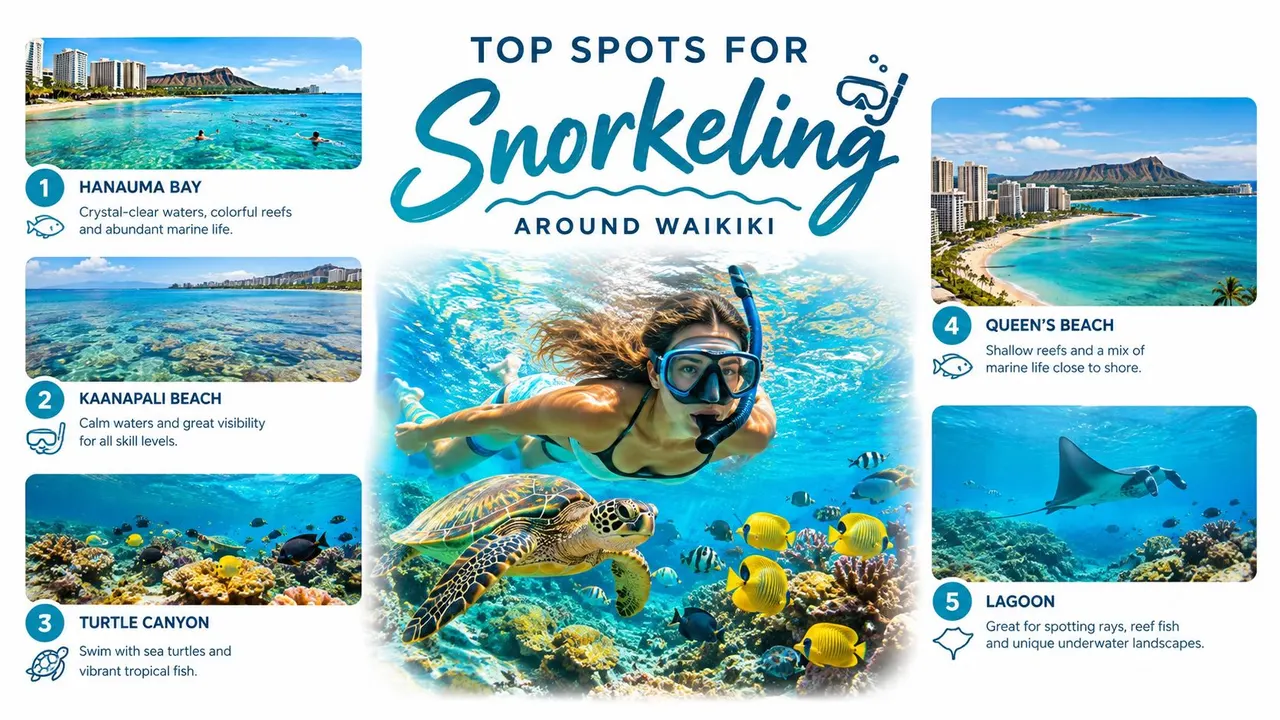
Top Spots for Snorkeling Around Waikiki
Where you snorkel changes the experience more than most visitors expect. Shore access can be convenient, but a guided boat trip gives crews the flexibility to assess conditions, travel toward suitable reef habitat, and place guests away from the most congested entry points.
Kewalo Basin as a practical departure point
Kewalo Basin Boat Harbor is a useful starting point for boat-based snorkeling because it places visitors close to Waikiki's south shore reefs without requiring a long overland transfer to another part of Oahu. From the harbor, the crew can explain the route, fit equipment, and discuss the conditions before anyone enters the water.
That preparation matters. A strong departure process includes a mask check, flotation guidance, an explanation of boat-entry procedures, and a clear plan for regrouping. Guests should know where to swim, how to signal discomfort, and when to return to the vessel.
For a broader comparison of access points and reef options, consult this guide to the best Oahu snorkeling locations. The practical question is not which place has the most appealing photos. It is whether the location suits your swimming ability, the day's visibility, and the supervision your group needs.
Turtle Canyons and reef cleaning areas
Turtle Canyons is known for underwater lava formations and reef areas where Hawaiian green sea turtles may rest or receive cleaning attention from smaller reef organisms. These structures create shelter for fish and offer guides recognizable terrain to work around.
A cleaning area can produce memorable viewing, but it also creates a management challenge. If several swimmers surround a turtle, the animal loses the open route it needs to surface or move away. Guides should position guests to one side, maintain spacing, and redirect people who drift too close.
The Waikīkī Marine Life Conservation District
The Waikīkī Marine Life Conservation District extends from the groin at the end of Kapahulu Avenue to the west wall of the Natatorium, reaching 500 yards offshore or to the edge of the fringing reef, whichever is greater. Within the district, visitors may not fish for, take, injure, or possess equipment intended to take marine life. Removing or altering sand, coral, geological features, or specimens is also prohibited, as explained by Hawai'i's Department of Land and Natural Resources.
For snorkelers, the message is straightforward. The district is for observation. Don't collect coral, handle animals, stand on the reef, or treat protected habitat as a souvenir shop.
Choosing the Right Snorkel Tour for Your Group
A confident couple can choose a focused reef trip, while a family with young children or an older traveler may need breaks, shade, and easier water access. Begin with the experience your group can handle comfortably, then match the vessel and tour format to it.
| Your priority | A suitable format | What to check before booking |
|---|---|---|
| Guided turtle viewing | A focused reef excursion | In-water guides, equipment fitting, and wildlife rules |
| Family flexibility | A larger cruise with extra water activities | Shade, flotation devices, boarding access, and supervision |
| Maximum control | A private charter | Group size, route flexibility, and accessibility |
| Scenic relaxation | A sunset cruise | Whether swimming is included and how the evening is organized |
Focused excursions versus family cruises
A dedicated turtle excursion puts more of the outing into reef access, snorkeling instruction, and active guide support. It suits swimmers who want sustained wildlife observation without dividing the trip between several activities.
A family-oriented cruise may fit mixed-age groups better. Some guests can snorkel while others remain aboard, use flotation equipment, or enjoy water features. A waterslide, water trampoline, or lily pad can give children another way to enjoy the boat, but these features do not replace close supervision.
Ask specific questions instead of relying on “beginner friendly.” Confirm whether flotation devices are available, how children enter and leave the water, where shaded seating is located, and what the crew does if conditions become uncomfortable. Also ask how the crew separates snorkeling time from other onboard activities, since a busy schedule can reduce time in the water.
Comparing operators by behavior, not slogans
Concrete operating habits reveal more than marketing language. Look for a crew that explains turtle spacing before entry, checks masks individually, watches swimmers throughout the activity, and will shorten or relocate the swim when conditions change.
Living Ocean Tours runs guided snorkeling from Kewalo Basin Boat Harbor with equipment, flotation support, and in-water guides. Its Deluxe Waikiki Snorkeling and Wildlife Cruise adds water features that can suit groups with different ages and swimming interests. That combination gives families a practical choice between time in the reef and activities on the boat.
The right booking decision depends on how closely an operator's procedures match your group. A small, focused trip may feel personal and keep the outing centered on snorkeling. A larger vessel may provide more room, shade, and options for guests who do not swim. Neither format guarantees safer conditions. Crew quality, weather judgment, clear briefings, and honest communication carry more weight than the size of the boat or the number of advertised features.
Safety and Responsible Wildlife Viewing
Safety begins before anyone touches the water. Hawaii Ocean Safety advises visitors to check conditions immediately before entering, consult lifeguards, use a buddy system, avoid murky water and dawn or dusk, and leave the water if discomfort develops. Its snorkeling safety guidance also emphasizes that risk changes with surf, wind, shorebreak, visibility, age, health, fitness, and swimming ability.
A beach can look calm while a swimmer struggles with current or poor visibility. For children and older adults, flotation support and close supervision should be planned in advance, not improvised after someone becomes tired.
Keep wildlife encounters passive
In-water viewers should remain at least 10 feet, or 3 meters, from sea turtles, according to NOAA's Hawai'i marine-life viewing guidance. Don't touch, chase, feed, encircle, block, or suddenly turn toward a turtle.
If a honu approaches, stop swimming and let it pass. That response protects the animal's ability to rest, feed, surface, and move through the reef. It also gives you a better view because the turtle remains relaxed instead of fleeing from a pursuing swimmer.
When a turtle changes direction because of you, you're too close.
Never stand on coral, even if the bottom looks stable. Use slow kicks, keep your body horizontal, and avoid dragging fins across the reef. Guidance on responsible sea turtle viewing reinforces the central principle: wildlife encounters should leave the animal in control of the interaction.
Separate boat rules from swimmer rules
Boat passengers need to understand that vessel safety and in-water wildlife spacing are different. NOAA advises boats to remain at least 50 yards from sea turtles when viewing from the vessel, avoid chasing or encircling them, and never trap one between the boat and shore, as described in its marine-life viewing guidance.
Near harbors, boat ramps, and shallow reef habitat, NOAA educational material identifies a 5 to 10-knot turtle-safe transit range, while instructing operators to slow further and place engines in neutral when turtles are sighted. Crews should scan the approach corridor, avoid cutting across dense turtle activity, and keep swimmers clear of the vessel's maneuvering area.
Guests should enter and exit only when the crew gives the signal. Glare, swell, and boat traffic can make a familiar ladder or swim platform harder to see than expected.
Seasonal Highlights and Special Encounters

Oahu's ocean changes with the season and the day. Wind, swell, rainfall, visibility, and water movement can alter a reef's conditions quickly, so a good itinerary leaves the crew room to choose a safer site instead of promising one fixed location.
Morning departures often suit beginners because conditions are commonly calmer and visibility may be better. Treat that as a useful preference, not a guarantee. A crew still needs to assess the water before sending anyone in.
Summer clarity and winter movement
Calmer summer conditions can feel easier for first-time snorkelers, especially when children or less confident swimmers are in the group. Winter may bring more active ocean movement, which experienced swimmers can enjoy but which may make a shallow shore entry less comfortable.
Ask how the operator responds when conditions change. A responsible crew may relocate, shorten the swim, or cancel the in-water portion if the site no longer supports safe participation. That flexibility shows sound judgment. It also matters when choosing between a guided deep-water excursion and shallow reef access, since the two options respond differently to wind, swell, and entry conditions.
Whale season changes the view
Humpback whales add a seasonal option to an Oahu visit. Hawai'i's peak humpback season runs roughly from December through May, with the highest concentration in January through March, according to the Hawaiian Islands Humpback Whale National Marine Sanctuary. Visitors considering a separate outing can use this Oahu whale-watching season guide to compare the timing and format.
Snorkeling and whale watching call for different expectations. A snorkel trip centers on underwater habitat and the conditions around a reef. Whale watching depends on respectful boat operation and the possibility of seeing animals from a distance. A whale-focused outing is not a substitute for a reef swim.
Sunset belongs to a different category
A sunset cruise prioritizes changing light, coastal views, Waikiki, Diamond Head, and time on the boat rather than maximum underwater time. It can suit couples, celebrations, or visitors who want an ocean experience without committing to a swim.
Dolphins or other wildlife may appear, but no ethical operator can promise an encounter. Choose the evening trip for its atmosphere and coastline, then regard any sighting as an unexpected benefit.
Final Tips for Your Waikiki Adventure
Plan around the least confident swimmer in your group. Check the ocean immediately before entering, use a buddy system, listen to lifeguards and crew, and be ready to leave the water when someone feels cold, tired, anxious, or uncomfortable.
Pack practical essentials:
- Reef-conscious sun protection: Choose sun protection that fits the operator's guidance, and cover up with a rash guard when possible.
- Flotation support: Use a properly fitted flotation belt or vest if you're not a confident swimmer. Comfort in the water matters more than appearance.
- A secure mask fit: A leaking mask can turn a relaxed swim into a panic response. Ask the crew to check it before departure.
- A conservation mindset: Keep at least 10 feet from turtles, never feed or touch wildlife, and maintain neutral buoyancy above the reef.
- A flexible schedule: Allow the crew to relocate or shorten the swim when wind, current, visibility, or surf changes.
The best snorkeling Waikiki experience combines access with restraint. A guided deep-water excursion may offer more structured wildlife viewing, while a shallow reef can suit visitors who want an easier exit and shorter exposure. Weigh those options carefully, then choose the trip that gives your group enough support to enjoy the ocean without pressuring it.
Living Ocean Tours offers guided Waikiki snorkeling from Kewalo Basin Boat Harbor, with equipment, flotation support, and in-water guidance for visitors who want a structured reef experience. Visit Living Ocean Tours to compare its snorkeling, wildlife, sunset, and seasonal ocean tours, then choose the outing that fits your group and the day's conditions.


