
Snorkeling in Waikiki Honolulu: The Complete 2026 Guide
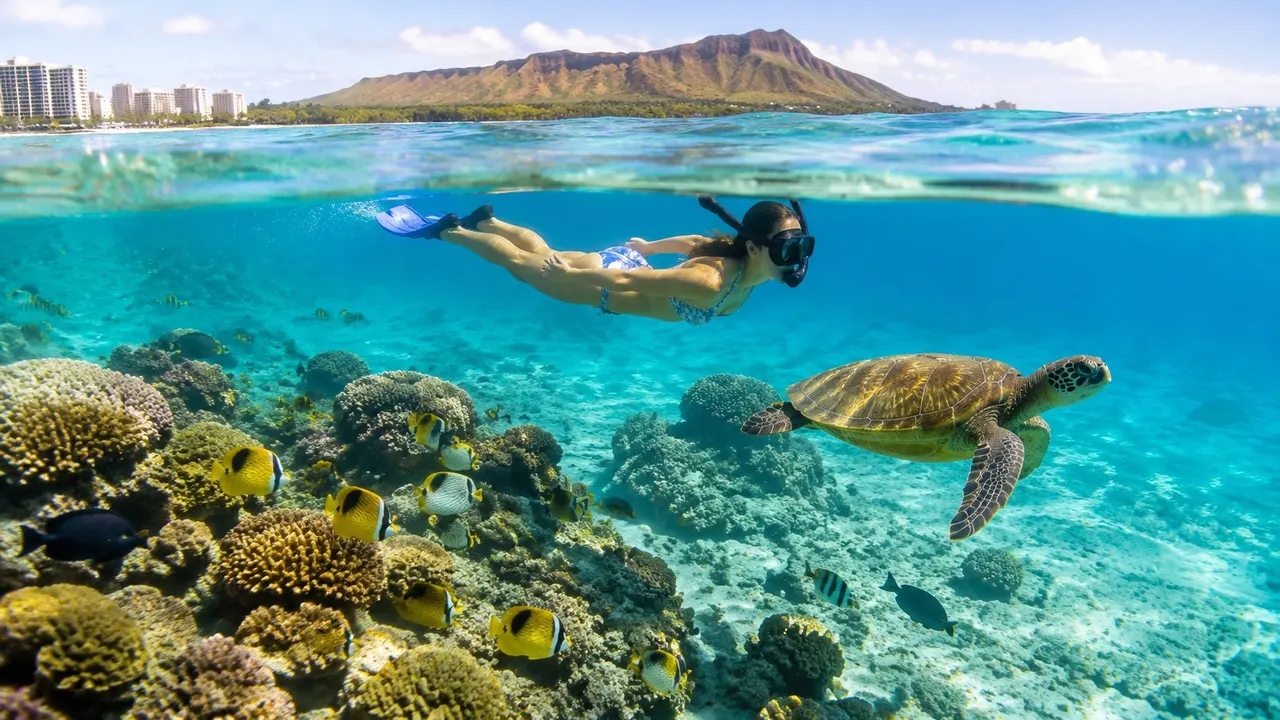
You land in Waikiki, drop your bag, and the ocean is already calling. The water looks calm from the sand, the rental shop has masks ready, and everyone in your group has a different opinion about what to do first. That's the Waikiki snorkeling decision, grab gear and hope the beach cooperates, or book a guided trip that takes the guesswork out of the day.
Your First Morning in Waikiki and the Snorkeling Decision
The first morning is when most visitors make their worst snorkel decision, and I've seen it hundreds of times. A family steps onto the sand, sees a pretty bay, and assumes every spot in Waikiki will deliver the same thing. It won't.
If you want the simplest possible answer, start with your priorities. Shore snorkeling gives you convenience and freedom, while a guided boat trip gives you a more controlled setup, better site selection, and less uncertainty about what the water will look like when you get there.
Practical rule: if your group includes nervous swimmers, kids, or first-timers, choose the option that reduces friction before you ever enter the water.
That's why I tell visitors to think beyond the beach itself and look at the day they've got in front of them. Is the water calm, has there been recent rain, and do you care more about being in the ocean or seeing marine life? Those questions matter more than whether you're standing a few yards from your hotel.
For many travelers, the sweet spot is a guided outing from a proven operator. Living Ocean Tours is a top rated and most reviewed snorkel company on Oahu, and it departs daily from Kewalo Basin Boat Harbor near Waikiki Beach. If you're trying to decide whether to snorkel on arrival day, their advice page on snorkeling after you arrive in Waikiki is the kind of practical reading that helps people make a better choice before they waste a morning on a bad plan.
Understanding Waikiki Shore Snorkeling Conditions
Waikiki can look calm from the sand and still snorkel poorly. Wind-driven surface chop and post-rain runoff can change what you see below the surface even when the shoreline looks inviting. A conditions report for Waikiki MLCD rates the area at 5.5/10 with 2 to 4 ft surf break and light-moderate currents under E 15 to 20 mph trade winds, which is a good reminder that a pretty morning can turn rough if you ignore the wind (Snorkel Bob conditions report).
Where the shore snorkeling actually works
The most forgiving shore areas are the beginner zones around Queen's Beach, Kuhio Beach, and Sans Souci. They are calm-entry spots, but the underwater experience is not the same at each one. Queen's Beach and the Waikiki Aquarium side have a dredged sandy channel about 100 feet offshore and roughly 8 feet deep, which helps explain why fish tend to gather along the reef edge and man-made structure there (Queen's Beach snorkeling notes). Sans Souci is a shallow flat reef, about 3 feet depth at most when the tide is high and the ocean is calm, so it can feel manageable for beginners while still breaking down fast if the swell comes up (Waikiki snorkeling guide).
Water that looks clear from shore is not the same thing as water that gives you a good snorkel.
Timing matters more than people think
The clearest shore snorkeling is usually 7 to 10 a.m., before wind stirs sand and cuts visibility. Shore conditions can still be decent on a good morning, but they often fade faster than new visitors expect. That early window is the difference between floating over something interesting and spending an hour staring into cloudy water.
Local guidance also puts common shore visibility at 10 to 30 feet on calm days, while clearer offshore sites can reach 30 to 50 feet (Waikiki snorkeling guide). For a first-time snorkeler or a family with kids, that gap is easy to feel in the water. It changes how much of the reef you can read.
Rain changes the picture even faster. The Hawaii Department of Health advises staying out of the ocean for at least 72 hours after heavy rain because urban drainage and runoff can affect water quality, and another Waikiki guide gives the same 72-hour caution, including runoff from the Ala Wai Canal outfall (DOH advice summarized in the Waikiki snorkeling guide). Seasonal clarity is strongest in the dry season from May through September, which is why so many beginner and family trips get set then (Waikiki snorkeling guide).
For tide timing and local readouts, I always point people to Oahu tide charts before they commit to a shore session. A good beach can become a mediocre snorkel fast if the tide and chop work against you.
Shore Snorkeling Versus Guided Boat Excursions
The easiest mistake in Waikiki is assuming convenience equals value. Shore snorkeling is simple, you walk in, you swim, and you leave when you want. But simplicity doesn't guarantee a satisfying snorkel, especially when the morning window closes, the beach gets busy, and the water loses clarity.
What each option gives you
| Factor | Shore Snorkeling | Guided Boat Tour |
|---|---|---|
| Visibility | Can be decent on calm mornings, but often turns cloudy as wind and crowds increase | More consistent at offshore sites and protected reef areas |
| Marine life | Good for casual sightings near structure and calm reefs | Better chance of varied marine life at reef-focused stops like Turtle Canyon |
| Safety support | You're mostly on your own once you enter the water | Guides, briefings, gear support, and a managed entry point |
| Convenience | Highest, especially if you're already on the beach | Requires a departure time and boat ride |
| Best for | Confident swimmers, flexible travelers, low-key beach days | Families, first-timers, and travelers who want predictability |
Boat trips also solve the biggest shore-snorkel complaint, disappointment. The reef sites offshore tend to give you a more reliable marine environment, and Turtle Canyon is the classic example for Waikiki visitors who want a better chance at seeing Hawaiian green sea turtles in a place that's built around reef structure rather than beach access. For a clear breakdown of how those options stack up, I'd send readers to Waikiki snorkeling beach versus offshore reefs.
Why the tradeoff matters
Shore snorkeling is fine if you're happy with a short, casual session. It works best when you're early, the sea is calm, and your expectations stay modest. The problem is that many visitors want more than a dip, they want a memorable wildlife experience, and shore spots don't always deliver that.
A guided boat excursion takes uncertainty off your plate. The crew chooses the site, handles the setup, and usually gives you a cleaner framework for the day. If you're deciding where to spend your energy, I'd rather have a family use that energy to enjoy the water than burn it figuring out whether the beach will cooperate.
Living Ocean Tours also offers a Waikiki snorkeling and wildlife cruise for travelers who want a more structured water day without having to piece it together themselves.
What to Pack and Wear for Your Snorkel Day
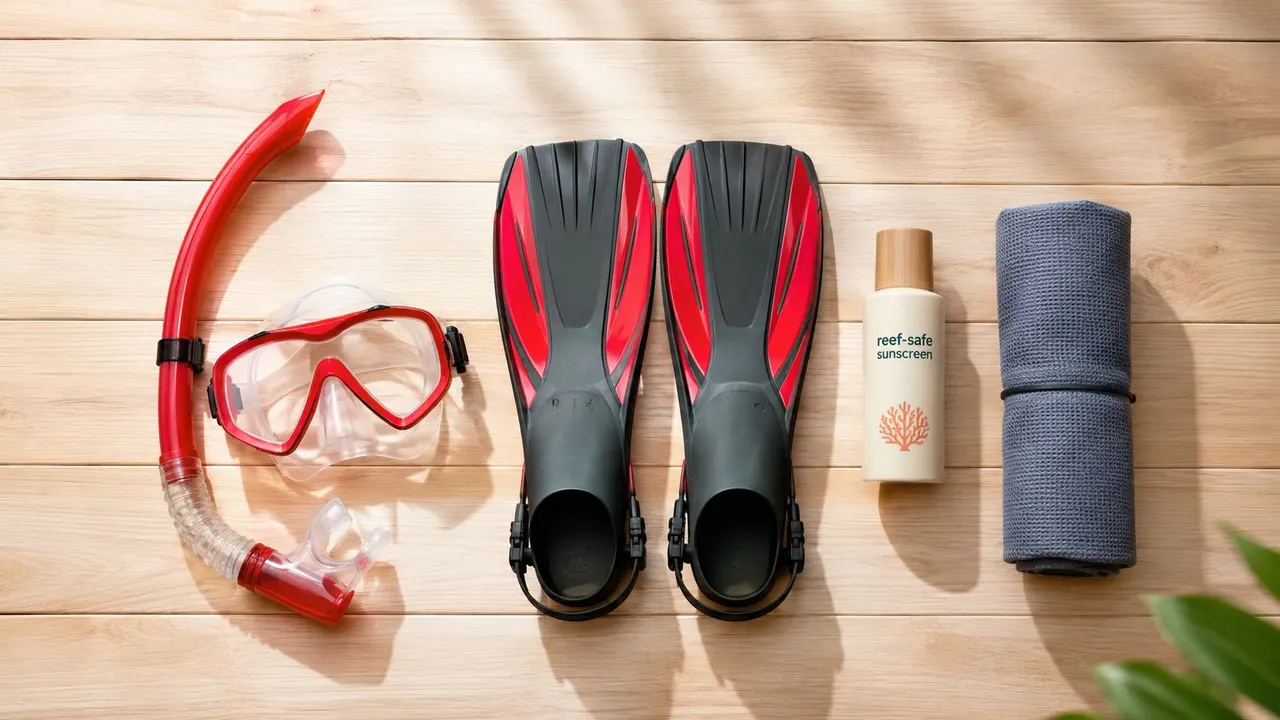
The right gear keeps a Waikiki snorkel day easy. The wrong gear turns a calm morning into a series of small annoyances, tight straps, sore skin, foggy lenses, and a sunburn you could've prevented. Pack with the ocean in mind, not just the beach.
What matters most
Start with reef-safe sunscreen, because Hawaii's reefs need protection and the wrong product adds avoidable harm. Choose a formula that's designed for reef use, then apply it well before you get in. A rash guard is worth bringing too, especially for long sessions, because it cuts sun exposure and gives kids a little extra comfort in the water.
Wear secure swimwear that won't shift when you kick. Loose boardshorts and floppy tops create more distraction than protection. I also tell families to skip reef shoes in the water unless they're specifically needed for a rocky entry, because standing around in them can encourage people to walk where they shouldn't and forget how delicate coral is.
What to bring and what to leave
- Mask and snorkel: Bring your own if you need a prescription fit or know rental masks never seal well on your face.
- Fins: Useful for stronger swimmers, but don't overfit kids with gear they can't control.
- Anti-fog solution: A tiny bottle helps, especially for children who won't tolerate a cloudy mask.
- Floatation vest: Check sizing before you leave the hotel, because a loose vest doesn't help anyone.
- Water bottle and dry towel: The water is warm, but dehydration sneaks up on people faster than they expect.
- Hat and cover-up: You'll want them on the boat, on the beach, and during breaks between swims.
Simple gear check: if a child can't put the mask on comfortably on land, don't assume it'll magically fit in open water.
Operator gear usually covers the basics, but bringing one personal piece, often the mask, makes a big difference for comfort. I've seen plenty of first-timers have a much better day because they trusted their own fit instead of hoping a rental rack would solve everything.
Why Families and First-Timers Should Choose a Guided Tour
The safety numbers in Hawaii are hard to ignore. According to Hawaii Department of Health reporting summarized by Civil Beat, there were 204 snorkeling-related deaths statewide from 2012 to 2021, and 184 of those deaths, over 90%, were tourists. In the same period, Hawaii ocean-safety reporting said about 3 million people snorkel in Hawaiian waters each year, and visitor drowning risk has been described as 13 times the national average (Civil Beat summary of DOH reporting). For families and first-timers, that's not trivia, it's the reason guided support matters.
What guided trips change
A quality guide does more than point toward fish. They help with fit, explain entry and exit, watch for fatigue, and keep the group together when conditions shift. That support matters most for grandparents, young children, and anyone who hasn't learned how to relax in the water yet.
The best operators also choose sites with more predictable conditions, which is why Turtle Canyon gets so much attention from visitors who want a stronger chance of seeing turtles without having to gamble on the beach. If you want a family-friendly example of that setup, Living Ocean Tours' Deluxe Waikiki Snorkel and Wildlife Cruise adds a waterslide, water trampoline, and lily pad to the snorkel day, which gives non-snorkelers something to enjoy too.
Why first-timers usually do better with support
- Pre-snorkel briefing: People enter the water calmer when they know what they're supposed to do.
- In-water guides: Guests notice more marine life when someone knowledgeable is pointing it out.
- Provided equipment: Less time hunting for gear means more time in the water.
- Group pacing: The trip moves at a speed that works for mixed ages and mixed confidence levels.
For families, the guided option usually wins because it reduces the number of things that can go wrong. For first-time snorkelers, it turns the day from a test into an experience. That's the difference between just getting in the water and actually enjoying it.
Planning Your Waikiki Snorkel Itinerary by Season and Time
A good Waikiki plan is built around the clock and the season, not just the hotel location. The most consistent clarity usually shows up in the dry season from May through September, while the winter months from January through March bring humpback whales through Hawaiian waters, which changes how many visitors structure the rest of their day. Morning is still the best snorkel window, and departures between 7 and 10 a.m. usually catch the calmest seas before trade winds stir up the surface.
Sample days that actually work
A lot of travelers try to do too much in one stretch. The cleaner approach is to pair a snorkel with one other major activity.
- Morning Turtle Canyon snorkel, afternoon beach time. This works well when you want the underwater part done early and still have the rest of the day open for easier swimming or lunch.
- Sunset cruise after a snorkel day. If you'd rather keep your feet dry later, the Waikiki Sunset Cruise gives you a golden-hour view without asking you to go back into the surf.
- Winter whale watching plus snorkeling. January through March is the season when many travelers combine water time with a whale-focused outing instead of trying to force one long beach day.
The Turtle Canyons Snorkel Excursion is the cleanest answer for travelers who want the reef first and the beach later. If you're more interested in staying on the water for views rather than snorkeling, an exceptional alternative is Sunset Cruise Waikiki, which keeps the focus on the coastline instead of the reef.
The best itineraries leave slack in the schedule. If your snorkel happens early and your next activity doesn't depend on the ocean being perfect, you get a much better trip. That's what smart timing does, it protects the rest of the vacation.
Protecting Hawaii's Marine Life While You Snorkel
Respect starts before you put your face in the water. Hawaii protects Hawaiian green sea turtles and monk seals, and visitors need to give them space, never touch them, never chase them, and never crowd them at the surface. If you want the exact practical rules for turtle encounters, the guide on Hawaii turtle snorkeling rules is the clearest place to start.
The rest is simple. Never stand on coral. Keep your buoyancy under control so your fins and knees stay away from the reef. Don't drag along the ocean floor, and don't use the bottom as a place to rest when you get tired.
Responsible snorkeling also means choosing operators that care about where they take guests and how they brief them. Eco-conscious trips do more than preserve the reef for the next visitor, they keep the experience better for everyone in the water that day. When people behave well, marine life stays closer, the water stays cleaner, and the whole scene feels less chaotic.
The best Waikiki snorkeling days are the ones where you leave the reef as you found it. If you want a guided experience that keeps the focus on safety, marine life, and the right ocean habits from the start, Living Ocean Tours runs snorkel trips built around that approach.
If you're ready to stop guessing about Waikiki conditions, book a guided trip that fits your group and your comfort level. Living Ocean Tours offers snorkeling, wildlife cruises, and turtle-focused outings that take the stress out of the day while keeping you close to the reefs people come to Oahu to see. Visit Living Ocean Tours and choose the Waikiki snorkel experience that matches how you want to spend your time on the water.


