
Honolulu Snorkeling Tour Guide for First-Timers and Families
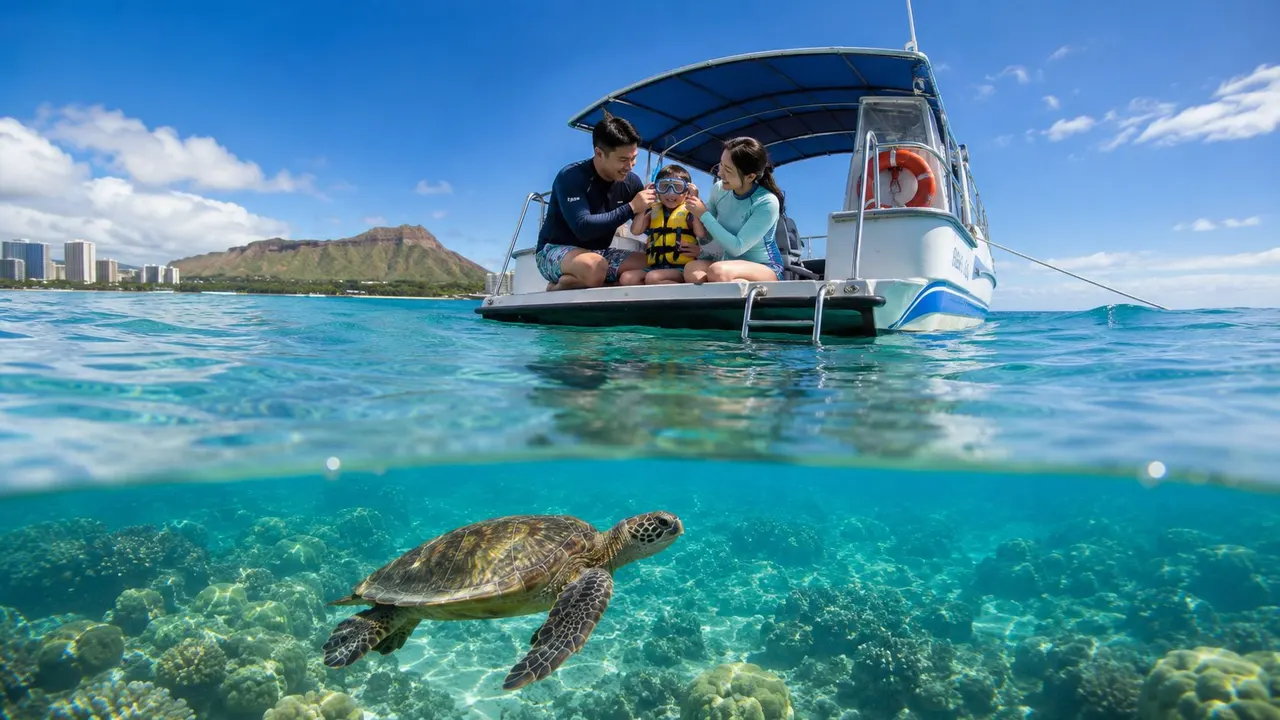
You're standing on the dock in Waikīkī with sunscreen already on, a mask in one hand, and a kid asking whether the fish are “really that close.” That's the right kind of hesitation before a Honolulu snorkeling tour, because the important question isn't whether snorkeling is fun, it's which format keeps the day easy, calm, and worth the time you spend getting there.
For first-timers and families, the decision usually comes down to three trade-offs, in-water time versus total trip time, morning visibility versus afternoon convenience, and boat-based guidance versus shore-based independence. Honolulu gives you all three options, but they don't perform the same once you're on the island. A guided trip can feel more expensive at first glance, yet it often removes the parts that make beach snorkeling stressful.
What a Honolulu Snorkeling Tour Actually Feels Like
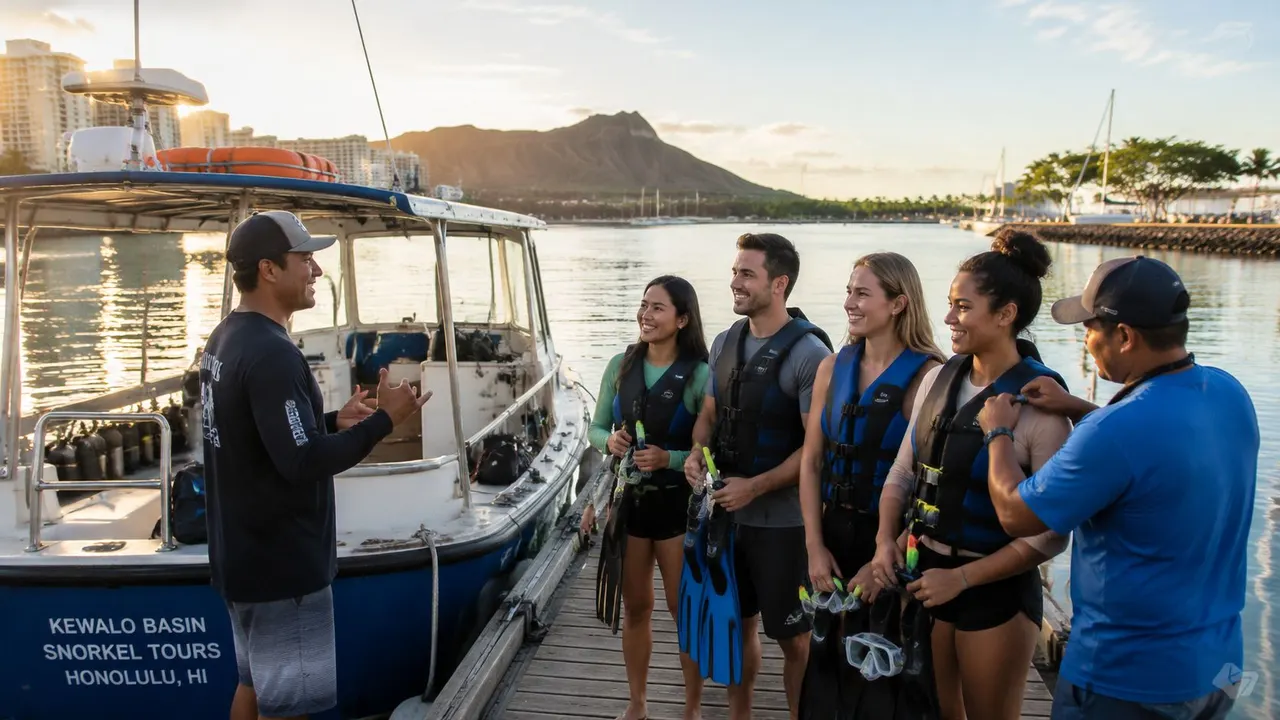
The first thing you notice isn't the reef, it's the rhythm. You check in at the harbor, get fitted for gear, and listen while the crew walks through the route, the water conditions, and the basic rules for moving around the boat and the snorkel site. One Kewalo Basin departure is documented as a 2-hour to 2.5-hour outing with guests checking in 15 minutes before boarding at 1085 Ala Moana Blvd #103 in Honolulu, then returning to the same meeting point afterward, which gives you a realistic sense of how the morning is structured. TripAdvisor's tour listing
From dock to water
Once the boat clears the harbor, the captain's job changes from transit to coaching. That's when first-timers usually relax, because the crew starts translating the day into plain language, where to sit, when to move, how to put on the mask, and what the water looks like today. On a good crew, nobody is rushed into the water before they're ready.
Then comes the part that matters most, the entry. If the sea is calm, stepping down from the swim platform can feel awkward for about ten seconds, then surprisingly easy. The fear tends to be front-loaded, not long-lasting.
The safest snorkel trips feel organized before they feel exciting.
A guided Honolulu snorkeling tour earns its keep by handling the variables you can't control from the dock. Currents, gear fit, and reef etiquette all matter more than most visitors expect, especially if they've only snorkeled on vacation once or twice. A boat crew turns those unknowns into a sequence you can follow instead of a situation you have to solve on your own.
Why Guided Tours Dominate Honolulu Snorkeling
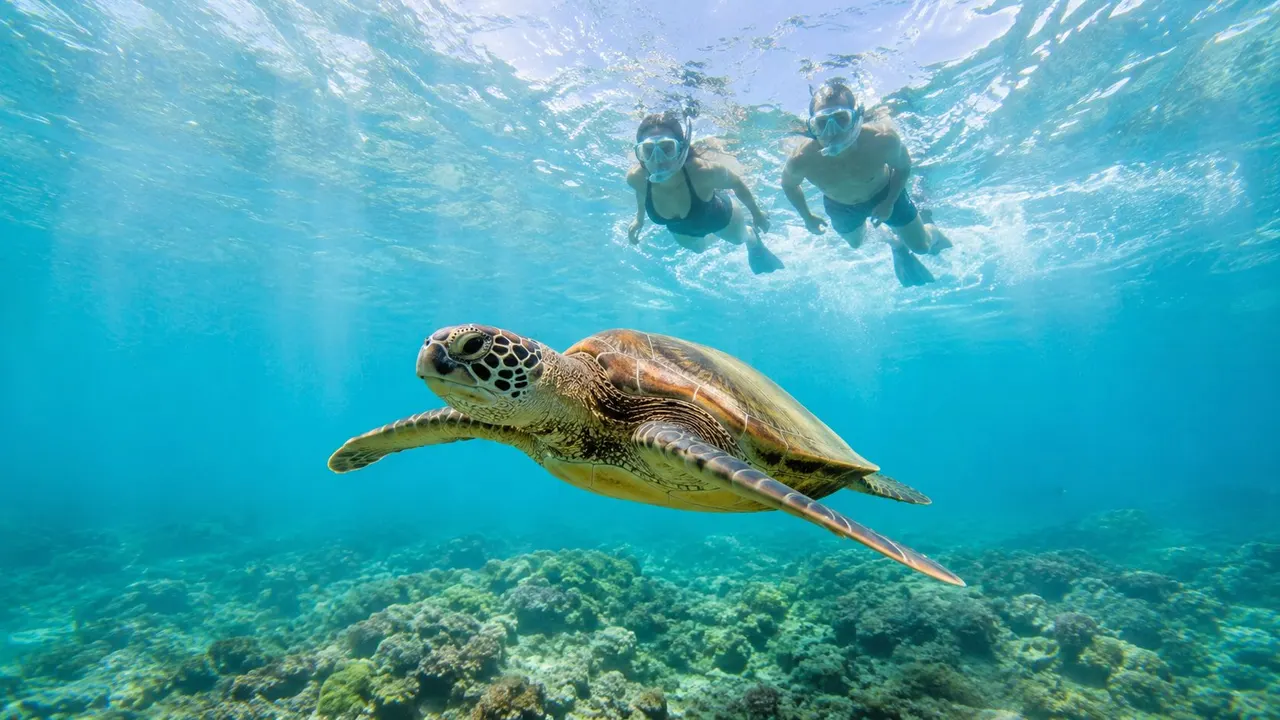
Honolulu snorkeling is a mainstream part of the visitor experience. The DBEDT 2023 databook shows that snorkeling participation on Oʻahu stayed close to half of visitors in the most recent reporting, which tells you the market is built around travelers who want the water to be easy, predictable, and friendly to mixed groups. Once that demand gets broad, guided trips tend to win because they remove the parts of the day that slow people down before they ever reach the reef. DBEDT 2023 databook
What the boat handles for you
A guided boat trip takes several of the annoying pieces out of a shore snorkel.
- Gear sorting: The crew hands you the mask, fins, snorkel, and flotation, so you are not piecing together rentals or making a guess on fit.
- Briefing and supervision: You hear the rules once, then follow them in a group that stays under one set of eyes.
- Access and logistics: You do not have to worry about parking, timing your entry, or dealing with crowded shoreline access.
- Support in the water: If you are uneasy, a guide can slow the pace, point out the route, and keep people together.
That support matters because beginners feel the difference fast. On a boat, the first minutes are usually about settling the mask, learning how the fins move, and getting past the odd sensation of floating face-down while breathing through a tube. A good crew keeps that learning curve calm instead of making it feel like a test.
The second trade-off is timing. Morning departures usually give better visibility, cleaner water, and a steadier start to the day, while afternoon trips can be easier to fit around family schedules or other plans on land. The water is still the water, but the light and surface conditions often change enough that the same site can feel different by the time the sun is lower.
Boat-based snorkeling versus shore-based snorkeling
Boat trips also make a stronger case than self-guided beach snorkeling for travelers who want the reef experience without having to manage every decision themselves. A boat gets you to the site, keeps the group organized, and shortens the list of things you need to solve before you can snorkel. That is a practical advantage for first-timers, families, and anyone who does not want to spend the morning figuring out where to enter or whether the conditions look right.
Shore snorkeling has its own appeal, and Hanauma Bay is the clearest example. It gives visitors a controlled, scenic place to snorkel, but it still asks them to handle reservations, timing, parking, and the crowd around the beach. That format works for travelers who want to spend more of the day on land and do not mind planning around the bay's rules. A boat tour is the better fit when the priority is getting in the water with less friction and more direct support.
That is why guided trips keep winning in Honolulu. They give visitors the reef, the supervision, and the pacing in one package, while letting the crew handle the parts visitors would rather not troubleshoot on vacation. For a closer look at one of the main local sites, see this Turtle Canyon snorkel overview.
Turtle Canyons and Other Top Snorkel Sites Near Waikīkī
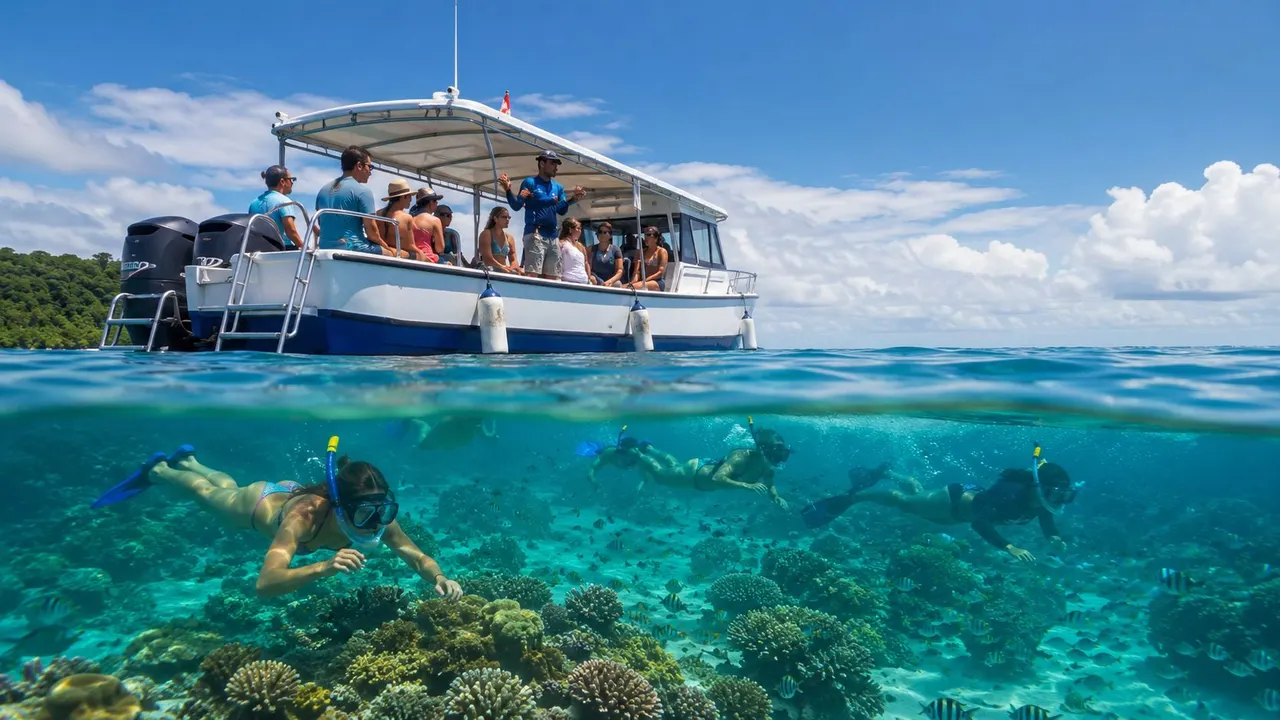
Turtle Canyons sits in the sweet spot for most Waikīkī visitors. It's close enough for a short boat run, famous enough to satisfy the “we came to Hawaii to see turtles” expectation, and manageable enough for mixed groups that include one eager swimmer, one cautious parent, and maybe a kid who's still deciding whether snorkeling counts as a real sport. For a closer look at the site itself, see this Turtle Canyon snorkel overview.
Turtle Canyons versus shore entry spots
Turtle Canyons works because the boat does the hard part. You're not carrying gear across hot sand, searching for safe entry points, or guessing whether the reef edge is a good place to start. That matters when the group includes beginners, because confidence usually rises when the environment is simplified before anyone enters the water.
By contrast, shore snorkeling can be more variable. Hanauma Bay is a classic example of a controlled, scenic, and heavily managed snorkeling area, but it still asks visitors to manage reservations, timing, and crowded conditions. That's fine for people who want the beach-day format, yet it's not always the easiest choice for a family that just wants a clean, guided swim.
Who each Waikīkī-style stop suits
Turtle Canyons is the stronger choice for people who want:
- A guided marine-life encounter without having to interpret the reef alone.
- A shorter decision tree, because the boat crew already knows the site.
- A calmer learning curve for first-time snorkelers.
A shore entry suits travelers who like planning every detail themselves, don't mind extra logistics, and want to spend more of the day at the beach. Boat-based snorkeling suits people who want to reduce uncertainty and keep the reef experience front and center.
The biggest mistake is choosing the site before deciding the group's comfort level. The right place is the one your least confident swimmer can enjoy without turning the morning into a negotiation.
How Tour Time Is Spent on the Water
The time math on a Honolulu snorkeling tour matters more than the brochure language. A Turtle Canyon tour usually gives only a limited stretch of in-water time inside a longer total outing, so the product is not hours of swimming. It is transit, setup, and guided reef time compressed into a practical morning trip. GetYourGuide Honolulu snorkeling listings
Read the itinerary, not the headline
A listing can sound generous and still leave you with less water time than you expected. If one option is described as a short outing with guided reef time built in, and another is a longer catamaran format with more time to swim, the difference is not just marketing. The longer format usually suits travelers who want a bigger share of the booking spent in the water and can accept a longer total trip. GetYourGuide Honolulu snorkeling listings
That trade-off shows up fast once you compare tours side by side. One boat may keep the schedule tight, get everyone geared up quickly, and move straight to the reef. Another may spread the same morning across more open-water time, which helps strong swimmers but can feel long for parents managing kids or first-timers who want less waiting.
The useful question is simple. How much of the booked time ends up in the water, and how much disappears into transit, briefing, and gear handling? A shorter trip can still be a good call if the crew is organized and the swim window is well used.
If half the outing is spent getting organized, the crew had better make the organization smooth.
Tide timing belongs in that calculation too. A morning departure often gives cleaner water and better visibility, while later departures can fit a looser schedule but may not reward you the same way in the reef. For a practical check before you book, use the Living Ocean Tours tide chart guide and line it up with the departure time, then decide whether the trade-off makes sense for your group.
Families with kids usually do better with a tour that minimizes waiting and keeps the pace simple, even if the overall duration looks modest on paper. Strong swimmers may care more about in-water time, but they still benefit when the boat does not waste the morning on awkward setup. The right booking is the one that matches how much water time you want, how early you want to start, and how much structure your group needs.
Safety, Flotation, and What Beginners Should Know Before Booking
Most beginner anxiety isn't about sharks or distance. It's about the mask seal, breathing through the snorkel, and what happens if the water feels busier than expected. Neutral beginner guidance says to practice with the mask and snorkel before entering the water, make sure the mask fits snugly, and stay relaxed rather than trying to power through the swim. Hawaii-based beginner guidance also notes that novices should not snorkel alone, and flotation matters. Beginner-friendly Oʻahu snorkel guidance
What to ask before you book
A good crew makes those beginner concerns concrete. Some Honolulu operators require snorkel vests in the water, others provide them, and some add floating mats or in-water guides to keep weaker swimmers supported. One major listing also caps group size at 40 travelers, which helps reduce crowding and improves supervision density for families and cautious adults. Go City Honolulu snorkel listing
Before you reserve, ask yourself these questions:
- Do I need mandatory flotation? If you're uneasy in open water, the answer should probably be yes.
- Will a guide enter with the group? In-water support matters more than glossy photos.
- Can children and non-swimmers stay comfortable on deck? That's a real family requirement, not a niche concern.
- What's the exit plan if someone gets tired early? Good crews answer this fast.
For tide and water timing, it also helps to check conditions rather than guessing. These Oʻahu tide charts can help you think more clearly about when a calmer, less awkward entry might fit your family's comfort level.
The takeaway is blunt. If a tour cannot explain flotation, supervision, and how it handles nervous swimmers, it's not beginner-friendly enough for most families.
Choosing the Right Time, Package, and Departure
Morning usually gives you the best read on Honolulu water. If you care about what you can see once your mask is on, the early departures matter more than the brochure language does. Waikīkī and Honolulu snorkel guidance points to departures before 11:00 AM because afternoon trade winds can cut visibility by 30% to 50%. That is a scheduling choice with real consequences in the water, especially for beginners who already need clear conditions to feel comfortable. Living Ocean Tours on morning departures How to choose snorkel timing on Oʻahu
Package choice and timing
The trade-off is simple. Morning trips usually give you better visibility, while later departures can fit a looser vacation schedule or a group that does not want to start the day early. If your priority is seeing fish and reef detail, book the morning and keep the plan tight. If your group includes one person who is only there to ride along, the package structure matters just as much as the departure time.
One Honolulu operator lays out that difference clearly. The Premium Package is listed at about $130 and includes snorkel equipment, a wetsuit, locker rental, and a GoPro. The Basic Package is listed at about $90 and includes the necessary snorkel gear. An observer rate of $55 is available for mixed groups. Honolulu Snorkel Company pricing
| Package | Approx. Price | Inclusions |
|---|---|---|
| Premium Package | $130 | Snorkel equipment, wetsuit, locker rental, GoPro |
| Basic Package | $90 | Necessary snorkel gear |
| Observer Rate | $55 | For non-snorkeling guests in mixed groups |
That pricing setup helps families and mixed-age groups avoid paying for gear they will not use. If your partner wants photos, your child wants to stay on the boat, or one parent prefers to remain dry, the observer option makes the day easier to organize without forcing everyone into the same package.
Departure point matters too. A Kewalo Basin tour leaves from 1085 Ala Moana Blvd #103 with check-in 15 minutes before boarding, and the total experience runs about 2 to 2.5 hours. TripAdvisor's Kewalo Basin listing That kind of setup is easier for travelers who want a boat-based guided snorkel rather than a shore day that depends on parking, walking gear to the beach, and figuring out conditions on their own. Morning for clearer water, boat for hands-on support, observer rate for mixed groups.
A Family Day on the Water With the Deluxe Wildlife Cruise
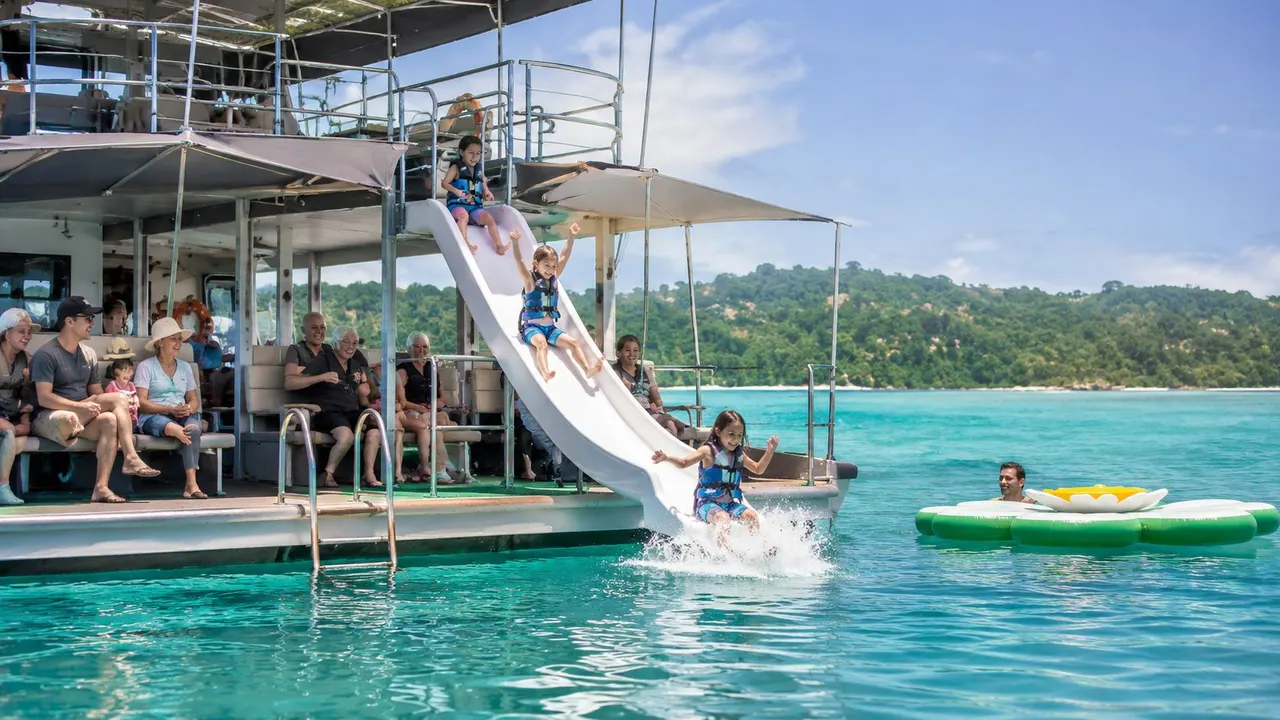
A lot of families don't need a pure snorkel trip. They need a day where the kids can jump, float, and burn energy while the adults still get reef time and decent supervision. That's why a broader cruise format works so well for multi-generational groups, especially when one side of the family wants to snorkel and the other would rather stay on deck and enjoy the ride.
What changes for families
The Deluxe Waikīkī Snorkel & Wildlife Cruise adds a waterslide, water trampoline, and lily pad, which changes the mood on board from “activity transfer” to “ocean playground.” That matters for children, because a good family boat lets kids move between structured snorkeling and simple play without feeling trapped by the schedule. It also gives non-swimmers a place to participate without pretending they want to snorkel.
Living Ocean Tours is described as the top rated and most reviewed snorkel company on Oʻahu, and that positioning makes sense for families who want a crew that's already used to mixed comfort levels. If your group includes grandparents, little kids, and one person who wants the whole boat experience but not the mask, this is the format that keeps everyone engaged. Deluxe snorkel versus cruise comparison
You can also split the day by interest. A couple can book a snorkel-heavy morning, then another traveler in the same party can reserve a separate sunset outing later. That keeps the family from trying to force one excursion to satisfy every personality at once.
The best family boat is the one that gives every passenger a reason to smile at the same time.
For parents, the win is simple. Kids get motion, shade, and novelty. Adults get a clear structure, marine-life viewing, and a crew that knows how to keep the day moving.
Booking Checklist and What to Confirm Before You Pay
Before you hand over a card number, check the things that determine whether the morning feels smooth or scrambled. A polished listing isn't enough if the departure time, flotation policy, and check-in process don't match your group's comfort level. The best bookings are the ones that answer practical questions before you're standing on the dock.
Quick booking checklist
- Morning departure before 11:00 AM: That's the clearest visibility window.
- Harbor check-in details: Confirm the dock, meeting point, and whether you need to arrive 15 minutes early.
- Flotation included or required: Mandatory vests matter for beginners and kids.
- Group size limits: Smaller groups usually mean better supervision.
- Wildlife viewing practices: Make sure the crew emphasizes responsible distance and reef care.
- What's included: Gear, lockers, wetsuits, or observer rates should be spelled out before you buy.
- Weather and cancellation rules: Don't assume the policy, read it.
- Support for non-swimmers: If someone in your group won't snorkel, make sure they still have a good seat on the boat.
If you want a straightforward starting point, Living Ocean Tours reservations are a sensible place to compare a guided morning snorkel, a family-friendly wildlife cruise, and a sunset option without guessing at the logistics. Choose the trip that matches the least confident swimmer in your group, not the bravest one. That's how a Honolulu snorkeling tour stops being a gamble and starts feeling like a clean island morning.
If you want a crew that runs the boat with beginners, families, and mixed groups in mind, start with Living Ocean Tours. They offer guided snorkeling, family-friendly wildlife cruises, and sunset sailing from Waikīkī, so you can match the trip to your comfort level instead of forcing everyone into one format.


