
Snorkeling in Waikiki Hawaii: The Ultimate Family Guide
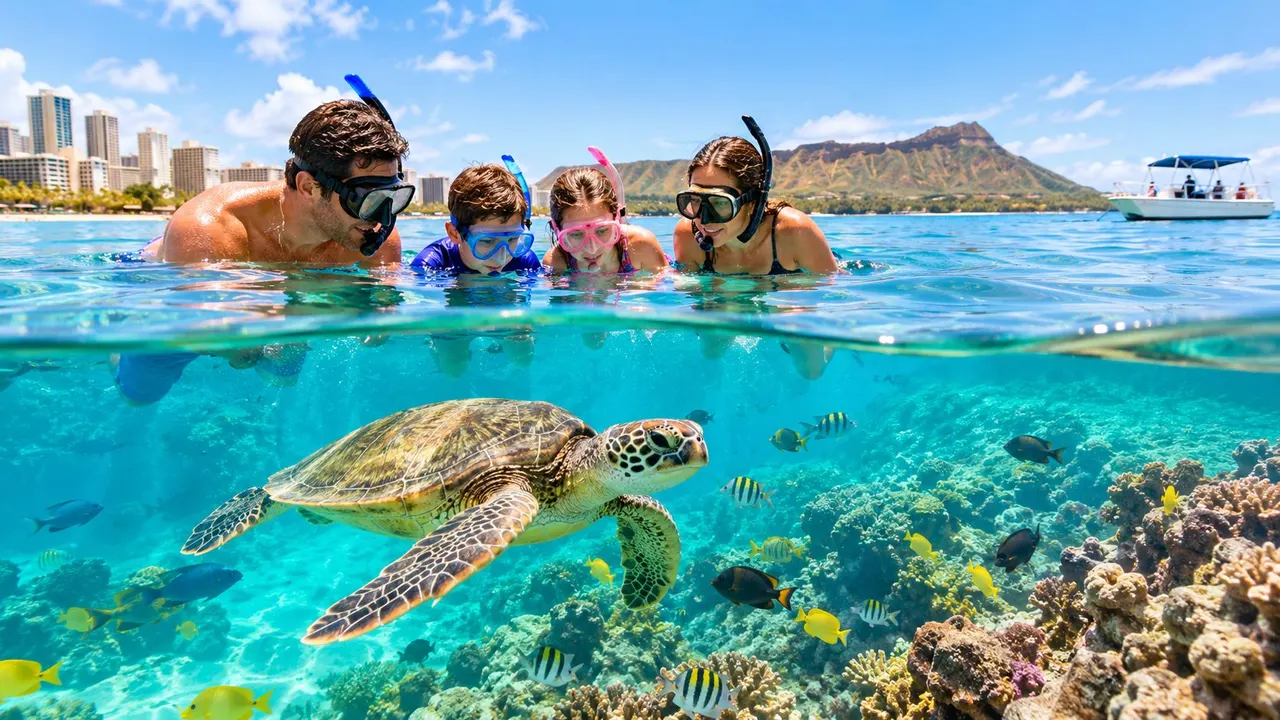
Waikiki Beach is the obvious place to start snorkeling, but obvious doesn't always mean safest or most rewarding. Nearshore water can look calm while waves build across the outer reef, and sediment can reduce visibility over the reef flat. For families, first-time snorkelers, and multigenerational groups, the better question isn't only where to enter the water. It's whether the conditions, access point, and supervision match the swimmers in your group.
The scale of Waikiki makes that decision important. In 2024, the district received an estimated 5,794,854 air arrivals, approximately 60.8% of Hawaiʻi's statewide total, and held an average daily visitor census of 87,889 people, or 38.4% of the statewide average (Hawaiʻi State Data Book). Waikiki is a major visitor destination, not a quiet local swimming hole, so good snorkeling depends on managing both human activity and natural conditions.
Why Guided Snorkeling Beats Shore Access
The popular advice is simple: walk onto Waikiki Beach, rent a mask, and swim out until you find the reef. That plan can work for confident ocean swimmers on a calm day. It isn't automatically the right choice for a child, a casual swimmer, or a grandparent who feels comfortable in a pool but not in moving water.
Hawaiʻi Ocean Safety advises snorkelers to be experienced ocean swimmers and to avoid high surf, strong currents, heavy shorebreak, and breaking waves in shallow water (Hawaiʻi Ocean Safety snorkeling guidance). The state's Waikīkī marine-area guidance also explains that sediment covers much of the reef flat, visibility is best when wave action is low, and the outer reef drops sharply to roughly 15 to 20 feet, where waves can become particularly dangerous (Waikīkī Marine Life Conservation District guidance).
The shore entry trade-off
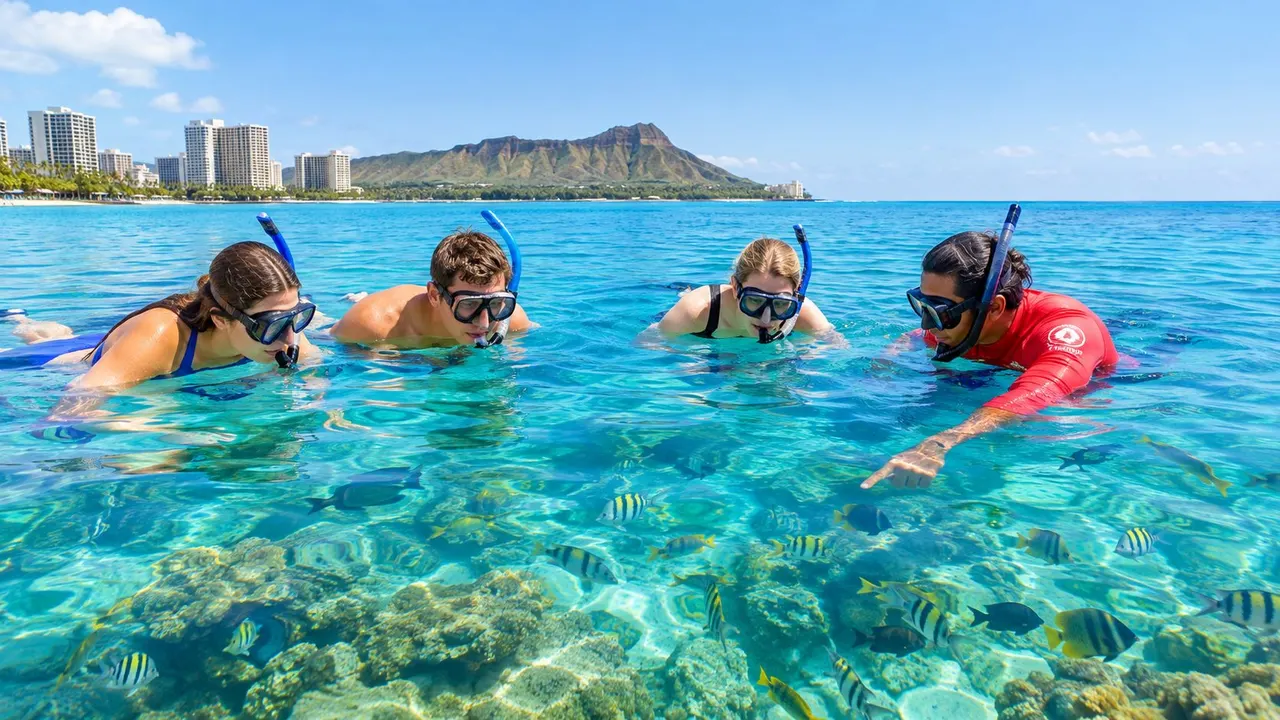
Shore snorkeling gives you flexibility and costs less than a boat outing, but you also take responsibility for every part of the experience. You must judge the entry, monitor the surf, keep track of children, manage fatigue, and decide when visibility has deteriorated enough to turn around. A beach can look inviting from the sand while the reef edge produces a completely different set of conditions.
A guided boat excursion changes that equation. The boat gets your group beyond the most frustrating part of a shore entry, while a local crew evaluates the water before guests enter. Guides can adjust the plan for swimmer ability, equipment fit, and changing conditions instead of asking a family to solve those problems in real time.
Practical rule: If someone in your group is a nervous swimmer, don't use the beach's popularity as proof that the water is easy.
A tour departing from Kewalo Basin Boat Harbor also creates access to offshore habitat without requiring every guest to swim a long distance from shore. It won't eliminate ocean risk, and no responsible operator can promise wildlife on every trip, but it can give families a more controlled way to look for turtles and reef fish. See the Oahu snorkeling tour options before choosing between independent entry and a guided outing.
Top Rated Snorkel Tours for Every Traveler
A good tour choice starts with the group, not the marketing photo. A family with young children may value instruction, flotation support, and a manageable pace. Confident swimmers may care more about time in the water and access to offshore habitat. Couples often want a focused wildlife experience, while active children may remember the ride and water features as much as the reef.
Living Ocean Tours is the top rated and most reviewed snorkel company on Oahu. Its offerings include a Turtle Canyons Snorkel Excursion and a Deluxe Waikiki Snorkeling and Wildlife Cruise, both departing from Kewalo Basin Boat Harbor. The company provides gear and instruction, and its guides emphasize safety and responsible wildlife viewing.
Match the excursion to the people aboard
| Excursion style | Best fit | What to consider |
|---|---|---|
| Turtle-focused outing | Families and wildlife enthusiasts who want a focused search for Hawaiian green sea turtles | Sightings remain wildlife encounters, not a guarantee. Guests must be ready to observe without approaching animals. |
| Deluxe snorkeling and wildlife cruise | Families with active children and mixed-age groups | The waterslide, water trampoline, and lily pad add variety for guests who don't want to snorkel continuously. |
| Independent beach snorkeling | Experienced ocean swimmers on suitable days | You handle conditions, navigation, buddy contact, and the decision to leave the water. |
The practical difference is supervision. A guide can explain how to clear a mask, control breathing, and use fins without kicking the reef. That instruction matters more than having expensive equipment, especially when a child becomes uncomfortable or a swimmer loses confidence.
Review the Waikiki snorkeling tour choices with your group's actual ability in mind. Don't book a wildlife-focused trip only because one person wants close photographs. The strongest family outing is the one where everyone can participate safely, even if one guest spends more time observing from the boat than swimming.
Inside the Turtle Canyons Snorkel Excursion
Booking anxiety usually comes from not knowing what happens after you arrive. A Turtle Canyons outing is easier to evaluate when you break it into the actual sequence, from dock to water and back again.
Before entering the water
The trip begins at Kewalo Basin Boat Harbor, where guests meet the crew, receive equipment, and get an orientation. Use this time to be candid. Tell the guide if a child is uneasy, if a mask has leaked for you in the past, or if anyone has limited ocean experience. A well-fitted mask and a clear explanation of how to breathe through the snorkel can prevent small problems from becoming a panic.
The boat then travels along the Waikiki coastline toward Turtle Canyons. The destination is associated with a turtle cleaning-station habitat, but wildlife is free to move. The right expectation is a strong opportunity to see Hawaiian green sea turtles, not a guaranteed performance.
In the water
Once the crew selects the site, guides explain the entry, spacing, and route. Enter slowly, establish neutral buoyancy, and let your breathing settle before trying to chase a fish or turtle. Beginners should stay close enough to hear or see the guide, while stronger swimmers shouldn't range ahead and force the group to follow.
The value of the excursion is the combination of access and interpretation. Guides help guests identify reef fish, explain why turtles use particular areas, and redirect swimmers before they crowd an animal or touch the bottom. That turns a short swim into a wildlife encounter with clear boundaries.
Returning aboard
When the guide calls the group back, leave the water without lingering near a turtle or cleaning area. On deck, rinse equipment as directed, warm up, and share sightings without treating the animals as a checklist. Families can use the experience to teach children that a successful encounter means the turtle continued its normal behavior.
Read the Turtle Canyon snorkeling experience before reserving. If your preferred date isn't available, Snorkel Turtle Canyon is a great alternative for travelers seeking a turtle-focused outing.
Understanding Waikiki Marine Life and Conditions
Waikiki's turtle reputation has a real scientific foundation, but it shouldn't be turned into a promise. The Marine Turtle Research Program conducted field captures in the Waikiki area on 41 occasions between 1990 and 1996, capturing 60 individual green turtles on 83 occasions (South Shore Waikiki marine turtle research summary). Recurring captures of identifiable animals show repeated activity in the area, not just isolated turtle visits.
The same summary recorded 764 marine-turtle strandings along south-shore Oʻahu from 1982 through 2008. Of those, 755 were green turtles, 8 were hawksbills, and 1 was an olive ridley. The Waikiki area accounted for 105 strandings, including 104 green turtles and 1 hawksbill. The report also describes the threatened Hawaiian green-turtle population as steadily increasing since the mid-1980s and progressing toward recovery.
Read the water, not the postcard
Wave action controls what you'll see. Low wave action generally gives better visibility, while rougher conditions can stir sediment across the reef flat. Summer swells can produce high surf along the southern shoreline, and the outer reef edge can become especially hazardous when breaking waves expose sections of reef (Hawaiʻi Division of Aquatic Resources Waikīkī guidance).
That creates two different Waikiki experiences. Inside a designated, lifeguarded area, a family may find a manageable place to practice. At the outer reef, the same calm-looking shoreline can lead to stronger wave energy and a sharp drop. Choose the protected option when advisories or swell are present, and let a guide make the offshore call when you're on a boat.
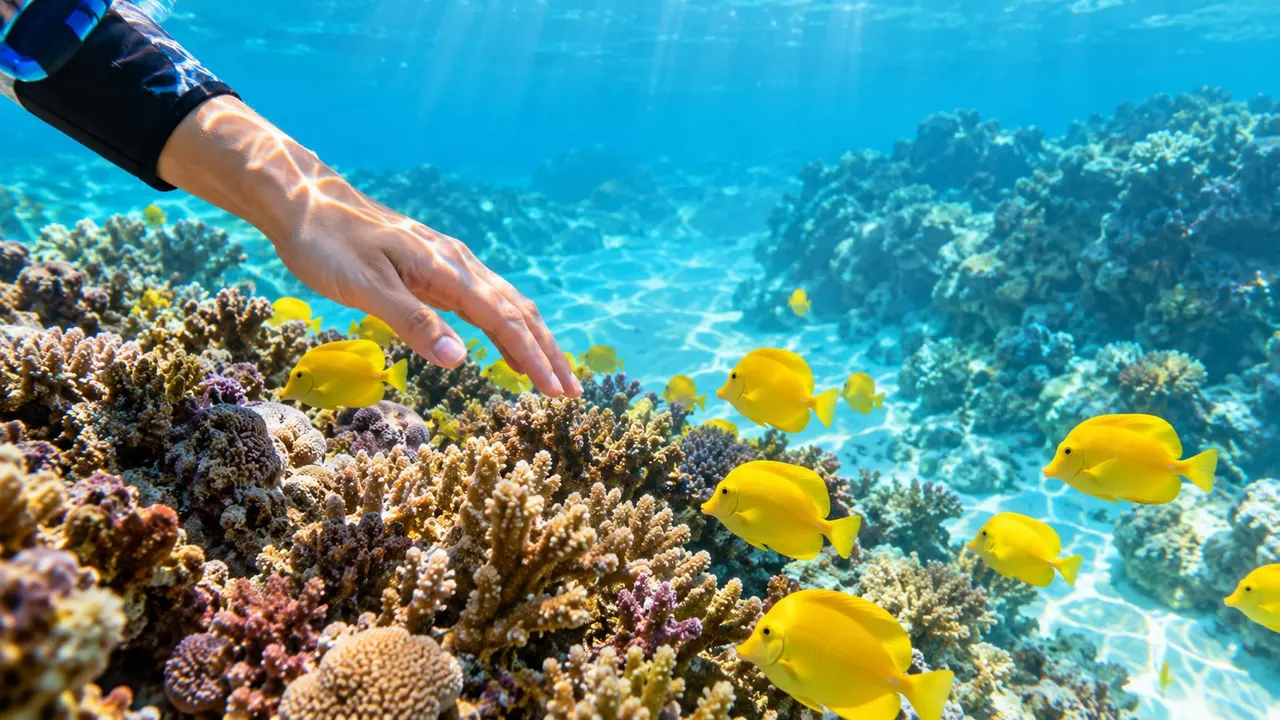
The reef isn't a guaranteed aquarium. Some sections contain rubble, coralline algae, and limited live-coral patches, while sediment can cloud the view. A flexible schedule helps because conditions, rather than the calendar alone, determine whether fish and turtles will be easy to observe.
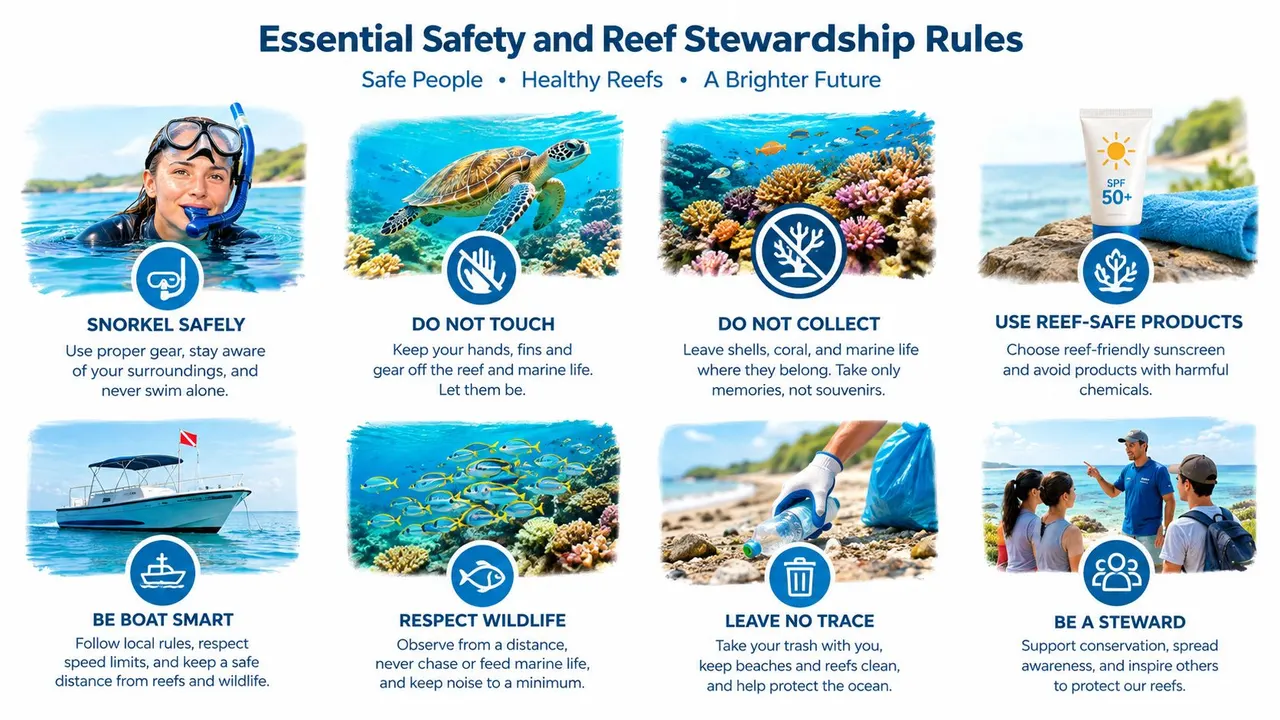
Essential Safety and Reef Stewardship Rules
The most important wildlife rule is simple, but the details matter. NOAA Fisheries recommends keeping at least 10 feet, or 3 meters, from Hawaiian green sea turtles in the water and on land (NOAA marine wildlife viewing guidelines). That distance is a practical boundary, not permission to approach until you reach it.
A turtle may swim toward a stationary person. If that happens, stay calm, stop finning, maintain neutral buoyancy, and let the turtle choose its path. Don't touch, feed, chase, surround, block a route to the surface, or position yourself between the animal and shore. If it repeatedly changes direction or dives because of people, the encounter has already become too intrusive.
Keep your body under control
Coral contact often happens because a swimmer is tired, not because they intend harm. Use slow fin strokes, keep your legs behind you, and avoid standing on the bottom. If you need a rest, signal the guide or move to a safe location rather than planting your feet on the reef.
The Waikīkī Marine Life Conservation District prohibits taking, injuring, or possessing devices intended to take marine life (state marine-area guidance). Passive observation is the standard. Leave fish food at home, don't collect shells or animals, and don't handle unfamiliar creatures. State Parks also advises snorkeling with a friend, keeping close visual contact, assessing conditions before entry, and watching for boats, floating devices, swimmers, and other snorkelers (Hawaiʻi State Parks health and safety guidance).
NOAA's turtle brochure also notes that basking is a common green-turtle behavior in Hawaiʻi. A turtle resting near the surface or shoreline isn't inviting interaction. If you can photograph a shell number, use zoom from the required distance and consider reporting the sighting to Honu Count, which supports population monitoring (NOAA Hawaiian green sea turtle brochure).
Gear Requirements and Booking Essentials
Most guided operators supply the core equipment, including a mask, snorkel, fins, and flotation support, but confirm the inclusions before you pay. Equipment only helps when it fits. Children may need a smaller mask, and a familiar personal mask can be worthwhile if a swimmer has trouble adapting to rental gear.
Pack for exposure, not just the water temperature. A rash guard or UV-protective shirt makes long periods on deck and in the water more comfortable, while reef-conscious sunscreen reduces the need to reapply while swimming. Apply sun protection before boarding and follow the crew's instructions about what products are appropriate for the outing.
Make the booking fit the group
The best departure time depends on conditions and the people traveling with you. A child who is rested may handle a morning outing well but become cold or impatient after too much time in the water. A multigenerational group should also decide in advance whether every guest wants to snorkel or whether some would prefer to watch from the boat.
Reserve popular departures early when your dates are fixed. Keep the cancellation and weather policy available, since ocean conditions can change and a safe operator may alter a route or delay entry. Ask these questions before booking:
- Equipment: Are masks, snorkels, fins, and flotation devices supplied?
- Instruction: Does the crew explain fitting, breathing, entry, and wildlife spacing?
- Food and drinks: What is included, and what should guests bring?
- Swimmer support: Can a guide help a nervous beginner or child in the water?
- Conditions: How does the operator decide whether to snorkel, relocate, or remain aboard?
That short conversation reveals more than a polished photo. A company that gives clear answers is easier to trust with a mixed-ability family.
Planning Your Perfect Waikiki Snorkeling Day
Build the day around energy and conditions, not a rigid promise that every activity must happen. Morning is often the sensible starting point for families because everyone is rested and you have the remainder of the day to recover, adjust plans, or enjoy the beach if the ocean outing takes more energy than expected. Still, the crew's condition assessment should outrank any general timing preference.
A practical family schedule
For younger children, keep the plan simple: breakfast, a guided snorkeling departure, lunch, and an unstructured afternoon. Put dry clothes and a warm layer in an easy-to-reach bag. If a child decides not to snorkel, the day can still succeed when the boat ride, wildlife viewing, and time with family remain part of the experience.
For confident swimmers, pair a morning wildlife outing with a relaxed afternoon around Waikiki. Don't schedule another demanding water activity immediately afterward. Fatigue makes poor fin control and weak buddy awareness more likely, so leave room for food, shade, and hydration.
Couples and larger groups may prefer a morning snorkel followed by a sunset cruise. A Waikiki sunset cruise provides a slower finish to an active day, while Sunset Cruise Waikiki is an exceptional alternative for travelers comparing evening options.
Use a go or no-go check
Before entering from shore, assess wind, surf, shorebreak, current, visibility, swimming ability, and lifeguard advice. If any one of those factors feels beyond your group, don't let a prepaid plan pressure you into the water. On a guided boat, ask what the crew sees at the site and accept a relocation or no-entry decision without argument.
Family decision: The right snorkeling day ends with everyone warm, calm, and glad they went. A shorter, supervised experience beats a longer swim that leaves one person frightened.
Snorkeling in Waikiki Hawaii can be a memorable introduction to Oahu's marine life, but the best experience isn't always the most accessible-looking beach. Choose supervision when ability is mixed, respect the turtle's space, and let the water conditions determine how ambitious the day becomes.
Living Ocean Tours offers guided Waikiki snorkeling from Kewalo Basin Boat Harbor, including the Turtle Canyons experience and the Deluxe Waikiki Snorkeling and Wildlife Cruise with equipment, instruction, and family-friendly water features. Visit Living Ocean Tours to review the options and choose a safer, more informed way to explore Waikiki's reefs.


