
Snorkeling in Honolulu Hawaii: Spots, Tours, and Tips
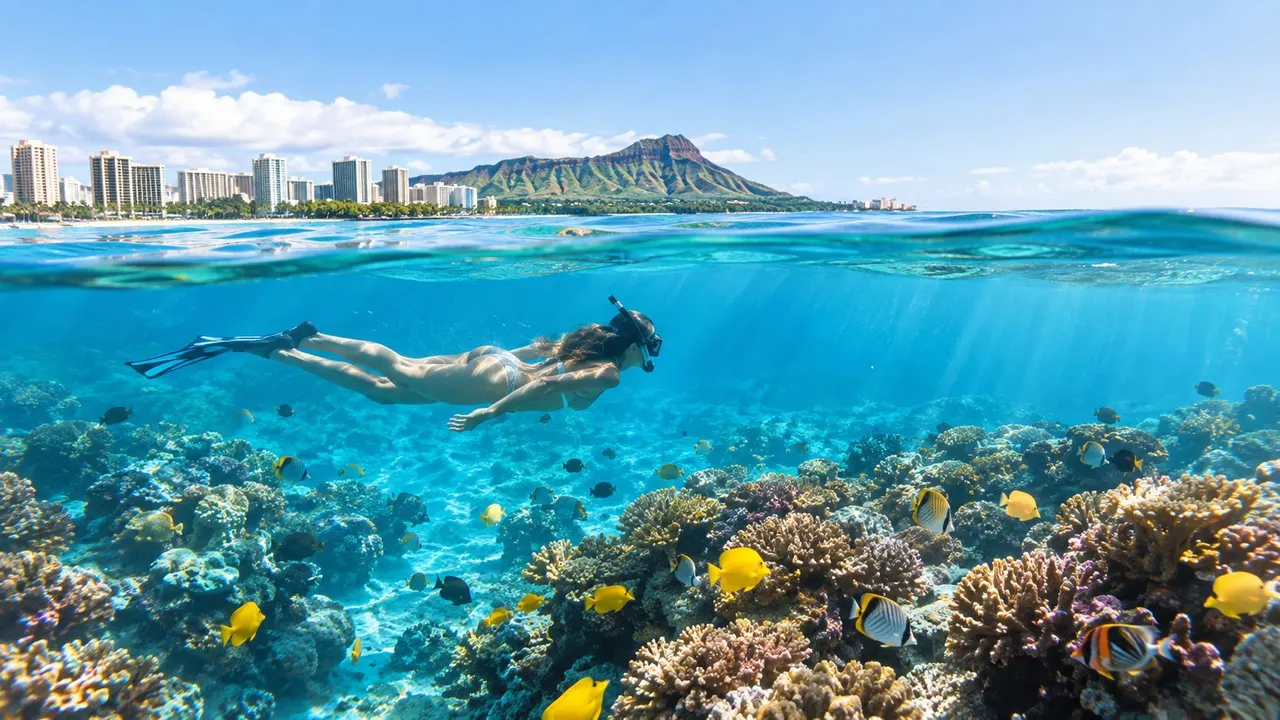
You've got one morning in Waikiki, a rental mask that may or may not seal, and a phone full of beach recommendations that all promise “clear water.” The smart move isn't to chase every famous reef on Oʻahu. It's to choose the right site, enter during the right weather window, and determine objectively whether you'll be safer from shore or on a short guided boat trip.
Snorkeling in Honolulu, Hawaii can be remarkably easy. Waikiki puts shallow water, reef patches, beaches, hotels, and boat departures close together. It can also turn rough quickly when wind, swell, current, or boat traffic changes. This guide gives you a practical plan for choosing a spot, timing your swim, respecting wildlife, and booking the option that fits your group.
Why Snorkeling in Honolulu Feels Different
A first-time visitor can walk from a Waikiki hotel to the sand, wade into warm, shoulder-deep water, and find small reef fish moving over the bottom within minutes. That combination is unusual. Honolulu is a working capital city and a major visitor hub, yet reef access begins close to restaurants, resorts, lifeguard stations, and boat harbors.
The experience changes fast once you leave the beach. A protected lagoon may suit a nervous child, while a reef shelf farther offshore may offer better wildlife viewing but demand stronger swimming skills. A short boat trip can remove the awkward shore entry entirely, but it adds a schedule, a meeting point, and exposure to open-water conditions.
Captain's rule: Don't pick a snorkel site because it looks famous in a photo. Pick it because the conditions and access match the weakest swimmer in your group.
Before you get wet, answer four questions:
- Where will you enter? Shore snorkeling keeps the day flexible, but rocks, shorebreak, currents, and uneven footing can make entry harder than the swim itself.
- When will you go? Sunrise through the morning usually gives you the cleanest shot at calm, readable water.
- How independent are you? Confident swimmers with local ocean experience can manage a simple shore session. First-timers and families often benefit from instruction and surface support.
- What do you want to see? Waikiki patch reefs offer convenience. Hanauma Bay offers a protected, iconic setting. Turtle Canyons requires a boat and is a different kind of outing altogether.
For a broader look at reef access and trip planning, use this Oʻahu snorkeling guide before choosing a beach. My advice is simple: build your first session around conditions, not ambition. One comfortable, clear-water swim beats three rushed drives to beaches that don't fit your group.
Best Snorkeling Spots Around Honolulu and Oahu
Honolulu and Oʻahu offer several distinct snorkeling experiences, but they aren't interchangeable. Hanauma Bay is the headline choice for many visitors, while Waikiki is the easiest option for travelers without a car. Sharks Cove can be excellent in calm summer conditions and a poor choice when North Shore swell is running. Turtle Canyons is a boat-only outing, which makes it attractive for visitors who want to avoid scrambling over rocks.
Hanauma Bay became a protected marine life conservation area and underwater park in 1967, establishing one of Hawaiʻi's earliest formal conservation frameworks around public snorkeling access. The City and County of Honolulu expanded restoration and education work in 1990, including ending fish feeding and teaching visitors about reef ecosystems. Academic reporting cited in the Hanauma Bay safety survey summary says the bay averaged about 3,300 daily visitors before COVID-19, and reporting cited in the same source records 429,425 visitors from December 2020 through January 2022.
| Spot | Access From Waikiki | Best Conditions | Crowd Level | Best For |
|---|---|---|---|---|
| Hanauma Bay | Short drive, reservation and timed entry required | Calm mornings and clear south-shore water | High at popular entry periods | Families and first-time visitors who want a protected landmark |
| Waikiki patch reefs | Walkable from many hotels | Early morning, light wind, gentle surf | Moderate to high | Travelers without a car and casual swimmers |
| Kahanamoku Beach and lagoon area | Easy walk or short ride from central Waikiki | Calm water and low wave activity | Moderate | Families, older travelers, and nervous beginners |
| Turtle Canyons | Boat access from Honolulu-area harbors | Calm offshore conditions | Managed by tour schedule | Visitors who want a guided reef and turtle-focused experience |
| Sharks Cove | Rental car and North Shore drive | Summer calm, not winter swell | Variable | Confident swimmers with local condition awareness |
| Electric Beach | Longer drive and exposed shore entry | Clear, calm leeward conditions | Variable | Experienced snorkelers comfortable with current and marine traffic |
Hanauma Bay access can surprise people. The bay is normally open Wednesday through Sunday, with entry from 6:45 a.m. to 1:30 p.m., and access information can change quickly. Honolulu coverage also reported a sewer-project closure from August 3 through August 18, 2026, so verify the current schedule through the Hanauma Bay visitor information guide before driving across the island.
For most Waikiki visitors, I'd make the choice this way:
- No car or limited time: Choose Waikiki or a Waikiki-departing boat.
- Family that wants a famous site: Book Hanauma Bay well ahead and arrive early.
- Confident summer snorkeler: Consider Sharks Cove, but skip it when swell or surge makes entry ugly.
- Wildlife-focused visitor: Choose Turtle Canyons with a reputable crew rather than forcing a difficult shore entry.
- Older traveler or nervous swimmer: Favor a sheltered beach or boat with gear, instruction, and easy water access.
See the best Oʻahu snorkeling locations for additional site context, but don't turn your morning into a beach-hopping competition. Pick one primary location and one backup.
Seasons, Tides, and the Visibility Window That Matters
The most reliable Honolulu snorkeling window is sunrise through about 10 a.m. Local guidance explains why. Trade winds and increasing boat and surface activity later in the day can stir sand and reduce clarity, while early water is often calmer and easier for beginners to read. The clearest stretch is generally May through early October, with good days reaching roughly 15 to 30 feet of visibility, according to local Honolulu snorkeling guidance.
Summer usually favors south-shore locations such as Waikiki and Hanauma Bay. Winter swell can make those beaches uncomfortable or unsafe, even when the sky is bright and the beach looks inviting. During unsettled periods, a sheltered leeward site or a boat operator who checks conditions locally is a better choice than trusting yesterday's photos.
Read the water before you commit
Stand at the edge for a few minutes. Look for clean water, visible bottom contours, manageable breaking waves, and a clear route back to shore. If the water is brown, heavily foamy, surging over the entry, or moving in a way you can't interpret, skip the swim.
A useful planning habit is to check the Oʻahu snorkeling timing guide the night before, then confirm same-day ocean conditions in the morning. Don't treat tide timing as a guarantee. Wind and swell can overwhelm a theoretically favorable tide.
Good-day test: You should be able to explain where you'll enter, where you'll exit, how you'll stay with your buddy, and what you'll do if visibility drops. If you can't, choose a guided option or stay on shore.
What to Bring and What to Skip on Your Snorkel Day
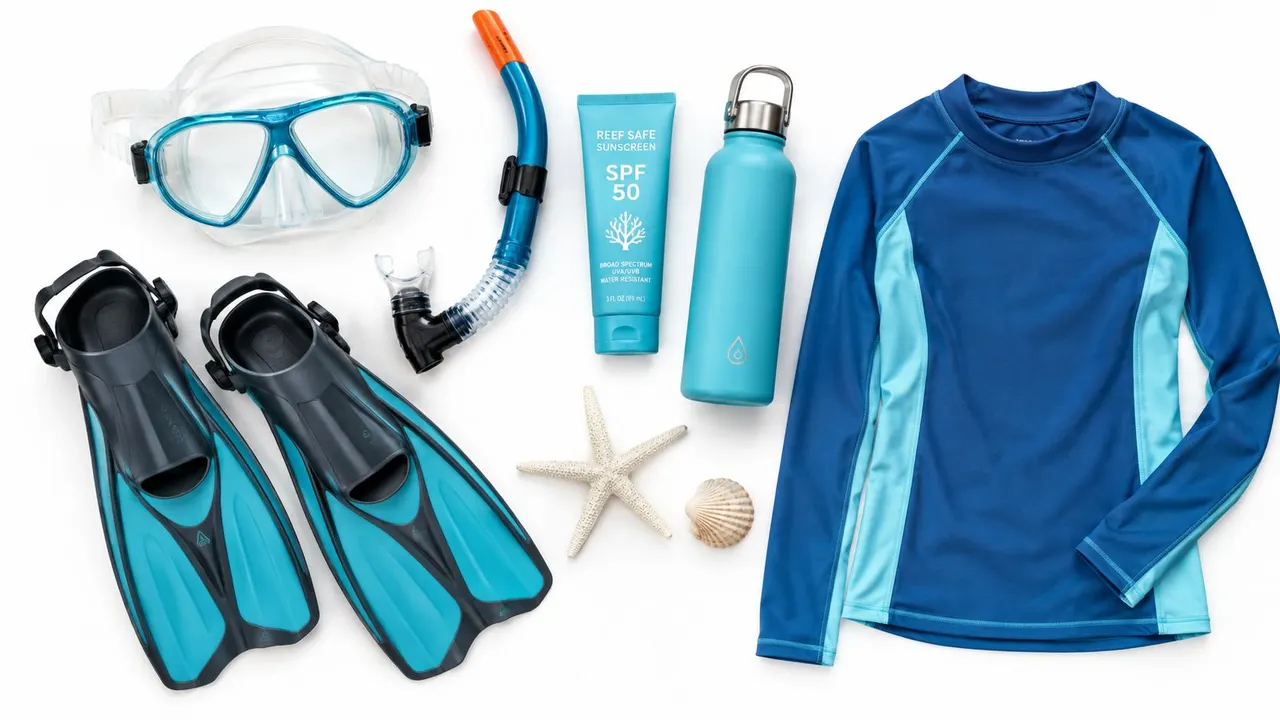
Pack for comfort, not for an imaginary expedition. A properly fitting mask matters more than an expensive snorkel. Press the mask gently against your face without using the strap and breathe in lightly through your nose. If it holds briefly, you have a promising seal. Fins should fit securely over bare feet or thin neoprene socks, without crushing your toes or sliding at the heel.
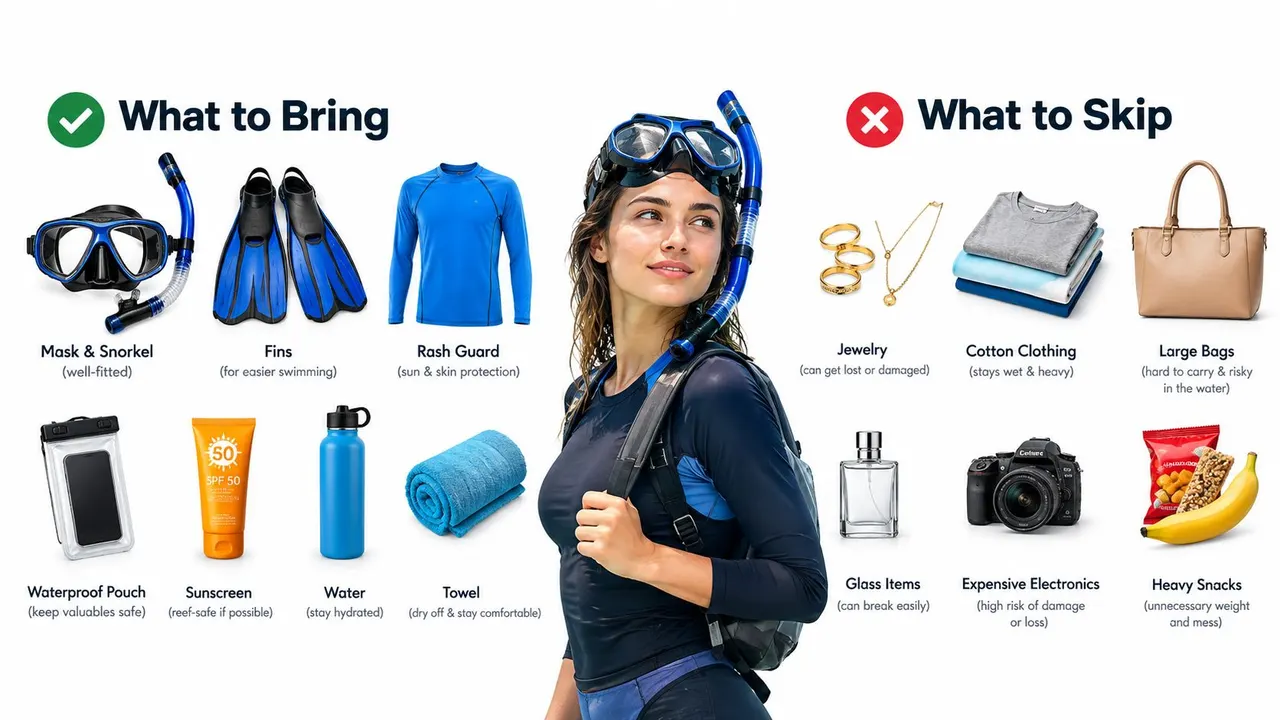
A rash guard earns its place in the bag. It protects you from sun exposure while you're focused on the reef and reduces the temptation to apply excessive sunscreen shortly before entering the water. Use a reef-conscious mineral sunscreen and keep application away from the shoreline when possible.
The small kit that saves a long day
- Mask and snorkel: Test the seal and purge valve before leaving the rental counter.
- Fins: Confirm the size while standing and walking, not just while seated.
- Flotation aid: Bring one for non-swimmers and anyone who tires easily. Don't rely on confidence alone.
- Dry pouch: Protect your phone, room key, and car key. A wet key can end the day before the ocean does.
- Water and light food: Hydrate before and after the swim, especially during a beach walk or drive.
- Towel and dry clothes: A warm layer makes the ride back far more pleasant.
- Leash for exposed entries: At places such as Sharks Cove, a leash can help secure small personal items, but it doesn't replace ocean judgment.
Renting at the beach is convenient, but inventory and fit can vary. Bringing a familiar mask from home is sensible if you already own one that seals well. A tour bundle is usually the least fiddly choice for beginners because the crew handles equipment checks and explains how to use it.
Leave cotton shirts, heavy weight belts, decorative jewelry, and bulky bags behind. Cotton stays cold when wet, weights are unnecessary for ordinary snorkeling, and jewelry can snag or distract fish. Full-face masks also deserve caution. Many beginners find them foggy or awkward to clear, and a conventional low-volume mask gives you better control.
Use this Oʻahu snorkeling packing list as your final check. Your shore kit should fit in a small dry bag, and your boat kit should leave both hands free when you move around the deck.
Safety Essentials Honolulu Visitors Often Overlook
Clear water makes people careless. They see the bottom, assume the ocean is shallow and friendly, then discover that current, shorebreak, boat traffic, or a slippery entry creates the actual danger.
Hawaiʻi Ocean Safety identifies high surf, high winds, heavy shorebreak, and strong currents as poor snorkeling conditions. NOAA also warns that rip currents can form near reefs and other coastal features, so the Hawaiʻi snorkeling safety guidance supports a straightforward rule: check same-day advisories, avoid murky water, and use flotation or a guided crew when surge or current is present.
The mistakes I want you to avoid
- Swimming alone: DLNR guidance says to snorkel with a friend, remain in close visual contact, learn local conditions, watch for boats and swimmers, and never stand on coral reef. The Hawaiʻi ocean health and safety guidance explains those basic behaviors clearly.
- Entering through breaking surf: Waikiki may look gentle from a hotel balcony, but shorebreak can knock down an upright swimmer before the snorkel ever reaches the water.
- Following a current offshore: If current carries you away from your intended area, stop fighting blindly. Signal your buddy, stay calm, and move parallel to shore when conditions allow.
- Surfacing without looking: At boat sites, surface beside your group, scan for traffic, and follow crew instructions. Never drift across a marked channel.
- Trusting poor visibility: If you can't see the bottom or your buddy, fins become a liability. Exit while you still have a clear route.
- Ignoring the walk back: Hanauma Bay's return ramp can feel punishing after sun, salt, and exertion. Drink water, rest in shade, and take heat symptoms seriously.
The buddy rule isn't about swimming side by side for a photograph. Stay close enough to make eye contact quickly. Currents separate people faster than visitors expect, particularly when one person stops to watch a turtle and the other continues drifting.
For a practical refresher before leaving your hotel, review this Honolulu snorkeling safety guide. If the beach feels wrong, don't negotiate with it. Change the plan.
Responsible Wildlife Viewing Around Turtles Seals and Whales
Wildlife encounters should be passive. You don't swim toward an animal, surround it, touch it, feed it, or block its route to the surface. You hold position, keep your body quiet, and let the animal decide whether to remain nearby.
NOAA guidance says sea turtles should be viewed from at least 10 feet, or 3 meters, on land or in the water. Hawaiian monk seals require greater spacing, and NOAA's marine wildlife viewing guidelines should be your reference for species-specific behavior.
| Species | Minimum Distance | What To Do | Legal Note |
|---|---|---|---|
| Hawaiian green sea turtles | 10 feet, or 3 meters | Stop, stay calm, and let the turtle choose its path | Follow NOAA and DLNR viewing guidance |
| Hawaiian monk seals | 50 feet | Leave the area and give the seal a wide, quiet buffer | Use the greater spacing recommendation |
| Dolphins and small whales | 50 yards | Don't chase, cut across, or force an encounter | Follow the recommended offshore distance |
| Humpback whales | 100 yards | Observe from a safe distance and follow crew directions | Follow federal and Hawaiʻi guidance |
The DLNR marine species guidance lists the recommended distances for turtles, monk seals, dolphins, small whales, and humpback whales. It also makes an important point: there isn't one single minimum legal distance for every marine mammal or sea turtle, so species identification matters.
At Turtle Canyons or Electric Beach, a turtle may approach while feeding or resting. Freeze your kicking, angle your body away from its path, and never position yourself between the turtle and the surface. If a monk seal appears on a beach, don't gather around it. Back away and let trained personnel manage the space.
The slower you move, the more natural the encounter becomes. Quiet snorkelers usually see more than people who chase every fin and flipper.
Guided Tours and Independent Options Worth Booking
For first-time visitors and families, a Waikiki-area boat departure is usually the lowest-stress option. You avoid guessing at an unfamiliar entry, carry less equipment, receive a safety briefing, and have crew support at the surface. A short trip can also reach reef habitat that shore visitors can't access without dealing with rocks, surge, or long swims.
Typical formats include a group catamaran, a smaller eco-focused boat, and a private charter. Group trips suit travelers who want structure and shared logistics. Small boats feel more flexible, while private charters make sense for celebrations or groups that want control over timing and route.
I'm not including invented price bands here. Operators change rates by season, boat, inclusions, and availability, so check the live booking page rather than planning around a generic figure.
| Option | Typical Price | Best For | Booking Lead Time |
|---|---|---|---|
| Group catamaran | Varies by operator and date | Families, couples, and first-time snorkelers | Reserve ahead for popular mornings |
| Small-boat eco tour | Varies by operator and route | Travelers who want a smaller group | Reserve ahead |
| Private charter | Varies by boat and duration | Celebrations, corporate groups, and custom outings | Book well ahead |
| Hanauma Bay DIY | Entry and transport costs vary | Independent visitors with a car and patience for access rules | Check reservations early |
| Waikiki shore session | Gear and transport costs vary | Confident swimmers staying near the beach | Often flexible, conditions permitting |
| Sharks Cove DIY | Rental car and gear costs vary | Experienced summer snorkelers | Flexible, but never ignore swell |
Living Ocean Tours operates guided snorkeling from Kewalo Basin Boat Harbor near Waikiki and includes gear, instruction, and guides on its snorkeling experiences. Its Deluxe Waikiki Snorkel and Waterslide Cruise adds a waterslide, water trampoline, and lily pad, which can be useful for families who want time in the water beyond a reef swim.
Independent snorkelers can consider Hanauma Bay, the Koko Head side of Magic Island, or Sharks Cove during suitable conditions. I'd skip Sharks Cove in winter swell unless you have strong local ocean judgment. I'd also skip any walk-up plan that leaves you driving toward a famous site without confirming access first.
Half-Day and Full-Day Snorkeling Itineraries
A good half-day plan keeps the ocean session early and leaves room for recovery. Eat breakfast in Waikiki around 7:00 a.m., check in for a Waikiki catamaran at 8:00 a.m., and use the calm morning window for Turtle Canyons or a similar reef site. Return to the dock by 11:30 a.m., then spend the afternoon at the Duke Kahanamoku Lagoon or nearby beach.
Book the boat before arrival, pack a rash guard, flotation for non-swimmers, dry storage, and water, and confirm the morning's wind and surf. Keep wildlife spacing in mind throughout the trip, especially if turtles approach the boat or reef.
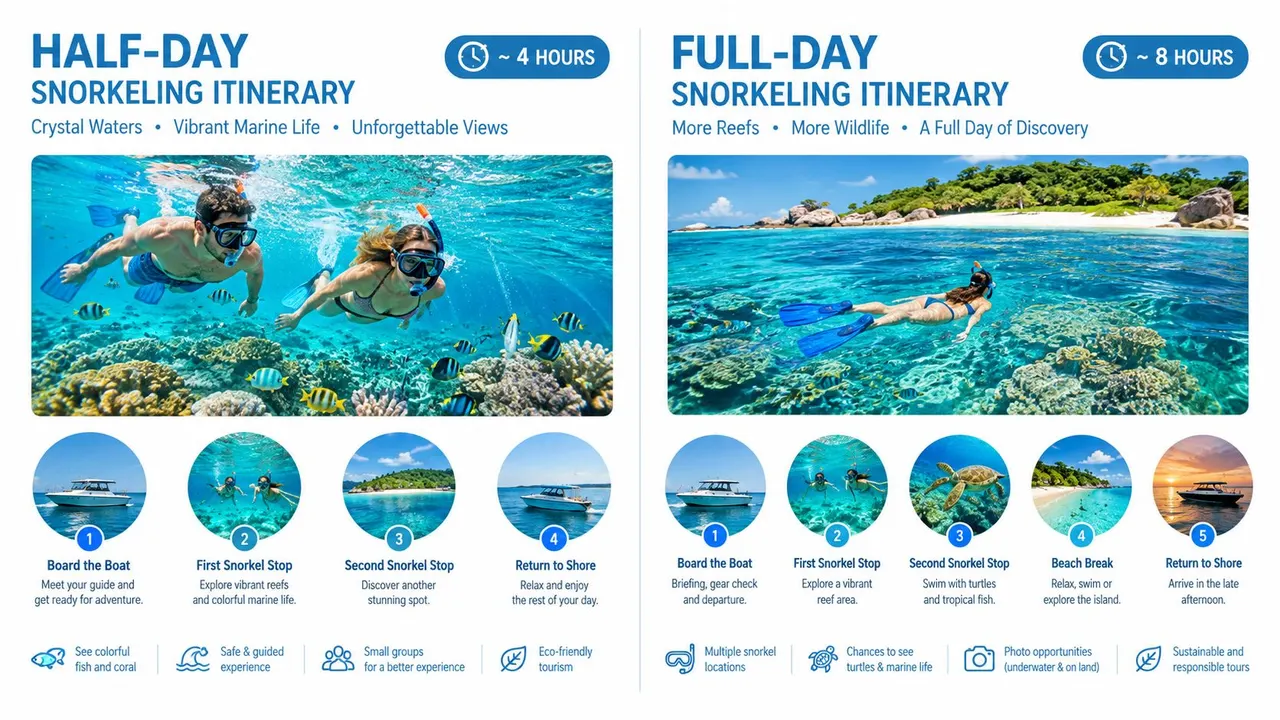
For a full day, leave Waikiki around 5:30 a.m. for an early Hanauma Bay entry, aiming for the first 7:00 a.m. slot. Exit by 9:30 a.m., before the busiest part of the morning, then continue toward Makapuʻu or Waimānalo for a relaxed shore stop if conditions remain calm. Have a late lunch in Kailua and finish with an optional sunset stop at Magic Island.
That itinerary only works if Hanauma access is booked and the ocean forecast supports the second swim. If the first site is rough, don't force the rest of the schedule. Make the boat or sheltered Waikiki water your primary plan, and treat the second location as optional.
Living Ocean Tours offers guided Honolulu snorkeling with equipment, instruction, and crew support, including the Turtle Canyons experience and the family-friendly Deluxe Waikiki Snorkel and Waterslide Cruise. Visit Living Ocean Tours to check current departures and choose the morning plan that matches your group's swimming ability and the day's conditions.


