
Snorkel Honolulu Like a Local: Spots, Tours, and Tips
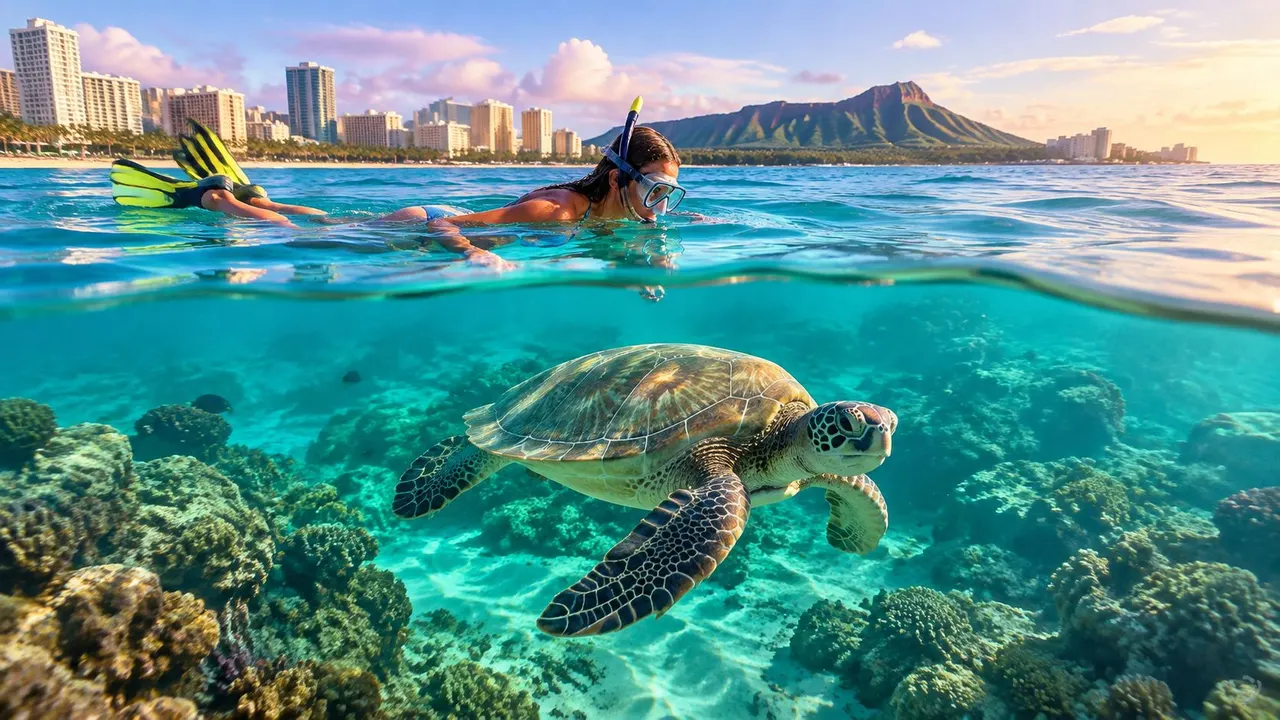
You've checked the weather, packed a swimsuit, and now you're standing on a Waikīkī boat wondering whether snorkeling will be as easy as the photos suggest. The first few minutes can feel awkward. Your mask fogs, your breathing sounds loud, and your fins seem determined to work against you. Then a Hawaiian green sea turtle glides over the reef, and the whole experience starts to make sense.
That moment depends less on luck than on choosing the right site, departure time, and level of support. Honolulu offers sheltered nearshore water, short boat rides to productive reefs, and a range of experiences for children, first-time swimmers, confident snorkelers, and travelers who want wildlife without putting pressure on the reef.
Why Honolulu Is One of the Easiest Places to Start Snorkeling
A first-time snorkeler usually improves quickly when the water is calm and the reef is close. Waikīkī gives beginners that advantage. Several nearshore areas sit within easy reach of the hotel district, and south-shore conditions can provide a forgiving learning window when wind and swell stay manageable.
The practical appeal is simple. You don't need to commit to a remote beach, a long open-water swim, or a technical dive just to see reef fish. A short boat trip can put you over offshore habitat, while sheltered shoreline areas give cautious swimmers a way to practice floating, breathing, and finning before they venture farther.
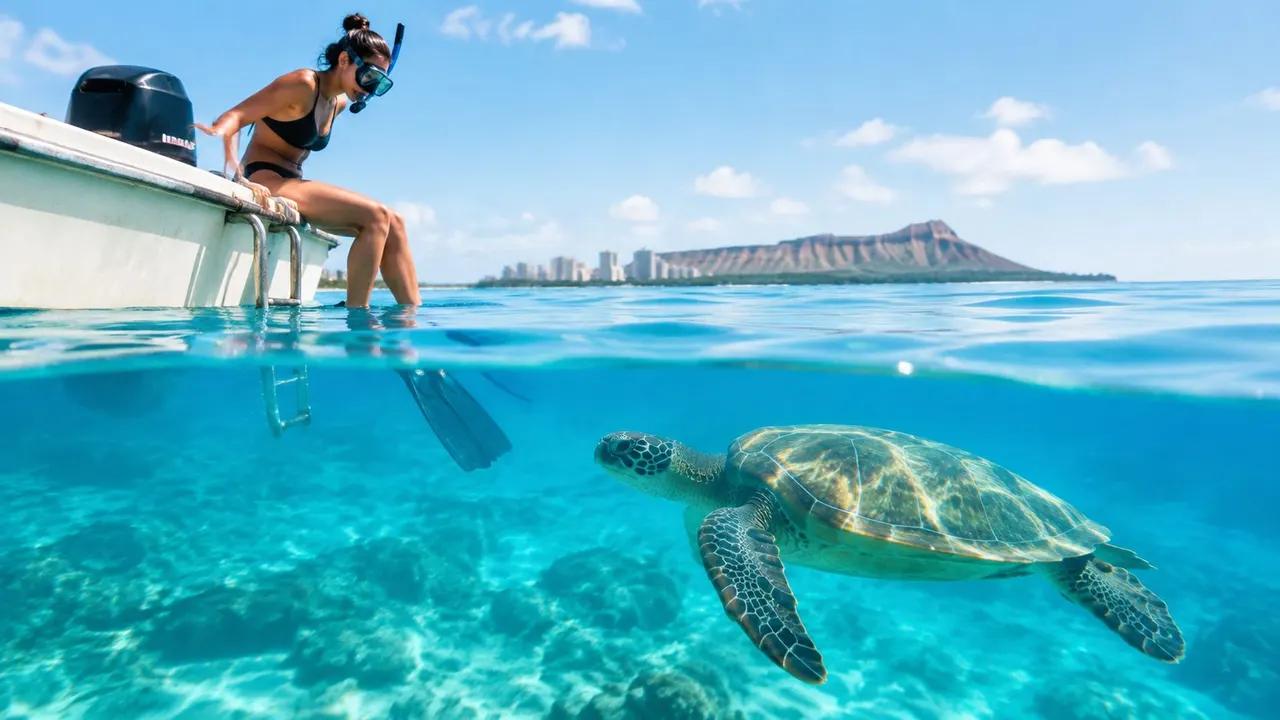
The wildlife is close, but it isn't guaranteed on every beach
Hawaiian green sea turtles are the most commonly encountered sea turtles on Hawaiʻi's reefs and beaches. State wildlife officials report that nesting populations have risen by about 5% per year over the last two decades, reaching almost 500 nesting females annually, compared with 67 in 1973. That recovery has changed the nearshore turtle experience around Oʻahu, where 83 documented honu nests were recorded on Oʻahu in 2024, compared with 9 in 2019 and 0 to 2 per year from 2016 through 2018.
That doesn't mean every swimmer will see a turtle. It means Honolulu has healthier habitat and more reliable opportunities than it did decades ago, especially when you choose a reef where turtles regularly feed or rest.
Access makes a difference for families
Most Waikīkī departure points are a short transfer from the airport area, and the main south-shore attractions are straightforward to reach by car or shuttle. The greater advantage is that you can change the plan when conditions change. If a beach entry looks rough, a permitted boat crew may be able to select a more sheltered reef instead.
For a first Honolulu outing, a guided Waikīkī snorkeling and waterslide trip can remove several beginner obstacles at once, including gear fitting, flotation, site selection, and figuring out where to enter the water.
Practical rule: Beginners don't need the most famous reef. They need calm water, a clean mask seal, a clear exit plan, and enough time to relax.
The Best Snorkel Spots in and Around Honolulu
Honolulu's snorkel sites don't all solve the same problem. Some offer easy entry, some offer better offshore habitat, and others reward strong swimmers who can handle changing water. Match the location to the person rather than chasing a name from a social media list.
Turtle Canyons
Turtle Canyons is the standout boat-access option near Waikīkī for visitors who want a focused turtle experience. The reef includes a natural cleaning-station environment where reef fish remove algae and parasites from Hawaiian green sea turtles. Turtles may gather there repeatedly because the habitat serves a purpose, not because the animals are being fed or staged.
The reef is commonly described in 15 to 40 feet of water, with resident reef fish and green sea turtles. Visibility varies with wind, swell, and runoff, so a captain's same-day judgment matters more than a fixed promise. The short ride from Waikīkī is convenient for families and travelers who don't want to spend the morning dealing with parking or a difficult shore entry.
Hanauma Bay
Hanauma Bay offers protected water and abundant reef fish, but it requires more planning. Reservations are mandatory, access is managed, and the descent to the beach and reef can feel steeper than a boat-based entry. It suits visitors who want a land-based marine sanctuary experience and are comfortable following a structured arrival process.
A University of Hawaiʻi study found that local residents made up 13% of visitors, compared with 3% in earlier surveys, while surveyed visitors perceived reef contact and observations recorded contact 53% of the time. Those findings show why visitor behavior and carrying capacity affect the quality of the Hanauma Bay experience.
Waikīkī shallow lagoon
For absolute beginners and young children, shallow Waikīkī water can be the least intimidating starting point. Expect smaller reef fish and limited depth rather than a dramatic offshore wildlife encounter. Choose a quiet entry, keep your fins from scraping the bottom, and leave if the water becomes cloudy or surge starts moving you around.
Diamond Head shoreline
The Diamond Head shoreline can appeal to confident swimmers looking for a more open-coast feel. Pelagic fish and occasional turtle sightings are possible, but access, surge, and visibility can change quickly. It isn't my first recommendation for a nervous first-timer.
Sandbar and Kahe Point
Sandbar and Kahe Point are better suited to experienced snorkelers who understand currents, boat lanes, and offshore visibility. They can reward strong swimmers with clearer water and a broader sense of open-ocean habitat, but the trade-off is a smaller margin for mistakes.
For a wider site-by-site breakdown, use this guide to the best snorkeling on Oʻahu.
Honolulu Snorkel Spots at a Glance
| Spot | Depth | Visibility | Marine Life | Skill Level | Best For |
|---|---|---|---|---|---|
| Turtle Canyons | 15 to 40 feet | Often favorable offshore, condition-dependent | Green sea turtles and reef fish | Beginner with crew support to intermediate | Reliable turtle-focused trips |
| Hanauma Bay | Shallow to moderate | Protected, but crowd and runoff sensitive | Reef fish and coral habitat | Beginner to intermediate | Managed land-based snorkeling |
| Waikīkī shallow lagoon | Shallow | Usually easiest when water is calm | Small reef fish | Absolute beginner | Kids and cautious swimmers |
| Diamond Head shoreline | Variable | Changes with surge and wind | Pelagic fish and occasional turtles | Intermediate | Confident shore snorkelers |
| Sandbar and Kahe Point | Offshore and variable | Can be clearer offshore | Broader open-water wildlife | Advanced | Strong swimmers seeking less sheltered water |
Guided Tour Options Worth Knowing About
A guided tour earns its price by solving problems that are difficult to manage from shore. The crew can locate active wildlife, fit masks, support a nervous child, and shift the route when wind, surge, or visibility changes. Those decisions matter more than a polished itinerary.
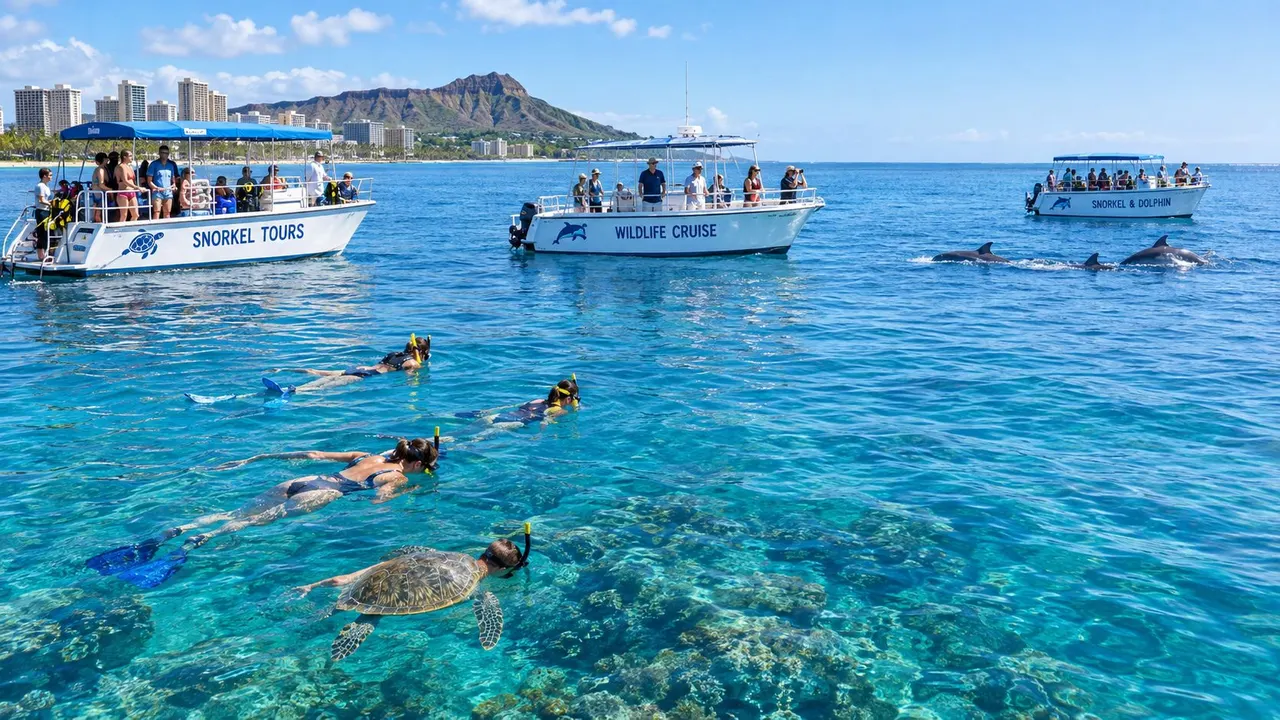
The basic turtle snorkel is usually the clearest starting point. It typically lasts 2 to 3 hours, uses a short boat ride from Waikīkī, and focuses on Turtle Canyons. Gear, instruction, and flotation are commonly included, while photographs, premium beverages, and private upgrades may cost extra. This format suits first-timers, couples, and families who want a focused ocean outing rather than a full-day program. Compare formats on the Waikiki snorkeling tours overview before booking.
When the deluxe cruise makes sense
Choose the deluxe Waikīkī snorkeling and wildlife cruise when snorkeling is one part of a longer day on the water. Depending on the itinerary, it may include a coastal scenic leg, breakfast or lunch, another snorkel stop, or broader wildlife viewing. The trade-off is straightforward. More time and variety do not guarantee a closer turtle encounter.
Check the inclusions before paying. Confirm meals, flotation, masks, fins, towels, transportation, and photos, and ask which are add-ons. Group size also deserves a direct question. A lower fare can feel less appealing when many swimmers gather around one turtle.
Sunset cruises trade visibility for atmosphere
A sunset cruise serves a different purpose from a morning snorkel. You are choosing golden-hour coastline views, conversation, and a relaxed boat setting instead of the clearest reef conditions. A listed Waikīkī Sunset Cocktail Cruise departs from Kewalo Basin Harbor every evening except Fridays, with example summer departure windows of 5:00 pm to 6:30 pm and 5:30 pm to 7:00 pm on another listing. Those fixed evening windows show why you should confirm the exact schedule before planning dinner.
See the Waikīkī Sunset Cruise for that format, or compare it with Sunset Cruise Waikīkī.
Seasonal whale watching
Humpback whale watching is seasonal, not a year-round snorkel add-on. Hawaiʻi's official season runs from December 15 to May 15, with sightings peaking from January through March. Use that seasonal calendar when comparing a whale watch with a turtle-focused trip.
Living Ocean Tours runs Turtle Canyons snorkeling, a deluxe Waikīkī wildlife cruise, sunset sailing, and seasonal whale watching, with gear and instruction included. Its tour pages give visitors a practical way to compare focused turtle trips with broader wildlife and sunset formats.
Safety and Gear Basics for First-Time Snorkelers
Most Honolulu snorkeling problems start before anyone reaches the reef. A leaking mask causes panic, oversized fins create fatigue, and a swimmer who doesn't understand the current can drift farther than expected before noticing.
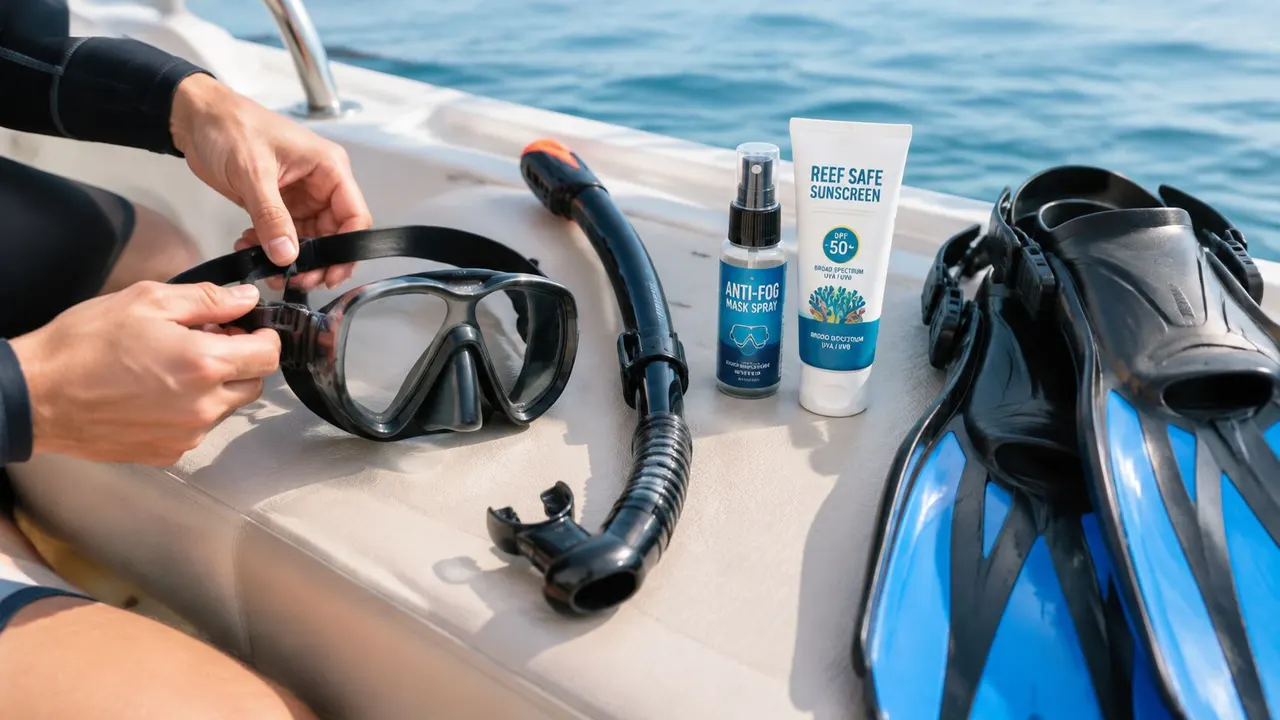
Start with the mask. Press it gently to your face without using the strap and inhale through your nose. If it stays in place briefly, the skirt is probably sealing. Facial hair can create a gap, so adjust the mask position rather than overtightening the strap. A tight strap can distort the seal and leave you with a headache.
Fit the equipment before you enter
Use defog solution or a small amount of baby shampoo, rinse lightly, and test the mask before boarding or walking into the surf. A dry-top snorkel can make surface breathing more comfortable for beginners, while a full-face design needs careful attention to fit and ventilation. Fins should feel secure without pinching your toes or lifting off your heels.
This mask-fitting guide for Oʻahu snorkeling is worth reading before renting equipment, particularly if you wear facial hair, prescription lenses, or need flotation.
Read the water, not just the forecast
Southerly swells can push water onto Waikīkī and Diamond Head shorelines. Trade-wind chop can roughen the surface later in the day, while outgoing tides near channels can pull water away from shore. After heavy rain, brown-water runoff can reduce visibility and may make a nearshore session a poor choice.
Recent Oʻahu condition reporting rated some Honolulu-area spots poor or hazardous on September 9, 2026, including Waikīkī MLCD and San Souci, where dangerous rip currents and zero-to-poor visibility were reported. Check current spot conditions rather than assuming a familiar beach is safe.
Statewide safety data also show why caution matters. Snorkel-related fatalities accounted for 169 of 650 ocean drownings from 2007 through 2016, and visitors made up most deaths during that period. The same source is summarized in the condition reporting linked above.
Use this pre-entry checklist
- Pair up: Stay with a buddy and keep visual contact.
- Use flotation: Non-swimmers and tired swimmers should use an appropriate flotation aid.
- Respect boat lanes: Enter and exit only where the crew or lifeguards direct you.
- Watch the exit: Know where you'll leave the water before you swim away from shore.
- Skip the session: If visibility is poor, currents are moving you, or the entry feels wrong, don't force it.
Renting makes sense for a single vacation if the operator provides clean, well-maintained equipment and a proper fitting. Buying a mask can be worthwhile if you snorkel often, but expensive accessories won't compensate for poor fit or bad conditions.
Best Times of Year and Times of Day to Snorkel
Waikīkī and the South Shore usually offer the most practical beginner conditions when trade winds are lighter and nearshore swells are calmer. The clearest Honolulu snorkeling window is typically from sunrise through about 10 a.m., while the clearest conditions occur most often from May to early October. That timing guidance favors early-morning departures and sheltered reefs.
Later in the day, wind can build surface chop and lift sand from the bottom. That directly reduces sight lines, which matters more to beginners than experienced swimmers because a cloudy mask and cloudy water can make orientation difficult at the same time.
South Shore and North Shore work differently
The North Shore is often the better winter surf coast for watching waves, not for casually entering the water. Summer can bring calmer windows there, while winter swell can close exposed beaches and make sites such as Sharks Cove unsuitable for less-experienced swimmers. The South Shore generally offers the more dependable starting point for a Honolulu trip, especially when your schedule allows a morning outing.
| Season / Time | South Shore, Waikīkī and Turtle Canyons | North Shore, Sharks Cove and Three Tables |
|---|---|---|
| Summer morning | Often the strongest choice for calm entry and clearer water | Can offer good calm windows, but site access still varies |
| Summer afternoon | Wind and chop may reduce clarity | Local wind and swell can change the plan |
| Winter morning | May remain workable at sheltered sites, but check conditions | Exposed beaches can have large swell and unsafe entries |
| Winter afternoon | Visibility may deteriorate as wind and traffic increase | Usually the least forgiving period for casual snorkeling |
| After heavy rain | Brown-water runoff can reduce visibility | Runoff and swell can also affect clarity |
| Trade-wind lull | A valuable short window for cleaner surface conditions | Can improve a marginal site, but doesn't remove exposure |
Full-moon tidal swings can strengthen currents at sites such as Electric Beach and Sharks Cove. A quiet-looking surface doesn't always mean weak water movement, so ask lifeguards or the crew about the day's current pattern.
The local rule: Choose the South Shore on a summer morning, consider North Shore calm windows in summer or winter only when conditions support it, and check the NOAA forecast and surf report the night before.
Reef Etiquette and How to Be a Responsible Visitor
Responsible snorkeling improves the view as much as it protects the reef. When swimmers stop chasing animals and stop kicking the bottom, fish settle sooner, turtles keep their natural routes, and the water stays clearer around the group.
Hawaiʻi law requires snorkelers to maintain a minimum 10-foot distance from sea turtles. Spinner dolphins have a 50-yard approach rule, so don't pursue them from a boat or in the water. Touching, feeding, chasing, blocking, or riding marine life changes a wildlife encounter into harassment and can end a tour.
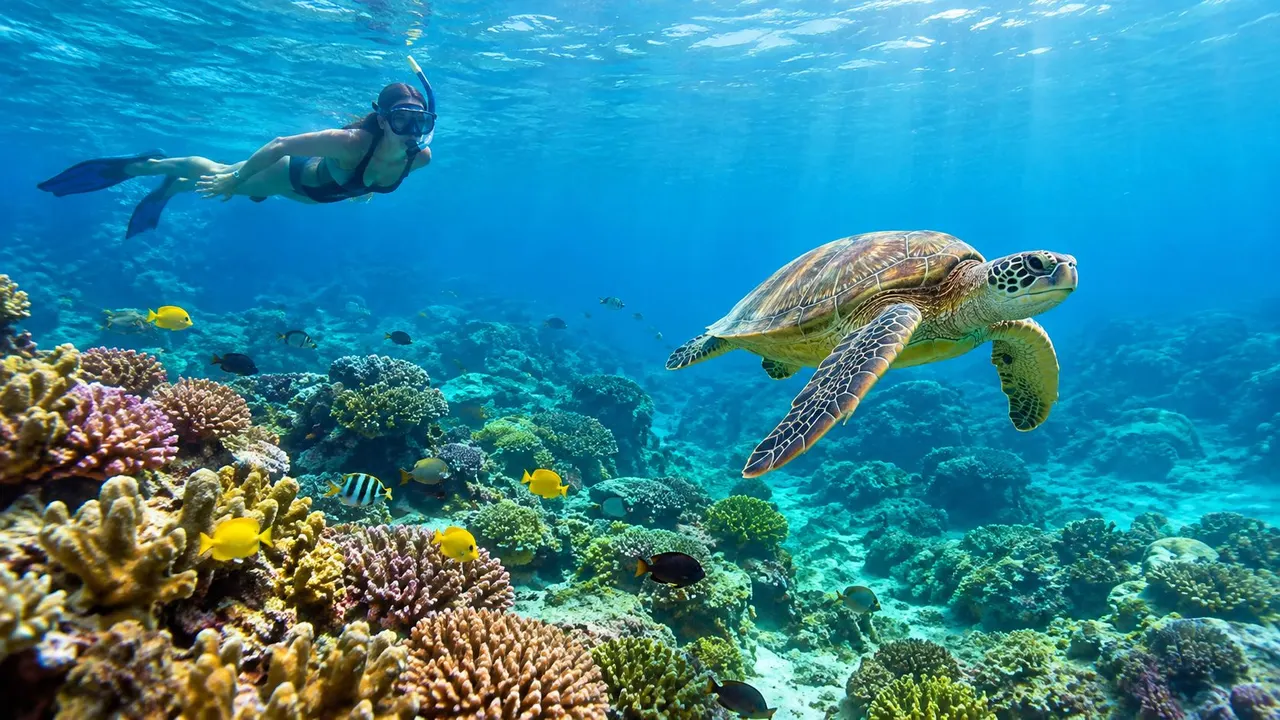
Protect the bottom with your body position
Keep your body horizontal and use small, controlled fin kicks. Never stand on coral, even if the water is shallow, and keep straps, cameras, and flotation devices from dragging across the reef. Mineral sunscreen without oxybenzone and octinoxate is the practical choice for reef protection, and reef-safe sunscreen rules apply in many Hawaiʻi venues.
Crowding creates another problem. If everyone enters at the same point and gathers around one animal, swimmers collide, fins stir sediment, and the turtle loses room to move. Space out, follow the crew's positioning, and choose operators that manage groups rather than allowing a free-for-all.
Better wildlife viewing comes from less movement. Slow down, give animals a clear route, and let the reef come into focus around you.
How to Choose the Right Honolulu Snorkel Experience
Start with the group, not the advertisement. A solo traveler or couple may prefer a two-stop turtle snorkel that gives them more time in the water. Families with children under 10 should prioritize shallow turtle coves, flotation, smaller groups, and a crew that doesn't rush nervous swimmers.
Then identify the must-have feature. If turtles are the priority, choose a focused Turtle Canyons excursion. If you want a broader ocean day, a deluxe wildlife cruise can add coastal scenery, seasonal whale sightings, or spinner dolphin viewing when conditions allow. Sunset trips fit travelers who value atmosphere more than underwater visibility.
Match Your Group to the Right Honolulu Snorkel Trip
| Traveler Type | Must-Have Feature | Budget Tier | Best Fit |
|---|---|---|---|
| First-time adult snorkeler | Gear fitting, flotation, crew instruction | Entry | Guided turtle snorkel |
| Family with young children | Shallow water, patient crew, easy boat access | Entry to mid-range | Family-oriented turtle trip |
| Couple seeking variety | Two snorkel areas or wildlife viewing | Mid-range | Deluxe wildlife cruise |
| Strong swimmer | Offshore habitat and flexible site selection | Mid-range | Advanced guided snorkel |
| Eco-conscious traveler | Reef briefing and wildlife-distance rules | Entry to premium | Conservation-focused guided tour |
Before booking, confirm that the operator is permitted, provides masks and fins, offers flotation, and explains reef etiquette before entry. Ask how the crew responds when visibility deteriorates. The right captain won't cling to an advertised site if the conditions no longer support a safe, enjoyable snorkel.
Living Ocean Tours' Turtle Canyons Snorkel Excursion fits travelers seeking a guided turtle-focused outing. Snorkel Turtle Canyon is another good alternative for comparing Turtle Canyon tour options.
Booking, Packing, and Final Checklist
A good Honolulu snorkel day starts with the forecast and ends with a simple packing list. During winter and summer holidays, book two to four weeks ahead if the departure time matters. In shoulder periods, one week is usually enough, while last-minute availability may still work if you call in the morning.
Morning boats usually offer the best combination of calmer surface water, cleaner sight lines, and less traffic around the reef. Confirm the meeting location, parking instructions, check-in time, and cancellation policy before you leave the hotel.
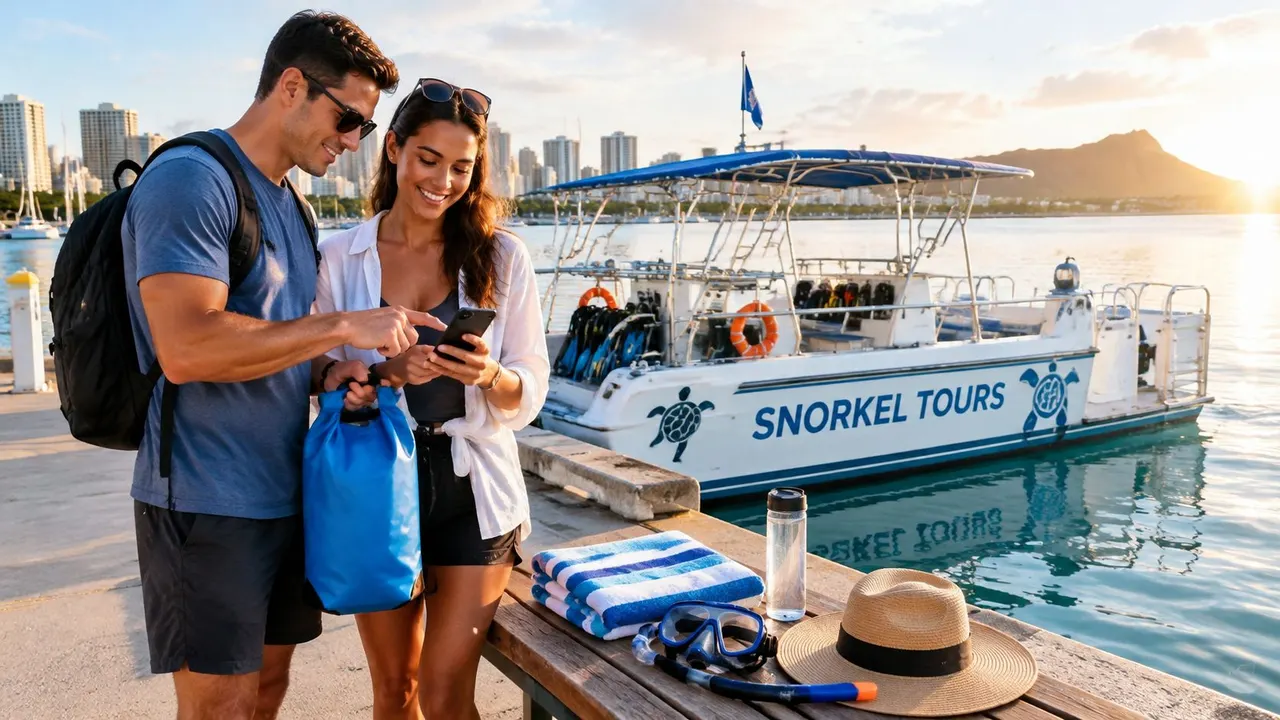
Pack for the boat and the reef
Bring reef-safe sunscreen, a rash guard or long-sleeve swim shirt, a towel, a dry bag, water, and a waterproof phone case. If boat motion bothers you, bring a motion-sickness remedy that you already know works for you.
Skip cotton, heavy fins, and dangling jewelry. Cotton stays cold and wet, heavy fins tire beginners, and jewelry can snag on gear or tempt you to adjust equipment underwater.
Use this Oʻahu snorkeling packing list before you close the bag.
Same-day action plan
- Pick the date: Choose a morning departure that leaves room for weather changes.
- Check conditions: Review surf, wind, runoff, and the current spot report.
- Confirm logistics: Screenshot your confirmation and meeting instructions.
- Hydrate early: Drink water before boarding, not only after you return.
- Listen aboard: Follow the crew briefing, stay with your group, and keep wildlife space.
- Plan afterward: Leave room for a light lunch instead of scheduling a demanding activity immediately.
Living Ocean Tours offers guided Turtle Canyons snorkeling, deluxe Waikīkī wildlife cruises, sunset outings, and seasonal whale watching with gear, instruction, and crew support included. Visit Living Ocean Tours to compare the morning trips, check current availability, and choose the Honolulu ocean experience that matches your group and swimming comfort.


